TEL:+86 132 6656 7067





Global 5G infrastructure continues to expand as mobile operators increase network coverage, improve service capacity, and prepare their systems for more demanding digital applications. Higher mobile data consumption, fixed wireless access, industrial connectivity, and the development of smart cities are creating additional requirements for high-capacity transport networks behind 5G radio access infrastructure.
While 5G services are delivered wirelessly to mobile devices, the infrastructure connecting base stations, aggregation sites, and core networks depends heavily on high-performance wired transmission. Optical fiber provides the capacity, low signal attenuation, and scalability required for many of these connections. As a result, 5G deployment is creating demand not only for radio equipment but also for fiber cables, optical transceivers, wavelength management systems, and network aggregation equipment.
The relationship between 5G and fiber is particularly important as networks move toward standalone 5G architectures, higher-capacity radio interfaces, and increasingly distributed computing resources. Optical connectivity is becoming a critical component of the transport infrastructure supporting next-generation mobile services.
1. Global 5G Expansion Increases Demand for Transport Infrastructure
5G adoption has progressed from initial commercial launches to large-scale network deployment across many regions. Operators are expanding coverage while upgrading existing sites to support additional frequency bands, greater capacity, and new service requirements.
According to Ericsson's 2026 mobility subscription statistics, global 5G subscriptions approached 3.3 billion in the second quarter of 2026, following approximately 155 million new subscriptions during the quarter. The same outlook indicates that 5G adoption is continuing to expand across both established and developing mobile markets.
Growing subscription numbers are only one part of the infrastructure requirement. Mobile networks must also accommodate increasing traffic volumes, higher peak data rates, more connected devices, and new applications that require reliable connectivity.
These developments create several infrastructure priorities:
More 5G base stations: Additional radio sites increase the number of connections required between access networks and aggregation facilities.
Higher transport capacity: Increased traffic from multiple radio sites requires stronger aggregation and backhaul infrastructure.
Fiber expansion: Operators need additional fiber routes to connect new sites and improve network capacity.
Network densification: Urban areas may require more small cells and distributed radio equipment to improve coverage and capacity.
Standalone 5G development: 5G SA architecture introduces additional requirements for transport, synchronization, and network performance.
Enterprise connectivity: Private 5G, industrial applications, and fixed wireless access create new requirements for reliable network connections.
As mobile network capacity increases, optical fiber becomes increasingly important for connecting geographically distributed network elements and transporting aggregated traffic toward the mobile core.
2. Optical Fiber Plays a Central Role in 5G Network Architecture
A 5G network consists of several interconnected layers, including the radio access network, transport network, and mobile core. Optical fiber can be deployed throughout these layers, although the required transmission speed, distance, and optical interface differ according to the application.
The transport network is commonly divided into fronthaul, midhaul, and backhaul. These segments connect different functional elements of the radio access network and carry traffic between the radio sites and core network.
| Network Segment | Typical Connection | Primary Function | Optical Requirement |
|---|---|---|---|
| Fronthaul | DU to AAU/RRU | Transports radio-related data between distributed baseband processing and radio equipment | Low-latency, high-capacity optical links |
| Midhaul | DU to CU | Connects distributed and centralized network functions | Aggregation capacity and flexible transport |
| Backhaul | CU or aggregation site to mobile core | Transports aggregated mobile traffic toward the core network | High-capacity, scalable optical transport |
In a fiber-based architecture, each segment may use different optical transceiver speeds and transmission distances. Shorter fronthaul connections often use 10G or 25G optical interfaces, while aggregation and backhaul networks may require 50G, 100G, 400G, or higher-capacity solutions.
Actual interface selection depends on the radio architecture, functional split, traffic load, fiber availability, network topology, and operator requirements. There is no single optical speed that applies to every 5G transport deployment.
3. 5G Fronthaul Drives Demand for 25G Optical Transceivers
Fronthaul is one of the most important optical application areas in 5G radio access networks. In centralized or cloud radio access network architectures, distributed units and centralized processing functions communicate with remote radio equipment through high-capacity transport links.
25G SFP28 optical transceivers have become an important interface option for many 5G fronthaul deployments. They provide a practical balance between bandwidth, module size, power consumption, and deployment cost.
Depending on the radio architecture and optical interface, 25G links can support transmission over single-mode fiber using different wavelengths and distances. CWDM and BiDi technologies are particularly useful when operators need to manage limited fiber resources.
25G CWDM Optical Modules
Coarse Wavelength Division Multiplexing (CWDM) allows multiple optical channels operating at different wavelengths to share a fiber infrastructure. This can increase the capacity of existing fiber routes without requiring a separate fiber pair for every connection.
For 5G fronthaul, 25G CWDM SFP28 modules can support point-to-point optical connections over distances such as 10 km and 20 km, depending on the selected wavelength and module specification.
25G BiDi Optical Modules
BiDi technology uses different wavelengths to transmit and receive signals over a single optical fiber. A matched pair of modules operates with complementary transmit and receive wavelengths, allowing bidirectional communication without requiring two separate fiber strands.
This architecture is valuable in dense urban areas where fiber resources may be limited or expensive to expand. It can reduce fiber-core requirements for suitable point-to-point connections.
25G SFP28, 25G CWDM SFP28, and 25G BiDi SFP28 are widely used optical interface categories. The appropriate module depends on link distance, wavelength plan, fiber availability, radio equipment compatibility, and optical power budget.
4. Midhaul and Backhaul Require Higher Aggregation Capacity
As traffic from multiple 5G radio sites is combined, the transport network must provide sufficient capacity to avoid congestion between access and core infrastructure.
Midhaul networks connect distributed and centralized radio access functions, while backhaul carries aggregated traffic toward the mobile core. Their bandwidth requirements depend on the number of connected sites, radio configuration, spectrum utilization, traffic patterns, and service-level requirements.
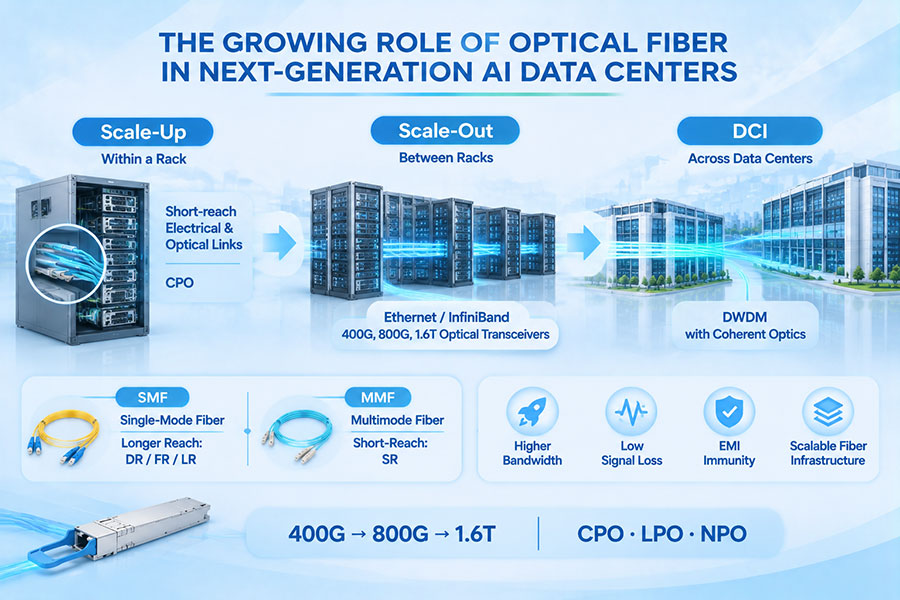
Optical transceivers in these network segments can include 25G, 50G, 100G, and 400G interfaces. Larger aggregation nodes may require higher-speed optical connections as traffic grows.
| Optical Data Rate | Common Form Factor | Potential Application |
|---|---|---|
| 10G | SFP+ | Legacy transport, smaller aggregation links, and selected access connections |
| 25G | SFP28 | 5G fronthaul and access aggregation |
| 50G | SFP56 | Higher-capacity aggregation and selected transport links |
| 100G | QSFP28 | Midhaul, backhaul, and metropolitan aggregation |
| 400G | QSFP-DD or OSFP | High-capacity transport, core network, and data center interconnection |
These are representative interface categories rather than mandatory standards for each network segment. Operators select optical speeds according to traffic engineering, equipment capabilities, and the expected service life of the transport infrastructure.
As 5G networks mature, the migration toward higher-capacity aggregation can also encourage upgrades to metropolitan optical transport systems and DWDM infrastructure.
5. Fiber Deployment and Microwave Backhaul Work Together
Although fiber is a preferred transport medium for many high-capacity 5G sites, it is not always economically or geographically practical to connect every base station directly to a fiber route.
Rural areas, remote locations, mountainous regions, and temporary network sites may use microwave backhaul where fiber construction is difficult or expensive. High-capacity microwave links can provide transport connectivity without requiring extensive new cable infrastructure.
Ericsson's 2025 Microwave Outlook reported that microwave backhaul was used in approximately 75% of live 5G networks worldwide. Its analysis also projected a gradual movement toward a more balanced global split between microwave and fiber backhaul by 2030.
This illustrates that 5G transport development is not simply a replacement of wireless backhaul with fiber. Operators combine different transmission technologies according to coverage, cost, capacity, and resilience requirements.
| Transport Medium | Advantages | Typical Deployment Considerations |
|---|---|---|
| Optical Fiber | High capacity, low attenuation, scalability, and electrical isolation | Construction cost, route availability, civil engineering, and repair access |
| Microwave | Rapid deployment, flexible routing, and useful coverage in remote areas | Line of sight, spectrum availability, weather conditions, and link capacity |
| Hybrid Fiber and Microwave | Flexible transport design and additional route diversity | Coordination of capacity, protection, and network management |
Fiber is particularly important for aggregation and high-capacity urban transport, while microwave remains valuable for extending mobile connectivity to locations where fiber deployment is challenging. A hybrid architecture allows operators to balance infrastructure investment with network performance.
6. DWDM Helps Operators Improve Fiber Resource Utilization
As the number of 5G sites increases, operators may encounter limitations in available fiber routes and optical distribution infrastructure. Building new fiber networks can require significant civil engineering investment, especially in dense urban environments.
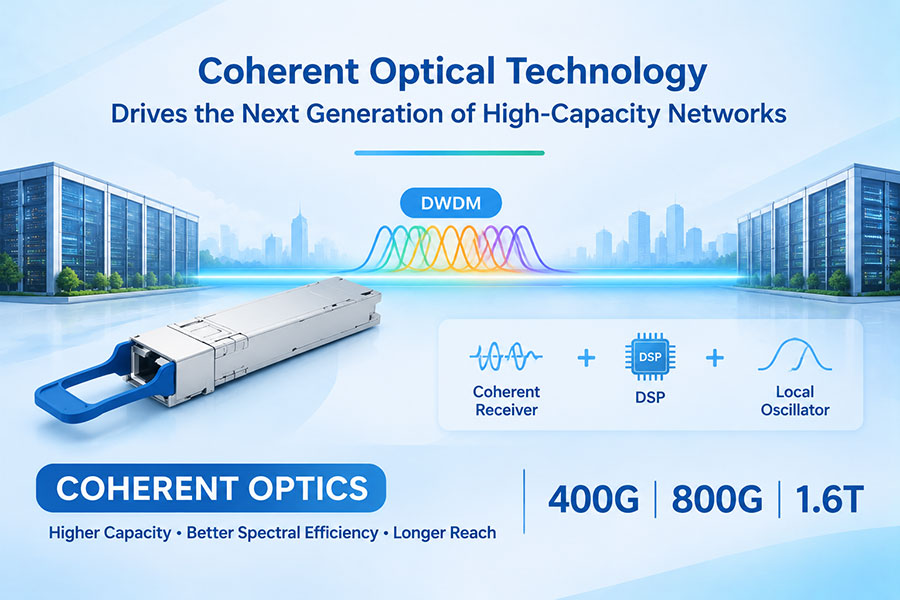
Dense Wavelength Division Multiplexing (DWDM) provides a way to increase the transmission capacity of existing fiber by carrying multiple optical channels at different wavelengths.
Rather than deploying an independent fiber pair for every transport connection, DWDM systems combine multiple wavelength channels onto a shared fiber infrastructure. This can increase capacity and improve fiber utilization where the optical design and transmission requirements permit.
DWDM is particularly relevant for:
Metropolitan 5G aggregation networks.
Connections between regional transport nodes.
High-capacity links between mobile core locations.
Fiber-constrained urban infrastructure.
Transport networks carrying traffic from multiple base stations.
Converged mobile, enterprise, and data center connectivity.
Optical modules used in DWDM networks must match the wavelength plan, channel spacing, optical power requirements, and transmission architecture. Coherent optical technology may also be used for higher-capacity transport links over longer distances.
7. 5G Expansion Creates New Requirements for Optical Network Reliability
Mobile network performance depends on more than radio coverage. Transport infrastructure must also maintain stable connectivity between radio sites, aggregation networks, and core network facilities.
Optical links in 5G infrastructure may operate in outdoor cabinets, roadside installations, tower equipment rooms, and remote communication facilities. These environments can expose optical transceivers to wider temperature variations and more demanding operating conditions than conventional indoor data center installations.
Several technical factors require attention during optical module selection.
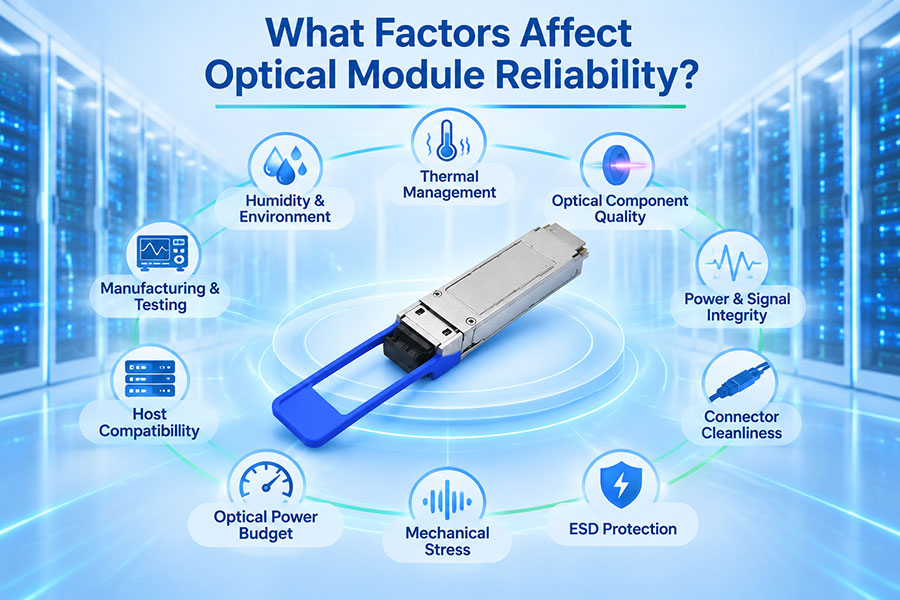
Operating temperature: Industrial temperature modules may be required for outdoor base stations and remote equipment cabinets. The specified operating range should match the actual installation environment.
Optical power budget: Fiber attenuation, connector losses, splices, and other passive components must be considered when calculating link performance.
Transmission distance: Optical modules must support the required reach while maintaining appropriate transmit power and receiver sensitivity.
Wavelength compatibility: CWDM, DWDM, and BiDi links require correct wavelength matching between connected optical interfaces.
Network monitoring: Digital Diagnostic Monitoring (DDM) can provide information such as temperature, supply voltage, transmit optical power, and receive optical power where supported by the module and host system.
Equipment compatibility: Optical modules must be compatible with the radio, switch, or transport equipment in which they are installed. Electrical interface specifications, module coding, firmware requirements, and management support should be verified.
8. 5G Infrastructure Convergence Supports Future Network Development
The development of 5G infrastructure is increasingly connected with other digital technologies, including cloud computing, edge computing, industrial automation, and private wireless networks.
5G and Edge Computing
Edge computing places processing resources closer to users and connected devices. This can reduce the distance data must travel to reach computing resources and support applications that require responsive processing.
However, edge computing also creates additional connections between radio access networks, local data centers, and central cloud infrastructure. Fiber transport is important for connecting these distributed locations.
5G and Industrial Connectivity
Industrial private 5G networks can support mobile robots, automated guided vehicles, connected sensors, and industrial monitoring systems. Their transport infrastructure may combine wireless access with fiber-based aggregation and enterprise network connections.
5G and Fixed Wireless Access
Fixed Wireless Access (FWA) uses mobile network technology to provide broadband connectivity to homes and businesses. As FWA adoption increases, operators need sufficient capacity in both radio access and transport networks to support the additional traffic.
Preparation for 6G
Although 6G commercial deployment remains a future development, the infrastructure being built today will influence the next generation of mobile networks. Higher transport capacity, synchronization, network automation, and fiber availability will remain important considerations as operators plan long-term network evolution.
9. C-LIGHT Optical Products for 5G Transport Networks
5G network deployment creates demand for optical transceivers across fronthaul, midhaul, backhaul, and metropolitan transport applications. C-LIGHT provides optical connectivity products covering different transmission rates, wavelengths, distances, and operating environments.
25G CWDM and BiDi SFP28 Optical Transceivers – Designed for 5G fronthaul and fiber resource optimization. Selected 25G BiDi configurations support single-fiber bidirectional transmission, while CWDM versions support wavelength-based fiber utilization.
25G CWDM SFP28 20km Optical Module – A 25G optical transceiver for 25G Ethernet and 5G fronthaul applications, using single-mode fiber with a specified reach of up to 20 km.
5G Fronthaul Optical Transceiver Solutions – C-LIGHT's 5G-oriented optical portfolio covers high-speed fronthaul requirements, including 25G SFP28 modules and industrial-temperature configurations.
Optical Transceiver Portfolio – Includes 25G, 50G, 100G, 400G, CWDM, DWDM, BiDi, and other optical transceiver categories for access, aggregation, and transport networks.
For 5G optical deployments, product selection should be based on the actual network segment, transmission distance, fiber type, wavelength plan, optical budget, operating temperature, and host equipment compatibility. A module designed for one fronthaul configuration should not automatically be assumed suitable for every midhaul or backhaul application.
10. Future Optical Fiber Demand Will Follow 5G Capacity and Coverage Growth
The long-term development of 5G infrastructure will continue to influence demand for fiber optic communication products. As operators expand coverage, increase radio capacity, and develop more advanced transport architectures, optical connectivity will remain important across multiple layers of the network.
Several trends are expected to shape future infrastructure investment.
Continued fiberization of aggregation networks: High-capacity aggregation sites require scalable optical connections to transport traffic from multiple mobile access locations.
Higher-speed optical interfaces: 25G will remain important for many fronthaul applications, while 50G, 100G, and 400G interfaces will support increasingly demanding aggregation and transport requirements.
Greater use of wavelength multiplexing: CWDM and DWDM technologies will help operators improve the utilization of existing fiber infrastructure in locations where fiber resources are limited.
More industrial-grade optical modules: Outdoor radio equipment and remote network facilities will continue to require optical products designed for wider temperature ranges and demanding operating environments.
Integration with edge and cloud infrastructure: Distributed computing and enterprise applications will increase the number of connections between mobile networks, data centers, and local processing facilities.
Hybrid transport architectures: Fiber and microwave will continue to complement each other, allowing operators to extend coverage while balancing network performance and infrastructure costs.
11. Conclusion
Global 5G infrastructure expansion is creating sustained demand for optical fiber communication networks. As mobile subscriptions, data traffic, and connected applications increase, operators must strengthen the transport infrastructure connecting radio access sites, aggregation facilities, and mobile core networks.
Optical fiber supports this development through high-capacity transmission, long-distance connectivity, and flexible network upgrades. 25G SFP28 modules are important in many fronthaul applications, while 50G, 100G, 400G, CWDM, and DWDM solutions support different aggregation and transport requirements.
Fiber will not replace every microwave connection, particularly in remote and geographically challenging locations. Instead, future 5G networks will continue to combine optical and wireless transport according to coverage, capacity, resilience, and deployment economics.
As 5G networks mature and prepare for future mobile technologies, optical transceivers, fiber infrastructure, and wavelength management solutions will remain essential components of global telecommunications development.
For 5G fronthaul, midhaul, backhaul, and high-capacity optical connectivity requirements, Contact C-LIGHT for product information, technical support, and optical module compatibility evaluation.
 >

 >
 >
 >
 >
 >
 >
 >