TEL:+86 132 6656 7067





The global expansion of artificial intelligence infrastructure is creating a new growth cycle for the optical communications industry. As hyperscale cloud providers, data center operators, and AI infrastructure developers increase investments in computing capacity, the demand for high-speed connectivity is expanding across server networks, switching systems, optical transmission equipment, and inter-data-center infrastructure. The industry is moving beyond traditional bandwidth upgrades toward a broader transformation of network architecture, component manufacturing, and optical supply chains.
In 2026, the increasing deployment of AI computing clusters has made optical connectivity an increasingly important part of data center investment strategies. Higher bandwidth requirements, growing network traffic, and the need for more efficient interconnections are accelerating the adoption of 800G technologies while creating new commercial opportunities for 1.6T optical solutions and advanced optical networking technologies.
1. AI Infrastructure Expansion Reshapes Global Optical Communication Demand
AI infrastructure development is changing the scale and structure of data center networking requirements. Traditional cloud data centers primarily support a combination of storage, web services, enterprise applications, and general computing workloads. Large-scale AI facilities introduce substantially different traffic patterns, particularly during distributed model training and large-scale inference operations.
AI accelerators must exchange large volumes of information across interconnected servers, switches, and computing racks. As cluster sizes increase, network bandwidth and transmission efficiency become increasingly important factors affecting overall computing performance.
This development is creating demand across several segments of the optical communications industry:
High-speed optical transceivers for server-to-switch and switch-to-switch connectivity.
Active optical cables for high-bandwidth connections across equipment racks.
High-speed copper interconnects for short-distance connections within AI computing environments.
Optical transport systems for connecting geographically distributed data centers.
Advanced optical components supporting higher transmission rates and improved integration.
The expansion of AI infrastructure is therefore not simply increasing demand for individual optical products. It is broadening the addressable market for optical communication technologies across the entire data center networking ecosystem.
2. Global Market Growth Creates New Opportunities for Optical Suppliers
The expansion of AI data centers is contributing to a significant increase in demand for optical transceivers and related connectivity products. Market research published by TrendForce on April 20, 2026, projected that the global AI-focused optical transceiver market would grow from approximately US$16.5 billion in 2025 to US$26 billion in 2026, representing projected year-over-year growth of more than 57%.
This forecast reflects the growing importance of optical connectivity in AI infrastructure investment. Demand is being supported by higher-speed network deployments, expanding GPU clusters, and the need for greater bandwidth between computing systems.
However, market expansion also creates challenges for manufacturers. Optical component availability, manufacturing capacity, product qualification, production yields, and delivery schedules can all influence the speed at which suppliers respond to new demand.
| Market Driver | Industry Development | Impact on Optical Communication |
|---|---|---|
| AI Computing Investment | Expansion of large-scale GPU infrastructure | Higher demand for high-speed optical connectivity |
| Network Bandwidth Upgrades | Migration toward 800G and emerging 1.6T architectures | Increased demand for next-generation transceivers |
| Data Center Expansion | Construction and upgrading of hyperscale facilities | Greater demand for optical modules and cabling |
| Inter-Data Center Connectivity | Expansion of geographically distributed computing resources | More opportunities for DWDM and coherent optics |
| Manufacturing Investment | Capacity expansion across optical component supply chains | Greater focus on production efficiency and supply stability |
Although the market outlook remains positive, actual demand and shipment growth will vary by product category, customer deployment schedules, and manufacturing readiness. Market forecasts should therefore be distinguished from confirmed shipment and revenue figures.
3. The 800G Transition Accelerates Across AI Data Center Networks
800G optical connectivity is becoming an important part of the next generation of data center networking infrastructure. As AI clusters require higher aggregate bandwidth and greater switching capacity, network operators are upgrading from earlier 100G, 200G, and 400G generations toward higher-speed interfaces.
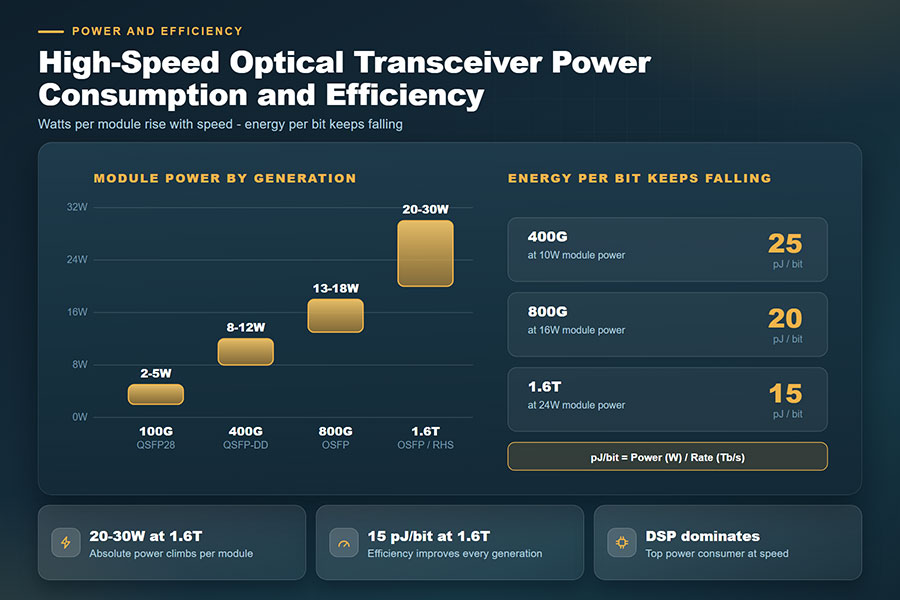
The transition is supported by several practical considerations, including network port density, bandwidth scalability, power consumption, and the cost of maintaining increasingly large computing environments.
800G optical transceivers provide a higher-capacity interface for high-density switches and AI networking platforms. Depending on the application, different optical configurations support different transmission distances and deployment requirements.
800G Optical Connectivity Solutions
C-LIGHT offers 800G optical transceiver solutions covering multiple configurations, including SR8, DR8, and 2×FR4. These products address different short-reach and medium-reach data center connectivity requirements.
800G OSFP Optical Transceivers support applications across AI data centers, cloud computing, and high-performance computing networks.
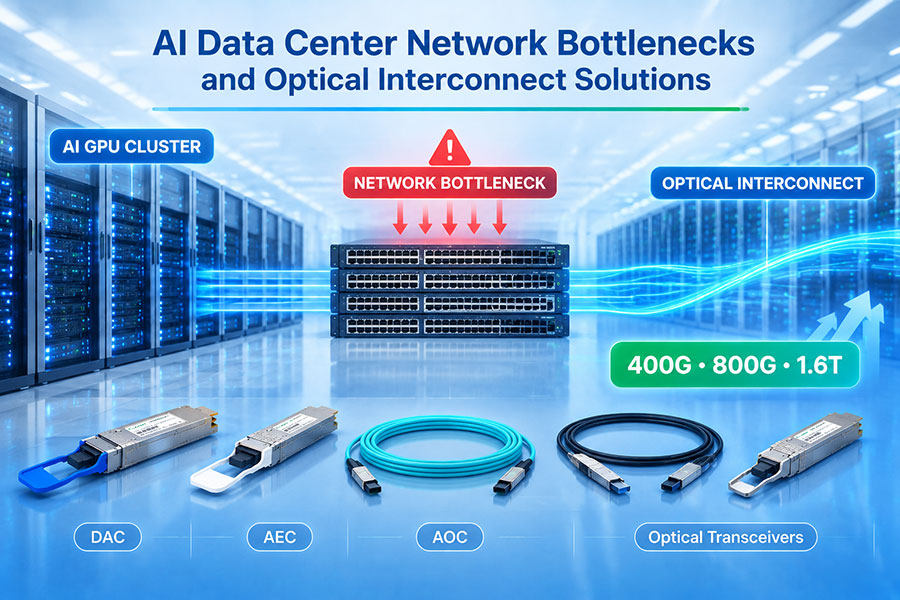
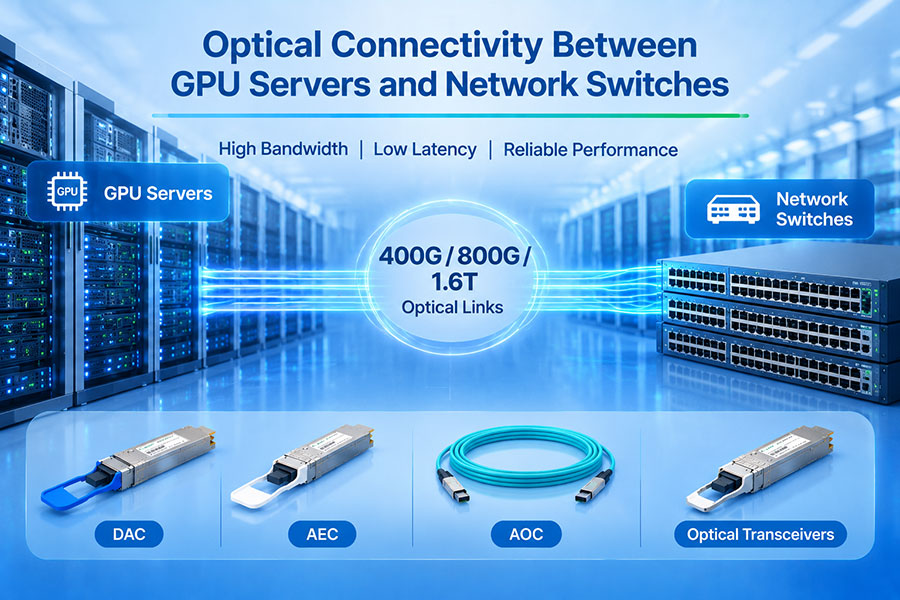
Beyond optical transceivers, 800G network expansion also increases demand for high-speed interconnect cables. DAC, AEC, ACC, and AOC technologies provide different connectivity options depending on transmission distance, signal integrity, power consumption, and deployment architecture.
The continued expansion of 800G infrastructure is expected to remain an important source of demand for optical communication manufacturers as data center operators upgrade network capacity.
4. 1.6T Technology Moves Toward Broader Commercial Adoption
While 800G deployment continues to expand, the optical communications industry is also preparing for the next bandwidth generation. 1.6T connectivity is attracting increasing attention as AI infrastructure requires greater bandwidth per port and higher network capacity.
The development of 1.6T products involves more than doubling the transmission rate of an existing optical module. It also introduces new requirements for electrical signaling, optical integration, thermal management, power efficiency, and host platform compatibility.
Industry discussions and technology developments in 2026 indicate that 1.6T is progressing through product development, customer qualification, and early commercialization activities. Nevertheless, deployment schedules and volume production readiness vary across manufacturers and product categories.
At the Asia Communications and Photonics Conference (ACP 2026), held in Hangzhou from November 1 to 4, industry discussions addressed the development of post-1.6T interconnect architectures, including NPO, CPO, and other advanced optical integration approaches. These discussions highlight the industry's preparation for increasingly demanding AI networking requirements rather than indicating that every proposed technology is already commercially mature.
Next-Generation 1.6T Connectivity
C-LIGHT's high-speed connectivity portfolio includes 1.6T OSFP-RHS optical transceiver solutions designed for next-generation data center networks.
The company's 1.6T product development is relevant to applications requiring higher bandwidth density and advanced optical connectivity. Actual platform selection should consider the host switch, electrical interface, optical reach, thermal conditions, and system compatibility.
The transition toward 1.6T will likely develop progressively. During this period, 800G and 1.6T products are expected to coexist as network operators balance infrastructure investment, equipment availability, and the performance requirements of different AI workloads.
5. High-Speed Interconnect Cables Become an Important Growth Segment
AI data center expansion is also changing demand for high-speed interconnect cables. Optical transceivers are essential for many high-bandwidth links, but copper-based and active electrical connectivity solutions continue to play important roles in short-distance network architectures.
Different interconnect technologies serve different application requirements:
| Technology | Transmission Medium | Typical Application | Industry Value |
|---|---|---|---|
| DAC | Passive copper | Very short-distance rack connections | Low power consumption and cost efficiency |
| AEC | Active copper with signal processing | Short-distance high-speed connections | Improved signal integrity over extended copper reach |
| ACC | Active copper with signal conditioning | High-speed rack and equipment connections | Supports demanding electrical connectivity applications |
| AOC | Optical fiber | Rack-to-rack and equipment interconnections | Longer reach and reduced copper-related signal limitations |
As AI computing environments become more complex, network designers increasingly need to evaluate the appropriate balance between copper and optical connectivity. The choice depends on cable reach, transmission rate, port density, power consumption, cooling requirements, and total deployment cost.
C-LIGHT High-Speed Cable Portfolio
C-LIGHT provides high-speed connectivity solutions covering DAC, AEC, ACC, and AOC technologies, with products supporting multiple data rates and interface configurations.
800G DAC for short-distance passive copper connections.
800G AEC for active electrical connectivity in AI server clusters.
AOC, DAC, AEC, and ACC Product Portfolio for different high-speed network architectures.
The continued development of these products reflects a broader industry trend: AI infrastructure requires a combination of optical and electrical interconnect technologies rather than a single universal connectivity solution.
6. DWDM and Coherent Optics Support Expanding Data Center Interconnections
AI infrastructure investment is not limited to connectivity within individual data centers. As computing resources become distributed across multiple facilities, high-capacity connections between data centers are becoming increasingly important.
Data Center Interconnect (DCI) networks support communication between geographically separated facilities, enabling distributed computing, data synchronization, storage access, and workload coordination.
DWDM technology allows multiple optical channels to share the same fiber infrastructure using different wavelengths. This provides an effective approach to increasing transmission capacity without requiring a proportional expansion of physical fiber routes.
Coherent optical technology also plays an important role in higher-capacity transmission systems. DCO modules integrate coherent optical functions into pluggable form factors, providing flexible connectivity options for applications requiring higher spectral efficiency and longer transmission distances.
As AI data center networks expand, several technologies are expected to remain relevant:
DWDM systems for increasing fiber capacity.
400G and 800G coherent optical modules for high-capacity DCI applications.
DCO solutions for flexible optical transport architectures.
Optical amplification and wavelength management technologies for long-distance transmission.
C-LIGHT DWDM and DCO Solutions
C-LIGHT's optical communication portfolio includes DWDM, CWDM, and coherent DCO optical transceiver technologies covering multiple transmission rates.
These solutions are relevant to optical transport networks, metropolitan connectivity, and data center interconnection projects where bandwidth scalability and fiber utilization are important considerations.
The expansion of AI infrastructure therefore creates opportunities not only for short-distance optical connectivity but also for high-capacity optical transport networks connecting multiple data center locations.
7. Optical Communication Supply Chains Face New Capacity Requirements
Rapid growth in optical communication demand is placing additional pressure on the global supply chain. Optical transceiver manufacturing depends on a broad ecosystem that includes semiconductor fabrication, laser sources, photodetectors, optical components, high-speed electrical chips, packaging, and final assembly and testing.
As product specifications advance from 400G to 800G and toward 1.6T, manufacturing complexity increases. Suppliers must address higher-speed signal processing, tighter component tolerances, thermal requirements, and more demanding product qualification procedures.
TrendForce's April 2026 market research identified component availability as an important constraint on AI optical transceiver capacity expansion. This highlights a key challenge facing the industry: strong market demand does not automatically translate into immediate increases in production and shipments.
Several factors will influence the ability of suppliers to respond to market growth:
Availability of high-performance optical and semiconductor components.
Manufacturing capacity for advanced optical modules.
Production yield and quality consistency.
Customer qualification and interoperability testing.
Supply chain flexibility and inventory management.
Ability to support different transmission rates and form factors.
For data center operators, supply reliability is becoming an important consideration alongside product performance and pricing. Manufacturers that can maintain consistent quality, support multiple platforms, and respond efficiently to changing demand may gain stronger positions in the evolving market.
8. Industry Outlook: Optical Connectivity Becomes a Core AI Infrastructure Investment
The development of global AI infrastructure is creating a longer-term opportunity for the optical communications industry. Increasing computing capacity requires corresponding improvements in network bandwidth, transmission efficiency, and interconnection density.
Several market developments are likely to shape the next stage of industry growth.
Continued Expansion of 800G Deployments
800G optical transceivers and high-speed interconnect cables are expected to remain important components of AI data center upgrades. Their adoption will depend on network architecture, equipment availability, and the economic requirements of individual deployments.
Progressive Adoption of 1.6T Connectivity
1.6T technology represents an important next step in optical bandwidth development. Its broader adoption will depend on product maturity, ecosystem compatibility, thermal performance, manufacturing capacity, and the timing of next-generation switching platforms.
Increasing Demand for Optical Integration
Silicon photonics, LPO, NPO, and CPO are attracting attention as potential approaches to improving bandwidth density and power efficiency. However, their commercialization paths and application suitability differ, and pluggable optical transceivers will continue to serve important deployment requirements.
Growth in Data Center Interconnect Infrastructure
The expansion of geographically distributed AI computing resources will increase the importance of high-capacity optical transport. DWDM and coherent optical technologies will remain relevant to scalable DCI architectures.
Greater Focus on Supply Chain Resilience
As network equipment requirements become more demanding, customers are placing increasing importance on manufacturing capability, product testing, compatibility support, and long-term supply stability.
Overall, the optical communications industry is entering a development cycle shaped by AI infrastructure investment. The most important opportunities will extend across optical transceivers, high-speed cables, optical components, and transport technologies, creating demand for a more comprehensive and flexible connectivity ecosystem.
9. Conclusion
AI data center expansion is becoming a major driver of global optical communication demand. The increasing scale of AI computing clusters, the migration toward 800G networking, the development of 1.6T connectivity, and the expansion of inter-data-center networks are reshaping investment priorities across the optical communications supply chain.
Although market forecasts indicate strong growth potential, the pace of commercialization will depend on actual infrastructure deployment, component availability, manufacturing capacity, and customer adoption. The transition will therefore involve multiple generations of optical and electrical connectivity technologies operating alongside one another.
For optical communication manufacturers and solution providers, the opportunity extends beyond individual product upgrades. The ability to support diverse network architectures, deliver reliable connectivity, and maintain consistent product quality will become increasingly important as global AI infrastructure continues to expand.
Optical Connectivity Solutions for AI Data Centers
C-LIGHT provides optical transceivers, high-speed DAC/AOC/AEC/ACC cables, DWDM, DCO, and other fiber optic connectivity solutions for data centers, cloud computing, and high-performance networking applications.
For product specifications, technical support, or customized connectivity requirements, contact our team.
Contact C-LIGHT >

 >
 >
 >
 >
 >
 >
 >