TEL:+86 132 6656 7067




The global rollout of 5G networks is accelerating at an unprecedented pace, fundamentally reshaping telecommunications infrastructure and, in turn, creating a surge in demand for next-generation optical modules. As operators worldwide deploy 5G base stations and upgrade their transport networks, the requirements for optical components have evolved beyond simple connectivity. Today's 5G networks demand optical modules that deliver high bandwidth, ultra-low latency, and exceptional energy efficiency—attributes that are no longer optional but essential for unlocking the full potential of 5G services.

5G's Expanding Footprint and Infrastructure Demands
The scale of 5G deployment continues to grow globally, driving substantial investment in network infrastructure. In 2026, China's three major telecom operators have planned capital expenditures of approximately 259.6 billion yuan, reflecting a continued commitment to 5G expansion and next-generation network upgrades. By early 2026, China Telecom and China Unicom had already deployed over 1.54 million shared 5G base stations through their co-construction and sharing initiative, forming the world's largest 5G standalone (SA) network. This massive infrastructure build-out directly translates into escalating demand for optical modules across the 5G transport network—spanning fronthaul, midhaul, and backhaul segments.
The 5G mmWave infrastructure market is also experiencing rapid growth, projected to expand from $5.28 billion in 2025 to $6.59 billion in 2026, representing a compound annual growth rate of 24.9%. This high-frequency spectrum deployment necessitates denser base station placements and more sophisticated optical connectivity solutions.
Why 5G Redefines Optical Module Requirements
5G networks introduce architectural shifts that place entirely new demands on optical modules. Unlike 4G, which primarily relied on distributed RAN (D-RAN) architectures, 5G embraces centralized RAN (C-RAN) to improve coordination, reduce latency, and enable advanced features like coordinated multipoint transmission. This architecture separates the baseband unit into centralized units (CUs) and distributed units (DUs), which then connect to active antenna units (AAUs) at cell sites. The resulting transport network becomes more complex and bandwidth-intensive.
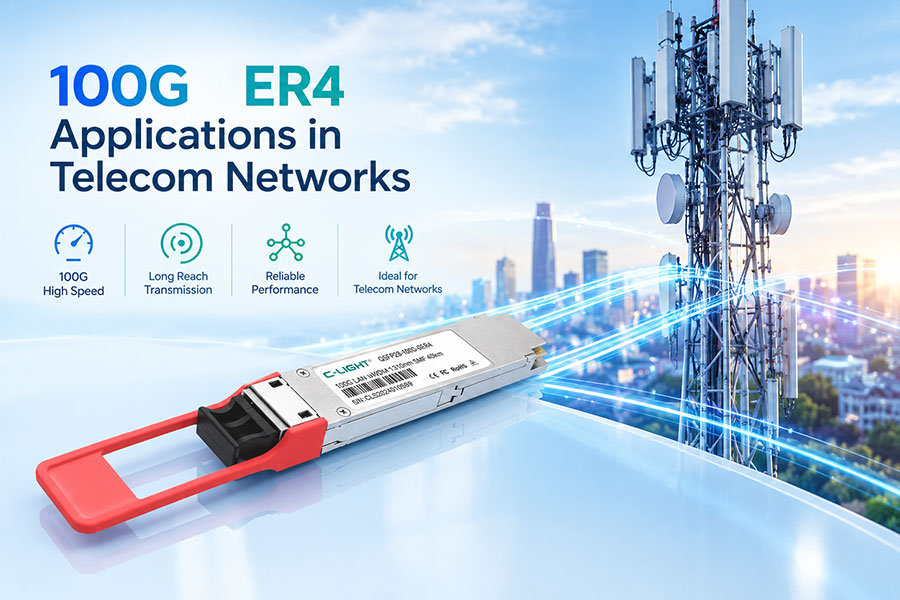
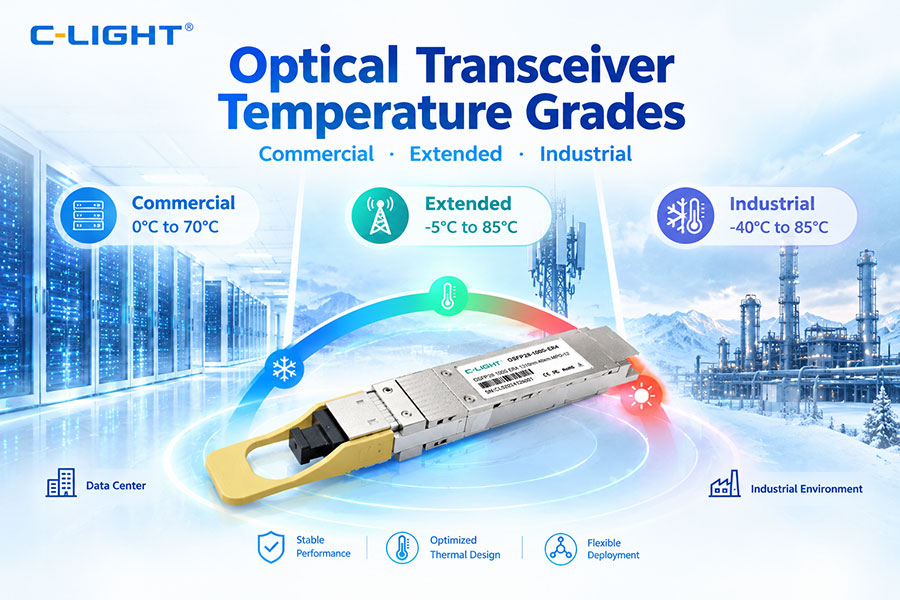
In the fronthaul segment, 5G requires high-speed connectivity between DUs and AAUs. The industry has largely converged on 25Gbps eCPRI interfaces as the mainstream technology for 5G fronthaul, with stringent latency requirements typically below 100µs to support real-time applications. Optical modules deployed in fronthaul scenarios must operate reliably in outdoor environments with industrial-grade temperature ranges (-40°C to +85°C) while delivering consistent high-speed performance.
Midhaul and backhaul segments face even greater capacity demands. As base station traffic aggregates toward the core network, bandwidth requirements multiply. The market for 5G midhaul and backhaul optical transceiver modules—covering rates from 100G to 800G—is projected to grow from $6.72 billion in 2024 to $22.0 billion by 2032, reflecting the enormous scaling needs of 5G transport. This growth trajectory underscores the critical role that optical modules play in enabling end-to-end 5G performance.
The Triple Mandate: High Bandwidth, Low Latency, and Low Power
Three performance metrics dominate 5G optical module specifications:
●High Bandwidth: 5G promises peak data rates exceeding 10 Gbps, requiring optical modules capable of handling 25G, 100G, 400G, and increasingly 800G per wavelength in transport networks. In 5G optical communication systems, optical modules can account for 50% to 70% of system equipment cost, highlighting their strategic importance in network economics.
●Low Latency: Ultra-reliable low-latency communication (URLLC) is a cornerstone 5G use case, supporting autonomous vehicles, remote surgery, and industrial automation. This requires optical modules with minimal signal processing delay and high timing precision to maintain end-to-end latency within single-digit milliseconds.
●Low Power Consumption: Energy efficiency has become a paramount concern as 5G base station density increases. 5G networks are expected to consume significantly more power than 4G, making low-power optical modules essential for operational cost containment and sustainability goals. Modern 25G tunable optical modules achieve power consumption below 2.3W across industrial temperature ranges, with room-temperature operation dropping to under 1.5W—a reduction of over 30% compared to previous generations.
Technical Innovations Driving the Market
The optical module industry has responded to 5G's demands with several key innovations. Wavelength Division Multiplexing (WDM) technologies have become essential for maximizing fiber utilization in 5G fronthaul deployments, enabling multiple optical signals to share a single fiber while maintaining high capacity and low latency. Tunable optical modules that support 48-channel seamless switching across entire C-band spectrums are gaining traction, allowing operators to simplify inventory management and accelerate network deployment.
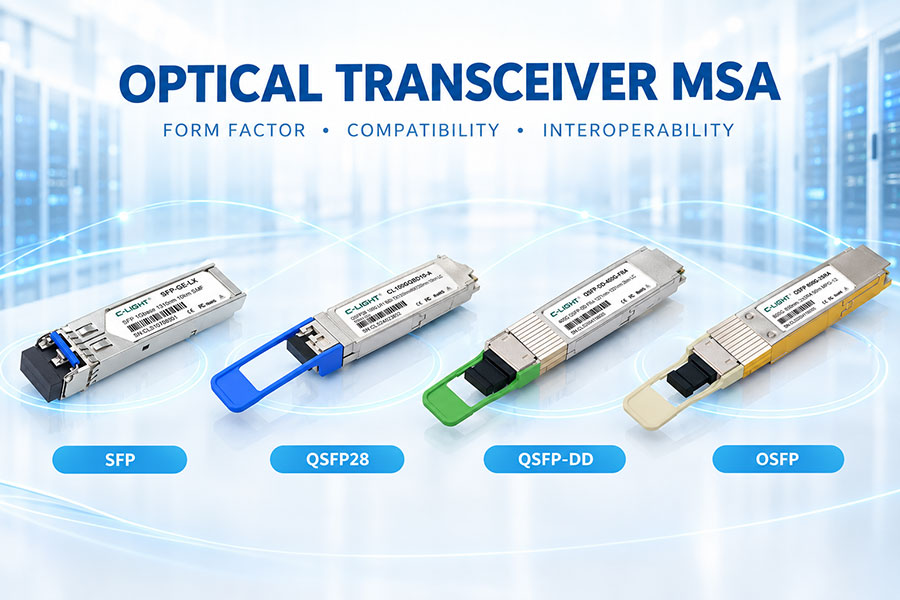
The transition from 10G to 25G SFP28 modules represents a pivotal upgrade in 5G fronthaul, offering 2.5× the bandwidth of 10G within the same compact form factor while maintaining similar power consumption levels. For midhaul and backhaul applications, 100G QSFP28 and 400G solutions are seeing accelerated adoption as traffic aggregation demands increase. The global optical module market is expected to maintain double-digit growth in 2026, with overall scale increasing 12%–16% year-over-year, driven by demand for 200G, 400G, and 800G high-speed product lines.
Industry Response: Meeting 5G-Specific Requirements
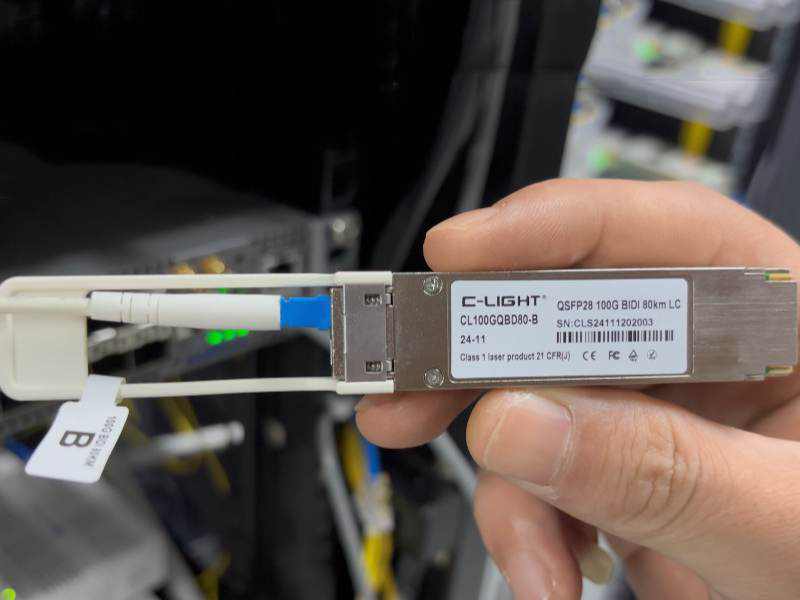
Optical module manufacturers have developed specialized solutions tailored to 5G's unique demands. Leading suppliers offer comprehensive product portfolios spanning 10G to 100G, with extended transmission distances and industrial-grade operating temperature support. These 5G-optimized modules incorporate features such as Clock and Data Recovery (CDR) circuits for signal integrity, Digital Diagnostic Monitoring (DDM) for real-time performance tracking, and BiDi (bidirectional) technology that saves up to 50% of fiber resources through single-fiber transmission.
C-LIGHT, a manufacturer with over 15 years of experience in fiber optic products, offers a range of 5G fronthaul optical modules designed specifically for the high-bandwidth, low-latency demands of modern wireless networks. Its 25G BiDi SFP28 transceivers, for example, support data rates from 24.3G to 26.5 Gb/s with maximum power consumption under 1.2W and transmission distances up to 40km. These modules feature integrated CDR circuits and industrial-grade temperature support (-40°C to +85°C), aligning with the rigorous environmental and performance requirements of 5G fronthaul deployments.
The Road Ahead: 5G-Advanced and Beyond
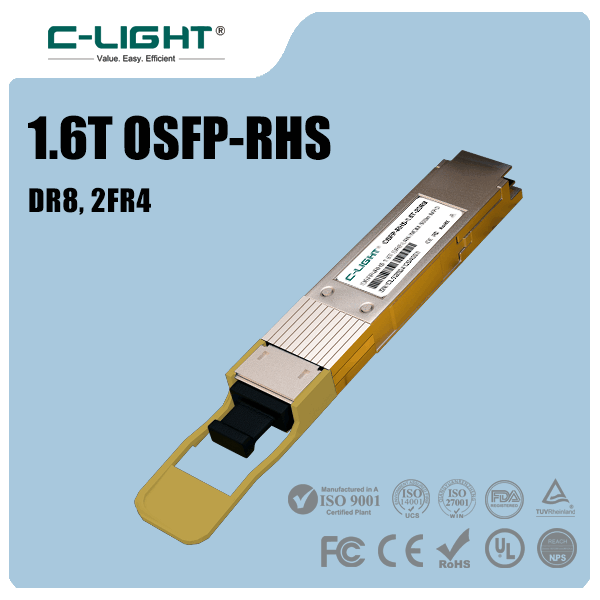
As 5G networks mature and operators begin planning for 5G-Advanced and eventual 6G deployments, the demands on optical modules will only intensify. Higher frequency bands, denser cell deployments, and emerging applications such as immersive extended reality and holographic communications will push bandwidth requirements toward 1.6T and beyond. The optical module industry must continue innovating in silicon photonics, co-packaged optics, and advanced modulation formats to meet these future challenges while simultaneously driving down cost per bit and power consumption.
In conclusion, 5G networks are not merely driving demand for optical modules—they are fundamentally reshaping the specifications and performance expectations of these critical components. The convergence of high bandwidth, low latency, and low power consumption requirements has created a new paradigm for optical module design and deployment. As global 5G coverage continues to expand and evolve, the symbiotic relationship between wireless access networks and optical transport infrastructure will remain central to delivering the connected experiences that define the 5G era.
 >
>

 >
>
 >
>
 >
>
 >
>
 >
>
 >
>
 >
>