TEL:+86 132 6656 7067




Air cooling has reached the end of its road. At rack densities of 6 to 15 kW, fans and chilled air were sufficient. At 100 kW, 140 kW, or even 250 kW per rack—the densities that NVIDIA's GB200 NVL72 and successors demand—air simply cannot carry away the heat. The industry's response has been liquid cooling, but liquid cooling is not one technology. It is two families of approaches, each with fundamentally different physics, economics, and operational characteristics: immersion cooling and direct liquid cooling.
The distinction matters enormously. Direct liquid cooling (DLC), also called direct-to-chip or cold plate cooling, pipes coolant through metal plates bolted to processors while the rest of the server remains air-cooled. Immersion cooling submerges entire servers in a tank of dielectric fluid, removing heat from every component simultaneously. On the spec sheet, immersion wins almost every column: lower PUE, higher rack density, full heat capture. Yet in the market, direct liquid cooling is winning the AI buildout by a wide margin. In 2026, liquid cooling has climbed toward 37 percent of deployments, and direct-to-chip accounts for approximately 70 percent of that liquid-cooled share.[reference:0]
This guide examines both technologies in depth—how they work, what they do better, where they fall short, and how to decide between them for AI data center deployments at 100 kW per rack and beyond.
1. How Direct Liquid Cooling Works
Direct liquid cooling places cold plates—metal blocks with internal fluid channels—directly on the hottest components: CPUs, GPUs, and increasingly memory modules. A coolant, typically water or a water-glycol mixture, is pumped through these plates, absorbing heat at the source. The heated coolant circulates out of the chassis to a coolant distribution unit (CDU), where it transfers heat to a secondary facility loop via a heat exchanger.[reference:1]
The liquid never contacts the electronics. It remains confined within sealed cold plates and tubing. The rest of the server—memory, voltage regulators, storage, networking—continues to rely on residual airflow. Cold plates capture approximately 75 to 80 percent of total server heat at the chip level; the remaining 20 to 25 percent dissipates through air.[reference:2][reference:3]
1.1 The CDU: Heart of the DLC System
The coolant distribution unit is the central component of any DLC deployment. It regulates coolant flow rate and temperature, monitors for leaks, and transfers heat from the secondary (server-side) loop to the primary (facility-side) loop. Modern CDUs scale from rack-level units of 100 kW to row-level and room-level systems of multiple megawatts.[reference:4]
DLC systems operate with warm water inlet temperatures up to 45°C, which frequently eliminates the need for mechanical chillers entirely. Outlet temperatures of 50 to 60°C make waste heat directly usable for district heating.[reference:5]
1.2 Single-Phase DLC Performance
Current cold plate technology supports rack densities of 60 to 200 kW. CoolIT Systems has demonstrated a 15 kW single-phase cold plate, roughly four times the performance of earlier designs, aimed at future GPUs with thermal design powers exceeding 2 kW.[reference:6][reference:7]
Experimental data shows that a 1.8 kW 2U server with a straight-fin cold plate maintains GPU temperatures well below 66°C at an optimal flow rate of 2 to 3 liters per minute, with a heat transfer coefficient of approximately 900 W/(m²·K). Higher flow rates increase the heat transfer coefficient to 1,200 W/(m²·K), but pressure drop rises sharply, underscoring the pumping power trade-off.[reference:8][reference:9]
2. How Immersion Cooling Works
Immersion cooling takes a fundamentally different approach: instead of targeting specific components, it submerges entire servers in a tank of dielectric fluid—a liquid that does not conduct electricity. Every heat-generating surface, from the largest GPU to the smallest voltage regulator, is in direct contact with the coolant. Heat capture approaches 100 percent.[reference:10]
There are two immersion architectures, differing in whether the fluid changes phase during operation.
2.1 Single-Phase Immersion
In single-phase immersion, servers are placed horizontally in a tank filled with a dielectric fluid—typically a hydrocarbon, synthetic oil, or fluorochemical. The fluid absorbs heat through convection, rises as it warms, and is pumped to a heat exchanger where it is cooled and recirculated. The fluid never boils; it remains liquid throughout the cycle.[reference:11]
Single-phase immersion commonly reports PUE in the 1.03 to 1.10 band. It uses cheaper coolants and simpler tanks than two-phase immersion but performs less effectively at the chip level, with an intermediate heat transfer capability that can cool processors consuming up to approximately 500 watts.[reference:12][reference:13][reference:14]
2.2 Two-Phase Immersion
Two-phase immersion uses a dielectric fluid with a low boiling point—typically a fluorochemical. Heat from the components causes the fluid to boil, creating vapor that rises to the top of the tank, where it condenses on a cooling coil and drips back down. This exploits the latent heat of vaporization, providing tighter thermal control and higher heat transfer coefficients than single-phase systems.[reference:15]
Two-phase immersion pushes PUE toward 1.02 and supports racks approaching 900 kW. However, it faces a significant regulatory challenge: the PFAS fluids it depends on are subject to strict restriction proposals in the European Union and the United States.[reference:16][reference:17]
3. Head-to-Head Comparison
The following table summarizes the key differences across the dimensions that matter most for AI data center design.
| Dimension | Direct Liquid Cooling (Cold Plate) | Single-Phase Immersion | Two-Phase Immersion |
|---|---|---|---|
| Heat Capture | 75–80% at chip level | ~100% | ~100% |
| Typical PUE | 1.15–1.30 | 1.03–1.10 | ~1.02 |
| Max Rack Density | 60–200 kW (15 kW per cold plate demonstrated) | Up to 250 kW+ | Up to 900 kW potential |
| Coolant | Water / water-glycol | Hydrocarbon, synthetic oil, fluorochemical | Fluorochemical (PFAS) |
| Server Modification | Cold plates added; standard form factor | Specialized tank; server may need modification | Specialized sealed tank; server must be compatible |
| Serviceability | Familiar; standard rack access | Requires tank opening; downtime for maintenance | Complex; vapor management, fluid filtration |
| Warranty Status | OEM-supported for major GPU platforms | Requires immersion-certified servers and fluids | Limited OEM support; specialized vendors |
| Regulatory Risk | Low | Low | High (PFAS restriction proposals) |
| CapEx per kW | $1,000–$2,500 | $3,000–$5,000 above DLC | Higher than single-phase |
| Deployment Speed | Fast; drops into existing racks | Slow; requires infrastructure redesign | Slowest; complex tank systems |
4. Why Direct Liquid Cooling Is Winning
The gap between immersion's spec-sheet advantage and its market position is explained by factors that datasheets do not capture: compatibility, serviceability, warranty support, and deployment speed.
4.1 Compatibility with Existing Infrastructure
Cold plate cooling drops into a more or less conventional server and a more or less conventional rack. Major GPU platforms, including NVIDIA's reference designs, ship with direct-to-chip cooling ready to go. Data center teams do not need to undergo extensive retraining, and maintenance procedures remain familiar. This compatibility is decisive at hyperscale, where the AI buildout is moving too fast to wait on an architecture that requires redesigning the entire data hall.[reference:18][reference:19]
4.2 Warranty and Serviceability
Most enterprise server warranties and OEM support contracts are written around air-cooled or direct-to-chip operation. Submerging a server in dielectric fluid can void the warranty or place it outside supported operational specifications. Operators must either purchase immersion-specific servers or accept the warranty risk. DLC avoids this problem entirely: cold-plate-ready servers are available from all major OEMs with full warranty coverage.[reference:20]
Serviceability follows the same pattern. A cold plate in a rack can be serviced with standard procedures. An immersion tank must be opened, the server removed, fluid drained or managed, and the tank resealed—a process that often requires downtime and specialized training.[reference:21]
4.3 Deployment Velocity
The AI buildout is a race. Every month of delay is compute capacity not delivered. DLC can be deployed incrementally: start with a few racks, expand as needed. Immersion requires a commitment to tank infrastructure, fluid management systems, and facility redesign before the first server can be submerged. For operators under pressure to deliver capacity, this velocity advantage is often the deciding factor.
5. Where Immersion Cooling Wins
Immersion is not without its advantages. In specific scenarios, its technical superiority translates directly into operational and economic benefits.
5.1 Extreme Density Beyond DLC's Reach
Direct liquid cooling struggles above approximately 100 kW per rack. At 200 kW and above, the residual air cooling required for memory, storage, and networking becomes increasingly difficult to manage. Immersion cooling has no such limitation: because every component is submerged, rack density is limited only by the tank's thermal capacity. Two-phase immersion has been demonstrated at densities approaching 900 kW.[reference:22][reference:23]
The practical threshold is clear: below 100 kW per rack, DLC is almost always the right choice. Above 200 kW, immersion becomes compelling. Between 100 and 200 kW, the decision depends on site-specific factors including power availability, cooling infrastructure, and operational maturity.[reference:24]
5.2 Full Heat Capture and Energy Efficiency
Immersion cooling captures essentially 100 percent of server heat, compared to 75 to 80 percent for cold plates. This translates directly into lower PUE: immersion achieves 1.02 to 1.10, while DLC typically lands between 1.15 and 1.30. For a 10 MW facility, the difference in annual energy consumption can be substantial.[reference:25][reference:26]
In China, comparative testing has shown that traditional air cooling requires 0.3 to 0.5 kWh of additional energy per kWh of compute for heat removal, while full immersion cooling reduces this to approximately 0.15 kWh—a reduction of 50 to 70 percent in cooling overhead.[reference:27]
5.3 Eliminating Server Fans
Immersion cooling eliminates the need for server fans entirely. This removes a significant source of power consumption, noise, and mechanical failure. Fan power scales with the cube of fan speed, so eliminating fans also eliminates a non-linear power consumer that becomes increasingly wasteful at high densities.[reference:28]
5.4 Simplified Server Design
Because immersion removes the need for airflow management, server designs can be simplified. Heatsinks, fan assemblies, and airflow baffles can be eliminated. This can reduce server cost, weight, and complexity—though these savings are offset by the need for immersion-compatible components and fluid management systems.[reference:29]
6. The PFAS Problem for Two-Phase Immersion
Two-phase immersion cooling's reliance on PFAS fluids represents the single largest regulatory risk in the liquid cooling landscape. PFAS—per- and polyfluoroalkyl substances—are a broad class of chemicals known as "forever chemicals" due to their environmental persistence. The European Chemicals Agency has evaluated restriction proposals that would significantly impact PFAS use in data center cooling, with some stakeholders arguing that no alternatives currently exist for large-scale two-phase deployments.[reference:30]
The regulatory pressure is already affecting technology decisions. Intel has acknowledged the PFAS issue, and vendors are racing to develop PFAS-free two-phase solutions. Until the regulatory situation clarifies, two-phase immersion carries an inherent policy risk that single-phase immersion and direct liquid cooling do not share.[reference:31]
Single-phase immersion avoids this risk. Its fluids—hydrocarbons, synthetic oils, and certain fluorochemicals that are not classified as PFAS—are not subject to the same restriction proposals. This makes single-phase immersion the lower-risk immersion option for operators concerned about long-term regulatory exposure.[reference:32]
7. Cost and Total Cost of Ownership
The economics of liquid cooling are more complex than per-unit capital costs. Total cost of ownership includes capital expenditure, energy consumption, maintenance, and the opportunity cost of deployment velocity.
7.1 Capital Expenditure
Direct liquid cooling capital costs run approximately $1,000 to $2,500 per kW cooled. This includes the CDU, cold plates, secondary loop, and integration with existing cooling infrastructure. Immersion cooling upfront costs run $3,000 to $5,000 per kW above DLC, with dielectric fluid adding $3 to $35 per liter depending on type. The tank infrastructure itself—sealed enclosure, integrated heat exchanger, filtration, leak detection, and fluid level sensors—represents a significant capital outlay that DLC does not require.[reference:33]
7.2 Total Cost of Ownership
IDTechEx's comparative analysis of 10-year TCO across four regions reveals that direct-to-chip cooling has, on average, a 13 percent lower TCO than single-phase immersion and 9.4 percent lower than two-phase immersion. This finding is driven by DLC's lower capital costs, faster deployment, and compatibility with existing infrastructure—despite immersion's lower energy consumption over the same period.[reference:34]
However, TCO comparisons are sensitive to assumptions. Facilities with expensive power may find immersion's energy savings offset its higher capital costs. Facilities with limited power capacity may find immersion's density advantage enables compute that DLC cannot support at all. And facilities facing PFAS regulatory risk may assign a higher cost to two-phase immersion than the TCO analysis suggests.
7.3 Operational Expenditure
Immersion cooling can reduce annual operating costs by 40 to 55 percent compared to DLC, primarily through lower energy consumption for cooling. One 10 MW TCO study found that immersion cooling cut 10-year total costs by approximately 39 percent compared to air cooling, with 30 to 40 percent savings in annual OPEX alone.[reference:35][reference:36]
These savings are real, but they accrue over time. For operators with high capital costs and short deployment windows, the upfront premium of immersion can outweigh the long-term operational savings.
8. Deployment Scenarios: Which Technology for Which Job
The choice between immersion and direct liquid cooling depends on the specific requirements of the deployment. The following table maps common scenarios to recommended approaches.
| Scenario | Recommended Approach | Rationale |
|---|---|---|
| New AI cluster, 60–100 kW per rack | Direct liquid cooling | Within DLC's optimal range; fast deployment; OEM-supported |
| New AI cluster, 150–250 kW per rack | Single-phase immersion or DLC with enhanced airflow | DLC approaching limits; immersion offers headroom |
| Rack density above 250 kW | Two-phase immersion | Only technology capable of cooling at these densities |
| Retrofit of existing air-cooled facility | Direct liquid cooling | Drops into existing racks with minimal redesign |
| Greenfield facility optimized for efficiency | Single-phase immersion | Lowest PUE without PFAS regulatory risk |
| PFAS-sensitive jurisdiction | DLC or single-phase immersion | Avoids two-phase PFAS fluids entirely |
| Cryptocurrency mining | Single-phase immersion | Proven in this application; cost-effective at scale |
| Edge computing | Direct liquid cooling | Compact form factor; minimal infrastructure |
9. The Fluid Question: Water vs Dielectric
The choice of coolant differs fundamentally between the two approaches, and this difference has implications for performance, safety, and operational complexity.
9.1 Water-Based Coolants for DLC
Direct liquid cooling uses water or water-glycol mixtures. Water has excellent thermal properties: high specific heat capacity and high thermal conductivity. It is inexpensive, widely available, and well-understood. The challenge is that water conducts electricity, so it must be carefully contained within sealed cold plates and tubing. Any leak poses a risk to electronics.[reference:37]
DLC systems manage this risk through leak detection, redundant seals, and careful mechanical design. In practice, well-designed DLC systems have demonstrated high reliability, and the risk of catastrophic leaks is low. However, the risk is not zero, and it is a consideration for risk-sensitive operators.
9.2 Dielectric Fluids for Immersion
Immersion cooling uses dielectric fluids—liquids that do not conduct electricity and can safely contact live electronics. These fluids fall into several categories:
Hydrocarbons and synthetic oils: Used in single-phase immersion. Lower cost, chemically stable, but lower specific heat than water and potentially flammable at high temperatures.[reference:38]
Fluorochemicals: Used in two-phase immersion and some single-phase systems. Excellent dielectric properties and low boiling points, but higher cost—up to 10 times as much as single-phase dielectric fluids, often more than $50 per liter—and subject to PFAS regulatory scrutiny.[reference:39]
Bio-based fluids: Emerging as a sustainable alternative, with suppliers including Cargill developing biobased liquids for immersion cooling.[reference:40]
Dielectric fluids have lower heat transfer coefficients than water, particularly in single-phase systems. This is a fundamental limitation: dielectric fluids are designed to be electrically insulating, and that property comes at the cost of thermal performance. Two-phase systems compensate through the latent heat of vaporization, achieving higher effective heat transfer than single-phase dielectric systems.[reference:41]
10. Optical Connectivity in Liquid-Cooled Environments
Liquid cooling introduces new considerations for optical transceivers and interconnect. In immersion-cooled systems, transceivers are submerged in dielectric fluid; in DLC systems, they may be exposed to elevated temperatures and require careful thermal management.
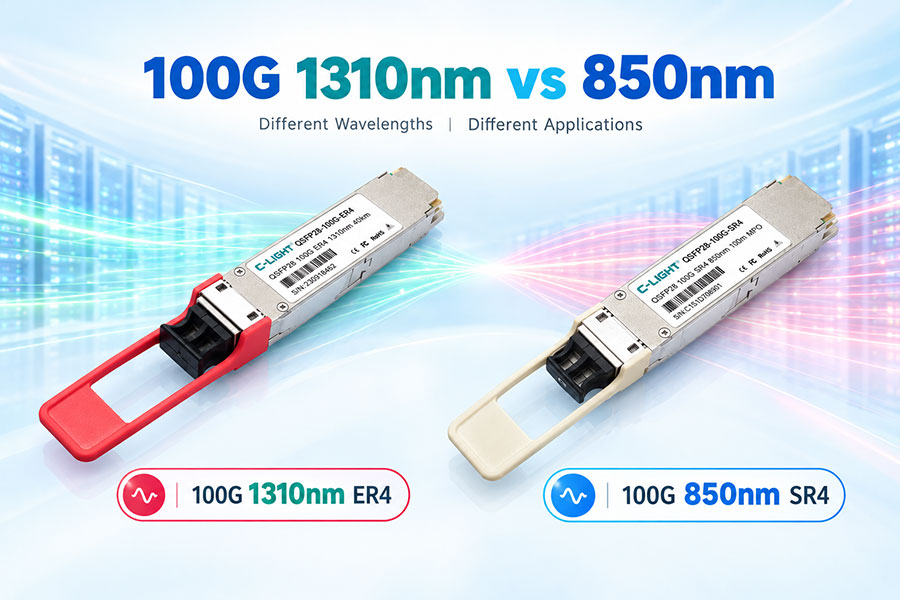
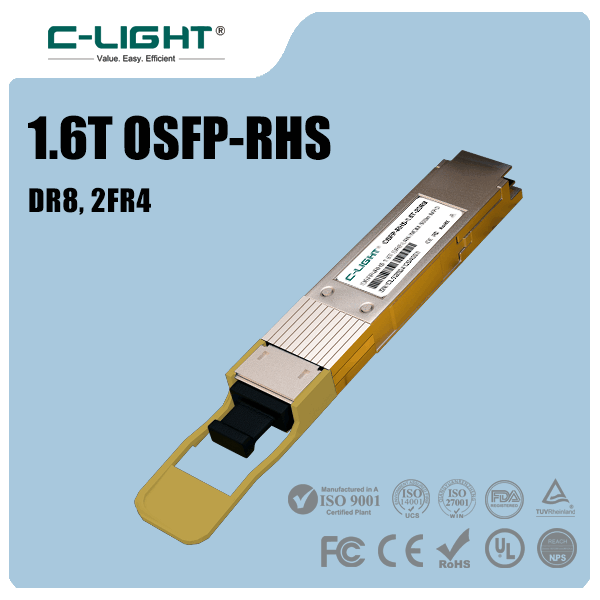
C-LIGHT has developed a portfolio of liquid immersion optical transceivers specifically for liquid-cooled computing environments. The product line includes 100G QSFP28, 400G, and 800G modules designed for immersion cooling deployments, with interfaces including MPO and LC connectors. These modules are engineered to operate reliably when submerged in dielectric fluid, addressing the unique thermal and chemical compatibility requirements of immersion-cooled AI data centers.[reference:42]
The availability of immersion-compatible optical modules removes one of the practical barriers to immersion deployment. As immersion cooling expands beyond niche applications, the ecosystem of compatible components—transceivers, cables, and connectors—will continue to grow.
11. Emerging Trends and Future Directions
The liquid cooling landscape is evolving rapidly, driven by AI compute demands and regulatory pressures.
11.1 DLC Pushing Its Limits
Cold plate technology continues to advance. CoolIT's 15 kW cold plate demonstration suggests that single-phase DLC can scale beyond the 2 kW per chip threshold that some analysts identified as its upper limit. NVIDIA has highlighted single-phase DLC with 45°C supply temperature as part of its next-generation AI platform roadmap, confirming that warm-water cold plate cooling will remain relevant through the next GPU generations.[reference:43][reference:44]
11.2 Immersion Ecosystem Maturing
Intel has launched a Data Center Certified Solution for Immersion Cooling, certifying specific tank designs and fluid formulations for use with its Xeon processors. This certification program, which includes a warranty rider for immersion-cooled Xeon processors, addresses one of the major barriers to immersion adoption: the fear that submerging servers will void warranties. Similar programs from other OEMs are expected to follow.[reference:45][reference:46]
11.3 Hybrid Approaches
Some deployments are combining DLC and immersion principles. Rear-door heat exchangers (RDHx) intercept hot exhaust air at the rack boundary, capturing residual heat from components not covered by cold plates. Hybrid systems that use cold plates for the hottest components and immersion or RDHx for the remainder are being explored as a way to capture more heat without the full commitment of tank-based immersion.[reference:47]
11.4 PFAS-Free Two-Phase Fluids
Vendors are racing to develop PFAS-free two-phase cooling fluids. ZutaCore has announced plans to eliminate PFAS from its two-phase solutions. If successful, these efforts would remove the primary regulatory barrier to two-phase immersion adoption. Until then, PFAS risk remains a consideration for any two-phase deployment.[reference:48]
11.5 On-Chip and Microfluidic Cooling
Longer-term, microfluidic cooling—integrating fluid channels directly into the silicon package—could bypass both DLC and immersion by removing heat at the source with unprecedented efficiency. This technology remains in research, but it represents the logical endpoint of the trend toward bringing cooling closer to the heat source.[reference:49]
12. Decision Framework
Choosing between immersion and direct liquid cooling requires evaluating both the technical requirements of the deployment and the operational constraints of the organization. The following checklist organizes the evaluation.
| Evaluation Factor | What to Assess |
|---|---|
| Rack Density | Below 100 kW: DLC. Above 200 kW: immersion. Between: evaluate both |
| Facility Readiness | Existing racks and power distribution favor DLC; greenfield favors immersion |
| Deployment Timeline | Aggressive timelines favor DLC; longer horizons allow immersion |
| Warranty Coverage | OEM-supported cold plate servers available; immersion requires certified servers |
| Operational Expertise | DLC leverages existing maintenance skills; immersion requires retraining |
| Regulatory Exposure | Two-phase immersion faces PFAS risk; DLC and single-phase are lower risk |
| Energy Cost | High energy costs favor immersion's lower PUE |
| Power Capacity | Limited power capacity may favor immersion's density advantage |
| Capital Budget | DLC has lower upfront costs; immersion has higher capital but lower OPEX |
| Scalability Path | DLC scales incrementally; immersion scales in tank-sized increments |
The decision is rarely binary. Many AI data centers will deploy DLC for the majority of racks, with immersion reserved for the highest-density clusters. The two technologies can coexist in the same facility, each serving the density range where it performs best.
13.Conclusion
Immersion cooling and direct liquid cooling represent two fundamentally different approaches to the same problem: removing heat from AI accelerators that generate more thermal energy per square centimeter than any previous computing technology. Direct liquid cooling targets the hottest components with cold plates, leaving the remainder of the server to air cooling. Immersion cooling submerges entire servers in dielectric fluid, capturing all heat uniformly.
On pure thermal performance, immersion wins: higher heat capture, lower PUE, greater density potential. In the market, direct liquid cooling wins: faster deployment, broader OEM support, simpler serviceability, and lower capital cost. The gap between the two reflects the difference between what is technically optimal and what is operationally practical at scale.
The choice depends on the deployment. For racks under 100 kW—which describes the majority of AI deployments today—DLC is almost always the right answer. For racks above 200 kW, immersion becomes compelling. Between those thresholds, the decision hinges on facility readiness, regulatory exposure, energy costs, and the operator's tolerance for operational complexity.
As AI accelerators push toward 2.3 kW per chip and racks toward 250 kW and beyond, the density frontier will continue to move. Direct liquid cooling is advancing to meet it, with 15 kW cold plates and warm-water designs. Immersion cooling stands ready for the densities that DLC cannot reach. The future is likely to include both—DLC as the workhorse for mainstream AI racks, immersion as the specialist for the most extreme densities, and a growing ecosystem of compatible components, fluids, and certification programs to support each.
 >
>

 >
>
 >
>
 >
>
 >
>
 >
>
 >
>
 >
>