TEL:+86 132 6656 7067





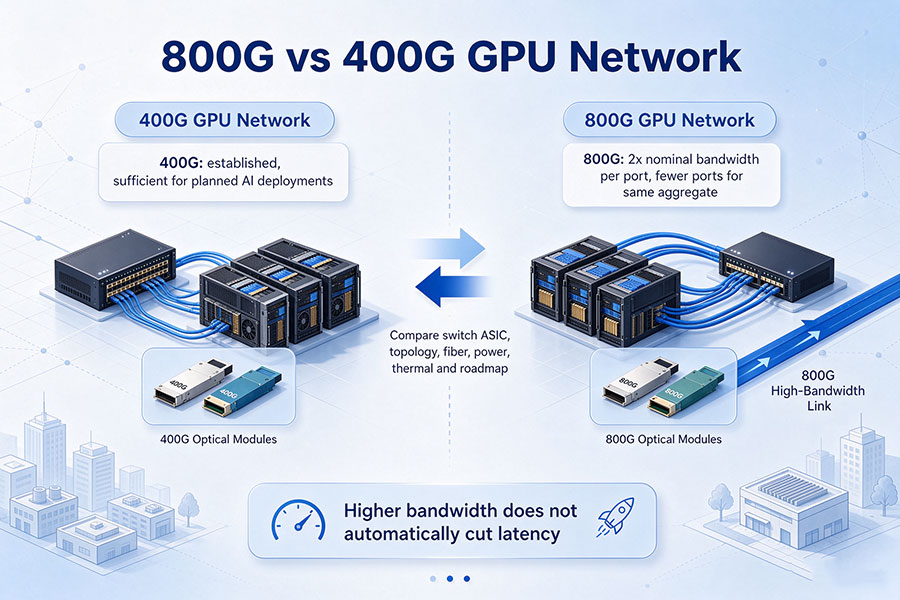
As artificial intelligence models become larger and GPU clusters expand, network bandwidth has become a critical factor in data center performance. Distributed AI training requires GPUs to exchange large volumes of data through high-speed interconnects. The network must provide sufficient throughput, low latency, and predictable performance to keep accelerators efficiently utilized.
400G and 800G GPU networks represent two important generations of high-speed data center connectivity. A 400G network can support demanding AI workloads and large GPU deployments, while an 800G network provides twice the nominal bandwidth per interface and creates more capacity for next-generation GPU clusters.
The difference is not limited to optical module speed. Switch capacity, port density, network topology, fiber infrastructure, power consumption, and expansion strategy all influence the choice between 400G and 800G GPU networking.
1. What Is a 400G GPU Network?
A 400G GPU network uses 400 Gbps Ethernet or another supported high-speed networking interface to connect GPU servers, network switches, storage systems, and other data center resources.
In AI infrastructure, 400G connectivity is commonly used in high-performance leaf-spine networks and GPU cluster fabrics. It provides substantial bandwidth for communication between servers and across network layers.
Typical 400G GPU network components include:
400G-capable leaf and spine switches.
GPU servers equipped with high-speed network adapters.
400G QSFP-DD or OSFP optical transceivers.
400G DAC and AOC cables for suitable short-distance connections.
Single-mode or multimode fiber infrastructure, depending on the optical interface.
A 400G network can be deployed using different optical interfaces, including DR4, FR4, and other application-specific configurations. The appropriate choice depends on transmission distance, fiber type, port architecture, and equipment compatibility.
For example, C-LIGHT offers 400G QSFP-DD optical transceivers and 400G OSFP optical transceivers for high-speed data center connectivity.
2. What Is an 800G GPU Network?
An 800G GPU network uses 800 Gbps interfaces to provide higher bandwidth between GPU servers and switching systems. It is designed for increasingly demanding AI infrastructure, where large GPU clusters generate substantial east-west traffic.
800G connectivity can increase the bandwidth available per physical port, helping network operators build higher-capacity switching fabrics without simply doubling the number of interfaces.
Common components include:
800G-capable Ethernet switches.
GPU servers and network adapters supporting the required interface architecture.
800G OSFP or QSFP-DD optical transceivers, depending on platform support.
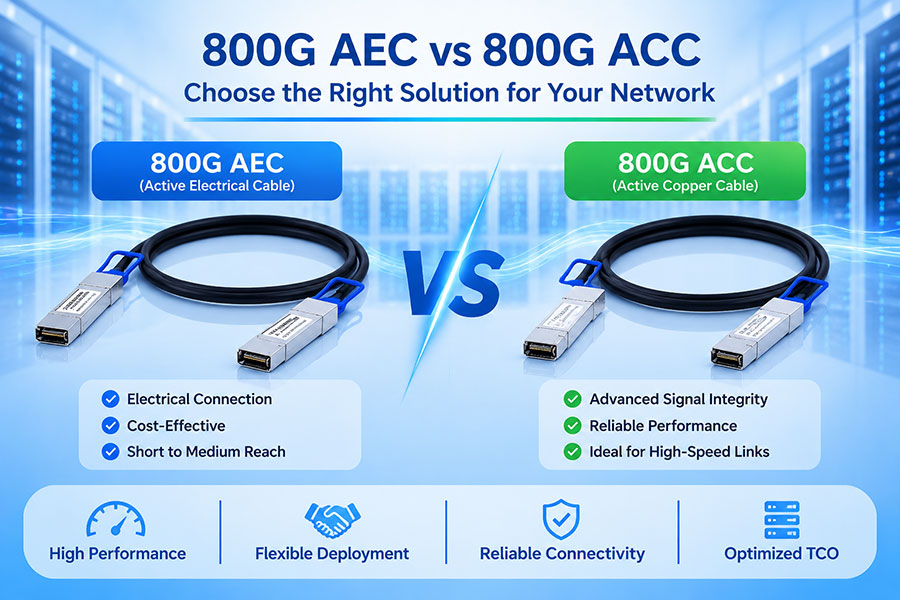
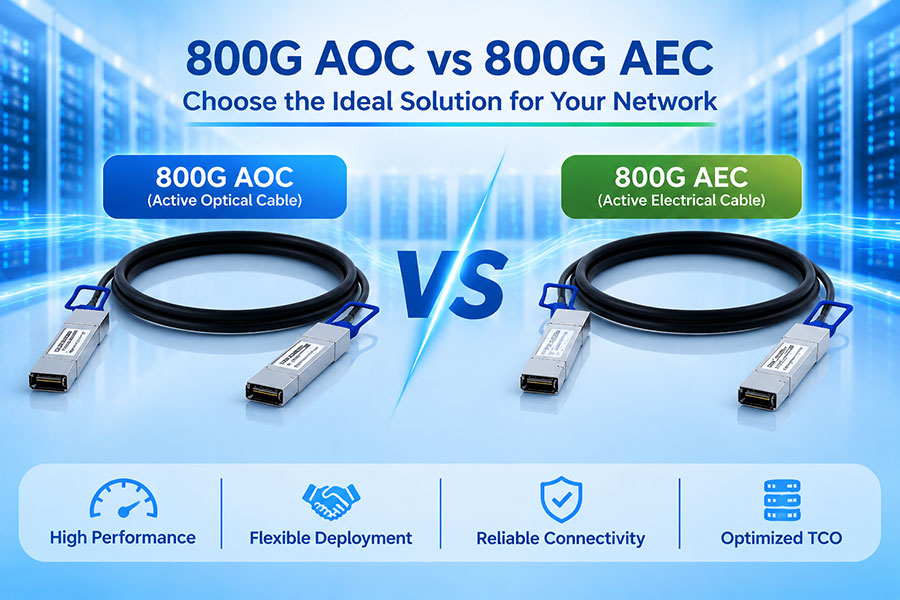
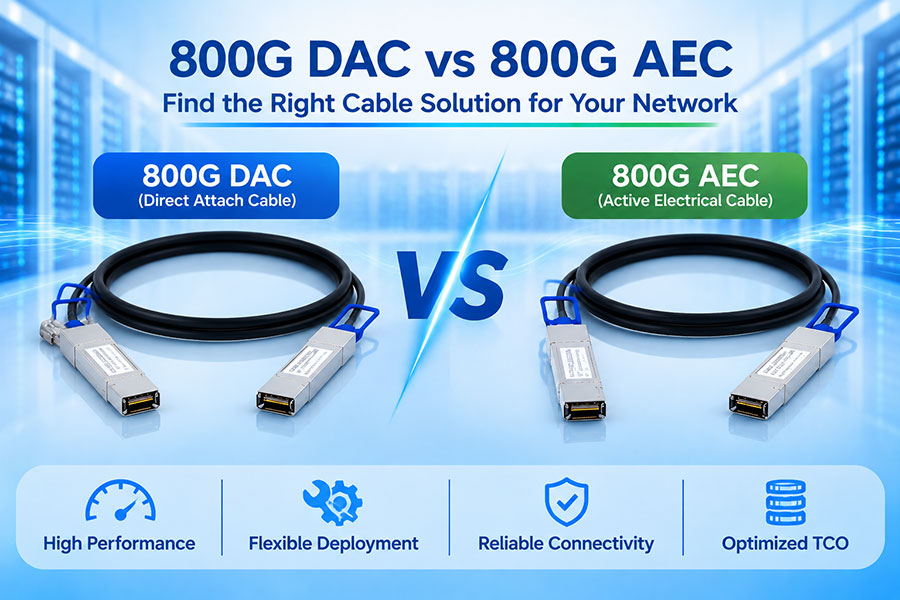
800G DAC, AOC, and other supported direct-attach or active cable solutions.
High-density fiber cabling and optical distribution infrastructure.
Common 800G optical interface options include SR8, DR8, and FR4 implementations. Each has different reach, fiber, connector, and lane requirements.
C-LIGHT provides 800G QSFP-DD and 800G OSFP optical transceiver solutions for high-bandwidth data center applications.
3. 400G vs 800G GPU Network: Key Differences
| Comparison | 400G GPU Network | 800G GPU Network |
|---|---|---|
| Nominal bandwidth per interface | 400 Gbps | 800 Gbps |
| Relative port bandwidth | Baseline | 2× 400G |
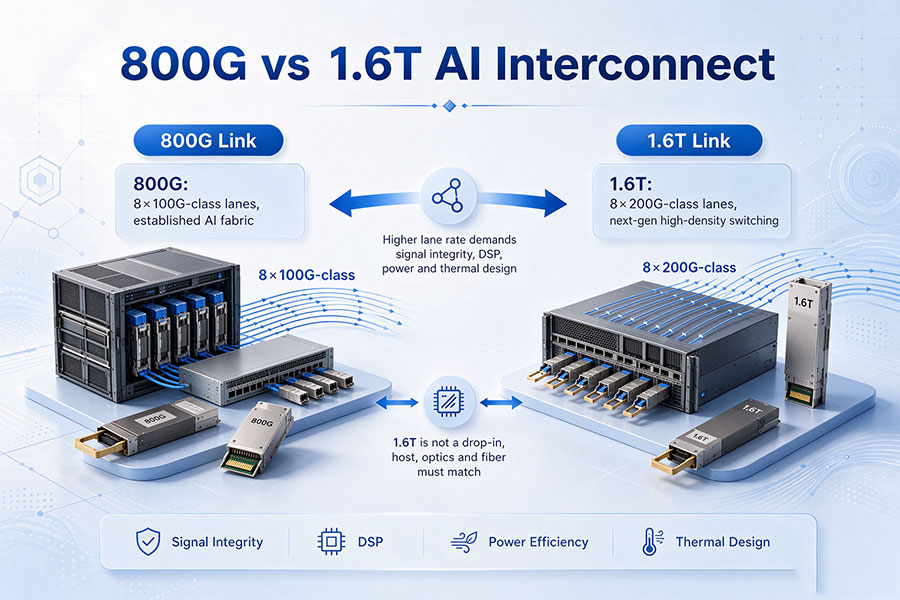
| Common electrical lane architecture | 4 × 100G-class or 8 × 50G-class, depending on implementation | 8 × 100G-class in common implementations |
| Optical module platforms | QSFP-DD, OSFP | QSFP-DD, OSFP |
| Common optical interfaces | DR4, FR4, SR4-class and other implementations | DR8, FR4, SR8 and other implementations |
| Network capacity per port | 400 Gbps | 800 Gbps |
| Port density potential | Requires more ports for a given aggregate bandwidth | Can deliver the same nominal bandwidth with fewer ports |
| Power and thermal requirements | High-speed optical cooling requirements | Higher bandwidth per port with demanding thermal design |
| Deployment role | Established high-performance AI networking | Higher-capacity AI network expansion |
The lane configurations shown are representative examples, not universal rules. Actual electrical and optical lane counts depend on the interface standard, transceiver design, and host platform.
4. Bandwidth and GPU Communication Performance
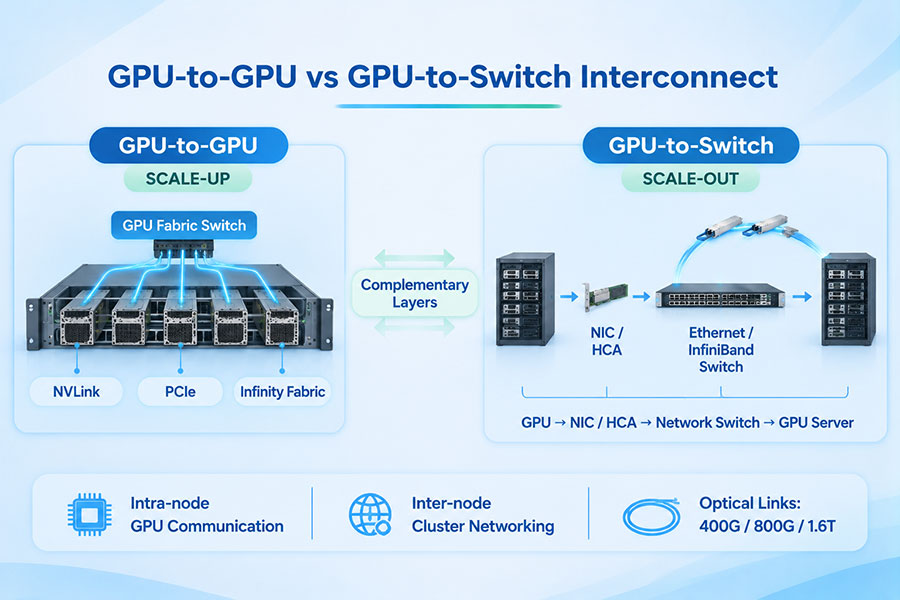
Bandwidth determines how much data can be transferred through a network interface over a given period. In distributed AI training, GPUs frequently exchange gradients, parameters, activations, and other data across multiple servers.
A 400G interface provides a nominal bandwidth of 400 Gbps, while an 800G interface provides 800 Gbps. This doubles the theoretical link capacity per port.
| Bandwidth Target | 400G Interfaces Required | 800G Interfaces Required |
|---|---|---|
| 3.2 Tbps | 8 | 4 |
| 6.4 Tbps | 16 | 8 |
| 12.8 Tbps | 32 | 16 |
| 25.6 Tbps | 64 | 32 |
| 51.2 Tbps | 128 | 64 |
This is a theoretical comparison based on nominal port bandwidth. Actual network throughput depends on traffic patterns, protocol overhead, link utilization, switch capacity, congestion, and oversubscription.
4.1 Impact on Distributed AI Training
Large AI training jobs distribute workloads across many GPUs. These GPUs need to exchange information frequently, and network performance can affect overall training efficiency.
A 400G network may provide sufficient capacity for many deployments, especially when the number of GPU servers and traffic requirements are carefully planned.
An 800G network can provide more bandwidth per uplink or server connection when supported by the complete platform. This can help accommodate larger clusters, higher traffic volumes, and more demanding communication patterns.
4.2 Bandwidth Does Not Automatically Mean Lower Latency
Moving from 400G to 800G doubles nominal interface bandwidth, but it does not automatically halve network latency. Latency also depends on switch architecture, packet processing, congestion, cable length, protocol configuration, and the performance of network adapters.
For latency-sensitive AI workloads, network designers should evaluate throughput and latency together rather than treating port speed as the only performance indicator.
5. Switch Architecture and Port Density
Switching capacity is a major consideration when building GPU networks. A switch with higher aggregate capacity can connect more high-speed ports or support greater bandwidth across its switching fabric.
For the same nominal bandwidth target, 800G interfaces can reduce the number of physical ports required compared with 400G interfaces. This can simplify port allocation and create opportunities for higher-density network designs.
For example, a 51.2 Tbps aggregate connection target would require 128 × 400G interfaces or 64 × 800G interfaces in a simplified port-count comparison.
However, port count alone does not determine the total network architecture. Designers must also consider switch ASIC capacity, available port configurations, uplink ratios, redundancy, and the required number of connections between network layers.
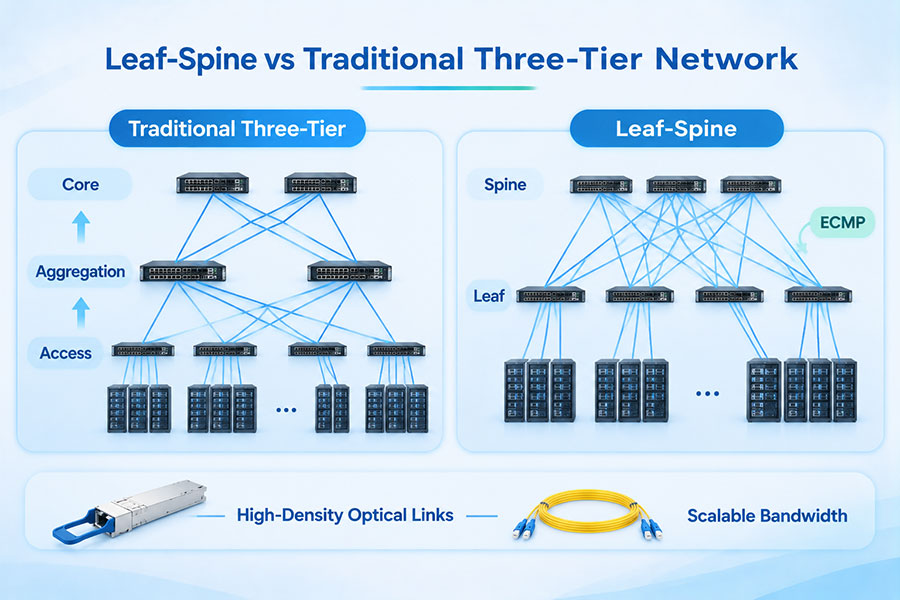
5.1 Leaf-Spine Network Design
Leaf-spine architecture is widely used in data centers because it provides predictable connectivity and supports horizontal scaling. GPU servers connect to leaf switches, while spine switches provide paths between leaf layers.
In a 400G GPU network, 400G interfaces may be used for server connections, leaf-to-spine uplinks, or both, depending on the network design.
In an 800G GPU network, higher-speed interfaces can increase uplink capacity and reduce the number of ports needed for a given aggregate bandwidth target. This can be useful in large-scale AI fabrics where east-west traffic is substantial.
6. Optical Transceivers and Connectivity Options
Optical transceivers are essential for connecting GPU servers and switches over distances that exceed the practical reach of direct electrical connections. The choice of optical module depends on link distance, fiber infrastructure, interface standard, and host compatibility.
| Connectivity Type | 400G Applications | 800G Applications |
|---|---|---|
| DAC | Short connections within racks or adjacent equipment | Short connections where supported by the host platform |
| AOC | Active optical connections for suitable short-reach links | Higher-bandwidth active optical connections |
| SR-class optics | Short-reach multimode fiber links | Short-reach multimode fiber links using compatible lane configurations |
| DR-class optics | Single-mode parallel optical connections | Higher-capacity single-mode parallel optical connections |
| FR-class optics | Single-mode wavelength-multiplexed links | Higher-bandwidth single-mode wavelength-multiplexed links |
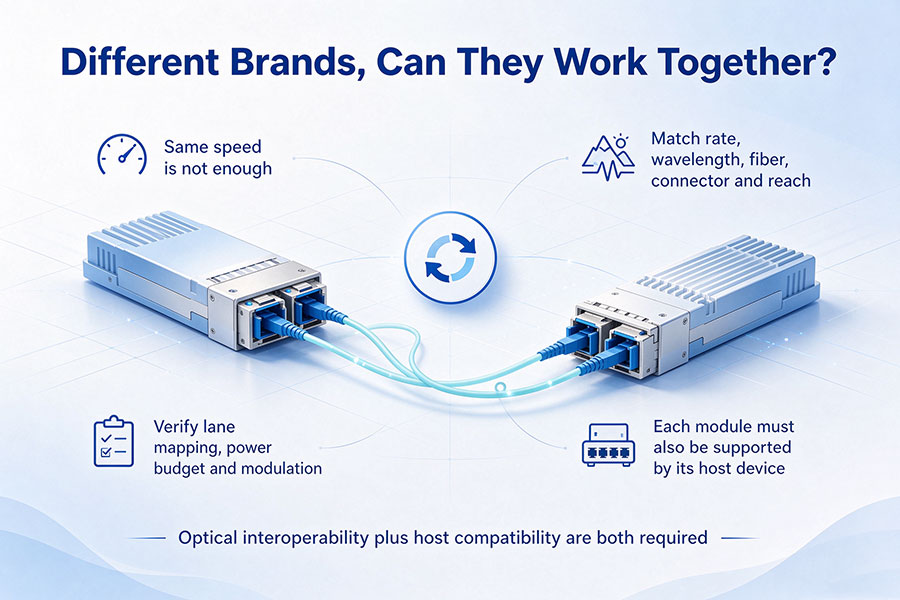
Different optical interfaces are not interchangeable simply because they have the same nominal data rate. Fiber type, wavelength arrangement, lane mapping, connector configuration, and reach must all be verified.
6.1 400G Optical Connectivity
400G optical transceivers are available in QSFP-DD and OSFP form factors. Common optical interfaces include DR4 and FR4, while other variants address different distances and fiber configurations.
For example, 400G DR4 uses parallel single-mode optical lanes, while 400G FR4 uses wavelength multiplexing over a duplex single-mode fiber connection. These interfaces serve different link designs and should not be treated as interchangeable.
See C-LIGHT's 400G QSFP-DD transceivers for examples of high-speed optical connectivity options.
6.2 800G Optical Connectivity
800G optical modules provide higher aggregate bandwidth and are available in platforms such as OSFP and QSFP-DD. Common optical implementations include DR8, FR4, and SR8, depending on the application and product design.
800G DR8 uses parallel single-mode optical lanes, while 800G FR4 uses wavelength multiplexing for duplex-fiber connectivity. The appropriate module depends on reach, fiber availability, and host switch support.
See C-LIGHT's 800G QSFP-DD and 800G OSFP product solutions.
7. Power Consumption and Cooling Requirements
Power consumption is an important factor in AI data center network design. High-speed optical modules, switch ASICs, network adapters, and cooling systems all contribute to the total energy demand.
An 800G module does not necessarily consume twice as much power as a 400G module. Actual power consumption depends on the optical architecture, DSP implementation, laser technology, reach, and module design.
When comparing 400G and 800G networks, operators should evaluate:
Optical module power consumption.
Power efficiency per transmitted bit.
Switch ASIC power and cooling requirements.
Rack-level power density.
Airflow and thermal management around high-density ports.
Total network energy consumption under real traffic conditions.
Although 800G can reduce the number of ports required for a given nominal bandwidth target, the complete system-level power benefit depends on the switch and optical module implementations.
8. When Should You Choose a 400G GPU Network?
A 400G GPU network remains a practical solution for many AI data centers. It provides substantial bandwidth and can support large-scale distributed computing when the network topology and oversubscription ratios are properly designed.
400G may be suitable when:
The existing switch infrastructure supports 400G interfaces.
The GPU cluster does not require 800G connectivity per link.
Network expansion can be achieved with the available port density.
400G optical modules and fiber infrastructure meet the required reach.
The organization wants to expand AI capacity without replacing the entire network platform.
For organizations with existing 400G switching infrastructure, retaining compatible 400G links can be more economical than upgrading every network connection at once.
9. When Should You Choose an 800G GPU Network?
An 800G GPU network is more relevant when the AI infrastructure requires greater bandwidth per connection and the switching platform supports the required interface architecture.
800G may be suitable when:
Building new high-density GPU clusters.
Deploying next-generation switches with 800G-capable ports.
Increasing leaf-to-spine bandwidth in large AI fabrics.
Reducing the number of physical ports for a given aggregate bandwidth target.
Preparing network infrastructure for future AI workload growth.
However, adopting 800G requires more than purchasing 800G optical transceivers. Switch ASICs, network adapters, host interfaces, fiber infrastructure, and cooling systems must all support the intended configuration.
10. Migration from 400G to 800G GPU Networking
Moving from 400G to 800G is a system-level upgrade. A 400G switch port cannot become an 800G port simply by installing an 800G optical module.
A migration plan should evaluate the following components:
Switch platform: Confirm that the switch ASIC and physical ports support 800G operation.
Network adapters: Verify that GPU servers and NICs support the required link speed and interface configuration.
Optical transceivers: Select compatible 800G modules with the required form factor, optical interface, and reach.
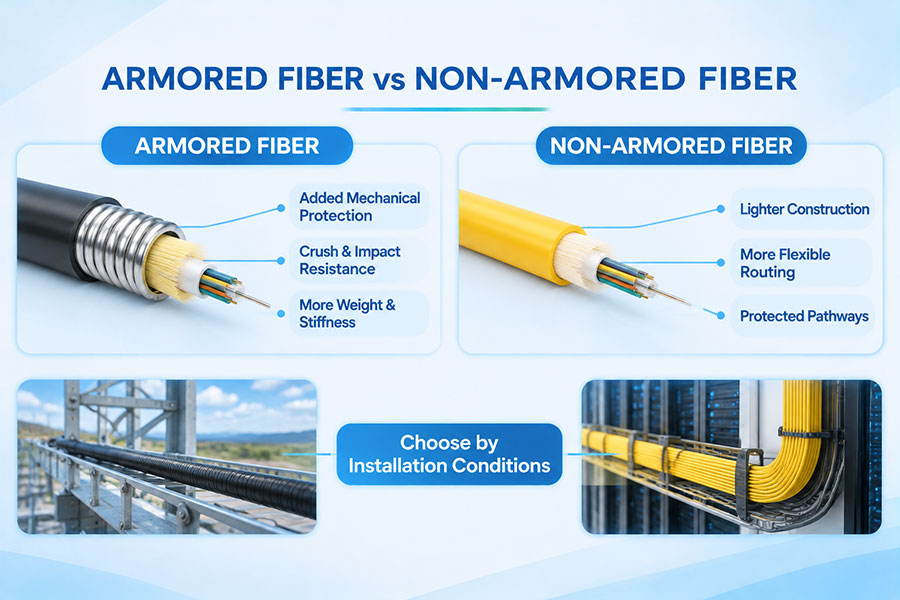
Fiber infrastructure: Check fiber type, connector configuration, polarity, and optical link budget.
Cabling: Evaluate DAC, AOC, and fiber cabling according to connection distance and application requirements.
Switching architecture: Review port allocation, oversubscription, redundancy, and leaf-spine capacity.
Power and cooling: Confirm that the equipment can operate within its thermal and power limits.
Validation: Test link establishment, optical power, error rates, and network performance before full deployment.
Many data centers may operate 400G and 800G equipment simultaneously during a phased migration. Mixed-speed networks can be designed using compatible switch interfaces and supported link configurations, but the two ends of an individual optical link must still implement compatible optical interfaces.
11. The Future of GPU Network Connectivity
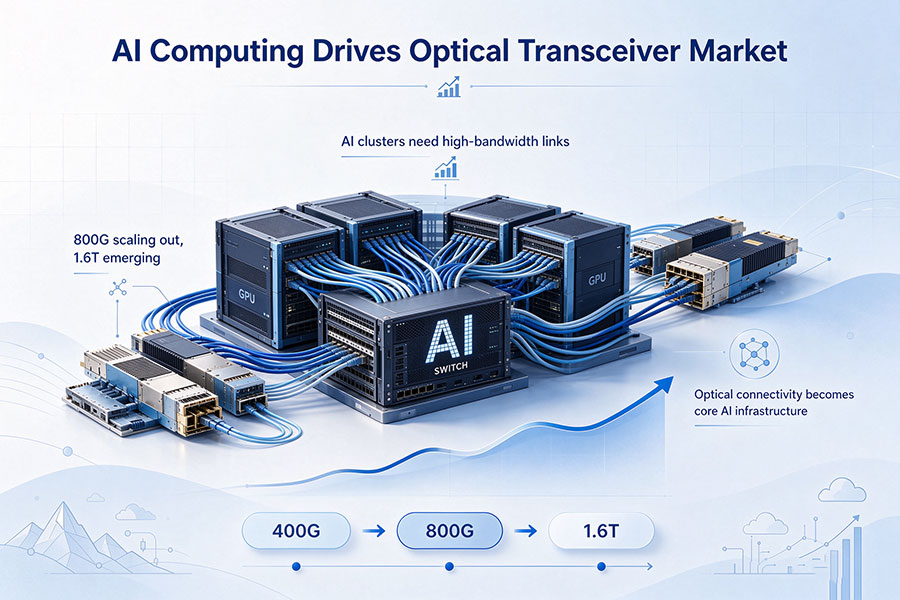
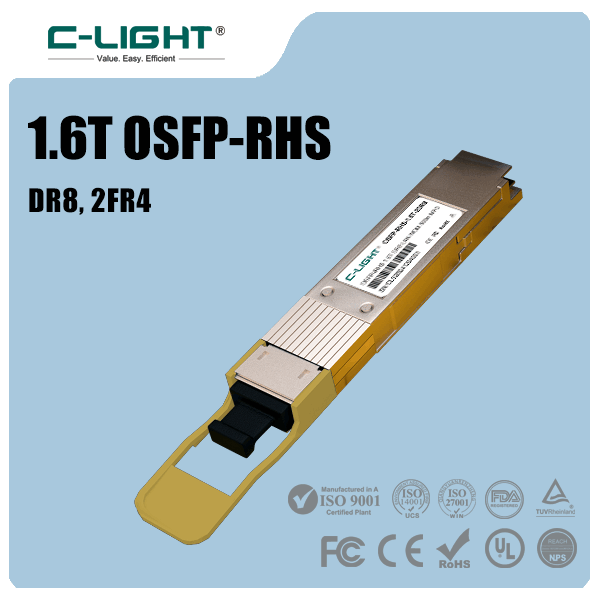
As AI models and GPU clusters continue to grow, network infrastructure will need to scale alongside compute performance. 400G and 800G are important stages in this evolution, while 1.6T interfaces are emerging as another step toward higher-capacity switching platforms.
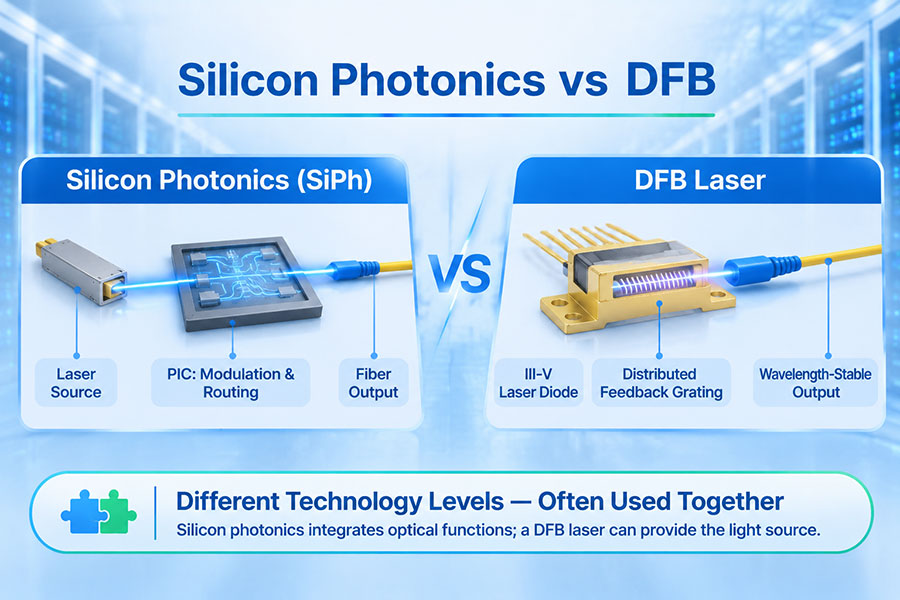
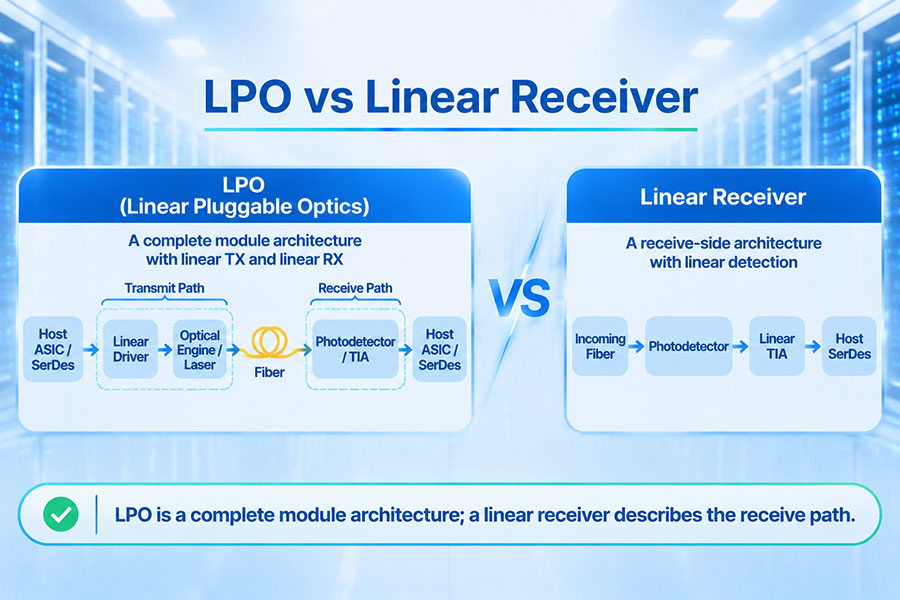
Future AI networks will increasingly depend on higher-speed SerDes, advanced optical engines, efficient DSP architectures, and improved fiber connectivity. Technologies such as silicon photonics, Linear Pluggable Optics (LPO), Linear Receive Optics (LRO), Near-Packaged Optics (NPO), and Co-Packaged Optics (CPO) are being developed to address different system-level requirements.
These technologies have different trade-offs in power, reach, integration, serviceability, and signal integrity. Their adoption will depend on the needs of each network architecture rather than a single universal solution.
For AI data center operators, the long-term objective is to build a network that balances bandwidth, latency, power efficiency, and scalability while keeping pace with GPU performance improvements.
12. Conclusion
400G and 800G GPU networks both support high-performance AI infrastructure, but they address different bandwidth and scaling requirements. A 400G network provides a strong foundation for many existing GPU clusters, while 800G doubles the nominal bandwidth per interface and offers greater capacity for larger and more demanding AI fabrics.
The right choice depends on GPU cluster size, network topology, switching capacity, optical connectivity, power budget, and future expansion plans. For existing infrastructure, a phased 400G-to-800G migration may be practical. For new large-scale AI deployments, 800G can provide a higher-bandwidth foundation when the complete platform is ready.
 >

 >
 >
 >
 >
 >
 >
 >