TEL:+86 132 6656 7067




DWDM and coherent optics are both important technologies in high-capacity optical communication, but they describe different aspects of an optical network. DWDM, or Dense Wavelength Division Multiplexing, is a wavelength multiplexing technology that allows multiple optical channels to share the same fiber. Coherent optics is a transmission and detection technology that uses information encoded in the amplitude, phase, and polarization of an optical signal.
Because they operate at different technical layers, DWDM and coherent optics are not mutually exclusive. A modern coherent optical network can use DWDM to carry multiple coherent wavelengths over the same fiber. In fact, high-capacity coherent pluggables such as 400ZR and 800ZR are specifically designed for DWDM line systems and data center interconnect applications.
The practical comparison is therefore better understood as traditional DWDM transmission based on direct detection versus modern coherent DWDM transmission. The two approaches differ in modulation, detection, DSP, spectral efficiency, transmission distance, optical performance, power consumption, and network architecture.
1. What Is DWDM?
DWDM stands for Dense Wavelength Division Multiplexing. It is an optical multiplexing technology that combines multiple wavelengths onto a single optical fiber.
Each wavelength acts as an independent optical channel. A DWDM multiplexer combines these channels at the transmitting side, while a demultiplexer separates them at the receiving side.
A simplified DWDM link can be represented as:
λ1 + λ2 + λ3 + λ4 + ... → DWDM Mux → Single Fiber → DWDM Demux → λ1 + λ2 + λ3 + λ4 + ...
DWDM increases the capacity of an existing fiber by allowing multiple optical channels to operate simultaneously within the same fiber.
2. What Are Coherent Optics?
Coherent optics is an optical transmission technology that recovers more information from the received optical field than conventional intensity-modulation direct-detection systems.
Coherent receivers use a local oscillator and advanced signal processing to recover information contained in the optical signal's amplitude, phase, and polarization.
Modern coherent systems commonly use advanced modulation formats such as QPSK and QAM together with high-speed DSP and FEC.
This approach provides substantially higher spectral efficiency and greater transmission performance than traditional direct-detection systems.
3. What Is the Main Difference Between DWDM and Coherent Optics?
| Feature | DWDM | Coherent Optics |
|---|---|---|
| Technology Category | Wavelength multiplexing | Optical transmission and detection technology |
| Primary Function | Combines multiple wavelengths on one fiber | Encodes and recovers information using optical field characteristics |
| Optical Channels | Multiple wavelengths | Can operate on one or multiple wavelengths |
| Detection | Can use direct or coherent detection | Coherent detection |
| DSP Requirement | Depends on the transmission architecture | Extensive DSP is normally required |
| Typical Modulation | NRZ, PAM, or coherent modulation depending on system | QPSK, 8QAM, 16QAM and other coherent formats |
| Spectral Efficiency | Depends on channel technology | High |
| Typical Applications | WDM transport and fiber capacity expansion | High-capacity metro, DCI, regional, long-haul, and subsea systems |
The most important point is that DWDM defines how multiple wavelengths share the fiber, while coherent optics defines how information is transmitted and recovered within an optical channel.
4. Can DWDM Use Coherent Optics?
Yes. This is now one of the most important combinations in optical networking.
A modern DWDM line system can carry many coherent optical channels, with each coherent wavelength occupying a defined portion of the optical spectrum.
A typical architecture can be represented as:
Coherent Transceiver → DWDM Mux → Optical Fiber → ROADM / Amplifier → DWDM Demux → Coherent Transceiver
In this architecture, DWDM provides wavelength multiplexing while coherent optics provides the high-capacity transmission technology used by each wavelength.
Modern coherent pluggables such as 400ZR and 800ZR are examples of this combination.
5. Can Coherent Optics Work Without DWDM?
Yes. Coherent technology can operate over a single optical wavelength without a multi-channel DWDM system.
For example, a coherent point-to-point link can transmit one high-capacity optical channel between two locations. DWDM is only required when multiple wavelengths are multiplexed onto the same fiber.
However, coherent technology is frequently combined with DWDM because its spectral efficiency and transmission performance make it highly suitable for carrying high-capacity wavelengths in dense optical transport systems.
6. How Did Traditional DWDM Work?
Early high-capacity DWDM systems commonly used intensity-modulation direct-detection technology.
The transmitter directly modulated the optical power, while the receiver detected changes in optical intensity using a photodetector.
A simplified system is:
Electrical Data → Laser / Modulator → Optical Fiber → Photodetector → Electrical Data
Multiple such channels could then be combined using DWDM.
This architecture was effective for earlier 10G-class and other moderate-capacity optical transport systems, but its ability to maintain high spectral efficiency over increasingly demanding transmission distances is more limited than modern coherent technology.
7. How Does Coherent DWDM Work?
A coherent DWDM system combines advanced coherent modulation and detection with wavelength multiplexing.
The transmitter uses a coherent optical modulator to encode information onto the optical carrier. The receiver mixes the incoming signal with a local oscillator and converts the resulting signal into electrical data for high-speed DSP processing.
The basic architecture is:
Electrical Data → DSP → Coherent Modulator → DWDM Wavelength → Fiber → Coherent Receiver → DSP → Electrical Data
When multiple coherent wavelengths are combined, DWDM provides the optical wavelength multiplexing layer.
8. How Do DWDM and Coherent Optics Differ in Modulation?
DWDM itself does not define one specific modulation format. A DWDM system can carry channels based on different transmission technologies.
Traditional direct-detection DWDM systems have commonly used NRZ or other intensity-based modulation formats. Modern coherent systems use phase and amplitude modulation formats such as QPSK and higher-order QAM.
| Technology | Common Modulation Approach | Typical Characteristics |
|---|---|---|
| Traditional IM-DD DWDM | NRZ / intensity modulation | Lower complexity, lower spectral efficiency |
| Coherent DWDM | QPSK / 8QAM / 16QAM and others | Higher spectral efficiency and transmission performance |
Higher-order coherent modulation can increase the amount of information transmitted per symbol, but it also requires better optical signal quality and more sophisticated DSP.
9. How Does DSP Change the Comparison?
DSP is a central component of modern coherent optics.
Coherent DSP can perform modulation processing, analog-to-digital conversion, equalization, carrier recovery, polarization recovery, chromatic dispersion compensation, clock recovery, and FEC processing depending on the implementation.
These functions allow coherent systems to compensate for transmission impairments that become significant over long optical paths.
Traditional direct-detection DWDM systems generally require much less digital processing, although the exact architecture varies by transmission rate and equipment generation.
10. How Do DWDM and Coherent Optics Differ in Transmission Distance?
Transmission distance is determined by the complete optical system rather than by the DWDM label alone.
Traditional direct-detection DWDM systems are commonly associated with shorter transport distances than high-performance coherent systems, although the actual range depends on data rate, optics, amplification, fiber quality, and system design.
Coherent optics can support distances from tens or hundreds of kilometers to thousands of kilometers depending on the modulation format, baud rate, DSP generation, FEC, optical power, OSNR, and line-system architecture.
| Application | Typical Technology Direction |
|---|---|
| Short WDM transport | IM-DD or coherent depending on capacity |
| Metro DCI | Coherent pluggables |
| Metro / Regional | Coherent optics |
| Long-Haul | High-performance coherent optics |
| Submarine | Advanced coherent transmission |
11. How Do They Differ in Spectral Efficiency?
Spectral efficiency describes how much information can be transmitted within a given amount of optical spectrum.
Traditional direct-detection DWDM channels typically use simpler modulation and therefore have lower spectral efficiency than modern coherent systems.
Coherent optics improves spectral efficiency through higher-order modulation, polarization multiplexing, higher baud rates, advanced DSP, and FEC.
This allows network operators to transport more capacity within the available C-band or other optical spectrum.
12. How Do DWDM and Coherent Optics Differ in Optical Spectrum?
DWDM divides the available optical spectrum into multiple wavelength channels. The channel spacing and usable spectrum determine how many channels can be carried on a fiber.
Traditional DWDM systems often use fixed channel spacing such as 50 GHz or 100 GHz.
Modern coherent systems can use flexible spectral widths. Flex-grid DWDM allows channel sizes to be adapted to the baud rate and modulation format of the coherent signal.
This is important for high-baud-rate coherent transmission because a fixed narrow channel may not provide sufficient spectrum for newer high-capacity wavelengths.
13. How Do They Differ in Optical Power and OSNR?
Coherent systems are highly dependent on optical signal-to-noise ratio, or OSNR. As transmission distance increases, amplifiers introduce noise and the optical signal becomes progressively more difficult to recover.
Coherent DSP and FEC can improve the usable performance of the received signal, but the system still requires sufficient OSNR and optical power conditions.
Traditional direct-detection systems also require adequate optical power and signal quality, but their sensitivity to transmission impairments is generally handled through simpler optical and electrical architectures.
In a DWDM system, channel power must also be carefully managed because multiple wavelengths share the same optical line system.
14. How Do They Differ in Power Consumption?
Traditional direct-detection optical modules can consume less power than coherent modules because the optical and digital processing architecture is simpler.
Coherent transceivers require high-speed DSP, ADC/DAC functions, sophisticated optical components, and thermal management. This increases power consumption and creates greater cooling requirements.
However, modern coherent pluggable designs have significantly reduced power per transmitted bit compared with earlier coherent transport equipment.
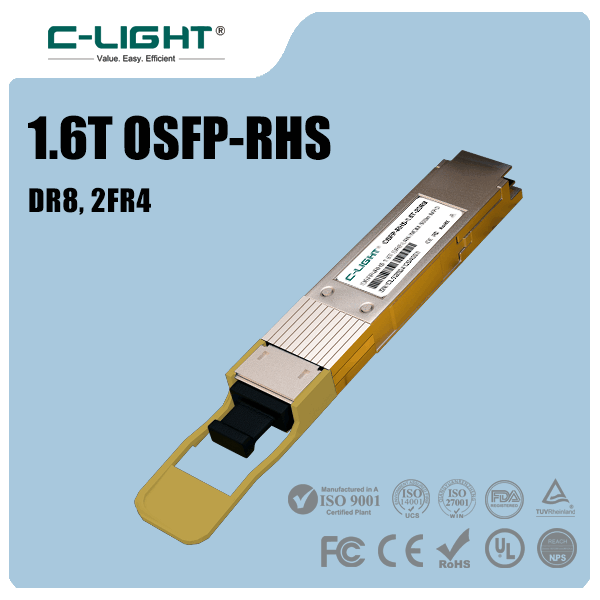
For example, modern 400ZR and 800ZR modules are designed specifically to bring coherent transmission into compact pluggable form factors with lower power and higher port density than traditional transport transponders.
15. How Do DWDM and Coherent Optics Differ in Cost?
The cost comparison depends on what type of DWDM system is being considered.
A simple fixed DWDM system using conventional optical modules and passive filters can be relatively economical for stable links.
Coherent systems have higher optical and processing complexity, which increases the cost of individual coherent modules. However, they can transport much more data per wavelength and over longer distances, reducing the number of systems or fibers required for a given network capacity.
| Cost Factor | Traditional DWDM / IM-DD | Coherent DWDM |
|---|---|---|
| Optical Complexity | Lower | Higher |
| DSP Cost | Lower | Higher |
| Power | Generally lower | Generally higher |
| Capacity per Wavelength | Lower | Higher |
| Long-Distance Capability | More limited | Much higher |
| Cost per Bit at High Capacity | Can become less efficient | Can be advantageous |
16. What Is the Difference Between a DWDM Transponder and a Coherent Pluggable?
A traditional DWDM transponder is normally part of a dedicated optical transport platform or line card. It can contain powerful coherent or non-coherent optics, DSP, FEC, and other transport functions.
A coherent pluggable integrates the optical transmission and digital processing functions into a compact module that can be inserted directly into a compatible router or switch.
| Feature | Traditional DWDM Transponder | Coherent Pluggable |
|---|---|---|
| Physical Form | Dedicated line card / transport module | Pluggable optical module |
| DSP | Integrated in transport platform | Integrated in pluggable module |
| Router Integration | Usually indirect | Direct in compatible platforms |
| Deployment | Optical transport system | Router, switch, or transport platform |
| Port Density | Depends on platform | High |
This development has enabled IP routers and switches to connect directly to DWDM wavelengths without necessarily requiring a separate transponder layer.
17. What Are 400ZR and 800ZR?
400ZR and 800ZR are examples of modern coherent technologies designed specifically for high-capacity DWDM transmission.
400ZR provides a 400Gb/s coherent optical interface for single-span data center interconnect applications. Depending on the optical system, it can operate over unamplified shorter links and amplified DWDM links extending to approximately 120 km.
800ZR provides an 800Gb/s single-wavelength coherent line interface targeted at amplified 80–120 km point-to-point DWDM links.
These technologies illustrate why DWDM and coherent optics should not be treated as competing technologies. The coherent module is the transmission technology, while DWDM provides the wavelength multiplexing environment in which multiple coherent channels can operate.
18. Where Are Traditional DWDM Systems Used?
Traditional DWDM remains useful in networks where the capacity and reach requirements can be met without the additional complexity of coherent transmission.
Typical applications include:
Metro WDM: Fixed wavelength channels can provide economical capacity expansion.
Enterprise Interconnection: DWDM can increase fiber utilization between sites.
Campus and Regional Links: WDM can carry several optical services over existing fiber infrastructure.
Telecom Transport: Fixed or semi-fixed DWDM systems can support stable optical transport requirements.
19. Where Are Coherent Optics Used?
Coherent optics is widely used when high capacity, long reach, spectral efficiency, or dynamic optical networking is required.
Data Center Interconnect: 400ZR, 800ZR, and related coherent pluggables can connect data centers over metro-scale optical links.
Metro and Regional Networks: Coherent modules provide high-capacity wavelengths across longer optical paths.
Long-Haul Transport: Advanced coherent systems provide the capacity and reach required for regional, long-haul, and ultra-long-distance networks.
Submarine Networks: Coherent technology is used in high-capacity submarine transmission systems where spectral efficiency and transmission performance are critical.
20. How Should You Choose Between DWDM and Coherent Optics?
The choice should first recognize that the two technologies can be combined. A practical decision is whether the network requires conventional WDM transport or high-capacity coherent DWDM transmission.
| Requirement | Typical Technology Direction |
|---|---|
| Stable low-complexity WDM link | Traditional DWDM |
| Multiple wavelengths over existing fiber | DWDM |
| 400G DCI | Coherent 400ZR / related coherent pluggable |
| 800G DCI | Coherent 800ZR / related coherent pluggable |
| Metro / regional high-capacity transport | Coherent DWDM |
| Long-haul optical transport | Advanced coherent DWDM |
| ROADM-based optical network | Coherent DWDM |
| Maximum spectral efficiency | Coherent optics |
Other selection factors include required capacity per wavelength, transmission distance, fiber availability, OSNR, optical power budget, channel spacing, amplification, ROADM architecture, FEC, DSP capability, module power, host compatibility, and total network cost.
C-LIGHT supports high-speed optical interconnect solutions for data center, DCI, telecom, and optical transport applications, covering different transmission rates, reach requirements, form factors, and optical architectures.
 >
>

 >
>
 >
>
 >
>
 >
>
 >
>
 >
>
 >
>