TEL:+86 132 6656 7067





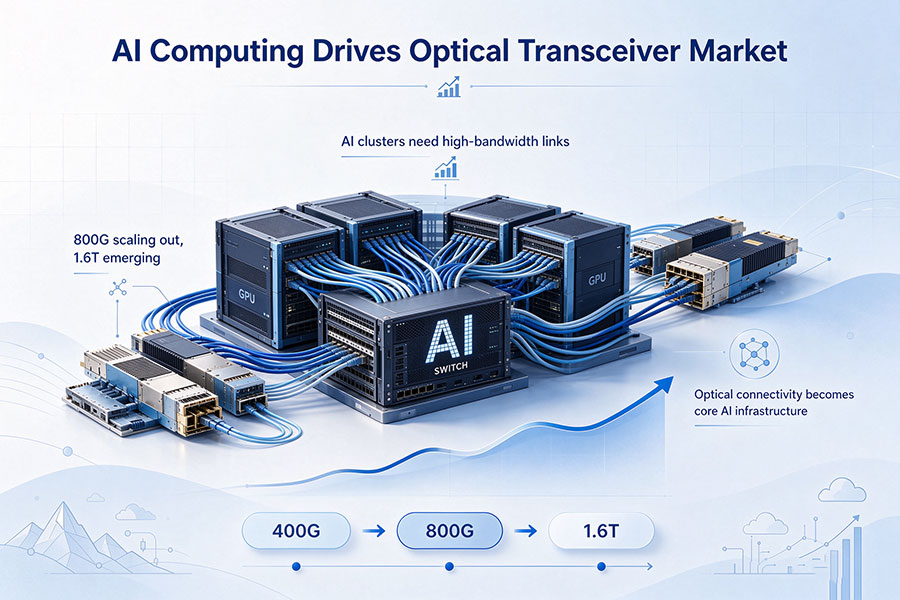
The rapid expansion of artificial intelligence is reshaping global data center infrastructure and creating new demand for high-speed optical connectivity. Large language models, generative AI, and increasingly complex inference workloads require enormous computing resources. As GPU clusters grow, the volume of data exchanged between servers, accelerators, and network switches increases accordingly.
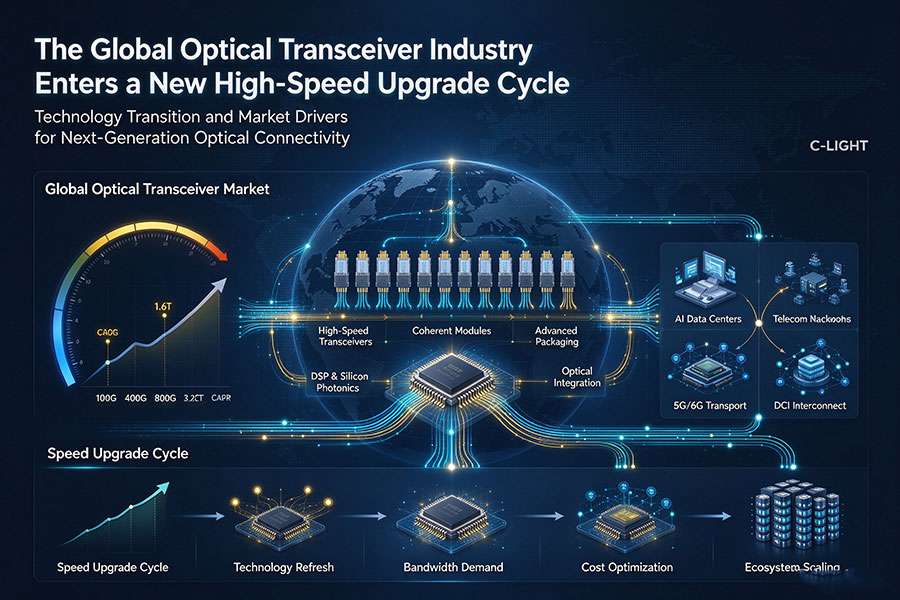
This shift is creating significant opportunities for the global optical transceiver market. Traditional data center connections are evolving toward 400G, 800G, and 1.6T optical technologies, while silicon photonics, linear pluggable optics, and co-packaged optics are attracting growing industry attention. Optical connectivity is becoming a critical part of AI infrastructure rather than simply a supporting network component.
1. AI Computing Is Reshaping Data Center Network Requirements
AI workloads place different demands on data center networks compared with many traditional enterprise applications. Training large AI models requires thousands of GPUs or other accelerators to exchange data continuously. Distributed computing tasks generate substantial east-west traffic between servers, while inference infrastructure must support increasing numbers of simultaneous requests.
These workloads create several networking requirements:
Higher bandwidth: GPU clusters need high-capacity connections to exchange model parameters, training data, and intermediate results.
Low and predictable latency: Communication delays can affect overall accelerator utilization and distributed computing efficiency.
High port density: Large AI clusters require extensive connections between servers, leaf switches, and spine switches.
Scalable network architecture: Data center fabrics must expand as accelerator counts and computing capacity increase.
Improved power efficiency: Network equipment must deliver higher bandwidth without allowing power consumption and heat generation to grow uncontrollably.
As a result, network infrastructure is undergoing continuous upgrades. Electrical connections remain useful for short distances, but optical links are increasingly important for connections across racks, rows, and data center facilities.
2. AI Infrastructure Is Driving Optical Transceiver Market Growth
The growth of AI computing is translating into higher demand for optical transceivers. Each expansion of an AI data center can require large numbers of high-speed optical connections, particularly within accelerator clusters and switching fabrics.
Industry forecasts reflect this trend. According to TrendForce's April 2026 research, the global AI-focused optical transceiver market is projected to increase from approximately US$16.5 billion in 2025 to US$26 billion in 2026, representing growth of more than 57% year over year.
LightCounting also projected approximately 65% growth for the Ethernet transceiver market in 2026 in its April 2026 market update. These estimates cover different market categories and should not be combined as though they measure the same market.
The broader market expansion is supported by several structural changes:
More AI servers and accelerator clusters are being deployed.
Network bandwidth per server is increasing.
800G optical modules are expanding across AI data center networks.
1.6T products are moving into commercial deployment.
Hyperscale operators are upgrading data center interconnect capacity.
New optical architectures are creating additional demand for lasers, DSPs, photonic components, and optical engines.
For optical transceiver manufacturers, the opportunity is not limited to selling more modules. Higher data rates, more complex optical designs, and increasingly demanding reliability requirements are also changing the value of individual products.
3. The Transition from 400G to 800G and 1.6T Is Accelerating
One of the most visible changes in the optical transceiver market is the migration toward higher-speed connectivity. As AI clusters scale, traditional 100G and 400G connections increasingly face bandwidth and port-density constraints in high-performance network layers.
3.1 400G Optical Transceivers Remain Important
400G optical transceivers continue to serve important roles in data center networks, enterprise infrastructure, and high-capacity interconnections. They provide a practical bandwidth upgrade for network operators moving beyond 100G and 200G architectures.
Common 400G form factors include QSFP-DD and OSFP. Depending on the optical standard and product design, 400G modules can support different reach requirements and fiber configurations.
Representative applications include:
400G SR8 for short-reach multimode connections.
400G DR4 for single-mode parallel-fiber connections.
400G FR4 for single-mode wavelength-multiplexed transmission.
400G LR4 for longer-reach single-mode applications.
400G connectivity remains relevant as operators upgrade existing infrastructure and deploy different network speeds across front-end and back-end networks.
3.2 800G Is Becoming a Key AI Networking Generation
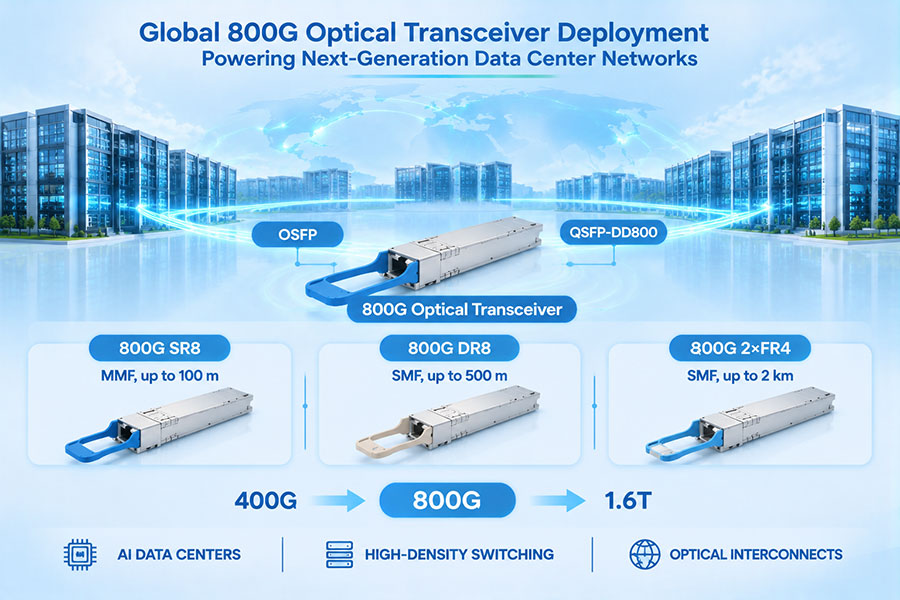
800G optical transceivers are gaining importance as AI clusters require greater bandwidth between accelerator servers and switching equipment. Compared with 400G, an 800G interface doubles aggregate bandwidth, helping increase network capacity without requiring a proportional increase in port count.
Common 800G form factors include QSFP-DD and OSFP. Representative optical applications include DR8, 2×FR4, and other standardized or MSA-based configurations.
For example, 800G DR8 uses parallel optical lanes over a multimode or single-mode architecture depending on the specific implementation. An 800G 2×FR4 design uses wavelength multiplexing to carry multiple optical channels over duplex fiber connections.
800G modules are particularly relevant to:
GPU server-to-switch connections.
Leaf-spine and spine-layer network fabrics.
High-density AI training clusters.
Hyperscale cloud data centers.
High-capacity data center interconnect infrastructure.
For additional product information, see C-LIGHT's 800G QSFP-DD and 800G OSFP optical transceiver product families.
3.3 1.6T Is Opening the Next Upgrade Cycle
As switch capacity and accelerator density continue to increase, 1.6T optical connectivity is emerging as the next major development direction.
A representative 1.6T architecture uses eight 200G-class lanes. PAM4 signaling enables higher data rates per lane, while advanced DSPs and optical components support the electrical-to-optical conversion process.
Two important optical configurations include:
| Configuration | Representative Reach | Optical Interface | Application |
|---|---|---|---|
| 1.6T DR8 | Up to 500m in representative implementations | Parallel single-mode fiber, commonly MPO | High-bandwidth data center links |
| 1.6T 2×FR4 | Up to 2km in representative implementations | Two duplex LC interfaces | Longer-reach data center connectivity |
Actual reach, connector configuration, and optical specifications depend on the product and applicable standard. The migration to 1.6T also creates new engineering challenges involving power consumption, thermal management, signal integrity, and manufacturing yield.
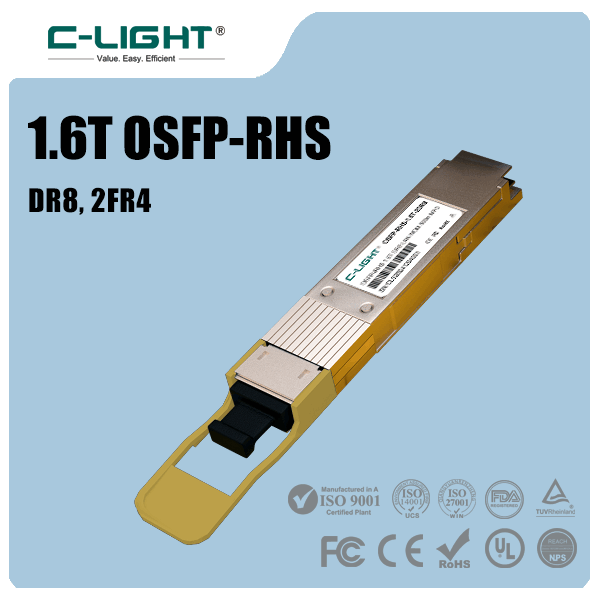
C-LIGHT's 1.6T OSFP-RHS optical transceiver is part of this emerging high-speed connectivity generation. Its specified architecture includes eight 200G PAM4 lanes, with DR8 500m and 2×FR4 2km configurations.
4. AI Data Center Architecture Creates Multiple Optical Connectivity Opportunities
AI data center networks are not built around a single type of connection. Different network layers have different bandwidth, reach, latency, and scalability requirements. This creates demand for a range of optical transceiver products and interconnect technologies.
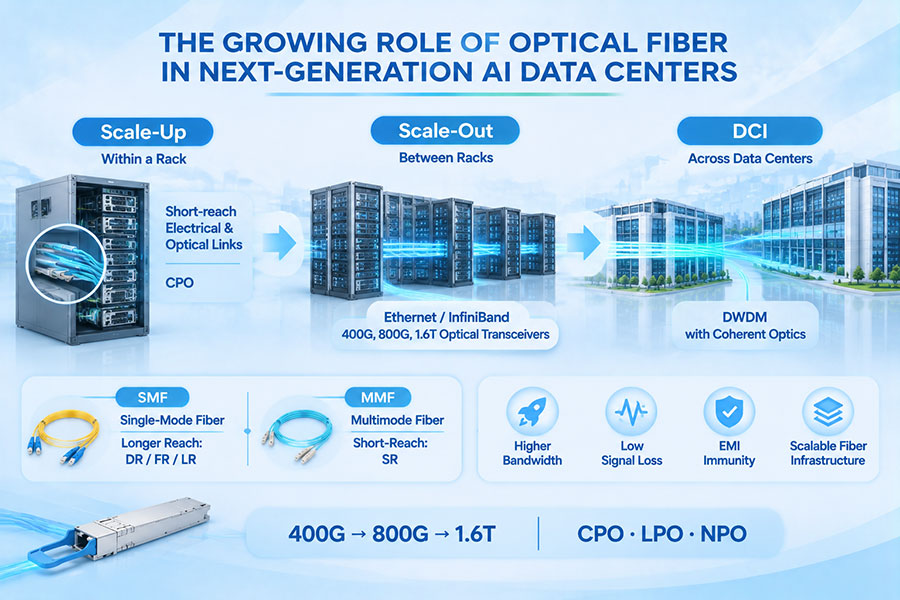
4.1 Scale-Up Networking
Scale-up networking connects processors and accelerators within a tightly integrated computing domain. The primary objective is to allow multiple computing devices to operate together with high communication bandwidth and low latency.
Electrical interconnects remain important for short-distance connections, but increasing bandwidth and larger accelerator domains are encouraging the development of optical technologies closer to compute devices.
Potential opportunities include:
High-density optical engines.
Near-packaged optics (NPO).
Co-packaged optics (CPO).
Advanced optical connectors and fiber arrays.
Low-power optical transmission technologies.
4.2 Scale-Out Networking
Scale-out networking connects multiple servers and accelerator systems through switches. It is one of the most important sources of near-term optical transceiver demand in AI data centers.
As GPU clusters expand across multiple racks, high-speed optical links are needed to connect server network interfaces with leaf and spine switching layers.
400G and 800G modules are already important in this environment, while 1.6T connectivity is becoming relevant as network capacity increases.
4.3 Scale-Across Networking and Data Center Interconnect
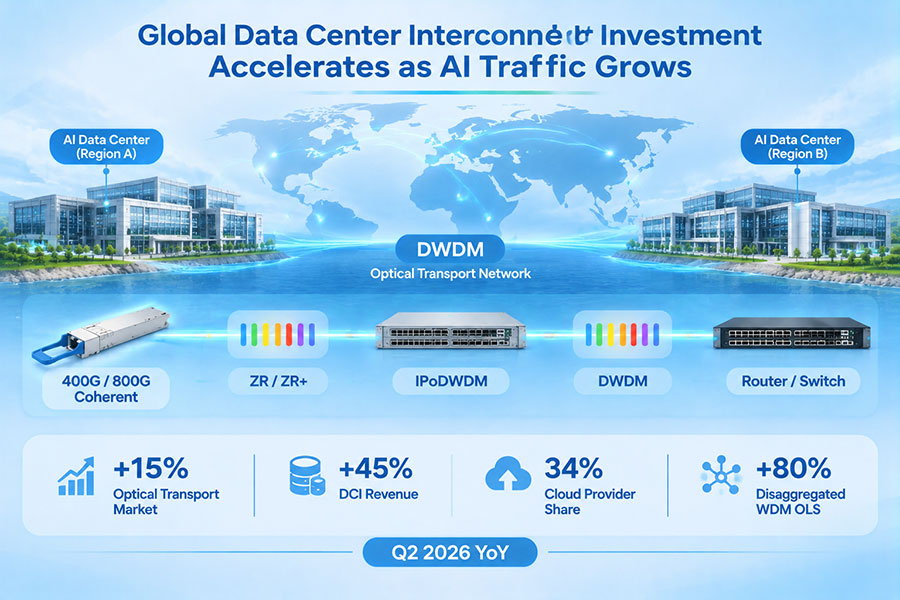
Scale-across networking connects computing resources across different data center buildings, campuses, or geographic locations. This approach allows operators to distribute AI infrastructure across multiple facilities rather than relying on a single physical site.
These connections often require longer transmission distances and higher-capacity optical transport systems.
Important technologies include:
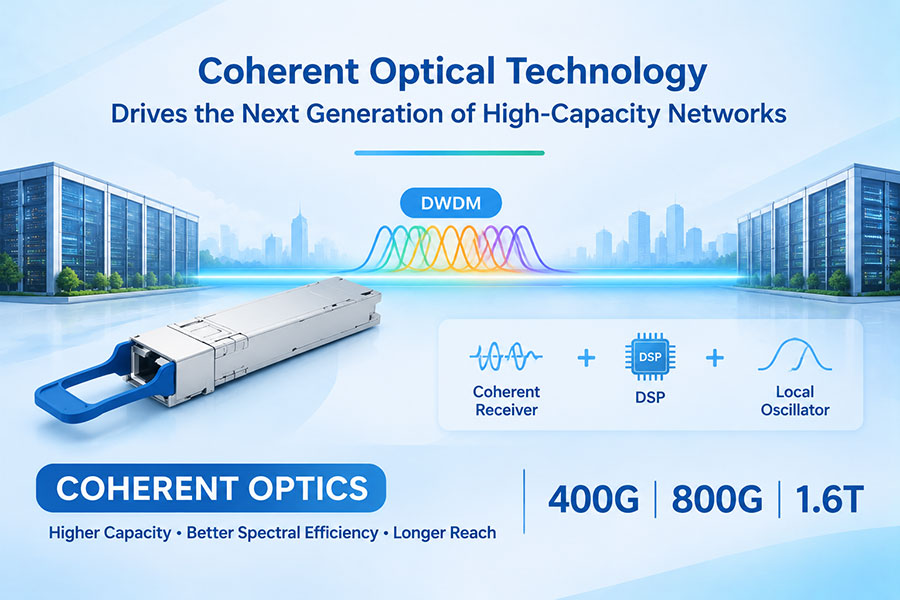
800G and 1.6T coherent optical transceivers.
400ZR and 800ZR coherent modules.
DWDM optical transport systems.
High-capacity fiber infrastructure.
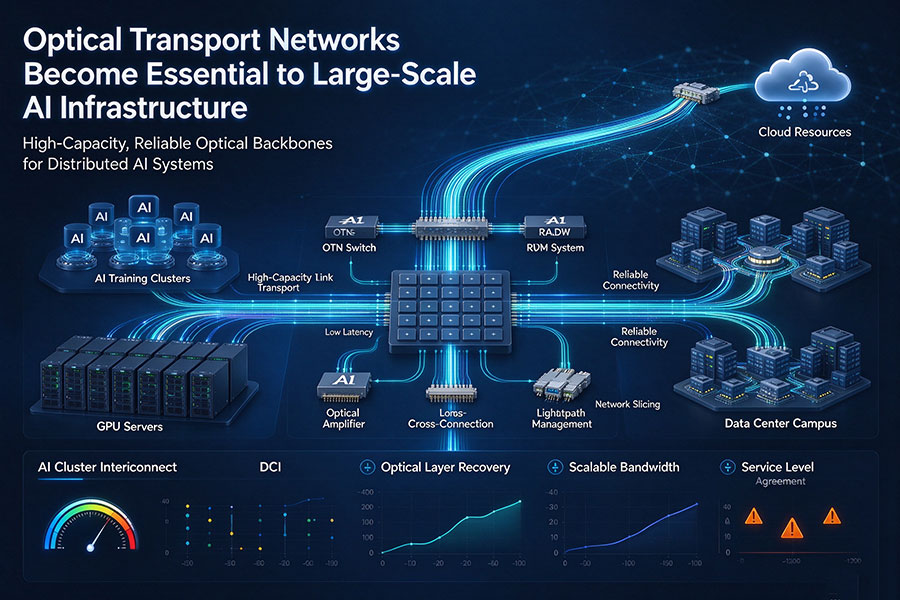
Data center interconnect (DCI) solutions.
As AI training and inference workloads become more geographically distributed, coherent optical technologies and high-capacity DCI solutions can become increasingly important.
5. New Optical Technologies Are Expanding Market Opportunities
The AI networking upgrade cycle is driving innovation beyond conventional pluggable optical modules. Higher bandwidth and tighter power constraints are encouraging manufacturers to develop new optical architectures and integration technologies.
5.1 Silicon Photonics
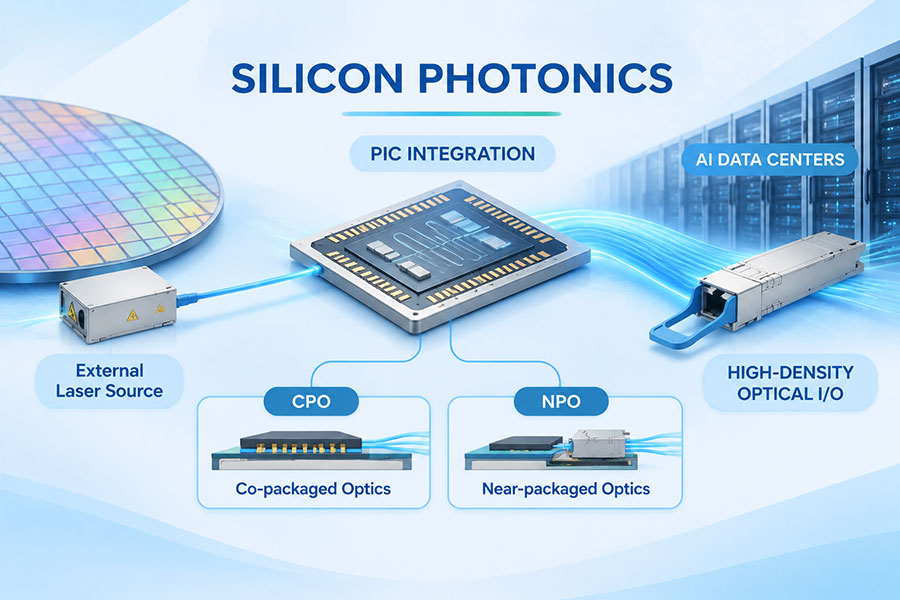
Silicon photonics integrates optical functions into silicon-based photonic integrated circuits. It can combine multiple optical components into a more integrated platform, supporting high-density optical connectivity.
Potential advantages include:
Higher integration of optical components.
Support for high-speed data transmission.
Potential improvements in manufacturing scalability.
New opportunities for compact optical engines.
Silicon photonics is attracting attention in 400G, 800G, and 1.6T product development. However, its commercial implementation still depends on laser integration, packaging, coupling efficiency, thermal design, and manufacturing yield.
5.2 Linear Pluggable Optics and Linear Receive Optics
Linear Pluggable Optics (LPO) and Linear Receive Optics (LRO) are designed to reduce or simplify certain signal-processing functions within optical modules.
Conventional pluggable transceivers commonly use DSP-based signal conditioning. LPO architectures reduce reliance on module-side DSP processing, while LRO applies a different approach to receiver-side signal processing.
These architectures aim to reduce power consumption and potentially improve latency, but they place greater demands on the host electrical interface and system-level signal integrity.
Their adoption depends on the specific network architecture, link budget, interoperability requirements, and available host-side signal processing capabilities.
5.3 Co-Packaged Optics
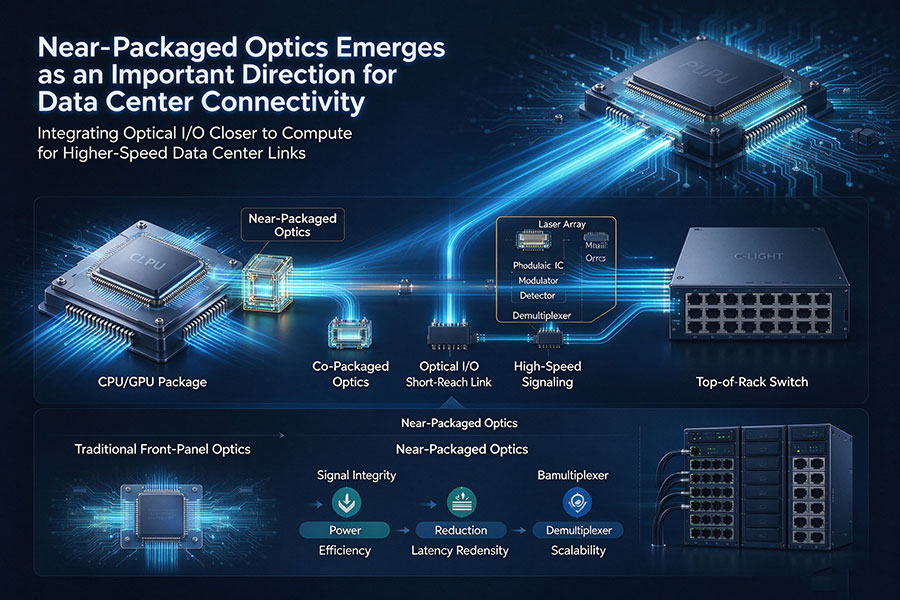
Co-Packaged Optics integrates optical engines closer to the switching ASIC rather than relying entirely on traditional front-panel pluggable modules.
This architecture can shorten high-speed electrical signal paths between the switch ASIC and optical components. By reducing electrical reach, CPO aims to address power consumption and bandwidth-density challenges in future high-capacity switches.
However, CPO introduces new requirements for optical engine reliability, fiber management, laser supply, thermal design, repairability, and system packaging.
Pluggable optics are expected to remain important across many network applications. CPO and other integrated optical architectures should therefore be viewed as additional development directions rather than immediate replacements for every optical transceiver.
6. The Growing Demand Extends Beyond Optical Modules
AI computing growth is expanding opportunities throughout the optical communications supply chain. Optical transceivers depend on multiple components and manufacturing processes, and higher-speed products increase the technical requirements for many of these elements.
| Supply Chain Segment | Key Products or Technologies | Growth Opportunity |
|---|---|---|
| Optical components | EML lasers, VCSELs, photodiodes | Higher-speed transmitters and receivers |
| Photonic integration | Silicon photonics, PICs, optical engines | Higher integration and bandwidth density |
| Electronic components | DSPs, drivers, TIAs, SerDes | Higher lane rates and signal processing |
| Passive components | Connectors, fiber arrays, isolators, filters | High-density optical connections |
| Module manufacturing | Optical packaging, assembly, testing | Higher production capacity and precision |
| Optical networking | Transceivers, AOCs, DACs, DCI systems | Expanded data center connectivity |
This broader demand creates opportunities for component suppliers, optical module manufacturers, cable producers, testing equipment providers, and network solution vendors.
7. Active Cables and High-Speed Interconnects Also Benefit
Optical transceivers are not the only connectivity products benefiting from AI infrastructure expansion. High-speed direct attach cables and active optical cables also play important roles in data center networks.
7.1 Direct Attach Cables
Direct Attach Cables (DACs) use copper conductors to connect networking equipment over relatively short distances. They are widely used for rack-level connections where low cost and low power consumption are important.
Common applications include:
Switch-to-server connections.
Top-of-rack switching.
Short-reach connections between adjacent network devices.
High-density rack interconnections.
DACs remain useful in AI data centers, particularly where the connection distance and signal integrity requirements are suitable for copper.
7.2 Active Optical Cables
Active Optical Cables (AOCs) integrate optical conversion components into cable assemblies. They provide high-bandwidth connectivity over distances that may be impractical for passive copper cables.
AOCs are useful for connections between servers, switches, and other network equipment in large data center environments. Their integrated design also simplifies installation because the optical modules and fiber cable are supplied as a complete assembly.
As network speeds increase, AOCs and other active copper or optical cable technologies can complement pluggable transceivers in different parts of an AI network.
Relevant C-LIGHT product categories include DAC cables, AOC cables, and AEC cables.
8. Market Challenges: Supply, Power, and Manufacturing Capacity
Although AI computing is creating substantial opportunities, the optical transceiver industry also faces several challenges. Increasing demand does not automatically translate into unlimited production or immediate revenue growth.
8.1 Component Supply Constraints
High-speed optical modules depend on specialized components, including laser chips, DSPs, photonic integrated circuits, and precision passive components. Production capacity for some components may not expand as quickly as demand.
LightCounting identified InP EML and laser chip production capacity as an important constraint in its April 2026 market update. Such supply limitations can affect module availability, delivery schedules, and the ability of manufacturers to meet customer demand.
8.2 Power Consumption and Thermal Management
Higher-speed modules often require more advanced signal processing and optical components. As a result, power consumption and heat generation become increasingly important design considerations.
Manufacturers must balance bandwidth, module power, thermal performance, and reliability. Data center operators also need to consider airflow, cooling capacity, and total rack power when selecting high-speed optical modules.
8.3 Manufacturing Complexity
Moving from 400G to 800G and 1.6T increases the technical complexity of module design and production. Higher lane rates require more precise optical and electrical performance, advanced packaging, and extensive validation.
Manufacturers must maintain consistent quality across high-volume production while meeting increasingly demanding interoperability and reliability requirements.
8.4 Market Competition and Price Pressure
The optical transceiver market is highly competitive. As production volumes increase and technologies mature, manufacturers may face pricing pressure, particularly in standardized product categories.
Long-term competitiveness will depend on more than production capacity. Product performance, manufacturing yield, supply-chain stability, technical support, and customer qualification will all influence market position.
9. What These Trends Mean for Global Optical Transceiver Suppliers
The growth of AI infrastructure is creating opportunities for optical transceiver suppliers at different stages of the market. However, the most attractive product categories and customer requirements may vary depending on company capabilities and target applications.
9.1 Expand High-Speed Product Portfolios
Suppliers can strengthen their product portfolios by supporting multiple generations of optical connectivity, including 100G, 400G, 800G, and 1.6T. Different data center operators upgrade infrastructure at different speeds, so a broad product range can address both existing deployments and next-generation requirements.
9.2 Focus on Application-Specific Solutions
AI data center networks require different optical solutions for short-reach server connections, switching fabrics, and inter-facility links.
Suppliers should clearly distinguish product specifications by application, including:
Form factor and supported data rate.
Optical standard and transmission distance.
Wavelength and fiber type.
Connector and lane configuration.
Power consumption and operating temperature.
Host compatibility and interoperability.
9.3 Strengthen Testing and Quality Validation
High-speed optical connectivity requires consistent product performance. Testing should cover optical output, receiver sensitivity, eye diagrams, BER, environmental performance, and compatibility with target networking equipment.
As AI data center networks become more complex, suppliers that can provide reliable products and clear technical documentation will be better positioned to support demanding deployments.
9.4 Build Supply-Chain and Customer Relationships
Reliable access to optical components and manufacturing capacity is increasingly important. Suppliers need to coordinate with component manufacturers, packaging partners, and network equipment customers to support product development and delivery.
Customer qualification is also critical. High-speed optical modules must be validated within the actual network environment before they can be adopted at scale.
10. The Future Outlook for the Optical Transceiver Market
AI computing is expected to remain an important driver of optical networking investment. As models become more complex and inference workloads expand, data centers will continue to require higher bandwidth, more efficient network fabrics, and greater optical connectivity.
Several developments are likely to shape the next stage of the market:
Continued 800G deployment: 800G will remain an important connectivity generation as AI data center networks expand.
Broader 1.6T adoption: Higher-speed modules will support the next generation of switch platforms and accelerator clusters.
Development of 3.2T technologies: Future network architectures will require further improvements in per-lane signaling, photonic integration, and thermal design.
Greater silicon photonics adoption: Photonic integration may support higher bandwidth density and new optical engine designs.
Expansion of CPO and NPO: Integrated optical architectures will continue to develop as network power and density constraints become more demanding.
Growing DCI requirements: Distributed AI infrastructure will create additional demand for high-capacity optical transport between facilities.
The pace of adoption will depend on technology readiness, component availability, power efficiency, manufacturing capacity, and the investment strategies of major data center operators.
11. Conclusion
AI computing growth is creating a new expansion cycle for the global optical transceiver market. Larger GPU clusters, higher network bandwidth requirements, and the development of hyperscale AI data centers are accelerating demand for 400G, 800G, and 1.6T optical connectivity.
The opportunity extends beyond traditional pluggable modules. Silicon photonics, LPO, CPO, active optical cables, optical components, and high-capacity DCI solutions are becoming increasingly important parts of the AI networking ecosystem.
For optical transceiver suppliers, long-term growth will depend on their ability to deliver higher bandwidth, lower power consumption, reliable performance, and scalable manufacturing. As AI infrastructure continues to evolve, optical connectivity will remain a fundamental technology supporting the expansion of global computing capacity.
Frequently Asked Questions
Q1: Why is AI computing increasing demand for optical transceivers?
Q2: Which optical transceiver speeds are important for AI data centers?
Q3: Why are 800G optical modules gaining adoption?
Q4: What role will 1.6T optical transceivers play?
Q5: How does silicon photonics benefit the optical transceiver market?
Q6: Will CPO replace traditional pluggable optical modules?
Q7: What is the difference between scale-up and scale-out networking?
Q8: Are DAC and AOC cables relevant to AI data centers?
Q9: What challenges could limit optical transceiver market growth?
Q10: What creates long-term opportunities for optical transceiver suppliers?
 >

 >
 >
 >
 >
 >
 >
 >