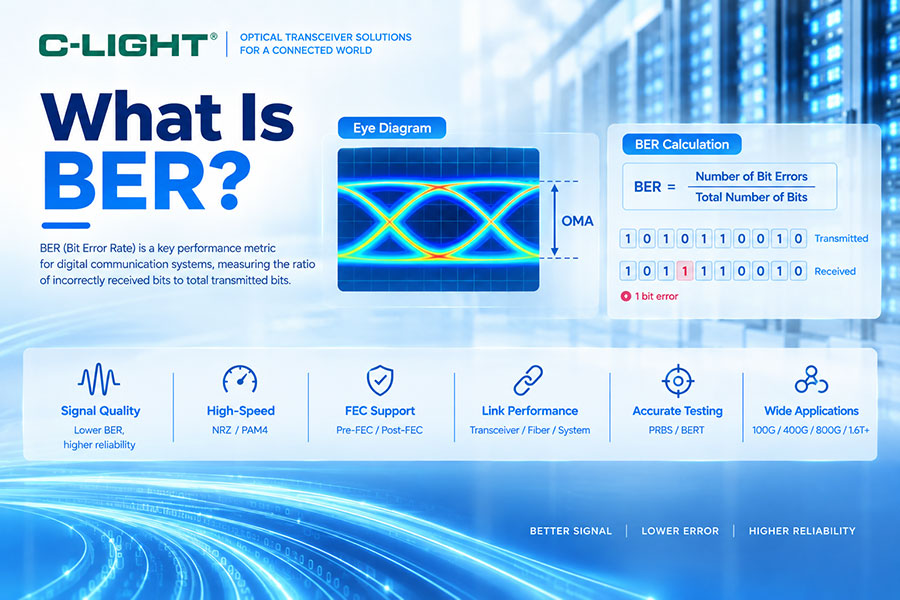
BER (Bit Error Rate) is a key performance metric for digital communication systems, measuring the ratio of incorrectly received bits to total transmitted bits. It is widely used to evaluate optical transceivers, fiber links, PAM4 systems, FEC performance, and high-speed Ethernet transmission reliability.
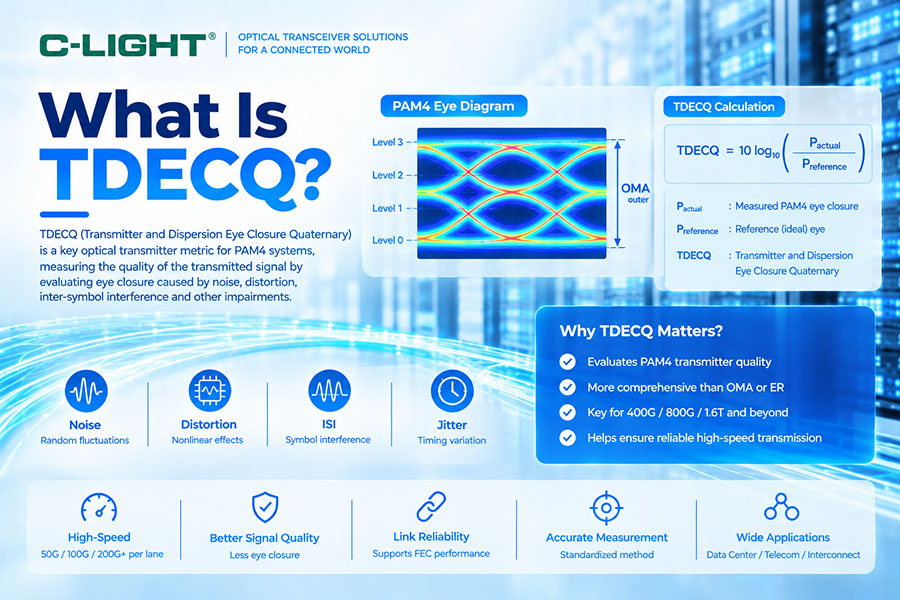
TDECQ (Transmitter and Dispersion Eye Closure Quaternary) is a key optical transmitter metric for PAM4 systems, measuring transmitter signal quality by evaluating eye closure caused by noise, distortion, inter-symbol interference, and other impairments.
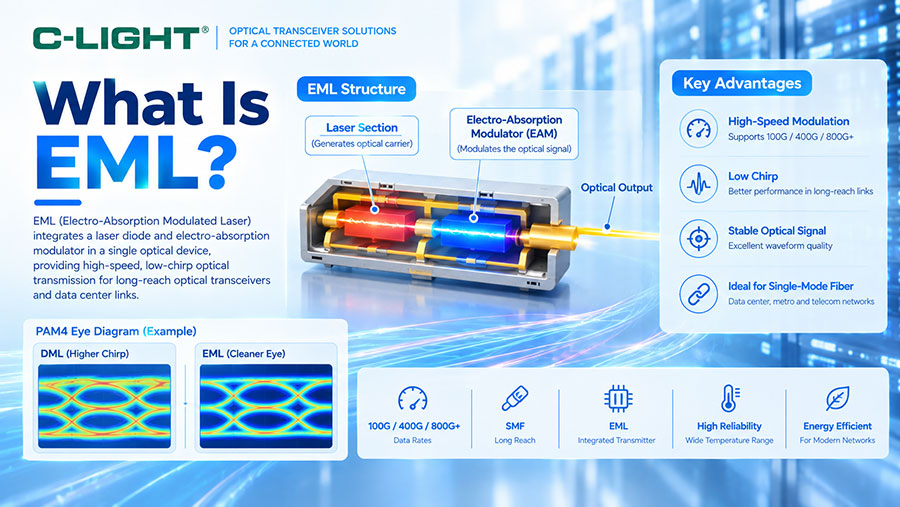
EML (Electro-Absorption Modulated Laser) integrates a laser diode and electro-absorption modulator in a single optical device, providing high-speed, low-chirp optical transmission for long-reach optical transceivers and data center links.
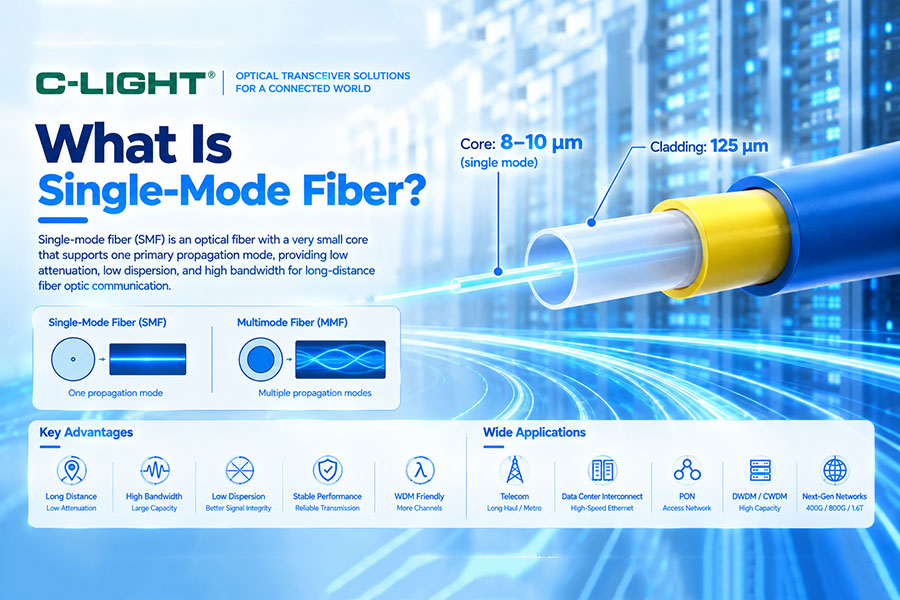
Single-mode fiber (SMF) is an optical fiber with a very small core that supports one primary propagation mode, providing low attenuation, low dispersion, and high bandwidth for long-distance fiber optic communication.
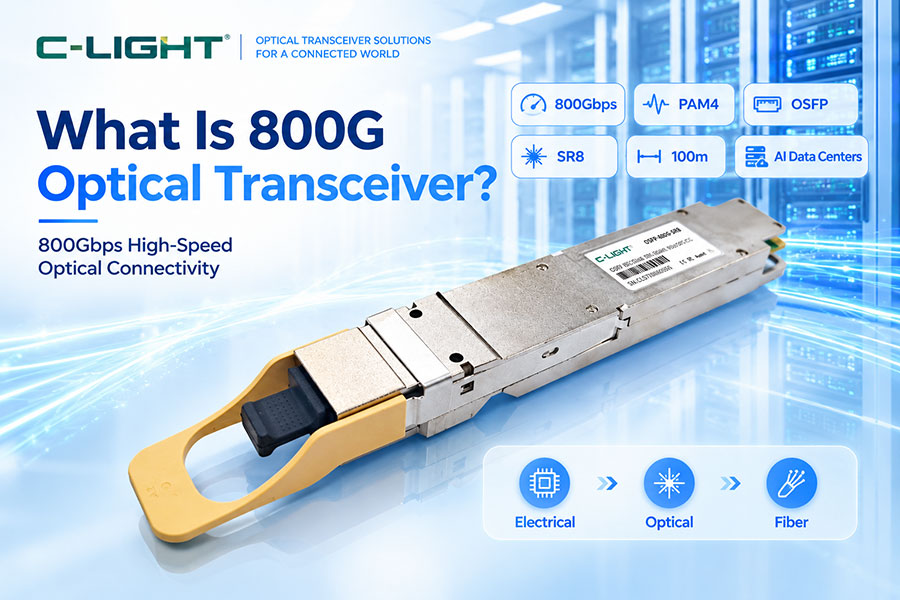
800G optical transceivers provide up to 800Gbps aggregate bandwidth for AI data centers, HPC, hyperscale networks, and high-speed Ethernet, with OSFP and QSFP-DD options covering short-, medium-, and longer-reach applications.
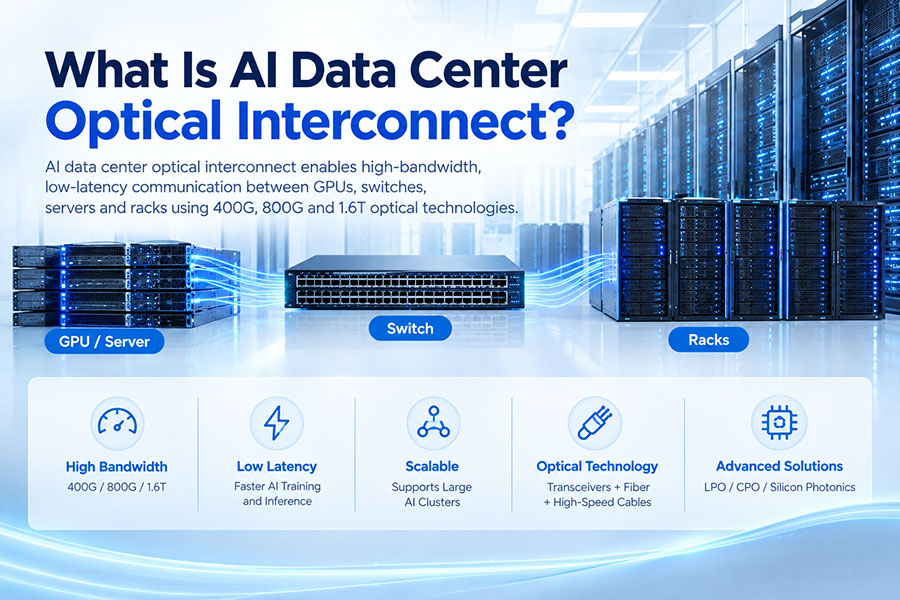
AI data center optical interconnect uses high-speed optical links to connect GPUs, switches, NICs, storage, and other computing infrastructure, providing the bandwidth, reach, and signal integrity required for large-scale AI clusters.