TEL:+86 132 6656 7067




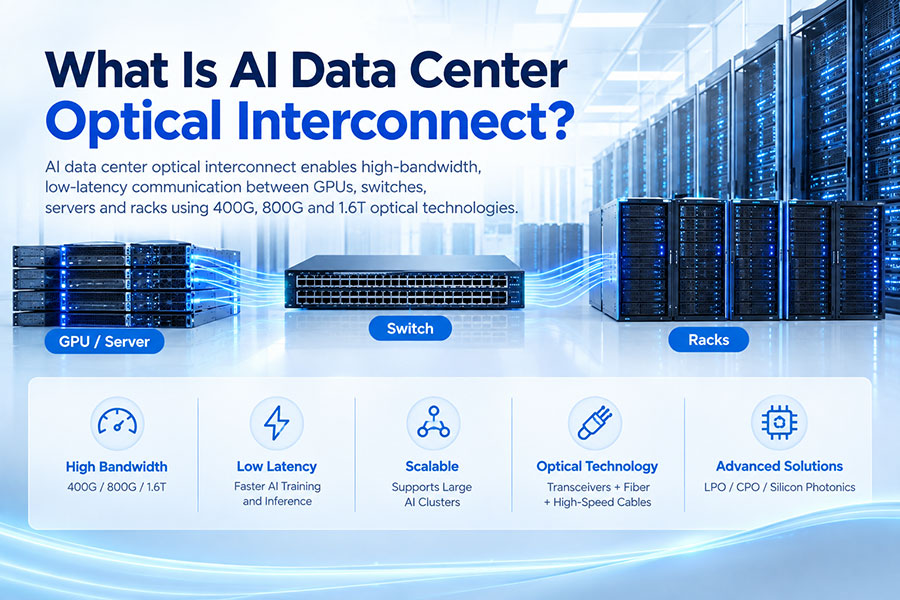
AI data center optical interconnect is the high-speed optical networking infrastructure used to connect GPUs, AI accelerators, switches, servers, and racks. It combines optical transceivers, fiber, high-speed cables, optical engines, and related technologies to provide the bandwidth, latency, and scalability required by large AI clusters.
1. What Is AI Data Center Optical Interconnect?
AI data center optical interconnect refers to optical communication solutions designed to move large amounts of data between computing and networking resources in AI infrastructure. Unlike conventional short-distance electrical connections, optical interconnect uses light to transmit data over fiber, enabling higher bandwidth and longer reach with lower transmission loss.
2. Why Is Optical Interconnect Important for AI Data Centers?
AI workloads require continuous communication between large numbers of GPUs and accelerators. As cluster size increases, the network must move more data between compute nodes without creating a communication bottleneck. Optical interconnect provides the bandwidth density and reach needed for these high-performance networks.
3. How Does AI Optical Interconnect Work?
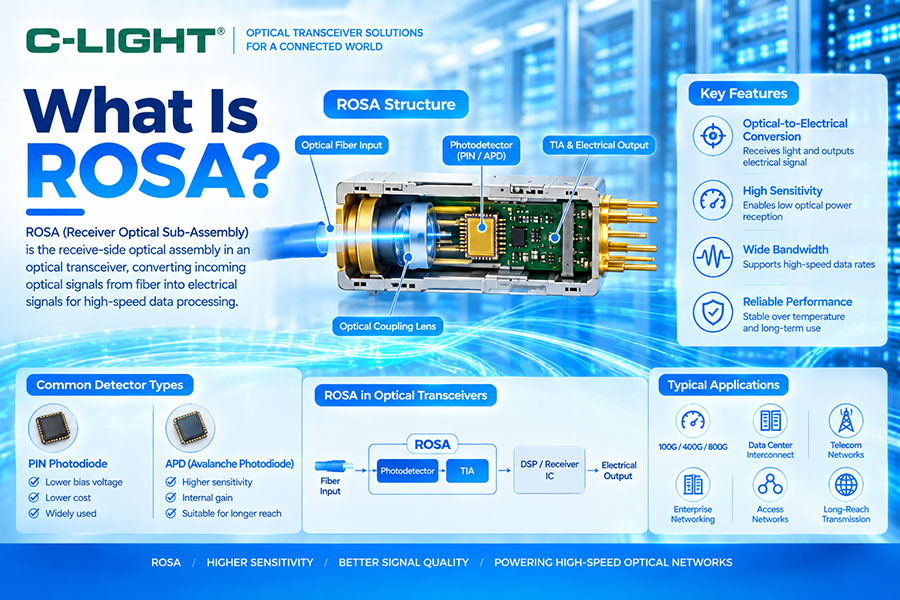
An optical transceiver converts electrical signals from a switch or accelerator system into optical signals for transmission through fiber. At the receiving end, another transceiver converts the optical signal back into an electrical signal. This process allows high-speed data to travel between servers, switches, racks, and data center zones.
4. Main Components of AI Optical Interconnect
Optical transceivers
Optical fiber
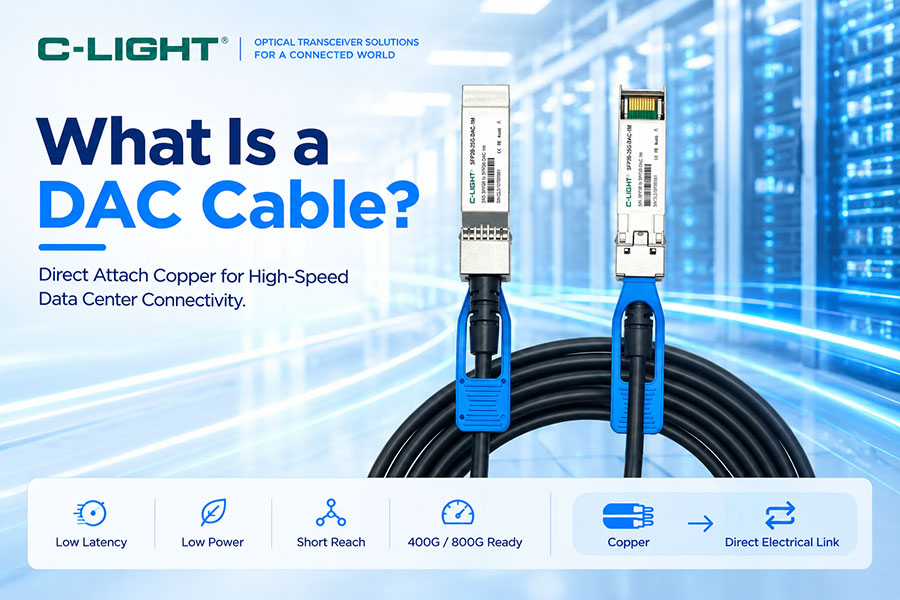
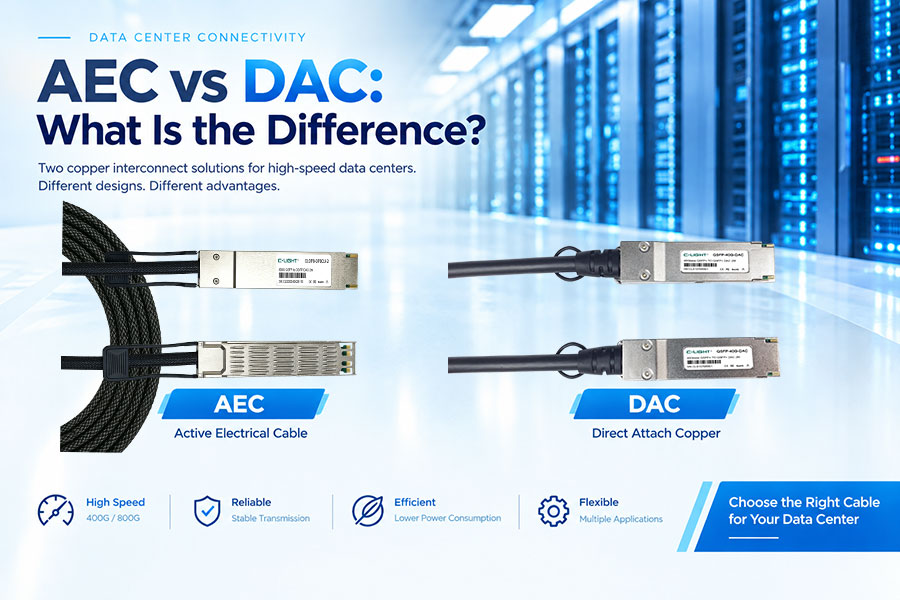
DAC and AEC cables
Active optical cables
Optical engines
Optical DSPs
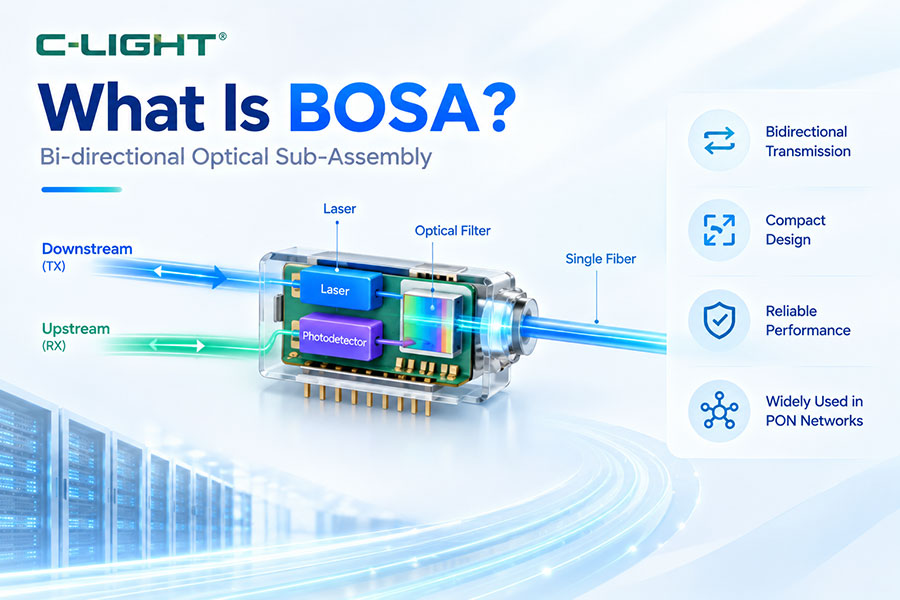
Lasers and photodetectors
Silicon photonics devices
High-speed connectors
5. 400G Optical Interconnect
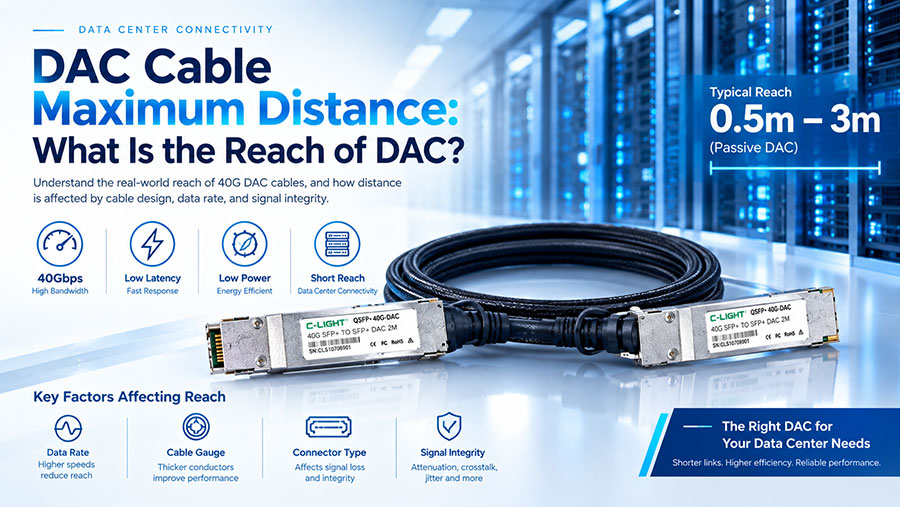
400G optical connectivity is widely used for high-bandwidth data center networking. Common 400G solutions include QSFP-DD and OSFP optical transceivers, as well as DAC, AOC, and AEC solutions for shorter connections.
6. 800G Optical Interconnect
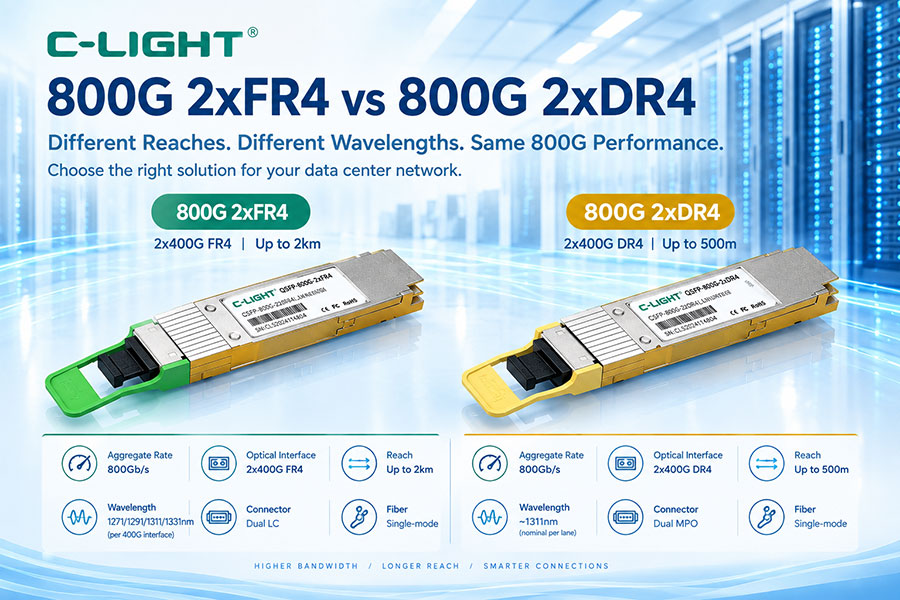
800G has become an important bandwidth level for large AI and hyperscale data center networks. An 800G optical link can provide twice the aggregate bandwidth of a 400G connection, helping increase switch capacity and reduce the number of ports required for high-bandwidth network fabrics.
7. 1.6T Optical Interconnect
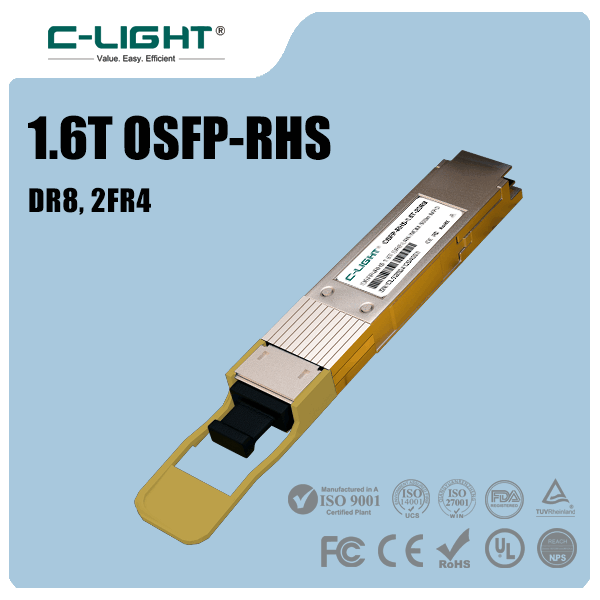
1.6T optical interconnect represents the next major bandwidth step for AI networking. Typical architectures use eight 200G electrical or optical lanes, while newer designs are moving toward higher data rates per lane. 1.6T solutions are aimed at higher-density switches and next-generation AI clusters.
8. PAM4 in AI Optical Interconnect
PAM4 is a key modulation technology for modern 400G, 800G, and 1.6T optical systems. Compared with NRZ, PAM4 carries two bits per symbol, allowing higher data rates without simply doubling the number of physical lanes.
9. Optical DSP
Optical DSPs process high-speed electrical and optical signals inside many modern transceivers. DSP functions can include signal equalization, clock recovery, FEC processing, lane management, and compensation for transmission impairments.
10. Silicon Photonics
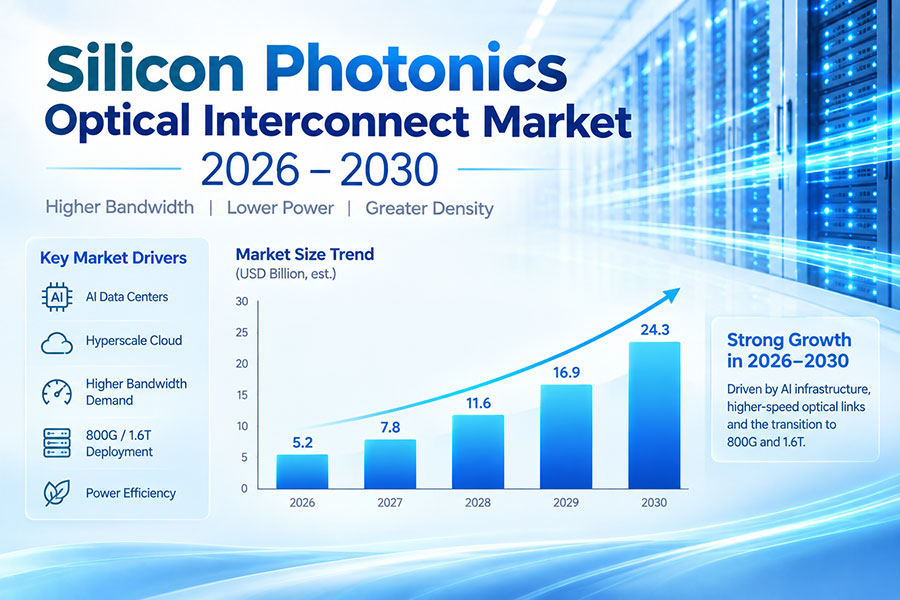
Silicon photonics integrates optical functions with semiconductor-based technologies. It can support compact optical engines, high bandwidth density, and scalable manufacturing for high-speed optical connectivity.
11. LPO for AI Data Centers
Linear-drive pluggable optics, or LPO, reduces or removes some of the traditional retiming and DSP functions in the optical module. By simplifying the signal path, LPO can target lower power consumption and lower latency, but it also places greater requirements on the host electrical system and overall signal integrity.
12. CPO and Optical Interconnect
Co-packaged optics, or CPO, moves optical components closer to the switching ASIC or other high-performance silicon. This architecture can reduce electrical trace length and support higher bandwidth density as conventional pluggable architectures become increasingly challenging at very high speeds.
13. Optical Transceivers in AI Networks
Optical transceivers are one of the most important building blocks of AI optical interconnect. They provide the conversion between electrical signals and optical signals and are available in different form factors, speeds, wavelengths, and transmission distances.
14. OSFP and QSFP-DD
| Feature | OSFP | QSFP-DD |
|---|---|---|
| Typical High-Speed Use | 400G, 800G, 1.6T | 200G, 400G, selected higher-speed platforms |
| Electrical Lanes | Multi-lane | Multi-lane |
| Thermal Capacity | Generally higher | More compact |
| Typical Application | AI and high-density data centers | Data center and Ethernet networks |
15. Optical Fiber in AI Data Centers
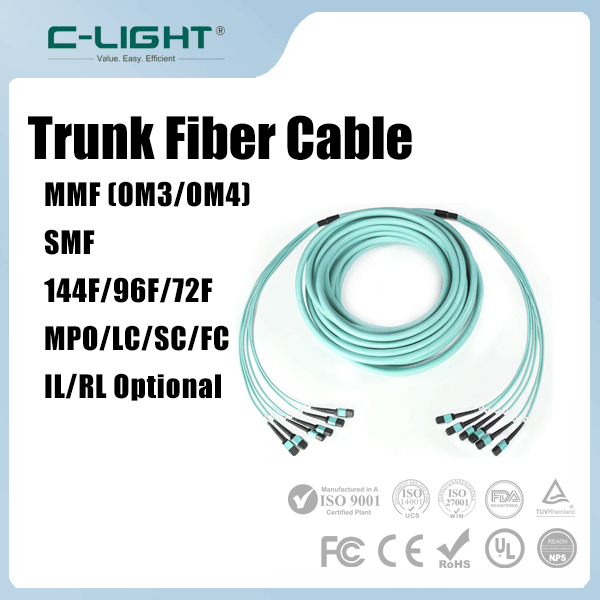
Optical fiber provides the physical transmission medium for high-speed optical interconnect. Multimode fiber is commonly used for shorter-reach applications, while single-mode fiber supports longer distances and higher-reach data center connections.
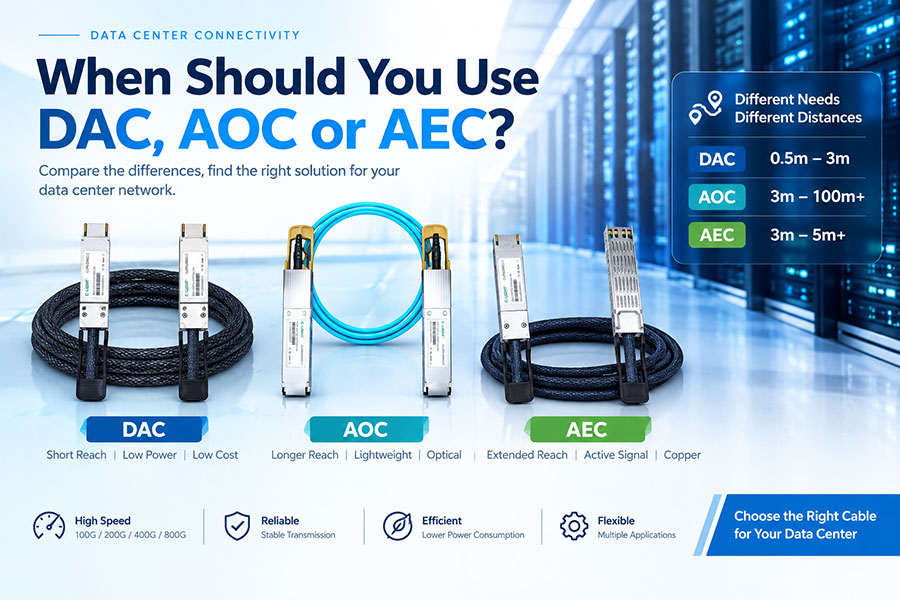
16. DAC, AOC, and AEC
| Technology | Transmission Medium | Typical Use |
|---|---|---|
| DAC | Copper | Very short rack connections |
| AEC | Active copper | Extended short-reach connections |
| AOC | Optical fiber | Longer rack and data center connections |
17. AI GPU-to-Switch Connectivity
GPU-to-switch communication is one of the key applications for optical interconnect. Large AI clusters require high-bandwidth connections between accelerator servers and network switches to support distributed training, inference, synchronization, and data movement.
18. Rack-to-Rack Optical Connectivity
As AI clusters expand across multiple racks, optical links can provide high-bandwidth connections between racks. Fiber-based connectivity helps overcome the distance and signal integrity limitations of high-speed electrical links.
19. Optical Interconnect and Network Bandwidth
Moving from 400G to 800G and 1.6T increases bandwidth per connection. This can help network designers increase switch capacity while reducing the number of physical ports and interconnect paths required for a given aggregate bandwidth.
20. Power Efficiency
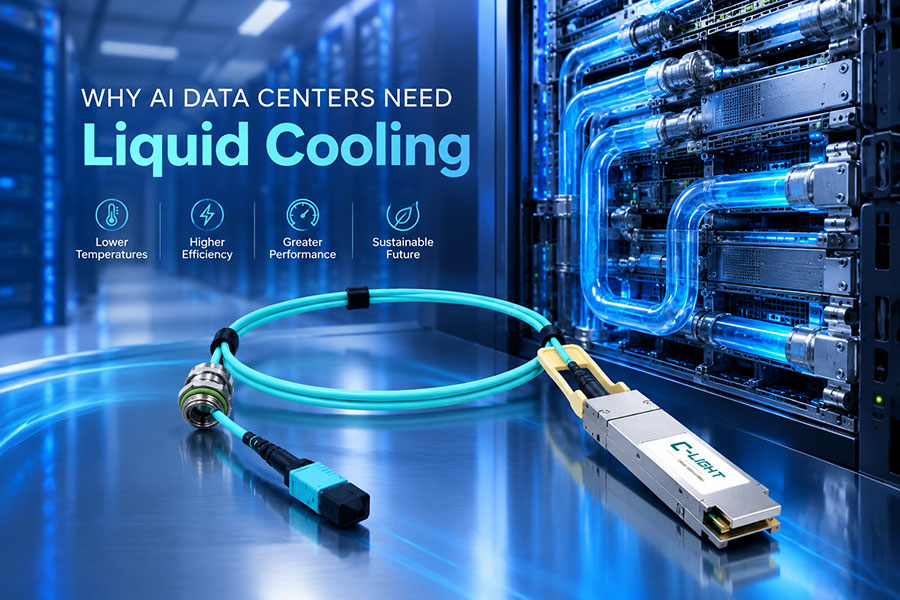
Power consumption is an important consideration in AI data center networking. Optical interconnect design must consider transceiver power, DSP power, laser efficiency, thermal management, and the power consumed by the complete electrical and optical signal path.
21. Latency and Signal Integrity
AI workloads are sensitive to communication efficiency across large accelerator clusters. Optical interconnect technologies therefore focus not only on bandwidth but also on latency, signal integrity, jitter, BER, and reliable operation at high data rates.
22. FEC in AI Optical Interconnect
Forward Error Correction helps correct transmission errors without requiring retransmission. FEC is particularly important for high-speed PAM4 systems, where signal margins become more challenging as data rates increase.
23. AI Data Center Optical Interconnect Architecture
A typical AI network may include GPU servers, high-speed Ethernet or InfiniBand switches, optical transceivers, DAC/AEC connections, and fiber links between racks. Higher-level architectures can also incorporate optical circuit switching, optical engines, silicon photonics, or CPO.
24. 800G and 1.6T Comparison
| Feature | 800G | 1.6T |
|---|---|---|
| Aggregate Bandwidth | 800Gb/s | 1.6Tb/s |
| Typical Lane Architecture | 8×100G | 8×200G |
| Modulation | PAM4 | PAM4 |
| Primary Role | Current high-speed AI networking | Next-generation AI networking |
| Typical Form Factor | OSFP / QSFP-DD | OSFP and emerging platforms |
25. Optical Interconnect for Hyperscale AI Networks
Hyperscale AI networks require scalable connectivity across large numbers of servers and switches. Higher-speed optical modules and optical fabrics can help support increasing bandwidth requirements while maintaining manageable network density.
26. AI Optical Interconnect vs Electrical Interconnect
| Feature | Optical Interconnect | Electrical Interconnect |
|---|---|---|
| Transmission Medium | Optical fiber | Copper or PCB traces |
| Reach | Longer | Generally shorter |
| Bandwidth Scaling | High | More challenging at long reach |
| EMI | Highly resistant | More susceptible |
| Typical Role | Rack-to-rack and high-speed links | Short-reach internal connections |
27. Key Challenges of AI Optical Interconnect
Higher bandwidth per lane
Increasing module power
Thermal management
Signal integrity
Optical loss and link budget
High-density connector design
Interoperability
Manufacturing scalability
28. Future Development of AI Optical Interconnect
AI networking is moving toward higher bandwidth per lane, more efficient optical engines, silicon photonics, LPO, CPO, and increasingly integrated optical architectures. The progression from 400G to 800G and 1.6T is expected to continue as AI clusters become larger and more bandwidth intensive.
29. How to Choose an AI Optical Interconnect Solution?
Selection should consider data rate, transmission distance, fiber type, connector, form factor, power consumption, optical budget, host compatibility, thermal conditions, and the required network architecture. The optical module should be selected together with the switch, cable, fiber, and complete link design.
30. Conclusion
AI data center optical interconnect is the high-speed communication foundation connecting GPUs, switches, servers, and racks in modern AI infrastructure. Technologies including 800G, 1.6T, PAM4, silicon photonics, LPO, CPO, optical transceivers, and high-speed fiber are helping data centers scale bandwidth while addressing power, latency, and density requirements.
 >
>

 >
>
 >
>
 >
>
 >
>
 >
>
 >
>
 >
>