TEL:+86 132 6656 7067




25G Ethernet has become an important server-connectivity option in data center networks because it delivers substantially more bandwidth than 10GbE while maintaining a compact, single-lane interface. Using SFP28 ports, 25G connections can link servers to top-of-rack (ToR) switches without requiring the multiple lanes associated with some alternative interface designs.
Its value extends beyond raw speed. 25G provides a practical balance of bandwidth, port density, connectivity cost, and migration flexibility for many enterprise, cloud, and storage environments. It also aligns with 100G Ethernet architectures based on four 25G lanes.
1. Higher Bandwidth per Server Connection
Modern data centers handle increasingly demanding workloads, including virtualization, distributed storage, cloud applications, and AI-related services. As server processing capacity increases, network interfaces must keep pace with data moving between servers, switches, and storage systems.
A 25G connection provides 2.5 times the nominal bandwidth of a 10G connection. This additional capacity can reduce congestion on server-facing links and provide more headroom for workloads with high network throughput requirements.
For example, a server running multiple virtual machines may generate traffic from application requests, storage operations, backups, and east-west communication simultaneously. Upgrading its network connection from 10G to 25G can provide more bandwidth without requiring multiple separate 10G links.
2. A Practical Balance Between Cost and Performance
25G Ethernet offers an intermediate upgrade path between 10G and higher-speed server connections. It can increase per-port capacity without automatically requiring the larger interface formats, additional lanes, and infrastructure changes associated with some higher-speed alternatives.
| Connection Speed | Nominal Bandwidth | Typical Data Center Role |
|---|---|---|
| 10GbE | 10 Gbps | Established server links and workloads with moderate bandwidth requirements. |
| 25GbE | 25 Gbps | Higher-bandwidth server access and switch-to-server connections. |
| 40GbE | 40 Gbps | Selected legacy and aggregation applications, often using four lanes in common interfaces. |
| 100GbE | 100 Gbps | High-capacity server connections, switch uplinks, and data center fabric links. |
Actual cost advantages depend on the switch platform, NIC, optics, cabling, power consumption, and required port count. A 25G connection is not automatically the least expensive choice in every environment, but it can provide a favorable cost-per-port and cost-per-gigabit balance for server access networks.
3. SFP28 Supports Compact, High-Density Connectivity
SFP28 is the common pluggable form factor for 25G Ethernet optical transceivers and direct-attach connections. It builds on the SFP+ mechanical format while supporting higher-speed electrical signaling.
For ToR switches, this allows many server-facing ports to fit into a relatively compact switch design. Higher port density can simplify rack connectivity and provide more server connections within the available switch capacity.
Available 25G connection options include:
25G DAC: A direct-attach copper cable suited to short, fixed-length connections, especially between servers and switches in the same rack.
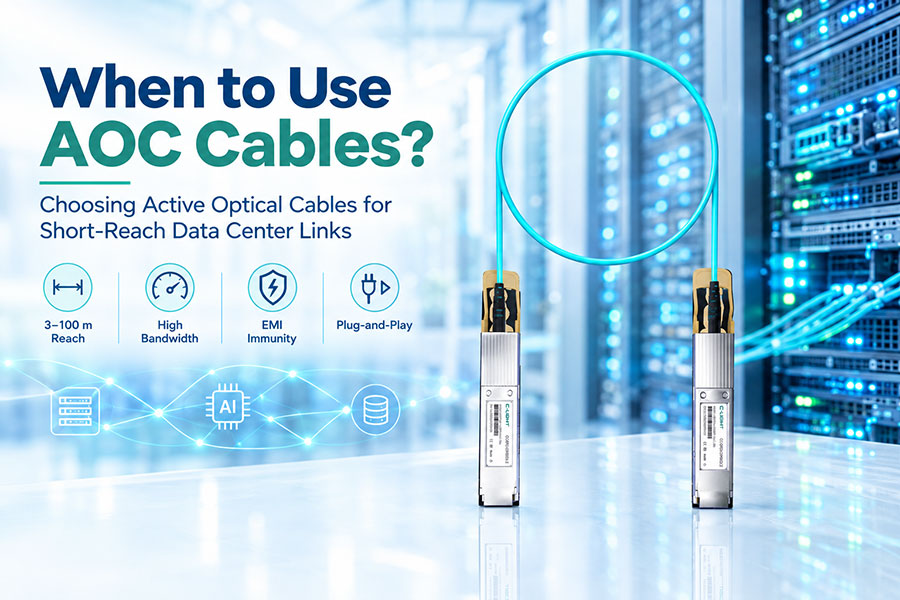
25G AOC: An active optical cable for fixed-length connections where optical signaling is appropriate.
25G optical transceivers: Pluggable modules used with separate fiber cabling for supported short- or longer-reach links.
The appropriate option depends on distance, rack layout, cable management, power requirements, and the host equipment's supported interfaces.
4. Four 25G Lanes Provide a Natural Path to 100G
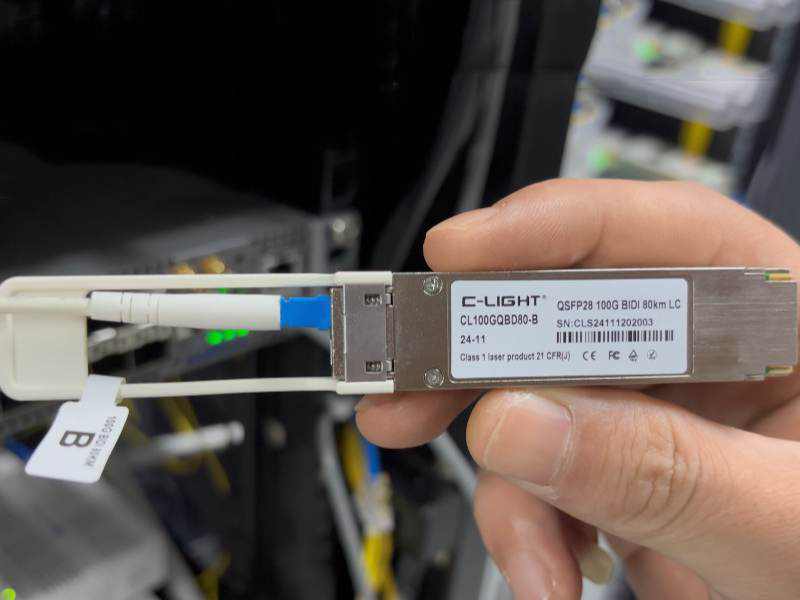
One important advantage of 25G is its relationship with 100G Ethernet. Many 100G interfaces use four lanes operating at approximately 25 Gb/s each. This creates a practical way to connect a high-capacity switch port to multiple lower-speed endpoints.
A common example is a 100G QSFP28 switch port connected through a compatible breakout cable to four 25G SFP28 server ports. Each server receives a separate 25G link, while the switch uses one 100G physical port for the four-lane breakout arrangement.
| Connection Arrangement | Server-Side Links | Key Consideration |
|---|---|---|
| 10G switch port to server | One 10G connection | Suitable when 10G provides sufficient bandwidth. |
| 25G SFP28 switch port to server | One 25G connection | Provides higher bandwidth through a single server-facing link. |
| 100G QSFP28 to 4 × 25G SFP28 | Four separate 25G connections | Requires compatible switch breakout support, cabling, and port configuration. |
This architecture helps data center operators scale server connectivity while retaining a structured migration path toward higher-capacity switching. The four 25G links share the 100G switch port's aggregate capacity, so the design must account for traffic demand and any intended oversubscription.
5. Flexible Migration from 10G to 25G
Moving from 10G to 25G does not always require replacing the entire cabling infrastructure. Depending on the existing fiber type, cable quality, link length, connectors, and optical specifications, some fiber links may support upgraded transceivers.
SFP28 and SFP+ share similar physical dimensions, which can simplify hardware planning. However, physical fit does not guarantee operational compatibility. The switch or server must support 25G operation, and the module, firmware, port mode, and link partner must meet the relevant requirements.
For short rack connections, replacing existing 10G DACs with 25G-compatible cables may be necessary. For optical links, the installed fiber plant and selected 25G transceiver must be evaluated together before a migration is approved.
6. Where Is 25G Most Useful?
25G is particularly useful in network designs that need higher server-facing bandwidth but do not require every connection to operate at 100G or above.
Cloud and virtualization: Provides additional network headroom for servers hosting multiple workloads.
Enterprise data centers: Upgrades server connections while preserving compact SFP28 connectivity.
Storage networks: Supports higher-throughput connections for compatible storage servers and network appliances.
Leaf-spine networks: Connects servers to leaf switches, with higher-speed links used where aggregation capacity requires them.
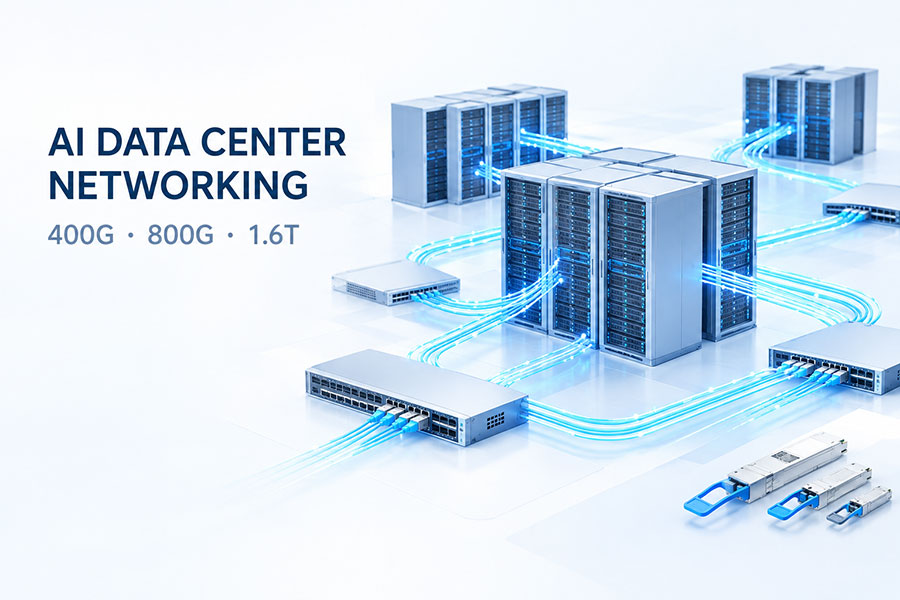
For high-performance AI servers and heavily distributed computing systems, 100G, 200G, or faster server links may be more appropriate. The correct speed depends on workload throughput, NIC capability, switch capacity, traffic patterns, and the required oversubscription ratio. A 25G design is most effective when these factors align with its bandwidth profile.
7. Conclusion
25G Ethernet remains a useful data center connectivity option because it combines higher bandwidth than 10G with compact SFP28 interfaces, flexible cabling choices, and a natural four-lane relationship with 100G Ethernet. It can improve server connectivity without forcing every part of a network to move immediately to a higher speed.
The best deployment depends on server requirements, switch port density, cable distance, compatibility, and the network's growth plan. Evaluating these factors together helps determine whether 25G, 100G breakout, or a faster direct connection provides the most suitable architecture.
8. Q&A
Q1: Why is 25G Ethernet faster than 10G?
Answer: 25G Ethernet provides a nominal 25 Gbps data rate per link, compared with 10 Gbps for 10GbE. This delivers 2.5 times the bandwidth without requiring multiple separate 10G links.
Q2: What is the difference between SFP28 and SFP+?
Answer: SFP28 supports 25G-class connectivity, while SFP+ is commonly associated with 10G. They share similar mechanical dimensions, but host port support and module compatibility must be verified.
Q3: Can one 100G port connect four 25G servers?
Answer: Yes. A compatible 100G QSFP28 port can support a 4 × 25G breakout configuration using suitable cabling or optics. The switch must support breakout mode, and the four server links share the port's aggregate capacity.
Q4: Is 25G enough for AI data centers?
Answer: It can suit management, selected storage, and some server-access connections, depending on traffic requirements. High-bandwidth GPU clusters often need faster links, such as 100G, 200G, 400G, or beyond, for demanding data paths.
 >
>

 >
>
 >
>
 >
>
 >
>
 >
>
 >
>
 >
>