TEL:+86 132 6656 7067




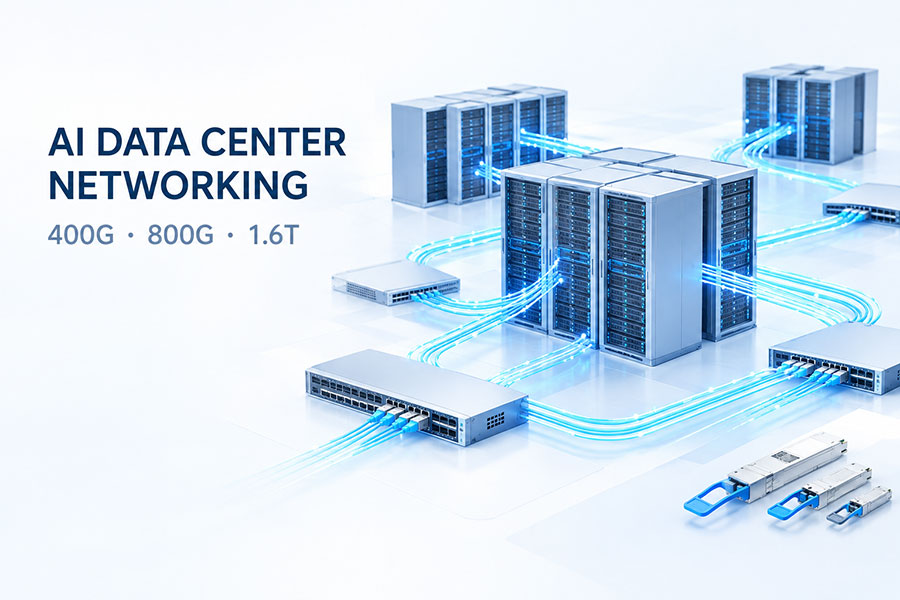
AI data centers depend on high-speed communication between GPU servers, network switches, and storage systems. Optical transceivers convert electrical signals into optical signals and back again, enabling data to travel over fiber at high speeds across racks and network layers.
As AI clusters expand, 400G and 800G optical transceivers help increase network capacity and connect more computing resources. Their role extends beyond signal conversion: module selection also affects link distance, power consumption, cooling, and network scalability.
1. Connecting GPU Servers and Network Switches
Optical transceivers provide the physical links that carry data between network devices. In AI infrastructure, they commonly connect server network adapters to switches and link switches across the network fabric.
Server-to-switch links: Connect GPU servers and high-speed network adapters to the data center fabric.
Switch-to-switch links: Carry traffic between leaf, spine, and aggregation switches.
Cluster expansion: Connect additional racks as computing capacity increases.
Storage connectivity: Support high-bandwidth access to shared storage and model data.
Optical transceivers primarily serve network connections between devices. Communication within a server or tightly integrated GPU system may use dedicated electrical or accelerator interconnects instead, depending on the architecture.
2. How Optical Transceivers Work
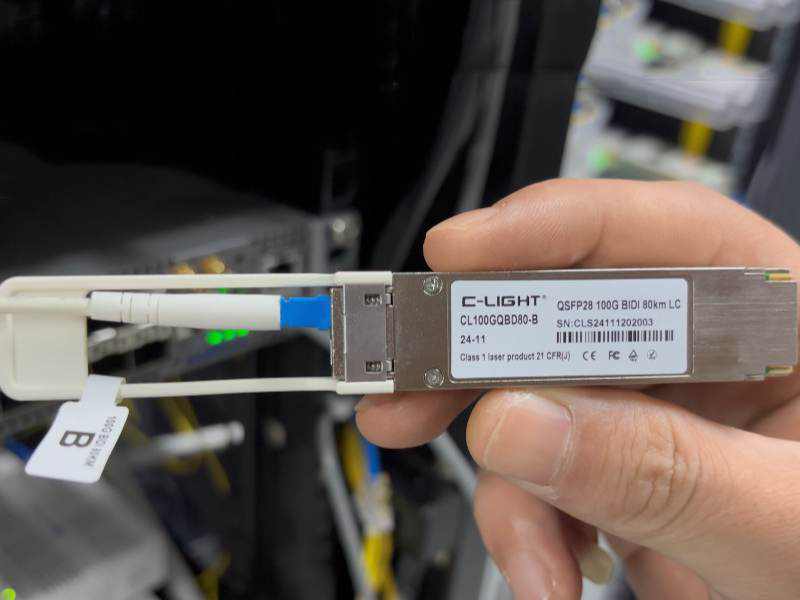
An optical transceiver integrates transmitting and receiving components in one module. On transmission, electrical data drives a laser or optical modulator that generates a light signal. The signal travels through fiber to the receiving transceiver, where a photodetector converts the light back into an electrical signal.
High-speed modules may include digital signal processing (DSP), clock and data recovery (CDR), and forward error correction (FEC), depending on the interface and design. These functions help maintain signal quality and reliable data transmission.
| Component | Function |
|---|---|
| Laser and modulator | Generate and encode optical signals. |
| Optical fiber | Transmits data between network devices using light. |
| Photodetector | Converts incoming light into an electrical signal. |
| DSP and CDR | Support signal processing, equalization, and timing recovery where implemented. |
| FEC | Corrects supported transmission errors when required by the interface. |
3. Why 400G and 800G Optics Matter
AI workloads generate substantial traffic between GPUs and servers. Higher-speed optical interfaces increase bandwidth per port, helping data center operators scale network capacity while managing port count and cabling complexity.
| Optical Rate | Typical Network Role | Design Priorities |
|---|---|---|
| 400G | High-speed server connectivity and switch uplinks | Port availability, optical reach, lane configuration, and FEC. |
| 800G | High-capacity AI fabrics and switch interconnections | Bandwidth density, module power, cooling, and fiber routing. |
| 1.6T-class | Next-generation high-bandwidth network platforms | Host support, electrical lane rates, thermal design, and module availability. |
The benefit depends on the complete network. Higher-rate optics can reduce link-capacity constraints, but switch bandwidth, NIC performance, traffic distribution, and network congestion must also be considered.
4. Fiber Types and Optical Reach
The transceiver must match the installed fiber and required transmission distance. Multimode and single-mode fiber support different optical applications and reach classes.
Multimode fiber: OM3 and OM4 are commonly used for supported short-reach connections within data centers.
Single-mode fiber: OS2 supports a broad range of applications, including longer links between racks, equipment rooms, and facilities.
Parallel optics: Uses multiple optical lanes and fiber paths to support high aggregate bandwidth.
Wavelength multiplexing: Combines multiple optical channels onto fewer fiber paths where the interface supports it.
Supported distance depends on the specific transceiver standard, fiber type, connector losses, and optical link budget. Clean connectors, correct polarity, and adequate received optical power help maintain reliable links.
5. Power, Cooling, and Compatibility
High-speed optical modules contribute to the power and thermal load of AI data center switches. The module's form factor, power consumption, heatsink design, and host airflow all influence how many ports a system can operate reliably.
Compatibility is equally important. Before deployment, verify:
Host support for the module form factor, such as QSFP-DD or OSFP.
Required data rate, Ethernet or InfiniBand interface, and FEC configuration.
Fiber type, connector, wavelength, transmission distance, and optical budget.
Power consumption, cooling requirements, and operating temperature.
Module recognition, diagnostic support, and equipment compatibility.
QSFP-DD and OSFP are different form factors and are not directly interchangeable. Selection should follow the host platform's specifications and the intended optical application.
6. Improving AI Network Reliability
Optical transceivers provide the link capacity, but the wider network determines how effectively that capacity is used. Oversubscribed uplinks, uneven traffic distribution, and congestion can limit GPU communication even when all optical links operate correctly.
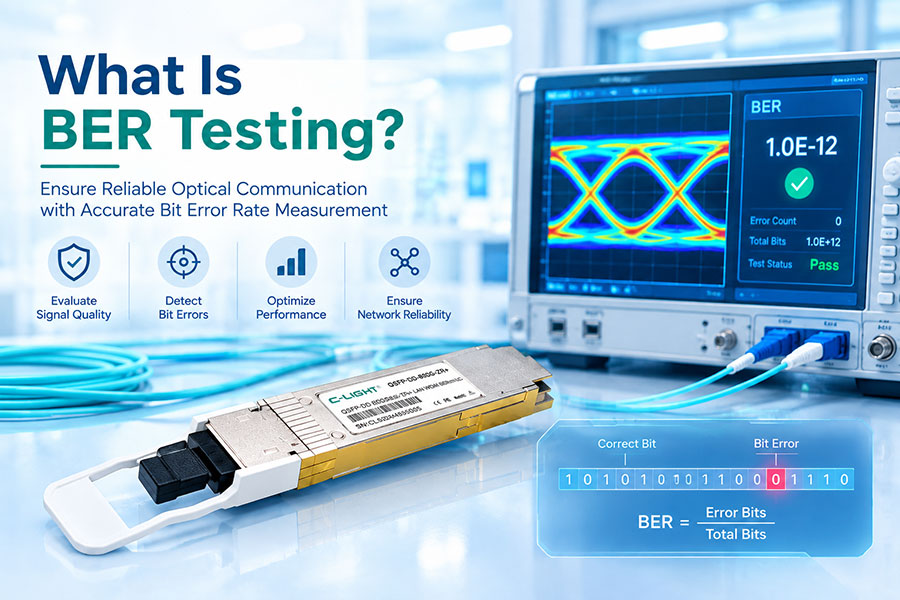
Network teams should monitor link utilization, error counters, optical power, temperature, and congestion indicators where available. Testing both endpoints and the complete link helps identify compatibility or transmission problems before they affect production workloads.
As AI infrastructure grows, a consistent strategy for transceiver qualification, fiber management, capacity planning, and replacement stock helps maintain network availability.
7. Conclusion
Optical transceivers connect GPU servers, switches, and other network resources through high-speed fiber links. By converting electrical data into light and back again, they enable the bandwidth and reach required by large AI data center networks.
400G and 800G optics provide higher-capacity connectivity, while fiber selection, module compatibility, power, and cooling determine deployment suitability. Coordinating these factors with switch capacity and network topology helps build scalable AI infrastructure with reliable data transfer.
 >
>

 >
>
 >
>
 >
>
 >
>
 >
>
 >
>
 >
>