TEL:+86 132 6656 7067




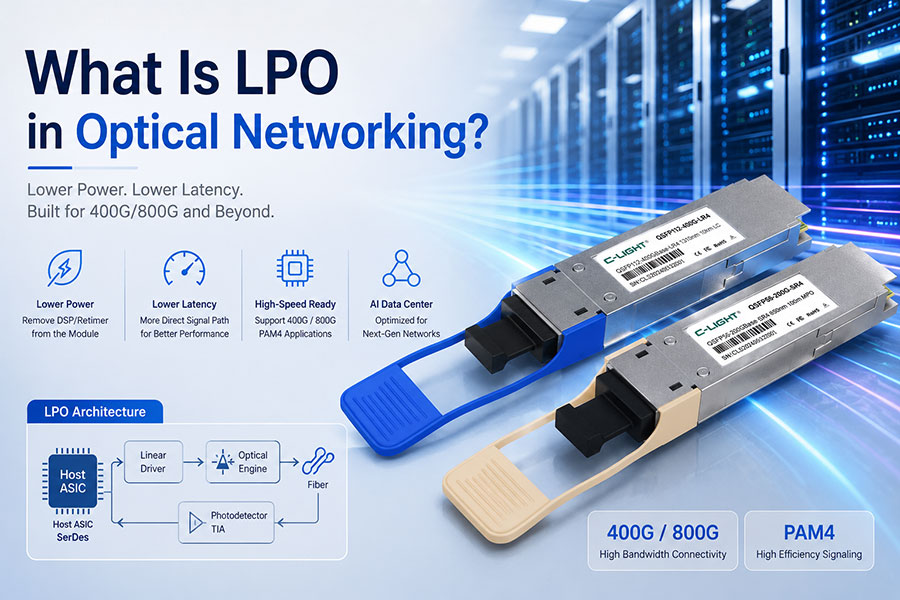
Linear Pluggable Optics (LPO) is an optical networking architecture designed to reduce the processing performed inside high-speed optical transceiver modules. Instead of relying on a retimer or DSP inside the module to regenerate and process the electrical signal, LPO uses a more direct electrical-to-optical path and relies more heavily on the host system's SerDes and signal-processing capabilities.
LPO has attracted attention for 400G and 800G networking, particularly in high-bandwidth data center and AI networking environments where power consumption, latency, and port density are important design considerations. The Optical Internetworking Forum (OIF) has demonstrated LPO technologies using 112G-class electrical interfaces. :contentReference[oaicite:0]{index=0}
1. What Does LPO Mean?
LPO stands for Linear Pluggable Optics or Linear-drive Pluggable Optics. The term describes a pluggable optical module architecture in which the optical module uses linear electrical components rather than a conventional retimer or DSP-based signal-processing architecture.
In a traditional retimed optical transceiver, the electrical signal from the host ASIC passes through a module DSP or retimer before being converted into an optical signal. In an LPO architecture, the DSP or retimer is removed from the optical module, creating a more direct signal path between the host SerDes and the optical components. :contentReference[oaicite:1]{index=1}
2. How Does LPO Work?
A simplified LPO transmission path can be represented as:
Host ASIC SerDes → Linear Driver → Optical Engine → Fiber
On the receive side, the architecture can use:
Fiber → Photodetector/TIA → Host ASIC SerDes
Compared with a conventional retimed module, the LPO approach removes the module-side DSP or CDR processing stage. This reduces the amount of signal processing performed inside the optical transceiver, but it also places greater responsibility on the host SerDes and the electrical channel between the ASIC and module.
3. LPO vs Traditional Pluggable Optical Transceivers
| Feature | LPO | Traditional Retimed Pluggable Optics |
|---|---|---|
| Module DSP/Retimer | Typically removed | Typically included |
| Electrical Signal Path | More direct | Additional processing inside module |
| Power Consumption | Lower potential | Higher due to DSP/retimer processing |
| Latency | Very low potential | Higher due to additional signal processing |
| Host SerDes Requirement | Higher | Lower relative dependence |
| Electrical Channel Sensitivity | Higher | Lower relative sensitivity |
| Typical Target Speeds | 400G, 800G and beyond | 100G, 200G, 400G, 800G and beyond |
4. Why Is LPO Important for High-Speed Networking?
As network speeds increase, optical transceiver power consumption becomes an increasingly important consideration. A conventional high-speed module may contain optical components, driver and receiver electronics, and a DSP or retimer. Removing the module-side DSP can simplify the signal path and reduce module power.
OIF has highlighted lower power and lower latency as key potential advantages of LPO. Its demonstrations have targeted high-speed electrical interfaces such as 112G-class PAM4. :contentReference[oaicite:2]{index=2}
LPO can therefore be attractive in systems where large numbers of high-speed optical modules are deployed and every watt of networking power matters.
5. LPO and PAM4 Signaling
LPO is closely associated with high-speed PAM4 networking. PAM4 uses four signal levels to encode two bits per symbol, allowing higher data rates per electrical or optical lane than traditional NRZ signaling.
For example, 400G and 800G optical systems can use 100G-class PAM4 lanes. NVIDIA's current 800G optical products include designs using 100G-PAM4 electrical modulation, while industry LPO demonstrations have also focused on 400G and 800G applications. :contentReference[oaicite:3]{index=3}
The combination of high-speed PAM4 SerDes and linear optical modules is important because the host ASIC must maintain sufficient signal integrity when the module no longer contains a conventional DSP to compensate for the electrical channel.
6. Main Advantages of LPO
6.1 Lower Power Consumption
Removing the module DSP or retimer can reduce the electrical processing performed inside the optical module. OIF has demonstrated LPO architectures with significant potential power savings compared with traditional retimed modules. :contentReference[oaicite:4]{index=4}
6.2 Lower Latency
Because the signal does not need to pass through a conventional module DSP processing path, LPO can provide a very low-latency optical interconnect architecture.
6.3 Simplified Module Architecture
An LPO module can use a relatively direct architecture consisting of linear drivers, optical transmitters, photodetectors, and TIAs. This can reduce the amount of active signal-processing circuitry inside the module.
6.4 Potential Cost Benefits
Removing a high-speed DSP or retimer can reduce the number of complex components in the module. The actual cost advantage depends on the optical engine, manufacturing process, host platform, volume, and system architecture.
7. Key Challenges of LPO
7.1 Greater Dependence on Host SerDes
The host ASIC must handle more of the signal-conditioning responsibility. The quality and capabilities of the host SerDes therefore become critical to successful LPO deployment.
7.2 Electrical Channel Loss
Without a module-side DSP or retimer, the electrical path between the host ASIC and optical module becomes more important. PCB materials, connector characteristics, package design, trace length, and insertion loss can all affect signal integrity.
7.3 Link Margin
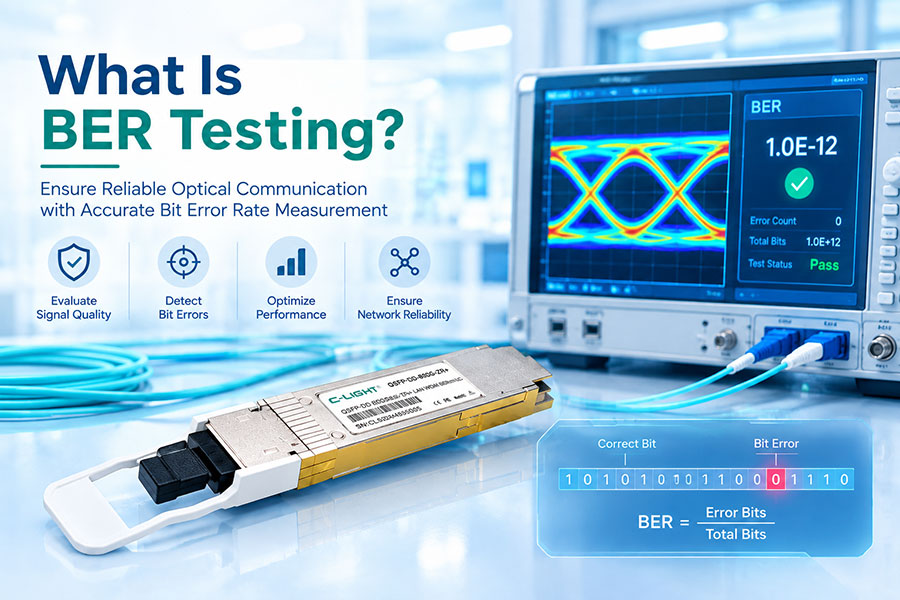
High-speed PAM4 signals have tighter signal-integrity requirements than lower-speed NRZ links. LPO system designers need to carefully evaluate the electrical and optical link budget, equalization capability, BER performance, and interoperability.
7.4 Interoperability
LPO performance depends strongly on the interaction between the host SerDes, electrical channel, optical module, and fiber link. As a result, system-level validation is particularly important.
8. LPO Applications
8.1 AI Data Centers
AI clusters require high-bandwidth communication between GPUs, network switches, storage systems, and other computing resources. LPO is being investigated as one approach for reducing optical interconnect power and latency in these high-bandwidth environments.
Industry demonstrations have included 800G LPO transceivers for AI and machine-learning networking. :contentReference[oaicite:5]{index=5}
8.2 High-Speed Ethernet
LPO can be used as an architecture for high-speed Ethernet optical connectivity, particularly at 400G and 800G. The technology is relevant to high-density switch-to-switch and switch-to-server connections.
8.3 Hyperscale Data Centers
Large data centers can contain very high numbers of optical links. Reducing the power consumed by each optical module can have a meaningful impact on overall networking power, especially as port speeds continue to increase.
9. LPO at 400G and 800G
LPO development has focused strongly on 400G and 800G optical networking. OIF's LPO work specifically discusses 400G and 800G implementations using high-speed electrical lanes. :contentReference[oaicite:6]{index=6}
800G is particularly relevant because modern switch ASICs and AI networking platforms increasingly use 100G-class electrical lanes. For example, current 800G optical transceiver implementations can use eight 100G-PAM4 electrical lanes. :contentReference[oaicite:7]{index=7}
This makes the host SerDes-to-optical-module interface a critical part of the overall system architecture.
10. LPO vs CPO
LPO and Co-Packaged Optics (CPO) both aim to address the power and signal-integrity challenges associated with increasingly high-speed networking, but they use different architectures.
| Feature | LPO | CPO |
|---|---|---|
| Optical Position | Pluggable module | Integrated near or with switch ASIC |
| Serviceability | Pluggable and replaceable | More integrated |
| DSP in Module | Typically removed | Architecture dependent |
| Power Potential | Lower than retimed pluggables | Potentially very low electrical interconnect power |
| Deployment Flexibility | High | More tightly integrated |
LPO therefore occupies an intermediate position between conventional retimed pluggable optics and more deeply integrated optical architectures. It retains the serviceability and modularity of pluggable optics while simplifying the module's electrical processing.
11. LPO vs Traditional Pluggable Optics: Which Is Better?
There is no universal answer. LPO can provide advantages in power and latency, but those advantages come with greater requirements for host SerDes performance and electrical-channel design.
Traditional DSP-based pluggable optics remain valuable because the DSP can perform signal conditioning and compensate for some electrical-channel impairments. This can simplify system-level interoperability and provide greater flexibility in challenging links.
LPO is most attractive when the host ASIC, electrical channel, optical engine, and module are designed and validated as a complete system.
12. The Role of LPO in AI Optical Interconnects
AI networking is increasing the need for high-bandwidth, low-latency, and power-efficient interconnects. Current AI networking platforms already use 400G and 800G optical connections, while the industry continues to develop higher-speed interfaces.
In this environment, LPO provides another architecture for reducing the processing and power overhead of high-speed optical modules. It is not a replacement for every type of optical transceiver, but it can be a useful option for carefully optimized high-bandwidth links.
13. C-LIGHT High-Speed Optical Connectivity
C-LIGHT develops optical transceiver and interconnect solutions covering multiple data rates and form factors for data center and high-speed networking applications.
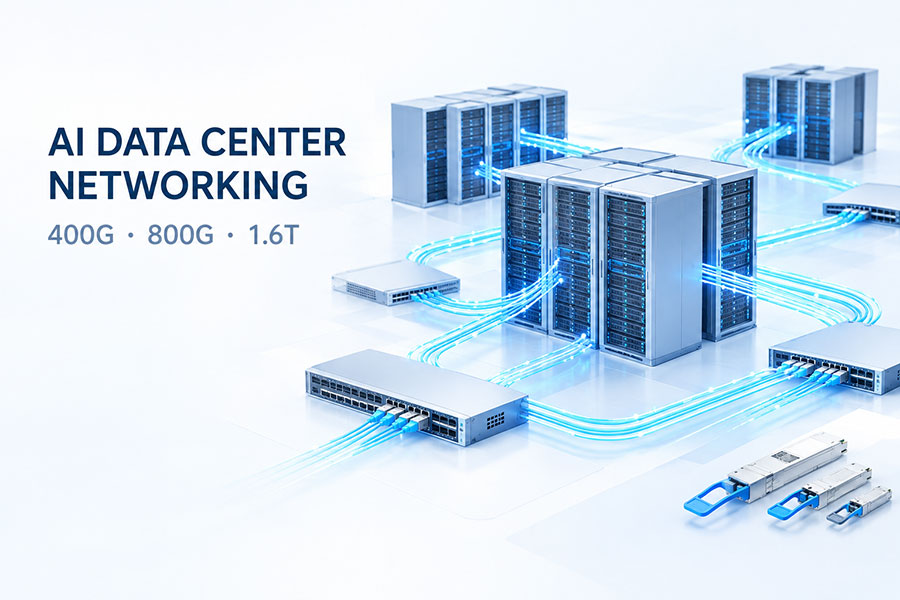
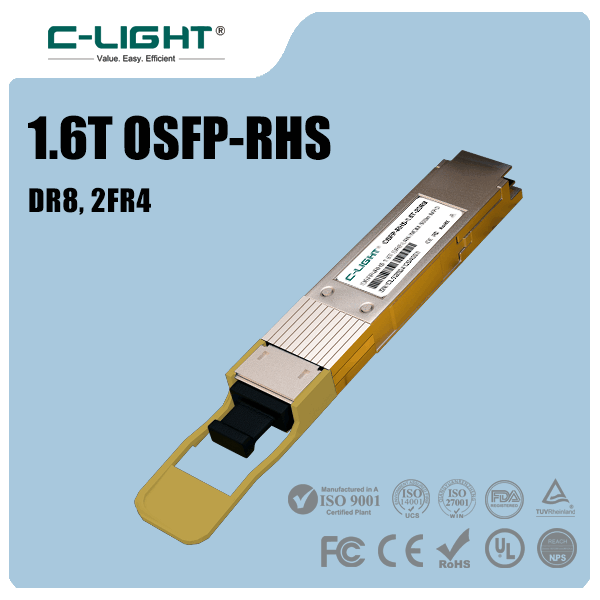
The product portfolio includes 400G, 800G and 1.6T optical connectivity solutions designed for applications such as data centers, AI infrastructure, high-performance computing, and high-speed Ethernet networks.
As optical networking moves toward higher lane rates and greater bandwidth density, technologies such as PAM4, LPO, silicon photonics, and next-generation pluggable optics are becoming important areas of development.
14. Frequently Asked Questions
Q1: What does LPO stand for in optical networking?
Answer: LPO stands for Linear Pluggable Optics or Linear-drive Pluggable Optics. It refers to a pluggable optical module architecture that removes the conventional DSP or retimer from the module and uses a more direct electrical-to-optical signal path.
Q2: What is the main advantage of LPO?
Answer: The main potential advantages are lower module power consumption and lower latency compared with conventional retimed optical modules. :contentReference[oaicite:8]{index=8}
Q3: Is LPO the same as a normal optical transceiver?
Answer: LPO is still a pluggable optical module, but its internal architecture is different. A typical LPO design removes the DSP or retimer from the optical module and relies more heavily on the host SerDes.
Q4: What speeds are associated with LPO?
Answer: LPO development has focused particularly on 400G and 800G networking, with higher-speed applications continuing to develop. :contentReference[oaicite:9]{index=9}
Q5: Does LPO use PAM4?
Answer: Many high-speed LPO implementations use PAM4 signaling. For example, industry demonstrations and 800G optical products have used 100G-class PAM4 lanes. :contentReference[oaicite:10]{index=10}
Q6: Is LPO suitable for AI data centers?
Answer: LPO is being developed and evaluated for high-bandwidth AI and data center networking because its lower-power and low-latency characteristics can be valuable in large-scale optical interconnect deployments.
15. Summary
Linear Pluggable Optics is a high-speed optical networking architecture that removes the conventional DSP or retimer from the optical module and creates a more direct signal path between the host SerDes and optical engine.
The architecture can reduce power consumption and latency, making LPO particularly relevant to 400G and 800G data center and AI networking. At the same time, LPO places greater demands on host SerDes performance, electrical-channel quality, signal integrity, and system-level interoperability.
As optical networks continue moving toward higher bandwidth and lower power consumption, LPO represents one of several approaches being developed alongside conventional pluggable optics, silicon photonics, and co-packaged optics.
 >
>

 >
>
 >
>
 >
>
 >
>
 >
>
 >
>
 >
>