TEL:+86 132 6656 7067





Pre-terminated fiber and field-terminated fiber are two installation approaches used in fiber optic networks. Both establish reliable optical connections, but they differ in where connectors are installed, how cable assemblies are prepared, and how much work must be completed on-site.
Pre-terminated fiber assemblies are manufactured with connectors installed and tested before delivery. During deployment, technicians route the cables and connect them to the corresponding equipment or distribution components. Field-terminated fiber is installed first and terminated at the job site, allowing technicians to determine connector locations and cable lengths according to actual installation conditions.
The choice between these methods affects installation time, labor requirements, testing procedures, project flexibility, and overall cost. Pre-termination is commonly used in standardized data center environments, while field termination remains important for customized installations, building networks, and projects with unpredictable cable routes.
1. What Is Pre-Terminated Fiber?
Pre-terminated fiber refers to an optical cable assembly with connectors installed at the factory before shipment. The cable ends are prepared, connectors are attached and polished, and the assembly is typically inspected and tested before delivery.
Because the connectors are already installed, technicians do not need to perform the complete termination process at the installation site. They mainly handle cable routing, connector mating, labeling, and final link verification.
1.1 Pre-Terminated Fiber Structure
Factory-prepared cable: Fiber cable is manufactured and cut to a specified length.
Factory-installed connectors: Connectors such as LC, SC, and MPO/MTP are attached before delivery.
Polished end faces: Connector end faces are prepared according to the specified polishing requirements.
Factory inspection and testing: Assemblies are inspected and tested according to the manufacturer's quality procedures.
Protective packaging: Connector ends are protected during transportation and installation.
1.2 Common Pre-Terminated Fiber Products
MPO/MTP trunk cables: Multi-fiber assemblies used for backbone connections between distribution areas.
LC duplex patch cords: Factory-assembled cables for connecting optical transceivers and patch panels.
MPO-to-LC breakout assemblies: Multi-fiber cables that fan out into individual duplex LC connections.
Pre-terminated distribution cables: Cable assemblies designed for structured fiber distribution.
Custom fiber harnesses: Assemblies with specified connector types, fiber counts, lengths, and polarity configurations.
1.3 Typical Applications
Pre-terminated fiber is particularly useful in data centers, enterprise network upgrades, telecommunications facilities, and large structured cabling projects. It is well suited to installations where cable routes, connector interfaces, and required lengths can be determined before deployment.
2. What Is Field-Terminated Fiber?
Field-terminated fiber refers to optical cable that is terminated at the installation site rather than delivered as a fully connectorized assembly. Technicians prepare the cable, install the connectors, and complete the required inspection and testing on-site.
Field termination can be performed using several methods, including fusion splicing with pigtails, mechanical splicing, and field-installable connectors. The appropriate method depends on the cable construction, connector type, installation environment, and required optical performance.
2.1 Common Field Termination Methods
Fusion splicing: Two prepared fiber ends are permanently joined using an electric arc. In many installations, a factory-terminated pigtail is fusion-spliced to the field-installed cable.
Mechanical splicing: Two fiber ends are aligned and held together using a mechanical alignment structure and index-matching material where applicable.
Field-installable connectors: Specially designed connectors are installed directly onto the fiber at the job site without requiring a factory-terminated cable assembly.
2.2 Field Termination Process
A typical field termination process includes cable preparation, jacket removal, fiber handling, cleaving, connector installation or splicing, end-face inspection, and optical testing.
The exact steps depend on the selected termination method. Fusion splicing requires specialized equipment and splice protection, while field-installable connectors require the correct preparation tools and connector-specific procedures.
2.3 Typical Applications
Field termination is useful in building networks, campus fiber systems, telecommunications infrastructure, renovation projects, and installations where the actual cable route or required length cannot be accurately determined in advance.
3. Pre-Terminated Fiber vs Field-Terminated Fiber: Key Differences
The main distinction is the location and timing of connector installation. Pre-terminated assemblies move most connector preparation and testing into the factory, while field-terminated systems complete the termination process at the installation site.
| Comparison | Pre-Terminated Fiber | Field-Terminated Fiber |
|---|---|---|
| Termination Location | Factory | Installation site |
| Connector Installation | Completed before shipment | Completed on-site |
| Cable Length | Specified before manufacturing | Can be adjusted to actual site conditions |
| Installation Work | Routing, connection, and verification | Cable preparation, termination, and testing |
| Required Equipment | Basic installation and inspection tools | Termination tools, cleavers, splicers, or field connector tools |
| Installation Speed | Generally faster for prepared cable routes | Usually requires more on-site labor |
| Labor Requirements | Lower on-site termination workload | Requires trained termination technicians |
| Quality Control | Factory inspection and testing, followed by site verification | Depends on technician skill, equipment, and site testing |
| Design Flexibility | Requires accurate advance planning | More adaptable to actual site conditions |
| Initial Planning | Requires confirmed lengths and connector configurations | Can accommodate some changes during installation |
| Project Cost | May have higher assembly costs but lower installation labor | May reduce factory assembly costs but increase site labor |
| Typical Application | Data centers and standardized structured cabling | Building networks and customized installations |
4. Installation Speed and Labor Requirements
Installation efficiency is one of the most important differences between pre-terminated and field-terminated fiber. The amount of work required at the job site can significantly affect project schedules, especially when a large number of fiber connections must be installed.
4.1 Pre-Terminated Fiber Installation
Pre-terminated assemblies arrive with connectors already installed. Once the cable routes and lengths have been confirmed, technicians can pull the assemblies into position, connect the interfaces, secure the cables, and perform final verification.
This reduces the need for on-site connector installation and polishing. In large data centers, pre-terminated MPO/MTP trunk cables can consolidate many fibers into a single assembly, further simplifying cable deployment.
4.2 Field-Terminated Fiber Installation
Field termination requires additional preparation at the installation site. Technicians must handle the cable, prepare individual fibers, install connectors or perform splicing, and inspect the completed connections.
For projects involving hundreds of fiber connections, the cumulative time required for field termination can be substantial. The actual installation duration depends on the termination method, number of fibers, site conditions, and technician experience.
4.3 Labor and Project Scheduling
Pre-termination can reduce on-site labor and shorten installation schedules when assemblies are correctly specified and delivered before deployment. However, it requires more detailed planning during the design stage.
Field termination shifts more work to the installation stage. It can be practical for small projects or locations where advance measurements are difficult, but large-scale termination work requires sufficient technician availability and testing resources.
5. Optical Performance and Connection Reliability
Both pre-terminated and field-terminated fiber can provide reliable optical connections. The difference is not that one method automatically delivers better transmission performance, but how the termination process is controlled and verified.
5.1 Factory Quality Control
Pre-terminated assemblies are manufactured under controlled production conditions. Standardized preparation, connector installation, polishing, and inspection procedures help maintain consistency between assemblies.
Manufacturers can use dedicated inspection equipment and optical test systems to check connector quality and assembly performance before shipment. However, factory testing does not eliminate the need for inspection after transportation and installation.
5.2 Field Termination Quality
Field-terminated fiber quality depends on the selected termination method, technician skill, tool condition, and installation environment. Poor cleaving, contamination, improper fiber alignment, or incorrect connector installation can increase insertion loss and reduce connection reliability.
Fusion splicing can provide consistent low-loss joints when performed correctly. Mechanical splices and field-installable connectors also have defined performance specifications, but results depend on the product design and installation procedure.
5.3 Insertion Loss and Return Loss
Insertion loss measures the optical power lost through a connection. Return loss measures the amount of optical power reflected toward the source. Both are important parameters when evaluating fiber termination quality.
For connectorized assemblies, end-face geometry, cleanliness, alignment, and polishing affect these parameters. For spliced connections, fiber alignment and splice quality are particularly important.
Neither pre-termination nor field termination guarantees a specific loss value by itself. The completed link must meet the optical budget and applicable component specifications.
6. Cable Length and Installation Flexibility
Cable length planning is another major consideration. Pre-terminated assemblies require accurate measurements before manufacturing, while field termination allows connectors to be installed after the cable has been routed.
6.1 Pre-Terminated Fiber Length Planning
Pre-terminated cable assemblies are usually manufactured to specified lengths. The design must account for the actual routing path, vertical cable management, service loops, equipment locations, and connector access requirements.
Accurate measurements help prevent assemblies from being too short or unnecessarily long. If the cable route changes after manufacturing, the original assembly may no longer fit the installation.
6.2 Field-Terminated Fiber Flexibility
Field termination allows cable to be routed first and terminated at the final connection points. This is useful in existing buildings, renovation projects, and installations where cable pathways contain unexpected obstacles.
Technicians can determine the final termination locations based on actual conditions. This reduces dependence on precise connector-to-connector measurements before installation.
6.3 Managing Excess Cable
Both methods require appropriate cable-length management. Excess cable can create congestion, increase routing complexity, and make maintenance more difficult. Insufficient cable length can prevent proper connection or create excessive mechanical tension.
Pre-terminated systems should include planned service loops, while field-terminated systems should account for the additional cable required for preparation and termination.
7. Cost Comparison: Pre-Terminated vs Field-Terminated Fiber
The total cost of a fiber installation includes more than the cable and connector purchase price. Labor, tools, testing, project scheduling, transportation, and future maintenance all influence the final cost.
7.1 Pre-Terminated Fiber Costs
Pre-terminated assemblies may have a higher purchase price because connectors are installed, polished, inspected, and tested before shipment. Custom lengths and specialized connector configurations can also affect manufacturing costs.
However, the reduction in on-site termination work can offset part of the initial assembly cost. This is particularly relevant to large projects where labor and installation time represent a significant portion of the budget.
7.2 Field-Terminated Fiber Costs
Field-terminated projects may use bulk fiber cable and separately purchased connectors or pigtails. This can provide flexibility in material selection and reduce the need to order custom-length assemblies.
However, the project must account for labor, termination equipment, consumables, testing, and the time required to complete each connection. Specialized fusion splicing equipment may also involve purchase, rental, or maintenance costs.
7.3 Total Cost of Ownership
The most economical approach depends on project scale and installation conditions.
Large standardized projects: Pre-terminated fiber can reduce installation labor and improve deployment consistency.
Small projects: Field termination may be economical when only a limited number of connections are required.
Irregular cable routes: Field termination can reduce the risk of ordering assemblies with incorrect lengths.
Repeated network expansions: A structured pre-terminated system can simplify standardized additions and equipment changes.
8. Testing and Inspection Requirements
Testing is essential for both termination methods. Factory testing provides an initial quality reference for pre-terminated assemblies, while field testing confirms that the installed optical channel meets the project requirements.
8.1 Pre-Terminated Fiber Testing
Factory testing commonly includes connector inspection and optical performance verification according to the manufacturer's procedures. Depending on the assembly and specification, testing may include insertion loss, return loss, continuity, and polarity verification.
After installation, technicians should inspect connector end faces and test the completed link. Transportation, cable pulling, and handling can introduce contamination or mechanical damage even when the assembly passed factory testing.
8.2 Field-Terminated Fiber Testing
Field-terminated connections require inspection and testing after termination. For connectorized links, end-face inspection and insertion loss testing are important. For fusion-spliced links, splice loss and overall link performance should be verified using suitable equipment.
Depending on the project, additional testing may include optical time-domain reflectometry (OTDR), optical loss testing, continuity testing, and polarity verification.
8.3 Recommended Testing Checklist
Visual inspection: Check connector end faces for contamination, scratches, and defects.
Insertion loss: Verify that the installed link meets the specified loss budget.
Return loss: Confirm that connectorized interfaces meet the required reflection performance.
Polarity: Verify correct fiber mapping, particularly for MPO/MTP assemblies.
Continuity: Confirm that each fiber reaches its intended destination.
OTDR testing: Identify splice events, excessive loss, reflections, or potential cable faults where required.
Documentation: Record test results, cable identifiers, and termination locations.
9. How to Choose Between Pre-Terminated and Field-Terminated Fiber
The right termination method depends on the project environment, installation scale, cable routing certainty, and available technical resources.
9.1 Choose Pre-Terminated Fiber When
The cable routes and required assembly lengths can be confirmed before installation.
The project involves a large number of standardized optical connections.
Fast installation and reduced on-site termination work are priorities.
Factory-controlled assembly and testing are preferred.
MPO/MTP trunk cables or pre-terminated breakout assemblies are part of the design.
The installation is located in a data center or another controlled cabling environment.
9.2 Choose Field-Terminated Fiber When
Cable routes are difficult to measure accurately in advance.
The installation involves irregular pathways or existing infrastructure.
Custom termination locations are required.
The project has a limited number of connections.
Qualified technicians and suitable termination equipment are available on-site.
Future cable routing changes are likely during construction.
9.3 Selection Checklist
Project size: Estimate the number of fibers and connections.
Cable route: Determine whether installation paths can be accurately measured.
Connector type: Confirm LC, SC, MPO/MTP, or other required interfaces.
Termination method: Select factory connectorization, field-installable connectors, or fusion-spliced pigtails.
Installation environment: Consider available workspace, cleanliness, and technician access.
Labor resources: Evaluate the availability of trained termination personnel.
Optical requirements: Define insertion loss, return loss, and link-budget limits.
Testing plan: Specify inspection, continuity, polarity, and optical loss testing.
Expansion requirements: Consider future changes to cable routes and equipment locations.
10. The Role of Pre-Terminated Fiber in Modern Data Centers
Modern data centers require large numbers of optical connections to support high-speed Ethernet, storage networks, and AI infrastructure. As port density increases, the efficiency of fiber installation and management becomes increasingly important.
10.1 MPO/MTP Trunk Systems
Pre-terminated MPO/MTP trunk cables consolidate multiple fibers into a single assembly. They are commonly used to connect distribution panels, modular cassettes, and equipment areas.
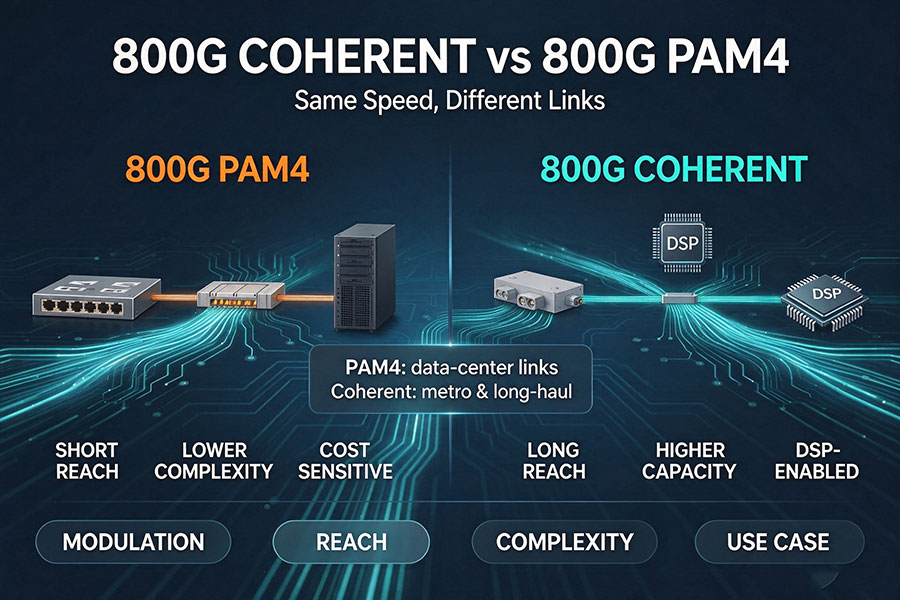
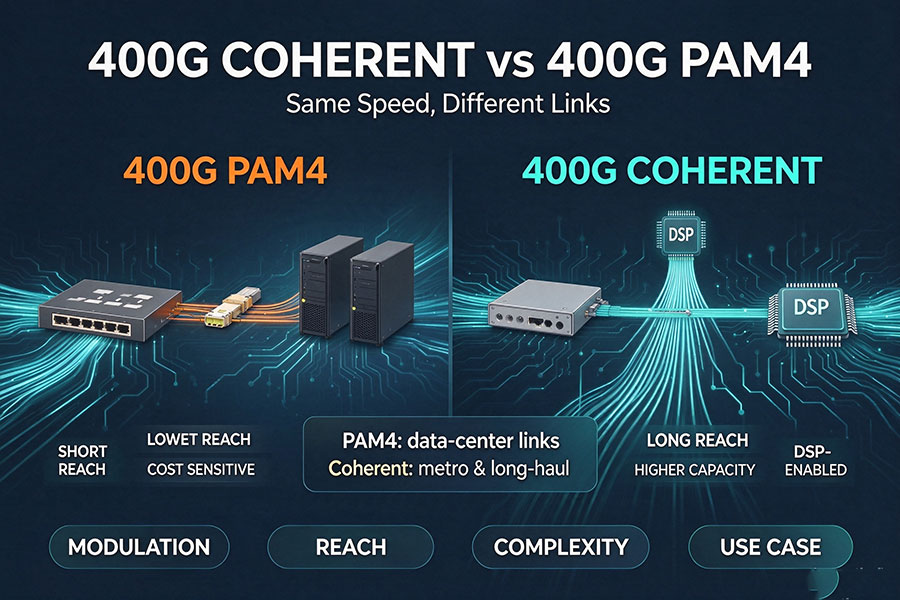
For high-speed parallel-optics applications, fiber count and polarity must match the optical transceiver interface. For example, 400G and 800G optical implementations can use different fiber mappings and connector configurations, so a trunk assembly must be selected according to the exact module specification.
10.2 Faster Deployment for High-Density Networks
Pre-terminated assemblies reduce the amount of connector preparation required on-site. This can help data center operators deploy large fiber infrastructures more efficiently, especially when many identical connections are installed across multiple racks.
10.3 Structured Cabling and Future Expansion
When pre-terminated trunks are combined with patch panels and modular cassettes, permanent backbone cabling can be separated from equipment-level patching. This makes it easier to replace switches, reorganize connections, and expand network capacity without repeatedly modifying the backbone.
For additional information about optical component inspection and qualification, see the C-LIGHT Optical Transceiver Testing and Validation Guide.
11. Conclusion
Pre-terminated fiber and field-terminated fiber offer different advantages for optical network installation. Pre-terminated assemblies are prepared and tested in the factory, reducing on-site termination work and supporting faster deployment. Field-terminated fiber provides greater flexibility when cable routes, lengths, or connection locations cannot be finalized in advance.
For large data centers and standardized structured cabling projects, pre-terminated MPO/MTP trunks and factory-assembled patch cords can simplify installation and improve consistency. For customized building networks, renovation projects, and irregular cable routes, field termination remains a practical approach.
The best solution depends on project scale, installation conditions, available labor, and optical performance requirements. In many networks, combining factory-prepared assemblies with selected field termination work provides a practical balance between installation speed and on-site flexibility.
 >

 >
 >
 >
 >
 >
 >
 >