TEL:+86 132 6656 7067




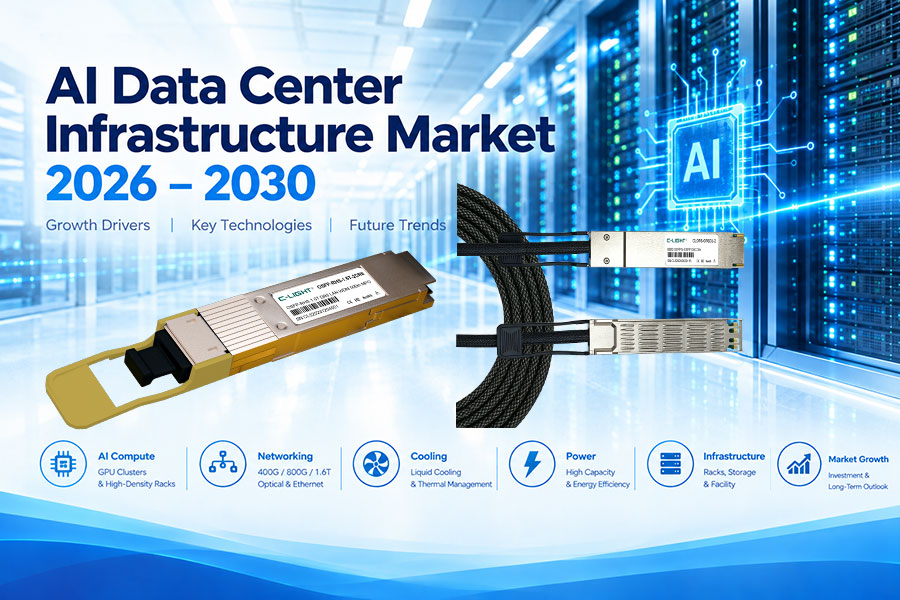
The optical interconnect market is entering a major growth cycle as AI data centers, cloud computing, high-performance computing, and next-generation networking require higher bandwidth, lower latency, and better power efficiency. From 2026 to 2030, the market is expected to evolve from conventional optical transceivers toward higher-speed 800G and 1.6T solutions, linear optics, silicon photonics, optical engines, and co-packaged or near-packaged optical architectures.
1. Optical Interconnect Market Overview
Optical interconnects provide high-speed data transmission between servers, switches, racks, GPUs, storage systems, network equipment, and data centers. They include optical transceivers, active optical cables, optical engines, photonic integrated circuits, fiber assemblies, and other optical connectivity technologies.
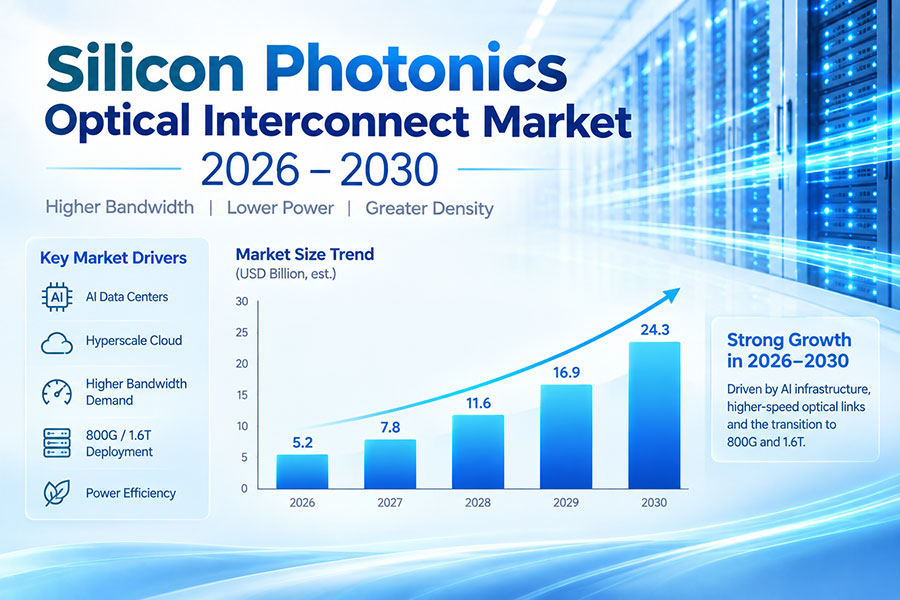
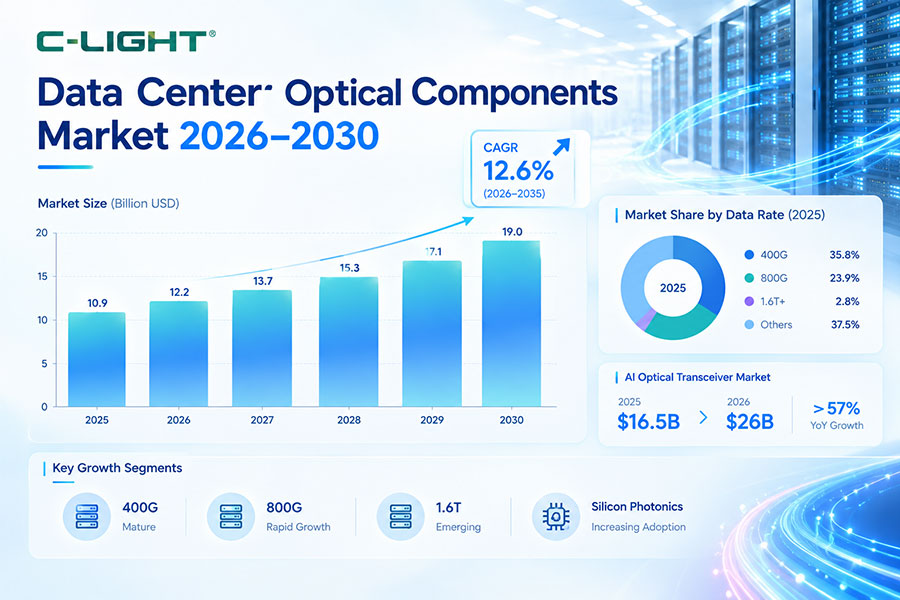
Market forecasts vary because research firms use different definitions and segment boundaries. One 2026 market report estimates the broader global optical interconnect market at approximately $15.28 billion in 2026 and projects $23.54 billion by 2030. A separate data-center-focused forecast projects a much larger market because it includes the rapidly expanding optical infrastructure associated with AI scale-up, scale-out, and scale-across architectures.
2. Why Optical Interconnect Demand Is Increasing
The main driver is the rapid growth of data traffic inside modern computing infrastructure. AI training and inference require large volumes of data exchange between GPUs, accelerators, memory, storage, and switches.
As electrical interconnects become increasingly constrained by distance, bandwidth density, power consumption, and signal integrity, optical connectivity becomes increasingly important for high-speed links.
Higher AI and HPC traffic
Rapid expansion of hyperscale data centers
Increasing GPU and accelerator density
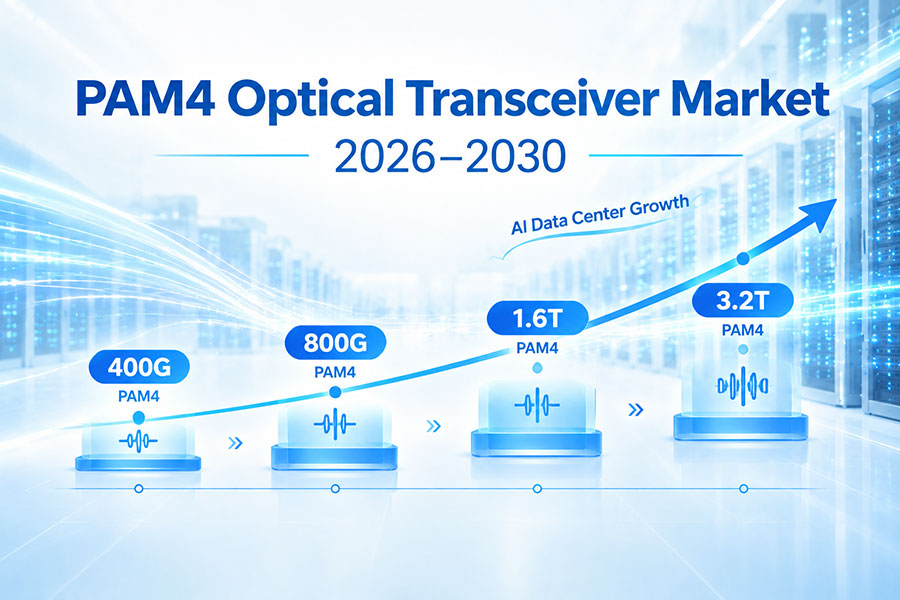
Migration from 400G toward 800G and 1.6T
Higher switch port speeds
Demand for lower latency and higher bandwidth
Growing power and thermal constraints
Expansion of data center interconnects
3. Optical Interconnect Market Forecast 2026–2030
Current market studies show strong growth through 2030, although the estimated market size differs significantly by research methodology.
| Market Area | 2026 | 2030 | Key Driver |
|---|---|---|---|
| Broad Optical Interconnect Market | About $15.3B | About $23.5B | Data centers, telecom, HPC, cloud |
| Data Center Optical Interconnect | Rapid expansion | Potentially above $100B | AI cluster connectivity |
| AI Optical Transceivers | About $26B | Continued expansion | 800G and 1.6T AI networks |
These figures should not be treated as directly interchangeable because the reports cover different market definitions. For example, a broad optical-interconnect report can include telecom, automotive, consumer electronics, and multiple interconnect levels, while an AI data-center optical-interconnect forecast focuses much more heavily on AI cluster infrastructure.
4. AI Data Centers Are Reshaping the Market
AI is changing the optical interconnect market from a traditional data-center connectivity business into a high-density computing infrastructure market.
Traditional data centers primarily connect servers, storage, and switches. AI clusters introduce much larger numbers of accelerators operating simultaneously. GPU-to-GPU and GPU-to-switch communication can generate extremely high bandwidth requirements, making network performance an important factor in overall cluster efficiency.
Optical interconnects are increasingly used across three major networking dimensions:
Scale-Up: Connectivity between accelerators and systems within tightly integrated computing architectures.
Scale-Out: Connections between servers, GPUs, leaf switches, and spine switches inside a data center.
Scale-Across: High-capacity connections between data centers and distributed AI infrastructure.
5. 400G, 800G and 1.6T Optical Interconnects
Data rates are one of the clearest indicators of market evolution. 400G remains widely deployed, while 800G is becoming increasingly important for AI infrastructure and high-density switching. 1.6T is emerging as the next major generation.
| Generation | Typical Role | Key Considerations |
|---|---|---|
| 400G | Established high-speed data center networks | DR4, FR4, LR4, SR8 and related architectures |
| 800G | AI clusters and next-generation switching | Higher port density, PAM4, thermal management |
| 1.6T | Next-generation AI and high-performance fabrics | 200G-class lanes, power efficiency, advanced optics |
The transition is not simply a matter of doubling bandwidth. Higher data rates require improvements in optical engines, laser technology, DSPs, SerDes, packaging, thermal management, fiber connectivity, and manufacturing processes.
6. 800G Optical Interconnect Market
800G is becoming a central technology in AI data-center networking. An 800G optical module can be implemented using multiple 100G-class lanes, although the exact electrical and optical architecture varies by application and vendor.
Common 800G architectures include:
800G SR8 for short-reach multimode fiber applications
800G DR8 for single-mode fiber connections
800G 2xFR4 for longer-reach parallel optical links
800G active optical cables for short-reach system connections
800G LPO and other linear optical architectures
AI networks are particularly sensitive to module power because thousands or millions of optical ports can operate simultaneously. Even a small reduction in power per module can produce a significant system-level effect.
7. 1.6T Optical Interconnects
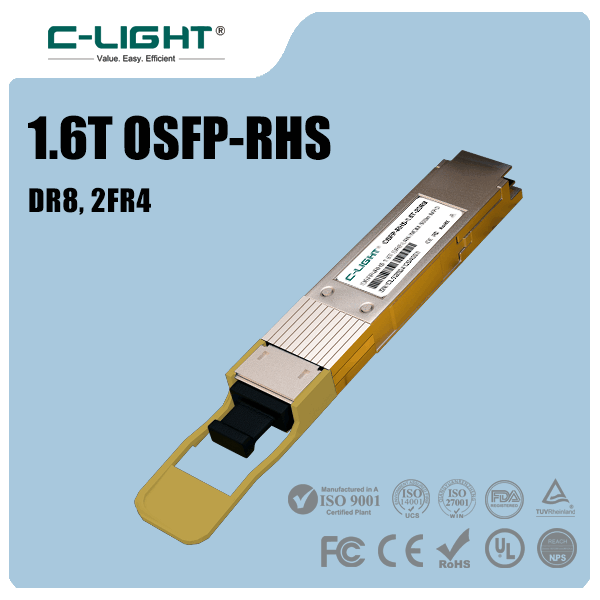
1.6T represents the next major bandwidth step for high-density AI networks. Many 1.6T architectures are based on eight 200G-class lanes, although implementation details vary.
The transition to 1.6T creates several engineering challenges:
Higher electrical signaling rates
More demanding signal integrity requirements
Higher optical component bandwidth
Greater thermal density
Higher power consumption if conventional DSP architectures are retained
More demanding packaging and connector design
As a result, the 1.6T market is closely connected with developments in silicon photonics, linear optics, advanced EML and laser technologies, optical engines, and next-generation SerDes.
8. LPO and Linear Optical Technologies
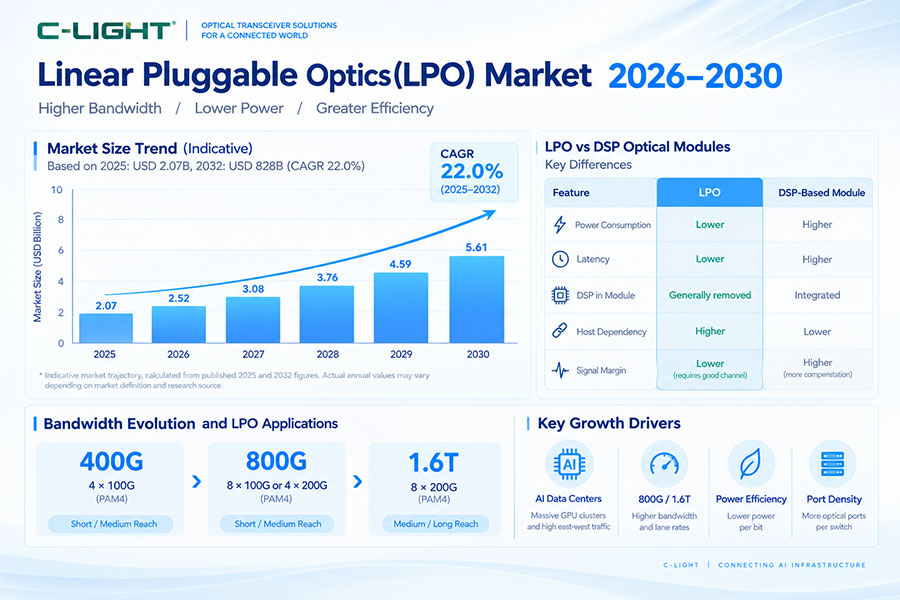
Linear pluggable optics, or LPO, are becoming an important part of the optical interconnect market. Instead of performing extensive signal processing inside the optical module, LPO architectures move more of the signal-conditioning responsibility toward the host switch ASIC or SerDes.
The main objectives are reducing optical module power, minimizing latency, and simplifying the signal path.
However, LPO also creates tighter requirements for the complete electrical channel. PCB loss, connectors, package characteristics, host SerDes performance, linear drivers, TIAs, and optical components must work together to maintain sufficient signal quality and BER margin.
9. Silicon Photonics and Optical Integration
Silicon photonics is another major technology influencing the 2026–2030 optical interconnect market. Silicon photonic platforms can integrate waveguides, modulators, wavelength multiplexers, splitters, and photodetectors into compact photonic integrated circuits.
Its importance increases as data-center operators seek higher bandwidth density and more scalable optical architectures.
Silicon photonics can support multiple market segments, including:
400G and 800G optical transceivers
1.6T optical modules
Optical engines
Co-packaged optics
Near-packaged optics
WDM optical systems
Silicon photonics does not replace every conventional optical technology. EML, VCSEL, InP lasers, passive optical components, and other technologies remain important depending on wavelength, reach, architecture, and performance requirements.
10. CPO and NPO Market Development
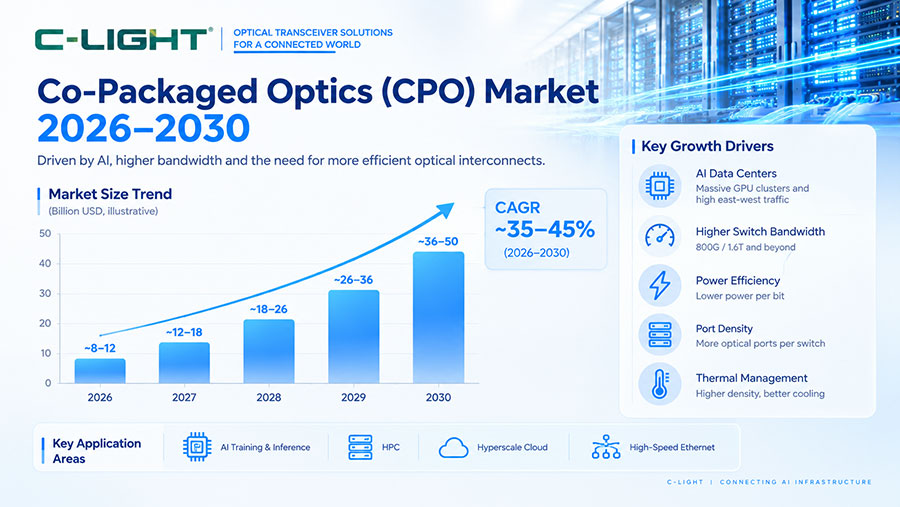
Co-packaged optics (CPO) and near-packaged optics (NPO) are designed to shorten the electrical distance between high-speed ASICs and optical engines.
As switch ASIC bandwidth increases, electrical connections between the ASIC and front-panel optical modules become increasingly challenging. Moving optical components closer to the switching silicon can reduce electrical channel loss and potentially improve bandwidth density and energy efficiency.
These architectures are particularly relevant to future AI switches and high-radix networking systems. They are not expected to immediately replace pluggable optics across all applications because serviceability, manufacturing complexity, thermal management, interoperability, and deployment requirements differ.
11. Optical Transceivers Remain a Core Market Segment
Despite the development of CPO, NPO, and optical engines, pluggable optical transceivers remain fundamental to data-center networking because they provide modularity and field replaceability.
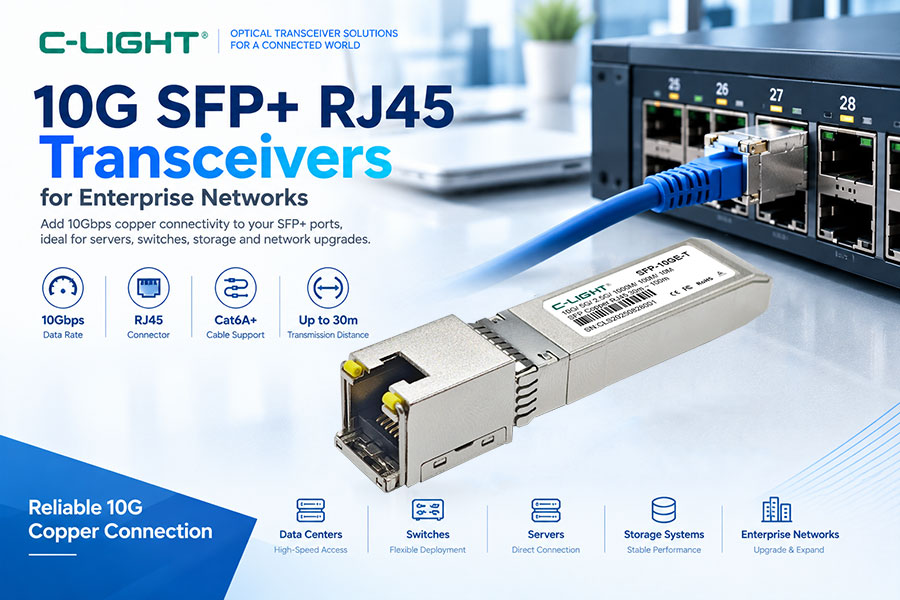
Major form factors include SFP, SFP+, SFP28, QSFP+, QSFP28, QSFP56, QSFP-DD, QSFP112, and OSFP.
Higher-speed AI networks are driving greater adoption of QSFP-DD, QSFP112, and OSFP-based solutions, while lower-speed form factors continue to serve enterprise, telecom, access, storage, and legacy infrastructure.
12. DAC, AOC and AEC in the Optical Interconnect Market
Optical transceivers are only one part of the interconnect ecosystem. Direct attach copper (DAC), active optical cables (AOC), and active electrical cables (AEC) are also important for short-reach connectivity.
| Technology | Typical Strength | Typical Application |
|---|---|---|
| DAC | Low cost and low latency | Very short switch-to-switch connections |
| AEC | Extended electrical reach | Short high-speed rack and cluster links |
| AOC | Optical transmission with integrated cable | Short-to-medium data-center connections |
| Optical Transceiver | Modular and flexible reach | Data-center fabric and longer links |
13. Data Center Optical Interconnect by Scaling Architecture
The market can also be analyzed according to where optical connectivity is used within the computing infrastructure.
13.1 Scale-Up
Scale-up architectures connect compute resources within tightly integrated systems. Short electrical and optical links are increasingly being evaluated as bandwidth requirements increase.
13.2 Scale-Out
Scale-out is currently one of the largest areas of optical demand. GPUs and servers communicate through leaf, spine, and multi-stage Clos networks using high-speed optical links.
13.3 Scale-Across
Scale-across connects geographically distributed computing resources and data centers. Coherent pluggables, DWDM, optical transport, and high-capacity single-mode fiber become increasingly important as distances increase.
14. Optical Interconnect Market by Fiber Type
Fiber selection depends strongly on transmission distance and optical architecture.
| Fiber | Typical Use |
|---|---|
| OM3 | Short-reach multimode data-center links |
| OM4 | Higher-performance multimode links |
| OM5 | Multimode WDM-oriented applications |
| OS2 | Single-mode links from data-center reach to long-distance networks |
15. Power Efficiency Becomes a Market Requirement
Power consumption is becoming one of the most important factors in optical-interconnect design. Higher bandwidth increases the amount of data transported through each port, but it can also increase the power required for DSPs, drivers, lasers, TIAs, cooling, and associated electronics.
For large AI clusters, the total optical power load can become substantial because thousands of ports may operate continuously.
This is driving demand for:
Lower-power DSPs
LPO and LRO architectures
More efficient lasers
Silicon photonics
Optical engines
Advanced thermal management
Higher bandwidth per watt
Lower power per transmitted bit
16. Optical Interconnect Supply Chain
The optical interconnect supply chain includes laser chips, EMLs, VCSELs, modulators, photodetectors, drivers, TIAs, DSPs, silicon photonic wafers, passive optical components, connectors, fiber, optical engines, packaging, testing, and complete transceiver assembly.
As the market moves toward 800G and 1.6T, production capacity and manufacturing yield become increasingly important. Laser chips, advanced packaging, optical coupling, and testing can become critical constraints during periods of rapid demand growth.
17. Regional Market Development
North America remains a major center for hyperscale cloud infrastructure and AI data-center investment. The United States hosts many of the largest cloud and AI infrastructure operators, supporting demand for high-speed optical connectivity.
Asia-Pacific is also important because of its semiconductor, optical-component, electronics-manufacturing, telecom, and data-center ecosystems. China, Taiwan, South Korea, Japan, and other regional markets contribute to the optical-component and manufacturing supply chain.
Europe continues to invest in cloud infrastructure, telecommunications, HPC, and data-center modernization, while regional energy-efficiency requirements are increasing the importance of power-efficient networking technologies.
18. Key Market Trends for 2026–2030
Several technology trends are expected to shape the optical interconnect market through 2030.
800G expansion: Increasing deployment in AI and high-density data centers.
1.6T adoption: Gradual transition toward higher-speed optical ports.
LPO and LRO: Increasing focus on lower-power optical architectures.
Silicon photonics: Greater integration of optical functions into photonic ICs.
CPO and NPO: Increasing interest in reducing electrical interconnect distances.
Optical engines: Greater integration of lasers, modulators, detectors, and photonic circuits.
AI cluster networking: Continued demand for high-bandwidth GPU fabrics.
Power efficiency: Increasing emphasis on watts per port and watts per bit.
Advanced packaging: Greater importance of optical coupling and thermal design.
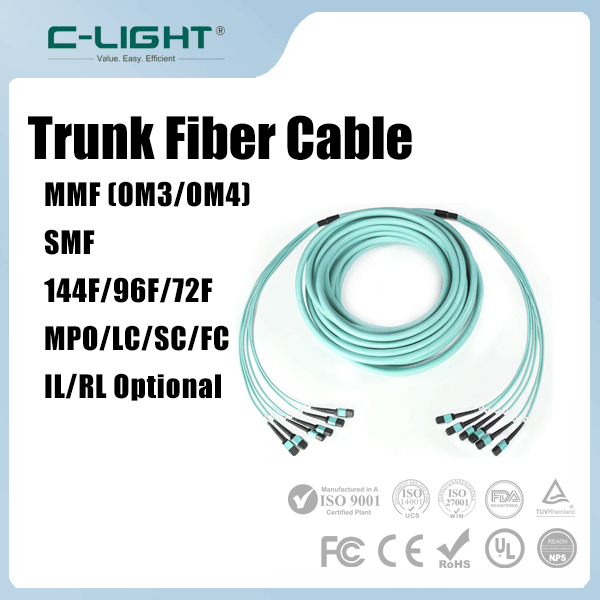
High-density cabling: Continued development of MPO/MTP and high-density fiber infrastructure.
19. Market Challenges
Despite strong demand, the optical interconnect market faces several technical and commercial challenges.
High-speed signal integrity
Optical component availability
Laser and photonic-device manufacturing capacity
Thermal management
High-speed testing requirements
Interoperability between vendors
Increasing module complexity
High development and qualification costs
Rapid technology transitions
Supply-chain volatility
20. What the 2026–2030 Market Means for Optical Module Development
Optical module development is shifting from simply increasing transmission speed toward optimizing the entire link architecture.
A competitive 800G or 1.6T optical solution must consider the host ASIC, SerDes, PCB channel, connector, optical engine, laser, driver, TIA, DSP or linear architecture, fiber, thermal environment, management interface, and testing methodology as one system.
This system-level approach is particularly important for AI data centers, where small differences in power, latency, BER, thermal performance, and port density can become significant at cluster scale.
21. Optical Interconnect Market Outlook to 2030
The 2026–2030 period is expected to be characterized by rapid increases in optical bandwidth and deeper integration between photonics and switching silicon.
400G will continue serving a large installed base, while 800G becomes increasingly important for AI and high-density data-center fabrics. 1.6T will progressively enter new deployments as switch ASICs, SerDes, optical components, and manufacturing processes mature.
At the same time, LPO, LRO, silicon photonics, optical engines, CPO, and NPO will expand the range of architectures available to network designers. Rather than one technology replacing all others, the market is likely to develop into multiple architectures optimized for different distances, bandwidths, power budgets, and deployment models.
22. Conclusion
The optical interconnect market from 2026 to 2030 will be strongly influenced by AI infrastructure, high-speed Ethernet, hyperscale data centers, and increasing bandwidth requirements. 800G and 1.6T optical technologies are becoming central to next-generation network architectures, while silicon photonics, LPO, optical engines, CPO, and NPO are changing how optical connectivity is implemented.
The key market direction is not simply higher bandwidth. Power efficiency, signal integrity, thermal performance, density, scalability, interoperability, and total system cost will increasingly determine which optical interconnect technologies are adopted at scale.
 >
>

 >
>
 >
>
 >
>
 >
>
 >
>
 >
>
 >
>