TEL:+86 132 6656 7067




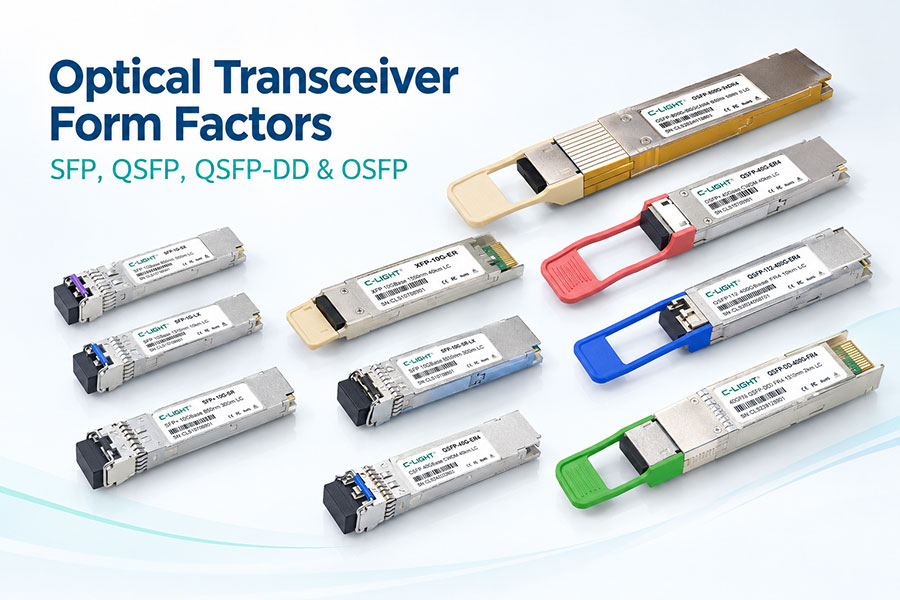
The main optical transceiver form factors currently in use include SFP, SFP+, SFP28, XFP, CSFP, QSFP+, QSFP28, QSFP56, QSFP112, QSFP-DD, and OSFP.
1. What Are Optical Transceiver Form Factors?
Optical transceiver form factors define the physical size, electrical interface, lane configuration, thermal design, and host-side interface of an optical module. Different form factors are designed for different network speeds, port densities, and application requirements.
2. Why Do Form Factors Matter?
The form factor affects module compatibility, power consumption, cooling requirements, port density, breakout options, and supported data rates. A module must match the form factor supported by the switch, router, server, NIC, or other host equipment.
3. SFP Form Factor
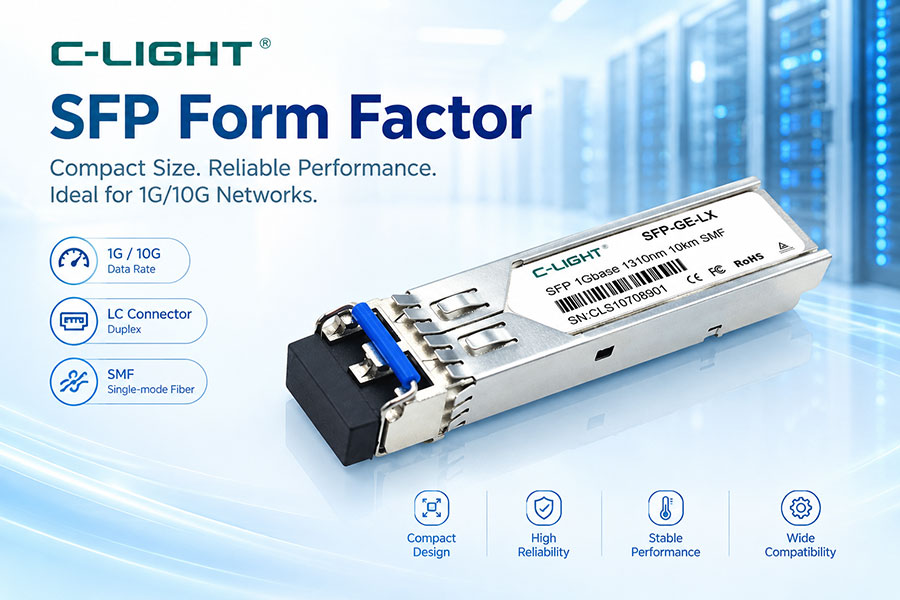
SFP, or Small Form-factor Pluggable, is widely used for 1G Ethernet and other access, enterprise, telecom, and industrial networking applications. SFP modules normally use a single electrical lane and are commonly available with LC or other fiber interfaces.
4. SFP+ Form Factor
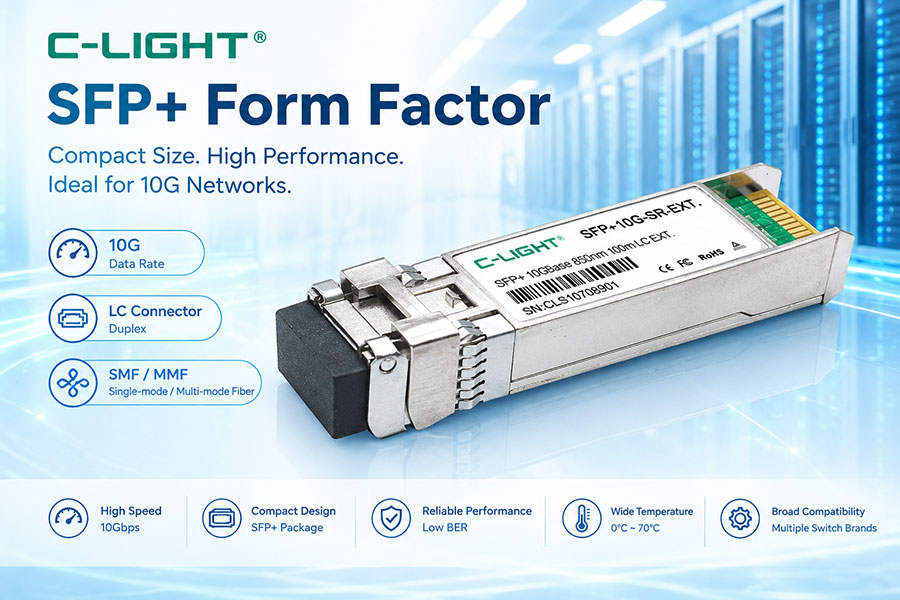
SFP+ is the enhanced version of SFP and is widely used for 10GbE, Fibre Channel, and telecom applications. It keeps a compact SFP-sized package while supporting higher-speed electrical signaling.
5. SFP28 Form Factor
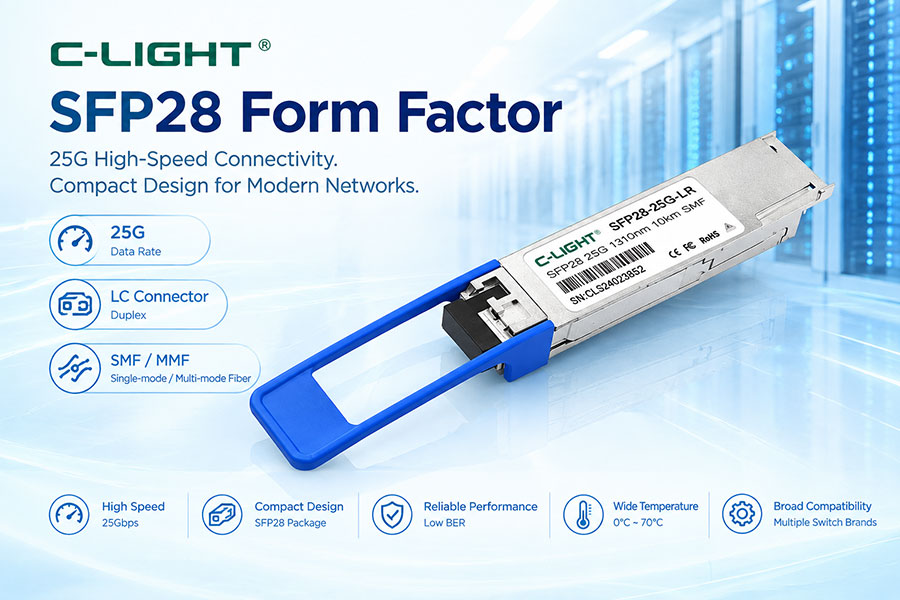
SFP28 is designed for 25Gbps-class networking and is widely used in data center servers, switches, NICs, and 25GbE connections. Its physical footprint is similar to SFP and SFP+, providing a compact single-lane solution.
6. XFP Form Factor
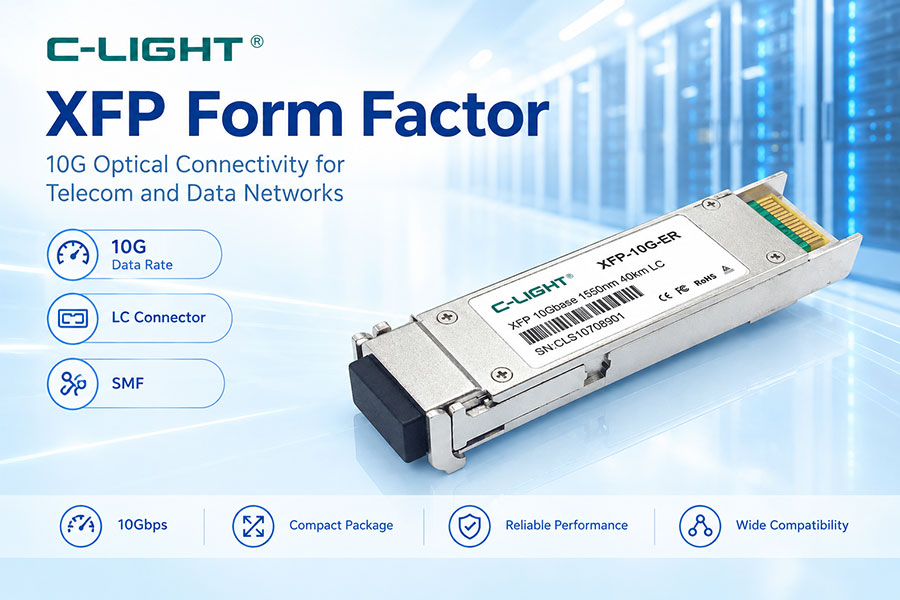
XFP is a 10Gbps pluggable form factor used in 10GbE, SONET/SDH, and telecom networking. It remains relevant in specific network equipment and installed systems, although SFP+ is more common for compact 10G deployments.
7. CSFP Form Factor
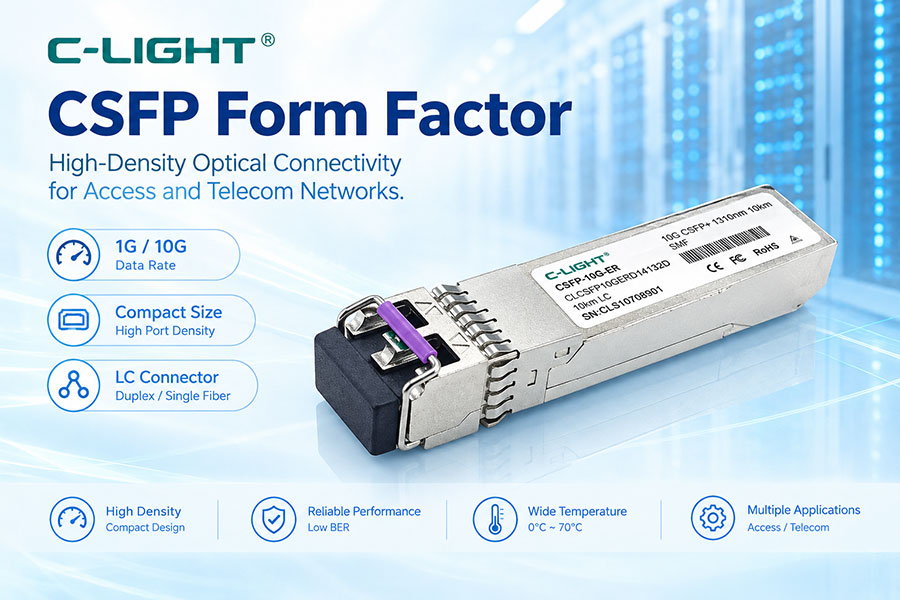
CSFP, or Compact Small Form-factor Pluggable, is designed for high-density optical access and telecom applications. CSFP implementations can support compact bidirectional or multi-channel connectivity depending on the module and host equipment.
8. QSFP+ Form Factor
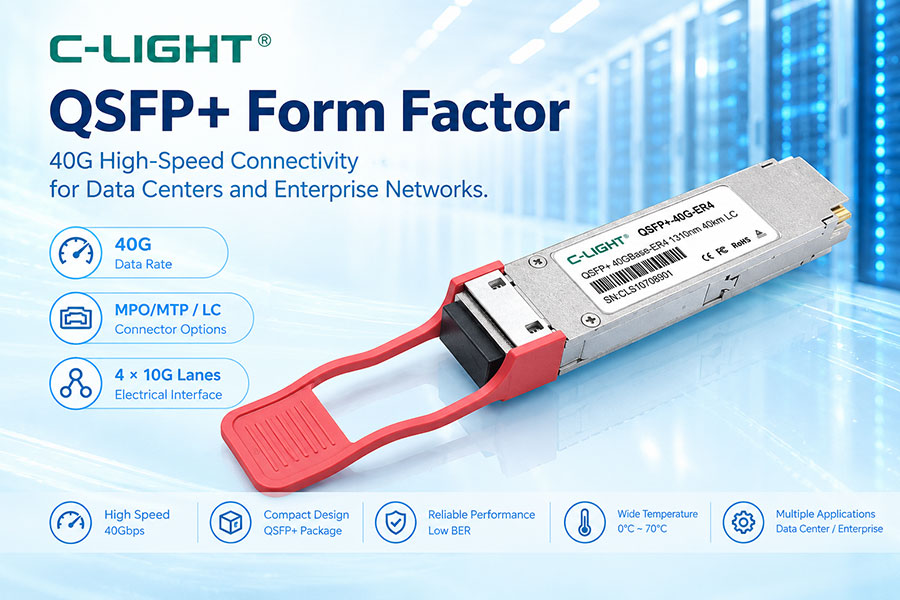
QSFP+, or Quad Small Form-factor Pluggable Plus, uses four electrical lanes and supports 40Gbps-class connectivity. It is commonly used for 40GbE switch-to-switch, server-to-switch, and data center connections and can support 4x10G breakout configurations.
9. QSFP28 Form Factor
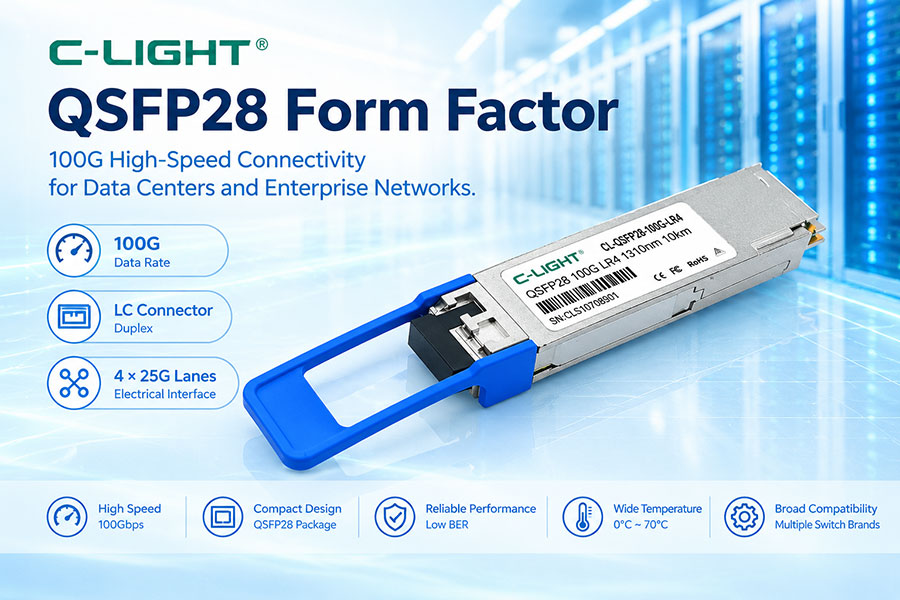
QSFP28 is one of the most widely deployed 100G form factors. It uses four electrical lanes and can support 100Gbps connectivity through 4x25G signaling. QSFP28 is widely used in data centers, enterprise networks, telecom networks, and high-performance computing.
10. QSFP56 Form Factor
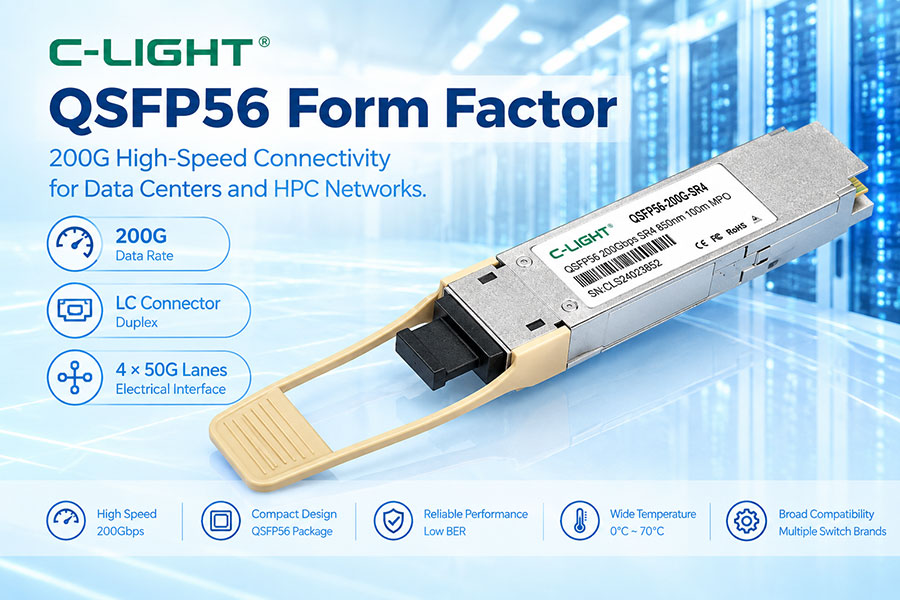
QSFP56 extends the QSFP family to 200Gbps-class applications by using four lanes at approximately 50Gbps per lane. PAM4 signaling enables higher bandwidth while maintaining the compact QSFP form factor.
11. QSFP112 Form Factor
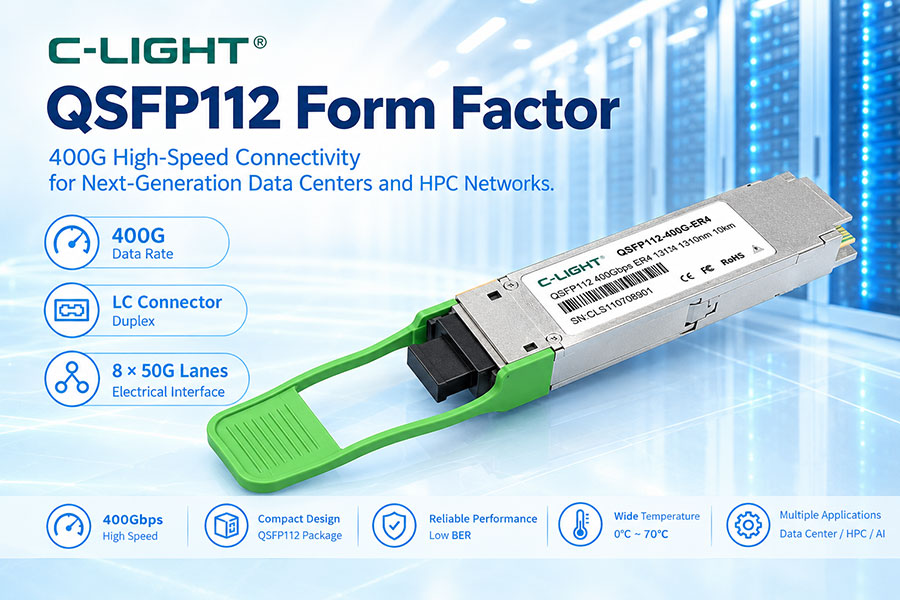
QSFP112 is designed for 400Gbps-class connectivity using four electrical lanes at approximately 100Gbps per lane. It is used for high-speed Ethernet and data center interconnect applications where a compact four-lane architecture is preferred.
12. QSFP-DD Form Factor
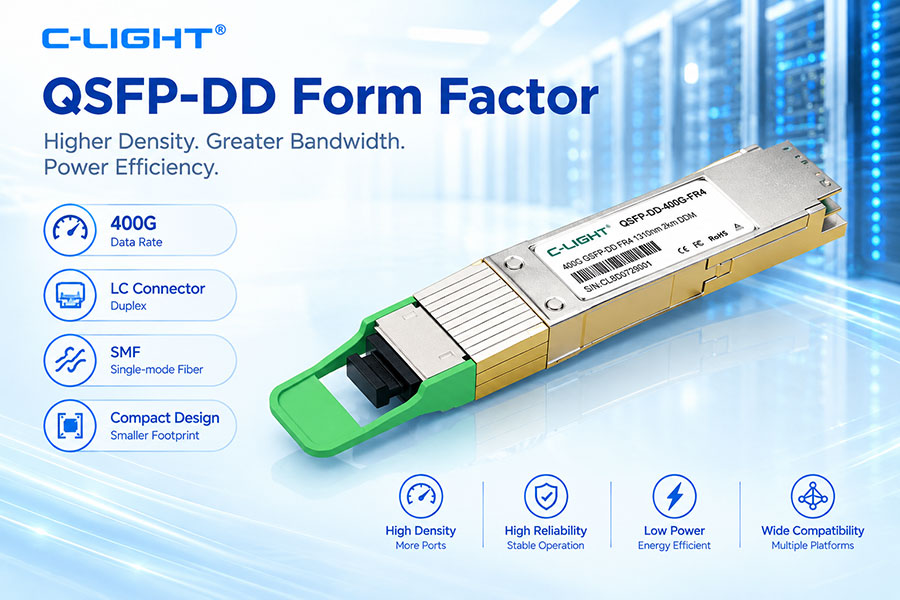
QSFP-DD, or Quad Small Form-factor Pluggable Double Density, increases the electrical lane count to eight. It is widely used for 400G and 800G optical modules and provides high port density for modern data center switches, routers, servers, and AI networking systems.
13. OSFP Form Factor
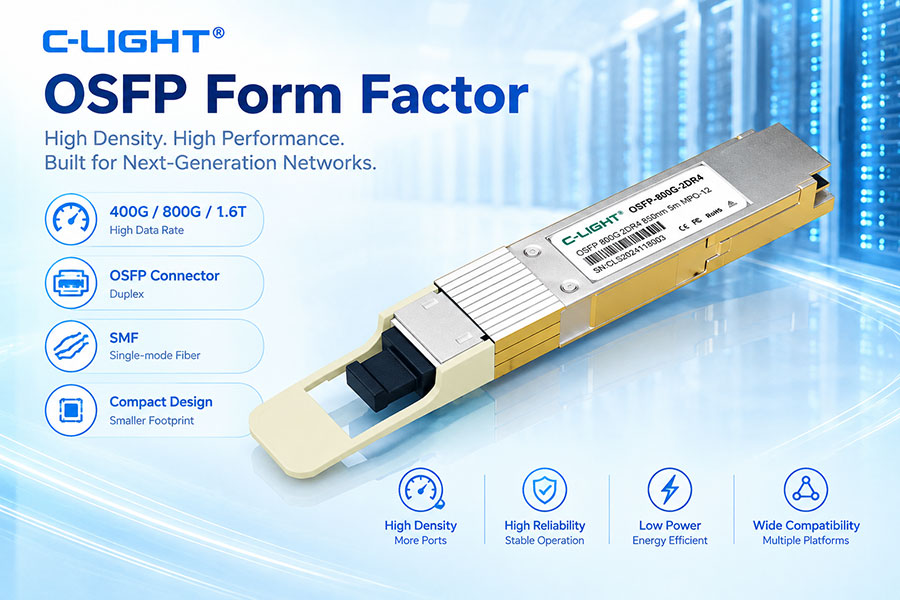
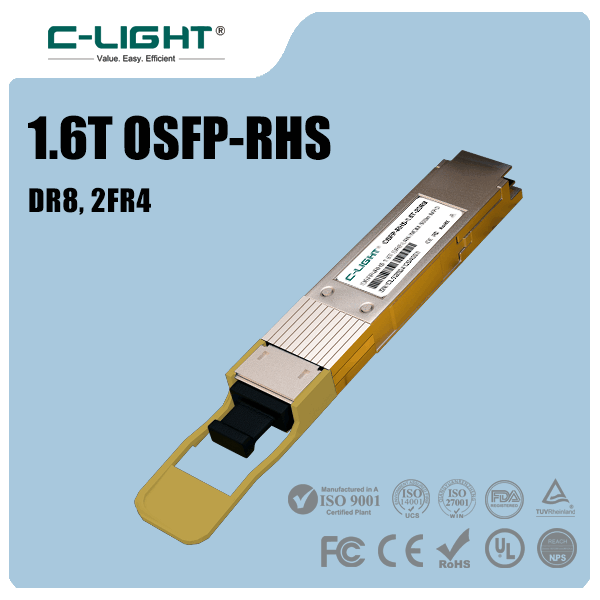
OSFP, or Octal Small Form-factor Pluggable, is designed for high-speed networking with eight electrical lanes. It is widely used for 400G, 800G, and emerging 1.6T optical connectivity, particularly in AI data centers, GPU clusters, hyperscale networks, and high-performance computing.
14. SFP vs SFP+ vs SFP28
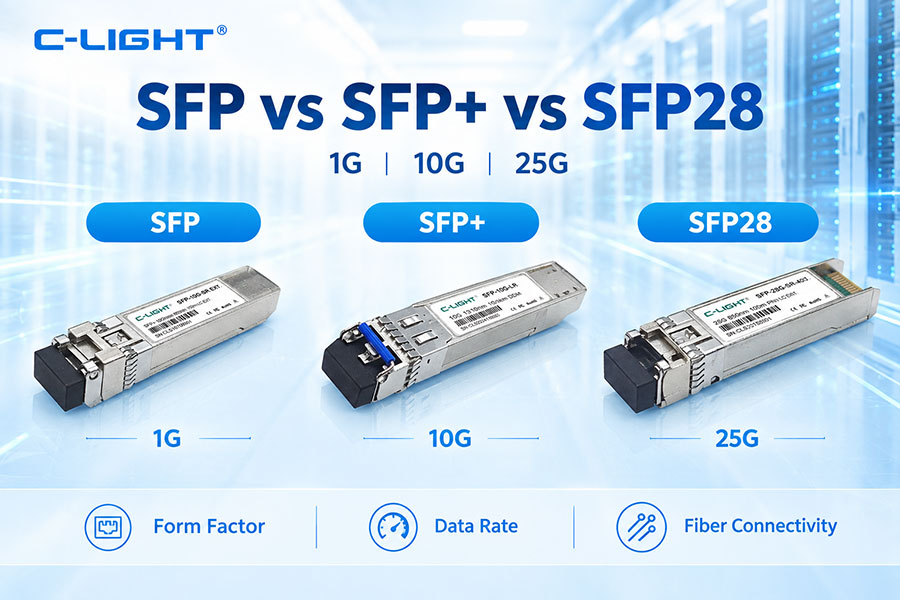
SFP, SFP+, and SFP28 share a compact single-port form factor but target different generations of network speeds. SFP is commonly associated with 1G, SFP+ with 10G, and SFP28 with 25G applications.
15. QSFP+ vs QSFP28 vs QSFP56
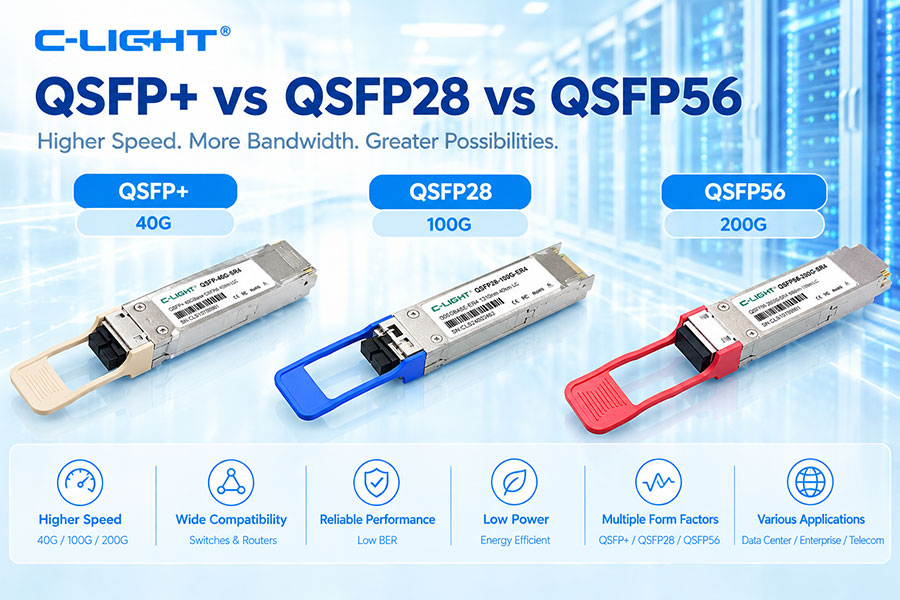
These QSFP-family modules use four electrical lanes. QSFP+ typically supports 40G, QSFP28 supports 100G, and QSFP56 supports 200G through progressively higher per-lane signaling rates.
16. QSFP-DD vs OSFP
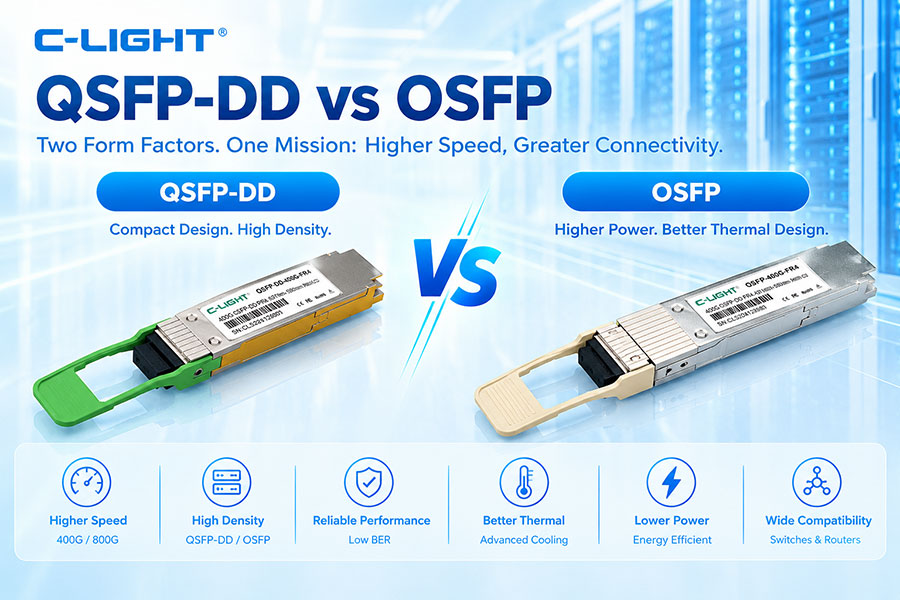
QSFP-DD and OSFP are two major form factors for 400G and 800G networking. QSFP-DD offers strong backward compatibility with the QSFP ecosystem, while OSFP provides a larger package with greater thermal headroom for high-power optical modules.
17. Single-Lane Form Factors
SFP, SFP+, SFP28, and related SFP-family modules use compact single-port architectures. They are suitable for access networks, enterprise networks, server connections, telecom systems, and applications where port density and compact size are important.
18. Four-Lane Form Factors
QSFP+, QSFP28, QSFP56, and QSFP112 use four high-speed electrical lanes. This architecture allows higher aggregate bandwidth while maintaining a relatively compact module size.
19. Eight-Lane Form Factors
QSFP-DD and OSFP use eight electrical lanes and are designed for high-speed networking from 400G to 800G and beyond. These form factors are particularly important for AI clusters, hyperscale data centers, and high-performance computing.
20. Form Factors and PAM4
As network speeds increase, PAM4 signaling has become important for higher-speed optical modules. QSFP56, QSFP112, QSFP-DD, and OSFP commonly use PAM4-based architectures to achieve higher data rates per electrical lane.
21. Form Factors and Optical Connectors
The form factor does not determine the optical connector by itself. Depending on the application, optical modules may use duplex LC, simplex LC, MPO/MTP, or other interfaces. The correct connector must match the fiber system and host-side requirements.
22. Form Factors and Fiber Type
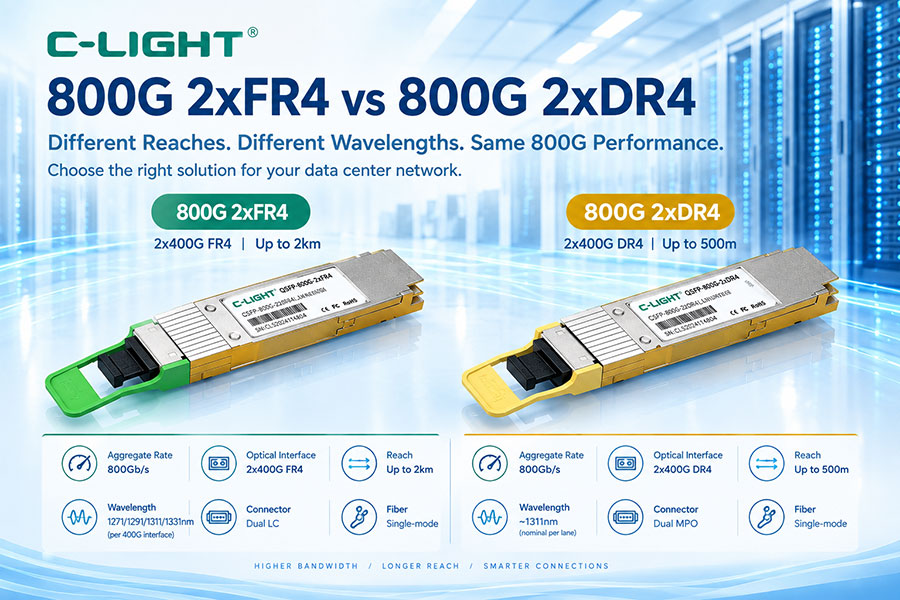
Different form factors can support both single-mode fiber and multimode fiber depending on the optical design. SR modules commonly use multimode fiber for short-distance links, while LR, ER, DR, FR, and related modules generally use single-mode fiber.
23. Form Factors and Transmission Distance
Transmission distance is determined by the optical design rather than the form factor alone. For example, QSFP28 can be used for short-reach SR applications as well as longer-reach LR and ER solutions.
24. Form Factors and Power Consumption
Higher-speed optical modules generally require more power and generate more heat. This makes thermal design increasingly important for QSFP-DD and OSFP modules used in 400G, 800G, and 1.6T applications.
25. Form Factors for Data Centers
Data center networks commonly use SFP+, SFP28, QSFP28, QSFP56, QSFP-DD, and OSFP depending on network architecture and bandwidth requirements. Higher-speed AI and HPC networks increasingly use 400G, 800G, and 1.6T form factors.
26. Form Factors for AI Data Centers
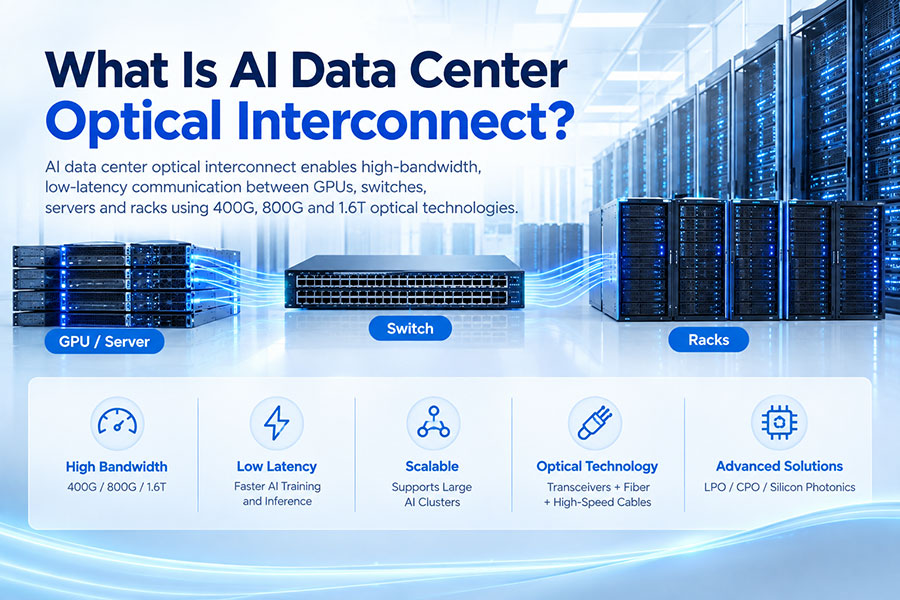
AI data centers require high bandwidth, low latency, high port density, and efficient thermal management. QSFP-DD and OSFP are therefore important form factors for 400G and 800G optical connectivity, while OSFP is also widely used for emerging 1.6T solutions.
27. Form Factors and Breakout Connectivity
Multi-lane form factors can support breakout configurations. For example, 100G QSFP28 can connect to 4x25G SFP28, while 400G and 800G QSFP-DD or OSFP solutions can support various breakout architectures depending on the optical module and host interface.
28. How to Choose an Optical Transceiver Form Factor?
Select the form factor according to the host equipment, required data rate, electrical lane configuration, optical reach, fiber type, connector, power budget, thermal environment, and compatibility requirements.
29. Optical Transceiver Form Factor Comparison
| Form Factor | Typical Speed | Lane Configuration | Typical Applications |
|---|---|---|---|
| SFP | 1G | 1 lane | Enterprise, access, telecom |
| SFP+ | 10G | 1 lane | 10GbE, telecom, storage |
| SFP28 | 25G | 1 lane | 25GbE, data centers |
| XFP | 10G | 1 lane | Telecom, 10GbE |
| CSFP | Application dependent | Compact architecture | Access, telecom |
| QSFP+ | 40G | 4 × 10G | 40GbE, data centers |
| QSFP28 | 100G | 4 × 25G | 100GbE, data centers |
| QSFP56 | 200G | 4 × 50G | 200GbE, HPC |
| QSFP112 | 400G | 4 × 100G | 400GbE, data centers |
| QSFP-DD | 400G/800G | 8 lanes | AI, data centers, HPC |
| OSFP | 400G/800G/1.6T | 8 lanes | AI, hyperscale, HPC |
30. Optical Transceiver Form Factor Evolution
The current mainstream development path can be summarized as SFP-family modules for lower-speed single-lane connectivity, QSFP-family modules for four-lane connectivity, and QSFP-DD and OSFP for high-density 400G, 800G, and 1.6T networking.
31. Summary
Optical transceiver form factors determine how modules fit into network equipment and how electrical lanes, thermal design, and port density are implemented. SFP, SFP+, SFP28, QSFP+, QSFP28, QSFP56, QSFP112, QSFP-DD, and OSFP are important form factors across current optical networking applications, while XFP and CSFP remain relevant in specific deployments.
 >
>

 >
>
 >
>
 >
>
 >
>
 >
>
 >
>
 >
>