TEL:+86 132 6656 7067




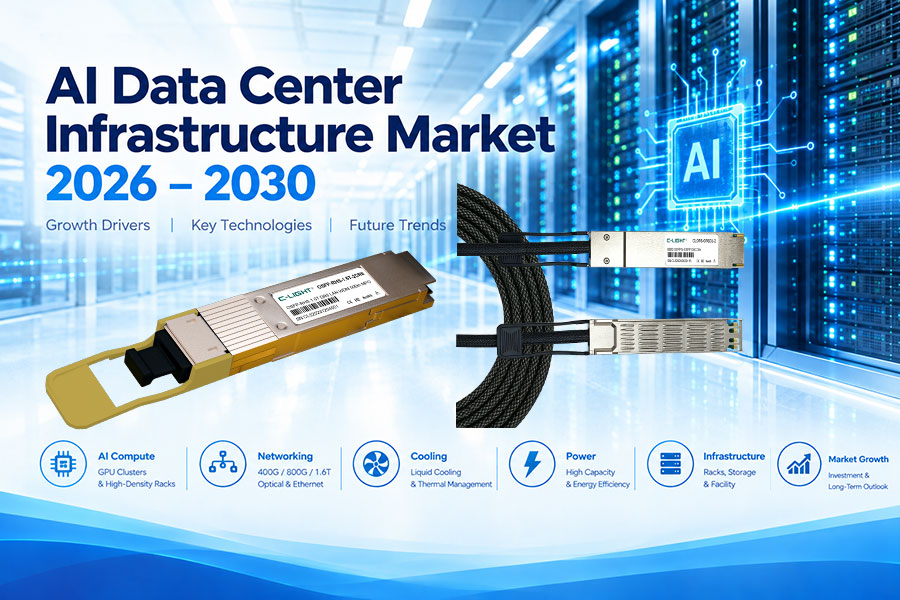
The AI data center infrastructure market is entering a major expansion cycle as hyperscalers, cloud providers, and enterprises invest in GPU clusters, high-speed networking, power systems, and advanced cooling. From 2026 to 2030, infrastructure development is expected to focus increasingly on power availability, liquid cooling, optical connectivity, high-density computing, and scalable data center design.
1. AI Data Center Infrastructure Market Outlook
AI workloads are changing the requirements of modern data centers. Large-scale model training and inference require significantly more compute capacity, memory bandwidth, network throughput, and power than traditional workloads.
Global data center capacity is expected to expand rapidly through 2030, with AI workloads becoming one of the primary drivers of new capacity. Industry forecasts also indicate that global data center investment could reach several trillion dollars during this expansion cycle.
2. What Is AI Data Center Infrastructure?
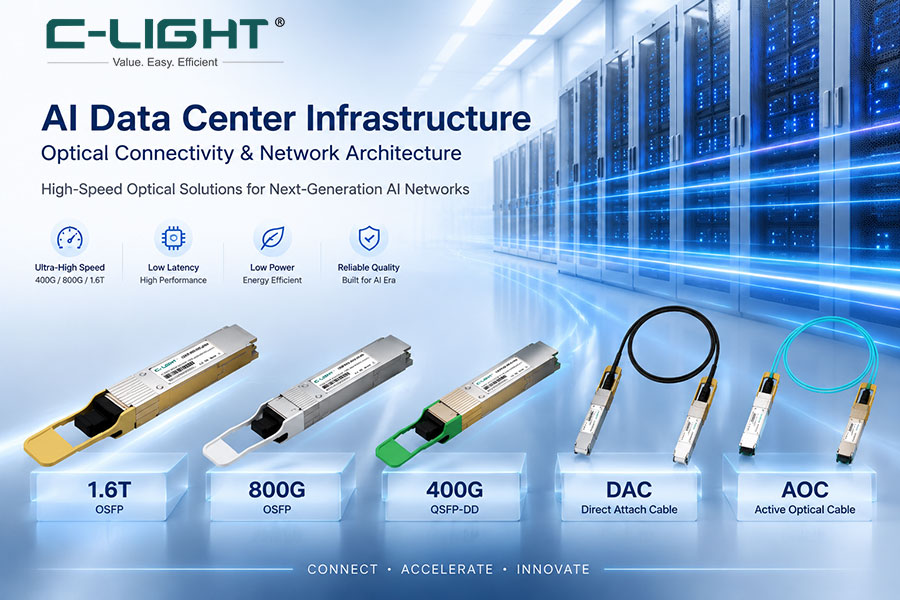
AI data center infrastructure includes the physical and networking systems required to deploy and operate AI computing platforms.
AI servers and GPU systems
High-speed Ethernet and InfiniBand networks
Optical transceivers and high-speed interconnects
DAC, AOC, and AEC cables
Power distribution and electrical systems
Liquid and air cooling systems
Racks and high-density server infrastructure
Storage and data management systems
Monitoring and facility management systems
3. AI Data Center Market Growth from 2026 to 2030
The market is expected to maintain strong growth throughout 2026–2030 as AI adoption expands across cloud services, enterprise computing, search, generative AI, autonomous systems, and real-time inference.
Infrastructure spending is not limited to GPUs. Power delivery, cooling, networking, optical connectivity, buildings, and grid infrastructure are becoming increasingly important parts of the overall AI data center investment cycle.
4. GPU Clusters Drive Infrastructure Demand
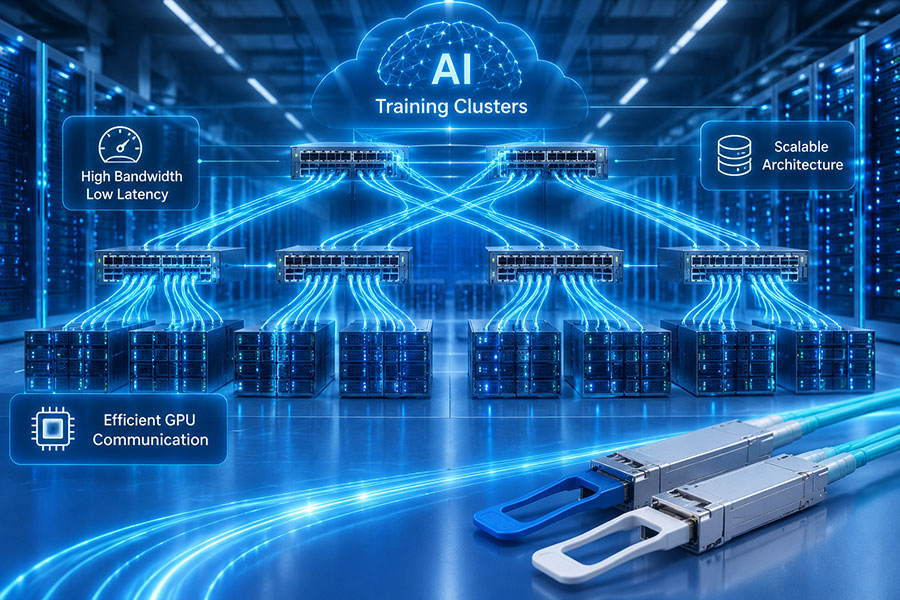
GPU clusters are at the center of modern AI data centers. Large AI systems connect thousands or even tens of thousands of accelerators through high-speed network fabrics.
As cluster sizes increase, the infrastructure must provide higher bandwidth and lower latency while maintaining reliable power and thermal performance. This creates demand for high-speed switches, optical modules, DAC, AOC, AEC, and advanced network architectures.
5. AI Data Center Power Infrastructure
Power availability has become one of the most important constraints for AI data center expansion.
AI-optimized servers consume substantially more power than conventional servers, while large GPU clusters can create very high rack-level power densities. As a result, new facilities require stronger utility connections, substations, power distribution systems, backup power, and more efficient power conversion.
Global data center electricity consumption is projected to continue rising rapidly through 2030, making energy availability a key factor in determining where new AI facilities can be built.
6. High-Density AI Data Center Racks
AI computing is increasing rack power density and changing traditional data center design.
High-density GPU racks require more efficient power delivery and thermal management than conventional CPU-based racks. Rack architecture is therefore becoming an integrated combination of compute, networking, power, cooling, and cabling.
7. Liquid Cooling Becomes More Important
Higher GPU power consumption is accelerating the adoption of liquid cooling in AI data centers.
Cold plate liquid cooling, direct-to-chip cooling, immersion cooling, and other advanced thermal technologies can provide better heat removal for high-density AI systems than conventional air cooling alone.
Cooling infrastructure is expected to become an increasingly important part of AI data center capital expenditure between 2026 and 2030.
8. High-Speed Networking in AI Data Centers
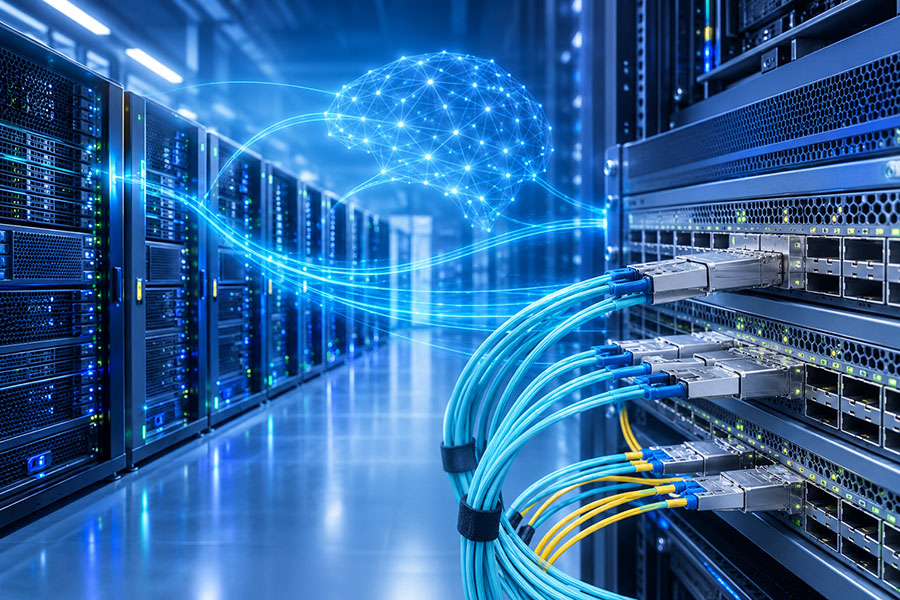
Networking is one of the most important infrastructure layers in an AI cluster. GPUs must exchange large amounts of data during model training and inference, requiring high-bandwidth and low-latency network connections.
400G and 800G networking are already important technologies in large AI deployments, while 1.6T connectivity is moving toward broader commercial deployment as next-generation AI clusters scale.
9. Optical Interconnect Market Growth
The rapid increase in network speeds is driving demand for optical transceivers and optical interconnect solutions.
Optical modules provide the reach and bandwidth required for connections between racks, switches, GPU clusters, and data center network layers. The transition from 400G to 800G and 1.6T is expected to remain a major theme through 2030.
10. 400G and 800G Optical Transceivers
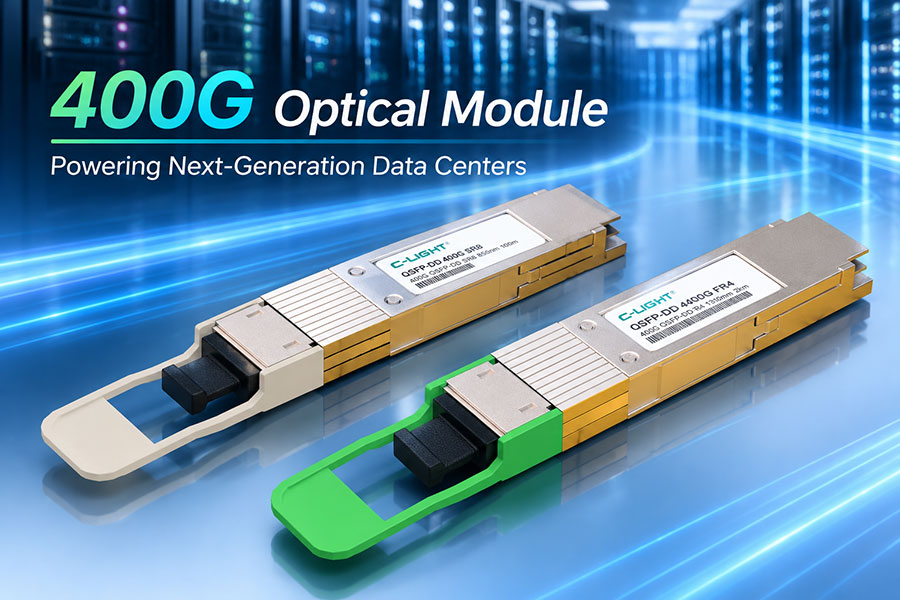
400G and 800G optical transceivers are becoming important building blocks for AI data center networks.
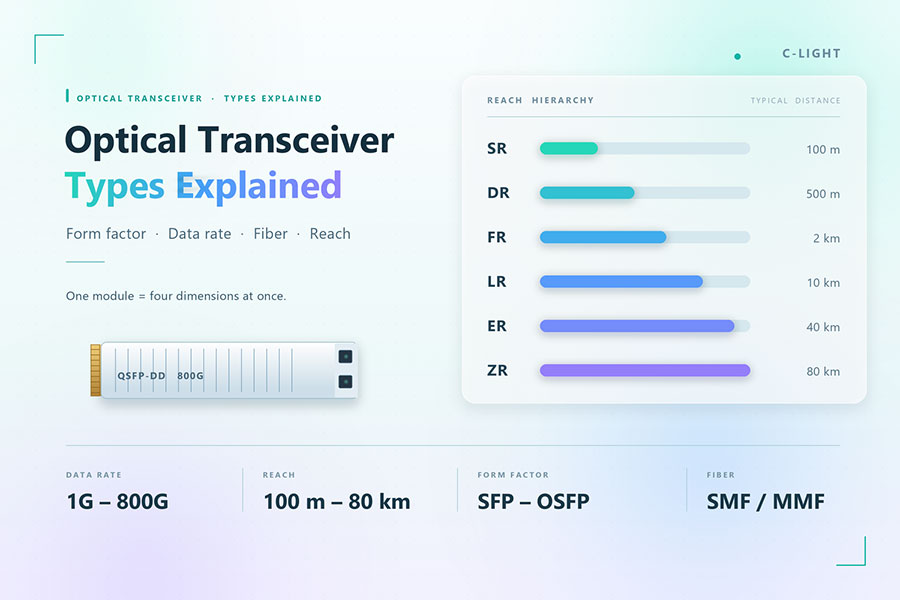
Different optical technologies are designed for different distances. Short-reach multimode solutions can serve local connections, while single-mode technologies provide longer reach between racks and network infrastructure.
The growing deployment of 800G optical modules is also creating a transition path toward 1.6T and higher-speed optical connectivity.
11. 1.6T Optical Connectivity
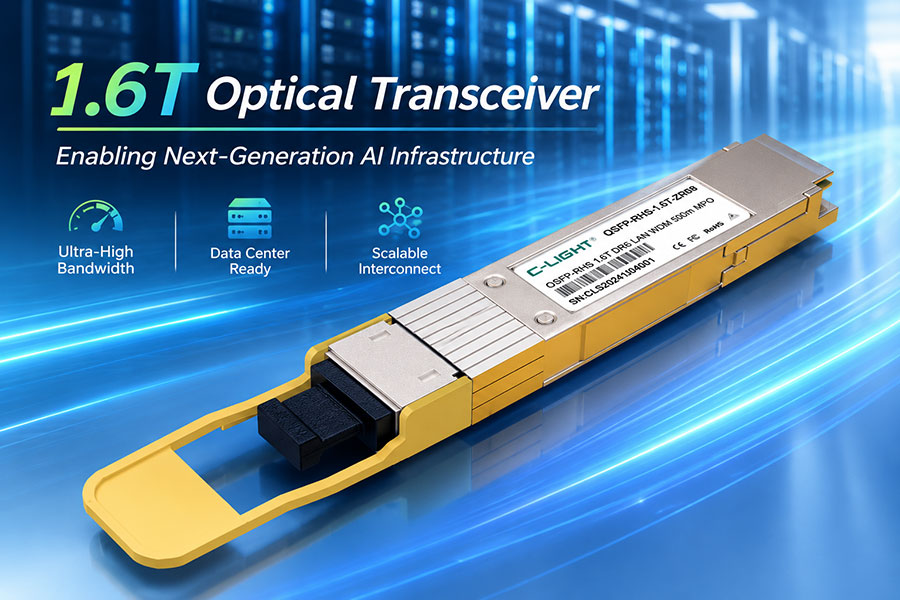
As AI clusters continue to increase in scale, 1.6T optical connectivity is emerging as the next major bandwidth generation.
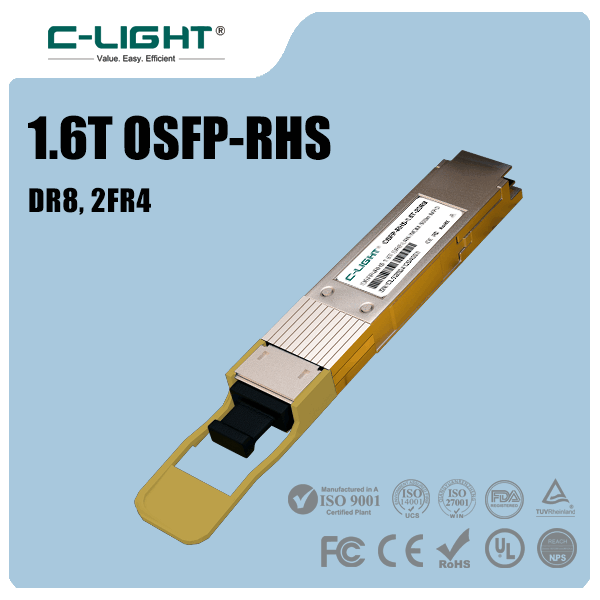
1.6T modules can use multiple 200G electrical and optical lanes to provide higher aggregate bandwidth. Technologies such as OSFP, PAM4, advanced DSP, and improved thermal designs are becoming increasingly relevant to next-generation AI networking.
12. DAC, AOC and AEC in AI Infrastructure
Not every AI data center connection requires an optical transceiver. Copper and active cable technologies remain important for short connections.
| Technology | Medium | Typical Use | Main Advantage |
|---|---|---|---|
| DAC | Copper | Short intra-rack links | Low cost and low power |
| AOC | Optical fiber | Short to medium links | Lightweight and flexible |
| AEC | Active copper | Extended electrical links | Longer copper reach |
| Optical Transceiver | Fiber | Rack-to-rack and longer links | Long reach and flexibility |
The combination of these technologies allows data center operators to select the most appropriate connectivity solution for each link.
13. InfiniBand and Ethernet AI Networks
AI data centers commonly use high-performance networking technologies such as InfiniBand and Ethernet-based AI fabrics.
InfiniBand remains important for tightly coupled high-performance computing and AI clusters, while Ethernet is expanding across AI infrastructure because of its ecosystem, scalability, and deployment flexibility.
The growth of both architectures supports continued demand for high-speed switches, optical modules, DAC, AOC, and AEC products.
14. AI Data Center Switching Infrastructure
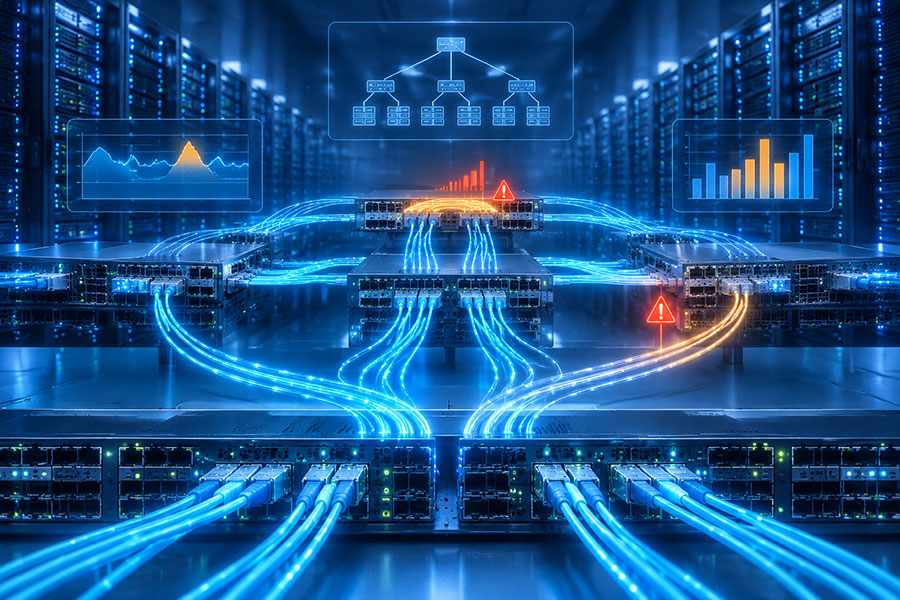
High-speed switches connect GPU servers and form the network fabric of AI clusters.
As port speeds increase from 400G to 800G and beyond, switch capacity, optical interfaces, cable assemblies, and power consumption become increasingly important design considerations.
Switch-to-switch and switch-to-GPU connectivity are therefore key application areas for high-speed interconnect manufacturers.
15. Data Center Power and Cooling Constraints
Power and cooling are increasingly linked. Higher computing density creates greater electrical demand while also generating more heat that must be removed from the facility.
This makes power availability, cooling capacity, water availability, energy efficiency, and site selection critical factors when planning new AI data centers.
16. Regional Development of AI Data Centers
North America is expected to remain one of the largest AI data center markets, supported by hyperscaler investment and strong demand for AI computing capacity.
Europe, Asia-Pacific, and the Middle East are also expanding AI infrastructure. New data center projects are increasingly being developed in locations where power, land, cooling resources, and network connectivity are available.
The availability of electricity is becoming a major factor in determining the geographic distribution of future AI data centers.
17. Hyperscalers Drive Market Expansion
Major cloud and technology companies are investing heavily in AI infrastructure to support training, inference, cloud AI services, and increasingly specialized AI workloads.
These investments create demand across the entire infrastructure supply chain, including servers, GPUs, switches, optical components, power equipment, cooling systems, racks, and data center construction.
18. AI Inference Changes Data Center Requirements
AI infrastructure is gradually shifting from a training-focused model toward a combination of training and large-scale inference.
Inference workloads can require distributed computing resources close to users and applications. This may increase demand for additional data center capacity, networking infrastructure, and geographically distributed AI facilities.
19. Data Center Infrastructure Supply Chain
The rapid expansion of AI data centers is placing pressure on the supply chain for critical infrastructure components.
Transformers, power equipment, cooling systems, switchgear, networking equipment, optical components, and advanced semiconductors can all become potential bottlenecks when demand increases faster than manufacturing capacity.
Supply chain resilience and component availability are therefore becoming important considerations for AI data center developers.
20. Energy Efficiency Becomes a Key Market Requirement
AI data center operators are increasingly focused on reducing energy consumption while maintaining computing performance.
Energy efficiency can be improved through more efficient GPUs, power conversion, cooling systems, network equipment, optical connectivity, and facility-level energy management.
Low-power optical modules, passive DAC, efficient switches, and advanced liquid cooling can all contribute to reducing infrastructure energy consumption.
21. AI Data Center Infrastructure Market Trends 2026–2030
800G networking: Increasing adoption in large AI clusters.
1.6T connectivity: Growing as AI cluster bandwidth requirements increase.
Liquid cooling: Expanding with higher GPU and rack power density.
High-density racks: Increasing deployment of high-power AI systems.
Power infrastructure: Becoming a critical constraint for new facilities.
Optical interconnects: Expanding with higher network speeds and longer links.
AI Ethernet: Increasing deployment alongside established high-performance fabrics.
Inference infrastructure: Becoming a larger part of overall AI capacity.
22. Challenges Facing the AI Data Center Market
Despite strong growth, the AI data center infrastructure market faces several challenges.
Limited grid and power availability
Long lead times for electrical equipment
Cooling capacity requirements
High construction and equipment costs
Optical component and networking supply constraints
Land and permitting limitations
Water and environmental considerations
Rapid hardware refresh cycles
These challenges mean that future AI data center development will require closer coordination between computing, networking, power, cooling, and facility design.
23. C-LIGHT Solutions for AI Data Centers
C-LIGHT provides high-speed optical transceivers and interconnect products for AI data center and high-performance computing applications.
The product portfolio includes 400G and 800G optical transceivers, DAC, AOC, AEC, and next-generation high-speed connectivity solutions designed for GPU clusters, switches, servers, and data center networks.
As AI infrastructure moves toward 800G and 1.6T networking, high-speed optical connectivity and short-reach interconnect technologies will continue to play an important role in scalable AI data center architectures.
24. AI Data Center Infrastructure Market 2026–2030: Outlook
The 2026–2030 period is expected to be a major investment cycle for AI data center infrastructure. Growth will extend beyond GPUs and servers into power systems, liquid cooling, high-speed networking, optical connectivity, and data center construction.
The most important shift is that AI infrastructure is becoming a system-level engineering challenge. Computing performance, network bandwidth, power availability, thermal management, and physical infrastructure must scale together.
For optical and interconnect suppliers, the transition from 400G to 800G and 1.6T creates significant opportunities in AI clusters, hyperscale data centers, and high-performance computing networks.
 >
>

 >
>
 >
>
 >
>
 >
>
 >
>
 >
>
 >
>