TEL:+86 132 6656 7067





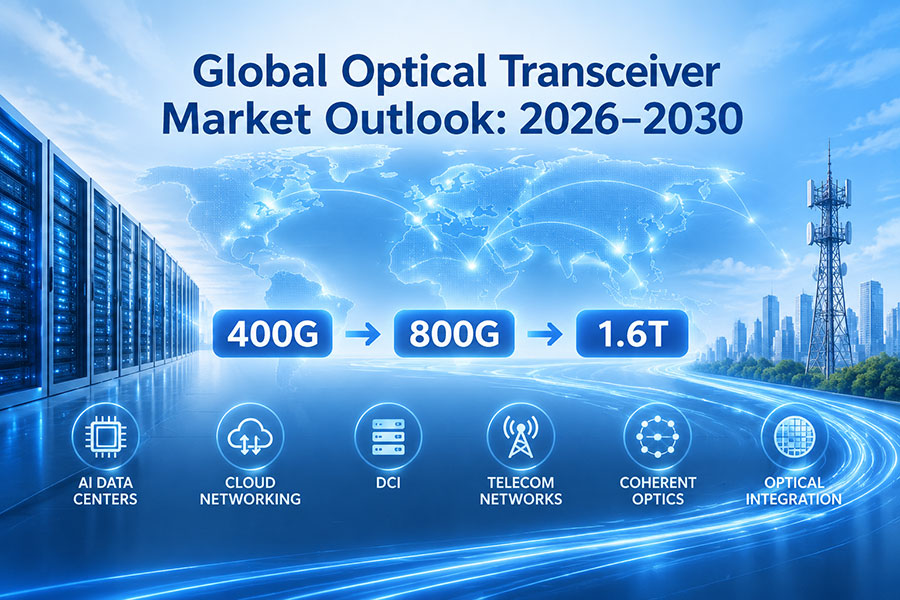
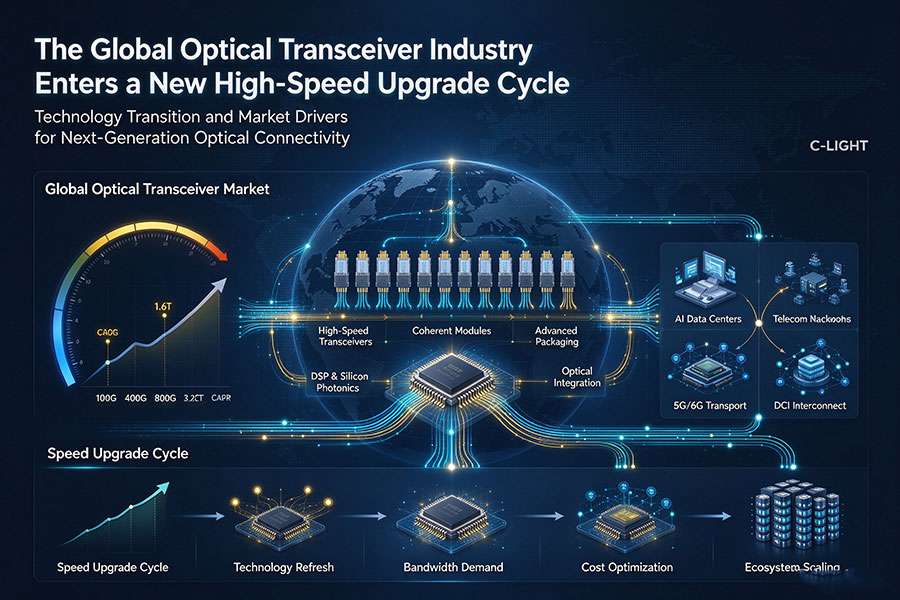
The global optical transceiver market is undergoing a significant technology and capacity transition as hyperscale cloud providers, AI infrastructure operators, and telecommunications companies expand their high-bandwidth networks. The shift from 400G toward 800G and 1.6T is changing not only the specifications of optical modules but also the economics of data center connectivity, component manufacturing, and optical supply chains.
800G transceivers are moving into broader deployment across high-density data center networks, while 1.6T products are progressing from development and qualification into volume production and early customer adoption. Demand is closely connected to AI accelerator clusters, high-performance Ethernet fabrics, and growing requirements for interconnection between geographically distributed data centers.
However, market development is not determined by bandwidth demand alone. Laser availability, optical DSP capacity, silicon photonics integration, manufacturing yields, power consumption, and multi-vendor interoperability all influence how quickly the next generation of optical connectivity can scale.
1. AI Infrastructure Is Reshaping the Optical Transceiver Market
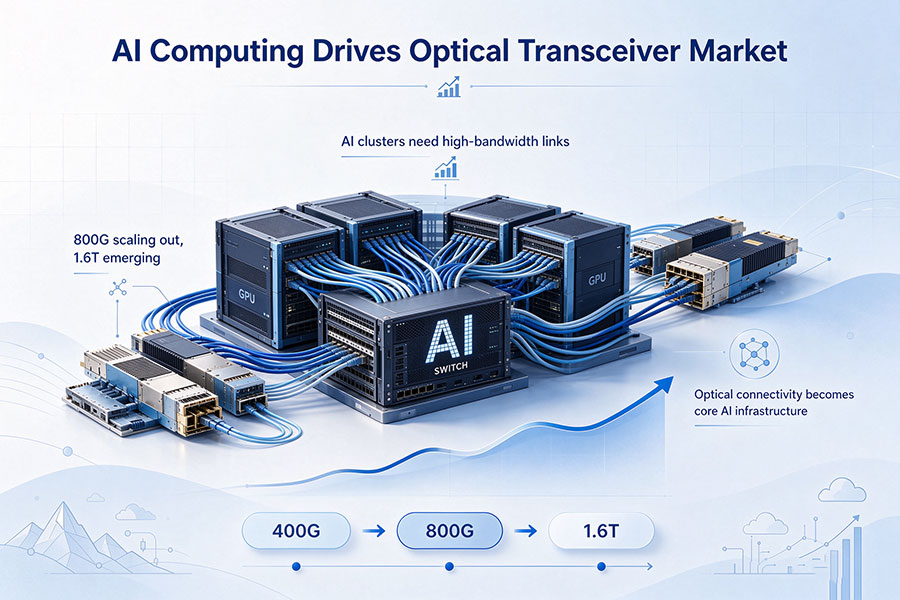
AI data centers have become a major source of demand for high-speed optical connectivity. Large accelerator clusters require substantial bandwidth between servers, racks, leaf-spine switches, and distributed network resources. As the number of accelerators and the scale of training workloads increase, network infrastructure must support higher aggregate throughput and more optical connections.
Several factors are contributing to this demand:
Larger accelerator clusters: More GPUs and other AI processors require high-capacity connections across compute and network fabrics.
Higher network bandwidth: Distributed training and data movement place increasing demands on switch ports and optical links.
Greater port density: High-radix switches require compact optical interfaces that can support large numbers of high-speed connections.
Data center expansion: New AI facilities and additional network capacity increase demand for optical modules and fiber infrastructure.
Scale-across connectivity: Connections between separate data centers create additional opportunities for high-capacity coherent optics and DCI solutions.
TrendForce reported in April 2026 that its forecast for the AI-focused optical transceiver market was approximately US$26 billion for 2026, compared with US$16.5 billion in 2025. This estimate covers the AI-focused segment rather than the entire global optical transceiver industry. The research also identified demand for 800G and higher-speed modules as an important growth driver.
The commercial implications extend beyond module shipments. Higher optical bandwidth requirements influence switch architecture, fiber distribution, laser production, DSP development, testing equipment, and the manufacturing capacity needed to support large-scale deployments.
2. 800G Optical Transceivers Move Toward Broader Deployment
800G has become an important generation in high-performance data center networking. Its adoption is supported by the growing availability of compatible switch platforms, optical module designs, high-speed electrical interfaces, and manufacturing capacity.
Compared with 400G, 800G can double the aggregate interface bandwidth while maintaining a compact module-based connectivity architecture. This helps operators increase network capacity without relying entirely on a proportional increase in the number of physical ports.
Common 800G optical interface families address different reach and fiber requirements:
| 800G interface family | Transmission approach | Typical application context |
|---|---|---|
| 800G SR8 | Parallel multimode optical transmission | Short-reach connections within data center environments. |
| 800G DR8 | Parallel single-mode transmission | Short-reach single-mode links and structured breakout architectures. |
| 800G 2DR4 | Two groups of four-lane single-mode optical channels | Data center links with duplex or parallel-fiber architecture depending on implementation. |
| 800G 2FR4 | Wavelength-division multiplexed single-mode transmission | Duplex-fiber connections over longer data center reaches. |
| 800G coherent optics | Coherent modulation and detection | Selected DCI, metro, and transport applications. |
These interfaces are not interchangeable. They differ in optical lane configuration, wavelength arrangement, fiber count, connector type, and transmission reach. Buyers and network engineers must match the module to the host port and the installed optical infrastructure.
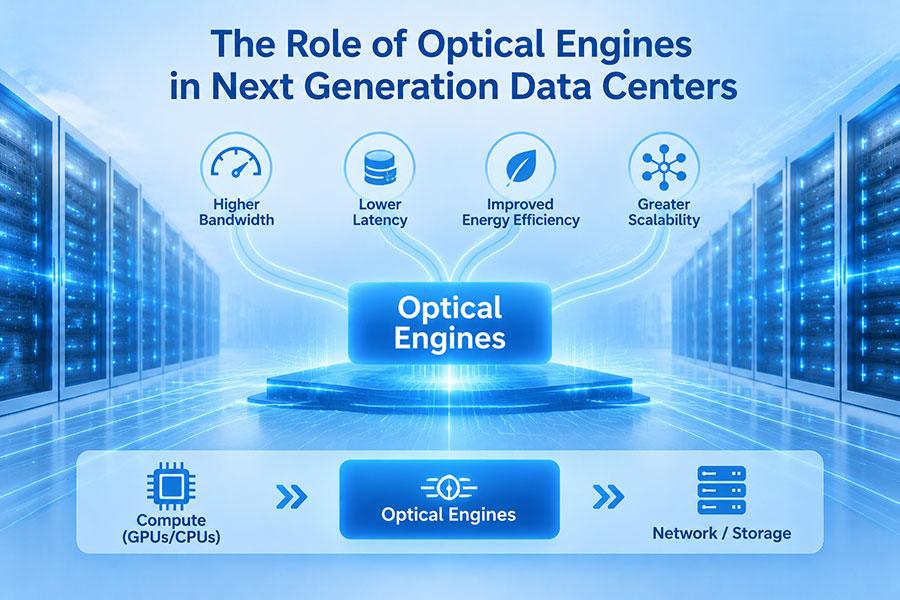
The transition to 800G also creates demand for supporting technologies, including 100G-class electrical lanes, high-performance DSPs, optical engines, advanced laser components, and higher-density fiber connectivity.
3. The 1.6T Generation Enters a New Commercial Stage
1.6T optical transceivers represent the next major bandwidth step for high-capacity Ethernet networks. They are designed to support network architectures that require greater throughput per port, particularly in large AI clusters and next-generation data center switching platforms.
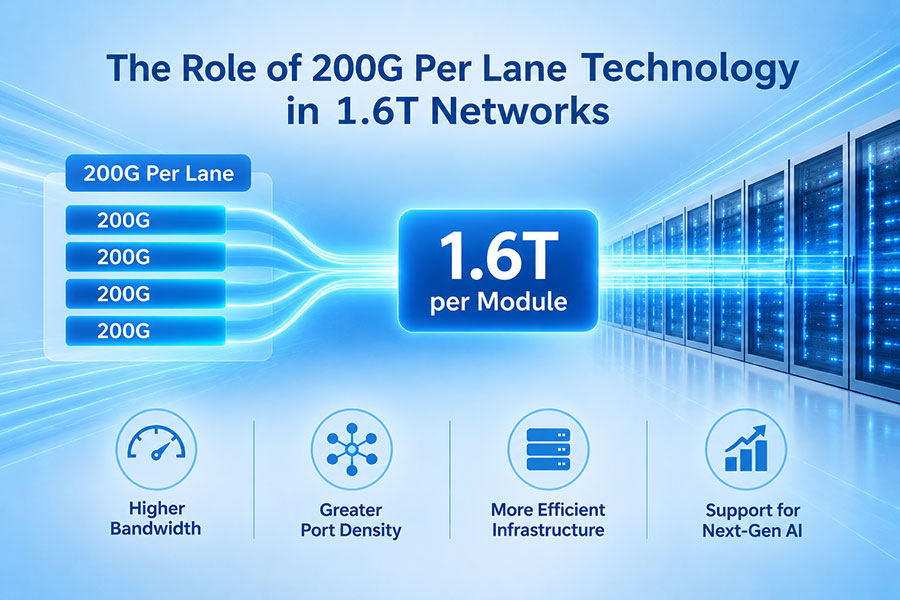
A representative 1.6T architecture uses eight electrical lanes operating at approximately 200G per lane. The optical implementation depends on the module design and may use parallel optical channels or other supported optical arrangements.
Compared with 800G, 1.6T development places greater demands on:
200G-class electrical signaling and host SerDes performance.
Optical DSP processing and signal integrity.
Laser bandwidth, modulation performance, and optical component quality.
Thermal management and module power efficiency.
High-speed test equipment and manufacturing calibration.
Host-platform compatibility and multi-vendor interoperability.
Commercial activity has advanced beyond laboratory demonstrations. In March 2026, Applied Optoelectronics announced its first volume order for 1.6T data center transceivers from a major hyperscale customer. Marvell also announced an expanded 1.6T optical DSP portfolio in March 2026 and reported that its Ara platform was shipping in volume to customers.
These announcements indicate that 1.6T has entered an early commercial deployment stage. However, this does not mean every hyperscale network is ready to migrate. Qualification schedules, switch availability, module cost, power limits, and supply-chain readiness will influence adoption across individual customers.
4. Market Size and Shipment Outlook
Market forecasts indicate substantial growth in high-speed optical connectivity, but estimates vary according to the products included, shipment definitions, and whether research covers AI-focused modules or the entire optical transceiver market.
| Market indicator | Reported estimate or outlook | Interpretation |
|---|---|---|
| AI-focused optical transceiver market | US$16.5 billion in 2025; approximately US$26 billion forecast for 2026 | TrendForce estimate covering the AI-focused market segment. |
| 800G and above shipments | 20–30 million units in 2025; 55–85 million in 2026 | ToAlpha forecast range based on compiled research estimates and supply-chain checks. |
| 1.6T shipments | Small volume in 2025; 10–33 million units in 2026 | ToAlpha forecast range indicating a transition toward larger-scale production. |
| 800G and above shipments | More than 60% of global optical transceiver shipments by 2026 | TrendForce projection published in February 2026. |
These figures should not be combined into a single market total. They come from different research scopes and methodologies. For example, the AI-focused market value estimate is not equivalent to total optical transceiver revenue, while shipment estimates may count different product categories or stages of the supply chain.
Even with these differences, the overall direction is consistent: higher-speed optical modules are gaining a larger role in data center connectivity, and 1.6T is becoming an increasingly important part of supplier roadmaps.
5. Hyperscale Data Centers Are Driving Product Mix Changes
Hyperscale cloud providers influence the optical transceiver market through large procurement programs, custom network architectures, and multi-year infrastructure investments. Their requirements can shape the specifications, volumes, and qualification processes adopted by the wider supplier ecosystem.
AI network architectures are also changing how optical bandwidth is deployed. Within a rack, some connections may use high-speed electrical interconnects, while optical links become increasingly important across racks and network switching layers. Larger deployments can require thousands or even millions of optical interfaces across multiple facilities.
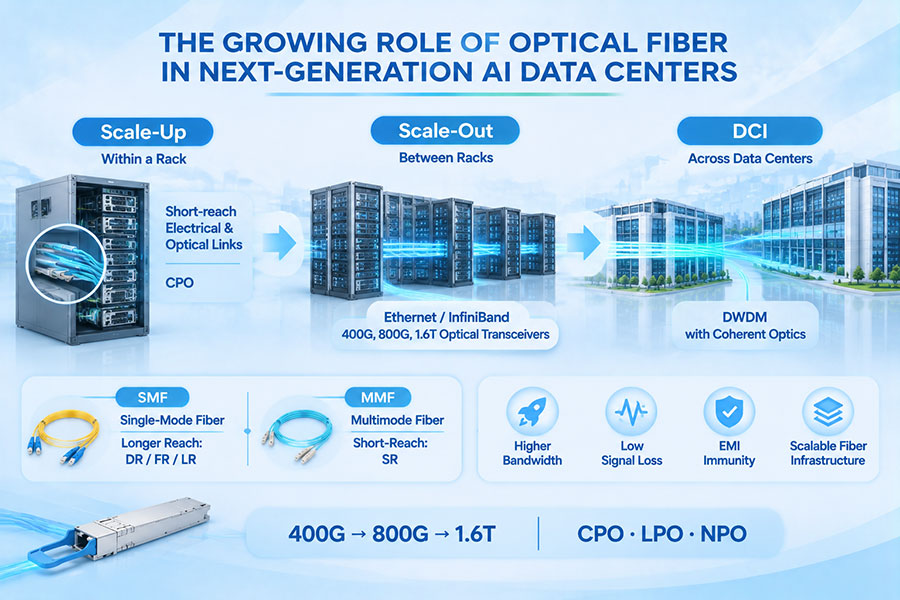
Three network domains are particularly relevant:
Scale-up networks: Connect accelerators within tightly coupled compute systems. The balance between electrical and optical connectivity depends on platform architecture.
Scale-out networks: Connect servers and racks through Ethernet or InfiniBand switching fabrics, creating substantial demand for 400G, 800G, and emerging 1.6T optical interfaces.
Scale-across networks: Connect separate data centers or campuses. These links can use high-capacity coherent optics and DWDM transport systems.
The result is a more diversified market. Short-reach parallel optics, duplex-fiber data center modules, active optical connections, and coherent transceivers can all benefit from AI infrastructure investment, but they serve different network segments.
6. Silicon Photonics and EML Shape the Technology Landscape
As optical data rates increase, the choice of optical engine and laser technology becomes increasingly important. Silicon photonics (SiPh) and electro-absorption modulated lasers (EMLs) are two significant technology approaches in high-speed optical transceiver development.
| Technology | Technical characteristics | Market relevance |
|---|---|---|
| Silicon photonics | Integrates optical functions such as waveguides, modulators, and multiplexing structures on a silicon-based photonic platform. | Supports integration and scalability in high-density optical engines. |
| EML | Combines a laser source and electro-absorption modulator in an integrated optical device. | Remains important for high-performance transmission and selected high-speed module designs. |
| VCSEL | Vertical-cavity surface-emitting laser technology, commonly used in multimode short-reach links. | Supports short-reach optical connectivity in suitable multimode applications. |
| CW laser | Provides continuous-wave optical power for external modulation architectures. | Important in silicon photonics and external-laser-based optical designs. |
Silicon photonics can enable higher levels of photonic integration, but it does not eliminate the need for suitable laser sources, optical packaging, electrical interfaces, and thermal management. EML-based designs also remain relevant where their performance and manufacturing characteristics fit the application.
The market is therefore unlikely to converge immediately on one universal optical technology. Product choices will depend on transmission distance, power efficiency, manufacturing yield, component availability, and total system cost.
7. Optical DSP and 200G-per-Lane Technology Become More Important
The move toward 1.6T requires significant improvements in electrical and optical signal processing. Eight 200G-class lanes create more demanding requirements for transmitter linearity, receiver sensitivity, equalization, timing recovery, and signal integrity.
Optical DSP performs several important functions in high-speed modules:
Electrical signal equalization and compensation for channel loss.
Clock and data recovery to maintain reliable symbol timing.
Lane mapping and gearbox conversion where host and optical lane arrangements differ.
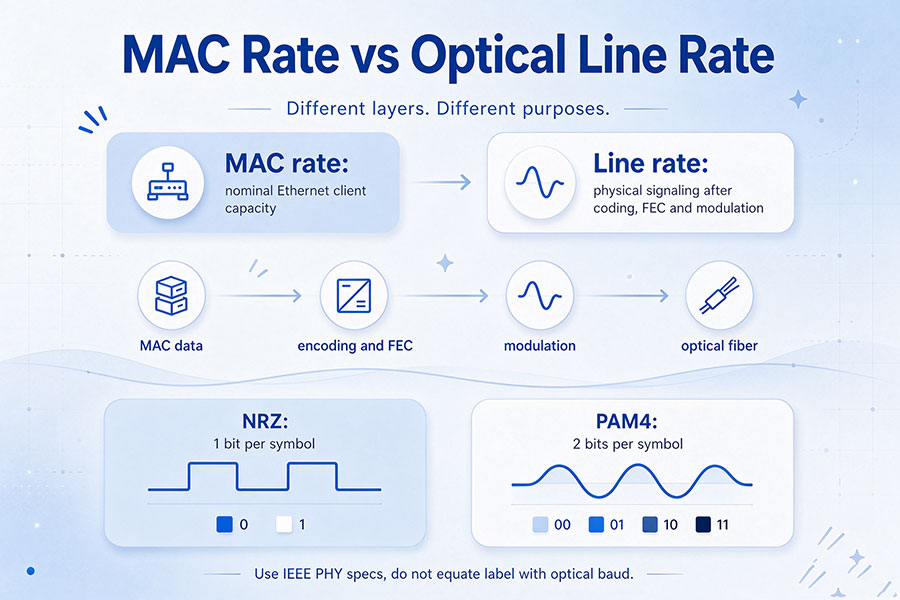
Signal conditioning for PAM4 transmission and reception.
Support for selected diagnostic, monitoring, and error-management functions.
DSP development also affects the economics of high-speed transceivers. More advanced processing can improve signal recovery and enable demanding electrical channels, but it may increase module power consumption, heat generation, and component cost.
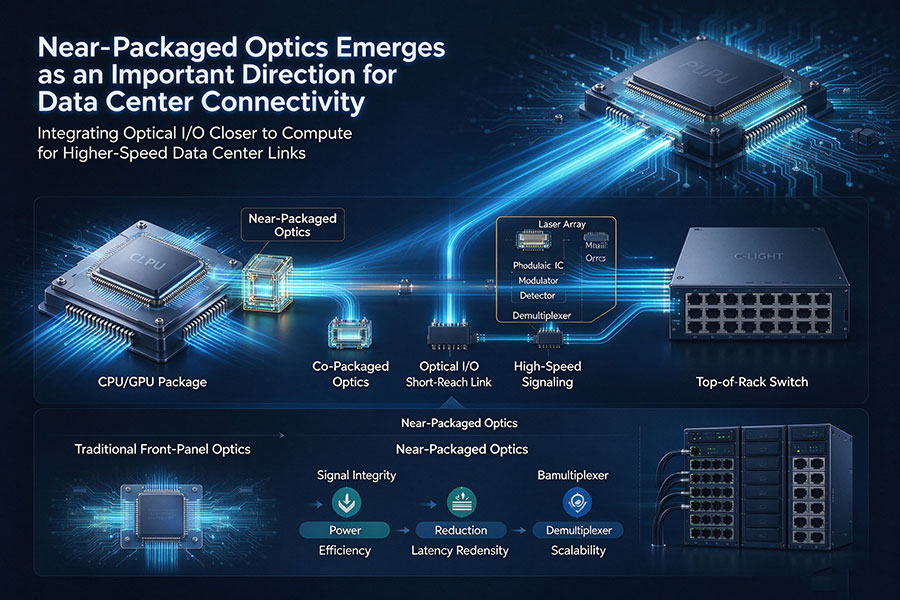
As a result, the market is seeing continued development of retimed optics, linear pluggable optics, linear receive architectures, and other approaches that distribute signal-processing responsibilities differently between the host ASIC and optical module.
8. Supply Chain Capacity Becomes a Strategic Market Factor
Rapid demand growth creates pressure across the optical transceiver supply chain. Module assembly capacity is only one part of the production process. High-speed optical products also depend on specialized lasers, photonic components, DSP chips, drivers, TIAs, connectors, substrates, and precision packaging.
Component availability can therefore determine how quickly suppliers convert customer orders into finished modules.
| Supply-chain segment | Key components or activities | Market considerations |
|---|---|---|
| Laser manufacturing | EML, CW-DFB, VCSEL, and related laser components | Performance, production yield, wavelength stability, and capacity availability. |
| Photonic integration | Silicon photonics, optical engines, modulators, and photodetectors | Integration density, coupling efficiency, packaging complexity, and yield. |
| Electronic components | DSPs, drivers, TIAs, SerDes-related components | Advanced process availability, power efficiency, and high-speed performance. |
| Module manufacturing | Optical assembly, alignment, packaging, and calibration | Automation, production throughput, testing capability, and quality control. |
| Testing infrastructure | BER testers, optical spectrum analyzers, high-speed electrical test systems | Test capacity, measurement accuracy, and production qualification time. |
TrendForce identified component shortages as a major constraint on capacity expansion in its April 2026 market assessment. This highlights an important feature of the current cycle: increasing demand for finished transceivers does not automatically translate into an equivalent increase in available production.
Manufacturers are responding through capacity investments, supplier diversification, manufacturing automation, and closer coordination with upstream component providers. The ability to secure critical components and maintain consistent production yields can become as important as the optical design itself.
9. Regional Manufacturing and Global Competition
The optical transceiver industry operates through a geographically distributed supply chain. Laser and semiconductor manufacturing, photonic component production, module assembly, testing, and final customer qualification may take place in different regions.
Manufacturing capacity in China, Taiwan, the United States, Japan, and other Asian production centers contributes to the global supply of optical components and finished modules. The distribution varies by technology and product category.
Several competitive factors influence regional positioning:
Manufacturing scale: High-volume production can improve delivery capability and manufacturing economics.
Component access: Access to advanced laser chips, DSPs, and photonic components influences product availability.
Engineering capability: High-speed optical design, packaging, and testing experience are important for next-generation products.
Customer qualification: Design wins with hyperscale customers can create significant volume opportunities, but qualification requirements are demanding.
Supply-chain resilience: Multiple production locations and component sources can reduce exposure to regional disruptions.
Competition is therefore not limited to the companies that assemble optical modules. Suppliers of lasers, DSPs, optical engines, drivers, TIAs, and manufacturing equipment all participate in the value chain.
10. 800G and 1.6T Coherent Optics Expand Data Center Interconnection
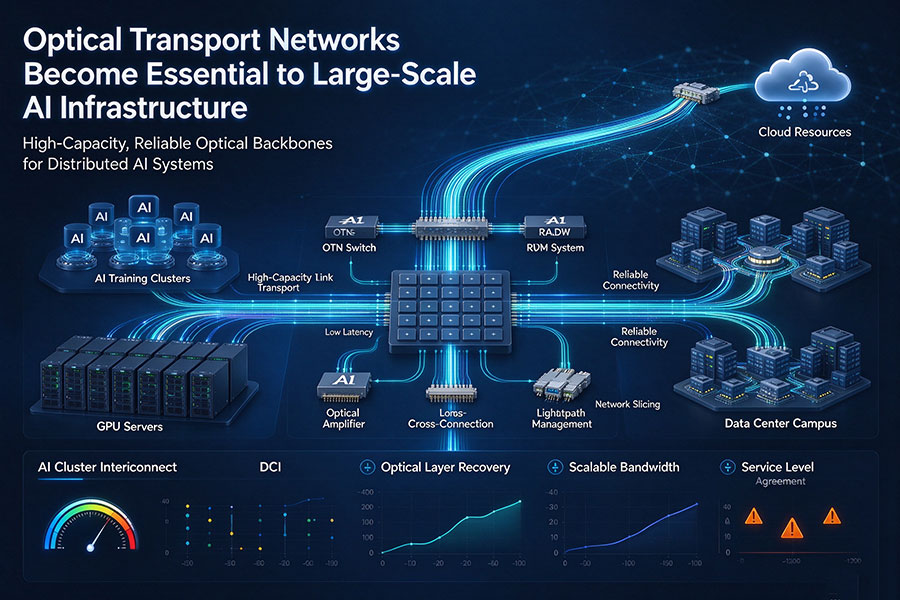
The demand for higher-speed optics is also extending beyond connections inside individual data centers. AI training systems increasingly use distributed infrastructure, creating requirements for high-capacity links between campuses, metropolitan facilities, and regional data centers.
Coherent optical technology is relevant to these applications because it supports high spectral efficiency and advanced signal processing over amplified fiber links. Coherent pluggable modules and transport transponders can provide different options depending on reach, line-system compatibility, and network architecture.
800G and 1.6T coherent solutions are not simply higher-speed versions of short-reach parallel optics. They use different modulation, receiver, DSP, and optical line-system requirements. Their deployment depends on OSNR, fiber characteristics, amplifier configuration, channel spacing, and the capabilities of the receiving equipment.
This creates another growth area for the optical industry: high-speed data center interconnect and transport solutions that connect AI infrastructure across multiple locations.
11. Power Efficiency and Thermal Management Influence Product Selection
Higher aggregate bandwidth creates additional power and cooling requirements. In high-density switches, hundreds of optical interfaces may operate within a relatively small equipment footprint. The combined power consumption of transceivers can become a significant part of the system's thermal budget.
For this reason, optical module suppliers are working to improve performance per watt through more efficient DSPs, integrated photonic engines, optimized laser designs, and improved packaging.
Power efficiency also influences architecture decisions. Depending on the application, operators may evaluate retimed modules, LPO, LRO, AEC, AOC, and other connectivity options. Each has different reach, signal-integrity, power, serviceability, and interoperability characteristics.
The market's long-term direction will depend not only on how much bandwidth a transceiver can deliver but also on how efficiently it can deliver that bandwidth within the thermal and power limits of the host platform.
12. Interoperability and Qualification Remain Essential
As 800G and 1.6T products enter broader deployment, interoperability becomes increasingly important. A module's aggregate data rate and physical form factor do not guarantee that it will work in every switch or router supporting the same nominal speed.
Compatibility depends on several technical factors:
Electrical host interface and lane configuration.
Optical interface specification, wavelength, and fiber arrangement.
FEC requirements and implementation location.
Module management interface and firmware behavior.
Power consumption and thermal limits.
Optical transmit and receive performance.
Multi-vendor link establishment and error-rate performance.
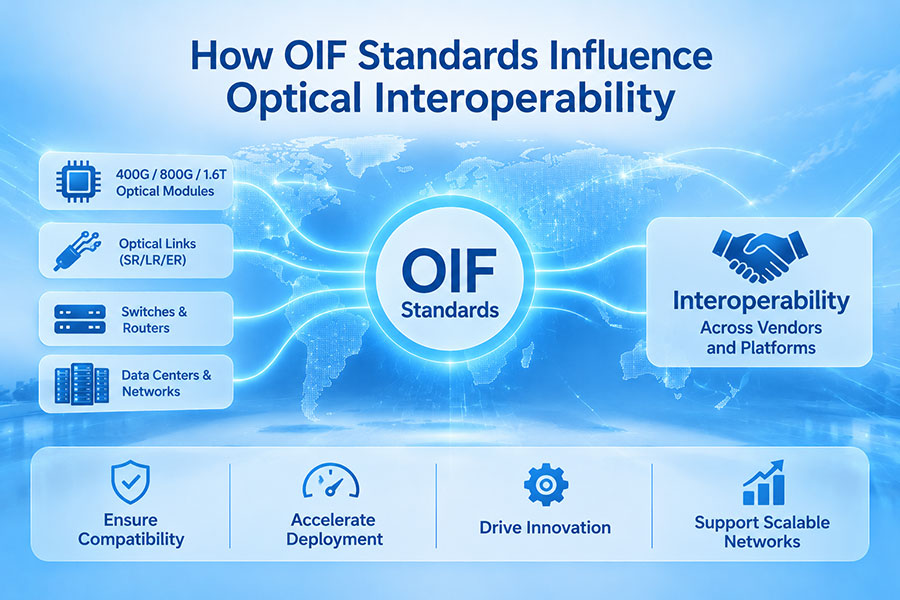
The 1.6T ecosystem is also progressing through standards development and interoperability activities. In September 2026, the Ethernet Alliance reported a multi-vendor 1.6T demonstration associated with the advancing IEEE P802.3dj work. Such activities help validate the wider ecosystem, although standards progress and demonstrations should not be interpreted as universal commercial compatibility across all products.
For manufacturers and network operators, qualification testing remains a necessary part of deployment. Testing across different host platforms and operating conditions helps identify problems before large-scale procurement and installation.
13. Market Outlook: From 800G Expansion to 1.6T Adoption
The next phase of optical transceiver development will likely involve overlapping product generations rather than an immediate replacement of 800G by 1.6T. 800G is expected to remain important as data center operators expand existing infrastructure, while 1.6T gains adoption in new platforms that require higher bandwidth per port.
Several trends will influence the market's development:
Continued 800G deployment: Existing high-speed Ethernet infrastructure and AI cluster expansion will sustain demand for 800G modules.
Growing 1.6T production: More customer qualifications and production programs will support the transition to higher-speed optical interfaces.
Technology diversification: Silicon photonics, EML, VCSEL, external laser sources, and different DSP architectures will serve different applications.
Supply-chain investment: Laser, DSP, photonic packaging, and testing capacity will influence delivery schedules.
Greater focus on power efficiency: Module power and thermal performance will become increasingly important in dense AI networking systems.
Expansion of coherent connectivity: DCI and regional transport networks will create additional opportunities for high-capacity coherent solutions.
Longer-term roadmaps are also moving toward 3.2T interfaces and higher per-lane signaling rates. However, demonstrations, development programs, standards work, and commercial volume shipments represent different stages of market maturity. The pace of adoption will depend on customer requirements, manufacturing readiness, and system-level economics.
14. Conclusion
The global 800G and 1.6T optical transceiver market is being shaped by the expansion of AI data centers, increasing network bandwidth requirements, and the transition toward higher-capacity Ethernet interfaces. 800G is becoming an established part of high-performance data center connectivity, while 1.6T is progressing into early volume deployment and broader ecosystem qualification.
At the same time, the competitive landscape is evolving across the entire supply chain. Laser production, silicon photonics, optical DSP, advanced packaging, manufacturing capacity, and interoperability testing all influence the industry's ability to deliver higher-speed products at scale.
For optical transceiver manufacturers and network operators, the key challenge is balancing bandwidth, reach, power consumption, component availability, and compatibility. The companies that can combine reliable optical performance with scalable manufacturing and consistent qualification will be well positioned as the industry moves through the next generation of high-speed connectivity.
As data center networks transition toward 800G and 1.6T connectivity, selecting the right optical interface requires careful consideration of host compatibility, transmission requirements, and deployment conditions. For optical connectivity requirements and technical support, Contact C-LIGHT.
 >

 >
 >
 >
 >
 >
 >
 >