TEL:+86 132 6656 7067




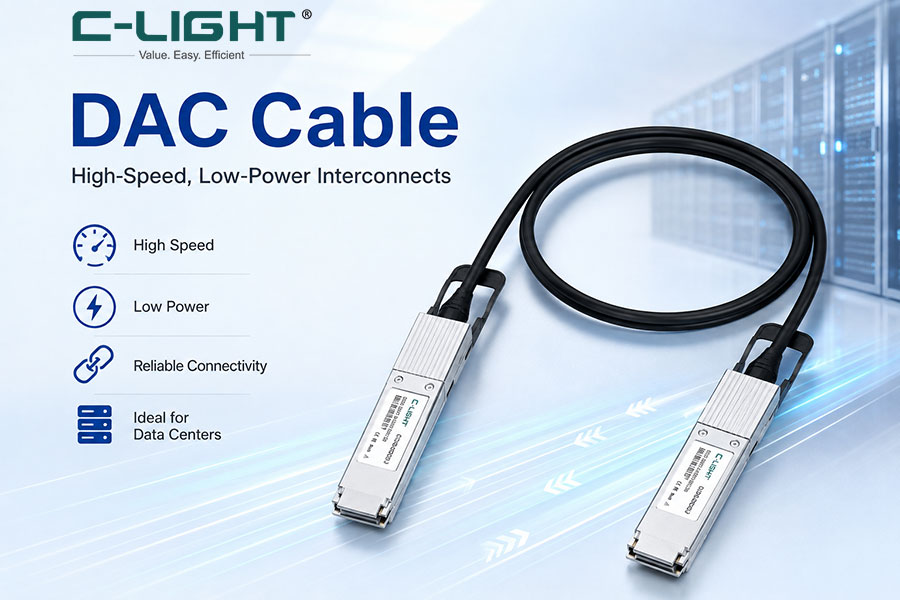
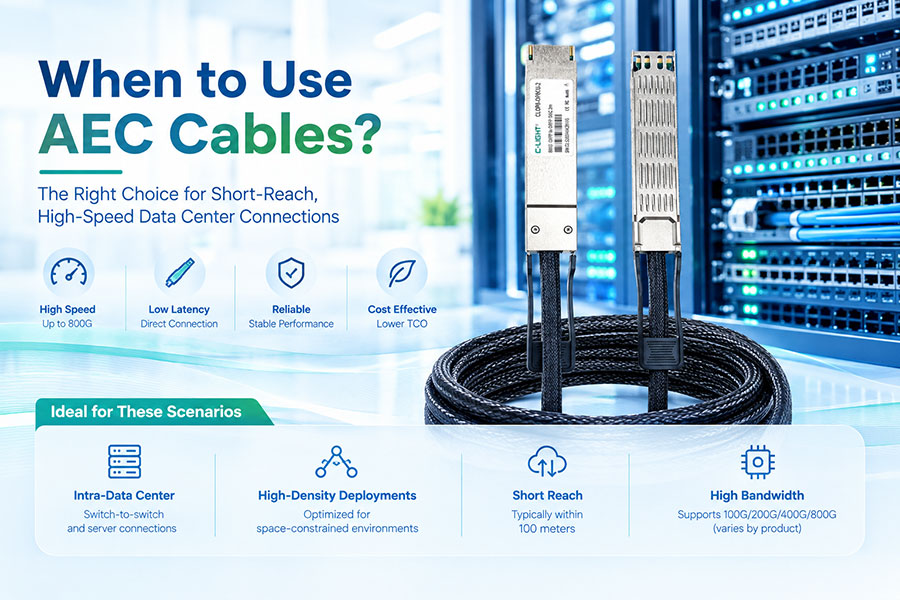
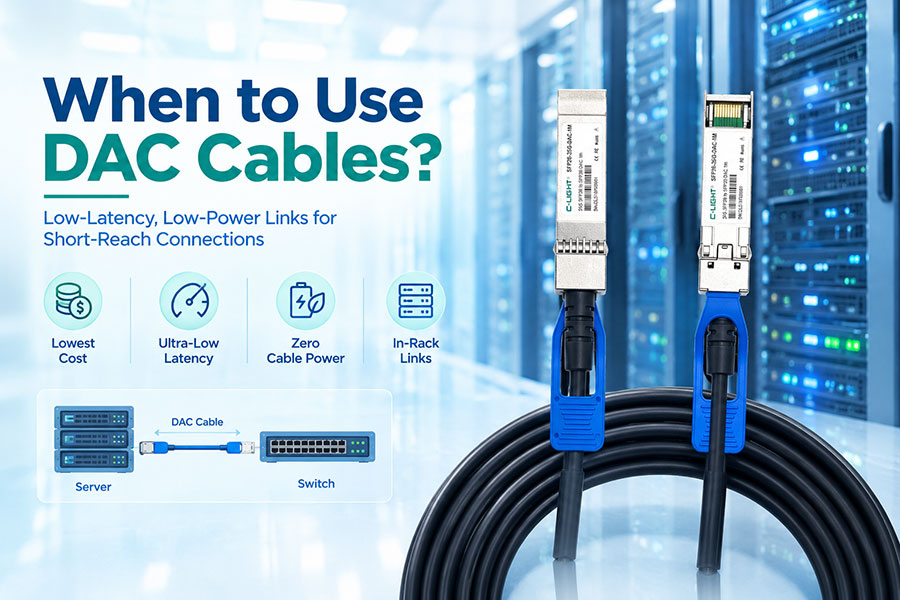
A DAC cable, or Direct Attach Copper cable, is a high-speed copper interconnect used to connect switches, servers, storage systems, and other networking devices. Its main purpose is to provide a simple, low-latency, and cost-effective connection for short-distance data transmission.
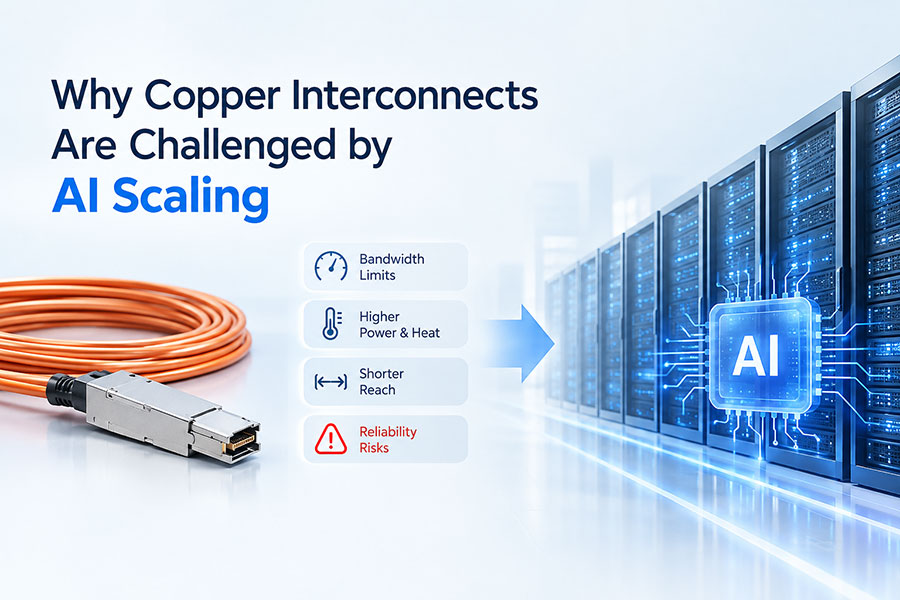
DAC cables are widely used in data centers, AI clusters, cloud computing environments, and high-performance networking because they can deliver high bandwidth without requiring separate optical transceivers.
1. What Is a DAC Cable?
A DAC cable combines the cable and optical module functions into a single copper assembly. Instead of installing two independent transceivers and a fiber cable, a DAC provides a direct connection between compatible network ports.
Typical DAC solutions are available for Ethernet and InfiniBand networks, with common data rates including 100G, 200G, 400G, and 800G.
Passive DAC and Active DAC
There are two common types of DAC cables:
Passive DAC: A passive copper cable without signal amplification. It is typically used for very short-distance connections and offers low power consumption and low cost.
Active DAC: An active copper cable incorporates electronic components to improve signal performance and support longer connection distances compared with passive DAC designs.
2. What Is the Purpose of a DAC Cable?
The primary purpose of a DAC cable is to provide high-speed connectivity between network devices over short distances while reducing installation complexity, power consumption, and overall deployment cost.
In a data center, DAC cables can be used to connect:
Server → Top-of-Rack Switch
GPU Server → AI Network Switch
Switch → Switch
Storage Server → Storage Switch
InfiniBand GPU Cluster → InfiniBand Switch
Because the cable and connector are integrated, DAC is especially useful when equipment is installed within the same rack or in nearby racks.
3. Why Are DAC Cables Popular in Data Centers?
3.1 Low Latency
DAC cables provide a direct electrical connection with very low transmission latency. This makes them suitable for high-performance computing, AI training, and storage networking applications where every microsecond can matter.
3.2 Low Power Consumption
Passive DAC cables do not require active optical components, helping reduce power consumption compared with many optical interconnect solutions.
3.3 Lower Cost
A DAC integrates the cable and interfaces into one assembly, eliminating the need for separate transceivers and fiber patch cables. This can reduce both hardware and deployment costs for short-distance links.
3.4 Simple Deployment
DAC cables are plug-and-play solutions for compatible ports. They require less cabling infrastructure than conventional optical connections, making them easier to deploy and manage inside high-density racks.
High Reliability
With fewer individual components and connectors, DAC assemblies can provide a straightforward interconnect architecture for short-range data center applications.
4. C-LIGHT DAC Cable Solutions
C-LIGHT provides high-speed DAC cable solutions designed for modern Ethernet, AI data center, cloud computing, and InfiniBand networks.
4.1 400G DAC Cable
C-LIGHT 400G DAC solutions are designed for high-bandwidth server and switch connections in modern data center networks. These cables can be used for short-distance connections between 400G network ports.
Typical applications include:
400G ToR switch connections
AI server connectivity
High-performance computing
Data center spine-leaf networks
4.2 800G DAC Cable
C-LIGHT 800G DAC solutions are designed for next-generation AI clusters and high-density data center networks. As network bandwidth continues to increase, 800G DAC provides a practical solution for short-distance high-speed connections.
Typical applications include:
GPU server to switch connections
AI training clusters
800G Ethernet networks
High-performance computing platforms
4.3 200G and 100G DAC Cable
C-LIGHT also provides 200G and 100G DAC solutions for data center, server, storage, and enterprise networking environments.
These lower-speed DAC options remain useful for applications that do not require 400G or 800G bandwidth.
5. DAC vs. AOC: What Is the Difference?
DAC and AOC cables are both designed for high-speed short-distance connectivity, but they use different transmission media.
DAC: Uses copper conductors and is generally suitable for shorter distances. It provides low power consumption and lower deployment costs.
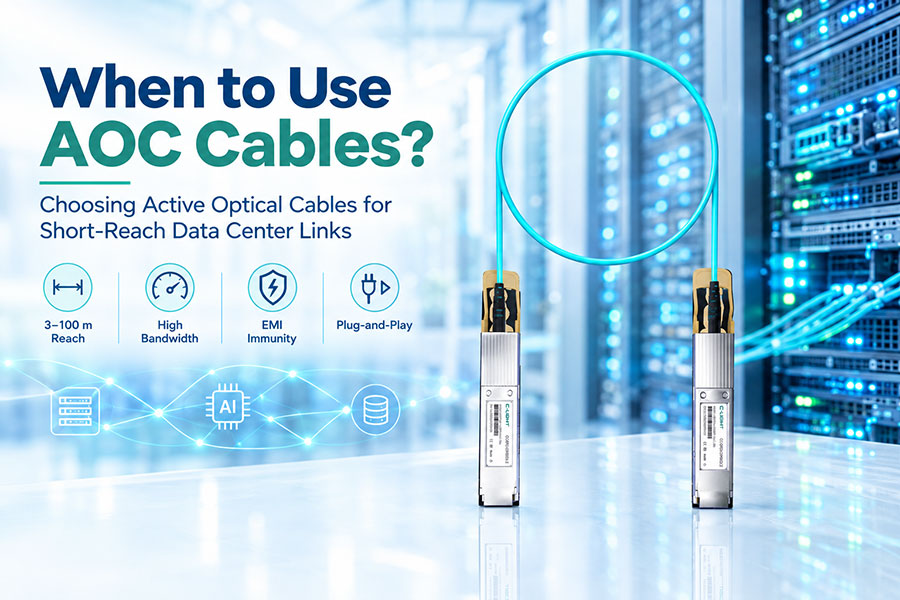
AOC: Uses optical fiber inside the cable assembly. It can support longer distances than DAC and is generally more suitable when copper transmission limitations become a concern.
For very short connections inside a data center rack, DAC is often the more economical choice. For longer connections, AOC or optical transceivers with fiber may be more appropriate.
6. DAC for AI Data Centers
AI clusters create extremely high levels of east-west traffic between GPU servers and network switches. High-bandwidth interconnects are therefore critical to cluster performance.
DAC cables are commonly used for short-distance links because they provide low latency, low power consumption, and simple physical deployment.
A typical AI data center architecture may use:
GPU Server → ToR Switch: 400G or 800G DAC
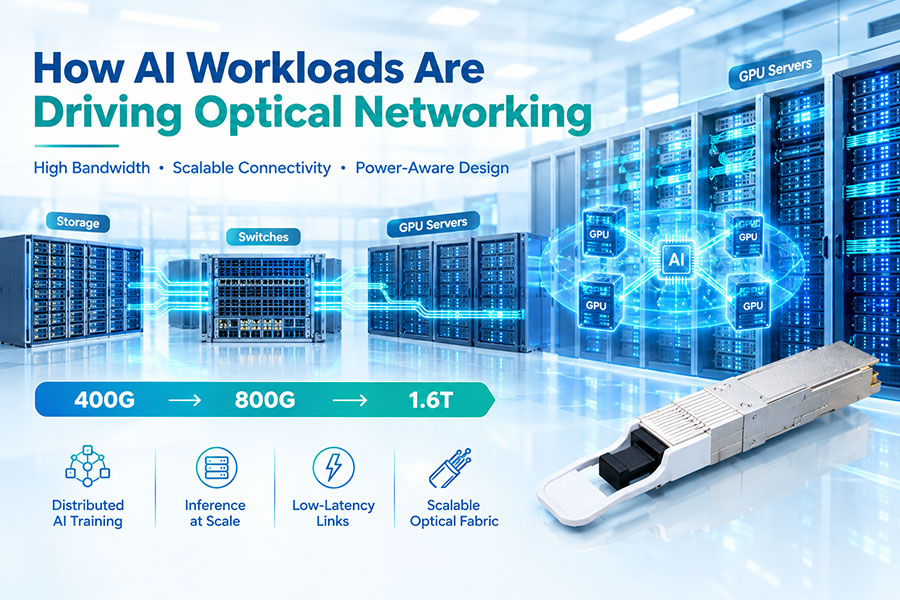
ToR Switch → Leaf Switch: 400G or 800G optical connectivity
Leaf Switch → Spine Switch: 800G or higher-speed optical connectivity
This hybrid architecture allows DAC to handle short connections while optical solutions provide the longer reach required between network layers.
7. DAC for InfiniBand Networks
DAC cables are also widely used in InfiniBand environments, especially for short-distance connections between GPU servers and InfiniBand switches.
AI and HPC clusters require high bandwidth and low latency to support distributed training, collective communication, and large-scale data movement.
In these environments, compatible DAC cables can provide a simple physical interconnect between server-side network adapters and high-speed switches.
8. When Should You Use a DAC Cable?
DAC is an excellent option when the connection distance is short and the network requires high bandwidth without unnecessary optical complexity.
DAC is commonly selected for:
Short-distance data center connections
Server-to-switch links
GPU-to-switch connections
Switch-to-switch connections within a rack
Storage networking
InfiniBand and HPC clusters
AI training infrastructure
9. When Should You Choose an Optical Solution Instead?
DAC is not suitable for every networking scenario. When the transmission distance exceeds the practical range of copper cabling, optical solutions are generally preferred.
For longer-distance connections, C-LIGHT offers optical transceiver solutions including 400G, 800G, and higher-speed optical products for data center and AI infrastructure.
Optical transceivers are typically preferred for:
Longer rack-to-rack connections
Leaf-to-spine networking
Data center interconnects
Metro and telecom networks
Long-distance AI cluster connectivity
10. How to Choose the Right DAC Cable?
10.1 Check the Data Rate
Make sure the cable supports the required network speed, such as 100G, 200G, 400G, or 800G.
10.2 Check the Connector and Form Factor
The connector must match the network equipment. Common high-speed interfaces include QSFP28, QSFP56, QSFP-DD, and OSFP.
10.3 Check the Cable Length
DAC is intended for short-distance applications. Select a cable length that matches the rack layout while avoiding unnecessary excess cable.
10.4 Check Compatibility
Network compatibility is important for data center deployment. C-LIGHT provides coding and compatibility options for different networking platforms and applications.
11. C-LIGHT High-Speed Connectivity Portfolio
C-LIGHT's high-speed interconnect portfolio can support different layers of modern data center and AI network architectures.
100G: DAC, AOC, and optical transceivers
200G: DAC and optical connectivity
400G: DAC, AOC, SR, DR, FR, and LR solutions
800G: DAC, AOC, SR8, DR8, and 2×FR4 solutions
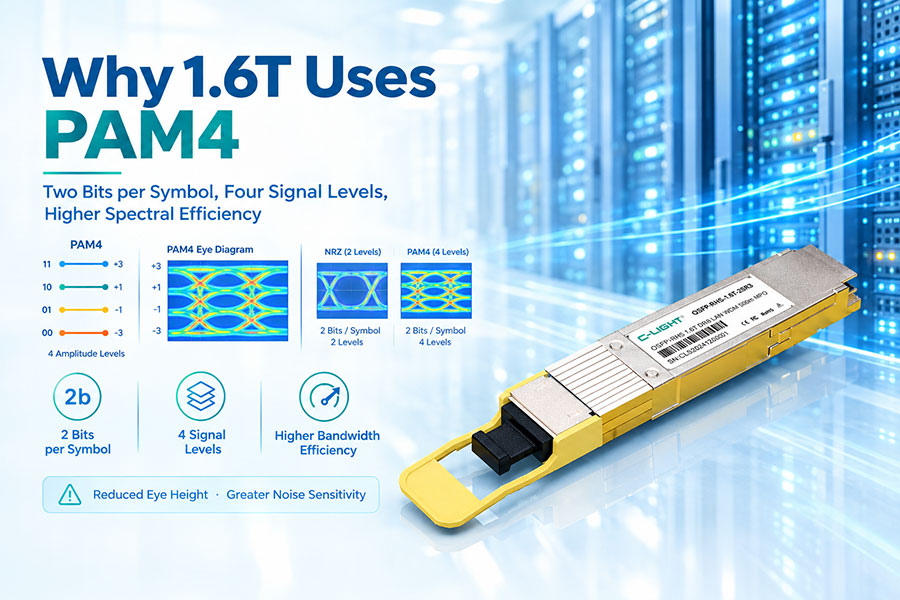
1.6T: Next-generation high-bandwidth interconnect solutions
This portfolio allows network designers to combine copper and optical technologies according to distance, bandwidth, power, and cost requirements.
12. Conclusion
The main purpose of a DAC cable is to provide a high-speed, low-latency, low-power, and cost-effective connection over short distances. DAC is particularly valuable in data centers, AI clusters, HPC environments, storage networks, and InfiniBand systems.
For short server-to-switch and switch-to-switch connections, DAC can simplify deployment and reduce total infrastructure cost. For longer distances, optical transceivers and fiber-based connectivity provide greater reach and flexibility.
With solutions covering 100G, 200G, 400G, 800G, and next-generation 1.6T connectivity, C-LIGHT supports a wide range of high-speed data center and AI networking requirements.
13. DAC Cable Q&A
1. What is the purpose of a DAC cable?
The purpose of a DAC cable is to provide a high-speed direct connection between compatible network devices over short distances. It combines the cable and transceiver interfaces into one assembly.
2. What does DAC stand for in networking?
DAC stands for Direct Attach Copper. It refers to a copper-based high-speed cable assembly used for direct network connections.
3. Why use DAC instead of fiber?
DAC is often selected for short-distance links because it can provide lower power consumption, simpler installation, and lower cost than a separate optical transceiver and fiber connection.
4. Is DAC suitable for AI data centers?
Yes. DAC is well suited to short-distance AI data center connections, including GPU server-to-switch links where low latency, high bandwidth, and power efficiency are important.
5. What speeds are available for DAC cables?
DAC cables are available in multiple data rates, including 100G, 200G, 400G, and 800G, depending on the network platform and application.
6. What is the difference between passive DAC and active DAC?
Passive DAC uses a direct copper connection without signal amplification, while active DAC includes electronic components to improve signal performance and support applications that require greater reach or signal conditioning.
7. How far can a DAC cable transmit?
DAC is primarily designed for short-distance connectivity. The practical transmission distance depends on the cable type, data rate, and equipment. For longer distances, AOC or optical transceiver solutions are generally more suitable.
8. Can DAC cables be used with InfiniBand?
Yes. Compatible DAC cables are widely used in InfiniBand networks for short-distance connections between GPU servers, network adapters, and InfiniBand switches.
9. Is an 800G DAC suitable for AI clusters?
Yes. 800G DAC can be used for high-bandwidth short-distance connections in AI clusters, particularly between GPU servers and high-speed network switches.
10. How do I choose between DAC and AOC?
Choose DAC when the connection is short and low cost, low power, and simple deployment are priorities. Choose AOC when a longer cable reach or optical transmission is required.
11. Does C-LIGHT provide DAC cables?
Yes. C-LIGHT provides high-speed DAC solutions for 100G, 200G, 400G, and 800G applications, supporting data center, AI, Ethernet, InfiniBand, and high-performance computing networks.
12. Can DAC be used for switch-to-switch connections?
Yes. DAC cables can be used for compatible short-distance switch-to-switch connections, especially within the same rack or between nearby network devices.
 >
>

 >
>
 >
>
 >
>
 >
>
 >
>
 >
>
 >
>