TEL:+86 132 6656 7067




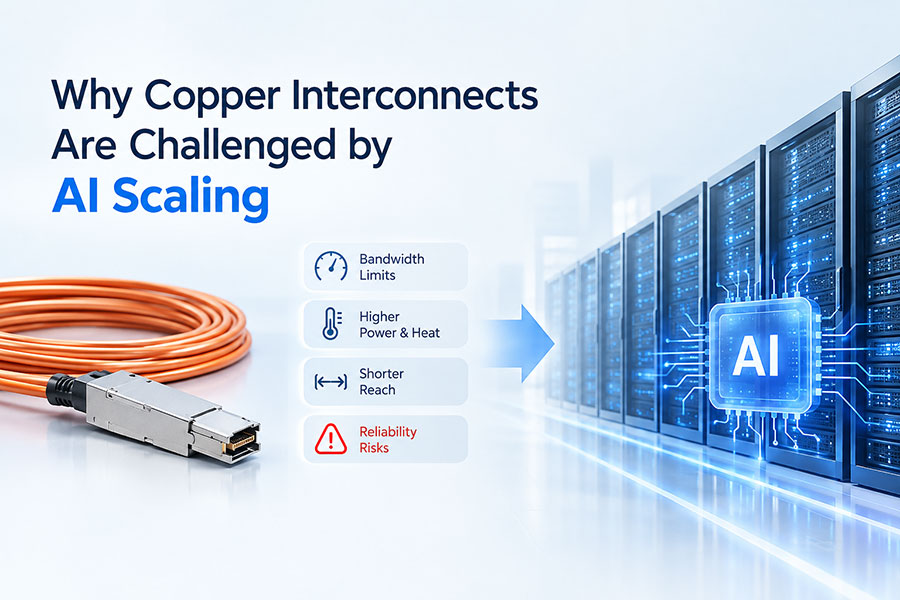
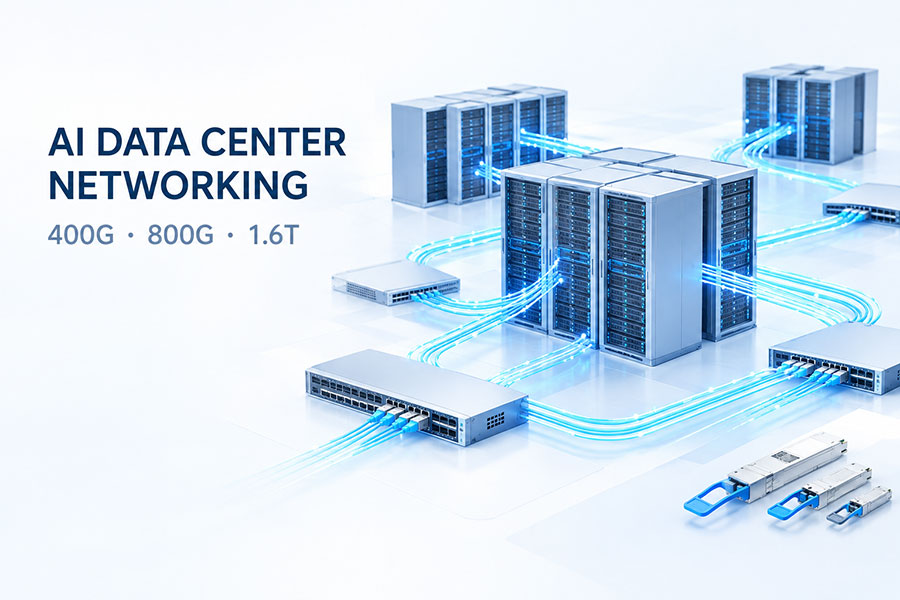
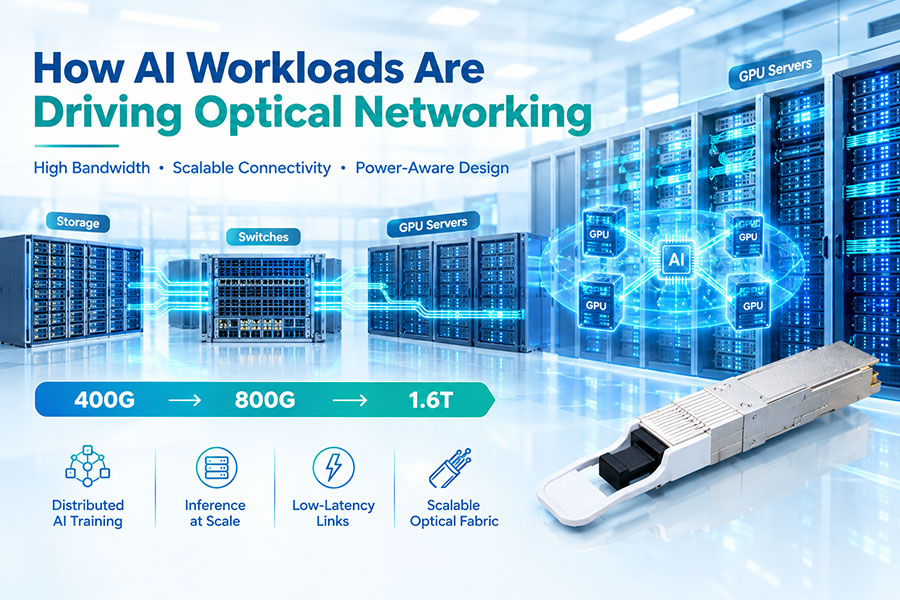
The rapid growth of artificial intelligence (AI), large language models, and GPU computing clusters is placing unprecedented demands on data center interconnects. As the number of accelerators increases and network speeds advance from 400G to 800G and 1.6T, the physical infrastructure connecting servers, switches, and computing systems must support higher bandwidth, greater port density, and increasingly demanding power and cooling requirements.
Copper interconnects remain important because they offer low cost, low power consumption in passive configurations, and relatively simple deployment over short distances. However, as electrical signaling rates increase, copper cables face greater challenges involving signal attenuation, crosstalk, signal integrity, cable dimensions, and usable transmission distance.
Optical interconnects provide an alternative for links that require greater reach and high-density connectivity. Rather than completely replacing copper, optical technologies complement copper by serving different parts of an AI network. Understanding the strengths and limitations of Direct Attach Copper (DAC), Active Copper Cables (ACC), Active Electrical Cables (AEC), and optical connectivity is essential when designing scalable AI data centers.
1. Why AI Scaling Changes Interconnect Requirements
AI computing increasingly relies on clusters containing hundreds or thousands of GPUs distributed across multiple servers and racks. These GPUs exchange large amounts of data during distributed training, inference, and collective communication operations.
As clusters grow, the network must provide sufficient bandwidth between computing nodes while maintaining reliable signal transmission and manageable power consumption. More servers also require more network ports, cables, switch connections, and physical infrastructure.
These requirements affect interconnect selection in several ways:
Higher data rates increase the demands on electrical signal integrity.
More network ports increase cabling density and cable management complexity.
Longer connections between racks make passive copper less practical in many configurations.
Higher network capacity increases the importance of power efficiency and cooling.
Future bandwidth upgrades require interconnects that can support the intended signal rate and topology.
The challenge is not simply transmitting more bits. It is maintaining reliable communication as data rates, physical distances, and the number of interconnected devices increase simultaneously.
2. How Copper Interconnects Work
Copper interconnects transmit data as electrical signals through conductive wires. In AI data centers, common implementations include passive DAC cables and active copper cable designs that incorporate electronic circuitry to improve signal transmission.
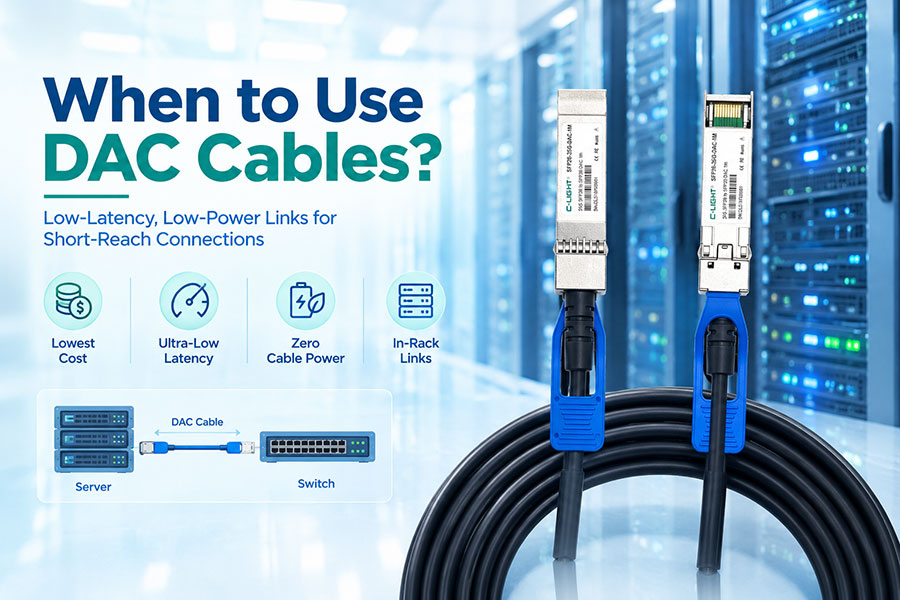
Passive DAC cables provide a direct electrical connection between compatible ports without active signal-conditioning electronics in the cable. They are widely used for supported short-reach connections because they require little additional power and can be cost-effective.
Active copper cables incorporate electronic components to compensate for signal degradation or restore the signal. Depending on the design, active copper solutions can extend usable reach beyond that of passive DAC cables, although they introduce additional power, cost, and implementation considerations.
The maximum practical reach is determined by the complete electrical interface and cable design, including lane rate, equalization capability, connector quality, and the signal requirements of the host devices.
3. The Physical Limits of Copper at Higher Data Rates
Electrical signals lose quality as they travel through copper conductors and interconnect structures. The severity of the degradation depends on frequency, cable construction, conductor geometry, dielectric materials, connectors, and the electrical characteristics of the connected devices.
At higher signaling rates, several effects become increasingly important:
Insertion loss: Signal amplitude decreases as energy is lost through the cable and interconnect path.
Frequency-dependent attenuation: Higher-frequency signal components can experience greater losses, affecting the shape of transmitted pulses.
Crosstalk: Signals in adjacent conductors can interfere with one another.
Impedance discontinuities: Mismatches at connectors or transitions can cause reflections and distort the received signal.
Noise sensitivity: Reduced signal margins make the receiver more sensitive to distortion and electrical noise.
These effects can limit the maximum reliable transmission distance at a given lane rate. Improving cable materials, shielding, connector design, and equalization can help, but the resulting solution must still meet the electrical requirements of the intended link.
4. Higher Lane Rates Make Copper More Difficult to Scale
Modern AI networks increase aggregate bandwidth through higher lane rates, more lanes, or a combination of both. As the data rate per lane increases, the electrical channel generally becomes more demanding.
For example, 800G and 1.6T interconnects can use different combinations of lane rates and lane counts. A cable designed for an earlier generation may not support a newer interface at the same physical length because the electrical signaling requirements have changed.
At higher lane rates, engineers must pay closer attention to insertion loss, crosstalk, equalization, receiver sensitivity, and the signal margins available across the entire channel.
This is why a copper cable's supported data rate cannot be evaluated independently from its length. A shorter cable may support a higher lane rate than a longer cable made with the same basic materials, while active electronics can extend reach under specific operating conditions.
5. PAM4 Modulation and Signal Integrity Challenges
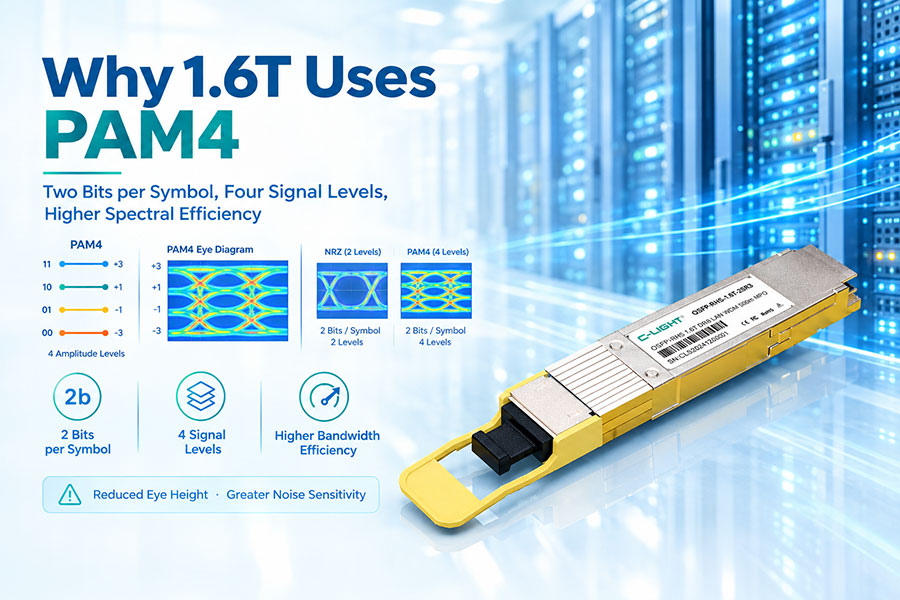
Many high-speed optical and electrical interfaces use Pulse Amplitude Modulation with four levels (PAM4). PAM4 represents two bits per symbol using four distinct signal levels, allowing a higher bit rate than NRZ signaling at the same symbol rate.
However, PAM4 divides the available signal amplitude range into more levels than NRZ. This reduces the vertical margin between adjacent levels and makes the receiver more sensitive to noise, distortion, and implementation imperfections.
In copper interconnects, the combination of PAM4 signaling and increasing lane rates places stricter demands on transmitters, receivers, connectors, cable construction, and signal-conditioning electronics.
Equalization and other signal-processing techniques can compensate for certain channel impairments, but they cannot remove every physical limitation. The cable and host interface must still meet the required channel performance.
6. Copper Interconnect Reach Becomes More Limited
Transmission distance is one of the clearest practical differences between copper and optical interconnects. Passive copper works well for many short connections, but its usable reach generally decreases as the signaling rate and electrical channel requirements increase.
Active copper designs can extend usable reach by adding signal-conditioning circuitry. Nevertheless, they remain dependent on the electrical channel and may require more power and additional components.
Optical links convert electrical signals into light and transmit the signals through fiber. This architecture supports a wider range of distances, depending on the transceiver, modulation technology, fiber type, and optical standard.
| Interconnect Type | Typical Role | Main Reach Consideration |
|---|---|---|
| Passive DAC | Short connections within racks or between nearby devices | Reach is limited by the electrical channel and supported signaling rate |
| ACC / LACC | Short links requiring additional electrical signal conditioning | Reach depends on the active design and host interface |
| AEC | Short electrical links requiring active signal processing or retiming | Reach, power, and compatibility depend on the product architecture |
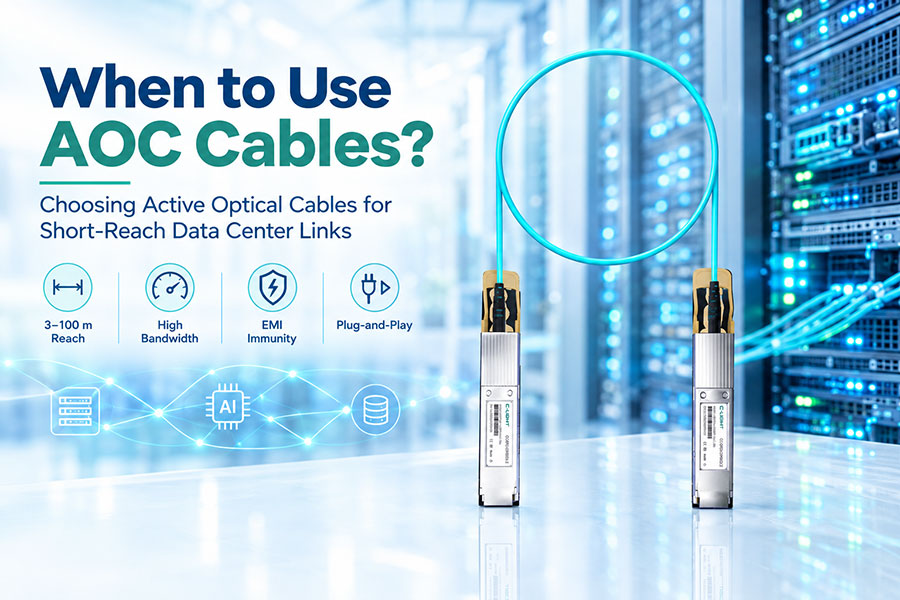
| AOC | Optical cable assemblies for supported short- and medium-reach links | Reach depends on the integrated optical design |
| Pluggable Optical Transceivers | Fiber links between servers, switches, and network devices | Can support a broad range of distances according to the transceiver specification |
These categories are not interchangeable, and their distance limits are not universal. Always verify the supported reach at the target lane rate and the requirements of the specific platform.
7. Cable Bulk and High-Density Deployment Challenges
Large AI clusters require extensive cabling between network adapters, switches, and other equipment. As the number of connections increases, cable diameter, weight, bending requirements, and routing complexity become important infrastructure considerations.
Copper cables can be relatively thick and heavy, particularly in high-speed implementations that require shielding and careful electrical construction. Large cable bundles may restrict airflow, complicate access to adjacent ports, and increase the effort required for installation and maintenance.
Optical fiber cables are often smaller and lighter than comparable high-speed copper assemblies. This can simplify routing and improve cable-management flexibility in dense installations, although fiber still requires appropriate bend-radius control, connector protection, and handling procedures.
When evaluating interconnects for an AI rack, cable dimensions and routing should be considered alongside signal performance, not treated as secondary installation details.
8. Power Consumption Becomes a System-Level Concern
Power efficiency is a critical consideration in AI data centers because thousands of network connections may operate simultaneously. The total power demand of interconnects can affect the electrical capacity and cooling requirements of a large cluster.
Passive DAC cables have a significant advantage because they do not require active electronics within the cable assembly. They can provide a low-power solution for suitable short-reach links.
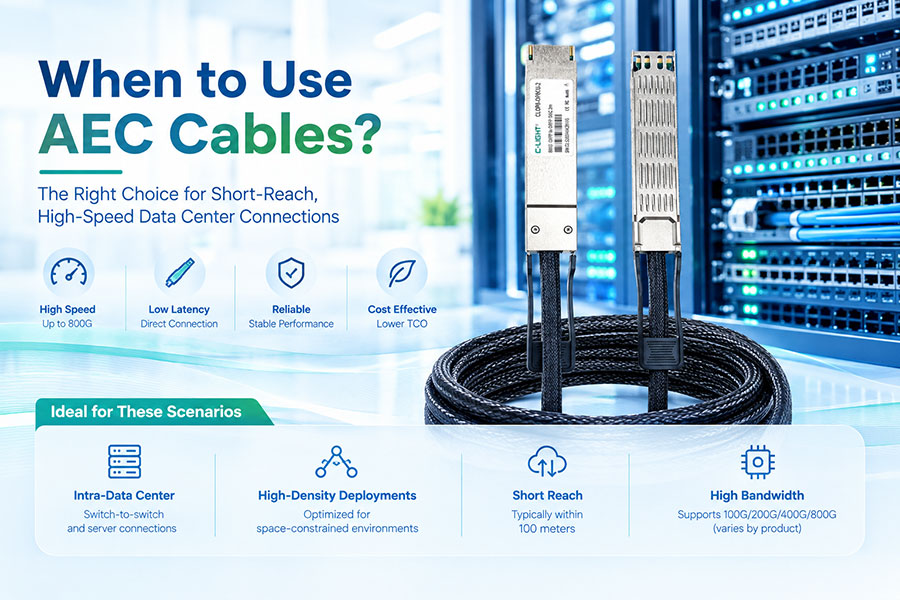
Active copper cables consume additional power to perform functions such as signal conditioning or retiming. Different ACC, LACC, and AEC implementations can have substantially different power requirements, depending on their circuitry and target reach.
Optical connectivity also consumes power. Pluggable transceivers require electrical-to-optical and optical-to-electrical conversion, while more integrated optical architectures have different power and thermal characteristics.
Therefore, copper is not always more power-efficient than optical at every distance or lane rate. The correct comparison must consider the complete link, including cable electronics, transceivers, signal processing, reach, and the power required to maintain reliable operation.
9. DAC vs ACC vs AEC: Understanding Copper Options
DAC, ACC, and AEC represent different approaches to high-speed electrical connectivity. Choosing between them depends on transmission distance, lane rate, power budget, signal integrity, cost, and the specific ports being connected.
| Feature | DAC | ACC / LACC | AEC |
|---|---|---|---|
| Signal Handling | Passive electrical channel | Active signal conditioning; implementation varies | Typically uses active signal processing and may retime signals |
| Power Consumption | No active cable electronics | Requires power for active circuitry | Requires power for active circuitry |
| Reach | Generally the shortest option at high lane rates | Can extend reach beyond passive copper in supported designs | Can support specific extended electrical links |
| Latency | No added cable electronics processing | Depends on the signal-conditioning architecture | Depends on DSP, retiming, and implementation |
| Cost and Complexity | Usually the simplest copper solution | Higher than passive DAC | Higher due to active signal-processing electronics |
| Typical Selection Priority | Lowest power and cost for supported short links | Extending short copper links while managing power | Electrical reach and signal restoration for supported connections |
The terms ACC and LACC can describe specific product families with different electrical designs, so their specifications should be checked individually. AEC implementations may use digital signal processing and retiming, whereas linear active copper designs typically focus on linear signal conditioning.
10. Why Optical Interconnects Become More Attractive
Optical interconnects transmit data through fiber rather than through a copper conductor. Optical transceivers convert electrical signals to optical signals for transmission and convert received light back into electrical signals.
This approach provides several advantages as AI networks scale:
Longer reach: Optical links support connections that exceed the practical distance of many high-speed copper implementations.
High bandwidth: Multiple optical lanes or wavelength-based techniques can support high aggregate data rates.
Fiber flexibility: Fiber cabling supports routing between equipment, racks, and network areas.
Lower cable bulk in many deployments: Optical cabling can simplify routing in high-density installations.
Network scalability: Optical links can support a broad range of data center and telecommunications architectures.
Optical solutions introduce their own requirements, including transceiver power, module cost, connector cleanliness, fiber management, and compatibility verification. These factors must be compared against the limitations and costs of the copper alternative.
11. Copper vs Optical Interconnects in AI Data Centers
Copper and optical technologies serve complementary roles. Copper is attractive for short connections where its cost, simplicity, and low power are valuable. Optical technology becomes more compelling as reach, bandwidth density, and cabling requirements exceed what is practical for the electrical channel.
| Comparison | Copper Interconnects | Optical Interconnects |
|---|---|---|
| Transmission Medium | Electrical signals through copper conductors | Optical signals through fiber |
| Best-Fit Distance | Generally short reach | Short, medium, and longer reach, depending on design |
| Power | Passive DAC requires no active cable power; active copper does | Pluggable optics require module power; integrated designs vary |
| Signal Integrity | Increasingly challenging as lane rate and channel loss increase | Uses optical transmission, with its own transmitter, receiver, and fiber limits |
| Cable Management | Thicker and heavier in many high-speed configurations | Often smaller and lighter for equivalent high-density deployment |
| Initial Cost | Often lower for compatible short links | Often higher for separate transceivers and fiber infrastructure |
| Typical Use | Short connections within racks or supported adjacent equipment | Links across racks, switch tiers, and other areas requiring greater reach |
Neither medium is universally superior. The appropriate option depends on the target distance, signaling rate, required performance, deployment environment, and total system cost.
12. How AI Scale-Up Architecture Challenges Copper
Scale-up networking connects GPUs and accelerators within a tightly integrated computing domain. The objective is to provide very high bandwidth and efficient communication among a large number of processors.
Copper remains attractive for many short-distance scale-up connections because passive electrical links can offer low cost and avoid additional optical conversion. However, as the number of accelerators increases and the interconnect expands beyond a compact rack, electrical links must cover more distance and fit within increasingly dense physical layouts.
At higher lane rates, the usable copper reach becomes more constrained. Extending the network across several racks may therefore require active electrical links, additional switching, or a transition to optical connectivity.
Optical technologies, including optical engines and co-packaged optics, are being explored for more demanding scale-up architectures. The appropriate design depends on the computing platform, switching architecture, power budget, and physical layout.
13. Why Scale-Out AI Networks Need Optical Connectivity
Scale-out networking connects multiple servers and racks through an Ethernet or InfiniBand fabric. As AI clusters grow, the network must connect more computing nodes while maintaining sufficient capacity between network tiers.
These connections often exceed the practical reach of passive copper cables, especially at high lane rates. Active copper can serve certain short inter-rack or adjacent-device connections, but optical links provide greater flexibility for longer routes.
Optical transceivers are therefore widely used for switch-to-switch and other high-speed connections across a data center fabric. Fiber infrastructure also helps network designers route links through structured cabling systems without requiring every endpoint to be physically close to its destination.
In scale-out design, optical reach alone does not determine performance. Switch capacity, oversubscription, routing, congestion control, and endpoint capabilities must all be considered alongside the physical interconnect.
14. 400G, 800G, and 1.6T Increase the Pressure on Copper
The move toward 400G, 800G, and 1.6T network connectivity increases demands on the complete electrical and optical path. Higher aggregate bandwidth can be achieved through multiple lanes, higher lane rates, or combinations of both.
When lane rates increase, copper links generally require shorter channels or more sophisticated signal-conditioning techniques to maintain signal integrity. Active copper can extend certain connections, but added power and implementation complexity must be included in the design.
Optical technologies can support different lane architectures and reach requirements, depending on the transceiver or optical engine. As a result, future AI infrastructure is likely to use a mixture of passive copper, active copper, pluggable optics, and more highly integrated optical solutions.
| Data Rate Generation | Interconnect Consideration | Selection Focus |
|---|---|---|
| 400G | Copper remains suitable for supported short links; optical options cover greater reach | Link length, lane configuration, and host compatibility |
| 800G | Higher signaling demands make channel and power limits increasingly important | DAC or active copper limits, optical reach, cooling, and cabling |
| 1.6T | Higher bandwidth creates additional pressure on electrical channels and system integration | Lane rate, signal conditioning, optical architecture, and system-level power |
These are general design considerations rather than fixed rules for every generation. A specific platform may support different electrical and optical options depending on its interface specifications and product implementation.
15. Co-Packaged Optics and the Future of Interconnects
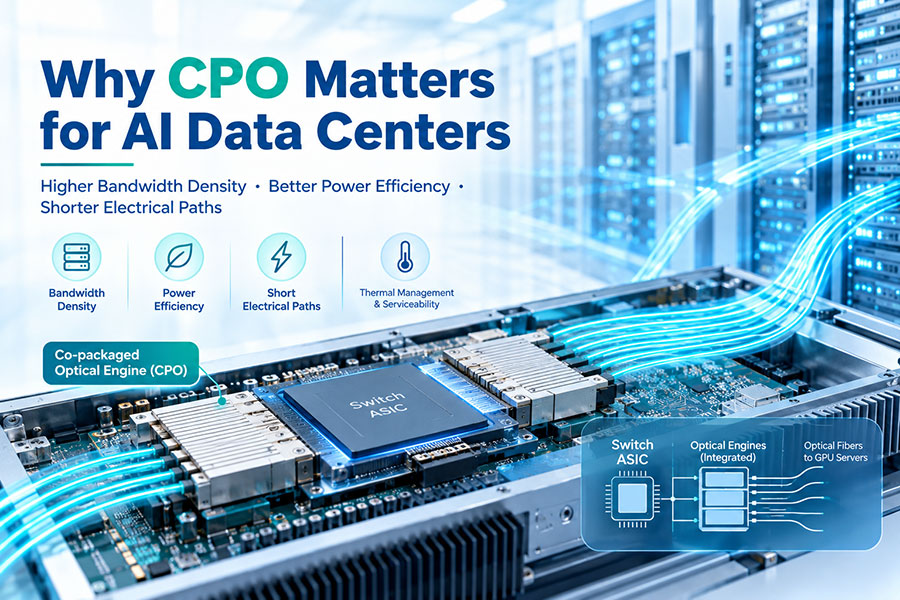
Co-Packaged Optics (CPO) places optical engines close to the host switching or computing ASIC, reducing the distance that very high-speed electrical signals must travel between the chip and the optical interface.
This architecture addresses some of the challenges associated with increasing electrical bandwidth density. By moving optical conversion closer to the processing chip, CPO can reduce the demands on long electrical connections between the ASIC and conventional front-panel optical modules.
However, CPO introduces challenges involving thermal integration, fiber attachment, serviceability, reliability, and system design. It does not eliminate the need for electrical links inside the system or remove all physical constraints.
CPO is one of several approaches under development for next-generation AI networking. Pluggable optical transceivers remain important where field replacement, modularity, and flexible deployment are required.
16. Active Copper and Optical Technologies Will Coexist
The development of active copper demonstrates that the industry's response to higher data rates is not limited to replacing every electrical link with fiber. ACC, LACC, and AEC solutions can extend the useful range of copper for selected applications while maintaining the advantages of an electrical interconnect.
At the same time, optical transceivers, AOCs, and integrated optical engines offer alternative solutions for links that require more reach or different cable-management characteristics.
The division between these technologies depends on the platform and use case. A short link within a rack may benefit from passive copper, an adjacent-device connection may suit an active copper implementation, and a longer switch-to-switch link may require optical connectivity.
Designers should compare supported reach, module and cable power, signal quality, physical dimensions, installation cost, maintainability, and platform compatibility before determining where each technology fits.
17. Total Cost of Ownership: Copper vs Optical
Initial cable or module price is only one part of the total cost of an AI data center interconnect. Deployment labor, power consumption, cooling, cable routing, troubleshooting, and future upgrades can also affect the overall economics.
Passive DAC is often economical for short links because it requires no active electronics in the cable. Active copper increases cost and power consumption but can extend the reach of specific electrical configurations.
Optical connectivity can have a higher initial component cost, particularly when separate transceivers and structured fiber infrastructure are required. However, it can reduce limitations associated with copper reach and cable bulk in larger deployments.
The best choice should be based on the actual link requirements and expected lifecycle costs rather than assuming that one transmission medium is always cheaper.
18. Reliability, Testing, and Maintenance Considerations
Reliable AI networking depends on maintaining stable communication across thousands of physical connections. Both copper and optical interconnects require appropriate installation, compatibility checks, and validation.
Copper systems should be evaluated for cable integrity, connector fit, channel compatibility, and any supported diagnostic or signal-quality requirements. Active copper products also require verification of their power needs and compatibility with the attached equipment.
Optical systems require attention to connector cleanliness, fiber polarity, bend radius, optical power levels, and transceiver interoperability. Digital Optical Monitoring (DOM) or Digital Diagnostics Monitoring (DDM), where supported, can help engineers identify abnormal module operating conditions.
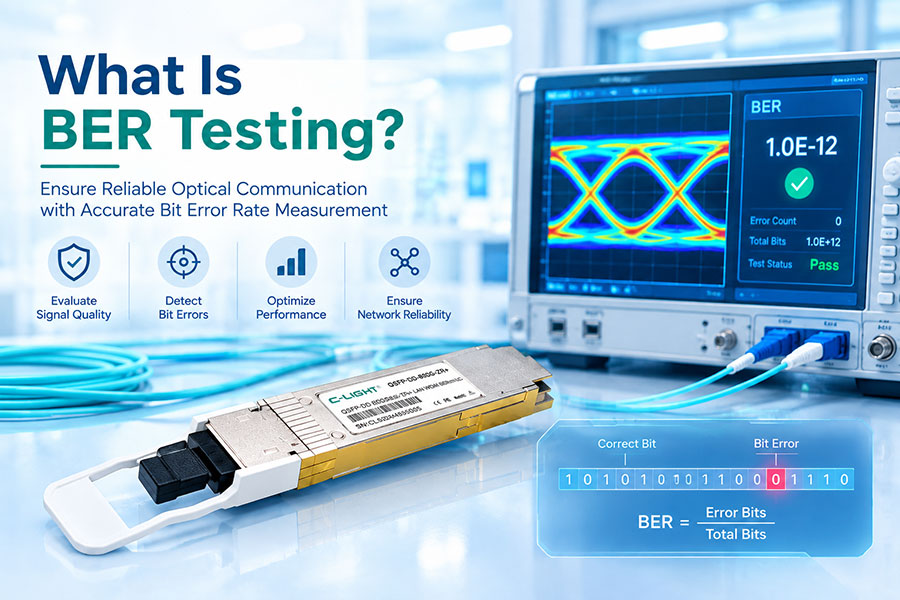
Testing should confirm that the complete link operates within the intended specifications. A cable's nominal data rate or a transceiver's claimed reach is not sufficient by itself to guarantee a successful installation.
19. How to Choose the Right Interconnect for AI Scaling
The correct choice depends on the network architecture, data rate, transmission distance, and requirements of the host equipment. Rather than selecting copper or optics based solely on bandwidth, engineers should evaluate the complete electrical or optical channel.
| Requirement | Potential Solution | Key Verification |
|---|---|---|
| Very short, cost-sensitive connection | Passive DAC | Supported lane rate, channel length, and host compatibility |
| Short connection requiring additional signal conditioning | ACC or LACC | Reach, active-circuit design, power, and port support |
| Supported electrical link needing retiming or signal restoration | AEC | Signal-processing architecture, power, and supported distance |
| Short or medium reach using an integrated optical cable | AOC | Supported reach, data rate, endpoint compatibility, and fixed cable length |
| Connections across racks or network tiers | Optical transceivers and fiber | Fiber type, wavelength, connector, optical budget, and host compatibility |
| Future high-density switch or compute architectures | Pluggable optics, NPO, or CPO where supported | Platform maturity, power, cooling, serviceability, and system integration |
For each connection, document the host interface, target data rate, length, cable route, lane configuration, power limits, and environmental conditions. Compare qualified products using these requirements, then validate the assembled link before large-scale deployment.
20. The Role of Copper and Optical Interconnects in Future AI Data Centers
AI infrastructure is moving toward higher bandwidth, more accelerators, denser network ports, and larger computing domains. These changes make interconnect design an increasingly important part of data center planning.
Copper continues to provide value for short electrical connections, particularly where low cost and low power are priorities. However, passive copper becomes increasingly constrained as lane rates rise and physical distances increase. Active copper can extend selected connections, but it introduces additional power and implementation trade-offs.
Optical interconnects provide the reach and cabling flexibility required by many large-scale network fabrics. Developments in 800G, 1.6T, silicon photonics, NPO, and CPO are creating additional options for future systems.
The likely direction is a heterogeneous interconnect architecture in which copper and optical technologies are selected according to their strengths. The goal is not to eliminate copper altogether, but to use each technology where it provides the best balance of performance, power, distance, density, cost, and serviceability.
21.Conclusion
Copper interconnects are being challenged by AI scaling because higher lane rates, greater bandwidth density, and more complex data center layouts place increasing demands on electrical signal integrity, transmission reach, power, and cable management.
Passive DAC remains useful for suitable ultra-short connections because of its low cost and low power consumption. Active copper solutions such as ACC, LACC, and AEC can extend particular electrical links, but their reach and power requirements depend on the implementation. Optical transceivers, AOCs, and integrated optical technologies provide alternatives for connections that require longer reach or different system-level characteristics.
As AI networks advance from 400G to 800G and 1.6T, the most practical approach is to combine copper and optical interconnects according to the requirements of each link. Careful evaluation of data rate, reach, signal integrity, power, density, and compatibility helps create reliable and scalable AI data center infrastructure.
 >
>

 >
>
 >
>
 >
>
 >
>
 >
>
 >
>
 >
>