TEL:+86 132 6656 7067




The rapid growth of AI data centers, cloud computing, and high-performance computing is driving optical communication networks from 400G toward 800G and 1.6T. As transmission speeds continue increasing, the selection of optical laser technology has become one of the most important factors affecting optical module performance, cost, power consumption, and scalability.
From VCSEL-based multimode solutions to EML, DML, and silicon photonics-based single-mode solutions, “Made in China” and “Not in China” laser technologies are being talked for different transmission distances and application scenarios.
This article explains the key differences between single-mode and multimode laser technologies and analyzes how laser selection, including the originals impacts the development of 400G, 800G, and 1.6T optical modules.
1. The Evolution of Optical Module Laser Technology
1.1 From 100G to 400G: The Beginning of PAM4 Optical Communication
The transition from 100G to 400G optical modules introduced PAM4 modulation technology, which significantly improved transmission efficiency by transmitting two bits per symbol.
400G optical modules typically use:
VCSEL for short-distance multimode applications
DR4 single-mode DFB s
FR4/LR4 solutions using EML
The industry began moving from traditional NRZ modulation toward PAM4-based high-speed optical transmission.
1.2 800G and 1.6T Drive New Laser Requirements
As AI clusters continue expanding, bandwidth requirements are increasing rapidly in 2026. 800G and 1.6T optical modules require higher-performance lasers with:
Higher modulation speed
Lower power consumption
Better signal integrity
Higher reliability
Laser selection has become a key technology decision in next-generation optical interconnect architectures.
2. Single Mode vs Multimode Optical Technology
2.1 Multimode Fiber and VCSEL Laser Technology
Multimode optical solutions typically use VCSEL (Vertical Cavity Surface Emitting Laser) technology combined with multimode fiber (MMF). Chinese makers like Sanan® are becoming competitors to Coherent® and Macom®.
VCSEL advantages include:
Low manufacturing cost
Low power consumption
100Gbps PAM4 / ch, High-speed modulation capability
Suitable for short-distance data center links
Typical applications:
100G SR4
200G SR4
400G SR4/ SR8
800G SR8
2.2 Single Mode Fiber and Advanced Laser Technology
Single-mode optical solutions use single-mode fiber (SMF) combined with advanced laser sources such as EML, DML, and silicon photonics lasers. The best Chinese vendor is YuanJie®
Advantages include:
Longer transmission distance
Higher bandwidth capability
Better scalability for future networks
Lower transmission loss
Typical applications:
400G DR4/ FR4/ LR4
800G DR8/ FR8/ LR8
1.6T DR8/ FR8
Core Differences of VCSEL & DFB/EML
| Comparison | Multimode Chip (VCSEL) | Singlemode Chip (DFB/EML) |
|---|---|---|
| Emission Direction | Vertical, surface-emitting | Horizontal, edge-emitting |
| Resonator | Vertical cavity + top/bottom DBRs | Horizontal waveguide + built-in Bragg grating |
| Spectral Characteristics | Multiple longitudinal modes, broad linewidth | Single longitudinal mode, ultra-narrow linewidth |
| Beam Profile | Circular, easy to couple | Elliptical, requires lenses |
| Modulation | Direct modulation | Direct (DFB) or external (EML) |
| Core Material | GaAs (Gallium Arsenide) | InP (Indium Phosphide) |
| Typical Wavelength | 850 nm | 1310 nm / 1550 nm |
| Dominant Scenario | Short-reach multimode (<100 m) | Medium-to-long-reach singlemode (500 m – 10 km+) |
3. Future Trend: Optical Interconnect Moving Toward Higher Integration
The future development of optical modules will not only focus on increasing transmission speed but also improving integration efficiency.
The evolution path is:
400G Pluggable Optical Module
800G High-Speed Optical Module
1.6T Optical Module
CPO Optical Engine
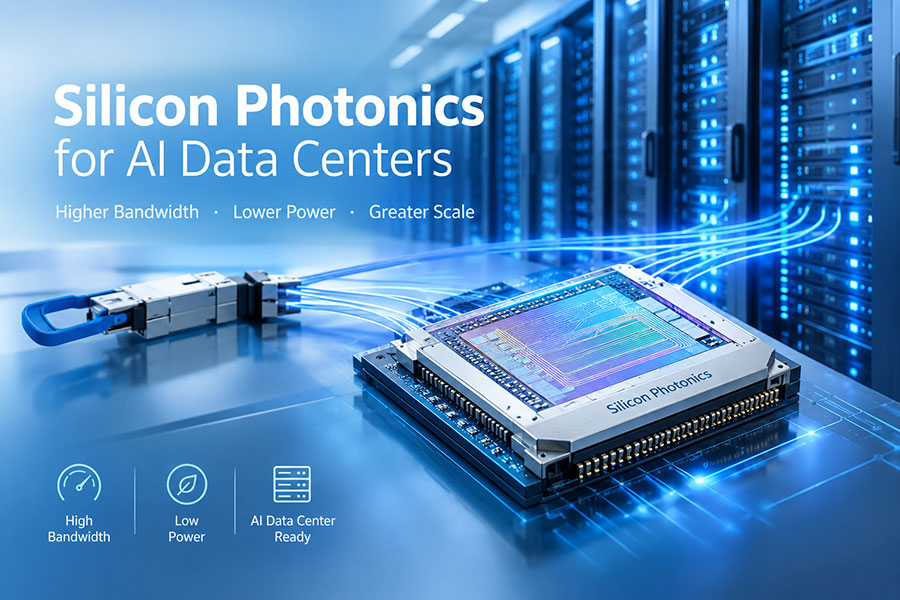
Optical I/O Architecture
As AI computing continues expanding, optical technology will gradually move closer to computing chips, requiring more advanced laser solutions.
4. C-LIGHT High-Speed Optical Connectivity Solutions
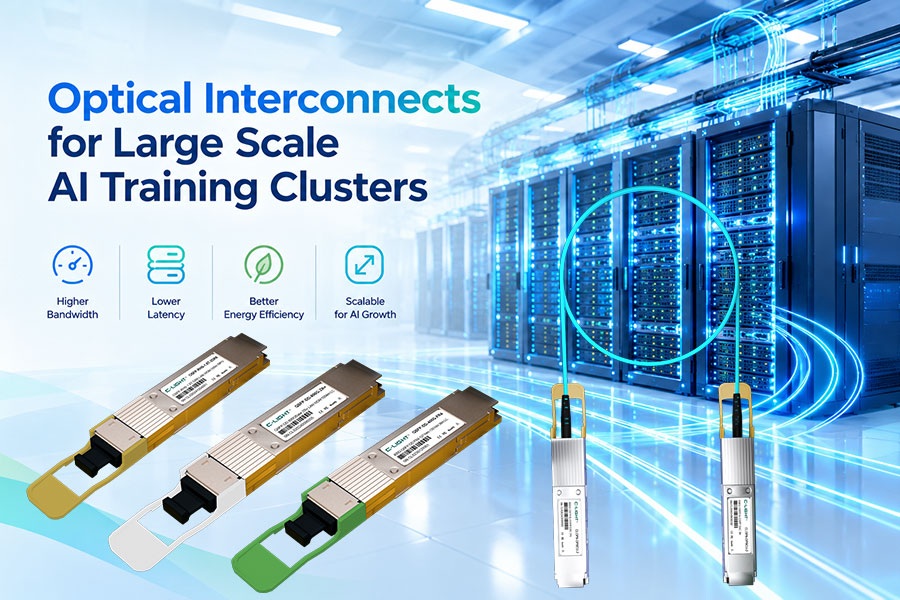
C-LIGHT provides advanced optical connectivity solutions supporting the evolution from 400G to 1.6T optical networks.
400G Optical Transceiver
800G Optical Transceiver
1.6T Optical Connectivity Solution
DAC, AOC and AEC ACC Interconnect Products
By combining advanced optical components and high-speed transmission technologies, C-LIGHT supports next-generation AI data center and cloud networking infrastructure.
 >
>

 >
>
 >
>
 >
>
 >
>
 >
>
 >
>
 >
>