TEL:+86 132 6656 7067




Silicon photonics and traditional optical modules are two approaches used to implement optical transmission and reception in modern networking systems. Both convert electrical data into optical signals and transmit those signals through optical fiber, but the way the optical functions are implemented can be very different.
Traditional optical modules often use discrete or semi-integrated optical components such as VCSELs, DMLs, EMLs, PIN photodiodes, APDs, lenses, optical isolators, and multiplexing components. Silicon photonics, by contrast, integrates multiple optical functions on a silicon photonic integrated circuit (PIC), allowing functions such as modulation, optical routing, wavelength multiplexing, and detection to be implemented in a highly integrated structure.
Silicon photonics does not necessarily mean that every optical component is made from silicon. Silicon is an efficient platform for passive optical waveguides and photonic integration, but light generation often relies on separately integrated or hybrid semiconductor laser technologies. Modern Silicon Photonics products can therefore combine silicon photonic PICs with lasers, drivers, TIAs, DSPs, and other electronic components.
1. What Is Silicon Photonics?
Silicon photonics is a technology that uses silicon-based photonic integrated circuits to manipulate and transmit optical signals. Instead of assembling every optical function from separate components, multiple optical functions can be integrated on a silicon substrate.
A silicon photonic PIC can contain optical waveguides, modulators, couplers, splitters, multiplexers, demultiplexers, and photodetection structures. Depending on the architecture, lasers may be integrated onto the photonic platform or connected as separate components.
This level of integration can reduce the number of discrete optical alignment operations and provide a pathway toward wafer-scale manufacturing and testing.
2. What Are Traditional Optical Modules?
Traditional optical modules generally use discrete or semi-integrated optical components assembled into a transceiver package.
A typical transmitter may use a VCSEL, DML, or EML laser together with a laser driver and optical coupling components. The receiver may use a PIN or APD photodiode, TIA, optical filter, and other components.
These components are assembled and aligned within the module to create the complete optical transmit and receive path.
Traditional optical modules have been widely used across 1G, 10G, 25G, 40G, 100G, 200G, 400G, and higher-speed networking systems.
3. Silicon Photonics vs Traditional Optical Modules: Basic Difference
| Feature | Silicon Photonics | Traditional Optical Module Architecture |
|---|---|---|
| Optical Integration | Multiple optical functions integrated on a PIC | More discrete or semi-integrated optical components |
| Core Platform | Silicon photonic integrated circuit | Discrete laser, detector, optical components, and package |
| Laser | May be hybrid or separately integrated | Typically discrete VCSEL, DML, or EML |
| Optical Alignment | Can be reduced through photonic integration | More individual component alignment may be required |
| Manufacturing | Compatible with wafer-scale photonic processes | More component-level assembly and alignment |
| Scaling | Suitable for highly integrated architectures | Scales through component and package evolution |
| Common Applications | High-speed data center and optical interconnects | Broad range of networking applications |
4. Silicon Photonics Is Not a Form Factor
Silicon photonics should not be confused with a module form factor.
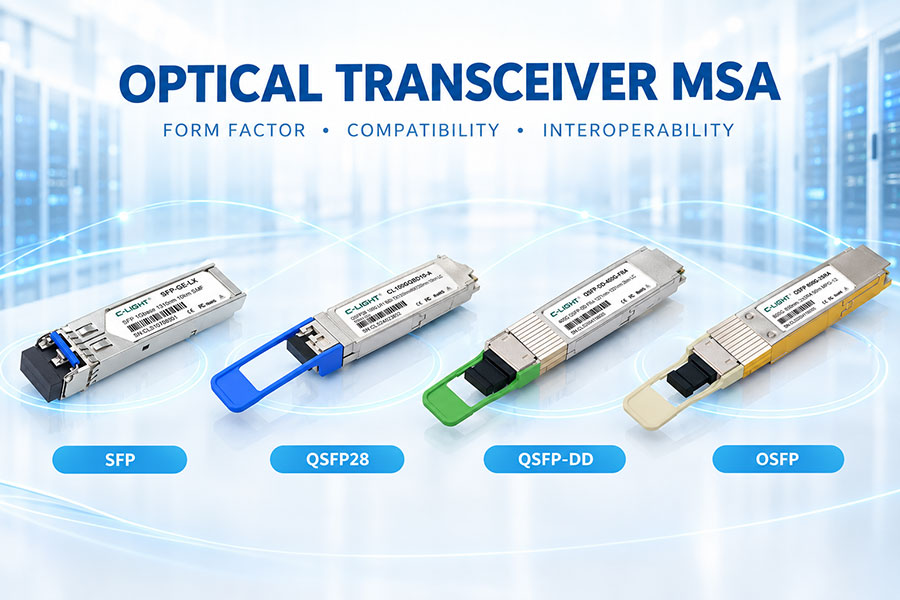
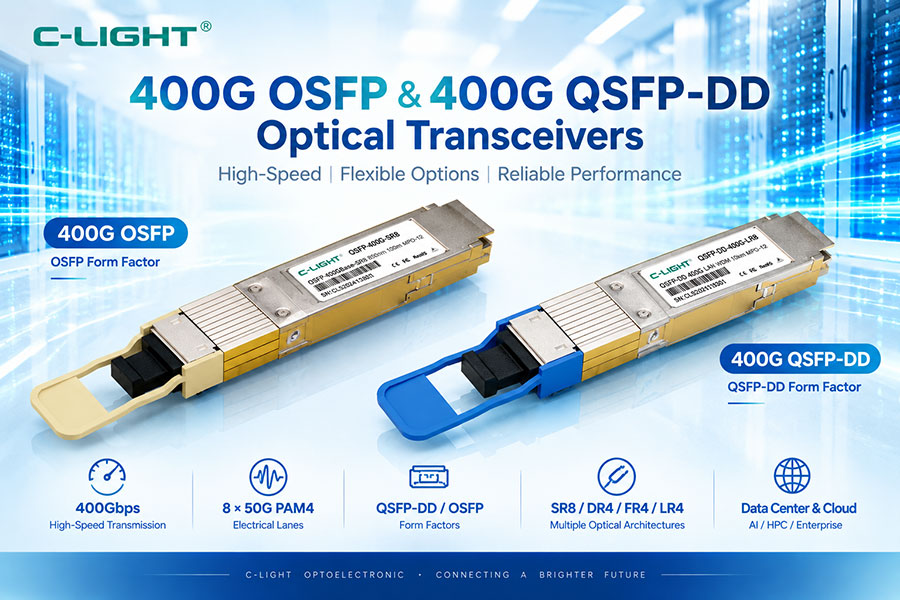
QSFP28, QSFP-DD, and OSFP describe mechanical and electrical interfaces used to connect a module to a host system. Silicon photonics describes how the optical functions are implemented inside the module.
A silicon photonics transceiver can therefore be designed as a QSFP28, QSFP56, QSFP-DD, or OSFP module depending on the required electrical and mechanical interface.
This distinction is important when comparing optical module technologies. The actual comparison is between different optical architectures, not simply between different connector or module shapes.
5. Silicon Photonics Integrated Optical Functions
A silicon photonics PIC can integrate several optical functions on the same chip.
Typical functions include optical waveguides, modulators, optical splitters, couplers, wavelength multiplexers, wavelength demultiplexers, and photodetection structures.
Integration of these functions can reduce the physical space required by individual optical components and simplify some optical routing structures inside the transceiver.
The exact functions integrated into the PIC depend on the product architecture.
6. Laser Integration in Silicon Photonics
One important technical point is that silicon itself is not normally used as the primary laser-gain material in conventional silicon photonics transceivers.
Many silicon photonics architectures therefore use III-V semiconductor laser technology that is hybrid-integrated, bonded, or coupled to the silicon photonic platform.
This approach combines the manufacturing and integration advantages of silicon photonics with semiconductor materials that are well suited to efficient light generation.
For example, Intel describes its silicon photonics platform as using on-die integrated laser arrays fabricated at wafer scale, while other commercial implementations use different hybrid or external laser approaches.
7. Traditional VCSEL Architecture
VCSELs are commonly used in short-reach multimode optical modules.
A traditional VCSEL-based module normally uses individual laser devices coupled into optical fibers. The optical output is directed through lenses, fiber coupling structures, or other alignment components.
VCSELs are widely used for 850nm-class short-reach applications because of their compatibility with multimode fiber and their suitability for high-volume data center connectivity.
This architecture can be relatively straightforward at lower optical channel counts, but the number of components and alignment requirements can increase as the module becomes more complex.
8. Traditional DML and EML Architecture
DML and EML technologies are widely used in single-mode optical modules.
A DML directly modulates the laser output, while an EML integrates a laser with an electro-absorption modulator to provide higher-speed modulation characteristics.
Traditional DML and EML modules generally use discrete laser packages coupled to optical paths inside the transceiver.
These technologies remain important for high-speed optical communication because they can provide strong optical performance for specific wavelength and reach requirements.
9. Silicon Photonics Modulators
One of the key functions of a silicon photonics PIC is optical modulation.
The PIC can convert electrical information into controlled changes in optical amplitude or phase using integrated optical modulators. Different modulator structures can be used depending on the required data rate, linearity, loss, and power characteristics.
Integrated modulation reduces the need for some discrete optical components and can allow multiple optical channels to be implemented on a common photonic platform.
10. Silicon Photonics and Wavelength Multiplexing
Silicon photonics is well suited to wavelength-multiplexed optical architectures because waveguides and wavelength-selective structures can be integrated on the same PIC.
Multiple optical wavelengths can be combined into one fiber and separated again at the receiver.
This is useful for optical modules such as 100G CWDM4, 400G FR4, 800G FR4, and other WDM-based designs where several wavelengths share a fiber interface.
11. Traditional WDM Optical Modules
Traditional WDM modules can also support multiple wavelengths, but the optical multiplexing function may be implemented through discrete filters, thin-film components, arrayed waveguide structures, or other optical components.
These components must be aligned and packaged to maintain the required optical insertion loss, isolation, and wavelength characteristics.
Silicon photonics can integrate some of these functions directly into the PIC, potentially reducing the number of individually packaged optical components.
12. Receiver Architecture
The receiver side is another area where silicon photonics and traditional architectures can differ.
Traditional modules may use individual PIN or APD photodiodes connected to separate optical paths and TIAs.
Silicon photonics can integrate photodetection and optical routing functions onto a PIC, although the exact detector material and integration method vary by technology.
The receiver electronics can still include a separate TIA, DSP, or other electrical processing circuits.
13. TOSA and ROSA in Traditional Modules
Traditional transceivers often use separate TOSA and ROSA structures.
The TOSA contains the laser and associated optical coupling components, while the ROSA contains the photodetector and receiver optical structure.
This modular optical assembly approach has been widely used across many generations of optical transceivers.
Silicon photonics can replace some of these discrete structures with a photonic integrated circuit, although the final module can still contain separate laser, driver, TIA, and other electronic components.
14. Optical Alignment
Optical alignment is one of the major manufacturing considerations in conventional optical modules.
Lasers, lenses, fibers, filters, photodiodes, and other optical components must be positioned accurately to achieve the required coupling efficiency and optical performance.
Silicon photonics can reduce the number of discrete alignment operations because optical waveguides and routing structures are fabricated directly on the PIC.
This does not eliminate all alignment requirements. Fiber coupling, laser coupling, packaging, and other interfaces still require precise assembly.
15. Wafer-Scale Manufacturing
One potential advantage of silicon photonics is compatibility with semiconductor-style wafer manufacturing.
Multiple photonic circuits can be fabricated across a wafer and tested before module assembly. This can allow known-good photonic dies to be selected for packaging.
Intel has described wafer-scale testing and laser burn-in as part of its silicon photonics manufacturing approach.
Traditional optical modules typically rely more heavily on component-level assembly and alignment rather than manufacturing the complete optical path on a photonic wafer.
16. Manufacturing Complexity
Silicon photonics can reduce certain types of assembly complexity by integrating multiple optical functions into one PIC.
However, this does not mean that silicon photonics is inherently simple to manufacture. Photonic packaging, fiber coupling, laser attachment, thermal control, electrical connection, and testing remain demanding processes.
Traditional modules have more individual optical components in many architectures, which increases assembly and alignment work, but established manufacturing processes and mature supply chains can simplify high-volume production.
17. Size and Integration
High integration allows a silicon photonics PIC to combine multiple optical functions in a relatively compact area.
This can be useful when module bandwidth increases and more optical channels or wavelength functions need to be placed inside a limited package.
Traditional modules can also achieve very compact dimensions through advanced packaging, but increasing channel count may require additional components and more complex internal optical routing.
18. Power Consumption
Power consumption is an important consideration when comparing optical technologies, but it cannot be determined from the optical platform alone.
Silicon photonics can reduce power in some architectures by integrating optical functions and reducing certain electrical or optical interconnect losses. A shorter or simpler internal signal path can also reduce some supporting circuit requirements.
However, silicon photonics may still require lasers, drivers, TIAs, DSPs, thermal control, and other active components. The total power depends on the complete module architecture.
Traditional optical modules also have a wide range of power levels depending on the laser technology, DSP, reach, and data rate.
19. Thermal Management
Thermal management remains important for both silicon photonics and traditional optical modules.
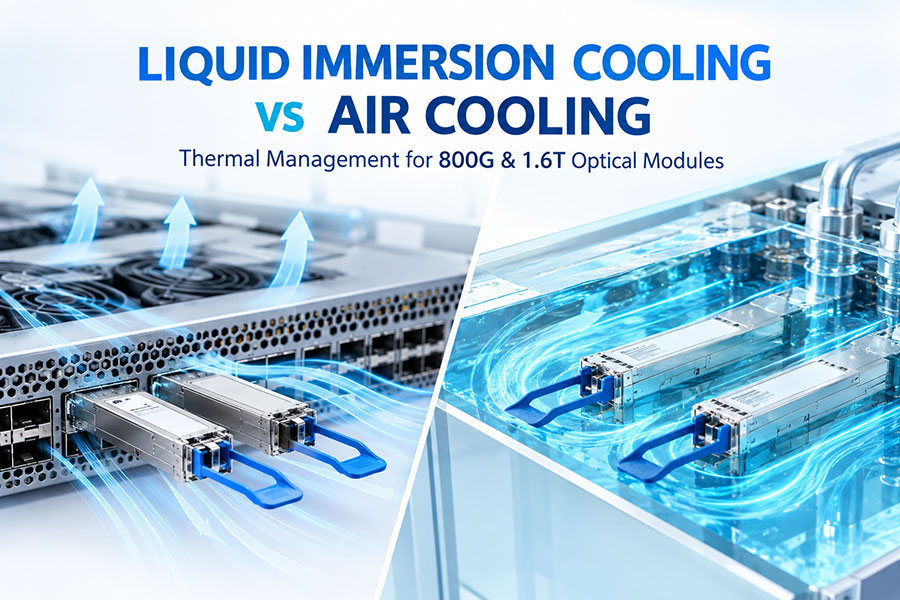
Silicon photonics PICs can integrate multiple optical functions into a small area, which can increase local thermal density. Laser temperature, modulator temperature, detector characteristics, and wavelength stability can also be affected by temperature.
Traditional modules distribute optical components across different packages, but high-speed modules can still generate substantial heat through DSPs, drivers, lasers, and TIAs.
For 800G and 1.6T modules, thermal design must therefore be considered at the complete module and system levels.
20. Silicon Photonics and 400G Modules
Silicon photonics is well suited to 400G modules because multiple optical channels and wavelength functions can be integrated into a compact PIC.
400G silicon photonics modules can use parallel single-mode architectures or wavelength-multiplexed architectures depending on the target reach and fiber configuration.
Intel currently lists 400G DR4 silicon photonics solutions as part of its data center optical portfolio.
21. Silicon Photonics and 800G Modules
800G increases the requirements for both electrical and optical integration.
Silicon photonics can integrate multiple optical channels and wavelength functions while reducing the number of separate optical components inside the module.
Current industry products and demonstrations include 800G silicon photonics transceivers using different optical architectures. The actual implementation varies by manufacturer and application.
22. Silicon Photonics and 1.6T Modules
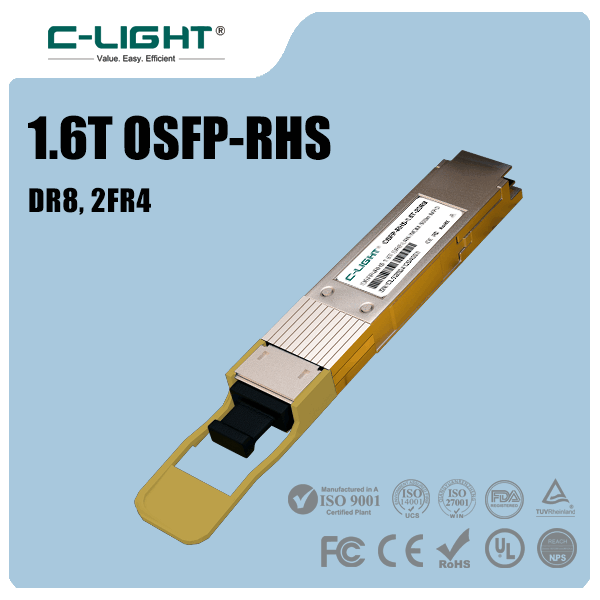
At 1.6T, optical integration becomes more demanding because each module must support multiple 200G-class electrical or optical channels.
Silicon photonics provides a way to integrate optical routing, modulation, detection, and wavelength functions into a compact PIC architecture.
Coherent and Intel have both publicly demonstrated or offered silicon-photonics-related 1.6T technologies. Coherent's 2026 demonstrations included 1.6T DR8 transceivers based on silicon photonics, while Intel describes 1.6T silicon photonics components in its current portfolio.
23. Silicon Photonics vs EML
Silicon photonics and EML are not exactly equivalent technologies because they operate at different levels of the optical architecture.
EML is a laser technology combining a laser with an electro-absorption modulator. Silicon photonics is a photonic integration platform that can implement modulation and other optical functions on a silicon PIC.
In practice, a high-speed optical module may use either an EML-based architecture or a silicon photonics PIC-based architecture to meet a particular optical specification.
The comparison should therefore focus on optical performance, power, integration, manufacturability, wavelength architecture, and system requirements rather than assuming one technology always replaces the other.
24. Silicon Photonics vs DML
DML is a direct laser modulation technology commonly used in single-mode optical modules.
Compared with a discrete DML architecture, silicon photonics can integrate the modulator and optical routing functions on the PIC while using a separate or integrated light source.
DML remains useful where its optical characteristics, simplicity, and cost are appropriate for the target application.
25. Silicon Photonics vs VCSEL
VCSEL technology is widely used for short-reach multimode optical transmission, particularly around 850nm.
Silicon photonics is more commonly associated with single-mode and wavelength-multiplexed architectures, although the technology can be used across a wide range of applications.
The choice depends on reach, fiber type, optical bandwidth, wavelength architecture, power, cost, and module requirements.
26. Optical Reach
Silicon photonics does not inherently determine the maximum transmission distance of a module.
Reach depends on the complete optical architecture, including laser technology, modulation method, fiber type, wavelength, optical power, receiver sensitivity, link budget, and signal processing.
Silicon photonics can therefore be used in both relatively short data center links and longer optical systems when the appropriate components and architecture are selected.
27. Silicon Photonics and Data Center Networks
Data centers require increasing bandwidth density while maintaining manageable power and thermal budgets.
Silicon photonics can support these requirements through integrated optical functions and scalable PIC manufacturing. It is already being used in pluggable transceivers for data center networking.
Intel reports that its silicon photonics platform has shipped more than 8 million PICs and more than 32 million integrated lasers in pluggable optical transceivers since 2016.
28. Silicon Photonics in AI Data Centers
AI infrastructure places strong demands on network bandwidth because large numbers of GPUs and accelerators exchange data through high-speed switching systems.
As link speeds move toward 800G and 1.6T, the number of optical channels and electrical interfaces inside the network increases rapidly.
Silicon photonics can provide a compact integrated optical architecture for these environments, while traditional laser technologies such as EML and VCSEL continue to serve specific applications.
29. Silicon Photonics and Pluggable Optics
Silicon photonics does not necessarily replace pluggable optics. In fact, silicon photonics is already used inside pluggable optical transceivers.
A silicon photonics transceiver can use a standard pluggable form factor while replacing a discrete optical assembly with a more integrated photonic architecture.
This means the industry can combine the serviceability of pluggable modules with the integration advantages of silicon photonics.
30. Silicon Photonics and CPO
Silicon photonics can also be used in Co-Packaged Optics and other highly integrated optical architectures.
In a CPO system, a silicon photonics PIC can be positioned close to the switch ASIC to shorten the electrical path between the switching silicon and optical engine.
This illustrates another important distinction: silicon photonics describes the optical technology, while CPO describes the system packaging architecture.
31. Reliability Considerations
Reliability must be evaluated at the complete module level rather than based only on the photonic technology.
Silicon photonics can reduce the number of discrete optical alignment interfaces, which can help simplify some assembly structures. However, the PIC, laser, fiber coupling, package, electrical interface, and thermal environment must all remain stable over the operating life of the product.
Traditional optical modules have mature qualification and reliability processes, but their individual optical components and alignment structures also require careful control.
32. Testing and Qualification
Silicon photonics introduces opportunities for wafer-level testing before the PIC reaches final module assembly.
Known-good photonic dies can potentially be selected before packaging, reducing the risk of assembling a complete module around a defective photonic circuit.
Traditional modules are typically tested at the component, subassembly, and complete-module levels. Both technologies still require final module testing for optical power, receiver sensitivity, BER, temperature, electrical performance, and other specifications.
33. Cost Considerations
The cost structure of silicon photonics and traditional optical modules is different.
Silicon photonics can benefit from wafer-scale manufacturing, integration, and reduced optical component count in some architectures.
Traditional modules benefit from mature component ecosystems, established packaging processes, and high production volumes across many product generations.
Therefore, silicon photonics should not be considered automatically cheaper. Actual cost depends on PIC manufacturing, laser integration, packaging, testing, yield, module volume, and target performance.
34. Supply Chain and Manufacturing Ecosystem
Traditional optical modules rely on a large ecosystem of laser, detector, TOSA, ROSA, DSP, driver, connector, and passive optical component suppliers.
Silicon photonics introduces additional dependencies around photonic foundries, PIC design, wafer processing, laser integration, optical packaging, and advanced testing.
As silicon photonics scales into higher-volume applications, the maturity of these manufacturing ecosystems becomes increasingly important.
35. Silicon Photonics vs Traditional Optical Modules: Key Differences
| Parameter | Silicon Photonics | Traditional Optical Module Architecture |
|---|---|---|
| Optical Integration | High | Typically lower, depending on design |
| Optical Routing | Integrated on PIC | More discrete optical components |
| Laser | Hybrid, bonded, or separately coupled | Discrete VCSEL / DML / EML |
| Modulation | Integrated photonic modulator possible | Laser or external modulator depending on design |
| WDM Integration | Highly suitable for integrated WDM structures | Typically uses discrete or packaged WDM components |
| Manufacturing | Wafer-scale photonic manufacturing possible | Component assembly and alignment |
| Alignment | Reduced for functions integrated on PIC | More component-level alignment |
| Power | Can be lower in suitable architectures | Depends on module architecture |
| Packaging | Advanced photonic packaging required | Established optical packaging |
| Applications | 100G to 1.6T and beyond, depending on architecture | Broad range from low-speed to high-speed optics |
36. When Silicon Photonics Is Used
Silicon photonics is particularly suitable when high optical integration, multiple wavelength channels, high bandwidth density, or scalable PIC manufacturing are important.
Typical applications include high-speed data center transceivers, wavelength-multiplexed optical modules, data center interconnects, AI networking, and emerging optical I/O architectures.
The technology is also useful where multiple optical functions need to be integrated into a compact package.
37. When Traditional Optical Modules Are Used
Traditional optical architectures remain widely used because discrete laser and detector technologies cover a broad range of wavelengths, reaches, and network standards.
VCSEL-based modules are commonly used for short multimode links, while DML and EML devices remain important for single-mode optical transmission.
These technologies are supported by mature manufacturing ecosystems and can provide an appropriate balance of cost, optical performance, and power for many applications.
38. Future Development
The development of high-speed optical networks is likely to involve multiple optical technologies rather than a single architecture.
Silicon photonics is expanding into 800G and 1.6T pluggable modules and is also being considered for increasingly integrated optical I/O architectures.
At the same time, EML, VCSEL, InP, GaAs, and other technologies continue to advance. Industry demonstrations in 2026 show multiple optical approaches being used for 1.6T and future generations, including silicon photonics, InP lasers and EMLs, and VCSEL-based solutions.
This means that the most suitable technology will continue to depend on the required reach, bandwidth, power, cost, packaging, and system architecture.
39. Conclusion
Silicon photonics and traditional optical modules represent different approaches to implementing optical transmission. Silicon photonics integrates multiple optical functions into a silicon photonic integrated circuit, while traditional optical modules commonly use discrete or semi-integrated lasers, photodetectors, optical filters, coupling components, and other optical devices.
The main potential advantages of silicon photonics include high optical integration, reduced discrete component count, wafer-scale manufacturing opportunities, and the ability to integrate multiple optical functions into a compact structure.
Traditional optical modules continue to provide broad wavelength, reach, component, and packaging options, supported by mature manufacturing and supply chains. Technologies such as VCSEL, DML, and EML remain important across many data center and telecom applications.
Silicon photonics should therefore not be viewed simply as a replacement for traditional optical modules. Both approaches can coexist, and silicon photonics can itself be integrated into conventional pluggable form factors such as QSFP28, QSFP-DD, and OSFP.
As networking moves from 400G to 800G, 1.6T, and higher bandwidth levels, optical integration, signal integrity, power consumption, thermal management, manufacturing yield, and packaging technology will become increasingly important factors in the design of high-speed optical transceivers.
 >
>

 >
>
 >
>
 >
>
 >
>
 >
>
 >
>
 >
>