TEL:+86 132 6656 7067




8、800G DCO Coherent Optical Module FAQ
Q1. What is an 800G DCO coherent optical module?
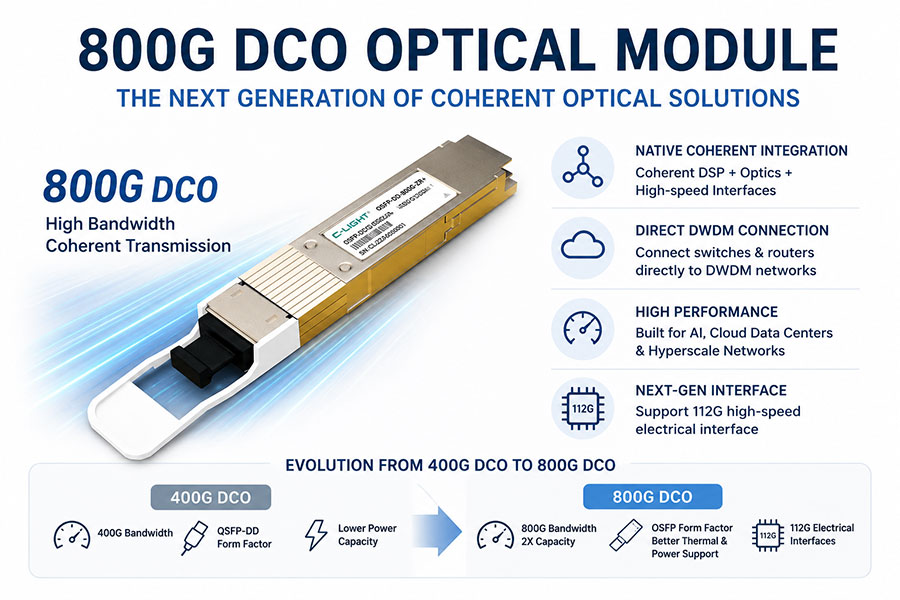
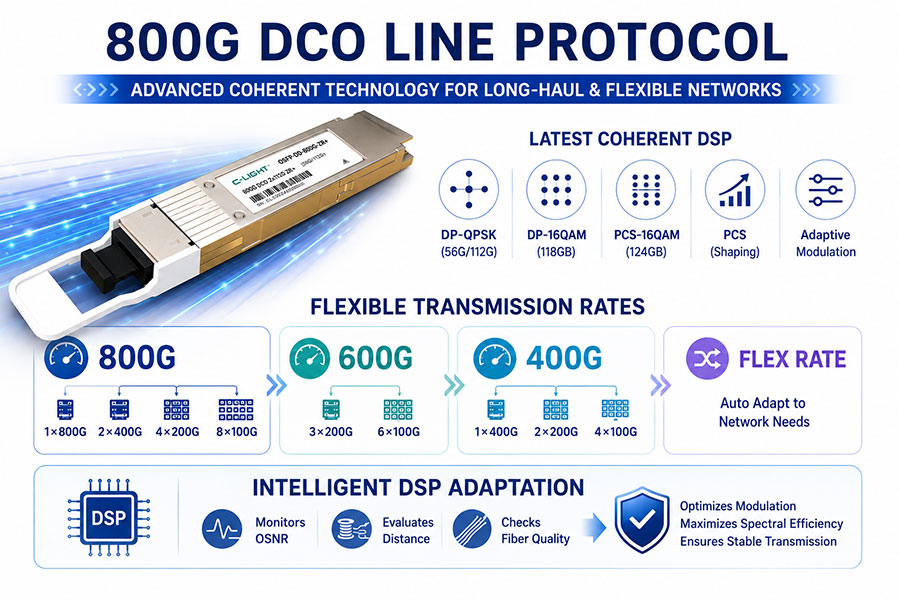
Answer: An 800G DCO (Digital Coherent Optics) coherent optical module is a pluggable optical transceiver that integrates a coherent DSP, tunable laser, coherent receiver, and advanced signal processing technology into compact QSFP-DD or OSFP form factors. It enables high-capacity optical transmission for AI data center interconnects, DWDM networks, metro networks, and backbone applications.
Q2. What is the difference between 800G DCO and traditional 800G optical transceivers?
Answer: The main difference is the transmission technology. Traditional 800G optical transceivers typically use direct-detection PAM4 technology for shorter data center links, while 800G DCO uses coherent modulation and DSP-based signal processing to support longer distances, higher spectral efficiency, and better tolerance against optical impairments such as chromatic dispersion and polarization effects.
Q3. Why are 800G DCO modules important for AI data center interconnects?
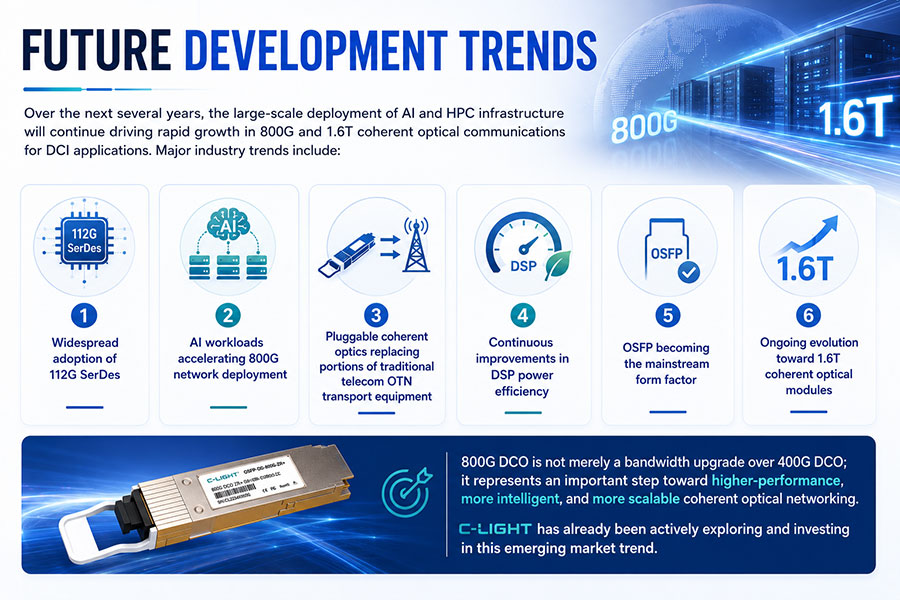
Answer: 800G DCO modules are important for AI data center interconnects because large-scale AI clusters require massive bandwidth between geographically distributed computing resources. By providing single-wavelength 800G transmission, DCO technology improves fiber utilization, reduces network complexity, and enables efficient scaling of AI infrastructure across multiple data centers.
Q4. What is the difference between 800ZR and OpenZR+ coherent optical solutions?
Answer: 800ZR and OpenZR+ are two important implementations of 800G coherent technology. 800ZR is optimized for data center interconnect applications with transmission distances around 120km. OpenZR+ provides greater flexibility with multiple modulation formats, adjustable reach, and enhanced FEC capabilities, making it suitable for metro networks, regional networks, and longer-distance optical transport applications.
Q5. What are the advantages of using 800G DCO optical modules for DWDM networks?
Answer: 800G DCO optical modules provide higher spectral efficiency, longer transmission distance, and improved optical performance compared with conventional pluggable solutions. They support IP over DWDM architectures by allowing routers and switches to connect directly to optical transport networks without requiring additional transponder equipment.
Q6. Which form factors are available for 800G DCO coherent transceivers?
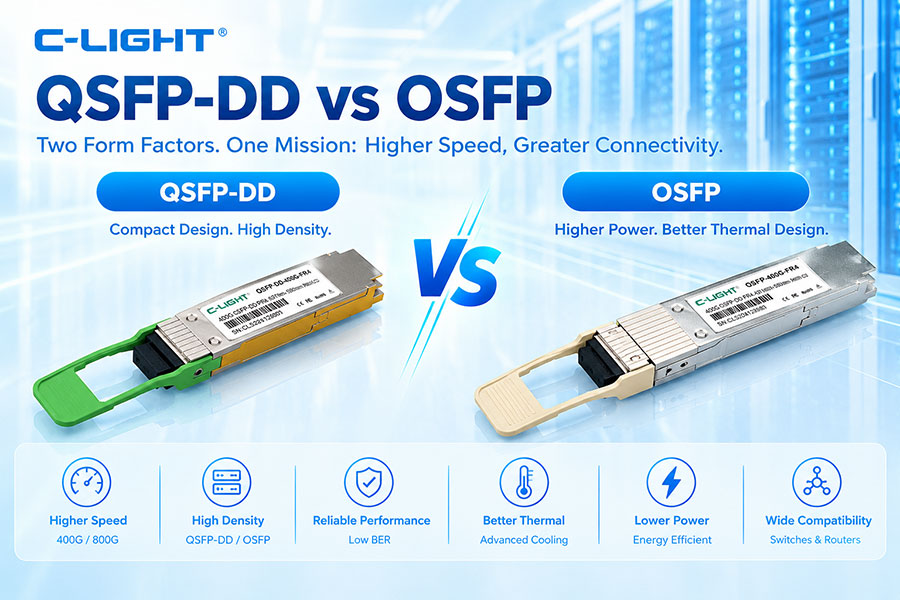
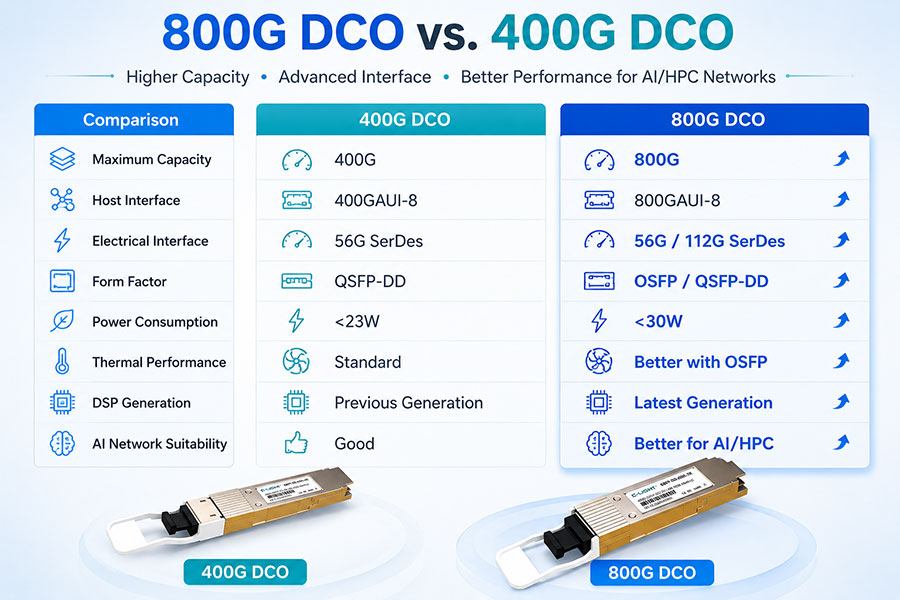
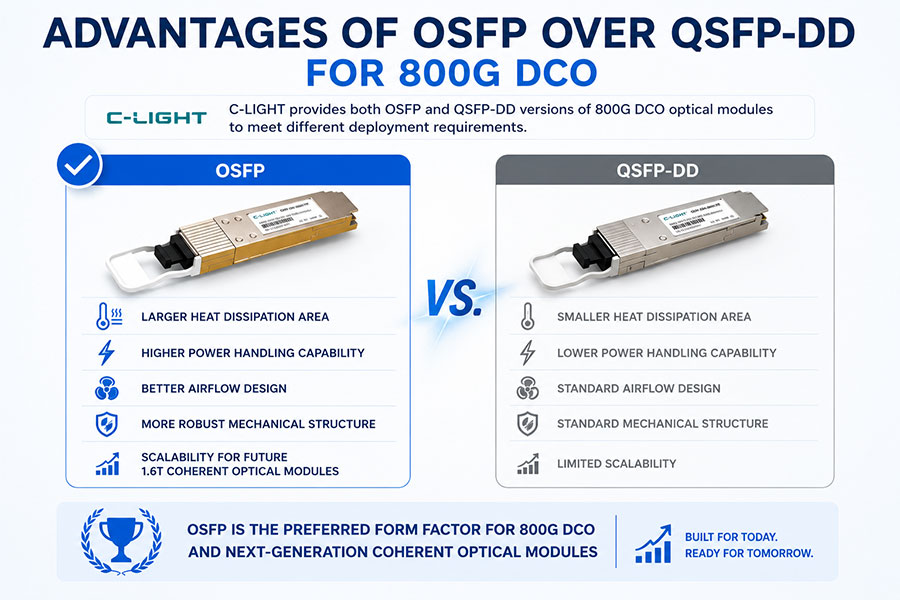
Answer: 800G DCO coherent transceivers are commonly available in QSFP-DD and OSFP form factors. QSFP-DD provides compatibility with existing high-density networking platforms, while OSFP offers enhanced thermal capability and is widely adopted for next-generation high-performance data center and AI networking applications.
Q7. What are the typical applications of 800G DCO coherent optical modules?
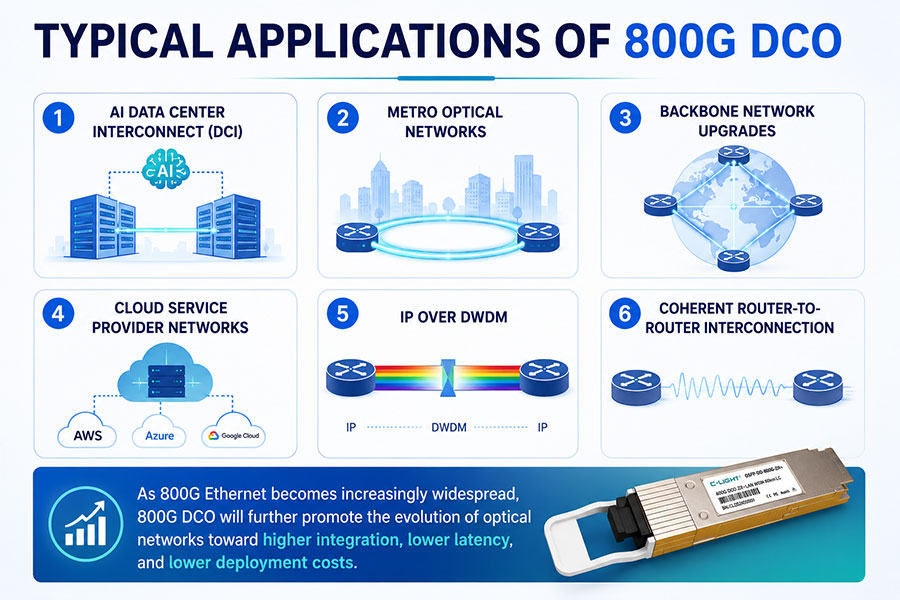
Answer: 800G DCO coherent optical modules are mainly used in AI data center interconnect (DCI), IP over DWDM networks, metro optical networks, cloud infrastructure, and regional backbone networks. They are designed for scenarios requiring high bandwidth, long-distance transmission, and efficient fiber utilization.
Q8. How do I choose between 800G DCO and 800G Ethernet optical modules?
Answer: The choice depends on transmission distance and network architecture. 800G Ethernet optical modules are typically used for short-reach data center networks such as AI clusters and leaf-spine connections. 800G DCO modules are better suited for long-distance connectivity, DCI, and DWDM-based networks where coherent transmission performance and scalability are required.
 >
>

 >
>
 >
>
 >
>
 >
>
 >
>
 >
>
 >
>