TEL:+86 132 6656 7067




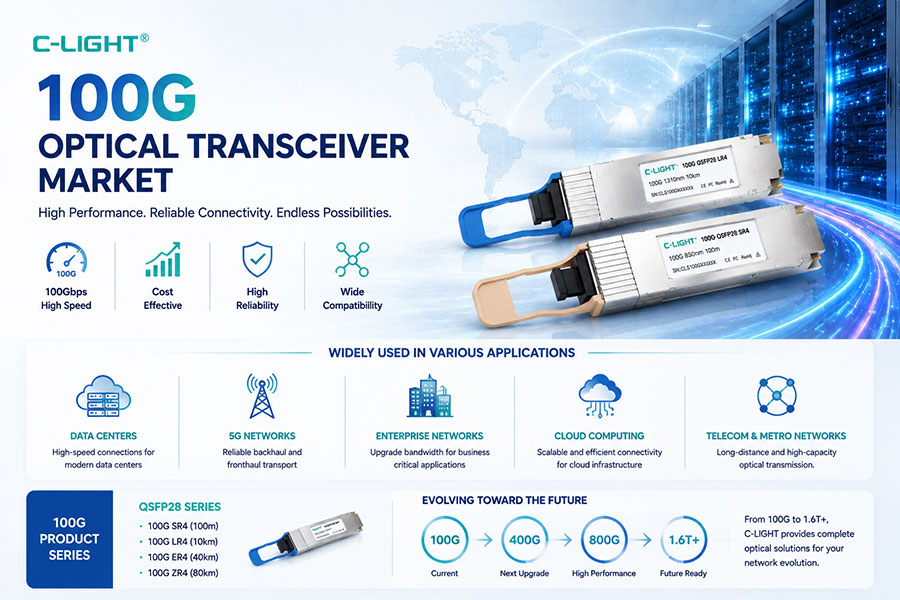
1. 100G Optical Transceiver Remains a Key Networking Technology
The global optical communication industry is experiencing rapid transformation driven by cloud computing, artificial intelligence (AI), 5G networks, and digital infrastructure expansion.
While the market is accelerating toward higher-speed solutions such as 400G and 800G optical modules, 100G optical transceivers continue to play an important role in global networking infrastructure.
100G optical transceivers provide a balance between:
High bandwidth capacity
Mature technology
Cost efficiency
Wide compatibility
They remain widely deployed in:
Enterprise networks
Telecom infrastructure
Cloud data centers
5G transport networks
Data center access layers
The 100G optical transceiver market continues evolving as operators upgrade existing networks while preparing for future higher-speed connectivity.
2. Overview of the 100G Optical Transceiver Market
2.1 What Is a 100G Optical Transceiver?
A 100G optical transceiver is a communication module designed to transmit and receive data at 100Gbps over optical fiber.
It converts:
Electrical Signals ↔ Optical Signals
to enable high-speed communication between:
Network switches
Routers
Servers
Optical transport equipment
Compared with previous generations such as 10G and 40G, 100G provides:
Higher network capacity
Better bandwidth efficiency
Lower cost per bit
Improved scalability
2.2 Main 100G Optical Module Types
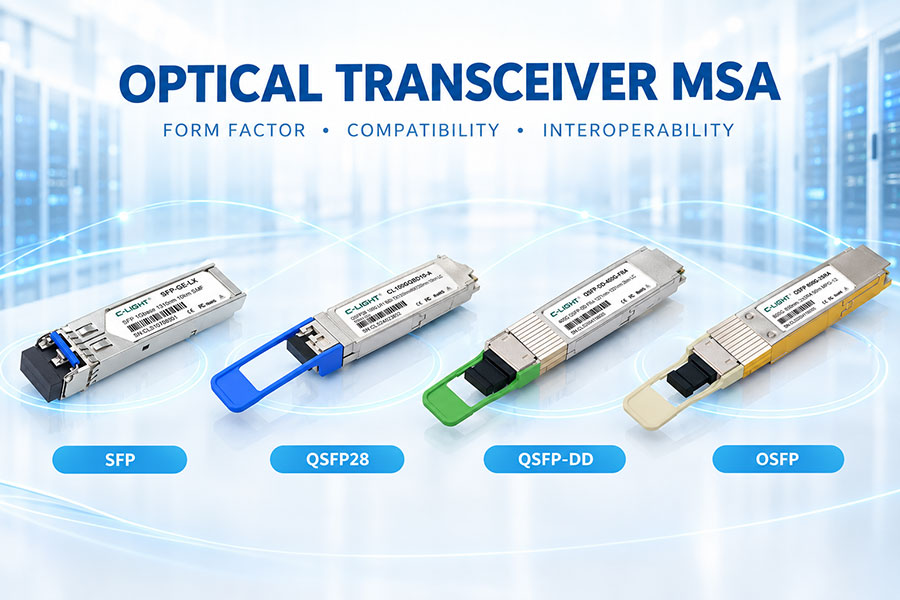
The 100G optical transceiver market includes several major form factors.
QSFP28 100G Optical Module
QSFP28 is currently one of the most widely used 100G optical module platforms.
Advantages:
Compact design
High port density
Low power consumption
Strong ecosystem support
Typical products:
100G QSFP28 SR4
100G QSFP28 LR4
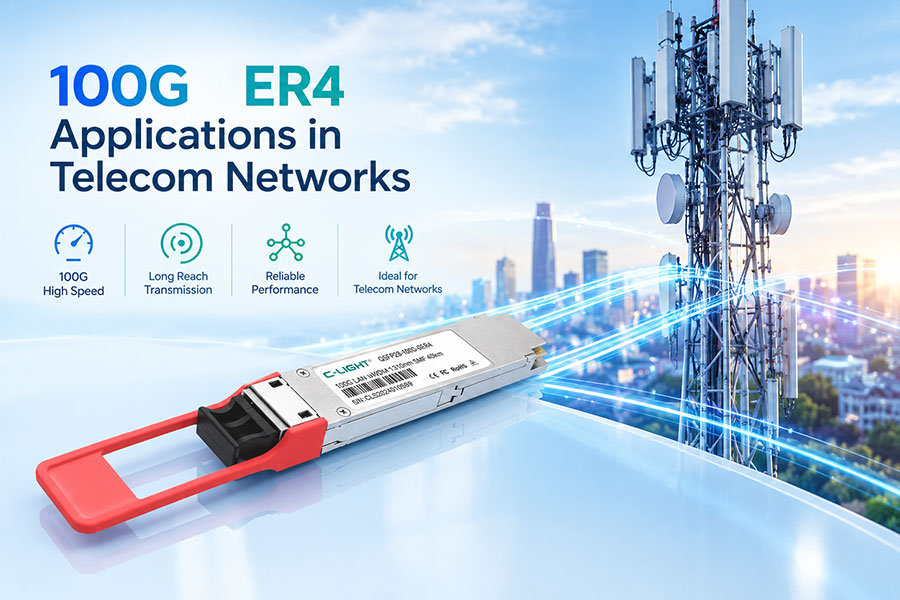
100G QSFP28 ER4
100G QSFP28 ZR4
Applications:
Data centers
Enterprise networks
Cloud infrastructure
CFP / CFP2 / CFP4 Optical Modules
CFP series modules were developed earlier for telecom and long-distance applications.
Advantages:
Higher optical performance
Suitable for carrier networks
Support longer transmission distances
Applications:
Metro networks
Optical transport systems
Telecom backbone networks
3. Growth Drivers of the 100G Optical Transceiver Market
3.1 Expansion of Data Center Infrastructure
Data centers remain one of the major application areas for 100G optical modules.
The continuous growth of:
Cloud services
Internet applications
Enterprise digital transformation
creates increasing demand for high-speed network connections.
100G optical modules are commonly deployed for:
Server uplinks
Switch connections
Data center aggregation networks
Although hyperscale AI data centers are moving toward 400G and 800G, many enterprise and edge data centers continue using 100G solutions due to cost and compatibility advantages.
3.2 5G Network Deployment
5G networks require significant improvements in transport infrastructure.
100G optical transceivers are widely used in:
5G backhaul networks
Metro aggregation
Mobile transport systems
They provide:
Higher bandwidth
Reliable transmission
Long-distance optical connectivity
As global 5G deployment continues, 100G remains an important networking solution.
3.3 Enterprise Network Upgrade
Many enterprises are upgrading from:
10G → 25G → 100G
to support:
Increasing data traffic
Cloud applications
Video services
Digital workloads
100G optical modules provide enterprises with:
Stable performance
Lower upgrade cost
Mature technology ecosystem
4. 100G Optical Module Applications
4.1 Data Center Networking
In modern data centers, 100G optical modules are commonly used for:
Leaf-spine network connections
Switch uplinks
Storage networking
Server aggregation
Typical solutions:
100G QSFP28 SR4
100G QSFP28 LR4
4.2 Telecom Networks
Telecom operators use 100G optical modules for:
Metropolitan networks
Optical transport systems
Network aggregation
Long-distance solutions such as 100G LR4 and ER4 support flexible network deployment.
4.3 Cloud Computing Infrastructure
Cloud service providers require reliable optical connectivity for:
Data transmission
Server communication
Network expansion
100G continues supporting large-scale cloud infrastructure while higher-speed modules serve AI workloads.
5. Technology Trends in the 100G Optical Transceiver Market
5.1 Higher Integration and Lower Power Consumption
Future 100G optical modules focus on:
Smaller size
Lower power consumption
Higher reliability
Manufacturers continue optimizing:
Optical engines
Packaging technologies
Thermal designs
5.2 Coexistence with 400G and 800G
The optical networking industry is not replacing one generation overnight.
The market roadmap is:
25G → 100G → 400G → 800G → 1.6T
Different speeds serve different applications.
| Speed | Main Application |
|---|---|
| 25G | Server access |
| 100G | Enterprise / Telecom / Data Center |
| 400G | Cloud and AI networks |
| 800G | AI infrastructure |
| 1.6T | Future AI computing |
5.3 Evolution Toward High-Speed Optical Networking
AI data centers are accelerating demand for:
400G optical modules
800G optical modules
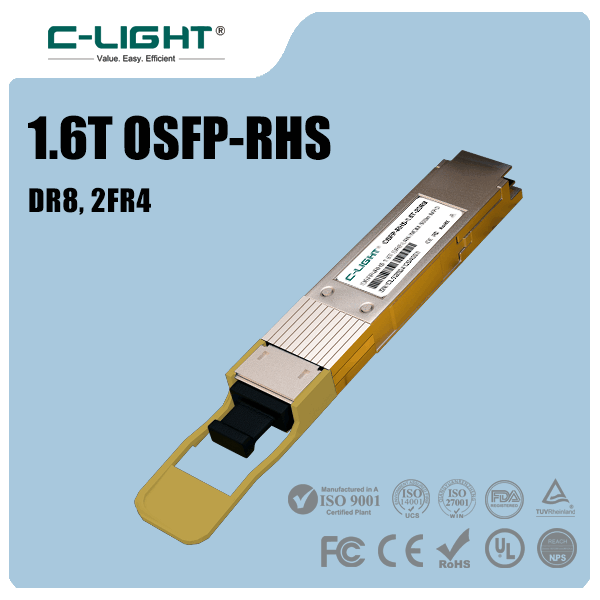
1.6T optical solutions
However, 100G remains an essential foundation technology due to:
Large installed base
Cost advantages
Broad compatibility
6. Challenges Facing the 100G Optical Transceiver Market
6.1 Market Competition
As 100G technology becomes mature, competition focuses on:
Cost optimization
Manufacturing efficiency
Product reliability
6.2 Migration to Higher Speeds
One challenge is the gradual transition toward:
400G
800G
For some high-performance applications, 100G modules are being replaced by faster solutions.
However, many networks still require cost-effective 100G connectivity.
6.3 Optical Component Supply Chain
100G optical modules rely on:
Laser components
Optical chips
Packaging technology
Testing capability
Stable supply chains remain important for large-scale deployment.
7. C-LIGHT 100G Optical Transceiver Solutions
C-LIGHT provides reliable 100G optical transceiver solutions for global networking applications.
7.1 100G QSFP28 Optical Modules
Product examples:
100G QSFP28 SR4
100G QSFP28 LR4
100G QSFP28 ER4
100G QSFP28 ZR4
Applications:
Data centers
Telecom networks
Enterprise infrastructure
7.2 Key Advantages of C-LIGHT 100G Solutions
High compatibility
Stable optical performance
Low power consumption
Flexible deployment options
Support for customized solutions
C-LIGHT continues expanding its optical product portfolio from:
100G → 400G → 800G → 1.6T
to support next-generation networking requirements.
8. Future Outlook of the 100G Optical Transceiver Market
The 100G optical transceiver market will continue playing an important role in global communication infrastructure.
Future trends include:
8.1 Continued Enterprise and Telecom Demand
100G will remain widely deployed in:
Enterprise networks
Telecom systems
Edge computing
8.2 Gradual Upgrade Toward Higher Speeds
High-performance applications will continue moving toward:
400G
800G
1.6T
8.3 Long-Term Market Stability
Because of its mature ecosystem and large installed base, 100G optical technology will continue serving as a fundamental networking solution.
9.Frequently Asked Questions (FAQ)
Q1: What is a 100G optical transceiver?
Answer:
A 100G optical transceiver is a networking module that provides 100Gbps optical data transmission for data centers, telecom networks, and enterprise infrastructure.
Q2: What are the common types of 100G optical modules?
Answer:
Common 100G optical module types include:
100G QSFP28 SR4
100G QSFP28 LR4
100G QSFP28 ER4
100G QSFP28 ZR4
Q3: Is 100G optical still important with 400G and 800G growth?
Answer:
Yes. 100G optical modules remain widely used in enterprise networks, telecom infrastructure, and existing data centers due to their mature technology, high reliability, broad compatibility, and cost efficiency.
Q4: What applications use 100G optical modules?
Answer:
100G optical transceivers are widely deployed in:
Data center networks
Telecom optical networks
Cloud infrastructure
Enterprise networking
Q5: What is the difference between 100G and 400G optical modules?
Answer:
400G optical modules provide four times the bandwidth of 100G modules and are mainly designed for AI data centers, hyperscale cloud networks, and high-performance computing applications. 100G remains an important solution for existing networks requiring reliable and cost-effective connectivity.
Q6: What is the future roadmap of optical transceivers?
Answer:
The optical communication industry is moving from 100G toward 400G, 800G, 1.6T, and future 3.2T solutions to support increasing bandwidth requirements from AI computing and next-generation data centers.
Q7: What 100G products does C-LIGHT provide?
Answer:
C-LIGHT provides 100G QSFP28 optical transceivers, including SR4, LR4, ER4, ZR4, CWDM4, PSM4, and BiDi solutions for data center, telecom, and enterprise optical networks.
Q8: Why choose 100G optical modules?
Answer:
100G optical modules provide a balance of bandwidth, reliability, compatibility, and cost efficiency. They are suitable for a wide range of networking environments, including data centers, telecom infrastructure, and enterprise networks.
 >
>

 >
>
 >
>
 >
>
 >
>
 >
>
 >
>
 >
>