TEL:+86 132 6656 7067




Silicon photonics and EML are two important optical technologies for high-speed transceivers. Silicon photonics integrates optical functions on a silicon photonic platform, while EML combines an electro-absorption modulator with a directly modulated laser. Their differences in integration, wavelength, reach, power, manufacturing, and applications make each suitable for different 400G, 800G, and next-generation optical networking scenarios.
1. What Is Silicon Photonics?
Silicon photonics is an optical technology that uses silicon-based photonic integrated circuits to guide, modulate, combine, and detect optical signals.
It can integrate multiple optical functions onto a compact photonic integrated circuit, making it attractive for high-density optical transceivers and large-scale data center deployments.
2. What Is EML?
EML stands for Electro-Absorption Modulated Laser. It combines a laser source and an electro-absorption modulator in a single optical device.
The laser generates continuous optical light while the electro-absorption section modulates the optical signal according to the electrical input.
3. Silicon Photonics vs EML: Basic Difference
| Feature | Silicon Photonics | EML |
|---|---|---|
| Core technology | Silicon photonic integrated circuit | Laser + electro-absorption modulator |
| Integration | High | Device-level integration |
| Typical wavelength | Commonly 1310nm-class and other bands depending on design | Commonly 1310nm and 1550nm-class applications |
| Data center role | Increasingly important | Widely established |
| Typical advantage | Integration and scalability | Mature high-speed optical performance |
4. How Silicon Photonics Works
A silicon photonics transceiver uses a photonic integrated circuit to manipulate light on a silicon platform. Depending on the implementation, the PIC can include waveguides, modulators, wavelength multiplexers, splitters, and photodetectors.
The optical source can be integrated in different ways, including external lasers coupled into the silicon photonic circuit.
5. How EML Works
An EML combines a semiconductor laser with an electro-absorption modulator. The laser continuously generates optical power while the modulator changes the optical intensity according to the electrical data signal.
This architecture provides high-speed modulation performance and is widely used in long-reach single-mode optical transceivers.
6. Silicon Photonics Integration
One of the major advantages of silicon photonics is the ability to integrate multiple optical functions on one photonic platform.
This can reduce the number of discrete optical components and support high-density multi-channel designs.
7. EML Integration
EML provides integration at the device level by combining the laser and electro-absorption modulator into one optical component.
Additional devices such as drivers, receivers, multiplexers, and control electronics are still required to build the complete optical transceiver.
8. Silicon Photonics and Laser Sources
Silicon is not an efficient native light source for conventional telecom wavelengths, so silicon photonics systems commonly use external or heterogeneous laser approaches.
The laser can be coupled into the silicon photonic circuit, allowing the silicon PIC to perform modulation and optical routing functions.
9. EML Laser Technology
EML commonly uses III-V semiconductor laser technology combined with an electro-absorption modulator. This makes the device well suited to high-speed optical transmission over single-mode fiber.
10. Modulation Efficiency
Both silicon photonics and EML can support high-speed modulation, but they use different physical mechanisms.
Silicon photonics may use carrier-depletion or other integrated modulation techniques, while EML uses electro-absorption to control the optical signal.
11. Silicon Photonics and 400G
Silicon photonics is increasingly used in 400G optical transceivers, particularly architectures that require multiple optical channels and compact integration.
Its ability to integrate wavelength multiplexing and multiple optical functions can be valuable in high-density data center modules.
12. EML and 400G
EML is widely used in 400G single-mode optical transceivers, particularly where high optical performance and longer reach are required.
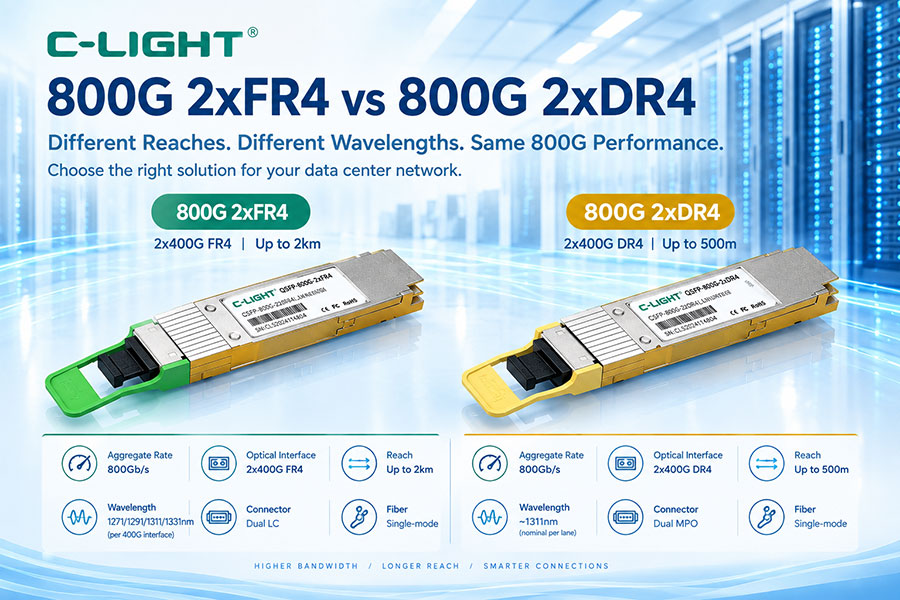
400G DR, FR, LR, and related architectures can use EML-based transmitters depending on the specific implementation.
13. Silicon Photonics and 800G
800G increases the importance of optical integration because more high-speed channels must fit into a compact transceiver with strict power and thermal constraints.
Silicon photonics can support multi-channel integration and wavelength multiplexing, making it attractive for some 800G architectures.
14. EML and 800G
EML is also relevant to 800G optical transceivers, especially single-mode solutions where high-speed optical modulation and transmission performance are important.
15. Silicon Photonics and 1.6T
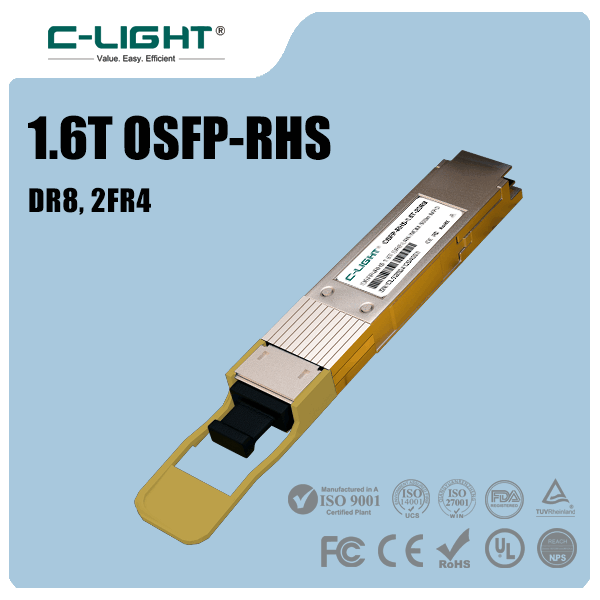
At 1.6T, optical integration becomes even more important. Higher lane rates increase the need for compact optical engines, efficient packaging, and reduced power per bit.
Silicon photonics is therefore being investigated and developed as an important platform for next-generation 1.6T and future optical architectures.
16. EML and 1.6T
EML technology can also evolve toward higher-speed optical transmission. The practical limit depends on laser bandwidth, modulator performance, driver capability, packaging, and the complete optical architecture.
17. Silicon Photonics for Data Center Optics
Data centers increasingly require high optical port density, low power consumption, and scalable manufacturing. Silicon photonics can address these requirements through integrated photonic circuits and multi-channel optical designs.
18. EML for Data Center Optics
EML remains an important technology for data center optical transceivers because of its mature performance and strong suitability for higher-speed single-mode transmission.
19. Short-Reach Applications
Short-reach data center connections can use several optical technologies depending on bandwidth and distance. Silicon photonics is particularly attractive where high integration and wavelength multiplexing are valuable.
20. Long-Reach Applications
EML is well established in longer-reach single-mode optical applications, including many 100G and 400G transceivers.
Silicon photonics can also support longer-reach applications when combined with appropriate laser sources, modulators, receivers, and optical packaging.
21. Silicon Photonics for WDM
Wavelength Division Multiplexing is one of the areas where silicon photonics can provide significant integration benefits. Multiple wavelengths can be combined and routed on a photonic integrated circuit.
22. EML for WDM
EML devices can provide individual high-speed optical channels for WDM architectures. Multiple EML transmitters can be combined with external multiplexers to form multi-wavelength transceivers.
23. Silicon Photonics and CWDM/LAN-WDM
Silicon photonic architectures can integrate wavelength multiplexing functions needed for multi-wavelength transceivers. This can reduce discrete optical component count and simplify some optical engine designs.
24. EML and LAN-WDM
EML is widely used in LAN-WDM transmitters because it can provide high-speed optical modulation at telecom wavelengths around the 1310nm region.
For example, many 400G FR and LR architectures use multiple 1310nm-class optical channels.
25. Silicon Photonics vs EML for 1310nm
Both technologies can support 1310nm-class optical communication. The difference lies primarily in how the optical source and modulation functions are implemented.
26. Silicon Photonics vs EML for 1550nm
EML is widely associated with high-speed 1550nm-class applications, particularly longer-reach transmission. Silicon photonics can also operate in the 1550nm region, depending on the PIC and laser architecture.
27. Optical Reach
Optical reach is determined by the complete transmitter, receiver, fiber, modulation format, optical power, dispersion tolerance, and link budget rather than by the optical source technology alone.
28. Silicon Photonics and Transmission Distance
Silicon photonics is not inherently limited to short distance. With suitable laser sources and optical architecture, silicon photonic transceivers can support short-, medium-, and longer-reach applications.
29. EML and Transmission Distance
EML is commonly used in single-mode optical transceivers with reaches ranging from several kilometers to longer distances depending on the module design.
30. Power Consumption
Power consumption cannot be determined simply by comparing silicon photonics and EML. The total module power depends on the laser, modulator, driver, DSP, TIA, cooling, wavelength architecture, and transmission distance.
31. Silicon Photonics Power Efficiency
Silicon photonics can improve integration and potentially reduce power associated with multiple discrete optical components. However, the complete module still requires laser power, drivers, control circuits, and potentially DSP.
32. EML Power Consumption
EML power depends on laser bias, modulator drive requirements, temperature, optical output power, and the associated driver and control electronics.
33. DSP and Silicon Photonics
A silicon photonics transceiver can be designed with or without a traditional retimed DSP depending on its architecture. The use of silicon photonics does not automatically mean that a module is DSP-free.
34. DSP and EML
EML transmitters can also be used in both DSP-based and reduced-DSP architectures. The laser technology and signal-processing architecture are separate design decisions.
35. Silicon Photonics vs EML Is Not the Same as LPO vs DSP
Silicon photonics and EML describe optical component or platform technologies, while LPO and DSP describe signal-processing architectures.
A silicon photonics module can use DSP, and an EML module can also use DSP. Likewise, reduced-DSP architectures can be implemented with different optical technologies.
36. Silicon Photonics and LPO
Silicon photonics can be used in LPO architectures where the optical engine is designed to minimize or remove traditional retiming DSP functions.
The resulting design can reduce power, but it places greater requirements on host electrical signal quality and system interoperability.
37. EML and LPO
EML transmitters can also be used in certain linear-drive architectures. Therefore, EML does not automatically imply a conventional retimed DSP architecture.
38. Thermal Considerations
Thermal performance depends on total module power and package design. Silicon photonics integration can reduce optical component count, while EML devices may require carefully optimized thermal control for stable laser performance.
39. Silicon Photonics Packaging
Silicon photonics often requires precise optical coupling between the PIC, laser source, fiber array, and other optical components. Packaging and alignment are critical to the final module performance.
40. EML Packaging
EML packaging must maintain optical alignment, electrical high-speed performance, thermal stability, and reliable coupling into the fiber path.
41. Manufacturing Approach
One potential advantage of silicon photonics is its compatibility with semiconductor manufacturing processes. Photonic circuits can be fabricated on wafers and integrated at relatively high density.
However, packaging, laser integration, fiber coupling, and testing remain important manufacturing steps.
42. EML Manufacturing
EML manufacturing relies on mature semiconductor laser and modulator processes. The technology has been widely deployed and optimized for telecom and data center optical applications.
43. Manufacturing Scalability
Silicon photonics is attractive for large-scale manufacturing because integrated photonic circuits can support multiple channels on a single wafer-level platform.
EML also benefits from mature manufacturing ecosystems, particularly for established 100G and 400G optical applications.
44. Cost Considerations
Cost depends on production volume, optical architecture, packaging, laser source, DSP, testing, and application requirements. Neither silicon photonics nor EML is universally cheaper in every transceiver design.
45. Silicon Photonics Cost Structure
Silicon photonics can reduce the number of discrete optical components, but advanced packaging and laser integration can add manufacturing complexity.
46. EML Cost Structure
EML benefits from mature component availability and established manufacturing processes, although multiple discrete components may be required to construct a high-density multi-channel optical engine.
47. Reliability
Reliability depends on the entire optical module. Laser aging, thermal cycling, fiber coupling, electronic components, packaging, and environmental conditions all influence long-term stability.
48. Silicon Photonics Reliability
Silicon photonic waveguides and integrated components can provide stable optical routing and modulation, but laser integration and optical packaging remain important reliability considerations.
49. EML Reliability
EML technology has a long deployment history in telecom and data center optical links. Stable laser operation and thermal control remain important for long-term reliability.
50. Silicon Photonics for High-Density Optical Engines
The integration capability of silicon photonics is particularly valuable when a transceiver needs multiple high-speed channels within a small package.
51. EML for High-Speed Optical Engines
EML provides a proven optical transmission technology for high-speed single-mode links. Multiple EML devices can be combined to create multi-lane optical engines.
52. Silicon Photonics vs EML for 400G DR4
400G DR4 can use either silicon photonics or other optical transmitter technologies depending on the specific implementation. The more important factors are optical power, wavelength, receiver sensitivity, dispersion performance, and total link budget.
53. Silicon Photonics vs EML for 400G FR4
400G FR4 uses multiple 1310nm-class wavelengths and single-mode fiber. EML is widely used in this application, while silicon photonics can integrate wavelength multiplexing and other optical functions in alternative architectures.
54. Silicon Photonics vs EML for 800G
At 800G, both technologies can play important roles. The optimum architecture depends on lane rate, wavelength multiplexing, modulation method, DSP architecture, power budget, and transmission reach.
55. Silicon Photonics vs EML for 1.6T
At 1.6T, integration density and power efficiency become even more important. Silicon photonics has strong potential for highly integrated optical engines, while EML continues to provide a mature high-speed laser and modulation platform.
56. Signal Integrity
High-speed optical modules require excellent electrical and optical signal integrity. Driver design, modulation bandwidth, package parasitics, optical coupling, and receiver characteristics all influence the final eye quality and BER.
57. Silicon Photonics Signal Path
A silicon photonics signal path can include electrical driver, modulator, silicon waveguide, wavelength multiplexer, fiber coupling, and optical receiver components.
58. EML Signal Path
An EML signal path typically includes a high-speed driver connected to the EML, followed by optical coupling into the fiber. The receiver side can use PIN or APD technology depending on the module.
59. Silicon Photonics and Optical Modulators
Silicon photonics provides several modulation approaches, including carrier-depletion-based devices. The specific modulator architecture determines bandwidth, drive voltage, optical loss, and power efficiency.
60. EML and Electro-Absorption Modulation
EML uses the electro-absorption effect to modulate the intensity of laser light. This provides a compact and fast optical modulation mechanism.
61. External Modulator vs EML
Silicon photonics can use an integrated modulator with a separate laser source, while EML combines the laser and electro-absorption modulator in one optical device.
This creates different trade-offs in integration, optical coupling, packaging, and manufacturing.
62. Silicon Photonics for Wavelength Multiplexing
WDM is one of the strongest areas for silicon photonics integration. Multiple wavelength channels can be combined on one PIC, reducing the need for separate external optical multiplexing components.
63. EML for Parallel Optical Architectures
EML can be deployed as multiple independent transmit channels in parallel-optical systems. This architecture can be straightforward but may require more discrete optical components.
64. Silicon Photonics and Fiber Count
When wavelength multiplexing is integrated into the optical engine, silicon photonics can help reduce the number of external fiber connections required for some architectures.
65. EML and Fiber Count
EML-based architectures can use either parallel fiber channels or WDM multiplexing. The number of fibers therefore depends on the complete module architecture rather than the EML device alone.
66. Co-Packaged Optics
Silicon photonics is often discussed in connection with Co-Packaged Optics because an integrated photonic platform can be placed closer to the switching ASIC.
However, CPO is a packaging architecture rather than a specific laser technology.
67. EML and CPO
EML devices can also be used in advanced optical packaging architectures when the optical engine requirements are compatible. CPO should therefore not be treated as synonymous with silicon photonics.
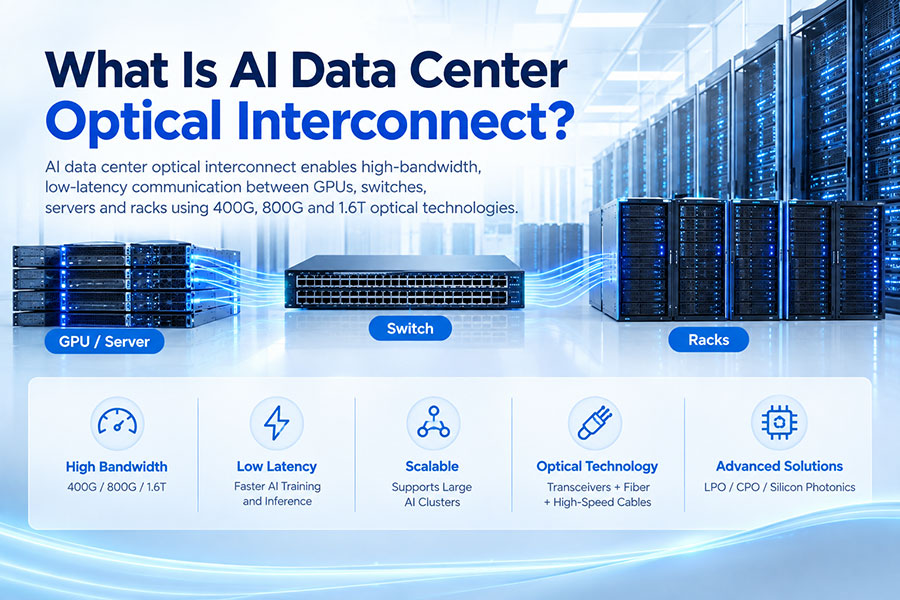
68. Silicon Photonics and AI Data Centers
AI data centers place strong demands on bandwidth, port density, power efficiency, and thermal management. Silicon photonics can address some of these requirements through compact multi-channel optical integration.
69. EML and AI Data Centers
EML remains important for high-speed single-mode optical connectivity in AI and hyperscale data centers, particularly where established high-performance optical transmission is required.
70. Which Is Better: Silicon Photonics or EML?
There is no universal winner. Silicon photonics is particularly attractive when optical integration, wavelength multiplexing, density, and scalable photonic integration are priorities.
EML is attractive when mature high-speed laser modulation, proven single-mode performance, and established manufacturing are important.
71. Silicon Photonics vs EML Selection Guide
| Requirement | Potential Advantage |
|---|---|
| High optical integration | Silicon photonics |
| Integrated WDM | Silicon photonics |
| Mature 1310nm high-speed transmission | EML |
| Established long-reach single-mode applications | EML |
| Future high-density optical engines | Silicon photonics |
| Proven optical component ecosystem | EML |
72. Silicon Photonics vs EML for AI Optical Interconnect
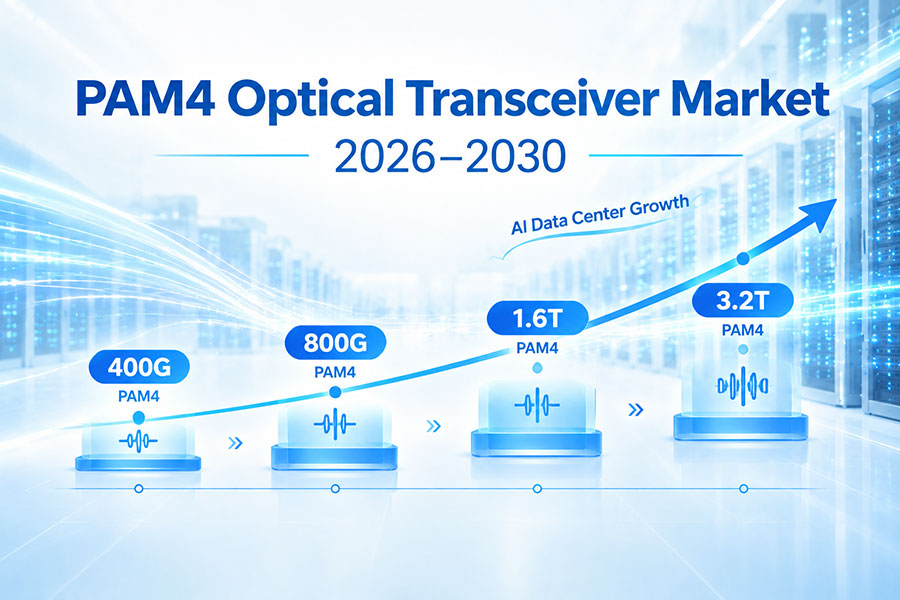
AI optical networking is moving toward 800G and 1.6T connectivity, making integration density and power efficiency increasingly important.
Silicon photonics can support highly integrated optical engines, while EML remains an important technology for high-performance single-mode optical transmitters.
73. Silicon Photonics vs EML and Power per Bit
Power per bit is a more useful comparison than optical technology alone. The final value depends on the laser, modulator, DSP, driver, receiver, packaging, and cooling architecture.
74. Silicon Photonics vs EML and Reach
Neither technology should be assigned a fixed transmission distance. Reach depends on the complete transceiver design and link budget.
75. Silicon Photonics vs EML and Cost
Cost depends on production scale, packaging, optical source, component count, test requirements, and integration strategy. High-volume silicon photonics may offer manufacturing advantages, while EML benefits from an established component ecosystem.
76. Silicon Photonics vs EML and Manufacturing
Silicon photonics can use wafer-scale semiconductor manufacturing for the photonic circuit, while EML uses mature compound-semiconductor manufacturing for the laser and modulator device.
77. Silicon Photonics vs EML and Packaging
Packaging is critical for both technologies. Silicon photonics requires accurate coupling between lasers, PICs, and fibers, while EML requires precise high-speed electrical and optical packaging around the EML device.
78. Silicon Photonics vs EML and Reliability
Both technologies can achieve high reliability when properly designed and qualified. The main reliability risks depend on laser aging, thermal cycling, optical coupling, packaging, and electronic components.
79. Future of Silicon Photonics
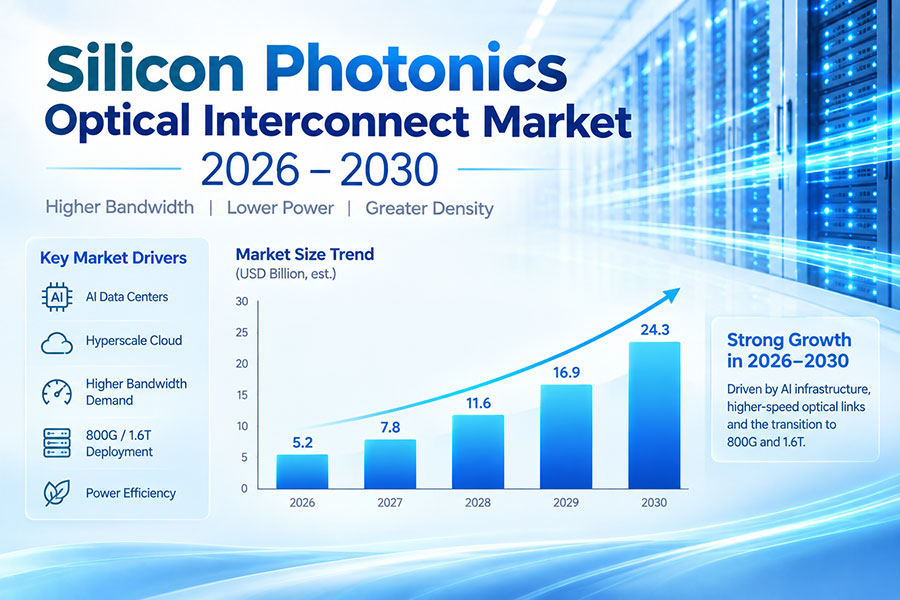
Silicon photonics is expected to remain an important technology for high-density data center optical connectivity, particularly as 800G, 1.6T, and future higher-speed optical engines require greater integration.
80. Future of EML
EML is also expected to remain important because it provides a mature and scalable technology for high-speed single-mode transmission. Improvements in laser bandwidth, modulator efficiency, packaging, and driver technology can extend its role into higher-speed generations.
81. Can Silicon Photonics Replace EML?
Silicon photonics may replace EML in some applications, but not universally. Different optical architectures have different requirements for reach, wavelength, power, integration, and cost.
82. Can EML Replace Silicon Photonics?
EML can remain a strong choice for applications where discrete high-speed optical transmitters provide sufficient performance and cost advantages.
83. Coexistence of Silicon Photonics and EML
The optical industry is unlikely to rely on a single transmitter technology. Silicon photonics and EML can coexist in different generations and applications.
The optimum technology will depend on the required optical architecture rather than the technology trend alone.
84. Silicon Photonics and EML in Hybrid Optical Engines
Future optical engines can also combine different technologies. For example, a system can use an external laser source together with a silicon photonic circuit, or integrate different optical devices according to the required wavelength and reach.
85. How to Select Between Silicon Photonics and EML
Start with the required data rate, wavelength, transmission distance, optical architecture, and power budget. Then evaluate the required integration level, manufacturing volume, thermal envelope, packaging, and interoperability.
86. Silicon Photonics vs EML Checklist
| Parameter | What to Check |
|---|---|
| Bandwidth | 400G, 800G, 1.6T, or target rate |
| Wavelength | 1310nm, 1550nm, or required wavelength range |
| Reach | Actual fiber distance and link budget |
| Integration | Discrete or highly integrated optical engine |
| Power | Total module power and power per bit |
| Thermals | Module and host cooling capability |
| Manufacturing | Production volume and packaging requirements |
| Application | Data center, AI, telecom, or DCI |
87. Conclusion
Silicon photonics and EML are both important technologies for modern optical transceivers, but they solve the optical transmission problem in different ways.
Silicon photonics focuses on photonic integration, compact optical engines, wavelength multiplexing, and scalable integration. EML combines a semiconductor laser with an electro-absorption modulator and provides a mature high-speed transmission solution for many single-mode applications.
For 400G, 800G, and 1.6T networking, neither technology is universally superior. The right choice depends on data rate, wavelength, reach, power consumption, DSP architecture, optical integration, manufacturing requirements, thermal conditions, and application topology.
 >
>

 >
>
 >
>
 >
>
 >
>
 >
>
 >
>
 >
>