TEL:+86 132 6656 7067




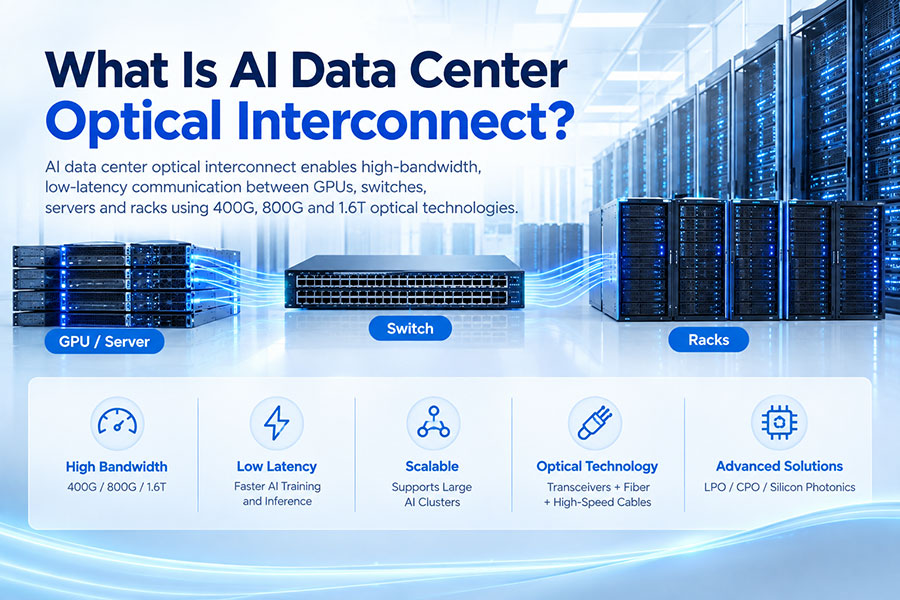
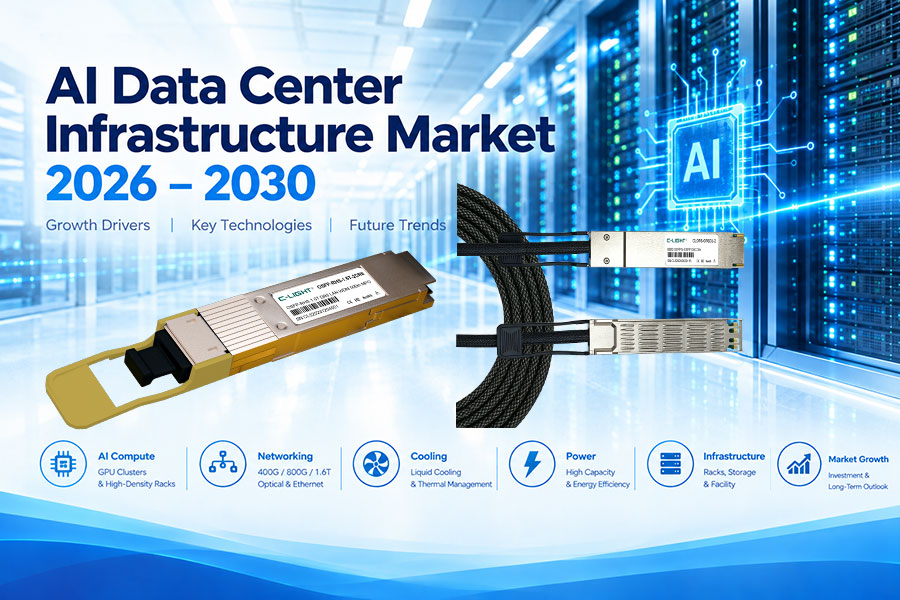
Optical networking for distributed AI training provides high-bandwidth, low-latency connectivity between GPUs, servers, switches, and storage systems across large-scale computing environments. 400G, 800G, 1.6T, InfiniBand, Ethernet, optical transceivers, AOC, DAC, AEC, and coherent optics address different parts of distributed AI training networks.
1. What Is Optical Networking for Distributed AI Training?
Optical networking for distributed AI training refers to the use of optical communication technologies to connect computing resources that participate in the same AI training workload.
When training is distributed across many GPU servers, the network must continuously exchange parameters, gradients, activations, datasets, and synchronization information. Optical connectivity provides the bandwidth and reach required for these large-scale communication patterns.
2. Why Distributed AI Training Needs High-Speed Networking
Distributed training divides an AI workload across multiple GPUs or servers. The compute operation is distributed, but the data and model state must still move between those resources.
As GPU performance increases, network bandwidth must scale accordingly. Otherwise, GPUs can spend more time waiting for communication instead of performing useful computation.
3. The Network Is Part of AI Compute Performance
AI training performance depends on more than GPU processing power. Network bandwidth, latency, congestion, topology, and communication efficiency can all influence how effectively a cluster uses its GPUs.
A powerful GPU cluster with an undersized network can therefore deliver less effective performance than expected from the compute hardware alone.
4. Distributed AI Training Communication
Distributed training can generate large amounts of east-west traffic between compute nodes. Depending on the training strategy, GPUs may repeatedly exchange gradients, parameters, or other intermediate data.
This traffic can be highly synchronized, creating bursts that place significant pressure on the network fabric.
5. Main Components of an AI Training Network
A typical distributed AI training environment includes GPU servers, high-speed network adapters, leaf or top-of-rack switches, spine switches, optical interconnects, storage systems, and management infrastructure.
Larger environments may also include multiple switching layers, dedicated storage networks, and data center interconnects between separate facilities.
6. GPU Servers
GPU servers are the primary compute nodes in distributed AI training. Each server can contain multiple GPUs and one or more high-speed network interfaces.
The network interface provides the connection between the server and the external switching fabric used to communicate with other training nodes.
7. Network Adapters for AI Training
High-speed network adapters connect GPU servers to the AI network. Depending on the system generation, these interfaces can operate at 200G, 400G, 800G, or higher speeds.
The adapter must match the switching technology and the protocol used by the training cluster.
8. Leaf Switches
Leaf switches aggregate connections from GPU servers and forward traffic toward the spine layer. In large AI clusters, leaf switches can contain many high-speed optical ports.
9. Spine Switches
Spine switches provide high-capacity connectivity between leaf switches. They form the central switching fabric through which distributed training traffic can travel between many servers.
10. Leaf-Spine Architecture for AI Training
Leaf-spine architecture is well suited to distributed AI because it provides multiple paths between compute endpoints and can scale by adding switches and links.
For very large clusters, multi-stage Clos or folded-Clos architectures can extend this concept to thousands of GPU endpoints.
11. Clos Architecture
A Clos network uses multiple switching stages and parallel paths to create a scalable fabric. It is particularly useful when many GPU servers need high-bandwidth connectivity with predictable path diversity.
12. Scale-Up and Scale-Out Training
Distributed AI systems commonly combine scale-up and scale-out approaches.
Scale-up connects multiple accelerators within a tightly integrated compute system, while scale-out connects multiple servers through an external network fabric. Optical networking becomes increasingly important at the scale-out level.
13. Scale-Across Distributed AI
When training resources are distributed across separate data centers, the network becomes a scale-across architecture. This introduces additional requirements for long-distance optical transmission, optical line systems, route diversity, and latency management.
14. Optical Networking vs Electrical Networking
| Feature | Optical Networking | Electrical Networking |
|---|---|---|
| Medium | Optical fiber | Copper or PCB traces |
| Longer high-speed reach | Well suited | More challenging |
| EMI sensitivity | Very low | Higher |
| Cable density at high bandwidth | Generally favorable | More challenging as speed increases |
| Primary AI role | Inter-rack, fabric, and longer links | Very short accelerator and host connections |
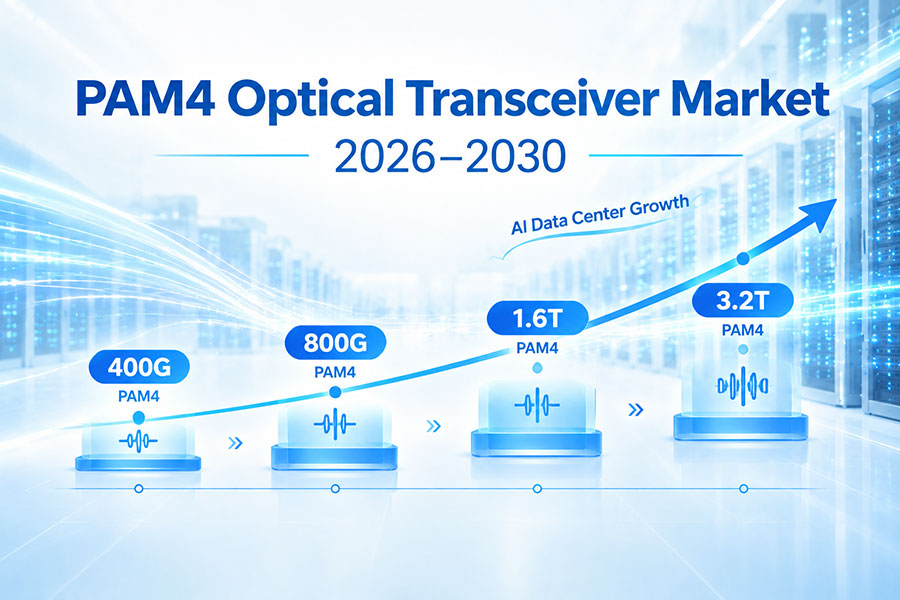
15. 400G Optical Networking for AI Training
400G is an important connectivity generation for distributed AI clusters. A common implementation uses eight 50G-class PAM4 electrical lanes, although exact architectures vary.
400G can be used for GPU-to-switch, server-to-switch, and switch-to-switch connections in AI training fabrics.
16. 800G Optical Networking for AI Training
800G increases the bandwidth available from each network port and is increasingly important for large GPU clusters. A common architecture uses eight 100G-class PAM4 lanes.
Higher bandwidth per port can help increase aggregate network capacity and reduce the number of physical interfaces required for some architectures.
17. 1.6T Optical Networking for AI Training
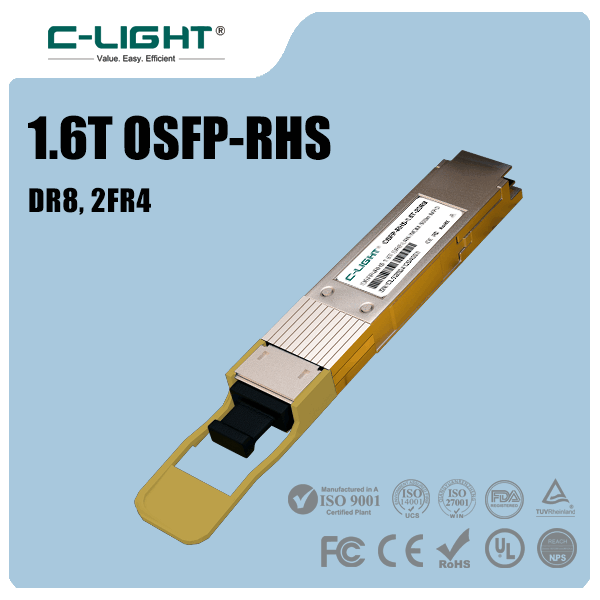
1.6T is a major next-generation bandwidth target for AI networking. A common electrical architecture uses eight 200G-class lanes, although implementation details vary.
The transition to 1.6T places additional pressure on optical engines, DSPs, host interfaces, packaging, signal integrity, and thermal management.
18. Why PAM4 Is Used in AI Optical Networking
PAM4 uses four signal levels and carries two bits per symbol. This allows higher data rates without requiring the same proportional increase in symbol rate as an NRZ design.
The trade-off is a smaller eye opening and greater sensitivity to electrical and optical impairments.
19. Optical Transceivers for Distributed AI Training
Optical transceivers convert electrical signals to optical signals for transmission over fiber and recover the optical signal at the receiving side.
The selected transceiver depends on bandwidth, fiber type, wavelength architecture, transmission distance, host form factor, and required performance.
20. Short-Reach Optical Transceivers
SR-class optical modules are commonly used for shorter links inside data centers. They typically use multimode fiber and are suitable for connections where the physical distance remains relatively short.
21. Single-Mode Optical Transceivers
Single-mode optical transceivers provide longer transmission distances and can be used for links spanning larger portions of a data center or campus.
DR, FR, LR, and other architectures address different reach requirements.
22. 400G SR and DR for AI Networks
400G SR-class solutions are designed for short-reach multimode connections, while 400G DR-class solutions use single-mode fiber for longer reach.
This allows the same nominal 400G network speed to be deployed across different physical distances.
23. 800G SR8 and DR8 for AI Training
800G SR8 is designed for short-reach multimode optical connections, while 800G DR8 extends the optical reach using single-mode fiber.
The choice depends primarily on physical topology, fiber infrastructure, and required transmission distance.
24. 800G FR4 for AI Training Networks
800G FR4 uses multiple LAN-WDM wavelengths over single-mode fiber. It provides a longer reach than many short-reach multimode architectures and can simplify fiber connectivity by using wavelength multiplexing.
25. DAC for Distributed AI Training
Direct Attach Copper remains useful for the shortest AI network connections. Typical applications include GPU server to switch and server-to-switch links within the same rack.
400G DAC is commonly available in short lengths such as approximately 0.5m to 3m, depending on the interface and cable design.
26. AOC for AI Training
Active Optical Cable integrates optical fiber and transceiver electronics into a single cable assembly. AOC provides longer reach than passive copper while keeping the installation relatively simple.
27. AEC for AI Training
Active Electrical Cable uses signal-conditioning electronics to extend the practical range of copper connectivity. AEC can provide an intermediate solution between passive DAC and optical links for selected AI network topologies.
28. DAC vs AEC vs AOC
| Technology | Medium | Typical Role |
|---|---|---|
| DAC | Passive copper | Very short intra-rack links |
| AEC | Active copper | Extended electrical connections |
| AOC | Optical fiber | Longer short-reach connections |
| Optical transceiver | Optical fiber | Flexible fabric and longer links |
29. InfiniBand Optical Networking
InfiniBand is widely used in high-performance computing and many large AI clusters. Its networking architecture is designed for high throughput and low latency, making efficient physical-layer connectivity essential.
Compatible optical transceivers, DAC, and active cables can all be used depending on the InfiniBand generation and network topology.
30. Ethernet Optical Networking
Ethernet is another major platform for AI networking. 400G and 800G Ethernet links can connect GPUs, servers, NICs, leaf switches, spine switches, and other infrastructure.
31. Ethernet vs InfiniBand for Distributed Training
Both Ethernet and InfiniBand can support large-scale distributed training. The choice depends on network architecture, application requirements, switching technology, congestion management, ecosystem, and software integration.
32. All-Reduce Traffic
Distributed training frequently uses collective communication operations such as all-reduce. In an all-reduce operation, multiple compute nodes contribute data and receive the resulting combined data.
Because these operations can involve many GPUs simultaneously, efficient network bandwidth and congestion control are important for maintaining training performance.
33. All-to-All Communication
Some distributed AI workloads generate all-to-all communication patterns in which many GPUs exchange data with many other GPUs.
This pattern can create severe network pressure because communication is distributed across a large number of endpoints and paths.
34. Parameter Synchronization
Distributed training can require model parameters or gradients to be synchronized across multiple nodes. The frequency and volume of synchronization depend on the training algorithm and system architecture.
35. Gradient Communication
In distributed training, gradients can be exchanged between participating GPUs or servers after processing local batches. Large gradient transfers make network bandwidth an important part of overall training efficiency.
36. Why Low Latency Matters
Bandwidth determines how much data can be transported, while latency determines how quickly a communication event can begin and complete.
Low latency is particularly important when a distributed training algorithm requires frequent synchronization between computing nodes.
37. Bandwidth vs Latency
| Metric | Importance in AI Training |
|---|---|
| Bandwidth | Controls bulk data transfer capacity |
| Latency | Affects communication and synchronization time |
| Jitter | Can affect predictability of communication |
| Packet loss | Can increase retransmission and reduce effective throughput |
38. Network Congestion in Distributed AI
AI training traffic can be highly synchronized, which can create congestion when many GPUs transmit simultaneously.
Even a network with high nominal bandwidth can experience performance degradation when traffic becomes concentrated on specific links or switching paths.
39. Congestion Control
AI networks use congestion-management techniques to control traffic and avoid excessive queue buildup. Ethernet and InfiniBand implementations can use different mechanisms according to their respective architectures.
40. Oversubscription
Oversubscription occurs when the aggregate bandwidth demanded by downstream devices exceeds the available upstream capacity.
Large AI training fabrics often minimize oversubscription because synchronized GPU traffic can rapidly consume the available uplink capacity.
41. Non-Blocking Network Fabrics
A non-blocking or near-non-blocking fabric aims to provide sufficient switching capacity for expected communication patterns without persistent internal bandwidth bottlenecks.
Achieving this at large GPU scale requires careful planning of port counts, link speeds, topology, and optical connectivity.
42. Optical Interconnect and Network Topology
Optical technologies should be selected according to physical topology rather than used uniformly throughout the cluster.
DAC may be suitable inside a rack, optical transceivers can connect racks and switching layers, and coherent optics can address longer-distance DCI.
43. Optical Networking by Distance
| Distance | Typical Technology |
|---|---|
| Very short | DAC |
| Several meters | AEC or AOC |
| Tens to hundreds of meters | AOC or optical transceiver |
| Hundreds of meters to kilometers | Single-mode optical transceiver |
| Metro and regional DCI | Coherent pluggable optics |
44. Optical Fiber in AI Training Networks
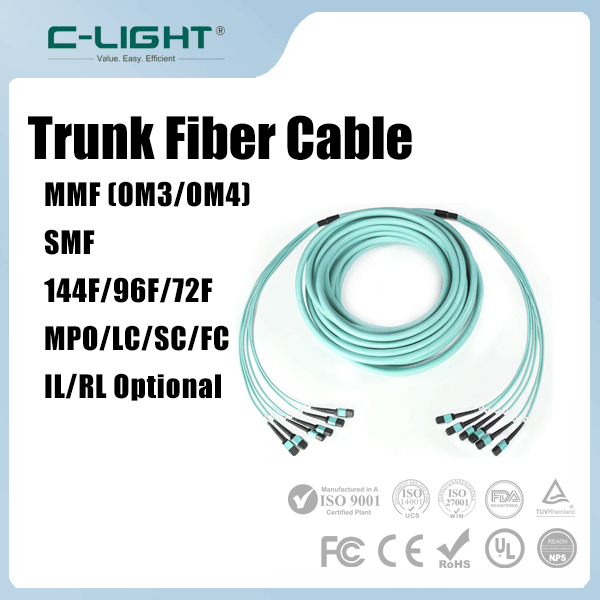
Optical fiber provides a practical medium for high-speed links over longer distances. Multimode fiber is common for short-reach applications, while single-mode fiber supports longer transmission.
45. Multimode Fiber
Multimode fiber is commonly associated with short-reach data center optics, especially VCSEL-based SR solutions.
Its practical reach depends on the optical module, fiber type, data rate, and link design.
46. Single-Mode Fiber
Single-mode fiber is widely used for longer high-speed connections. DR, FR, LR, and coherent solutions can use single-mode infrastructure for progressively longer optical paths.
47. Wavelength Division Multiplexing
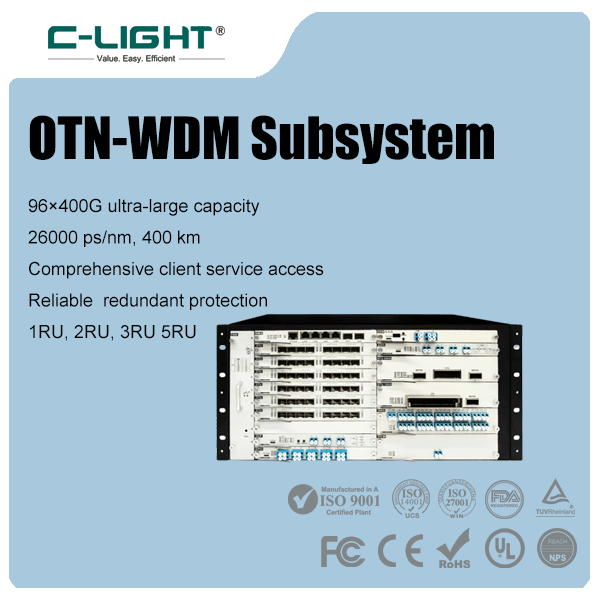
Wavelength Division Multiplexing allows multiple optical wavelengths to share a single fiber pair. This can substantially increase aggregate capacity without requiring a separate fiber pair for every optical channel.
48. DWDM for Distributed AI Training
DWDM is particularly important when AI training resources are spread across facilities or when a large amount of traffic must travel over a limited number of fiber pairs.
Multiple coherent wavelengths can be multiplexed onto the same optical infrastructure to create high-capacity DCI links.
49. Coherent Optics for Distributed AI
Coherent optics are designed for longer-distance transmission and use advanced digital signal processing to compensate for optical impairments.
This makes them suitable for metro, regional, and other long-distance AI DCI applications where conventional data center PAM4 optics may not provide sufficient reach.
50. Coherent Pluggables
Coherent pluggables integrate coherent optical functions into compact replaceable modules. They can be inserted directly into compatible routers, switches, or optical platforms.
This architecture can simplify IP-over-DWDM deployment by reducing the need for separate transport equipment.
51. 400ZR for Distributed AI Training
400ZR is a coherent pluggable technology designed for high-capacity DCI. It provides a practical way to connect data center routers and switches across optical infrastructure.
52. 400ZR+ for Extended AI DCI
400ZR+ implementations provide additional performance or reach flexibility for more demanding optical paths. The actual reach depends on the complete system, including fiber loss, optical line equipment, DSP configuration, and network architecture.
53. 800ZR for AI DCI
800ZR increases the capacity available from a coherent optical channel and is relevant to high-bandwidth AI DCI.
Higher-capacity wavelengths can reduce the number of channels required to transport a given aggregate amount of training traffic.
54. 800ZR+ for Longer AI Links
800ZR+ can target more demanding optical routes and longer DCI applications depending on the implementation.
55. 1.6T Coherent Networking
1.6T coherent optics represent an emerging capacity level for future high-bandwidth DCI. The main challenges include higher baud rates, DSP efficiency, optical integration, thermal management, and the power required per transmitted bit.
56. Optical DSP in AI Training Networks
Optical DSPs perform high-speed digital signal processing functions that may include equalization, clock recovery, lane management, FEC processing, and other signal-conditioning operations.
DSP efficiency is increasingly important as AI networks move from 400G to 800G and 1.6T.
57. FEC in Distributed AI Optical Networking
Forward Error Correction adds redundancy so that the receiver can correct certain transmission errors. FEC can improve link robustness at high data rates and over demanding optical paths.
58. Pre-FEC and Post-FEC Performance
Network operators should distinguish between the raw transmission error rate and the error rate after FEC processing.
A link that appears error-free after correction can still have limited physical-layer margin if the pre-FEC error rate is already high.
59. Signal Integrity at 400G and 800G
As signaling rates increase, electrical and optical signal quality become more difficult to maintain. In addition to the optical channel, PCB traces, connectors, transceivers, and host interfaces all contribute to the overall signal path.
60. TDECQ and High-Speed Optical Links
TDECQ is used in applicable PAM4 optical testing to characterize transmitter signal quality. It helps quantify distortion-related performance and is one of the parameters used when evaluating high-speed optical transmitters.
61. Power Consumption in AI Optical Networking
Power consumption is a major design consideration because a large AI switch can contain many high-speed optical ports operating simultaneously.
As the number of GPUs and optical ports increases, even small differences in power per port can produce a significant change in total system energy consumption.
62. Power per Bit
Power per bit provides a more useful comparison between network generations than module power alone. The objective is to transport more traffic without proportionally increasing energy consumption.
63. Thermal Management
AI data center switches and GPU servers operate under high thermal loads. Optical modules must operate within the thermal envelope of the host platform, particularly when dozens of 800G or future 1.6T interfaces are deployed.
64. Cable Density
A large distributed AI cluster can require thousands of network connections. Cable diameter, bend radius, connector density, weight, airflow, and routing complexity therefore become important infrastructure considerations.
65. Optical Interconnect and Airflow
Optical cables can reduce some of the bulk associated with large copper bundles. This can simplify cable routing around high-density AI servers and switches, although optical modules themselves still contribute to system power and thermal load.
66. Network Reliability
Distributed AI workloads can depend on many network paths simultaneously. A single unstable link can affect multiple training nodes or reduce overall job efficiency.
High-quality optical modules, validated fiber infrastructure, redundancy, and continuous monitoring are therefore essential.
67. Optical Link Monitoring
Modern optical modules can report information such as temperature, transmit power, receive power, voltage, alarms, and module status. Monitoring these parameters can help identify degrading links before they cause major service problems.
68. Network Telemetry
Optical telemetry becomes more useful when combined with switch and application telemetry. Correlating optical power, FEC statistics, congestion, packet errors, and application behavior can help isolate network problems more quickly.
69. Interoperability in AI Training Networks
AI clusters frequently use equipment from multiple vendors. Optical modules, network adapters, switches, cables, firmware, and software must all operate correctly together.
Connector compatibility alone is not sufficient to establish interoperability.
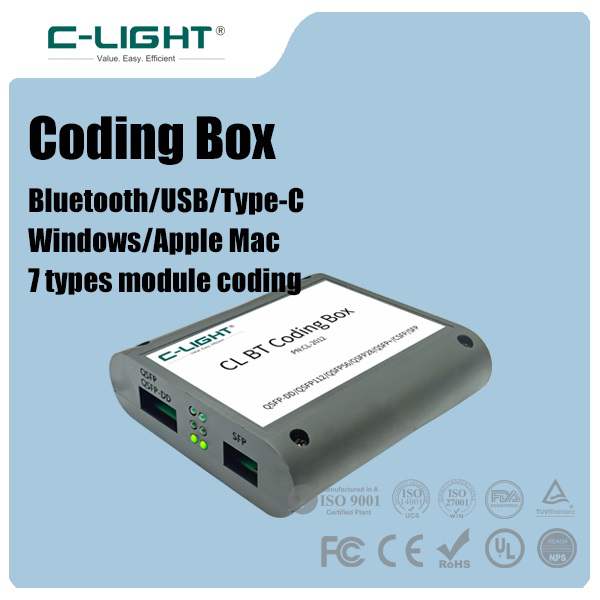
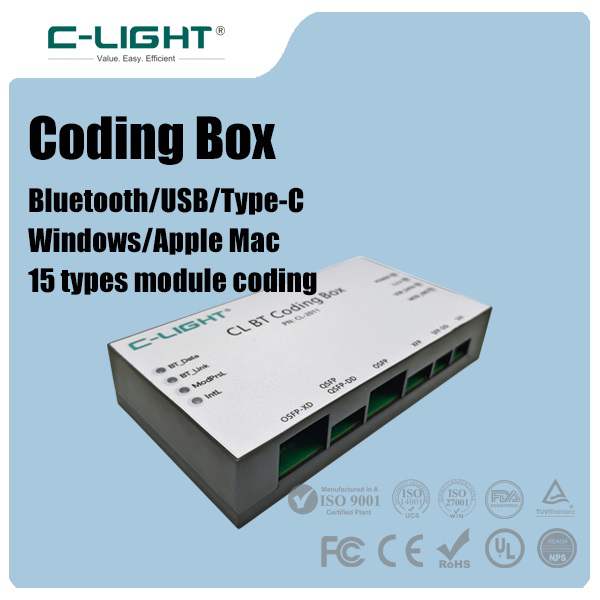
70. Vendor Coding and Compatibility
Some switches and network adapters use transceiver identification or vendor coding mechanisms. Proper module coding and platform qualification can therefore be necessary for deployment.
71. Optical Testing for AI Networks
Before production deployment, optical links should be tested for optical power, BER, wavelength, signal quality, temperature behavior, and interoperability.
72. BER Testing
Bit Error Rate testing measures transmission errors using a known test pattern or traffic stream. It is a fundamental method for verifying high-speed optical link performance.
73. Long-Duration Stability Testing
Long-duration traffic testing can identify intermittent errors, temperature-related degradation, unstable modules, and marginal optical paths that may not appear during short tests.
74. Distributed AI Training Across Data Centers
When training infrastructure spans multiple data centers, the network must support long-distance optical transmission in addition to local GPU networking.
Coherent pluggables, DWDM, optical amplification, and route diversity can become part of the overall architecture.
75. Latency in Multi-Data-Center Training
Physical distance introduces propagation delay that cannot be removed by changing the optical technology. Distributed training architectures must therefore consider whether a workload can tolerate the additional round-trip latency associated with geographically separated resources.
76. DCI Fiber Route Diversity
Long-distance AI training networks should consider diverse physical fiber routes to reduce the risk associated with fiber cuts and other physical network failures.
77. Optical Amplification
Long optical routes may require amplification to compensate for accumulated fiber and component loss. Optical amplifiers can extend the usable transmission path while keeping the signal in the optical domain.
78. ROADM in AI DCI
ROADMs allow optical channels to be added, dropped, or routed through the network. They become increasingly useful when AI DCI connects multiple facilities through a shared optical transport infrastructure.
79. Optical Network Capacity Planning
AI traffic can grow much faster than traditional data center traffic. Capacity planning should consider current GPU count, expected GPU expansion, network port speeds, wavelength count, fiber availability, and future upgrades.
80. 400G to 800G AI Network Migration
Moving from 400G to 800G affects more than the transceiver. Switch ports, network adapters, cables, breakout configurations, power budgets, optical infrastructure, and thermal design may all require changes.
81. 800G to 1.6T Migration
Moving to 1.6T introduces greater electrical signaling and optical processing requirements. Host interfaces, DSP architecture, optical engines, thermal density, packaging, and power per bit all become more demanding.
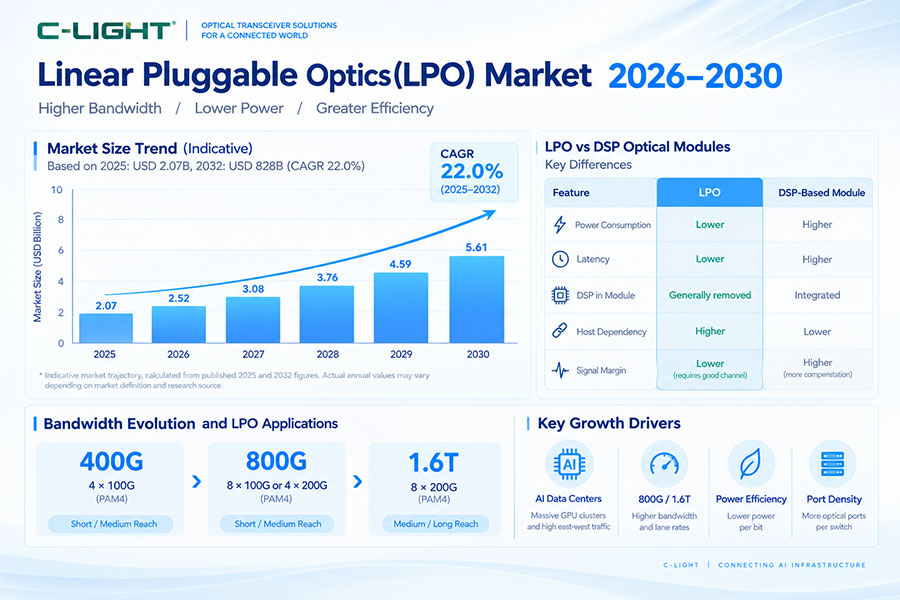
82. LPO for AI Training Networks
Linear-drive pluggable optics aim to reduce or remove some of the retimed DSP processing used in traditional optical architectures.
LPO can reduce power in suitable short-reach links, but it can also impose tighter requirements on host electrical signal quality, reach, interoperability, and system design.
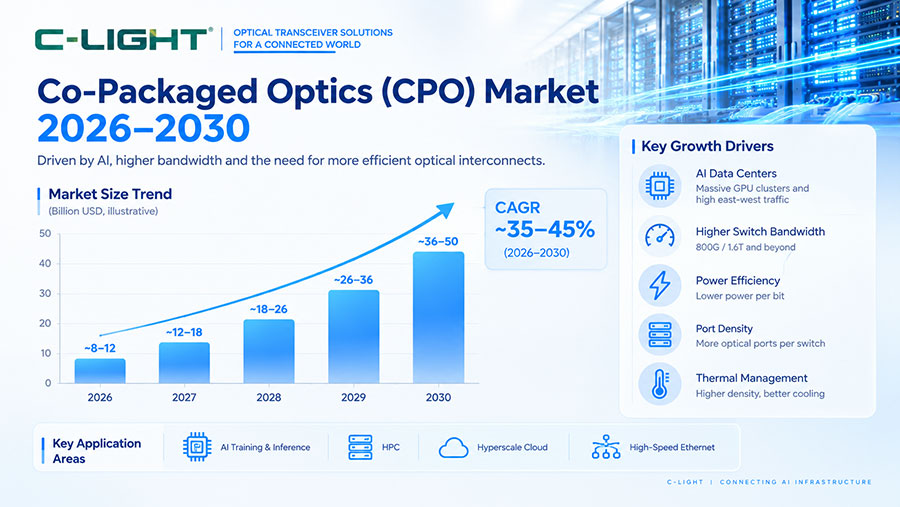
83. CPO for AI Networking
Co-Packaged Optics integrates optical engines close to the switching ASIC. This greatly reduces the electrical path between the switch silicon and optical interface.
CPO is being developed for future architectures where traditional pluggable electrical channels become increasingly difficult to scale.
84. Pluggable Optics vs CPO
| Feature | Pluggable Optics | CPO |
|---|---|---|
| Replaceability | High | Lower |
| Electrical path | Longer | Shorter |
| Upgrade flexibility | High | More limited |
| Serviceability | Simpler | More complex |
| AI networking role | Mainstream current architecture | Emerging high-bandwidth architecture |
85. Optical Interconnect for AI Training by Network Scale
| Scale | Typical Connectivity |
|---|---|
| Within server | Specialized electrical accelerator links |
| Within rack | DAC, AEC, short optical links |
| Across racks | AOC and optical transceivers |
| Across data center | 400G/800G optical networking |
| Across data centers | Coherent optics and DWDM |
86. Optical Networking and AI Training Efficiency
The purpose of high-speed optical networking is not simply to increase link speed. The larger objective is to reduce communication bottlenecks so that distributed compute resources spend more time processing data and less time waiting for the network.
87. Network Utilization
High network utilization does not automatically mean high training efficiency. Congestion, synchronization delays, packet loss, and uneven path utilization can reduce effective performance even when nominal link bandwidth is high.
88. Communication-Computation Overlap
AI software and networking systems can attempt to overlap communication with computation. A high-performance network makes this easier by transferring data rapidly enough that communication can be performed concurrently with useful GPU work.
89. Network Bottlenecks in Distributed AI
Common bottlenecks include insufficient port bandwidth, oversubscribed uplinks, congestion, slow optical links, excessive latency, poor load balancing, and unstable physical connections.
90. How to Select Optical Interconnect for Distributed AI Training
Start with the training topology and required bandwidth. Determine the physical distance of each connection and then select DAC, AEC, AOC, optical transceiver, or coherent optics according to the actual link requirements.
Then verify host compatibility, power, thermal limits, fiber infrastructure, latency, diagnostics, and future expansion.
91. Optical Interconnect Selection Checklist
| Item | Key Consideration |
|---|---|
| Bandwidth | 400G, 800G, 1.6T, or required speed |
| Protocol | Ethernet or InfiniBand |
| Distance | Actual cable or fiber route |
| Medium | Copper, multimode fiber, or single-mode fiber |
| Form factor | QSFP-DD, QSFP112, OSFP, or supported interface |
| Power | Module and host power budget |
| Thermals | Host airflow and rack density |
| Compatibility | Switch, NIC, firmware, coding, and interoperability |
| Reliability | Redundancy, monitoring, and route diversity |
| Scalability | Future GPU and network generations |
92. Future of Optical Networking for Distributed AI Training
Distributed AI training will continue to push network bandwidth toward 800G, 1.6T, and higher speeds. At the same time, operators will seek lower power per bit, greater port density, better signal integrity, and simplified network operations.
Optical transceivers, active optical connectivity, coherent DCI, LPO, CPO, silicon photonics, and advanced optical engines are likely to play different roles across the evolving AI network.
93. Conclusion
Optical networking is a fundamental technology for scaling distributed AI training beyond individual servers and racks. As GPU clusters grow, the network must provide sufficient bandwidth, low latency, predictable performance, and reliable connectivity across increasingly large physical and logical topologies.
400G and 800G provide important current bandwidth levels, while 1.6T represents a major next-generation step. DAC, AEC, AOC, optical transceivers, and coherent optics address different physical distances, while InfiniBand and Ethernet provide different networking architectures for distributed training.
The most effective AI training network is therefore a layered architecture that matches each connectivity technology to the required distance, bandwidth, latency, power, thermal conditions, topology, and future scaling requirements.
 >
>

 >
>
 >
>
 >
>
 >
>
 >
>
 >
>
 >
>