TEL:+86 132 6656 7067




1. Why Optical Connectivity Becomes Critical in AI Clusters
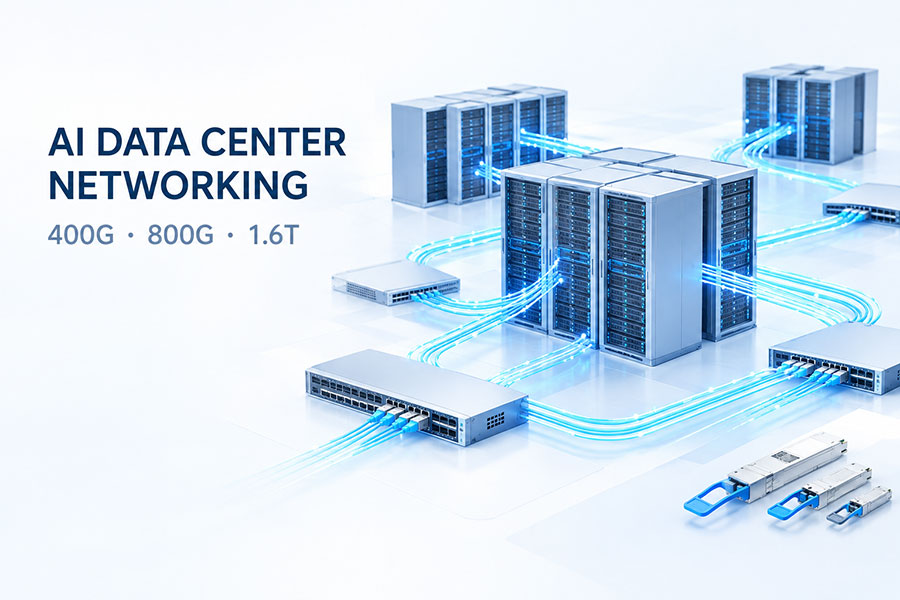
The rapid growth of artificial intelligence (AI) models, large language models (LLMs), and high-performance computing workloads is driving a fundamental transformation in data center networking. Modern AI clusters require thousands or even millions of GPUs working together, creating unprecedented demands for high-bandwidth, low-latency, and highly reliable communication.
Unlike traditional cloud workloads, AI training and inference rely heavily on distributed computing. GPUs inside an AI cluster must constantly exchange large amounts of data through high-speed networks such as Ethernet AI Fabric and InfiniBand. As GPU performance continues to increase, the network infrastructure becomes a critical bottleneck.
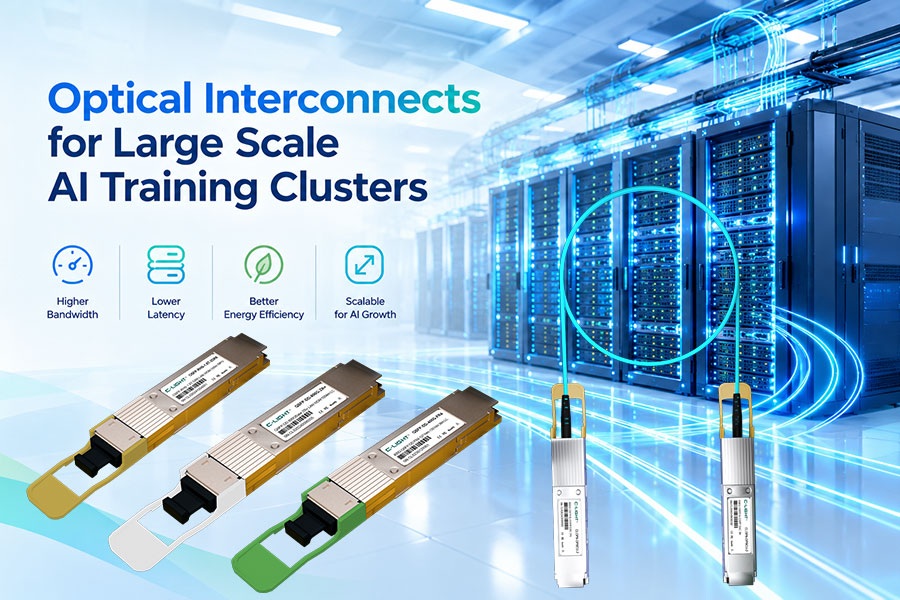
Optical connectivity plays a central role in solving these challenges. From 400G and 800G optical transceivers to emerging 1.6T optical modules, optical interconnect technologies are becoming essential for scaling AI data centers. However, deploying optical networks for large-scale AI clusters introduces several technical challenges, including power consumption, signal integrity, thermal management, scalability, and cost.
2. Increasing Bandwidth Requirements in AI Networks
2.1 AI Workloads Create Massive Data Traffic
Traditional data center applications are mainly based on client-server communication patterns. AI clusters are different because distributed GPUs require continuous communication during training processes.
For example, during large model training, GPUs frequently exchange:
Model parameters
Gradient information
Activation data
Synchronization messages
This creates intensive east-west traffic inside the data center.
As AI models become larger, the required network bandwidth continues to increase:
| AI Infrastructure Generation | Network Speed |
|---|---|
| Traditional Data Center | 10G / 25G / 40G |
| Cloud AI Deployment | 100G / 200G |
| Modern AI Cluster | 400G / 800G |
| Next Generation AI Fabric | 1.6T and Beyond |
The transition from 400G to 800G and 1.6T optical connectivity is becoming a key requirement for next-generation AI infrastructure.
3. Optical Module Power Consumption Challenges
3.1 Higher Speed Creates Higher Power Requirements
One of the biggest challenges in AI optical connectivity is power consumption.
As optical transceiver speeds increase, module complexity also increases. Higher-speed modules require:
Advanced DSP chips
Higher-speed electrical interfaces
More complex optical engines
Advanced thermal solutions
Typical power evolution:
| Optical Module | Approximate Power Level |
| 100G QSFP28 | 3.5W–5W |
| 400G QSFP-DD | 7W–12W |
| 800G OSFP | 13W–20W |
| 1.6T Optical Module | 20W+ |
In large AI clusters containing thousands of optical links, optical module power consumption can significantly impact total data center energy usage.
Reducing optical module power while maintaining high bandwidth has become a major industry challenge.
4. Signal Integrity Challenges at Higher Speeds
4.1 Electrical Signal Loss and High-Speed Transmission
As transmission speeds increase, electrical signals become more sensitive to:
Insertion loss
Return loss
Crosstalk
Jitter
Channel attenuation
At 800G and 1.6T speeds, traditional copper connections face limitations because electrical signals degrade quickly over distance.
This creates challenges between:
GPU servers
Network switches
AI accelerator systems
Spine and leaf switches
Optical interconnects provide longer reach and better signal performance, but they introduce additional requirements for:
Optical alignment
Laser performance
Receiver sensitivity
Thermal stability
5. Thermal Management Challenges in AI Data Centers
5.1 Increasing Rack Power Density
AI servers consume significantly more power than traditional enterprise servers.
Rack power density evolution:
| Computing Era | Rack Power Density |
| Traditional Server | 5–15kW |
| High Performance Computing | 20–40kW |
| AI GPU Cluster | 60kW+ |
| Future AI Infrastructure | 100kW+ |
Higher power density creates significant cooling challenges.
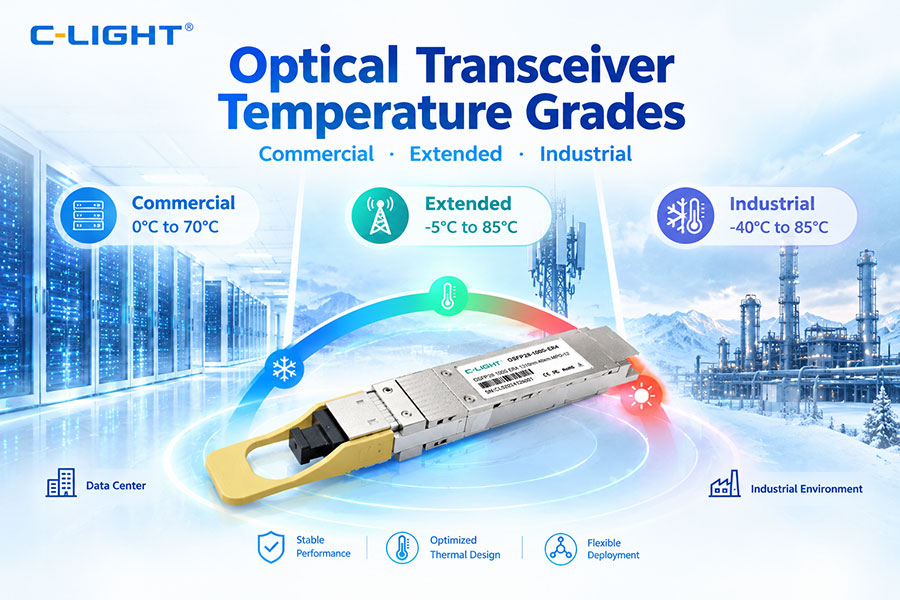
Optical modules installed near GPUs and switches must operate reliably under high-temperature environments.
Key challenges include:
Maintaining laser stability
Reducing optical module heat output
Improving thermal design
Supporting liquid-cooled systems
New solutions such as liquid cooling optical modules and advanced optical engines are becoming increasingly important.
6. Optical Interconnect Scalability Challenges
6.1 Managing Thousands of Optical Links
A large AI cluster may contain:
Thousands of GPUs
Hundreds of switches
Tens of thousands of optical connections
The complexity of optical deployment increases rapidly.
Major challenges include:
High-Density Cabling
AI clusters require extremely dense optical connections, creating difficulties in:
Cable management
Installation
Maintenance
Airflow optimization
Port Density
Network switches must support more high-speed optical ports.
For example:
400G switch platforms
800G switch platforms
Future 1.6T switch platforms
Higher port density requires smaller, lower-power optical solutions.
7. Cost Challenges of AI Optical Infrastructure
7.1 Optical Connectivity Becomes a Major Investment
Optical modules represent a significant portion of AI data center infrastructure costs.
The cost comes from:
Advanced optical components
DSP technology
High-speed lasers
Manufacturing complexity
Testing requirements
As AI clusters expand, operators need solutions that balance:
Performance
Reliability
Power efficiency
Cost efficiency
Technologies such as:
DAC (Direct Attach Cable)
AOC (Active Optical Cable)
AEC (Active Electrical Cable)
Pluggable Optical Modules
are being optimized for different AI networking scenarios.
8. Emerging Solutions for AI Optical Connectivity
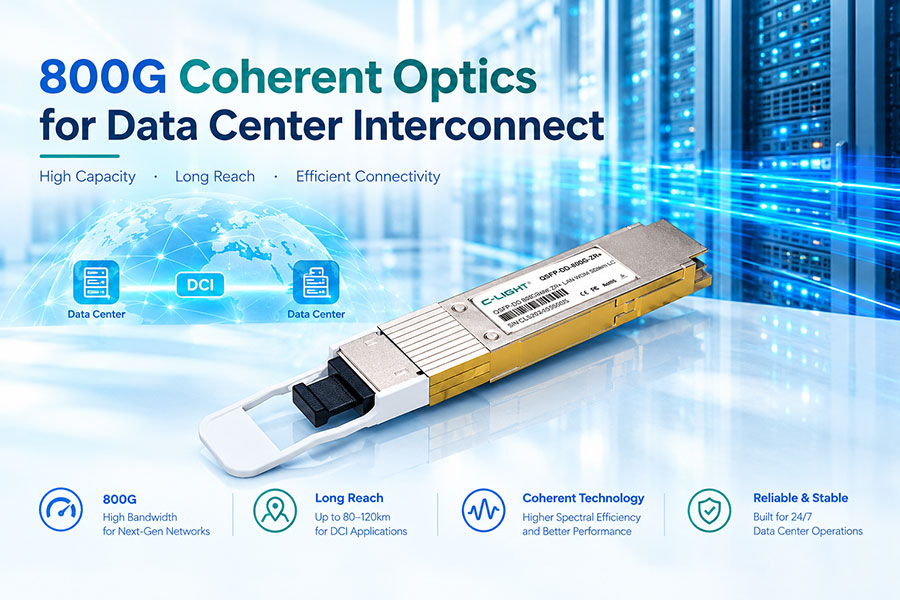
8.1 800G and 1.6T Optical Transceivers
800G optical modules are becoming a mainstream solution for AI clusters.
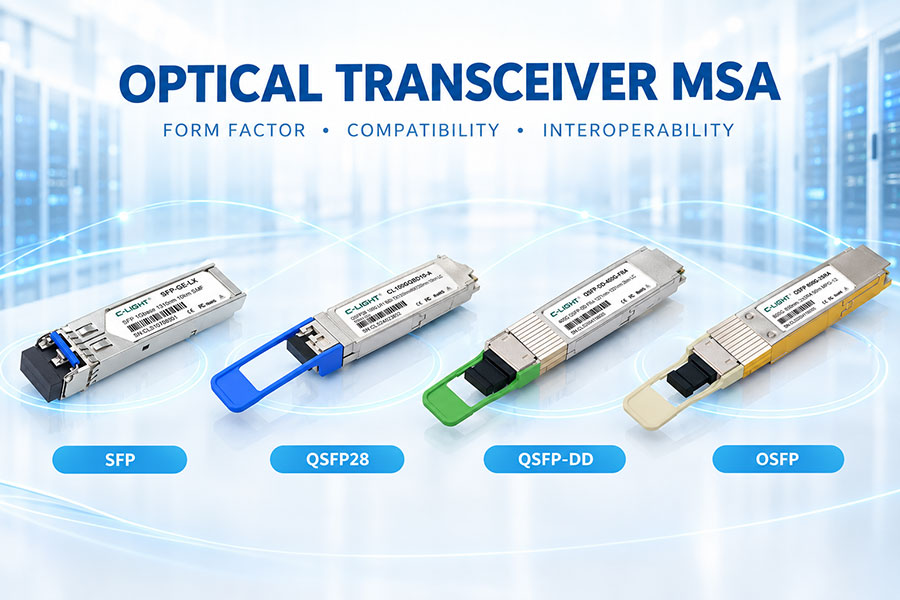
Common form factors include:
OSFP
QSFP-DD
QSFP112
Future AI networks are expected to adopt 1.6T optical modules to support next-generation GPU systems.
8.2 Linear Pluggable Optics (LPO)
LPO removes or reduces DSP processing inside optical modules.
Advantages include:
Lower power consumption
Lower latency
Reduced system cost
However, LPO requires better electrical channel design and tighter interoperability between:
Switch ASIC
Optical module
Host system
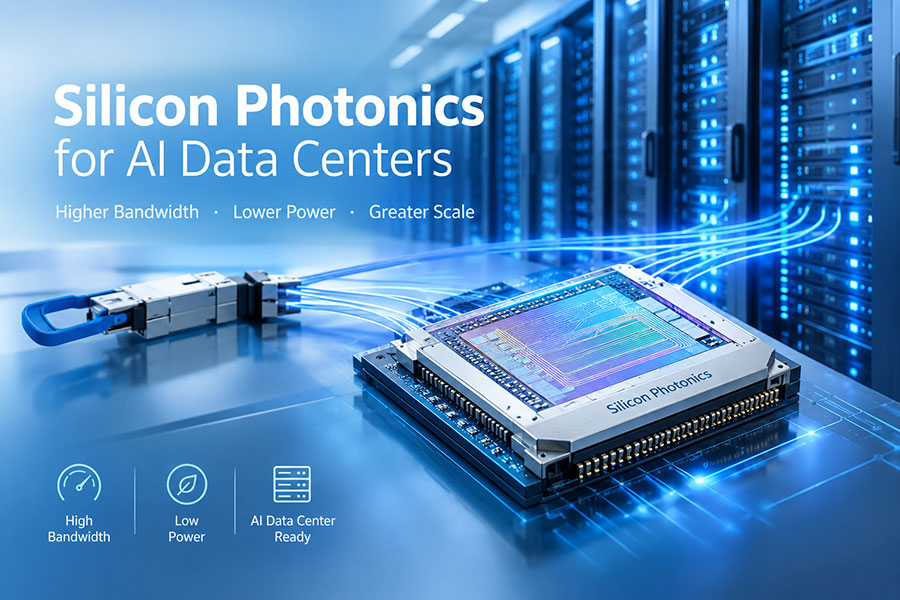
8.3 Co-Packaged Optics (CPO)
CPO integrates optical engines closer to switching ASICs.
Benefits:
Reduced electrical loss
Lower power consumption
Higher bandwidth density
CPO is considered a potential long-term solution for future AI networking.
9. C-LIGHT Optical Connectivity Solutions for AI Networks
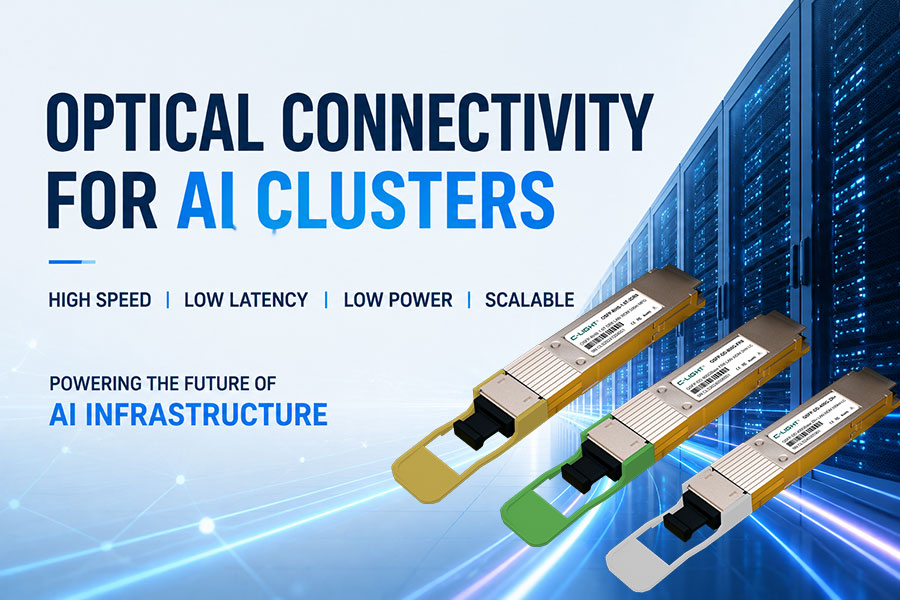
C-LIGHT provides advanced optical connectivity solutions designed for next-generation AI data centers.
The product portfolio includes:
400G optical transceivers
High-speed DAC and AEC cables
Customized optical solutions for AI infrastructure
These solutions are designed to address key AI networking requirements:
High bandwidth
Low latency
Low power consumption
High reliability
Scalable deployment
By supporting the evolution from 400G to 800G and 1.6T networks, C-LIGHT helps data centers build efficient optical infrastructures for AI workloads.
10. Future Outlook of Optical Connectivity in AI Clusters
The rapid development of AI computing will continue pushing optical communication technology forward.
Future AI clusters will require:
Higher bandwidth optical links
Lower power optical engines
Advanced thermal solutions
Higher-density optical connectivity
Intelligent network architectures
The evolution path is expected to continue:
400G → 800G → 1.6T → 3.2T Optical Connectivity
As AI models become larger and GPU clusters become more complex, optical connectivity will no longer be only a networking component. It will become a fundamental technology supporting the future of artificial intelligence infrastructure.
11.FAQ: Optical Connectivity Challenges in AI Clusters
Q1: Why do AI clusters require high-speed optical connectivity?
Answer: AI clusters require high-speed optical connectivity because thousands of GPUs need to exchange massive amounts of data during training and inference. Optical networks provide higher bandwidth, lower latency, and longer transmission distances compared with traditional electrical connections.
Q2: What are the main challenges of optical connectivity in AI data centers?
Answer: The main challenges include:
Increasing bandwidth requirements
Higher optical module power consumption
Signal integrity at high speeds
Thermal management
Deployment cost and scalability
Q3: Why are 800G and 1.6T optical modules important for AI clusters?
Answer: 800G and 1.6T optical modules provide the bandwidth capacity required for next-generation AI networks. They enable faster GPU communication and support larger AI training clusters.
Q4: What is the role of DAC, AOC, and AEC in AI networks?
Answer: DAC, AOC, and AEC provide different connectivity solutions:
DAC: Short-distance, low-cost connections inside racks
AOC: Optical solutions for medium-distance connections
AEC: Active electrical solutions balancing distance and cost
Q5: How does liquid cooling impact optical modules?
Answer: As AI racks reach higher power densities, liquid cooling helps maintain stable operating temperatures. Optical modules must be designed to support higher thermal environments while maintaining optical performance.
Q6: What technologies will improve future AI optical connectivity?
Answer: Future improvements will come from:
LPO technology
Co-packaged optics (CPO)
Silicon photonics
Higher-speed optical modules
Q7: What optical speeds will AI data centers use in the future?
Answer: AI data centers are expected to transition from 400G and 800G networks toward 1.6T and eventually 3.2T optical connectivity as AI workloads continue expanding.
Q8: How does C-LIGHT support AI data center networking?
Answer: C-LIGHT provides high-speed optical transceivers, DAC, AOC, and AEC solutions designed for AI clusters, helping data centers achieve higher bandwidth, lower power consumption, and scalable optical connectivity.
 >
>

 >
>
 >
>
 >
>
 >
>
 >
>
 >
>
 >
>