TEL:+86 132 6656 7067




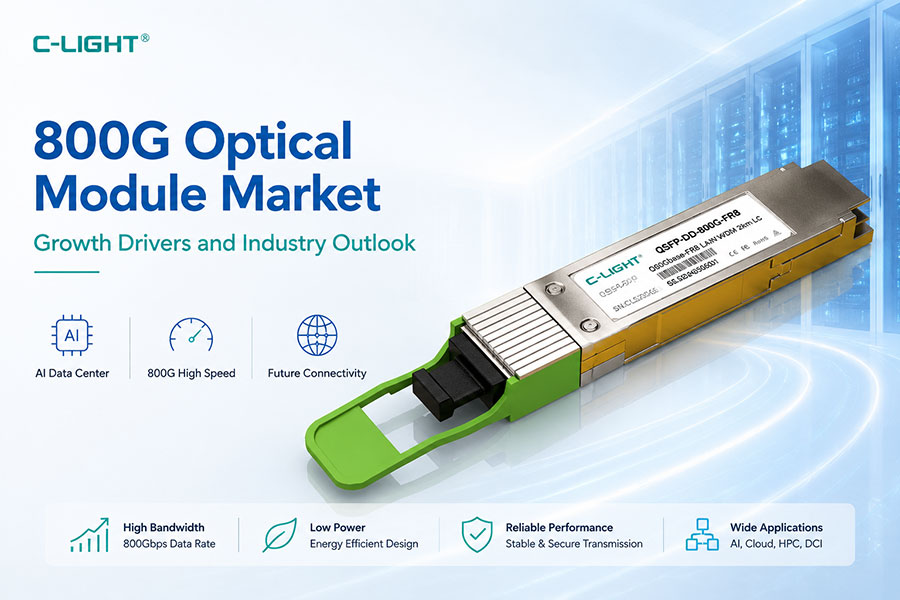
1. 800G Optical Modules Enter a New Growth Phase
The global optical communication industry is experiencing a major transformation driven by artificial intelligence (AI), hyperscale cloud computing, and next-generation data center infrastructure.
As AI models become increasingly complex, the demand for high-bandwidth, low-latency, and energy-efficient networking continues to accelerate. Traditional 100G and 400G optical solutions are facing increasing pressure from rapidly expanding AI workloads.
In this environment, 800G optical modules have emerged as a critical technology for next-generation data centers, providing the bandwidth capacity required for large-scale AI clusters, GPU networking, and high-performance computing (HPC).
The 800G optical module market is expected to experience significant growth from 2026 onward, becoming one of the most important segments in the optical transceiver industry.
Key market drivers include:
Rapid AI data center expansion
Increasing GPU cluster scale
Growth of hyperscale cloud infrastructure
Upgrade from 400G to 800G Ethernet networks
Demand for higher bandwidth density and lower power consumption
2. Overview of the Global 800G Optical Module Market
2.1 What Is an 800G Optical Module?
An 800G optical module is a high-speed optical transceiver capable of transmitting data at 800Gbps, typically designed for data center networking applications.
Compared with 400G optical modules, 800G solutions provide:
2× bandwidth capacity
Higher switch port efficiency
Improved network scalability
Lower cost per bit
800G optical modules are mainly deployed in:
AI training clusters
Cloud data centers
High-performance computing systems
Ethernet AI fabrics
Data center interconnect (DCI)
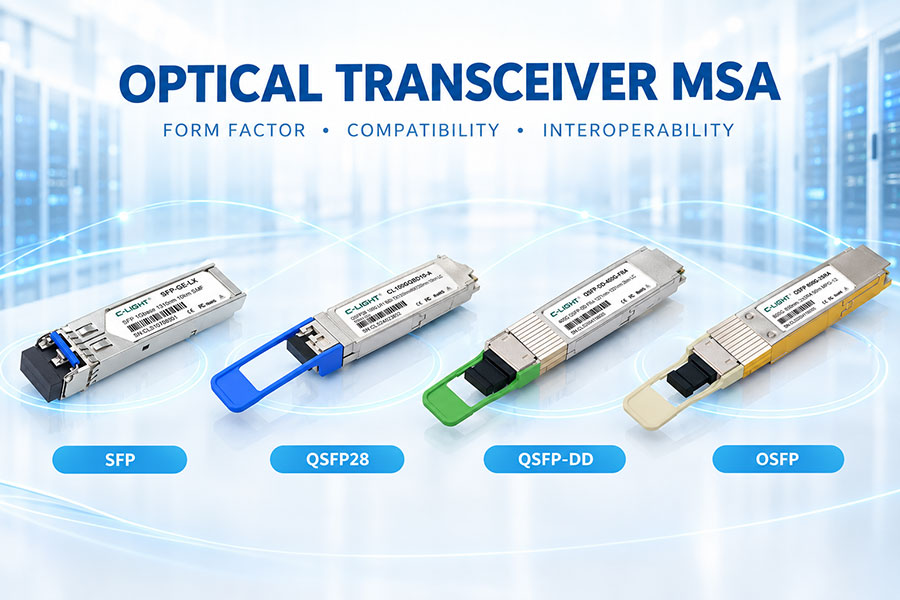
2.2 Main 800G Optical Module Form Factors
The current 800G market mainly includes:
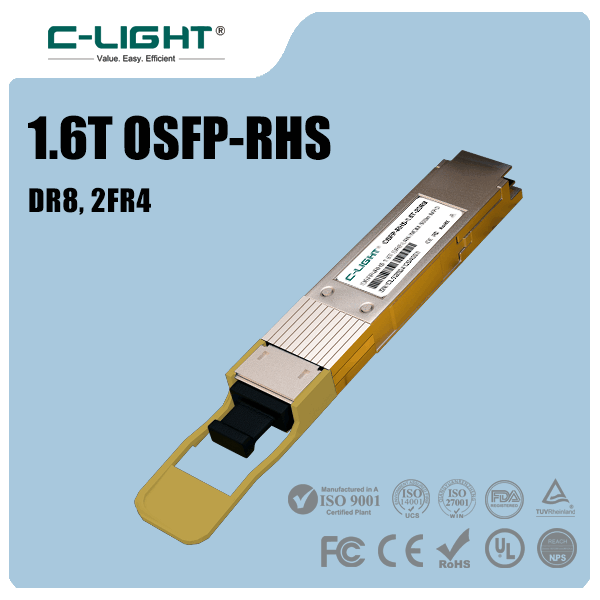
800G OSFP Optical Modules
800G OSFP MSA SR8/DR8/2FR4 Optical Transceiver丨C-LIGHT
OSFP (Octal Small Form-factor Pluggable) is widely adopted in AI networking environments.
Advantages:
Better thermal performance
Higher power capability
Suitable for next-generation switches
Common products:
800G OSFP SR8
800G OSFP DR8
800G OSFP 2×FR4
800G QSFP-DD Optical Modules
800G QSFP DD SR8/DR8/FR4 optical transceiver丨C-LIGHT
QSFP-DD maintains compatibility with existing networking systems.
Advantages:
High port density
Broad ecosystem support
Easier migration from 400G networks
Typical applications:
Cloud data centers
Enterprise networks
Telecom infrastructure
3. Major Growth Drivers of the 800G Optical Module Market
3.1 AI Data Centers Become the Primary Demand Engine
The biggest growth opportunity for 800G optical modules comes from AI infrastructure.
Modern AI clusters require massive communication between:
GPUs
AI accelerators
Network switches
Storage systems
Unlike traditional workloads, AI training generates continuous east-west traffic inside data centers.
For example:
Large GPU clusters require thousands of high-speed connections
AI fabrics require ultra-low latency networking
Switch bandwidth continues increasing rapidly
As AI computing expands, optical connectivity becomes one of the most important infrastructure components.
3.2 Migration from 400G to 800G Networks
400G optical modules have become widely deployed in current data centers. However, increasing AI workloads are pushing networks toward higher speeds.
The industry upgrade roadmap is:
100G → 200G → 400G → 800G → 1.6T
Compared with 400G, 800G provides:
| Feature | 400G | 800G |
|---|---|---|
| Bandwidth | 400Gbps | 800Gbps |
| Network Efficiency | Standard | Higher |
| AI Application Support | Limited | Optimized |
| Future Scalability | Medium | High |
800G enables operators to increase network capacity without proportionally increasing equipment footprint.
4. Key Technologies Behind 800G Optical Modules
4.1 PAM4 Modulation Technology
800G optical modules commonly use PAM4 modulation.
Compared with traditional NRZ:
Advantages:
Doubles transmission efficiency
Supports higher speeds
Reduces required channel bandwidth
PAM4 has become a key technology foundation for:
400G
800G
1.6T optical communication
4.2 DSP and Signal Processing
High-speed optical transmission requires advanced digital signal processing.
DSP functions include:
Signal compensation
Clock recovery
Error correction
Channel optimization
However, DSP also increases:
Power consumption
Thermal challenges
Module complexity
This has encouraged the development of new technologies such as LPO.
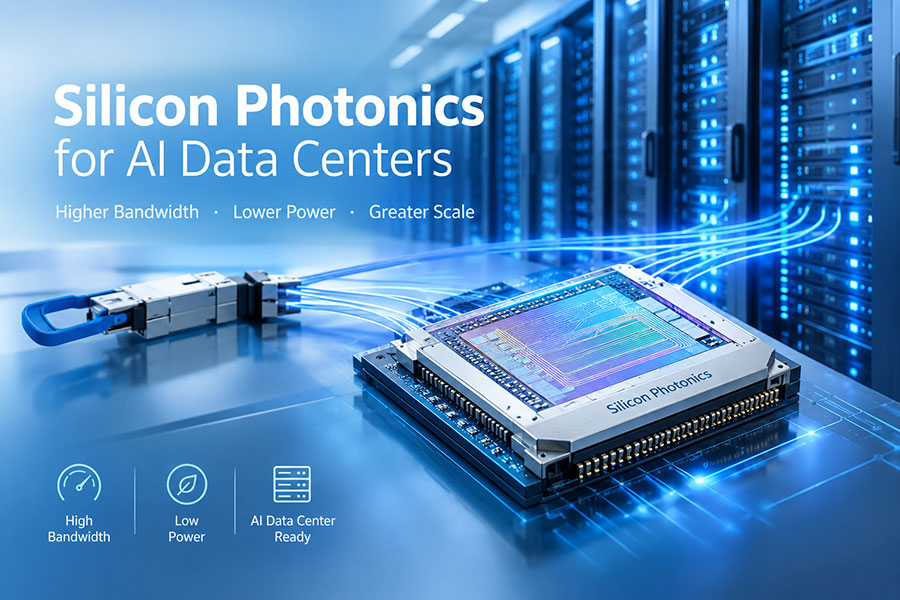
4.3 Silicon Photonics and Advanced Packaging
Silicon photonics is becoming increasingly important for future optical modules.
Benefits include:
Higher integration density
Lower manufacturing cost
Improved scalability
Better power efficiency
Silicon photonics is expected to support future:
800G optical modules
1.6T optical modules
Co-packaged optics (CPO)
5. 800G Optical Module Product Applications
5.1 AI Data Center Networking
AI data centers represent the fastest-growing application area.
Typical applications:
GPU cluster interconnect
AI training networks
Ethernet AI Fabric
High-performance computing
800G optical modules provide:
High bandwidth
Low latency
Long-distance transmission capability
5.2 Cloud Computing Infrastructure
Major cloud service providers continue upgrading their networks.
Drivers include:
Increasing cloud traffic
AI service deployment
Data processing demand
800G modules help cloud operators:
Reduce network bottlenecks
Increase switch capacity
Improve operational efficiency
5.3 Data Center Interconnect (DCI)
DCI applications require:
High bandwidth
Low power consumption
Reliable long-distance transmission
800G solutions are becoming important for:
Metro networks
Regional cloud connections
Enterprise data centers
6. 800G Optical Module Market Challenges
6.1 Power Consumption and Thermal Management
Higher-speed optical modules generate more heat.
Challenges include:
Increased module power
Higher rack density
Cooling requirements
This is especially important for AI data centers where rack power can exceed traditional levels.
6.2 Supply Chain Constraints
800G optical modules require advanced components:
High-speed DSP
Optical engines
Laser components
Precision packaging
Supply chain stability has become a key factor affecting market growth.
6.3 Testing and Reliability Requirements
800G modules require strict validation, including:
BER testing
Eye diagram analysis
Signal integrity testing
Optical performance testing
Thermal testing
Reliable manufacturing and testing capability are essential for large-scale deployment.
7. C-LIGHT 800G Optical Module Solutions
As AI networking continues evolving, C-LIGHT provides advanced optical connectivity solutions designed for high-performance data center applications.
C-LIGHT 800G product portfolio includes:
800G OSFP Optical Transceivers
Applications:
AI data centers
High-speed Ethernet networks
HPC systems
Features:
800Gbps transmission capability
OSFP form factor
High-density networking support
Optimized thermal design
800G QSFP-DD Optical Modules
Designed for:
Cloud computing
Enterprise networks
Data center upgrades
Benefits:
High compatibility
Flexible deployment
Efficient migration from 400G
800G DAC and AEC Solutions
For short-distance AI cluster connections:
800G DAC
800G AEC
Advantages:
Lower latency
Lower cost
Reduced power consumption
These solutions help customers build scalable AI-ready network infrastructure.
8. Future Outlook: 800G Toward 1.6T Era
The 800G optical module market will remain a major growth area during the next several years.
Future development trends include:
Higher Transmission Speed
The industry is moving toward:
800G → 1.6T → 3.2T
More Efficient Optical Architecture
Future networks will adopt:
LPO
CPO
Silicon photonics
to improve:
Energy efficiency
Bandwidth density
System scalability
AI-Optimized Optical Networks
AI workloads will continue reshaping network architectures.
Optical connectivity will become a core infrastructure technology supporting:
Large language models
AI training
Cloud AI services
HPC applications
9. Frequently Asked Questions (FAQ)
Q1: What is an 800G optical module?
Answer: An 800G optical module is a high-speed optical transceiver that provides up to 800Gbps data transmission for AI data centers, cloud networks, hyperscale infrastructure, and high-performance computing applications.
Q2: Why is the 800G optical module market growing rapidly?
Answer: The rapid growth of the 800G optical module market is mainly driven by AI data center expansion, increasing GPU cluster sizes, cloud computing growth, and the transition from 400G to higher-speed networking architectures.
Q3: What is the difference between 400G and 800G optical modules?
Answer: 400G and 800G optical modules are designed for different network bandwidth requirements.
400G provides 400Gbps transmission capacity.
800G doubles the bandwidth to 800Gbps per optical link.
800G is better suited for large-scale AI clusters, HPC systems, and next-generation data center networks.
Q4: What are the main types of 800G optical modules?
Answer: Common 800G optical solutions include:
800G OSFP SR8 optical modules
800G OSFP DR8 optical modules
800G QSFP-DD optical transceivers
800G DAC and AEC high-speed interconnect cables
Q5: Will 800G replace 400G optical modules?
Answer: 800G optical modules will gradually become mainstream in AI data centers and hyperscale networks. However, 400G optical modules will continue to be widely used in existing data center deployments during the transition period.
Q6: What technologies support 800G optical communication?
Answer: 800G optical communication relies on several advanced technologies, including:
PAM4 modulation technology
Advanced DSP signal processing
Silicon photonics technology
High-performance optical packaging and thermal management
Q7: What 800G products does C-LIGHT provide?
Answer: C-LIGHT provides a complete portfolio of 800G optical interconnect solutions for AI data centers and next-generation networking applications.
800G OSFP optical modules
800G QSFP-DD optical transceivers
800G DAC high-speed cables
800G AEC active electrical cable solutions
Q8: What is the future roadmap after 800G?
Answer: The optical communication industry is moving toward 1.6T and 3.2T solutions to support future AI computing workloads, larger GPU clusters, and ultra-high-bandwidth data center networks.
 >
>

 >
>
 >
>
 >
>
 >
>
 >
>
 >
>
 >
>