TEL:+86 132 6656 7067




The rapid development of artificial intelligence (AI) infrastructure is transforming data center networking architectures. As AI clusters continue to scale, traditional electrical interconnect technologies are facing increasing challenges in bandwidth, power consumption, and signal transmission distance.
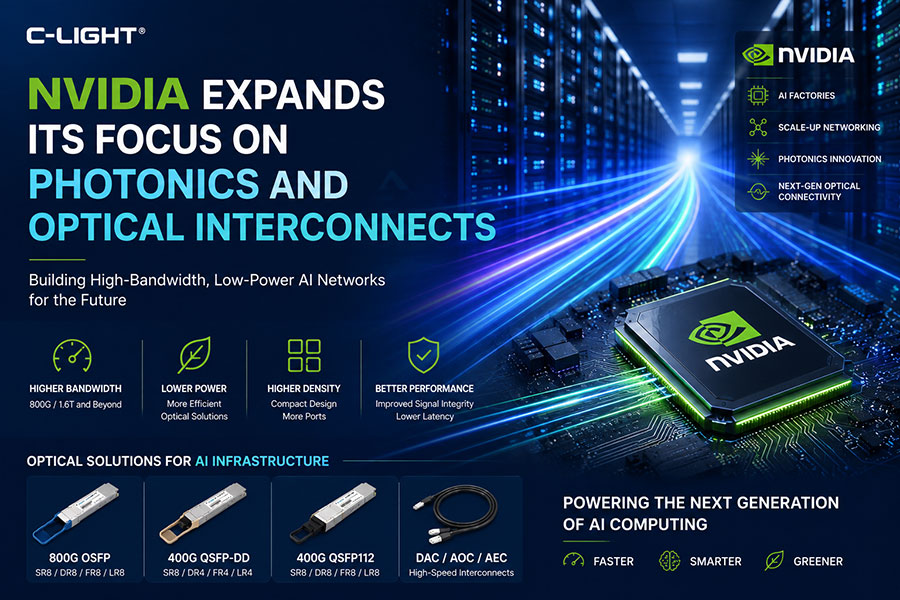
NVIDIA is expanding its focus on photonics and optical interconnect technologies to support the next generation of AI computing systems. Optical connectivity, silicon photonics, and advanced optical networking solutions are becoming essential technologies for building large-scale AI factories with higher bandwidth and improved energy efficiency.
The evolution toward 800G, 1.6T, and future higher-speed optical connectivity is accelerating the transition from traditional electrical connections to advanced optical interconnect architectures.
1. AI Infrastructure Drives the Demand for Optical Interconnects
Modern AI models require massive computing resources, with thousands of GPUs working together in distributed clusters. The communication between GPUs, switches, and storage systems creates enormous data traffic inside AI data centers.
High-performance AI networks require:
Higher bandwidth connectivity
Lower latency communication
Reduced power consumption
Higher port density
Reliable large-scale deployment
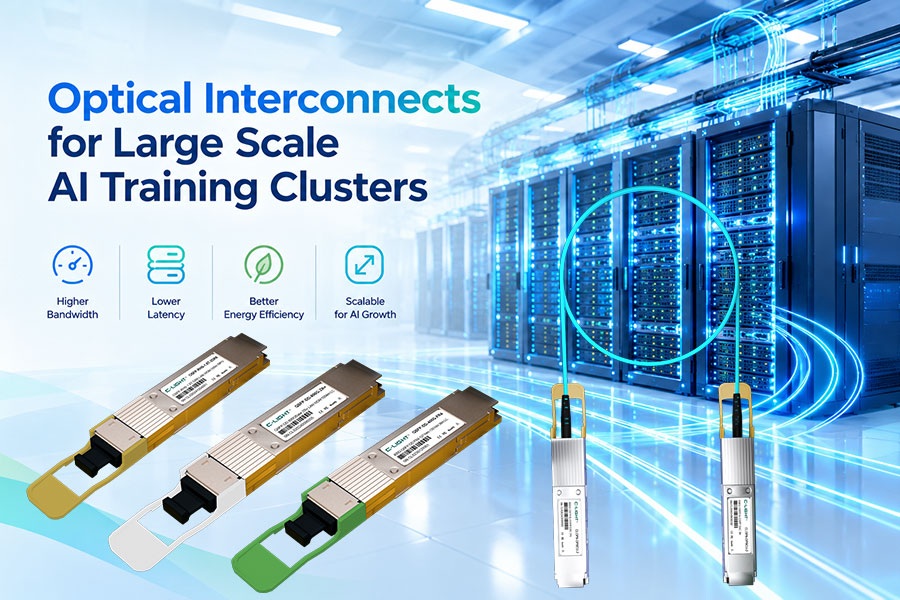
Optical interconnect technology provides an efficient solution by replacing longer electrical transmission paths with high-speed optical links.
2. NVIDIA’s Growing Interest in Photonics Technology
As AI computing continues moving toward larger GPU clusters, NVIDIA has increased its investment and attention toward optical networking technologies.
Photonics technology enables faster data transmission while reducing the limitations caused by electrical signal loss and power consumption at higher speeds.
Key optical technologies supporting future AI systems include:
Silicon Photonics
Co-Packaged Optics (CPO)
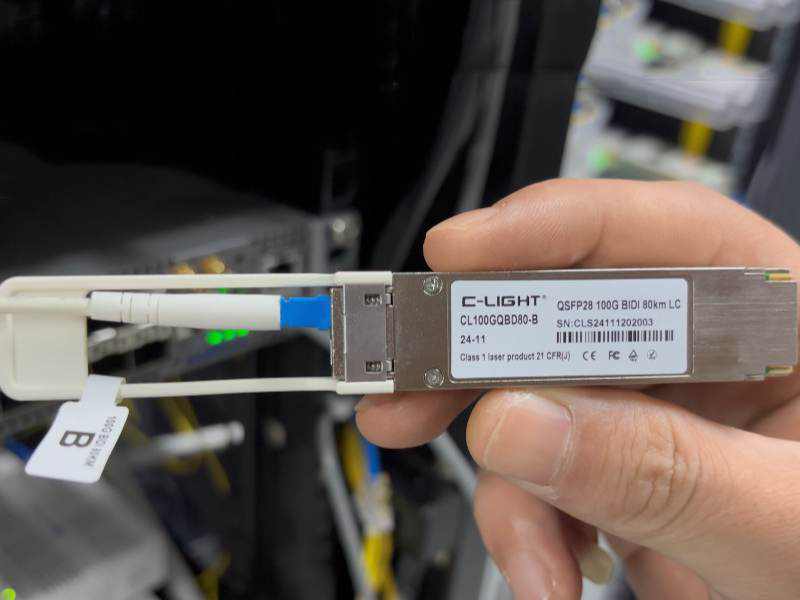
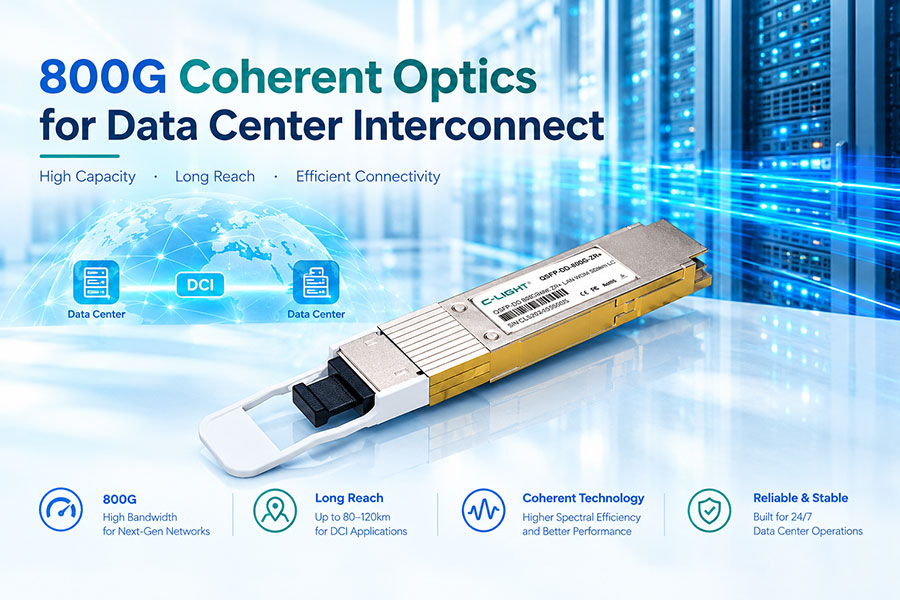
800G Optical Transceivers
1.6T Optical Connectivity
High-Speed DAC, AOC, and AEC Interconnects
3. Optical Interconnect Evolution in AI Data Centers
The networking requirements of AI clusters are accelerating the transition of optical technologies:
| Generation | Technology | Main Applications |
| 100G / 200G | Traditional Optical Modules | Cloud Data Centers |
| 400G | QSFP-DD / OSFP Optical Modules | Large-Scale Data Center Networks |
| 800G | OSFP / QSFP112 Optical Solutions | AI Training Clusters |
| 1.6T | Next-Generation Optical Connectivity | Future AI Infrastructure |
The increasing bandwidth requirements of AI workloads are pushing optical networking toward higher-speed and more integrated architectures.
4. Silicon Photonics Enables Future AI Networking
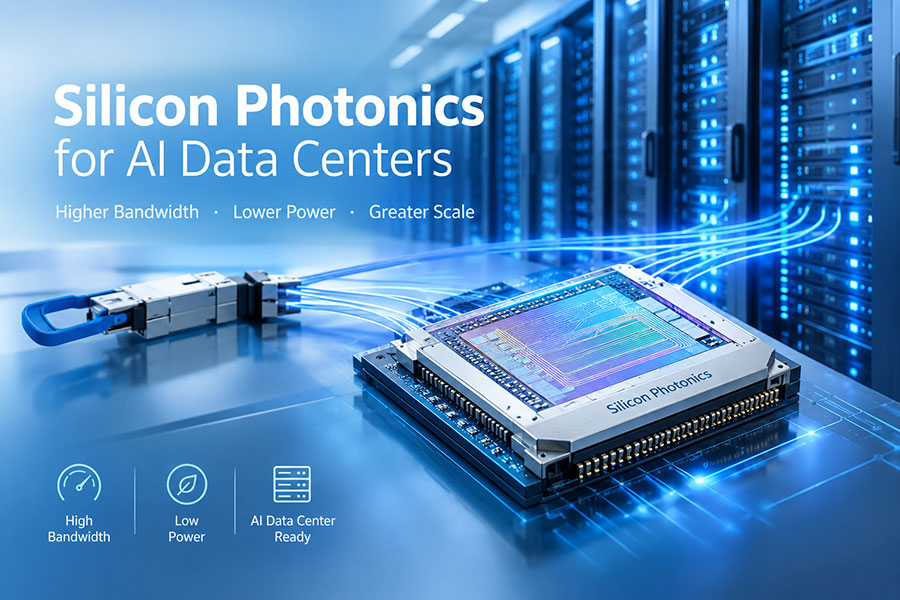
Silicon photonics combines optical components with semiconductor manufacturing technologies, enabling higher integration density and improved scalability.
Compared with traditional optical solutions, silicon photonics provides advantages including:
Higher optical integration density
Lower power consumption
Improved manufacturing scalability
Support for future high-speed optical systems
Silicon photonics is expected to become an important foundation for future AI data center architectures, especially when combined with CPO technology.
5. CPO and Optical Interconnects for Future AI Systems
Co-Packaged Optics (CPO) represents a major change in optical networking architecture by integrating optical engines closer to switching ASICs.
Compared with traditional pluggable optical modules, CPO can provide:
Lower electrical signal loss
Improved energy efficiency
Higher bandwidth density
Better thermal management
As AI clusters continue scaling, CPO and silicon photonics are expected to play an increasingly important role in next-generation AI networking systems.
6. NVIDIA AI Networking and High-Speed Optical Solutions
NVIDIA’s AI networking ecosystem requires advanced connectivity solutions to support GPU clusters, AI factories, and hyperscale computing environments.
High-speed optical products supporting these applications include:
800G OSFP Optical Transceivers
400G QSFP-DD Optical Modules
400G QSFP112 Solutions
DAC / AOC / AEC High-Speed Interconnects
Future 1.6T Optical Connectivity
7. Impact on the Optical Communication Market
The growing demand from AI infrastructure is reshaping the optical communication market. Data center operators and networking companies are accelerating investments in advanced optical technologies.
Major market trends include:
Rapid adoption of 800G optical modules
Increasing demand for 1.6T optical connectivity
Growth of silicon photonics solutions
Development of CPO-based networking architectures
Higher demand for low-power optical interconnect solutions
8. C-LIGHT Optical Interconnect Solutions for AI Networks
C-LIGHT provides high-speed optical connectivity solutions designed for modern AI data centers, cloud computing networks, and next-generation Ethernet infrastructure.
800G OSFP Optical Modules
400G QSFP-DD / QSFP112 Optical Modules
High-Speed DAC, AOC, and AEC Solutions
AI Data Center Optical Interconnect Solutions
These solutions help customers build scalable, efficient, and reliable optical networks for future AI computing environments.
9. Conclusion
NVIDIA’s increasing focus on photonics and optical interconnects reflects a major industry shift toward optical-based AI infrastructure.
As AI clusters demand higher bandwidth and lower power consumption, technologies such as silicon photonics, CPO, 800G, and 1.6T optical connectivity will become critical components of future data center networks.
10.NVIDIA Expands Its Focus on Photonics and Optical Interconnects - Q&A
Q1: Why is NVIDIA focusing on optical interconnect technology?
Answer: AI clusters require extremely high bandwidth and efficient communication between GPUs. Optical interconnects provide higher speed, lower latency, and better energy efficiency.
Q2: How does photonics improve AI data center networks?
Answer: Photonics technology enables high-speed optical transmission with lower power consumption and improved scalability compared with traditional electrical connections.
Q3: What optical technologies are important for future AI networks?
Answer: Key technologies include silicon photonics, CPO, 800G optical modules, 1.6T optical connectivity, and advanced interconnect solutions.
Q4: What role does CPO play in AI networking?
Answer: CPO integrates optical engines closer to switching ASICs, reducing electrical losses and improving bandwidth density for large AI clusters.
Q5: Why are 800G and 1.6T optical modules important?
Answer: Higher-speed optical modules provide the bandwidth required for large-scale AI training and inference networks.
Q6: How does silicon photonics support optical communication?
Answer: Silicon photonics improves optical integration, reduces power consumption, and supports scalable manufacturing for future optical systems.
Q7: What products are used in AI optical interconnect systems?
Answer: AI networks typically use optical transceivers, DAC, AOC, AEC cables, and future CPO-based optical solutions.
Q8: What is the future trend of AI optical networking?
Answer: AI networking will continue moving toward higher bandwidth, lower power consumption, and more integrated optical architectures.
 >
>

 >
>
 >
>
 >
>
 >
>
 >
>
 >
>
 >
>