TEL:+86 132 6656 7067




Co-Packaged Optics (CPO) and pluggable optics are two different approaches to providing high-speed optical connectivity in data center and high-performance networking systems. Traditional pluggable optical transceivers place the optical module outside the switch ASIC package and connect it to the host board through a high-speed electrical interface. CPO moves the optical engine much closer to the switching silicon by integrating optical components and the switch ASIC within a common package or tightly coupled package structure.
Both architectures are designed to address the increasing bandwidth requirements of data centers, AI infrastructure, high-performance computing, and large-scale Ethernet networks. However, they differ in electrical channel length, power distribution, thermal design, serviceability, packaging complexity, and system architecture.
The difference becomes increasingly important as network speeds move from 800G toward 1.6T and future higher-bandwidth interfaces. Reducing electrical reach between the switch ASIC and optical engine can help address channel loss and power challenges, while pluggable optics retain important advantages in field replacement, interoperability, and network upgrade flexibility.
1. What Is Pluggable Optics?
Pluggable optics are removable optical transceivers installed in standardized cages and connectors on switches, routers, servers, and other networking equipment.
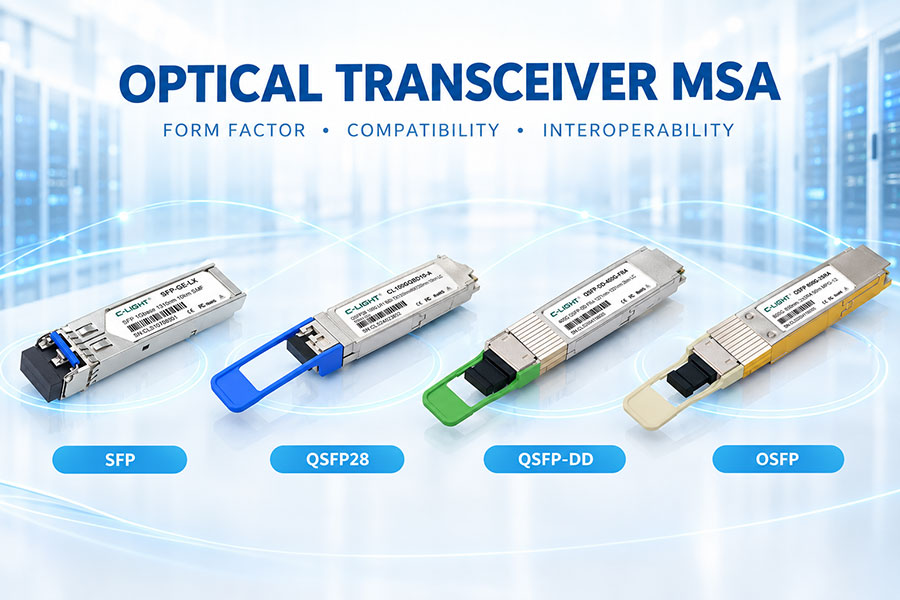
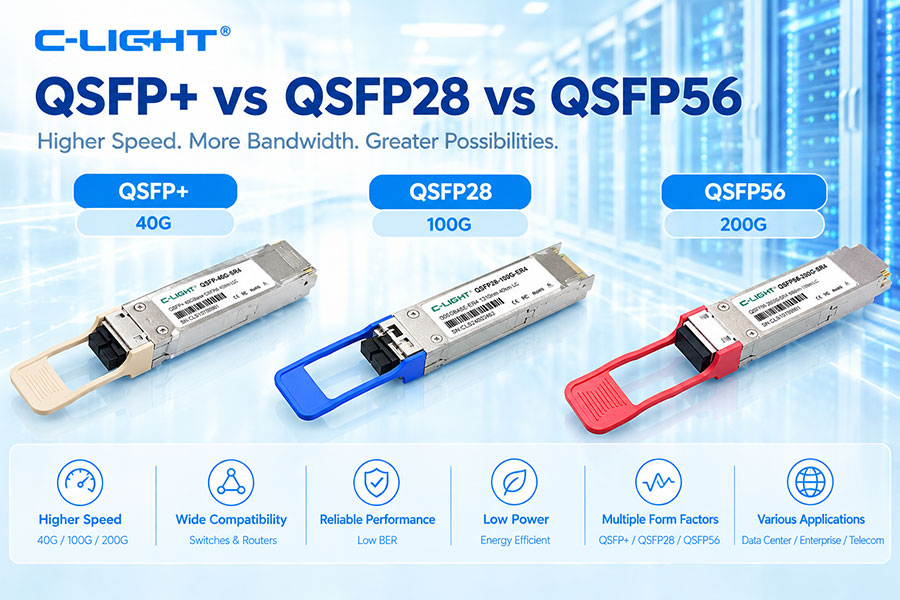
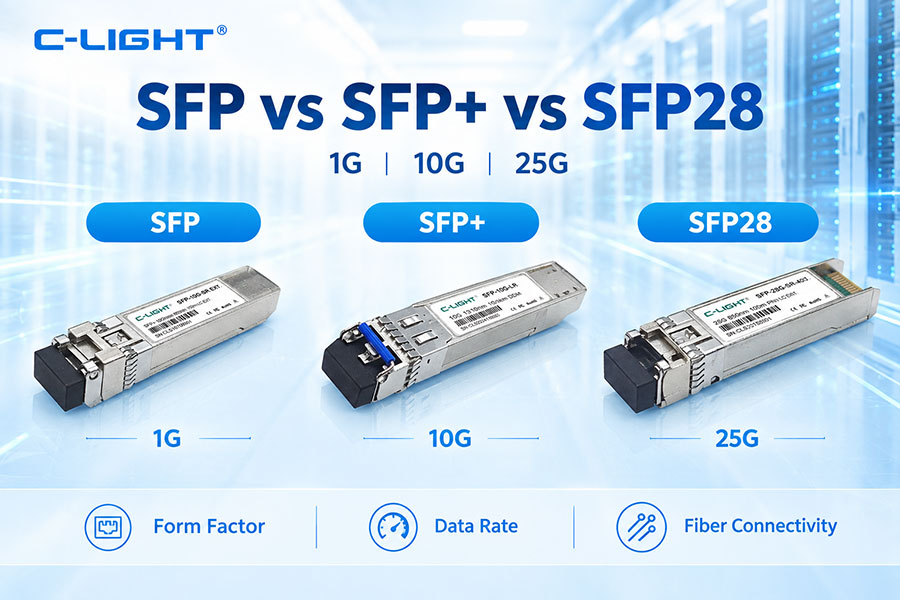
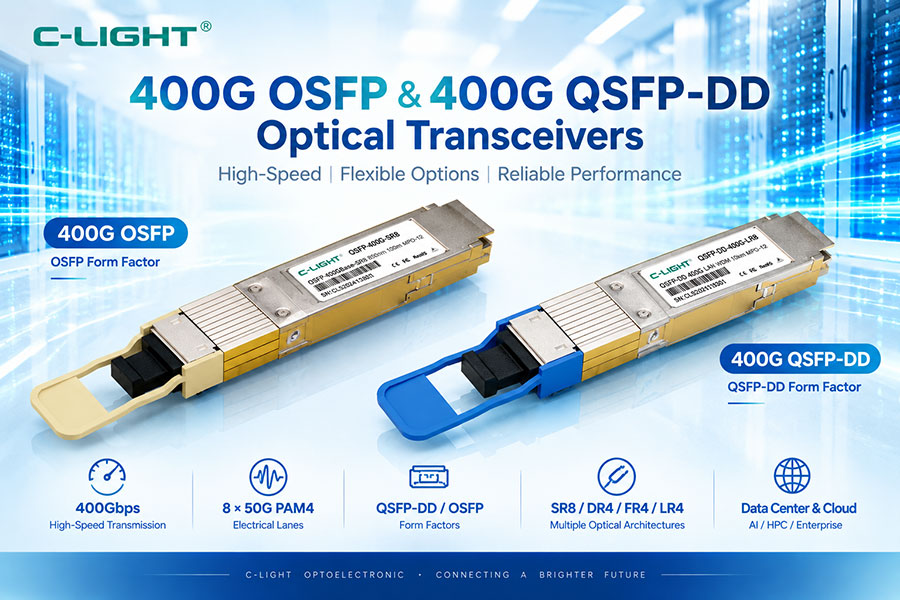
Common pluggable form factors include SFP, SFP28, QSFP28, QSFP-DD, and OSFP. Depending on the generation, these modules can support 1G, 10G, 25G, 100G, 200G, 400G, 800G, and higher-speed networking applications.
In a traditional pluggable architecture, the switch ASIC sends high-speed electrical signals across the host PCB to the module connector. The optical transceiver then converts the electrical signal into an optical signal for transmission through fiber.
2. What Is CPO?
CPO stands for Co-Packaged Optics. Instead of placing the optical transceiver at the front panel of the switch, CPO places optical engines much closer to the switch ASIC, usually within the same package environment or through a closely integrated packaging architecture.
The purpose is to shorten the high-speed electrical path between the switching silicon and optical conversion devices. This can reduce electrical channel loss and help address the power and signal-integrity challenges associated with very high-speed SerDes interfaces.
CPO does not eliminate the optical link itself. Light still travels through fiber between networking systems. The primary architectural change occurs at the electrical and packaging interface between the switch ASIC and the optical engine.
3. CPO vs Pluggable Optics: Basic Difference
| Feature | CPO | Pluggable Optics |
|---|---|---|
| Optical Location | Close to switch ASIC | Front-panel pluggable module |
| Electrical Path | Very short | Longer PCB and connector path |
| Serviceability | More integrated | Module can generally be replaced independently |
| Thermal Design | Highly integrated with switch package | Module and chassis thermal design are more separated |
| Port Upgrade | More dependent on system architecture | Module-level replacement is straightforward |
| Packaging Complexity | High | Lower at system package level |
| Interoperability | More dependent on system implementation | Broad pluggable ecosystem |
| Typical Role | High-density next-generation systems | Broad range of existing and high-speed networks |
4. Why Was CPO Developed?
The development of CPO is closely related to the increasing electrical bandwidth of switch ASICs.
As SerDes lane rates increase, the electrical path between the ASIC and a conventional front-panel optical module becomes more difficult to maintain. PCB traces, connectors, package structures, and other interconnects contribute insertion loss and signal distortion.
Moving the optical conversion point closer to the ASIC can reduce the length of this high-speed electrical channel. This is one of the main reasons CPO is being considered for next-generation high-radix switch platforms.
5. Electrical Channel Length
The electrical connection between a switch ASIC and an optical module is an important part of a high-speed network system.
In a conventional pluggable design, signals travel from the switch ASIC through a package, PCB traces, vias, connectors, and finally into the optical module.
In a CPO architecture, the optical engine is positioned much closer to the ASIC. The resulting electrical path is substantially shorter.
A shorter channel can reduce insertion loss, reflections, crosstalk, and other high-frequency impairments. This can provide additional electrical margin as lane rates increase.
6. Signal Integrity
Signal integrity becomes increasingly difficult as electrical lane rates rise. A high-speed channel must maintain controlled impedance while minimizing attenuation, reflections, crosstalk, and other distortion.
Traditional pluggable optics require careful PCB and connector design to maintain the electrical channel between the ASIC and the front-panel module.
CPO reduces the electrical path length and therefore addresses one major source of channel loss. However, CPO introduces new challenges inside the package, including high-density interconnects, optical-engine electrical interfaces, packaging tolerances, and manufacturing complexity.
7. Power Consumption in Pluggable Optics
Traditional high-speed pluggable modules can contain DSPs, retimers, TIAs, drivers, optical engines, lasers, monitoring circuits, and other active components.
As data rates increase, the electrical channel between the ASIC and pluggable module can require more signal-conditioning power. The module itself can also consume significant power.
The total system power therefore includes both the optical module and the host electrical interface required to drive it.
8. Power Consumption in CPO
CPO can reduce some of the power associated with long high-speed electrical channels by placing the optical engine close to the switch ASIC.
This shorter electrical path can reduce channel loss and potentially reduce the amount of equalization or signal conditioning required between the switch silicon and the optical engine.
However, lower system power is not an automatic consequence of CPO. The actual result depends on the switch ASIC, optical engine, modulation technology, SerDes architecture, thermal system, and the definition of the system power being compared.
A 2026 IEEE Journal of Lightwave Technology study reported energy-efficiency improvements for a current CPO implementation compared with LPO and conventional DSP-based pluggable approaches, while also noting that comparisons should be made at the system level and that the magnitude of the improvement depends on the technology generation and what components are included in the calculation.
9. Thermal Management of Pluggable Optics
Pluggable optics separate the optical module from the switch ASIC, which provides some flexibility in thermal design.
The module has its own heat sink or thermal structure, while the switch ASIC uses its own cooling system. Heat generated by the optical module is managed through the module, cage, chassis airflow, and system cooling architecture.
This separation can simplify maintenance and module replacement, but high-power modules can still place significant demands on chassis airflow and cooling capacity.
10. Thermal Management of CPO
CPO places the optical engines close to the switch ASIC, creating a much more tightly coupled thermal environment.
The switch ASIC is typically one of the largest heat sources in the system. Integrating optical engines nearby means that optical components may operate in a more challenging thermal environment than a front-panel module.
Thermal design therefore becomes a package-level and system-level problem involving the ASIC, optical engine, substrate, heat spreader, heat sink, cold plate, and overall cooling system.
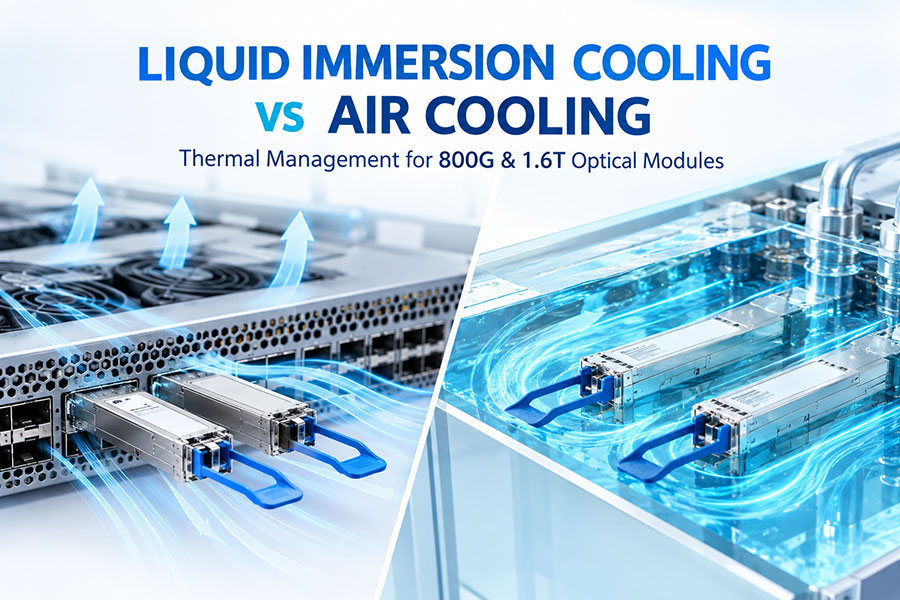
As system power density continues to increase, advanced cooling methods can become increasingly important for both CPO and high-power pluggable architectures.
11. Serviceability
Serviceability is one of the clearest differences between CPO and pluggable optics.
A pluggable transceiver can generally be removed and replaced without replacing the entire switch. A technician can replace an optical module because of failure, compatibility requirements, or network upgrades while leaving the main switch platform in operation.
CPO integrates the optical engine much more tightly with the switch package. This increases the importance of package-level reliability and can make field replacement more complex than replacing a front-panel optical module.
12. Reliability
Both architectures require high reliability, but the sources of risk are different.
Pluggable optics are exposed to repeated insertion and removal, connector wear, thermal cycling, and mechanical handling. However, the module is an independently replaceable component.
CPO reduces some removable interfaces but increases integration complexity. Optical engines, ASICs, package structures, thermal systems, and high-density interconnects must operate together for long periods.
OIF has identified reliability, serviceability, integration complexity, ecosystem maturity, and initial cost as important considerations for broader CPO deployment.
13. Module Replacement
With traditional pluggable optics, a failed or outdated module can normally be replaced independently of the switch chassis.
This provides flexibility for network upgrades. For example, an operator can change an optical module when moving between transmission distances or optical standards without redesigning the entire switching platform, provided that the host supports the selected module.
CPO does not generally provide the same module-level replacement model because the optical engine is part of the switch's integrated architecture.
14. Network Upgrade Flexibility
Pluggable optics provide a modular upgrade model. Switch manufacturers can design a host platform and support different optical modules according to bandwidth, reach, fiber type, and application.
CPO requires closer coordination between switch silicon, optical engines, packaging, thermal design, firmware, and system manufacturing.
This can provide a highly optimized system but also means that optical upgrades are more closely tied to the switch generation.
15. Port Density
CPO can provide high optical port density because the optical engines are integrated around the switch ASIC rather than occupying conventional front-panel transceiver cages.
Removing front-panel module cages and long electrical channels can allow system designers to explore different switch layouts and packaging arrangements.
Pluggable optics also provide high port density, especially with compact form factors such as QSFP-DD and OSFP. The actual density depends on the chassis width, number of ports, thermal requirements, and module size.
16. Front-Panel Architecture
Traditional pluggable optics are visible and accessible from the front panel. The module can be inserted directly into a cage and connected to optical fiber through an LC, MPO/MTP®, or other supported connector.
CPO shifts the optical integration away from the front-panel cage and toward the switch package.
This changes the physical design of the networking system and requires different approaches to fiber routing, optical engine placement, cooling, service access, and manufacturing.
17. Optical Interface
CPO changes the location of the electrical-to-optical conversion but does not fundamentally eliminate optical fiber connectivity.
A CPO system still requires an optical interface between the system and external fiber. The optical interface can use different fiber and connector architectures depending on the application.
Pluggable optics also support a broad range of optical interfaces, including duplex LC and MPO/MTP® configurations, depending on the module and optical standard.
18. CPO and Optical Engine Architecture
The optical engine is a key component of a CPO system. It may contain optical transmit and receive components, laser sources, modulators, photodetectors, drivers, TIAs, and associated optical coupling structures.
The optical engine is positioned near the switch ASIC to reduce the electrical connection distance.
The exact implementation can vary significantly between CPO platforms. Some architectures use silicon photonics, while other approaches can employ different photonic technologies depending on the application and system design.
19. Pluggable Optics and DSP
Traditional high-speed pluggable modules often use DSPs to perform functions such as equalization, gearbox conversion, signal conditioning, and PAM4 processing.
The DSP can help the module tolerate the electrical channel between the switch ASIC and the optical components.
However, the DSP itself consumes power. As electrical lane rates increase, the power associated with signal processing becomes an important part of the overall optical-link budget.
20. CPO and DSP Reduction
One objective of CPO is to reduce the electrical distance between the switch ASIC and optical engine. This can reduce the need for some of the signal conditioning otherwise required by longer electrical channels.
Depending on the implementation, this can enable simpler optical interfaces or lower-power signal processing architectures.
It is important to distinguish this from completely eliminating signal processing. A CPO system can still use drivers, receivers, equalization, or other electronic functions depending on the architecture.
21. CPO vs Pluggable Optics at 800G
800G is an important generation for both architectures.
Pluggable 800G modules such as QSFP-DD800 and OSFP800 are already based on very high-speed electrical lanes and advanced PAM4 signaling.
CPO can reduce the electrical distance between the ASIC and optical engine, which addresses one of the challenges associated with these high-speed interfaces.
At the same time, the large installed base of pluggable 800G systems, established module manufacturing ecosystem, and field-service model remain important considerations for network deployment.
22. CPO vs Pluggable Optics at 1.6T
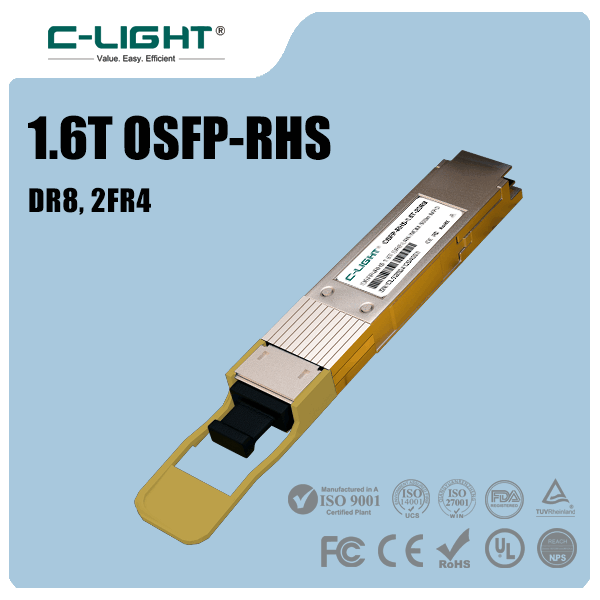
At 1.6T, the electrical interface becomes even more demanding. Both QSFP-DD1600 and OSFP1600 target eight 200G-class electrical lanes.
At these speeds, electrical channel loss, connector performance, PCB materials, thermal management, and signal conditioning become increasingly important.
CPO reduces the electrical path length, while pluggable architectures retain the flexibility of front-panel modules. The trade-off becomes increasingly dependent on system architecture and deployment requirements.
23. CPO and AI Data Centers
AI data centers can require large numbers of high-bandwidth network links between GPUs, accelerators, switches, storage systems, and other resources.
This creates pressure to increase bandwidth density while controlling power and cooling requirements.
CPO is being developed partly in response to these requirements. The short electrical path and high-density packaging can address some of the limitations associated with scaling traditional electrical connections.
Pluggable optics remain important because they provide flexible optical connectivity, established maintenance procedures, and a broad ecosystem of 400G and 800G products.
24. Scale-Out and Scale-Up Networks
Scale-out networks connect large numbers of servers or accelerator nodes through high-speed Ethernet switches. Scale-up architectures connect processors or accelerators with particularly high bandwidth and low-latency requirements.
CPO can be used in both concepts, but the specific implementation depends on the switch and system architecture.
Industry discussions in 2026 have increasingly focused on CPO and near-packaged optics for high-density AI networking, including scale-out and emerging scale-up applications.
25. CPO and Near-Packaged Optics
Near-Packaged Optics (NPO) is related to CPO but uses a different degree of physical integration.
In general, NPO places the optical engine very close to the switch ASIC without necessarily integrating it into the same package in exactly the same way as CPO.
This can provide a middle architecture between traditional pluggable optics and fully co-packaged implementations.
The emergence of NPO is important because it demonstrates that the industry is exploring multiple approaches to shorten electrical channels without relying on one single packaging model.
26. CPO and Pluggable Optics Interoperability
Interoperability is one of the major advantages of the pluggable ecosystem. Standardized form factors, optical interfaces, electrical interfaces, and management specifications allow equipment and module manufacturers to develop around common requirements.
CPO requires tighter integration between the switch ASIC, optical engine, package, firmware, and system design. As a result, interoperability can be addressed at different layers rather than through an independently replaceable front-panel module.
OIF has continued to work on interoperability and co-packaging-related specifications as the industry develops optical and electrical interfaces for future generations.
27. Manufacturing Complexity
Pluggable optics are manufactured as independent modules. The transceiver can be tested separately before shipment and can then be inserted into a compatible host system.
CPO integrates multiple technologies into a more complex assembly that includes switch silicon, optical engines, package structures, fiber coupling, high-speed electrical interfaces, and thermal components.
This can increase manufacturing and testing complexity. Yield at the package or system level becomes increasingly important because multiple components must operate together.
28. Testing and Validation
Pluggable optical modules can be tested independently for transmitter output, receiver sensitivity, BER, eye characteristics, power consumption, temperature performance, and other parameters.
CPO requires more system-level testing because the optical engine is closely integrated with the switch ASIC and package.
This can include optical characterization, electrical signal-integrity testing, thermal testing, package reliability testing, and system-level interoperability validation.
29. Maintenance and Field Deployment
Pluggable optics are well suited to environments where network hardware must be maintained and upgraded over time. Failed modules can generally be replaced without removing the entire switching system.
CPO changes the maintenance model because the optical components are part of a more integrated assembly.
This increases the importance of manufacturing quality, component reliability, package qualification, and system-level diagnostic capabilities.
30. Cost Considerations
Cost comparisons between CPO and pluggable optics depend strongly on the technology generation and the scope of the comparison.
Pluggable optics benefit from a mature supply chain and independent module manufacturing. The same module can potentially be used across multiple compatible systems.
CPO can reduce some electrical and packaging overhead at the system level, but its integrated package can introduce higher initial development, manufacturing, testing, and service complexity.
Therefore, comparing only the price of an optical engine with the price of a pluggable module does not provide a complete system-level cost comparison.
31. CPO vs Pluggable Optics: Key Technical Differences
| Parameter | CPO | Pluggable Optics |
|---|---|---|
| Optical Integration | Close to switch ASIC | Separate front-panel module |
| Electrical Channel | Very short | Longer host electrical path |
| Power Optimization | Can reduce electrical interconnect and signal-conditioning power | Module and host channel power remain separate |
| Cooling | Highly integrated | Module and switch cooling can be managed separately |
| Serviceability | More integrated | Independent module replacement |
| Upgrade Flexibility | More dependent on switch platform | High module-level flexibility |
| Packaging | High integration | Independent module packaging |
| Optical Ecosystem | Developing | Mature and broad |
| Typical Deployment | Emerging high-density systems | Broad existing and high-speed deployments |
32. When Pluggable Optics Are Used
Pluggable optics are well suited to networking systems that require flexible module selection, field replacement, broad multi-vendor availability, and different optical reaches.
They are widely used in enterprise networks, cloud data centers, telecom systems, storage networks, AI infrastructure, and other environments.
Pluggable architectures also allow the optical interface to evolve independently from some aspects of the switch platform, provided that the host supports the required module generation.
33. When CPO Is Considered
CPO is being considered for networking systems where electrical channel limitations, power density, port density, and future bandwidth requirements become increasingly difficult to address using conventional front-panel architectures.
It is particularly relevant to high-radix switches and high-bandwidth AI networking systems where large numbers of high-speed optical connections may need to operate within a constrained power and thermal budget.
The suitability of CPO depends on the complete platform architecture, including switch silicon, optical technology, cooling, manufacturing, maintenance strategy, and network deployment model.
34. Future Development
The transition toward higher SerDes speeds is likely to drive continued development of both pluggable optics and more integrated optical architectures.
Pluggable modules continue to evolve through higher lane rates, improved DSPs, linear-drive architectures, better optical engines, and improved thermal designs.
At the same time, CPO and NPO are being developed to shorten electrical paths and increase the level of integration between switching silicon and optical engines.
The OIF 448G framework notes that CPO can help minimize electrical channel loss, while also identifying ecosystem maturity, integration complexity, reliability, serviceability, and cost as factors affecting broader deployment.
35. Conclusion
CPO and pluggable optics represent two different approaches to high-speed optical connectivity. Pluggable optics place optical transceivers at the front panel and provide a modular architecture with independent replacement, established interoperability, and flexibility across different optical applications.
CPO moves the optical engine close to the switch ASIC, substantially shortening the high-speed electrical path. This can help address electrical channel loss and power challenges as switch bandwidth increases, but it also introduces tighter integration between optical, electrical, thermal, packaging, manufacturing, and service requirements.
For 400G and 800G networks, pluggable optics remain an important architecture with a broad deployment ecosystem. As networking moves toward 1.6T and higher bandwidth levels, CPO, NPO, and advanced pluggable approaches are all being developed to address different system requirements.
The practical choice between CPO and pluggable optics depends on the switch architecture, bandwidth, power budget, thermal design, service model, optical reach, port density, manufacturing strategy, and upgrade requirements of the network.
 >
>

 >
>
 >
>
 >
>
 >
>
 >
>
 >
>
 >
>