TEL:+86 132 6656 7067





High-speed data center networks increasingly depend on the ability to move large volumes of data between processors, accelerators and switches without exceeding power, thermal or space constraints. Copper interconnects remain highly effective for short electrical connections, but their signal integrity becomes harder to maintain as lane rates and channel lengths increase. Silicon photonics offers an optical alternative that can carry high-bandwidth signals over fiber while supporting increasingly dense optical integration.
These technologies are not interchangeable in every application. Copper provides a direct electrical path without optical conversion, making it attractive for short connections. Silicon photonics introduces modulators, photodetectors and optical waveguides to transmit data as light, making it useful when electrical reach or bandwidth density becomes a limiting factor. In modern AI infrastructure, the two technologies are increasingly deployed together.
1. What Is a Copper Interconnect?
A copper interconnect transfers data through electrical signals traveling along conductive paths. These paths may be integrated into a semiconductor package, printed circuit board (PCB), connector assembly or copper cable. Copper remains a foundational technology for connecting processors, memory devices, network interfaces and switching equipment.
Common copper interconnect implementations include:
On-chip copper wiring: Connects logic blocks, memory structures and functional units within integrated circuits.
Package-level electrical connections: Uses bumps, redistribution layers, substrates and other structures to connect dies.
PCB traces: Carry high-speed electrical signals between components on a circuit board.
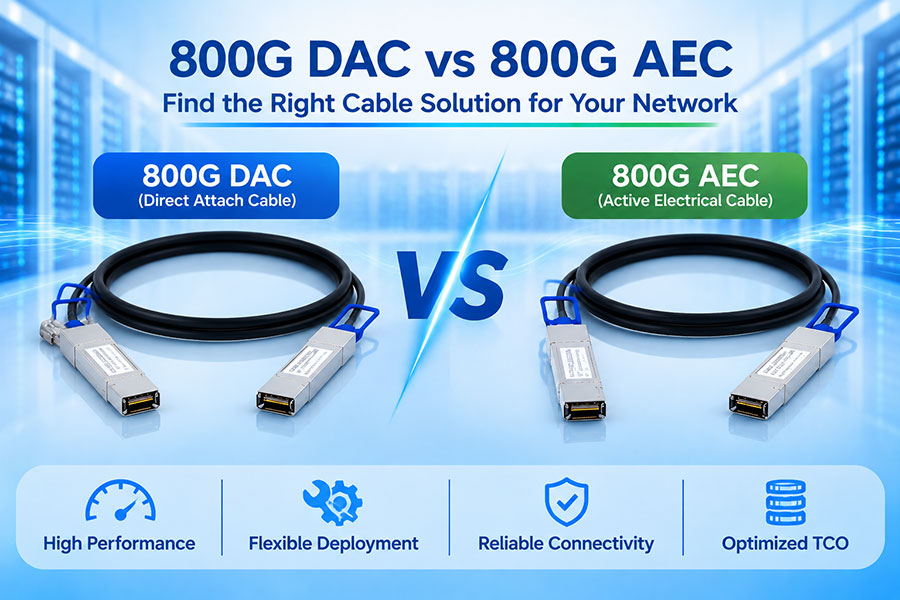
Direct Attach Copper (DAC): Provides short-reach connectivity between network equipment through passive copper cable assemblies.
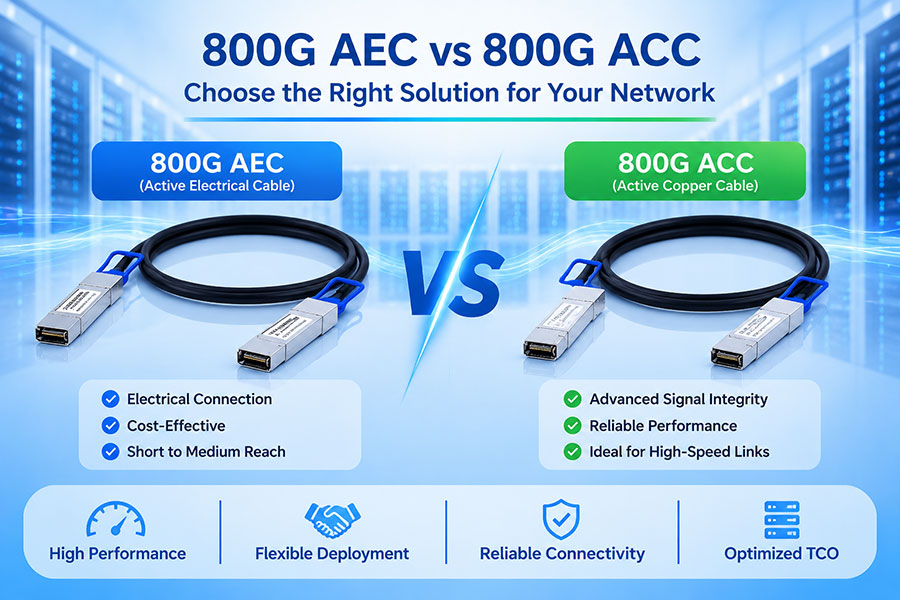
Active Electrical Cable (AEC): Integrates active signal-conditioning components to support selected higher-speed copper connections.
Electrical signals are generated and recovered by electronic circuits such as serializer/deserializer (SerDes) transmitters and receivers. Depending on the channel, equalization and retiming may be needed to compensate for signal degradation.
2. What Is Silicon Photonics?
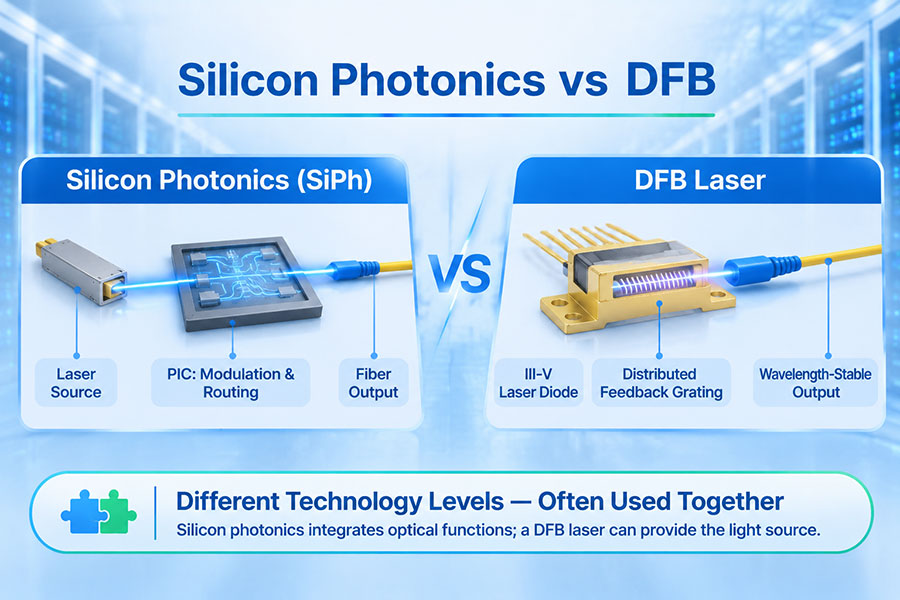
Silicon photonics is an integrated photonics technology that uses silicon-based semiconductor processes to implement optical functions on a chip. A silicon photonic integrated circuit (PIC) can contain optical waveguides, modulators, couplers, splitters, filters and photodetectors.
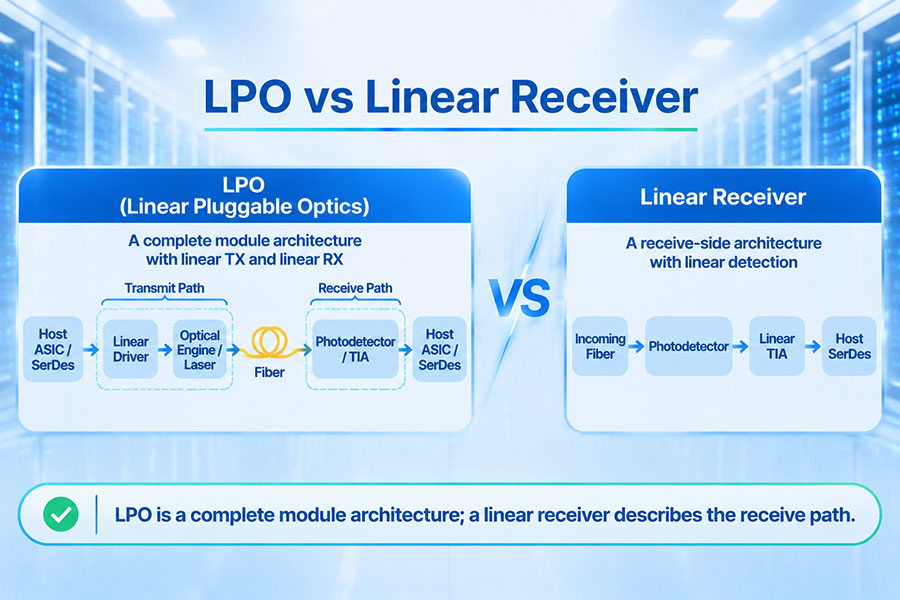
In a typical optical communication system, electrical data from a host ASIC or SerDes transmitter is delivered to an optical driver. The driver controls a modulator that encodes the data onto light. The optical signal travels through a waveguide and fiber to a receiver, where a photodetector converts it back into an electrical signal.
Silicon photonics supports several functions:
High-speed optical modulation and detection.
Compact waveguide routing and optical signal distribution.
Wavelength-division multiplexing for carrying multiple optical channels.
Integration of optical components within a photonic integrated circuit.
Connection to electronic ICs through advanced packaging and optical-engine architectures.
Silicon is not generally an efficient light emitter in conventional photonic implementations. Systems therefore commonly use external or heterogeneously integrated laser sources. Electronic drivers, receiver circuits and control components are also required. Silicon photonics changes the transmission medium, but it does not remove the need for electronic processing.
3. Core Differences Between Silicon Photonics and Copper
The fundamental difference is how information travels between two endpoints. Copper carries electrical signals through conductive paths, while silicon photonics uses integrated optical devices to transmit data as light through waveguides and fiber.
| Technical Aspect | Silicon Photonics | Copper Interconnect |
|---|---|---|
| Signal medium | Optical signals through waveguides and fiber | Electrical signals through conductive paths |
| Core technology | Photonic integrated circuits and optical coupling | Electrical conductors, SerDes and signal-conditioning circuits |
| Signal conversion | Requires electrical-to-optical and optical-to-electrical conversion | Remains in the electrical domain |
| Typical media | Silicon waveguides and optical fiber | PCB traces, copper cables and package wiring |
| Channel impairment | Optical propagation loss, coupling loss and reflections | Conductor loss, dielectric loss, crosstalk and reflections |
| Reach | Supports short-reach optical I/O through longer fiber links, depending on design | Most effective for on-chip, package-level and short cable connections |
| EMI behavior | Optical transmission is not subject to electrical EMI in the same way as copper | Requires electromagnetic compatibility and noise control |
| Power requirements | Includes laser, driver, receiver and conversion power | Includes transmitter, receiver and any required equalization or retiming |
| Typical applications | Optical transceivers, optical I/O, CPO and high-bandwidth fiber links | On-chip wiring, PCB routing, DAC and selected AEC connections |
4. Bandwidth and Data Rate Scaling
Copper interconnects can support very high data rates through advanced SerDes circuits, modulation schemes and equalization. Their practical performance depends on the electrical channel, including conductor geometry, dielectric properties, cable construction, connector transitions and total path length.
As signaling rates increase, the channel becomes more sensitive to frequency-dependent attenuation, reflections and crosstalk. Maintaining a reliable signal may require more complex equalization or retiming. In many designs, the usable copper reach becomes shorter as the per-lane data rate increases.
Silicon photonics offers a different approach to bandwidth scaling. Optical signals can travel through fiber with substantially lower propagation loss over distance than high-speed electrical signals in copper cables. Multiple wavelengths can also share an optical fiber through wavelength-division multiplexing, increasing aggregate capacity.
However, optical bandwidth is also constrained by modulator bandwidth, detector response, laser characteristics, wavelength spacing, signal quality and receiver electronics. A silicon photonic device does not automatically determine the total link rate; the complete transceiver and host architecture must support it.
5. Transmission Distance and Practical Reach
Reach is one of the strongest reasons to choose between copper and optical connectivity. Copper is highly effective for short connections, especially when passive cables can meet the required signal-integrity margin. As channel length and lane rate increase, electrical attenuation and distortion become more difficult to compensate for.
Silicon photonics enables optical transmission over fiber, making it suitable for connections that extend beyond the practical reach of a given copper implementation. The supported distance depends on the optical module, wavelength, fiber type, link budget and system configuration.
| Connection Scenario | Common Approach | Primary Consideration |
|---|---|---|
| Within a processor die | Electrical metal interconnect | Routing density, RC delay and power |
| Between dies in a package | Electrical package interconnect; optical I/O in emerging designs | Bandwidth density and package integration |
| Between components on a PCB | Electrical traces and high-speed connectors | Channel loss and signal integrity |
| Short equipment-to-equipment links | Passive DAC or AEC | Validated cable reach and lane rate |
| Between racks | Optical transceivers and fiber | Optical reach, fiber routing and link budget |
| Between data center sites | Optical fiber with suitable WDM or coherent technology | Distance, capacity and transmission performance |
There is no universal distance at which copper stops working and optics becomes mandatory. For example, a passive DAC, an AEC and a high-performance PCB channel have different reach characteristics. The appropriate boundary must be established using the actual lane rate, cable specification, host interface and validated system design.
6. Power Consumption and Energy per Bit
Power consumption is a major consideration in large-scale AI infrastructure. Thousands of high-speed connections can operate simultaneously, making the energy required to move each bit an important system-level metric.
Passive copper DACs can be very power-efficient because the cable itself does not require a laser, photodetector or optical conversion circuitry. For a short connection that meets its electrical channel requirements, copper often offers a low-power and economical solution.
At higher data rates or longer reaches, however, copper links may require stronger equalization, retimers or active cable electronics. These components consume additional power and can add heat and latency.
Silicon photonics avoids many of the distance-related electrical losses in the transmission medium, but its total power budget includes several components:
Laser source and optical power management.
Modulator driver and associated electronic circuitry.
Photodetector and receiver electronics.
DSP and FEC, where required by the link architecture.
Thermal management and control circuits.
Consequently, optical transmission does not automatically consume less power than copper for every connection. A short passive copper link may be more efficient than an optical link with two transceivers. At greater reach or higher bandwidth density, the balance can shift as electrical signal-conditioning requirements increase.
Evaluate both endpoints, cable or fiber, equalization, retiming, optical conversion, DSP and cooling. Comparing only copper cable loss with optical fiber loss does not provide a reliable system-level energy-per-bit result.
7. Latency and Signal Integrity
Short copper links can provide very low latency because the signal remains in the electrical domain and does not require optical conversion. This makes copper attractive for local connections between chips, package components and nearby equipment.
Optical links introduce electrical-to-optical and optical-to-electrical conversion. Depending on the transceiver architecture, DSP, FEC and other processing may also contribute to total latency. However, copper links that require retiming can introduce additional pipeline delay.
Signal integrity presents different challenges for each medium:
Copper: Requires control of impedance, insertion loss, return loss, crosstalk, jitter and electromagnetic interference.
Silicon photonics: Requires control of optical insertion loss, coupling efficiency, reflections, wavelength behavior and optical signal quality.
Neither medium is inherently lower-latency in every system. A meaningful comparison must include endpoint circuitry, signal conditioning, FEC, retiming and propagation across the complete connection.
8. EMI, Crosstalk and Operating Environment
Copper channels can be affected by electromagnetic interference and crosstalk from nearby electrical signals. High-density PCB layouts and cable bundles therefore require careful routing, grounding, shielding and impedance control.
Optical signals traveling through fiber are immune to electrical EMI along the transmission path. Fiber also provides galvanic isolation between connected equipment, which can be useful in electrically noisy environments.
Optical links still have their own performance constraints. Reflections, connector contamination, bending loss, coupling misalignment and optical crosstalk can degrade signal quality. Silicon photonic devices may also require temperature control to maintain stable wavelength characteristics.
The operating environment should therefore influence the decision. Copper may be easier to deploy and service in a short, controlled connection, while fiber can provide advantages in electrically noisy areas or where electrical isolation is required.
9. Cost, Reliability and Maintenance
Copper has a mature manufacturing and deployment ecosystem. Passive DAC assemblies are often economical for short connections because they avoid optical components and conversion electronics. Their installation is relatively straightforward, and they can be replaced without optical cleaning or fiber inspection procedures.
Silicon photonics requires photonic fabrication, laser integration, optical coupling and additional assembly and testing processes. Optical transceivers also contain more functional components than passive copper cables. These factors can increase initial component cost and maintenance requirements.
However, total cost depends on the network architecture. If copper requires active retimers, specialized low-loss materials or shorter cable paths, its cost advantage may narrow. Optical connectivity can also reduce cable-bundle size and support longer distances, potentially simplifying network layout.
Reliability should be evaluated at the product and system level. Connector quality, cable construction, operating temperature, optical alignment, component quality and installation practices all influence service life. It is not accurate to assume that every copper connection is more reliable than every optical connection, or vice versa.
10. Silicon Photonics and Copper in AI Data Centers
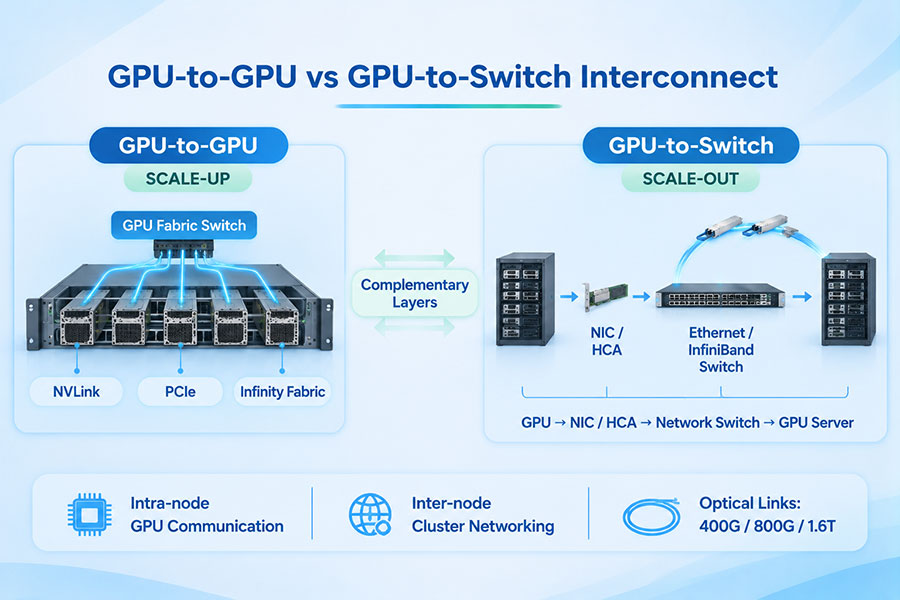
AI clusters create demanding communication requirements between GPUs, accelerators, memory systems and network switches. As cluster size and aggregate bandwidth increase, the physical interconnect can become a major constraint on system scalability.
Copper remains important for short connections within servers, packages and racks. Passive DAC is particularly useful when the required reach and lane rate remain within the cable's validated operating limits. AEC can extend selected electrical connections through active signal conditioning.
Optical connectivity becomes increasingly relevant for rack-to-rack links, scale-out networks and high-bandwidth connections where copper reach or channel loss becomes difficult to manage. Silicon photonics provides a compact platform for optical engines that can be used in pluggable transceivers and emerging near-package or co-packaged designs.
A practical AI data center therefore uses a combination of technologies:
Electrical wiring within processors and integrated circuits.
Electrical package connections between nearby dies and components.
DAC or AEC for suitable short-reach equipment links.
Optical transceivers and fiber for longer-reach, high-bandwidth connectivity.
Advanced optical I/O architectures for selected high-density accelerator and switch systems.
11. The Role of Copper in CPO and Near-Package Optics
Co-packaged optics (CPO) moves optical engines close to a switch ASIC or other high-performance electronic device. The objective is to shorten the high-speed electrical path between the host chip and optical conversion circuitry, reducing some of the signal-integrity and power challenges associated with longer electrical connections.
CPO does not eliminate copper. Electrical connections remain necessary between the ASIC, drivers, control circuits and photonic devices. The architectural change is that high-speed electrical paths become shorter and more localized, while optical signals carry data beyond the package through fiber.
Silicon photonics can provide the optical modulation, detection and waveguide functions within the optical engine. Copper remains responsible for essential electrical connections inside the package and across the electronic system.
This hybrid architecture illustrates the complementary roles of the two technologies: copper handles local electrical communication, while optical links provide bandwidth and reach beyond the practical limits of the electrical channel.
12. Selecting the Right Technology for Different Applications
The selection process should begin with the required reach, lane rate, aggregate bandwidth, power budget and system topology. The lowest-cost medium for a short connection may not be the most economical choice when the same connection must scale to higher data rates or longer distances.
| Application Requirement | Recommended Starting Point | Key Design Consideration |
|---|---|---|
| On-chip communication | Electrical interconnect | Routing density, RC delay and power |
| Short die-to-die connections | Electrical package interconnect | Package architecture and channel performance |
| Short in-rack equipment links | Passive DAC where validated | Lane rate, cable reach and power budget |
| Higher-rate short electrical links | AEC where supported and appropriate | Active electronics, latency and total power |
| Rack-to-rack connectivity | Optical transceivers and fiber | Reach, optical budget and fiber infrastructure |
| High-density switch ASIC optical I/O | Silicon photonics with CPO or near-package optics | Thermal design, optical coupling and package reliability |
Before deployment, engineers should verify host compatibility, supported lane rates, modulation format, FEC requirements, connector type, cable or fiber specification, optical budget and operating temperature. These factors determine whether a proposed link can meet its performance and reliability targets.
13. C-LIGHT Copper and Optical Connectivity Solutions
Modern data center infrastructure relies on both copper and optical connectivity. DAC and AEC solutions are suitable for selected short-reach electrical links, while optical transceivers and AOCs support fiber-based connections across different network distances.
C-LIGHT's connectivity portfolio includes:
400G DAC and AEC: High-speed copper connectivity options for supported short-reach applications.
800G OSFP DAC and AEC: Copper interconnect options for next-generation high-bandwidth equipment connections.
1.6T OSFP DAC and AEC: High-speed electrical connectivity categories for emerging data center architectures.
400G, 800G and 1.6T optical transceivers: Optical connectivity options for high-bandwidth network links.
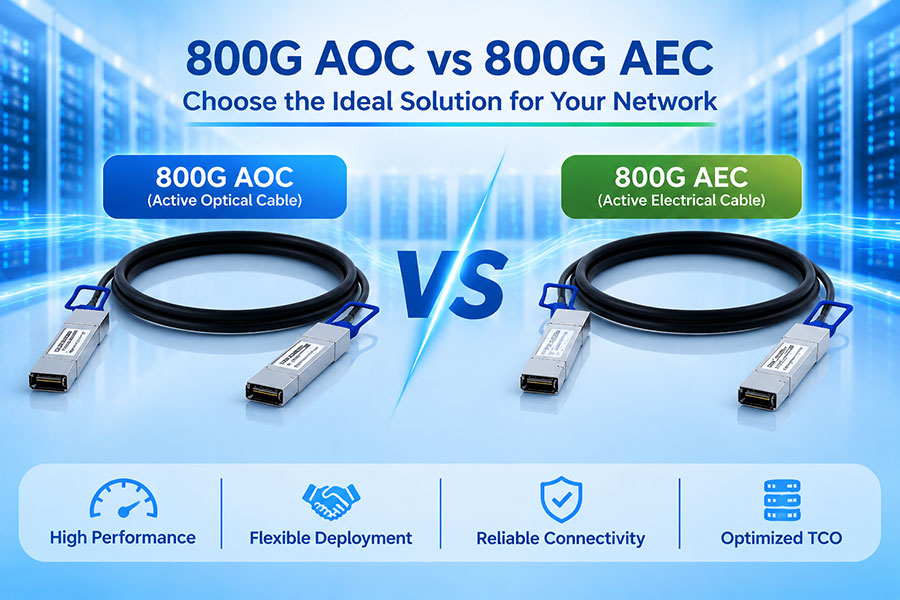
Active Optical Cables: Fiber-based connectivity for equipment links where optical transmission is preferred.
The appropriate choice depends on the host platform, required reach, data rate, power budget and compatibility requirements. Product-level specifications should be checked for each application rather than assuming that all products within a speed category support the same cable length or interface.
View the C-LIGHT connectivity product range and optical transceiver portfolio for available solutions.
14. Conclusion
Silicon photonics and copper interconnects serve different positions in modern computing and data center networks. Copper remains an effective choice for short electrical connections because of its mature ecosystem, straightforward implementation and low power consumption in passive configurations. Silicon photonics provides optical integration for links that require greater reach, bandwidth density or improved scalability beyond the practical limits of electrical channels.
The transition toward optical connectivity does not mean copper will disappear. High-performance systems will continue to use copper inside chips, packages and short-reach equipment connections, while optical engines and fiber carry data across longer or more bandwidth-intensive paths. CPO and near-package optics bring the two technologies closer together by combining short electrical connections with high-capacity optical transmission.
For data center connectivity requirements involving DAC, AEC, AOC and optical transceivers, visit C-LIGHT products or Contact C-LIGHT.
 >

 >
 >
 >
 >
 >
 >
 >