TEL:+86 132 6656 7067





High-performance AI data centers depend on two essential networking functions: connecting compute servers to the network and moving traffic between those servers. NVIDIA addresses these functions through different product families. ConnectX provides network adapters installed in servers, while Spectrum provides Ethernet switching technology used to build the data center fabric.
Although ConnectX and Spectrum are closely associated in NVIDIA's AI networking architecture, they are not competing products. A ConnectX adapter provides the server-side network interface, while a Spectrum switch provides the switching capacity that connects multiple servers and network segments. Together, they form an important part of NVIDIA's Spectrum Ethernet and Spectrum-X platforms.
1. What Is NVIDIA ConnectX?
NVIDIA ConnectX is a family of high-performance network interface cards (NICs) and network adapters designed for servers, storage systems, cloud infrastructure and accelerated computing environments.
A ConnectX adapter is typically installed in a server through a PCIe interface or an applicable Open Compute Project (OCP) form factor. It provides the physical and protocol-level connection between the host system and an external network. Depending on the model, ConnectX adapters support Ethernet, InfiniBand or specific configurations of these networking technologies.
In AI infrastructure, ConnectX adapters are particularly important for communication between GPU servers. They support high-speed data transfer and hardware acceleration features that reduce the processing burden on host CPUs. With RDMA support, applications can transfer data between memory regions on different systems with reduced CPU involvement.
Important ConnectX capabilities include:
High-speed network connectivity: Provides server-side Ethernet or InfiniBand interfaces at supported data rates.
RDMA acceleration: Supports Remote Direct Memory Access for efficient data movement between connected systems.
RoCE support: Applicable Ethernet models support RDMA over Converged Ethernet, enabling RDMA communication over Ethernet fabrics.
GPU communication: Supports technologies such as GPUDirect RDMA on qualified platforms, allowing network transfers to interact directly with GPU memory under supported configurations.
Hardware offloads: Accelerates selected networking, storage and security operations to reduce CPU overhead.
AI cluster connectivity: Connects GPU servers to high-performance Ethernet or InfiniBand networks.
ConnectX models serve different generations and deployment requirements. For example, ConnectX-7 supports high-speed Ethernet and InfiniBand configurations, while newer SuperNIC generations target increasingly demanding AI networking environments. Port count, interface type, throughput and host requirements vary by exact model.
2. What Is NVIDIA Spectrum Networking?
NVIDIA Spectrum is a family of Ethernet switching technologies and platforms designed for data center, cloud, enterprise and AI networking. Spectrum Ethernet switches provide the network infrastructure that connects servers, storage systems and other network devices.
Unlike ConnectX, which operates at the server interface, Spectrum switching technology is implemented in network switches. These switches receive Ethernet frames from connected devices, process forwarding information and transmit traffic toward the appropriate destination.
Spectrum switches are used in conventional Ethernet data centers as well as large-scale AI clusters. They support high-density switching, high aggregate bandwidth and network operating systems such as NVIDIA Cumulus Linux and SONiC. Depending on the switch generation, port configurations and supported optics vary.
Key Spectrum networking capabilities include:
Ethernet switching: Connects servers, switches and other network equipment through standards-based Ethernet interfaces.
High switching capacity: Provides the aggregate bandwidth needed for large data center fabrics.
AI traffic optimization: Spectrum-X configurations incorporate features designed to improve performance for distributed AI workloads.
Congestion management: Supports mechanisms that help maintain predictable network behavior under demanding traffic conditions.
Network scalability: Supports leaf-spine and other data center switching architectures.
Flexible software: Supports network operating system options including Cumulus Linux and SONiC, depending on the switch platform.
Spectrum is also the switching foundation of NVIDIA Spectrum-X Ethernet, an AI-oriented networking platform that combines Spectrum switches with compatible ConnectX or BlueField SuperNICs, cables, transceivers and networking software.
3. NVIDIA ConnectX vs Spectrum: Main Differences
The fundamental distinction is the position each product occupies in the network architecture. ConnectX connects an individual server to the fabric. Spectrum switches connect multiple network devices and forward traffic across the fabric.
| Design Dimension | NVIDIA ConnectX | NVIDIA Spectrum |
|---|---|---|
| Product category | Network interface cards and SuperNICs | Ethernet switching ASICs, switches and switching platform |
| Primary function | Connects servers to a network | Connects network devices and forwards traffic |
| Installation location | Inside or attached to a server | In network switch equipment |
| Network position | Host-facing endpoint | Network fabric and switching layer |
| Supported protocols | Ethernet or InfiniBand, depending on model | Ethernet |
| RDMA capabilities | Provides host-side RDMA functionality on supported models | Supports Ethernet fabric features used by RoCE deployments |
| Hardware interface | PCIe or supported OCP form factors | High-speed switch ports and internal switching fabric |
| Typical applications | GPU servers, storage servers, cloud compute nodes | Top-of-rack, leaf-spine and large-scale AI Ethernet networks |
| Common technologies | RDMA, RoCE, GPUDirect RDMA and hardware offloads | Ethernet forwarding, routing, congestion management and fabric operations |
| Relationship | Connects a server to the Spectrum Ethernet fabric | Provides the switching infrastructure for connected servers |
One important distinction is that Spectrum is an Ethernet switching family, whereas ConnectX is a network adapter family that can support different protocols depending on the model. A ConnectX InfiniBand adapter is not automatically an Ethernet adapter simply because it belongs to the ConnectX family.
4. How ConnectX and Spectrum Work Together in an AI Cluster
In a distributed AI cluster, GPU servers exchange data during model training, inference and other parallel computing workloads. ConnectX adapters provide the network interface on each server, while Spectrum switches provide the Ethernet fabric connecting those servers.
A simplified communication path looks like this:
GPU / Server Memory → ConnectX SuperNIC → Ethernet Optical or Copper Link → Spectrum Ethernet Switch → Network Fabric → Destination Spectrum Switch → Destination ConnectX Adapter → GPU / Server Memory
When a GPU server sends data to another server, its ConnectX adapter handles the host-side network transmission. The Spectrum switch receives the Ethernet traffic and forwards it through the fabric. At the destination, the receiving ConnectX adapter delivers the data to the target system using the supported networking and memory-transfer mechanisms.
With an appropriately configured RDMA environment, the communication can reduce CPU involvement. GPUDirect RDMA can further support direct data movement between network adapters and GPU memory on compatible systems. Actual behavior depends on the GPU platform, adapter, driver, software stack and network configuration.
This division of responsibilities is especially important for large AI training jobs. When thousands of GPUs exchange gradients, activations or other intermediate data, the network must sustain high aggregate throughput while controlling congestion and maintaining predictable performance.
5. ConnectX NICs, Spectrum Switches and Spectrum-X
NVIDIA's networking portfolio includes several related product categories. Understanding their relationship helps avoid treating individual components and complete networking platforms as interchangeable.
| Product or Platform | Main Role | Typical Deployment |
|---|---|---|
| ConnectX NIC | Server network connectivity and hardware acceleration | GPU servers, storage servers and general-purpose data center hosts |
| ConnectX SuperNIC | Enhanced network acceleration for demanding AI workloads | Large-scale GPU clusters and high-performance Ethernet environments |
| Spectrum Ethernet Switch | Ethernet packet switching and fabric connectivity | Top-of-rack, leaf and spine network layers |
| Spectrum-X Ethernet | Integrated AI-optimized Ethernet networking platform | Distributed AI training and large-scale AI data centers |
| BlueField DPU | Accelerated infrastructure processing, security and network services | Cloud infrastructure, AI factories and software-defined data centers |
| LinkX Cables and Transceivers | Physical connectivity between adapters, switches and other equipment | Server-to-switch and switch-to-switch links |
Spectrum-X is not another name for Spectrum switches. It is a broader AI Ethernet platform that combines switching hardware, compatible SuperNICs, connectivity components and software. Its purpose is to optimize the behavior of the complete Ethernet fabric rather than only the performance of an individual switch.
For example, NVIDIA's Spectrum-X architecture combines Spectrum Ethernet switches with supported ConnectX or BlueField SuperNIC configurations. The platform incorporates technologies such as RDMA over Converged Ethernet, congestion management, adaptive routing and performance monitoring to address the communication demands of large GPU clusters.
6. The Role of Optical Transceivers and Cables
ConnectX adapters and Spectrum switches still require suitable physical links to communicate. Depending on port configuration and deployment distance, these connections may use direct-attach copper cables, active copper cables, active optical cables or pluggable optical transceivers with fiber assemblies.
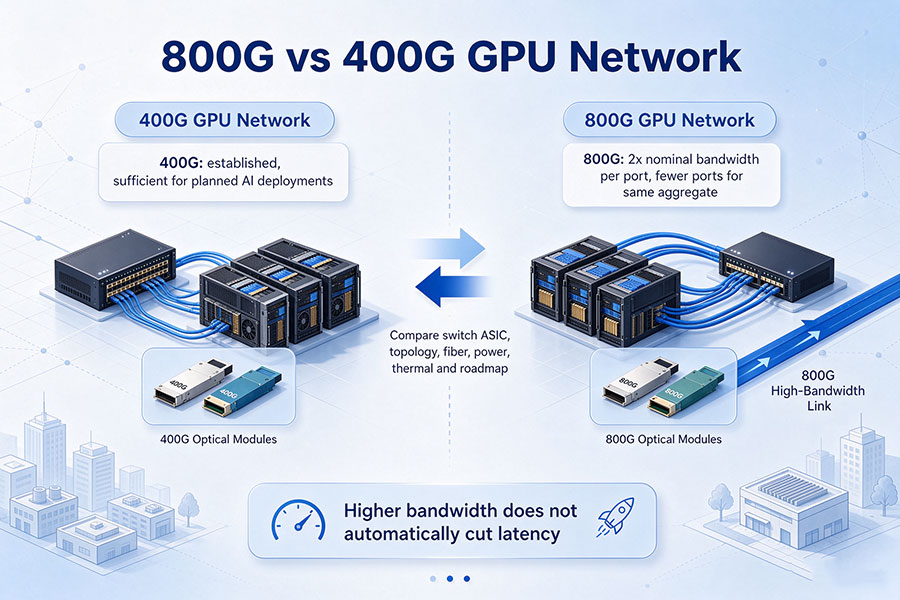
In AI data centers, the physical interconnect must match both the adapter and switch interfaces. A high-speed ConnectX port cannot deliver its intended network performance if the cable, optical module or switch port operates at an incompatible rate or lane configuration.
Important selection factors include:
Port speed: Confirm that the adapter, switch and interconnect support the same operating rate and compatible lane configuration.
Connector and form factor: Check the supported OSFP, QSFP-DD, QSFP112 or other interface requirements for the specific equipment.
Transmission distance: Select DAC, AOC or optical transceiver solutions according to the physical link length and deployment layout.
Fiber type: Confirm whether the optical interface requires multimode or single-mode fiber.
Optical budget: Verify transmitter output, receiver sensitivity and total channel insertion loss.
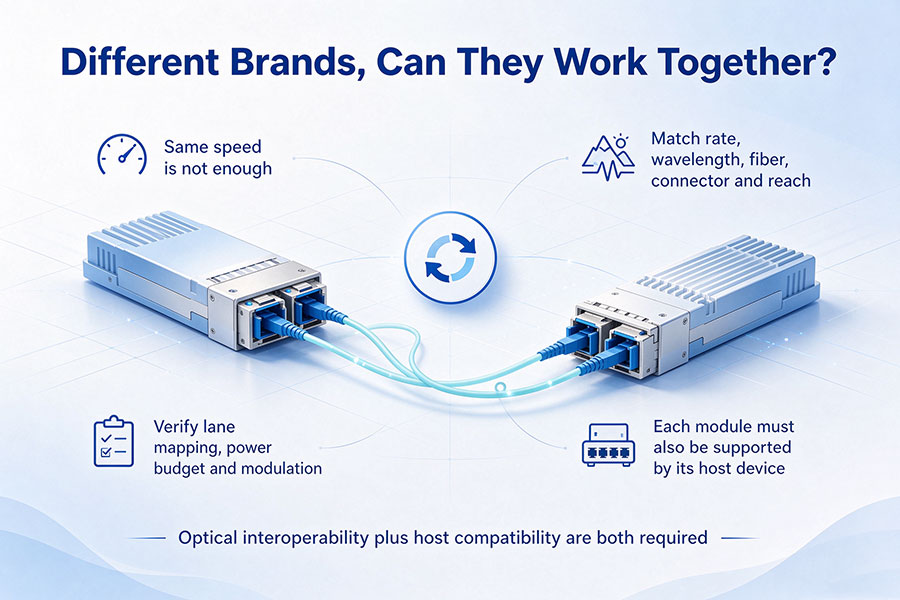
Compatibility: Check host-device support, module coding, firmware requirements and vendor qualification.
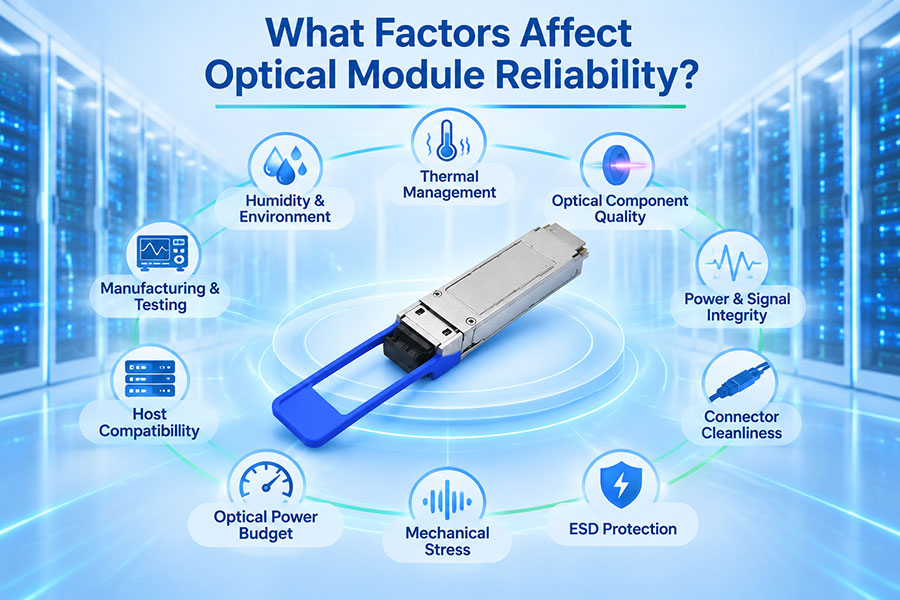
Thermal requirements: Ensure that the selected cable or optical module operates within the switch and server cooling specifications.
For high-speed Ethernet deployments, C-LIGHT offers optical transceiver solutions for data center connectivity. Selection should be based on the exact switch or adapter model, port speed, supported optical standard, fiber type and required transmission distance.
7. ConnectX and Spectrum in Different AI Network Architectures
The combination of ConnectX adapters and Spectrum switches can support different network designs, depending on the size and performance requirements of the AI deployment.
Single-rack AI systems: GPU servers connect to a top-of-rack or rack-level Ethernet switching system through their network adapters. The switch provides connectivity among the servers and to the wider data center network.
Multi-rack AI clusters: ConnectX adapters provide server-facing links to leaf switches. The leaf switches connect to spine switches, creating a scalable fabric across multiple racks. The architecture can expand by adding network devices and capacity according to the design.
Large-scale distributed training: Multiple GPU servers communicate through an AI-optimized Ethernet fabric. ConnectX SuperNICs provide host-side acceleration, while Spectrum switches handle network forwarding and fabric-level traffic management.
Multi-tenant AI infrastructure: The network must isolate workloads while maintaining predictable performance. Depending on the platform configuration, ConnectX or BlueField SuperNICs and Spectrum-X software features can support traffic isolation and resource management.
8. Common Deployment and Compatibility Considerations
Although ConnectX and Spectrum are designed to work together, successful deployment requires more than matching their advertised maximum speeds. Engineers need to validate the complete hardware and software path.
Protocol alignment: Confirm that the adapter and switch are configured for compatible Ethernet or InfiniBand networking. Spectrum switches are Ethernet switches.
Port configuration: Check port speed, breakout mode, lane mapping and supported cable or transceiver types.
RDMA configuration: For RoCE deployments, validate the host software, adapter settings, addressing, congestion control and end-to-end fabric configuration.
Switch capacity: Evaluate aggregate bandwidth, port utilization, oversubscription and the expected traffic pattern.
Topology: Confirm that the leaf-spine design provides sufficient paths and capacity for the workload.
Software compatibility: Check firmware, drivers, network operating system versions and the applicable NVIDIA reference architecture.
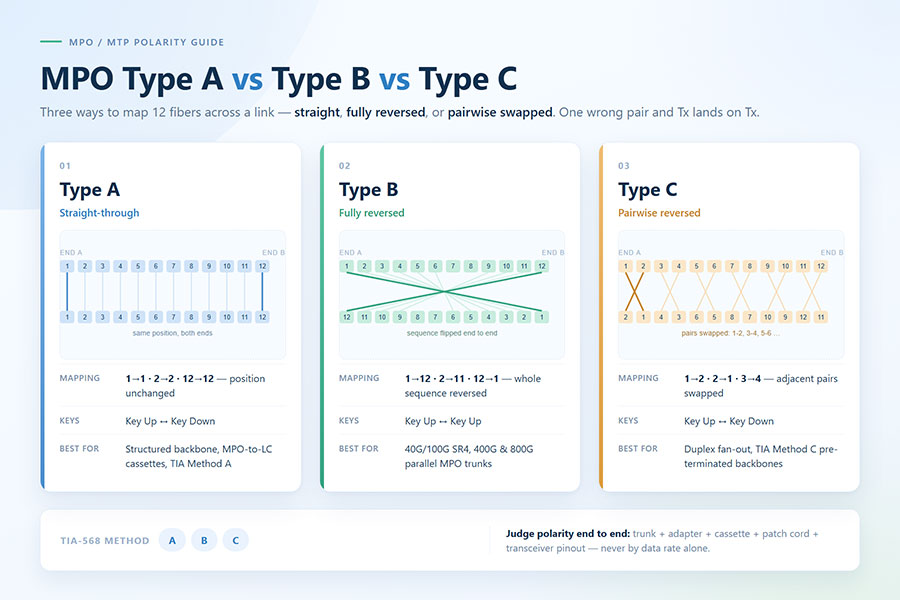
Physical connectivity: Validate optical power, link status, error counters, fiber polarity and cable specifications.
A useful validation process includes checking link establishment, verifying negotiated speeds, testing RDMA connectivity where applicable, monitoring switch counters and measuring application-level performance. These steps help identify whether a bottleneck originates in the host adapter, physical link, switch fabric or software configuration.
9. Conclusion
NVIDIA ConnectX and NVIDIA Spectrum serve different but complementary roles in modern data center networking. ConnectX adapters provide the network interface and hardware acceleration inside servers, while Spectrum switches provide the Ethernet switching infrastructure that connects those servers into a fabric.
For AI clusters, the combination becomes particularly important when large numbers of GPU servers need to exchange data efficiently. ConnectX SuperNICs support high-performance server connectivity, and Spectrum switches provide the switching capacity and fabric features required for distributed workloads. Spectrum-X brings these components together as an AI-optimized Ethernet platform.
When designing or upgrading an AI network, engineers should evaluate the adapter, switch, optical or copper interconnect, software configuration and complete fabric topology as one system. Matching these elements is essential for achieving reliable connectivity and predictable application performance.
Building high-speed connectivity for AI and data center networks?
Explore C-LIGHT's optical transceiver portfolio for high-speed network infrastructure. For assistance with optical interfaces, transmission distances and equipment compatibility, Contact C-LIGHT.
 >

 >
 >
 >
 >
 >
 >
 >