TEL:+86 132 6656 7067





As AI models grow in size and complexity, networking has become a critical part of GPU cluster performance. Distributed AI training requires large volumes of data to move between GPUs and servers, often through frequent synchronization and collective communication operations. The network connecting these systems can directly affect training efficiency, GPU utilization, and overall infrastructure scalability.
InfiniBand and Ethernet are two major networking technologies used in AI data centers. InfiniBand is a high-performance fabric designed for demanding computing workloads, while Ethernet provides a widely adopted networking foundation that can be optimized for AI through technologies such as RDMA over Converged Ethernet (RoCE).
Neither technology is automatically the best choice for every AI cluster. The right architecture depends on workload characteristics, cluster size, congestion management, operational requirements, and total infrastructure cost.
1. Why Network Architecture Matters in AI Clusters
AI training workloads distribute computation across multiple GPUs and servers. Each GPU processes part of a model or dataset, and the results must be exchanged with other GPUs during training.
For example, distributed training may require frequent gradient synchronization, parameter exchange, and collective communication operations such as All-Reduce. When network communication becomes a bottleneck, GPUs may spend more time waiting for data instead of performing computation.
A high-performance AI network should therefore provide:
High bandwidth for large-scale data exchange.
Low and predictable communication latency.
Efficient congestion management under synchronized traffic.
High network utilization across multiple links and paths.
Reliable operation during link failures and traffic changes.
Scalability across servers, racks, and data center rows.
InfiniBand and AI-optimized Ethernet address these requirements through different network architectures and operational approaches.
2. What Is InfiniBand?
InfiniBand is a high-performance interconnect technology designed for high-performance computing (HPC), AI infrastructure, scientific computing, and other environments that require efficient communication between servers.
Unlike conventional Ethernet networking, InfiniBand uses a dedicated fabric architecture with specialized host channel adapters (HCAs), switches, and network management components. It supports RDMA, allowing data to move between registered memory regions on different systems with reduced CPU involvement.
InfiniBand is particularly relevant to distributed GPU clusters because it supports low-overhead communication and provides networking features designed for demanding parallel workloads.
2.1 Key Features of InfiniBand
RDMA support: Enables direct memory-to-memory data transfer between compatible systems.
Low-latency communication: Designed to minimize communication overhead for tightly coupled computing workloads.
Hardware-based congestion management: Provides fabric-level mechanisms to manage traffic and maintain predictable performance.
Adaptive routing: Supported systems can distribute traffic across available paths to improve network utilization.
High-performance collective communication: Supports demanding parallel computing workloads and GPU cluster communication.
Dedicated fabric management: Uses specialized management and configuration mechanisms for the InfiniBand network.
2.2 Where InfiniBand Is Used
InfiniBand is commonly used in environments where communication performance is a major factor in overall application efficiency:
Large-scale AI model training.
High-performance computing clusters.
Scientific simulations and research computing.
GPU clusters with intensive collective communication.
High-performance storage and distributed computing systems.
3. What Is Ethernet for AI Clusters?
Ethernet is the most widely deployed networking technology in enterprise networks, cloud infrastructure, and data centers. Its open standards, broad hardware ecosystem, and established operational tools make it an attractive foundation for large-scale infrastructure.
However, conventional enterprise Ethernet is not automatically optimized for the synchronized, high-volume communication patterns found in distributed AI training. AI Ethernet deployments therefore require appropriate network adapters, switches, congestion management, traffic engineering, and software integration.
One important technology is RoCE, which enables RDMA communication over Ethernet. RoCEv2 encapsulates RDMA transport packets in UDP/IP, allowing RDMA traffic to operate across routed IP networks.
3.1 Key Features of AI Ethernet
Open Ethernet standards: Builds on a widely adopted networking ecosystem.
RoCE support: Enables RDMA-based communication over Ethernet.
ECN-based congestion management: Helps identify and respond to network congestion.
Adaptive routing and load balancing: Supported platforms can distribute traffic across available network paths.
Broad hardware availability: Offers a wide range of switches, network adapters, optical transceivers, and cabling options.
Integration with existing networks: Can align with established Ethernet operations and infrastructure.
3.2 AI Ethernet Is More Than Standard Ethernet
It is important to distinguish AI-optimized Ethernet from a conventional enterprise Ethernet network.
Standard Ethernet can handle general-purpose application traffic effectively, but large AI clusters generate synchronized flows that may create congestion and uneven bandwidth utilization. An AI Ethernet fabric needs suitable switch hardware, RoCE support, congestion control, traffic balancing, and careful end-to-end configuration.
Therefore, comparing InfiniBand with ordinary, unoptimized Ethernet does not provide a fair picture of the capabilities of modern AI Ethernet architectures.
4. InfiniBand vs Ethernet: Key Differences
Both technologies can support high-performance AI networking, but they differ in architecture, ecosystem, management, and deployment requirements.
| Comparison Point | InfiniBand | AI-Optimized Ethernet |
|---|---|---|
| Network architecture | Dedicated high-performance fabric | Ethernet fabric optimized for AI workloads |
| RDMA support | Native RDMA support | RDMA through technologies such as RoCE |
| Transport approach | InfiniBand transport services | Ethernet and IP, commonly with RoCEv2 for RDMA |
| Latency | Designed for low-latency communication | Can achieve low latency with appropriate hardware and tuning |
| Congestion management | Fabric-level congestion control mechanisms | ECN, RoCE congestion control, traffic engineering and other supported mechanisms |
| Routing | InfiniBand subnet and fabric management | IP routing and Ethernet fabric technologies |
| Hardware ecosystem | Specialized HCAs, switches and fabric components | Broad Ethernet switch, NIC and optical component ecosystem |
| Compatibility | Requires InfiniBand-compatible components | Uses Ethernet-compatible infrastructure and standards |
| Operations | Requires InfiniBand-specific management expertise | Can leverage established Ethernet operational practices |
| Typical applications | Dedicated AI training and HPC clusters | AI clouds, enterprise AI infrastructure and multi-purpose data centers |
| Deployment flexibility | Specialized fabric design | Can support AI and general-purpose Ethernet workloads in appropriately designed environments |
The comparison is architectural rather than a universal performance ranking. Actual results depend on the selected switch generation, network adapter, topology, workload, software stack, and configuration.
5. Performance: Bandwidth, Latency and GPU Utilization
Network performance is one of the most important considerations when selecting a fabric for an AI cluster. However, evaluating performance requires more than comparing the maximum bandwidth printed on a switch or network adapter.
5.1 Bandwidth
Both InfiniBand and Ethernet support high-speed connections for modern AI infrastructure. Available link speeds depend on the hardware generation and product configuration.
For AI clusters, aggregate fabric bandwidth matters as much as individual port speed. A network with high-speed links can still experience poor application performance if the topology is oversubscribed or traffic is distributed unevenly.
5.2 Latency
InfiniBand is designed for low-latency communication and is widely used in tightly coupled computing environments. Its specialized transport and fabric architecture help reduce communication overhead.
AI-optimized Ethernet can also deliver low-latency communication through RoCE, suitable network adapters, advanced switch hardware, and effective congestion management. The performance difference depends on the specific platform and workload rather than the protocol name alone.
5.3 GPU Utilization
In distributed AI training, network delays can prevent GPUs from receiving data or completing synchronization operations on time. This can reduce effective GPU utilization.
Both InfiniBand and optimized Ethernet can support high-performance GPU communication. The key evaluation should be whether the network maintains predictable bandwidth and latency during real training workloads, especially during collective operations and periods of heavy traffic.
6. RDMA: InfiniBand vs RoCE on Ethernet
RDMA is an important technology in both InfiniBand and modern AI Ethernet architectures. It allows data to move between memory regions on different servers with less dependence on conventional operating system networking operations.
6.1 RDMA in InfiniBand
InfiniBand provides native RDMA capabilities through its fabric and transport architecture. Compatible HCAs handle data transfer operations in hardware, reducing host CPU involvement and communication overhead.
6.2 RoCE in Ethernet
RoCE enables RDMA communication over Ethernet. RoCEv2 uses UDP/IP encapsulation, which allows RDMA traffic to be routed across Layer 3 networks.
For RoCE-based AI clusters, the network must be configured to handle RDMA traffic effectively. This includes appropriate switch capabilities, ECN configuration, traffic classification, and congestion management.
6.3 What Is the Practical Difference?
InfiniBand provides RDMA as part of its native fabric architecture. Ethernet uses RoCE to deliver RDMA capabilities over an Ethernet network.
The distinction affects hardware selection, network configuration, troubleshooting, and operational workflows. It does not mean that Ethernet cannot support high-performance RDMA communication.
7. Congestion Control and Network Reliability
AI clusters often generate synchronized traffic patterns. When many GPUs transmit data at the same time, several flows may compete for the same switch output ports. Without effective congestion management, queues can grow, latency can increase, and throughput can become uneven.
7.1 InfiniBand Congestion Management
InfiniBand includes fabric-level congestion management mechanisms designed to control traffic and maintain predictable communication performance.
Depending on the platform, features such as adaptive routing and congestion control can help distribute traffic and respond to congestion conditions. These capabilities are especially important for large-scale AI training fabrics with many simultaneous data flows.
7.2 Ethernet Congestion Management
AI Ethernet deployments commonly use Explicit Congestion Notification (ECN) and RoCE congestion-control mechanisms. In a typical DCQCN-based design, switches mark packets when congestion is detected. The receiving network adapter can then send a Congestion Notification Packet (CNP) to signal the sender to adjust its transmission rate.
Priority Flow Control (PFC) may also be used for selected traffic classes in some RoCE deployments. However, PFC is not a universal requirement for every AI Ethernet design. Its use should be evaluated alongside ECN, queue management, traffic engineering, and the behavior of the complete network.
7.3 Why Congestion Control Matters
Effective congestion management helps prevent a few heavily loaded links from reducing performance across the entire cluster.
When evaluating either fabric, network operators should test:
Throughput under simultaneous multi-node traffic.
Latency and tail latency during congestion.
Bandwidth fairness between competing workloads.
Performance during link failures and route changes.
Behavior during large-scale collective communication operations.
8. Network Topology and Scalability
The topology determines how servers and switches are connected, how much bandwidth is available between network layers, and how traffic is distributed across the fabric.
8.1 Leaf-Spine Architecture
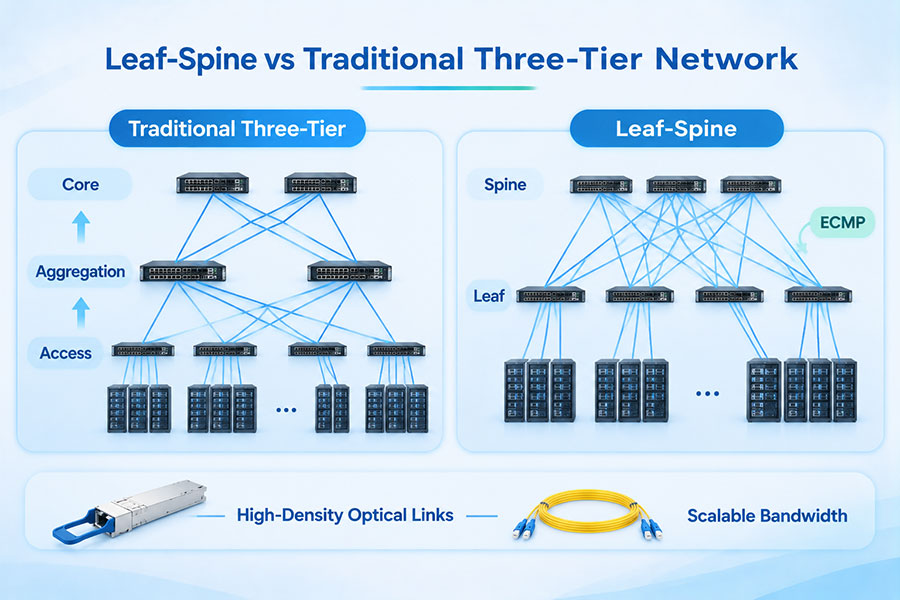
Leaf-spine is a common architecture for Ethernet data center networks. Servers connect to leaf switches, while leaf switches connect to spine switches to provide paths between racks.
For AI clusters, the architecture must be designed with sufficient uplink capacity, balanced traffic distribution, and appropriate congestion management. The number of network tiers and the oversubscription ratio should reflect the communication demands of the workload.
8.2 InfiniBand Fabric Topology
InfiniBand clusters use dedicated fabric topologies with specialized switches and fabric management. Depending on cluster size and performance requirements, designs may use different levels of switching and high-radix network architectures.
The objective is to provide sufficient path capacity and predictable communication behavior between compute nodes.
8.3 Scaling Across Racks
As GPU clusters expand, the network must maintain performance across increasingly large numbers of servers and racks.
Neither InfiniBand nor Ethernet scales automatically simply because higher-speed ports are available. Successful expansion requires careful planning of switch capacity, cabling, routing, network oversubscription, failure domains, and traffic patterns.
9. Cost and Total Cost of Ownership
Cost is an important factor when building an AI cluster, but comparing only the purchase price of switches or network adapters can lead to an incomplete decision.
9.1 InfiniBand Cost Considerations
InfiniBand requires specialized network adapters, switches, cables, and fabric management components. Organizations may also need engineers with experience in InfiniBand deployment and troubleshooting.
For dedicated AI or HPC environments, these specialized components may be justified by the performance and operational characteristics required by the workload.
9.2 Ethernet Cost Considerations
Ethernet benefits from a broad supplier ecosystem and established data center infrastructure. Organizations that already operate large Ethernet networks may be able to reuse some operational knowledge, tools, and infrastructure practices.
However, AI Ethernet is not simply a matter of connecting GPUs to ordinary switches. High-performance RoCE deployments may require advanced switches, capable network adapters, suitable optics, and additional engineering work to achieve the required performance.
9.3 Compare the Full Infrastructure Cost
A meaningful cost comparison should include:
Switches and network adapters.
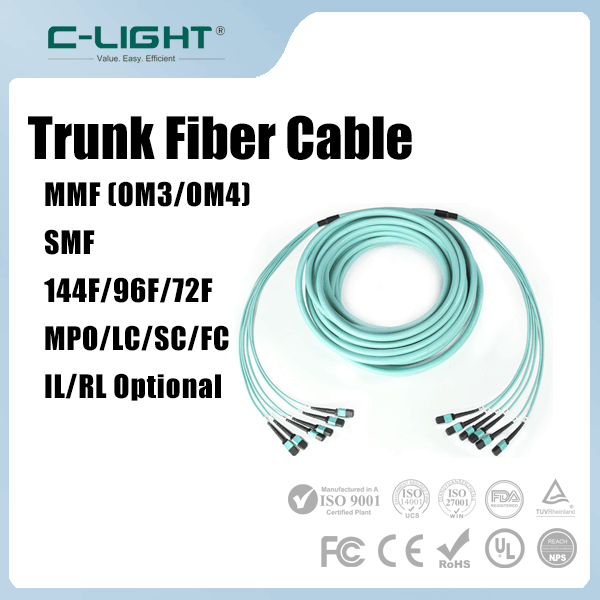
Optical transceivers, AOCs, DACs and fiber cabling.
Rack space, power consumption and cooling.
Network management and monitoring systems.
Engineering, deployment and troubleshooting effort.
Maintenance, upgrades and long-term compatibility.
Application performance and the cost of inefficient GPU utilization.
The lowest-cost network hardware does not necessarily produce the lowest overall AI infrastructure cost. The more useful metric is the cost of delivering the required training performance over the system's operating life.
10. InfiniBand vs Ethernet: Which Is Better for Different AI Workloads?
The most suitable network depends on the way an AI environment is deployed and operated.
10.1 Large-Scale Distributed AI Training
InfiniBand is a strong option for dedicated AI training clusters where low-latency communication, RDMA, and specialized fabric performance are central requirements.
AI-optimized Ethernet is also suitable when the deployment includes a carefully engineered RoCE fabric with sufficient bandwidth, effective congestion management, and appropriate hardware.
10.2 Multi-Tenant AI Clouds
Multi-tenant AI infrastructure may run several workloads simultaneously, each with different communication patterns and performance requirements.
Ethernet can be attractive in these environments because of its established IP networking ecosystem and integration with broader cloud infrastructure. However, performance isolation, traffic scheduling, and congestion management must be designed carefully.
10.3 High-Performance Computing
InfiniBand has a long history in HPC environments and remains an established option for applications that depend on high-performance inter-node communication.
Ethernet can also support HPC workloads, particularly when the application software and network architecture are designed around optimized Ethernet and RDMA capabilities.
10.4 Enterprise AI Infrastructure
Organizations integrating AI workloads into existing data centers may prefer Ethernet because it can align with existing network operations and infrastructure practices.
For applications with intensive GPU-to-GPU communication, the Ethernet fabric still needs to be designed specifically for the AI workload rather than treated as an ordinary enterprise LAN.
11. Optical Connectivity for AI Cluster Networks
High-speed optical connectivity is an important part of modern AI network infrastructure. As the number of GPUs and the bandwidth requirements of data center fabrics increase, optical transceivers and active optical cables help connect servers, switches, and racks over the required distances.
It is important to distinguish the network protocol from the physical interconnect. InfiniBand and Ethernet are different networking technologies, but both can use optical links. The selected transceiver or cable must match the equipment interface, data rate, reach, fiber type, and protocol-specific compatibility requirements.
11.1 800G Ethernet Optical Transceivers
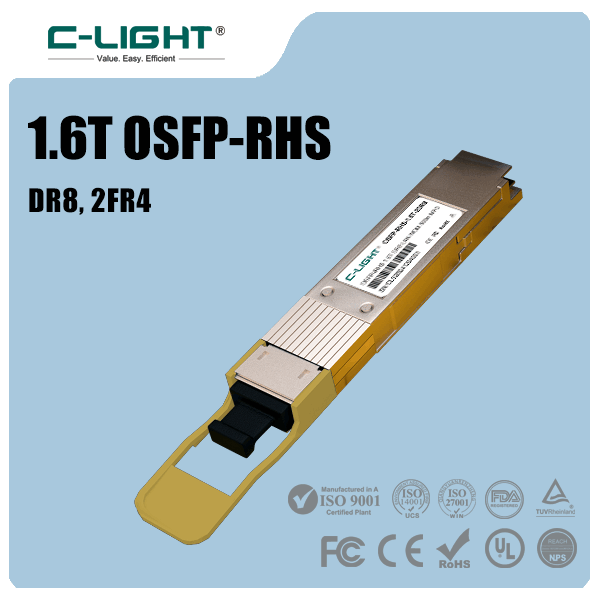
For high-speed Ethernet fabrics, 800G optical transceivers support high-bandwidth connections between data center switches and other compatible network equipment.
C-LIGHT offers 800G QSFP-DD optical transceivers designed for next-generation Ethernet infrastructure, including AI data center and GPU networking applications. The product family includes different transmission configurations and distances, depending on the model.
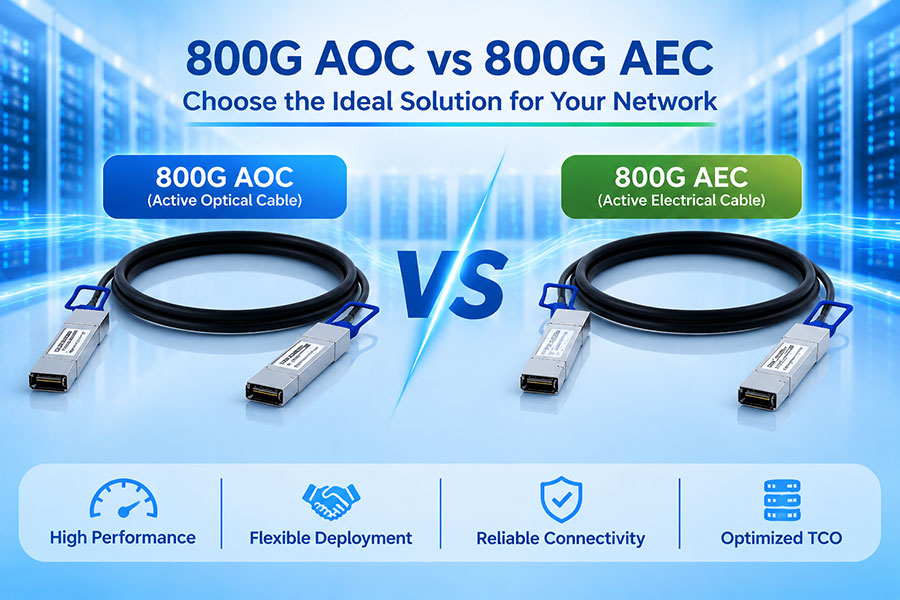
11.2 800G InfiniBand Active Optical Cables
Short-reach optical connections are also important in high-density AI clusters. Active Optical Cables integrate optical components into a cable assembly, providing a practical connection option for compatible equipment.
C-LIGHT's 800G AOC product family includes InfiniBand-oriented configurations, such as 800G QSFP-DD to QSFP-DD and 800G OSFP to OSFP options. Ethernet-oriented configurations are also listed separately.
When selecting an AOC, the exact interface, protocol configuration, cable length, and equipment compatibility should be verified. An 800G label or a shared connector form factor alone does not guarantee that an InfiniBand cable configuration and an Ethernet port are interchangeable.
11.3 Selecting the Right Optical Interconnect
Before deploying optical connectivity in an AI cluster, check the following:
InfiniBand or Ethernet protocol compatibility.
Supported data rate and port configuration.
QSFP-DD, OSFP or other required form factor.
Optical reach and fiber type.
Connector type and cabling architecture.
Switch and network adapter compatibility.
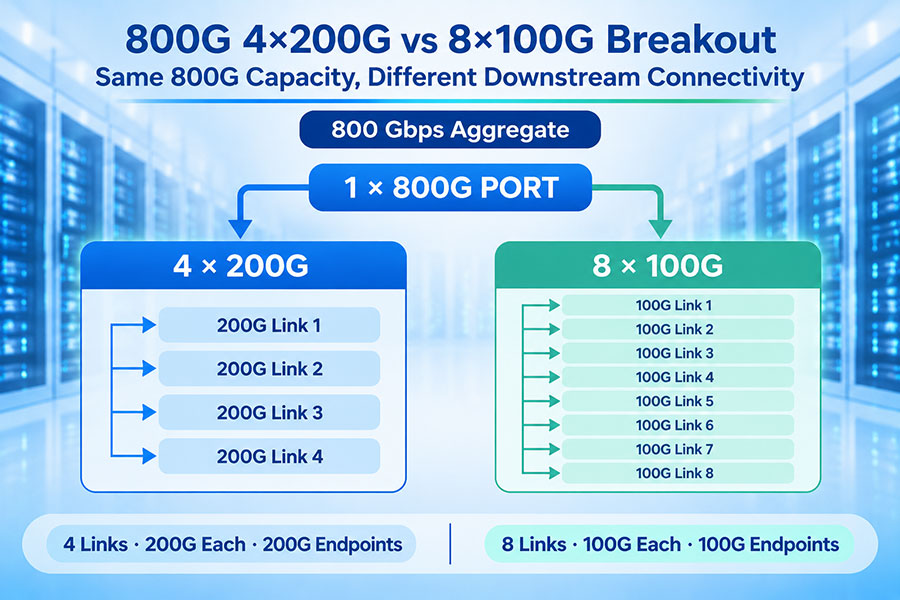
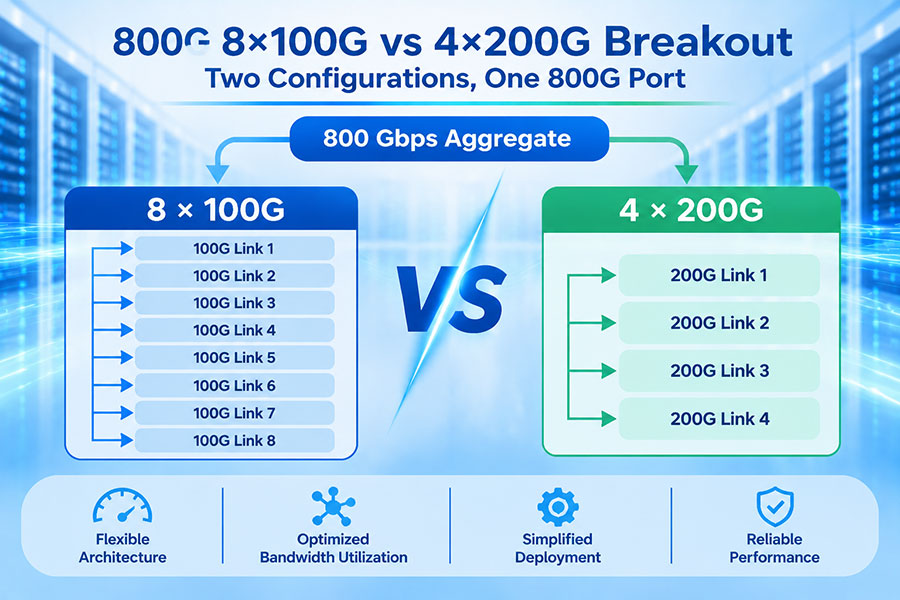
Breakout requirements and link configuration.
Matching the physical interconnect to the actual network architecture is essential for reliable deployment.
12. How to Choose Between InfiniBand and Ethernet
Before selecting a network fabric, organizations should evaluate their AI workload, infrastructure strategy, engineering resources, and long-term operating requirements.
| Selection Criteria | InfiniBand May Be Suitable When | AI Ethernet May Be Suitable When |
|---|---|---|
| Performance priority | Dedicated, tightly coupled AI training is the primary objective | High performance is required within an optimized Ethernet architecture |
| Existing infrastructure | A dedicated InfiniBand fabric is acceptable | The organization already has strong Ethernet infrastructure and expertise |
| Operational model | The team can manage specialized InfiniBand infrastructure | The team prefers established Ethernet and IP networking workflows |
| Workload environment | Dedicated HPC or large-scale training workloads | Multi-tenant AI cloud and mixed data center workloads |
| RDMA approach | Native InfiniBand RDMA | RoCE-based RDMA over Ethernet |
| Long-term architecture | A dedicated high-performance computing fabric | A broader Ethernet-based data center network strategy |
These are general decision guidelines rather than strict rules. Both technologies can support demanding AI workloads when the network is designed and configured appropriately.
13. Conclusion
InfiniBand and Ethernet are both viable technologies for modern AI clusters, but they approach high-performance networking from different architectural directions.
InfiniBand offers a dedicated fabric with native RDMA capabilities and specialized congestion-management features. It is a strong choice for organizations building dedicated AI training and HPC environments where tightly coupled communication is a major priority.
Ethernet offers a broad standards-based ecosystem and can support high-performance AI communication through RoCE, advanced switching, congestion control, and optimized network design. It is particularly attractive for organizations that value Ethernet integration, operational flexibility, and a common networking foundation across different data center workloads.
The final decision should be based on measured application performance, congestion behavior, infrastructure cost, and operational requirements. A properly engineered Ethernet fabric can be a strong alternative to InfiniBand, while InfiniBand remains an important option for specialized high-performance AI and HPC deployments.
Frequently Asked Questions
Q1: Is InfiniBand better than Ethernet for AI clusters?
Not in every situation. InfiniBand is designed for high-performance computing, while optimized Ethernet with RoCE can also support demanding AI workloads. The better choice depends on workload and infrastructure requirements.
Q2: Why is InfiniBand used in AI data centers?
InfiniBand provides native RDMA, low-latency communication, and specialized fabric features that support distributed GPU training and HPC workloads.
Q3: Can Ethernet support large AI GPU clusters?
Yes. AI-optimized Ethernet using RoCE, suitable switches, and effective congestion management can support large-scale GPU networking.
Q4: What is the difference between InfiniBand and RoCE?
InfiniBand is a dedicated networking fabric with native RDMA. RoCE enables RDMA communication over Ethernet, with RoCEv2 using UDP/IP encapsulation.
Q5: Does Ethernet have higher latency than InfiniBand?
Not necessarily. InfiniBand is designed for low-latency communication, but optimized Ethernet can also achieve low latency. Actual results depend on hardware, configuration, topology, and workload.
Q6: Do AI Ethernet networks require PFC?
Not universally. Some RoCE deployments use PFC alongside ECN, while others rely on different congestion-management designs. The choice depends on the complete network architecture.
Q7: Which is more cost-effective for AI clusters?
There is no universal answer. Ethernet may benefit from an existing infrastructure and broad supplier ecosystem, while InfiniBand may be justified by specialized performance requirements. Compare total cost of ownership rather than hardware prices alone.
Q8: Can InfiniBand and Ethernet coexist in the same AI data center?
Yes. An AI data center can use separate InfiniBand and Ethernet fabrics for different traffic types, such as GPU training, management, storage, and general application communication.
Q9: Do InfiniBand and Ethernet use optical transceivers?
Both can use optical connectivity. The transceiver or cable must match the network protocol, equipment interface, data rate, reach, and other compatibility requirements.
Q10: Is 800G Ethernet suitable for AI clusters?
Yes. 800G Ethernet can provide high-bandwidth connectivity for next-generation AI data centers when supported by compatible switches, adapters, optical links, and network architecture.
 >

 >
 >
 >
 >
 >
 >
 >