TEL:+86 132 6656 7067




1. What Is LPO?
Linear-drive pluggable optics (LPO) is an optical transceiver architecture designed to reduce or eliminate retiming and DSP functions inside the optical module. Instead of heavily processing the signal within the transceiver, LPO relies more on the host switch ASIC and SerDes to maintain signal integrity across the electrical and optical paths.
LPO is particularly relevant to high-speed networking because optical module power, thermal density, latency, and port scalability become increasingly important as data center networks move from 400G to 800G and 1.6T.
2. Why AI Data Centers Need Higher-Speed Interconnects
AI training and inference systems connect large numbers of GPUs, CPUs, memory systems, storage devices, and network switches. These systems generate substantial east-west traffic as data, model parameters, gradients, and synchronization information move between compute nodes.
As GPU clusters become larger, the network must provide high bandwidth and predictable latency without creating excessive power and cooling requirements.
3. The Role of Optical Interconnects in AI Networks
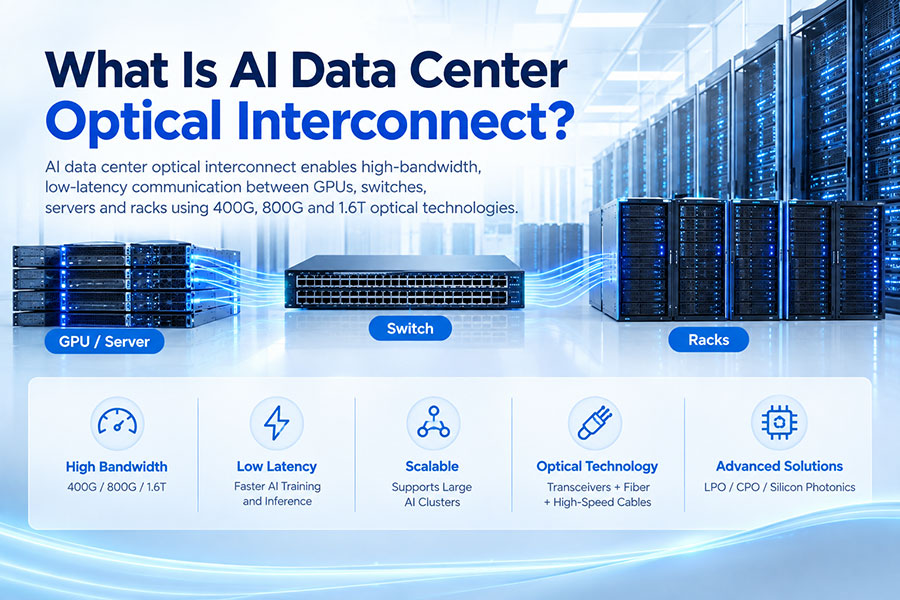
Optical interconnects provide high-speed connectivity between switches, servers, GPUs, and other network components. Compared with electrical connections, optical links are well suited to higher bandwidth over longer distances within a data center.
Modern AI fabrics increasingly use 400G, 800G, and emerging 1.6T optical connections to build high-density network architectures.
4. The Power Challenge of 800G and 1.6T Optics
Higher-speed optical modules generally require more advanced signal-processing, driver, receiver, and optical components. When thousands of ports are deployed, even a small difference in power per module can become significant at the rack or data center level.
For example, a switch populated with dozens of high-speed optical modules can have a substantial optical-module power load in addition to ASIC, memory, fan, and other system power.
5. DSP Is a Major Power Factor
Conventional high-speed retimed optical modules can include DSP or related signal-processing functions to compensate for channel impairments and support reliable transmission.
DSP provides important signal-processing capabilities, but it also consumes electrical power and generates heat. At higher lane rates, managing this power becomes increasingly important for dense AI networking equipment.
6. How LPO Changes the Optical Module Architecture
LPO moves toward a more linear signal path. The optical module can use linear drivers and receivers while reducing or bypassing traditional retiming and DSP functions within the module.
This approach places greater responsibility on the host ASIC, SerDes, PCB, connectors, package, and overall electrical channel.
7. LPO Can Reduce Optical Module Power
One of the primary reasons LPO is being considered for AI data centers is power efficiency. Removing or reducing power-hungry signal-processing components can lower the electrical power consumed by the optical module.
Lower module power can also reduce the heat that must be removed from high-density switch systems.
8. Lower Thermal Density Matters in AI Switches
AI switches can contain large numbers of high-speed optical ports in a relatively small chassis. Optical-module heat therefore becomes part of the overall thermal-management problem.
Lower-power optical modules can make it easier to maintain operating temperatures and manage airflow, heatsink requirements, fan speed, and system reliability.
9. LPO and Latency
LPO can also reduce signal-processing latency by simplifying the signal path inside the optical module. The exact latency benefit depends on the implementation and the functions removed or bypassed.
For AI workloads, lower communication latency can be useful because distributed training involves frequent synchronization and collective communication between compute nodes.
10. AI Training Is Sensitive to Network Performance
Large-scale AI training frequently involves operations such as all-reduce, all-to-all communication, parameter synchronization, and gradient exchange.
When GPU communication is delayed by network congestion, latency, retransmissions, or insufficient bandwidth, expensive compute resources may spend more time waiting for data.
11. Why Power Efficiency Is More Important at Scale
A single optical module may have a relatively small power requirement. An AI cluster, however, can contain thousands of optical connections.
Reducing power consumption at the individual-port level can therefore have a meaningful cumulative effect across switches, racks, and data center infrastructure.
12. 800G Is a Major LPO Application
800G networking is an important target for LPO because AI switches increasingly require high-density 800G interfaces.
Many 800G implementations use eight 100G-class electrical and optical lanes, although the exact architecture depends on the platform and optical implementation. At these speeds, electrical channel quality becomes increasingly important.
13. LPO for 1.6T Networking
As network interfaces move toward 1.6T, power per bit and thermal efficiency become increasingly important design considerations.
LPO concepts can be relevant to 1.6T architectures because reducing unnecessary signal-processing power becomes more valuable as lane rates and port densities increase. However, the electrical channel and host SerDes requirements also become more demanding.
14. PAM4 and LPO
High-speed LPO implementations commonly use PAM4 signaling. PAM4 provides four amplitude levels, allowing two bits to be transmitted per symbol.
The higher information density of PAM4 helps achieve high lane rates, but the smaller eye openings make the signal more sensitive to noise, loss, reflections, crosstalk, and other channel impairments.
15. The Electrical Channel Becomes Critical
With less signal processing inside the optical module, the complete electrical path becomes more important. This includes the host ASIC SerDes, package, PCB traces, connectors, cages, module interface, and optical module electronics.
Channel insertion loss, return loss, impedance discontinuities, crosstalk, and signal reflections can directly affect the available link margin.
16. Host SerDes Plays a Larger Role
In a conventional architecture, some signal conditioning can occur inside the optical module. In an LPO architecture, more of the signal-quality responsibility is handled by the host platform.
This means the switch ASIC and its SerDes must be designed and validated for the intended LPO channel and operating conditions.
17. LPO Requires Stronger Interoperability Control
Interoperability is an important consideration for LPO because the module and host system are more tightly coupled.
Successful deployment can depend on the combination of ASIC SerDes, PCB design, connector characteristics, module driver and TIA performance, fiber, optical components, temperature, and firmware configuration.
18. LPO Is Not Simply a Lower-Power Optical Module
LPO should be understood as an architecture rather than a specific optical reach or form factor.
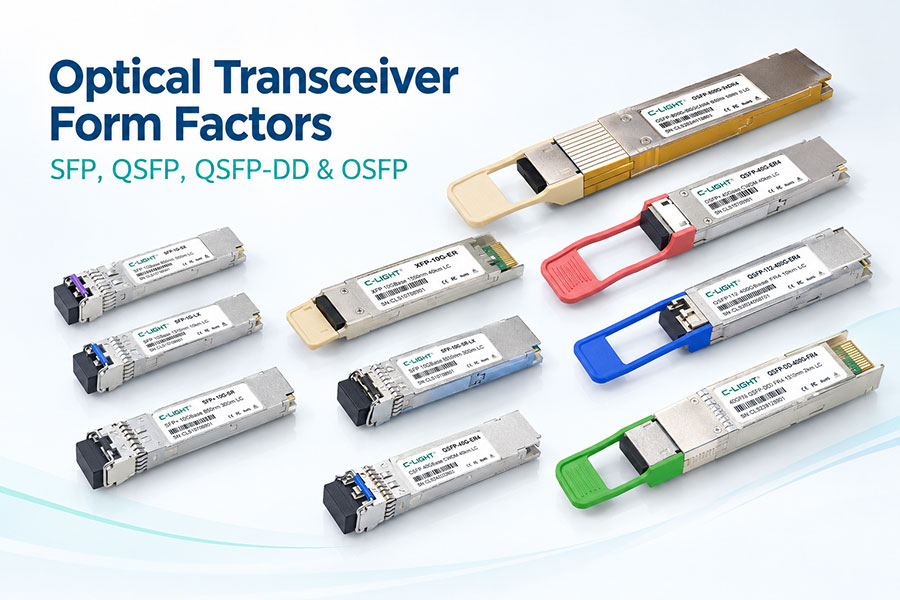
An LPO module can be designed in different form factors and optical configurations. The term primarily describes how signal processing and drive functions are distributed between the host system and optical module.
19. LPO vs. Conventional Retimed Optics
| Item | Conventional Retimed Optics | LPO |
|---|---|---|
| Module DSP/CDR | Typically included | Reduced or bypassed |
| Module Power | Higher processing overhead | Potentially lower |
| Signal Path | More signal processing | More linear |
| Host Dependency | Lower | Higher |
| Electrical Channel | Important | Highly critical |
| Latency | Includes processing contribution | Potentially lower |
| Interoperability | Generally more flexible | Requires careful validation |
20. LPO vs. LRO
LPO and linear-receive or reduced-retiming architectures are related but should not be treated as identical.
LPO generally emphasizes a highly linear optical path with minimal signal processing inside the module. Other architectures may retain selected retiming or signal-conditioning functions. The exact definition depends on the implementation.
21. LPO vs. Silicon Photonics
LPO and silicon photonics describe different aspects of optical networking technology.
LPO describes the signal-processing and drive architecture, while silicon photonics describes an optical integration technology. A module can potentially combine silicon photonics with an LPO architecture.
22. LPO Does Not Eliminate Optical Components
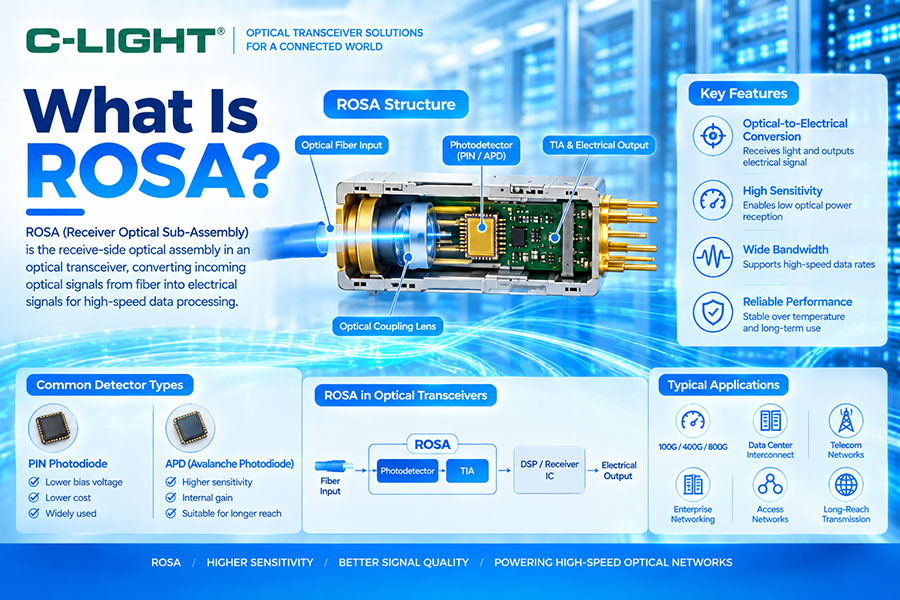
An LPO module still requires optical transmit and receive components. Depending on the architecture, these can include lasers, modulators, photodetectors, drivers, TIAs, optical coupling components, and fiber interfaces.
The primary architectural difference is the reduced role of DSP or retiming within the module.
23. Typical LPO Optical Configurations
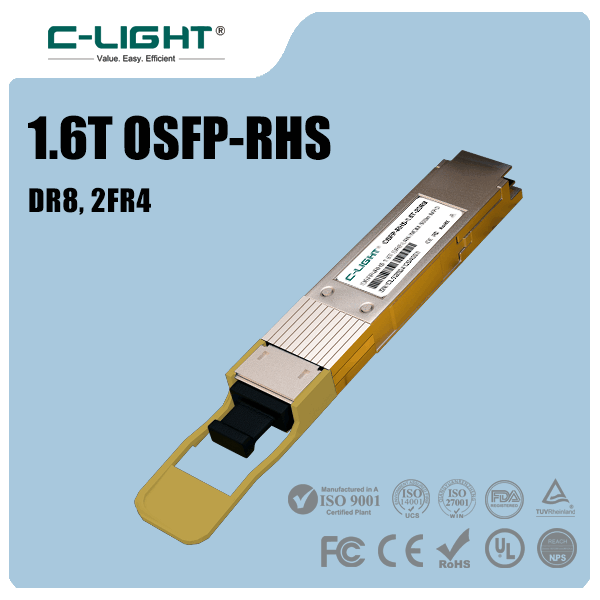
LPO implementations can target different optical configurations depending on the application. Examples include short-reach parallel-fiber architectures such as DR8 and wavelength-multiplexed configurations such as 2×FR4.
Reach, wavelength, fiber type, lane configuration, and power specifications must be evaluated from the specific module design rather than inferred from the LPO designation alone.
24. LPO for GPU-to-Switch Connections
GPU-to-switch connections are one of the important areas for high-speed optical interconnects in AI infrastructure.
Where short-reach optical connections are required between compute systems and high-density switches, LPO can provide a path toward reducing module power while maintaining high bandwidth.
25. LPO for Switch-to-Switch Connections
Leaf-spine AI networks require large numbers of switch-to-switch connections. These links can consume significant optical-module power when deployed at high density.
LPO can be considered for suitable switch-to-switch applications where the host platform, channel design, and optical reach meet the required specifications.
26. LPO and AI Cluster Scale-Out
AI scale-out networking connects increasing numbers of compute nodes through a switching fabric. As the cluster grows, the number of optical ports and total interconnect power also increase.
Improving power efficiency at the transceiver level can therefore contribute to more efficient scaling of the network fabric.
27. LPO and Data Center Cooling
Power consumed by optical modules eventually becomes heat that must be removed by the cooling system.
Lower optical-module power can reduce thermal density around switch ports and potentially reduce the cooling burden. This becomes particularly relevant when conventional air cooling approaches their practical limits.
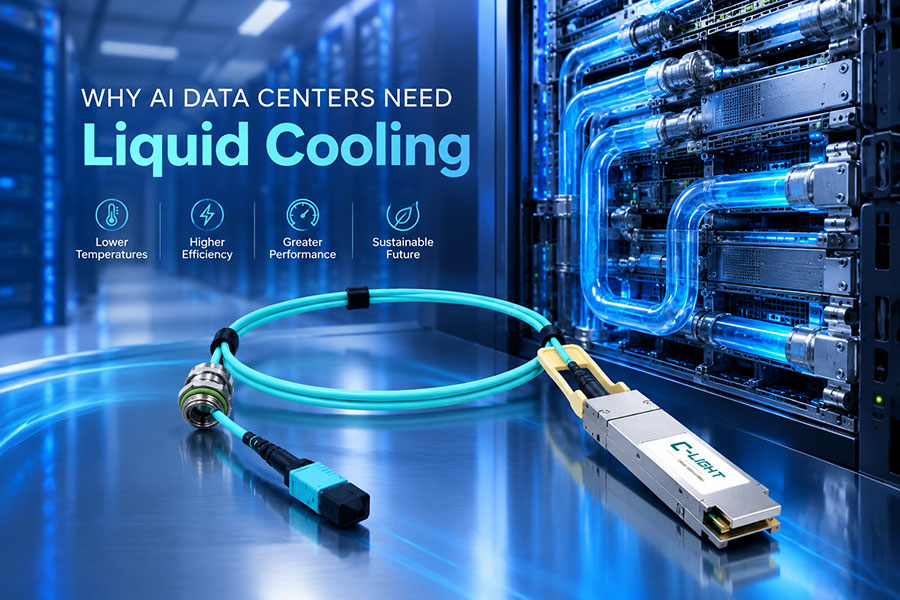
28. LPO and Liquid Cooling
Liquid cooling is increasingly considered for high-density AI infrastructure because GPUs, CPUs, switches, and other components can generate substantial heat.
LPO does not replace liquid cooling, but reducing optical-module power can complement broader thermal-management strategies by reducing heat generated at the network interface.
29. LPO and Power per Bit
Power per bit is often more informative than module power alone when comparing high-speed networking technologies.
A higher-speed module may consume more total power than a lower-speed module while still providing better energy efficiency per transmitted bit.
For AI data centers, both absolute module power and watts per gigabit should therefore be considered.
30. LPO and Port Density
High-density switches are designed to provide large numbers of high-speed ports in compact systems. As port counts increase, thermal and power constraints become more difficult to manage.
Lower-power optical modules can help create additional thermal and electrical headroom for dense 800G and future 1.6T deployments.
31. LPO Deployment Requires Link Validation
LPO deployment should include electrical and optical validation rather than relying only on nominal module specifications.
Testing can include eye diagrams, BER, receiver performance, optical power, temperature behavior, channel loss, FEC counters, and interoperability between the host and optical module.
32. BER Is an Important LPO Metric
Bit error rate is particularly important for high-speed PAM4 links. A link may operate correctly under nominal conditions but experience degraded margin when temperature, channel loss, or other impairments change.
Pre-FEC and post-FEC measurements can provide useful information about the quality and operating margin of the complete link.
33. Thermal Conditions Must Be Considered
Optical modules can experience different performance characteristics at different temperatures. Laser bias, optical output, receiver sensitivity, and electronic component behavior can change as temperature varies.
LPO validation should therefore consider the actual thermal environment of the switch rather than laboratory conditions alone.
34. Management and Monitoring
LPO does not mean that optical modules have no management functions. Depending on the implementation, modules can still support management and monitoring capabilities through standards such as CMIS.
Important parameters can include module temperature, supply voltage, optical power, laser bias, alarms, and diagnostic information.
35. Key Benefits of LPO for AI Data Centers
Potentially lower optical-module power
Reduced thermal load at high-density switch ports
Potentially lower signal-processing latency
Simplified optical module architecture
Improved power efficiency for high-speed fabrics
Potentially better power-per-bit efficiency
Suitability for high-density 800G and future networking architectures
36. Key Challenges of LPO
Greater dependence on host SerDes performance
Tighter electrical channel requirements
More demanding signal-integrity validation
Potential interoperability limitations
Greater sensitivity to channel loss and impairments
Need for system-level testing
Architecture-specific reach and performance limitations
37. How to Evaluate an LPO Module
When evaluating an LPO solution for an AI data center, engineers should consider the complete system rather than module power alone.
Host ASIC and SerDes compatibility
Electrical channel loss
Lane rate and signaling technology
Optical reach
Fiber type and connector
Module power consumption
Latency
BER and FEC behavior
Temperature range
Management and diagnostics
Interoperability
38. Why LPO Is Important for AI Data Centers
The importance of LPO comes from the combination of bandwidth growth, port density, power consumption, thermal management, and latency requirements in modern AI networks.
As AI clusters move toward larger numbers of 800G and 1.6T connections, reducing unnecessary processing power at every optical port can become increasingly valuable. LPO provides an architectural approach to address this challenge by moving more signal-processing responsibility into the host platform.
39. The Relationship Between LPO and Future AI Networking
Future AI networks are expected to continue increasing bandwidth while placing greater emphasis on energy efficiency and system-level scalability.
LPO is one of several approaches being explored to improve the efficiency of high-speed optical connectivity. Its practical adoption will depend on host ASIC capabilities, electrical channel design, optical technology, interoperability, and deployment requirements.
40. LPO Selection Checklist
Before deploying LPO in an AI data center, consider:
Does the switch ASIC support the required linear electrical interface?
Does the SerDes provide sufficient signal integrity and equalization?
Is the PCB and connector channel suitable for the target lane rate?
Does the optical reach match the physical network?
Is the module power advantage meaningful at the planned port density?
Has interoperability been validated?
Are BER and FEC margins sufficient?
Can the thermal system support the complete switch configuration?
41. Frequently Asked Questions
Q1. What does LPO mean in optical networking?
Q2. Why is LPO important for AI data centers?
Q3. Is LPO mainly used for 800G?
Q4. Does LPO eliminate DSP completely?
Q5. Does LPO reduce optical transceiver power?
Q6. Is LPO the same as silicon photonics?
Q7. Does LPO have lower latency?
Q8. What is the main challenge of LPO?
42. Summary
LPO is becoming an important optical networking architecture for AI data centers because high-speed network growth is creating increasing pressure on power consumption, thermal density, latency, and port scalability.
By reducing DSP and retiming functions inside the optical module, LPO can simplify the optical signal path and potentially reduce module power and latency. At the same time, it places greater demands on host SerDes, electrical channel design, signal integrity, interoperability, and system-level validation.
For 800G and emerging 1.6T AI networking, LPO should therefore be evaluated as part of the complete switch and network architecture rather than as an isolated optical-module specification.
 >
>

 >
>
 >
>
 >
>
 >
>
 >
>
 >
>
 >
>