TEL:+86 132 6656 7067





In high-speed data centers, not every network connection needs an optical transmission system. When servers, switches, and accelerators are installed close together, a Direct Attach Copper (DAC) cable can provide the required bandwidth through a direct electrical connection. It eliminates the need for separate optical transceivers and fiber patch cords, making it an attractive option for short, high-density links where cost, power consumption, and installation simplicity matter.
The decision between DAC and optical transceivers should be based on more than transmission distance alone. Port compatibility, electrical signal integrity, cable routing, airflow, network architecture, and future expansion all influence the most suitable connection method.
1. The Fundamental Difference Between DAC and Optical Connectivity
A DAC cable integrates compatible electrical connectors at both ends and carries high-speed electrical signals directly through copper conductors. A passive DAC does not require optical conversion or active signal-conditioning electronics within the cable assembly.
An optical connection uses a transceiver at each endpoint to convert electrical signals into optical signals and back again. Fiber patch cords carry the optical signal between the two modules. This architecture supports longer transmission distances and more flexible physical network layouts.
2. Situations Where DAC Is the Better Choice
Short Connections Inside the Same Rack
DAC is particularly suitable when the connected devices are installed in the same rack or in closely positioned equipment. Typical examples include server-to-ToR switch connections, adjacent switch connections, and short links between network adapters and switching equipment.
For these deployments, the cable can often connect directly to compatible ports without requiring separate optical modules and fiber patch cords. This simplifies the physical connection and reduces the number of individual components.
Power-Sensitive Network Designs
Passive DAC does not require the optical transmitters and receivers used in pluggable optical connections. This makes it attractive in large installations where many short links operate continuously.
The power difference becomes more relevant as port counts increase. However, comparisons should use actual product specifications and distinguish passive DAC from active copper cable designs, which contain signal-conditioning electronics.
Cost-Controlled High-Speed Deployments
For a short connection, a DAC assembly can reduce the number of separately purchased components. An optical link generally requires two compatible optical transceivers and a fiber patch cord, while a DAC combines the cable and endpoint connectors into one assembly.
This can lower the initial connection cost, particularly in large server racks with many identical short-reach links.
Latency-Sensitive Interconnections
A passive DAC carries electrical signals directly through copper conductors without optical conversion. This avoids the optical conversion stages associated with separate transceiver-based fiber links.
The complete system latency still depends on host interfaces, signal processing, switching equipment, and the cable architecture. DAC should not be treated as a guarantee of a particular end-to-end latency figure.
3. When Optical Transceivers Are More Appropriate
DAC is not a universal replacement for optical connectivity. As the physical distance increases, copper-channel loss and signal-integrity requirements become more difficult to manage. Optical links are generally preferable when the network layout extends beyond the supported DAC reach.
| Deployment Requirement | More Suitable Solution | Engineering Reason |
|---|---|---|
| Server to switch inside one rack | DAC | Short electrical channel and simplified cabling. |
| Nearby switch-to-switch connection | DAC, if supported | Direct copper connectivity can reduce component and power requirements. |
| Connections between distant racks | Optical transceivers | Fiber supports longer cable routes. |
| Links between different rooms or floors | Optical transceivers | Fiber provides greater reach and routing flexibility. |
| High-density cable pathways | Often optical | Fiber cables can offer smaller diameters and easier routing in constrained pathways. |
| Links exposed to significant EMI | Optical transceivers | Fiber does not conduct electromagnetic interference along the transmission medium. |
| Short, power-conscious connections | Passive DAC | No optical conversion is required. |
Optical connectivity is also useful when a network requires different fiber types, connector arrangements, or transmission distances. For example, multimode SR modules can serve suitable short-reach fiber links, while single-mode DR, FR, and LR families support different reach requirements according to their specifications.
4. DAC Cable Reach and Signal Integrity
The practical reach of a DAC cable depends on data rate, conductor design, cable gauge, connector performance, host SerDes capability, and the electrical channel budget. Higher signaling rates generally place greater demands on copper-channel performance.
Passive DAC is usually selected for the shortest connections. Active copper designs may extend the usable electrical reach through signal-conditioning components, but they should be evaluated separately from passive DAC.
| Connection Type | Signal Medium | Typical Deployment Focus | Key Consideration |
|---|---|---|---|
| Passive DAC | Copper | Very short rack connections | Host electrical channel margin |
| Active Copper | Copper with active electronics | Short links requiring additional signal conditioning | Power, latency, and device support |
| AOC | Optical fiber with integrated optical components | Longer fixed-length equipment connections | Optical interface compatibility |
| Pluggable Optical Transceiver | Optical fiber with separate modules | Flexible fiber links across racks and facilities | Wavelength, fiber, reach, and optical budget |
For example, C-LIGHT's 800G DAC cable family includes QSFP-DD and OSFP112 configurations. Listed product configurations primarily cover short lengths such as 0.5m to 2m, with selected designs extending toward 3m. These options are intended for high-bandwidth connections in AI data centers and other dense computing environments.
5. Compatibility Checks Before Choosing DAC
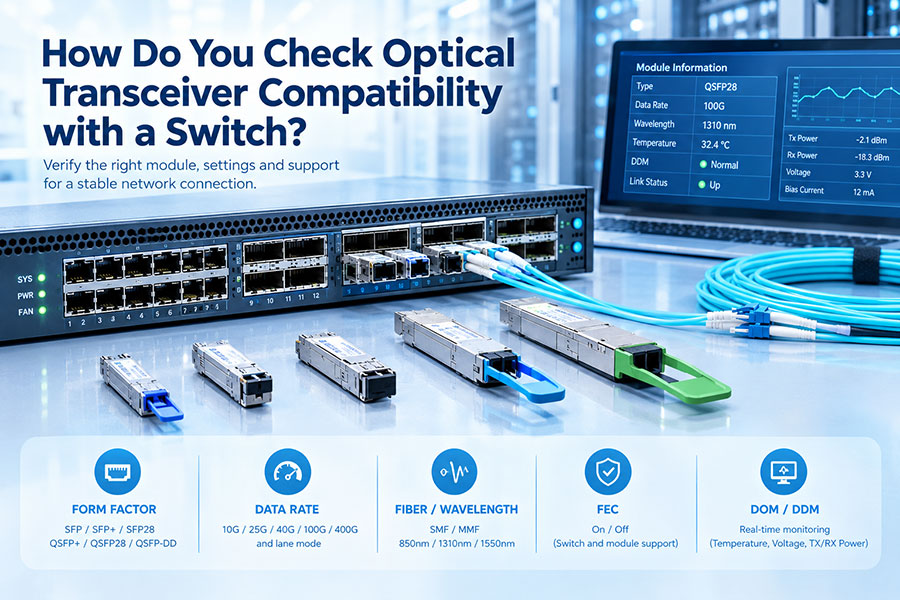
A DAC cable should be selected according to the complete electrical and mechanical requirements of both connected devices. Matching the nominal data rate alone is not sufficient.
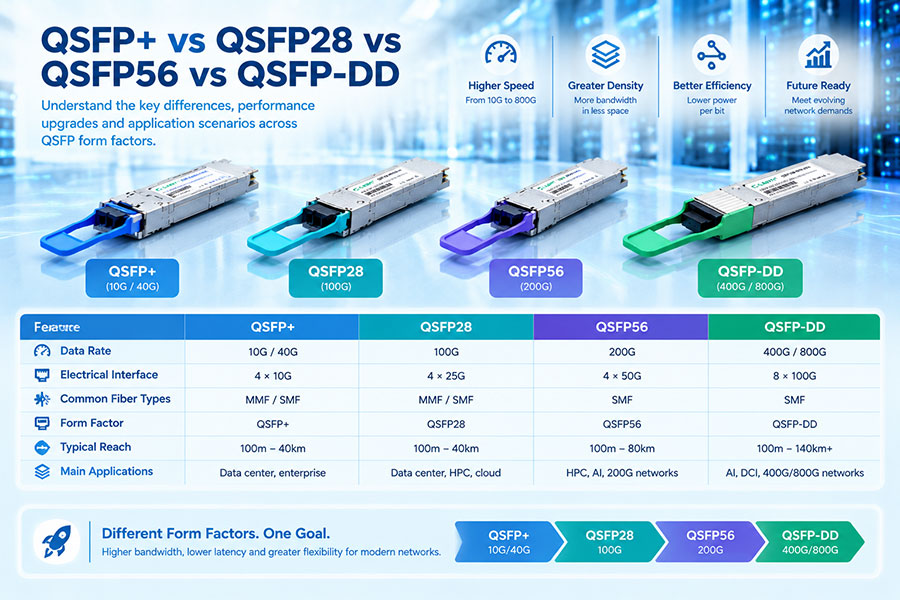
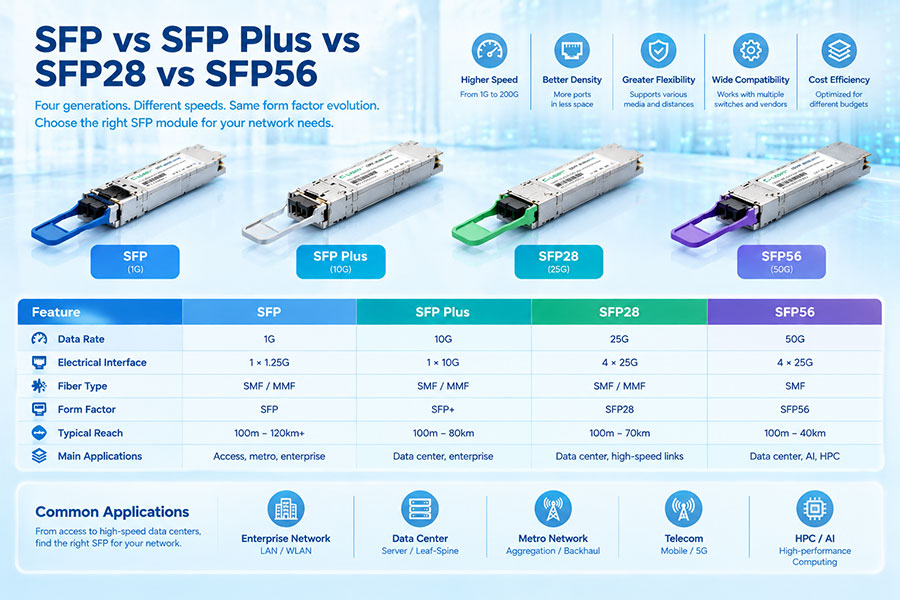
Port form factor: Confirm that both endpoints support the required QSFP28, QSFP-DD, OSFP, QSFP112, or other connector configuration.
Data rate: Verify the supported Ethernet or InfiniBand speed and lane configuration.
Breakout topology: Check whether the connection is direct or requires a breakout arrangement, such as 800G to 2 × 400G.
Electrical compatibility: Confirm host SerDes, signal integrity, and supported cable specifications.
Vendor coding: Check the equipment vendor's cable recognition and compatibility requirements.
Mechanical design: Confirm connector shape, heatsink configuration, cable direction, and available port clearance.
Operating environment: Check temperature ratings, cable routing, bend limitations, and airflow requirements.
A cable that physically fits a port is not necessarily guaranteed to establish a stable link. Compatibility should be validated against the switch or server platform documentation and, where possible, through actual equipment testing.
6. How DAC Fits into AI Data Center Networks
AI training clusters and high-performance computing systems use large numbers of high-speed connections between GPU servers, network adapters, and switches. Many of these devices are installed within dense racks, making short electrical connections a practical choice.
DAC can serve the shortest connections in the network, while optical transceivers and active optical cables handle links that require greater reach or more flexible routing. This hybrid approach avoids using optical components where they are unnecessary without limiting the overall network architecture.
Use passive DAC where both endpoints are close, the electrical channel remains within specification, and compatible ports are available. Move to active copper or optical connectivity when reach, channel loss, routing, or equipment requirements exceed the passive DAC design.
7. C-LIGHT DAC and Optical Connectivity Solutions
C-LIGHT provides high-speed interconnect products for data centers, AI infrastructure, and enterprise networking. Selecting the appropriate connection type allows network designers to balance bandwidth, physical reach, power consumption, and deployment cost.
800G DAC Cable
The C-LIGHT 800G DAC family supports QSFP-DD and OSFP112 platforms, with direct and breakout configurations. It is designed for short-reach connections in GPU clusters, high-performance computing systems, and high-density data center racks.
Its short cable configurations make it suitable for deployments where direct electrical connectivity can meet the required channel specifications.
800G Optical Transceiver Solutions
When a network connection requires fiber rather than a direct copper cable, C-LIGHT also provides 800G QSFP-DD and 800G OSFP optical transceiver families.
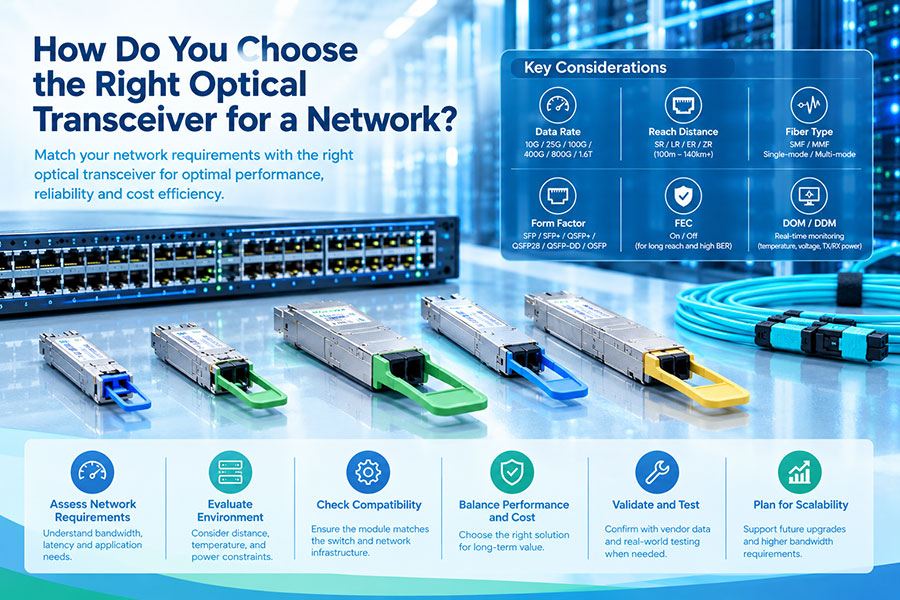
These product families include different optical interface options for varied network architectures. The appropriate model should be selected according to transmission distance, fiber type, connector interface, and host equipment requirements.
For projects involving mixed DAC and optical links, C-LIGHT can assist with interface selection, cable length, equipment compatibility, and customized connectivity requirements. Visit the Contact C-LIGHT page for technical and product inquiries.
8. Choosing the Right Connection for Your Network
DAC is generally the more efficient choice when a connection is short, both devices have compatible electrical ports, and the cable can meet the required signal-integrity limits. It can reduce component count, power consumption, and connection cost in dense rack environments.
Optical transceivers are more appropriate when links extend across longer distances, require flexible fiber routing, or operate in environments where copper cabling is less suitable. The best network design often combines both technologies rather than relying exclusively on one.
Choose DAC for short, compatible, cost-sensitive connections where direct electrical transmission meets the system requirements. Choose optical transceivers when greater reach, fiber flexibility, or electromagnetic isolation is needed. Evaluating distance, port compatibility, signal integrity, power, and cable management together leads to a more reliable and efficient high-speed network.
 >

 >
 >
 >
 >
 >
 >
 >