TEL:+86 132 6656 7067




Data Center Interconnect, or DCI, is a networking technology used to connect two or more data centers over high-speed communication links. DCI allows data, applications, storage, and network services to communicate between facilities, supporting cloud computing, disaster recovery, enterprise infrastructure, and increasingly AI workloads.
1. What Is Data Center Interconnect?
Data Center Interconnect refers to the network infrastructure that connects geographically separate data centers. The connection may span a few kilometers between nearby facilities or extend much farther across a metropolitan or regional network.
DCI commonly uses high-speed optical links because optical fiber provides high bandwidth, low attenuation, and efficient long-distance transmission.
2. How Does Data Center Interconnect Work?
A simplified DCI architecture is:
Data Center A → Optical Transceivers → DCI Transport Network → Optical Transceivers → Data Center B
Depending on the distance and required capacity, the transport network may use point-to-point Ethernet optics, WDM, DWDM, coherent optics, optical amplifiers, ROADMs, or other optical transport technologies.
3. Why Is Data Center Interconnect Important?
Modern organizations often operate multiple data centers for capacity expansion, redundancy, application distribution, backup, and disaster recovery. DCI provides the high-speed communication path needed to share data and network resources between these facilities.
For cloud and AI infrastructure, DCI also provides connectivity between different computing locations and can support distributed processing and large-scale data movement.
4. What Are the Main Types of DCI?
DCI can be classified according to distance, network architecture, and optical technology.
Campus DCI
Metro DCI
Regional DCI
Long-distance DCI
Point-to-point DCI
WDM-based DCI
Coherent DCI
5. What Is Short-Distance DCI?
Short-distance DCI connects data centers located relatively close to each other, such as facilities within the same campus or metropolitan area.
Ethernet optical transceivers and direct fiber connections are often suitable when the distance and optical loss remain within the supported reach of the selected modules.
6. What Is Metro DCI?
Metro DCI connects data centers across a metropolitan region, often requiring longer optical reach and higher-capacity transport than simple short-distance Ethernet links.
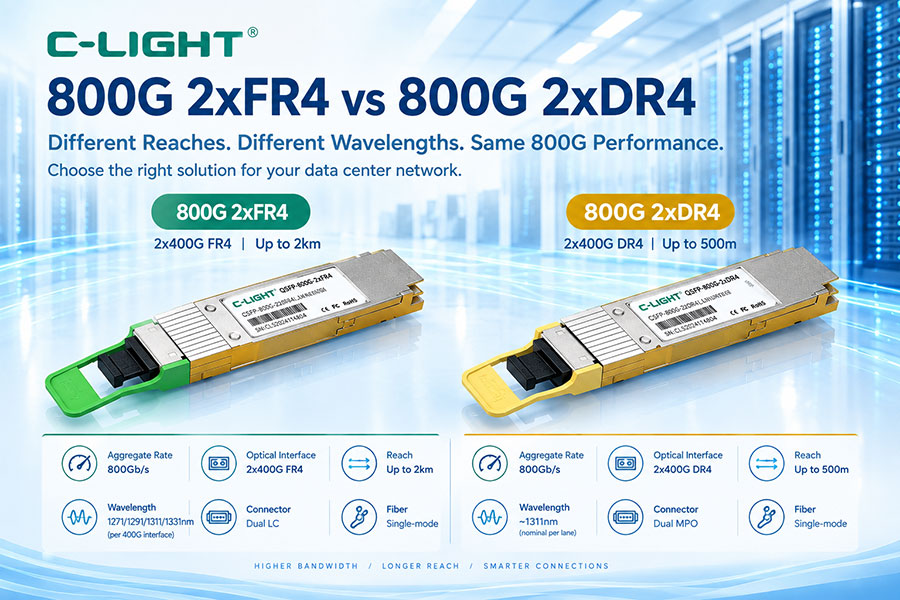
400G and 800G optical interfaces, WDM technologies, and coherent optical solutions can be used depending on the distance and network design.
7. What Is Long-Distance DCI?
Long-distance DCI connects facilities across large geographic areas. These links normally require advanced optical transport technology to compensate for fiber attenuation and other transmission impairments.
Coherent optical transceivers, DWDM systems, optical amplifiers, and ROADM architectures can be used in appropriately engineered long-distance networks.
8. What Optical Technologies Are Used in DCI?
Common DCI optical technologies include:
100G optical transceivers
400G optical transceivers
800G optical transceivers
DWDM
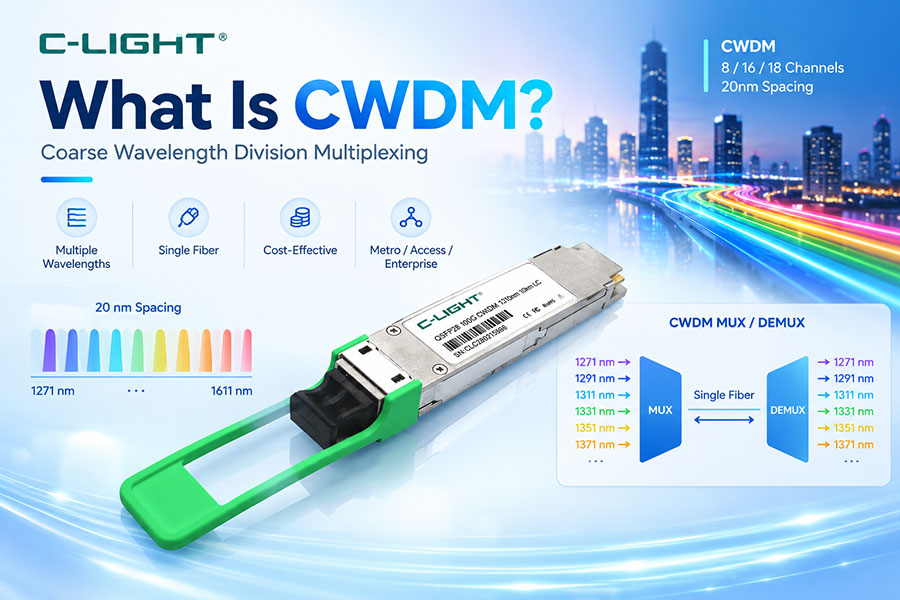
CWDM for suitable applications
Coherent optical transmission
Optical amplifiers
ROADM-based optical transport
9. What Is the Role of Fiber Optics in DCI?
Fiber optics provide the physical transmission medium for most high-capacity DCI networks. Compared with copper, optical fiber supports much longer distances and significantly higher bandwidth.
Single-mode fiber is commonly used for metro, regional, and long-distance DCI because of its low attenuation and suitability for high-speed optical transmission.
10. What Is a DCI Optical Transceiver?
A DCI optical transceiver converts electrical data from a data center switch or router into optical signals for transmission through fiber and converts received optical signals back into electrical data.
The appropriate transceiver depends on bandwidth, wavelength, fiber type, transmission distance, connector, and host interface.
11. Why Are 400G and 800G Important for DCI?
Data traffic between facilities continues to increase as cloud services, AI workloads, distributed computing, and large-scale storage systems expand.
Higher-speed optical interfaces such as 400G and 800G allow more data to be transmitted over each network connection, increasing DCI capacity without requiring a proportional increase in the number of physical links.
12. What Is DWDM DCI?
DWDM DCI uses Dense Wavelength Division Multiplexing to carry multiple optical channels over the same fiber pair.
Each wavelength carries an independent data channel, allowing the total capacity of the fiber to increase significantly.
13. How Does DWDM Improve DCI Capacity?
Without WDM, adding capacity often requires additional fiber pairs or additional physical links. DWDM instead allows multiple wavelengths to share the same fiber.
For example, multiple 400G or other high-speed optical channels can be transported over one fiber pair, with the total capacity determined by the number of active wavelengths and their individual line rates.
14. What Is Coherent DCI?
Coherent DCI uses coherent detection and digital signal processing to support high-capacity optical transmission over longer distances.
Coherent technology can provide improved tolerance to optical impairments and is widely associated with metro, regional, and long-distance DCI applications.
15. What Is the Difference Between Ethernet DCI and Optical Transport DCI?
| Feature | Ethernet DCI | Optical Transport DCI |
|---|---|---|
| Main layer | Ethernet networking | Optical transport |
| Typical distance | Short to medium | Medium to long |
| Optical technology | Pluggable Ethernet optics | DWDM, coherent optics, amplifiers, ROADMs |
| Complexity | Lower | Higher |
16. What Is a DCI Link Budget?
The optical link budget represents the available margin between transmitter output power and receiver sensitivity.
A simplified calculation is:
Optical Budget = Transmitter Output Power − Receiver Sensitivity
This budget must cover fiber attenuation, connector losses, splice losses, WDM component losses, and an appropriate engineering margin.
17. Why Is Link Loss Important in DCI?
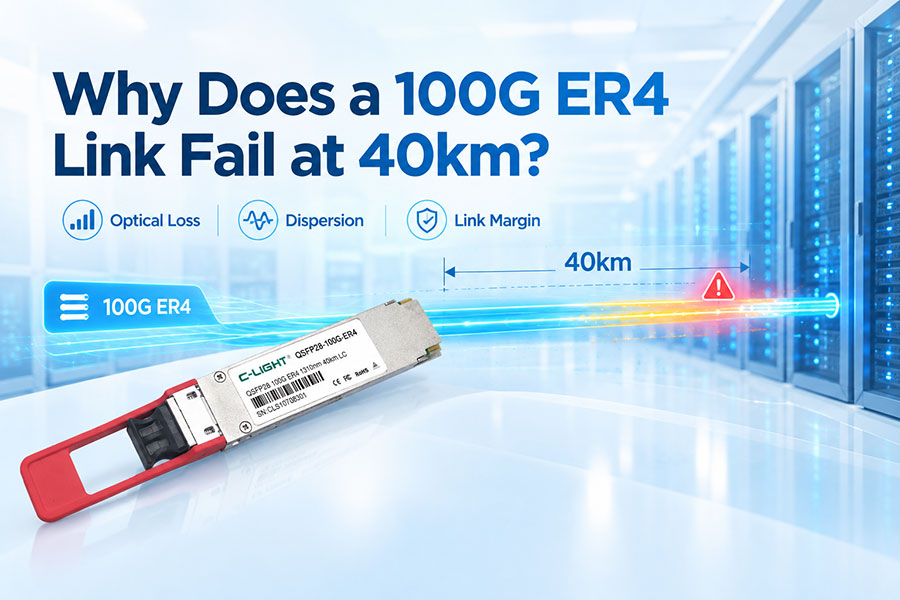
As the distance between data centers increases, fiber attenuation becomes a major factor in determining whether a selected optical solution can support the link.
Longer DCI links may also introduce additional losses from patch panels, optical connectors, MUX/DEMUX equipment, ROADMs, and other passive components.
18. What Is Latency in DCI?
DCI latency is the total time required for data to travel between connected data centers. It includes propagation through fiber as well as processing and switching delays in the network.
Physical distance is a major factor, so connecting geographically closer facilities generally results in lower propagation latency.
19. Why Is Low Latency Important for DCI?
Low-latency DCI is important for applications such as database replication, distributed applications, storage synchronization, high-performance computing, and some AI workloads.
Network architecture, optical technology, routing, switching, and geographic distance all influence end-to-end latency.
20. How Does DCI Support Cloud Computing?
Cloud providers often operate multiple data centers and availability zones. DCI allows workloads, storage, and network services to communicate between these locations.
This supports redundancy, traffic distribution, data replication, and flexible resource utilization.
21. How Does DCI Support Disaster Recovery?
Organizations can replicate critical data and applications between separate facilities through DCI. Maintaining geographically separate copies can improve resilience against failures affecting one data center.
The required bandwidth depends on the volume and frequency of data replication.
22. How Does DCI Support AI Data Centers?
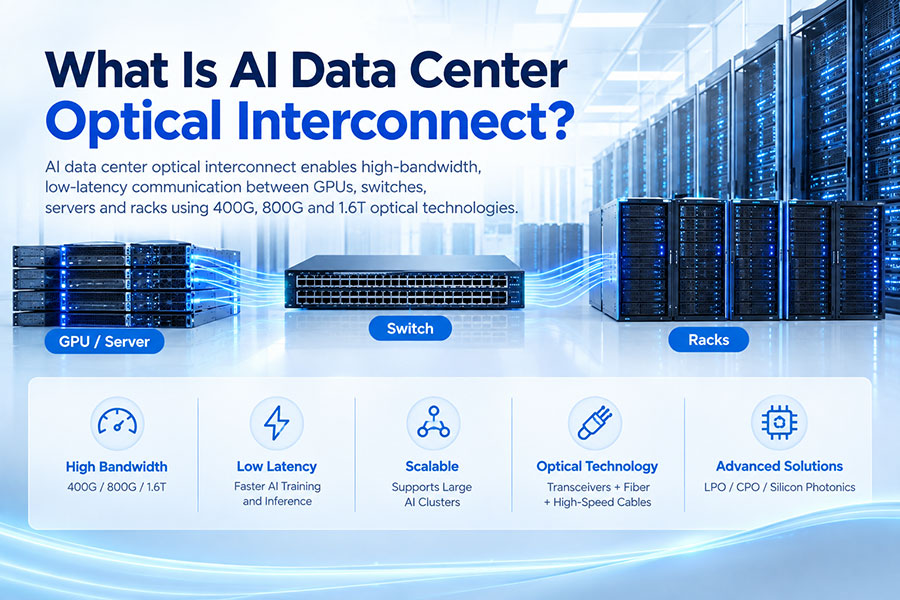
AI infrastructure can generate extremely large volumes of data between computing, storage, and networking systems. Multiple data centers may also participate in distributed AI infrastructure.
High-bandwidth optical DCI provides the connectivity needed to move large datasets and coordinate distributed computing resources.
23. What Are the Main DCI Deployment Architectures?
Common architectures include:
Point-to-point DCI
Hub-and-spoke DCI
Ring-based metro DCI
Mesh optical transport
ROADM-based multi-site networks
The appropriate architecture depends on the number of sites, traffic pattern, redundancy requirements, distance, and scalability objectives.
24. What Is Point-to-Point DCI?
Point-to-point DCI directly connects two data centers using dedicated optical links. It is one of the simplest DCI architectures.
Point-to-point connections can use direct Ethernet optics for shorter distances or WDM and coherent solutions for longer or higher-capacity links.
25. What Is a ROADM-Based DCI Network?
A ROADM-based DCI network allows selected wavelengths to be added, dropped, or routed at multiple optical network nodes.
This enables more flexible multi-site connectivity than fixed point-to-point optical connections.
26. What Network Speeds Are Used in DCI?
DCI networks can use a range of interface speeds depending on capacity requirements and network generation.
| Speed | Typical Use |
|---|---|
| 100G | Existing and lower-capacity DCI links |
| 400G | Modern high-capacity DCI |
| 800G | High-density and next-generation DCI |
| 1.6T | Emerging ultra-high-capacity architectures |
27. What Are the Main DCI Design Considerations?
A DCI deployment should consider:
Required bandwidth
Transmission distance
Fiber type and attenuation
Optical link budget
Latency
Redundancy
Wavelength plan
Optical amplification
Network scalability
Equipment interoperability
28. What Are the Main Advantages of DCI?
The main advantages of Data Center Interconnect include:
High-bandwidth connectivity between facilities
Support for data replication
Improved disaster recovery
Resource sharing across data centers
Scalable optical capacity
Support for cloud and AI infrastructure
29. What Are the Challenges of DCI?
DCI networks also introduce several challenges:
High bandwidth requirements
Fiber distance and optical loss
Latency over longer distances
Optical power management
Network redundancy
Equipment compatibility
Power and cooling requirements
Deployment and maintenance costs
30. How Can DCI Capacity Be Increased?
DCI capacity can be increased by upgrading individual link speeds, adding additional wavelengths, deploying higher-density WDM systems, or combining these approaches.
For example, moving from 100G to 400G per optical channel can substantially increase capacity without requiring a proportional increase in the number of optical channels.
31. DCI vs WAN
| Feature | DCI | WAN |
|---|---|---|
| Primary purpose | Connect data centers | Connect distributed networks and users |
| Traffic profile | Often large data flows between facilities | Broad range of application traffic |
| Optical bandwidth | Often very high | Varies widely |
| Typical technologies | Ethernet optics, WDM, coherent optics | IP, MPLS, Ethernet, optical transport |
32. What Is the Future of Data Center Interconnect?
DCI is evolving toward higher optical channel speeds, greater wavelength density, lower power consumption, and tighter integration with AI and cloud infrastructure.
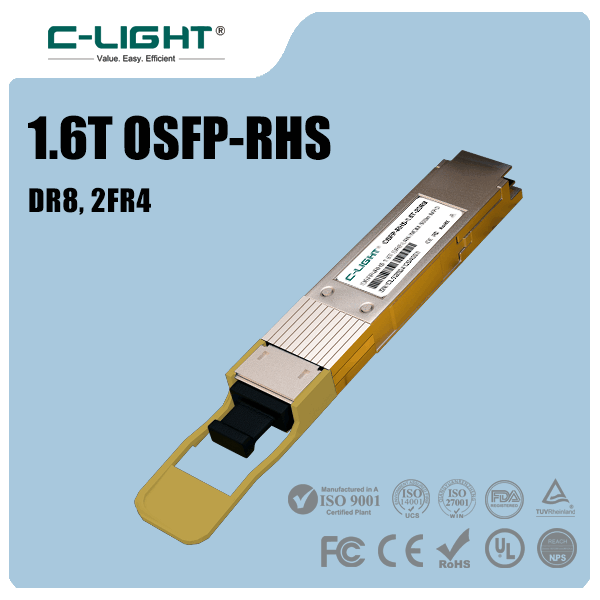
400G and 800G solutions are already important for high-capacity networks, while 1.6T-class optical interfaces and more advanced coherent and silicon photonics technologies are being developed for future connectivity requirements.
33. FAQ
Q1. What is Data Center Interconnect?
Q2. What technologies are used for DCI?
Q3. What optical speeds are used in DCI?
Q4. What fiber is used for DCI?
Q5. What is DWDM DCI?
Q6. Why is DCI important for AI data centers?
34. Summary
Data Center Interconnect connects separate data centers through high-speed network and optical infrastructure. Depending on distance and capacity, DCI can use Ethernet optical transceivers, DWDM, coherent optics, optical amplifiers, and ROADM-based transport. As cloud computing and AI workloads continue to increase traffic between facilities, high-capacity 400G, 800G, and emerging 1.6T optical technologies are becoming increasingly important for scalable DCI networks.
 >
>

 >
>
 >
>
 >
>
 >
>
 >
>
 >
>
 >
>