TEL:+86 132 6656 7067




I. Market Overview and Scale
An optical transceiver is a core component of optical communication systems. It converts electrical signals into optical signals at the transmitting end and restores optical signals back into electrical signals at the receiving end. It is widely used in telecommunications networks, data centers, and enterprise networks. As a critical interface device in fiber optic communication links, the optical transceiver directly determines a network's transmission bandwidth, latency, and reliability.
In recent years, fueled by the explosive growth in demand for artificial intelligence (AI) computing power, the continued expansion of cloud computing services, and the widespread deployment of 5G networks, the U.S. optical transceiver market has been experiencing a period of high-speed growth. From a global perspective, the North American market holds a significant strategic position. In 2025, North America accounted for approximately 35.9% of the global optical transceiver market, making it the second-largest regional market after China. It is also the region with the most concentrated demand for high-speed optical transceivers and the forefront of technological iteration globally. Other research institutions project that North America's share of the global optical transceiver market could reach 45.3% by 2035, further solidifying its leading position.
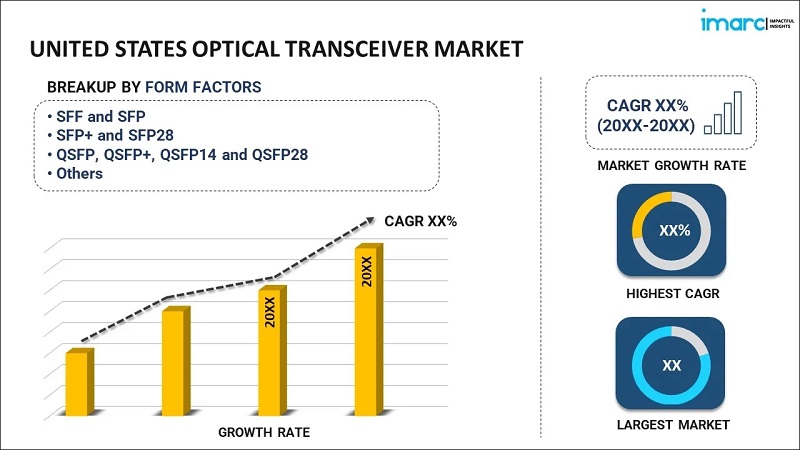
Focusing on the U.S. domestic market, according to statistics from IMARC Group, the U.S. optical transceiver market size reached USD 3.7 billion in 2025. It is projected to grow to USD 10.6 billion by 2034, with a compound annual growth rate (CAGR) of 12.05% during the 2026–2034 forecast period. The primary growth drivers in the U.S. market stem from the continuous expansion of data center infrastructure, accelerated deployment of 5G networks, and the sharp rise in internet traffic. Furthermore, U.S. government-supported broadband infrastructure projects—such as the Broadband Equity, Access, and Deployment (BEAD) Program managed by the National Telecommunications and Information Administration (NTIA), which allocates USD 42.45 billion for nationwide high-speed broadband network construction—are consistently driving procurement demand for optical transceivers in fiber optic backbone and access networks.
Looking at the broader global picture, estimates of market size and growth rates vary among different research institutions. Data from Fortune Business Insights indicates the global optical transceiver market was valued at USD 14.7 billion in 2025 and is expected to reach USD 46.1 billion by 2034, at a CAGR of 17%. Research Nester projects a size of USD 15.7 billion in 2025, growing to USD 55.4 billion by 2035, with a CAGR of 13.4%. LightCounting offers a more aggressive growth estimate, forecasting approximately 60% growth for both 2025 and 2026, with global sales of Ethernet optical transceivers and CPO/NPO reaching USD 26 billion in 2026. Despite discrepancies in absolute figures among agencies, the fundamental consensus on robust market growth remains unanimous.
II. Core Driver: Explosive Demand from AI Data Centers
The most significant growth driver for the current U.S. optical transceiver market is the insatiable demand for high-speed optical interconnects from artificial intelligence data centers.
2.1 Sustained Increase in Cloud Provider Capital Expenditure
Capital expenditure on AI infrastructure by major North American Cloud Service Providers (CSPs) continues to climb. Meta and Microsoft both raised their capital expenditure guidance for 2026 in their latest quarterly earnings reports. Meta's demand for 800G optical transceivers is the largest among North American CSPs, estimated at 10 to 12 million units; combined demand from Google and Microsoft stands at approximately 12 million units; and Amazon accounts for roughly 5.5 million units. Goldman Sachs has significantly raised its 2026 global sales forecast for 800G optical transceivers from the previous estimate of 25 million units to 33.5 million units, an increase of 58%, demonstrating strong market confidence in the demand for high-speed modules.
According to Cignal AI analysis, AI-driven data center construction is propelling the optical components market to record highs in 2025. Revenue in the datacom segment is expected to exceed USD 18 billion, with coherent module revenue approaching USD 6 billion. The firm projects that from 2024 to 2029, datacom optical component revenue will achieve a CAGR exceeding 20%, reaching nearly USD 29 billion by 2029.
2.2 800G Becomes Mainstream, 1.6T Commercialization Accelerates
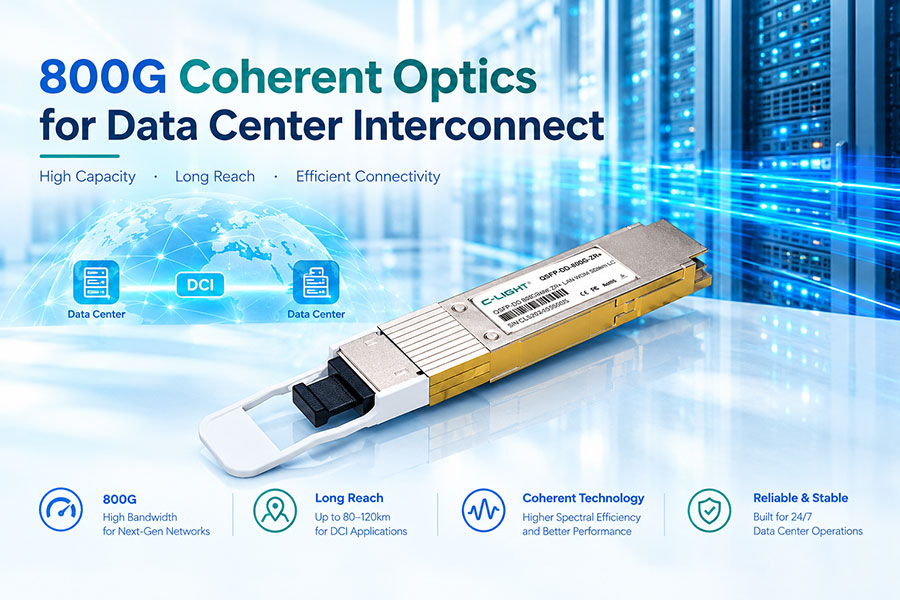
In terms of product technology, 800G optical transceivers have transitioned from "future technology" to the default choice for new AI data center deployments. In 2025, 800G transceiver shipments doubled year-over-year. For the first time, quarterly shipments of datacom optical transceivers with speeds of 400G and above exceeded 10 million units in Q4 2025, with single-quarter revenue surpassing USD 5 billion. Cignal AI estimates total shipments of high-speed modules at 800GbE and above will reach 42 million units in 2025.
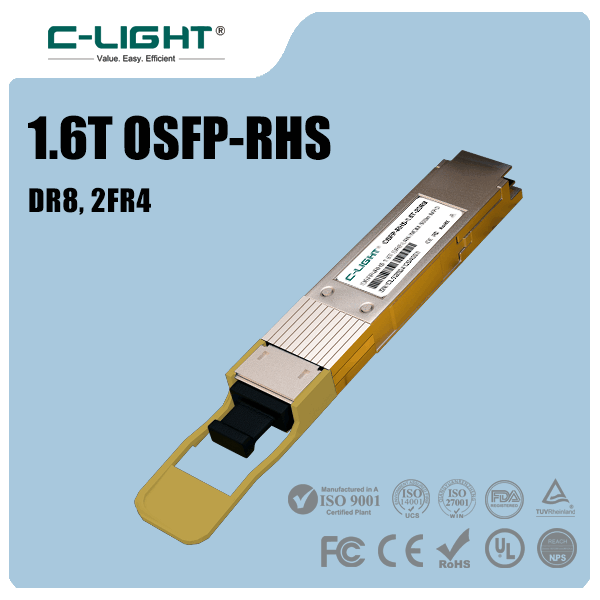
1.6T optical transceivers are accelerating into the commercialization phase. Global shipments of transceivers above 800G were approximately 24 million units in 2025, projected to reach nearly 63 million units in 2026—an increase of roughly 2.6 times. Overseas technology giants have reportedly raised their 2026 procurement plans for 1.6T transceivers from 10 million to 20 million units, effectively doubling demand overnight, underscoring the intensifying AI computing arms race. NVIDIA, a "radical promoter" of 1.6T, is estimated to require 2.5 to 3.5 million units in 2025 (accounting for 80% of global share), increasing to over 5 million units in 2026; Google's demand stands around 4 million units, and Meta's around 1 million units. Cignal AI expects 1.6T module shipments to exceed 5 million units in 2026.
Regarding technology roadmaps, Silicon Photonics (SiPh) has become the mainstream solution for 1.6T transceivers due to its advantages in low power consumption and cost, capturing 72% market share. Concurrently, Linear-drive Pluggable Optics (LPO) technology, which removes the DSP chip to optimize both power and performance, has been adopted by major customers like Meta and Amazon. Co-packaged Optics (CPO) , as a cutting-edge direction, can reduce data center power consumption by over 40%, though its large-scale commercialization is expected post-2027.
2.3 Supply Chain Constraints and Easing
The concentrated surge in demand for high-speed optical transceivers has also strained the upstream supply chain. Between 2023 and 2025, shortages in the supply of VCSELs and Indium Phosphide (InP) lasers limited transceiver shipments. However, industry analysis suggests this supply bottleneck will significantly ease by mid-2026. Meanwhile, demand for InP from AI data centers is growing at an astonishing rate—with a projected CAGR of 85% for AI data center InP demand from 2026 to 2030—and global InP production capacity is expected to increase by an additional 50% in Q4 2026. The gradual improvement in the supply chain will provide a solid foundation for the continued expansion of the optical transceiver market.
III. Regional Comparison: United States vs. China
In the global competitive landscape of optical transceivers, China and the United States constitute the primary poles of the market. In terms of end-user demand, China is the largest global market, accounting for approximately 64%, while North America ranks second with around 17%. However, regarding deployment pace and technological leadership in high-speed optical transceivers, the U.S. market possesses a stronger first-mover advantage.
3.1 Differences in Demand Structure and Growth Rates
Tracking data from LightCounting indicates that procurement volumes for Ethernet optical transceivers and CPO/NPO by the Top 5 U.S. cloud service providers have historically significantly outpaced their Chinese counterparts. However, the gap is narrowing—from a factor of 7x in 2022 to approximately 4x in 2024–2025, and projected to further narrow to 2.5x by 2031. The projected CAGR for U.S. cloud provider transceiver demand from 2025 to 2031 is 18%, compared to a robust 29% for China.
The aggressive push by Chinese cloud providers in deploying 800G optical transceivers is a key factor in closing this gap. Demand from leading Chinese firms such as ByteDance, Alibaba, and Tencent is gradually ramping up, with combined requirements potentially reaching several million units. The easing of U.S. export restrictions on NVIDIA GPUs to China in early 2026 is expected to further accelerate the deployment of high-speed optical transceivers by Chinese cloud providers in 2026.
3.2 Competitive Landscape
The competitive landscape of the global optical transceiver market is characterized by a "duopoly with distinct strengths" between Chinese and American companies. From a supplier perspective, Coherent Corp. is one of the world's largest producers of optical transceivers, holding approximately 16% market share. The top five manufacturers collectively account for roughly 56% of the global market. Key players include Coherent, Innolight, Cisco Systems, Huawei (HiSilicon Optoelectronics), and Lumentum Holdings. In terms of product mix, low-to-medium speed transceivers still constitute approximately 91% of total unit volume, but high-speed transceivers represent the primary source of value growth and profit margins.
From an industrial chain perspective, the United States holds advantages in chip design (particularly DSPs), advanced R&D, and end-user demand, but faces reliance on external sources for component manufacturing and packaging/testing processes. Chinese enterprises have established strong competitiveness in module assembly and testing through cost advantages and large-scale production capabilities.
IV. Technology and Industry Trends
4.1 From 800G to 1.6T and 3.2T: Accelerating Data Rate Iteration
The iteration cycle for optical transceiver data rates is accelerating at an unprecedented pace. 800G has entered the large-scale deployment phase, 1.6T is commercializing, and 3.2T has already appeared on corporate technology roadmaps. The acquisition of silicon photonics company DustPhotonics by Credo serves as a representative case—DustPhotonics' silicon photonic PIC technology supports high-speed optical modules up to 1.6T and has roadmaps extending to 3.2T. This acquisition enables Credo to vertically integrate capabilities spanning SerDes, DSP, silicon photonics, and system integration, covering the full stack of interconnect requirements for AI infrastructure.
In the U.S. 1.6T optical transceiver market, competition is already intensifying. According to IndexBox analysis, the U.S. 1.6T transceiver market is in a critical transition phase from early deployment to mainstream commercial adoption. While large-scale market penetration of 1.6T products will require time due to ongoing improvements in cost curves and power efficiency, the United States, as a global technology leader, will continue to play the dual role of a core application market and the primary battleground for commercial competition.
4.2 Accelerated Adoption of Silicon Photonics
Silicon Photonics is currently the most closely watched technology direction in the high-speed optical transceiver sector. By integrating optical devices on a silicon substrate to achieve electro-optical signal conversion, this technology offers advantages of small size, low power consumption, and manageable cost. The penetration rate of SiPh solutions in 800G and 1.6T transceivers is steadily increasing. Credo projects the Silicon Photonics PIC market will grow to USD 6 billion by 2030. As AI data centers impose increasingly stringent requirements on bandwidth and energy efficiency, Silicon Photonics is poised to become the mainstream solution for future high-speed optical transceivers.
4.3 Industry M&A and Vertical Integration
The optical transceiver industry chain is undergoing a new wave of merger and acquisition integration, primarily driven by the strategic imperative to build a complete interconnect technology stack. In April 2026, Credo acquired DustPhotonics for USD 750 million in cash plus approximately 920,000 shares of common stock. The transaction is expected to be accretive to Credo's earnings in fiscal year 2027 and generate over USD 500 million in optical business revenue in that fiscal year. This transaction profoundly reflects the industry's high regard for vertical integration capabilities—possessing end-to-end expertise from electrical signal processing to optical conversion and system integration is becoming a critical competitive advantage for transceiver vendors in the AI era.
V. Policy Environment and Supply Chain Security
U.S. government policies supporting the semiconductor and optical communication industries provide important institutional safeguards for the development of the U.S. optical transceiver market.
5.1 CHIPS and Science Act
The CHIPS and Science Act, signed in August 2022, aims to expand domestic advanced chip manufacturing capacity in the United States through federal incentives, stabilize supply chain security, and strengthen R&D investment to maintain technological leadership. The Act authorizes approximately USD 53 billion in semiconductor manufacturing incentives, driving over USD 10 billion in related investments through mechanisms like the U.S. Investment Accelerator. While the Act directly targets the semiconductor sector, its support for advanced packaging and photonic integrated circuits has a significant indirect impact on the optical transceiver industry.
It is worth noting that the CHIPS Act faces risks of revision or "dismantling" under the Trump administration, but bipartisan consensus on strengthening strategic investments in the semiconductor sector remains. A key provision requires companies receiving federal funds to refrain from significant expansions of semiconductor capacity in China or other "countries of concern" for ten years—a stipulation that profoundly influences the global layout of the optical transceiver supply chain.
5.2 Trends in Supply Chain Localization
Driven by policy guidance and geopolitical factors, the trend toward domestic manufacturing within the U.S. optical transceiver industry is becoming increasingly apparent. The case of Applied Optoelectronics Inc. (AOI) is illustrative: The company is expanding its production capacity in Taiwan while simultaneously building a new facility in Sugar Land, Texas. AOI has stated it expects soon to possess the largest domestic U.S. manufacturing capacity for 800G and 1.6T optical transceivers. Combining domestic and overseas capacity, AOI anticipates producing over 500,000 units of 800G and 1.6T transceivers per month by the end of 2026. In March 2026, AOI announced it had secured an initial volume order valued at over USD 200 million for 1.6T datacom transceivers from a long-term hyperscale customer, with shipments expected to commence in early Q3 2026.
VI. Market Outlook and Challenges
Looking ahead, the U.S. optical transceiver market is expected to maintain robust growth throughout the 2026–2034 period. IMARC Group projects a CAGR of 12.05%, reaching a market size of USD 10.6 billion by 2034. The market's long-term growth logic remains clear and solid: The AI computing arms race drives continuous bandwidth doubling within data center interconnects; the technological iteration from 800G to 1.6T and eventually 3.2T is accelerating; cloud provider capital expenditure is expected to remain elevated for the foreseeable future; and the deeper deployment of 5G networks alongside further proliferation of fiber optic broadband will continue to contribute incremental demand.
However, the market also faces several challenges. First, post-2026, as cloud provider capital expenditure potentially normalizes and supply chain bottlenecks ease, the growth rate may moderate from peak levels; the industry must prepare for a deceleration. Second, the U.S. market faces structural risks associated with dependence on foreign sources for certain core components, such as high-speed lasers and advanced DSP chips. Third, competition is intensifying, particularly in frontier areas like 1.6T, where the technology roadmap has yet to fully converge. Multiple competing approaches—including SiPh, LPO, and CPO—coexist, requiring sustained R&D investment to maintain competitiveness. Additionally, policy uncertainty surrounding the trajectory of the CHIPS Act could impact long-term investment decisions. Meanwhile, while previous concerns about a price war triggered by concentrated capacity release in the second half of 2026 have somewhat abated, pricing pressure remains non-negligible as more players enter the high-speed transceiver arena.
In summary, the U.S. optical transceiver market is navigating a historic growth opportunity driven by the AI wave. Enterprises that can successfully capture the rhythm of high-speed technology iteration, build differentiated technological barriers, and effectively navigate supply chain security challenges will be well-positioned to secure a competitive advantage in this phase of industrial upgrading.
 >
>

 >
>
 >
>
 >
>
 >
>
 >
>
 >
>
 >
>