TEL:+86 132 6656 7067




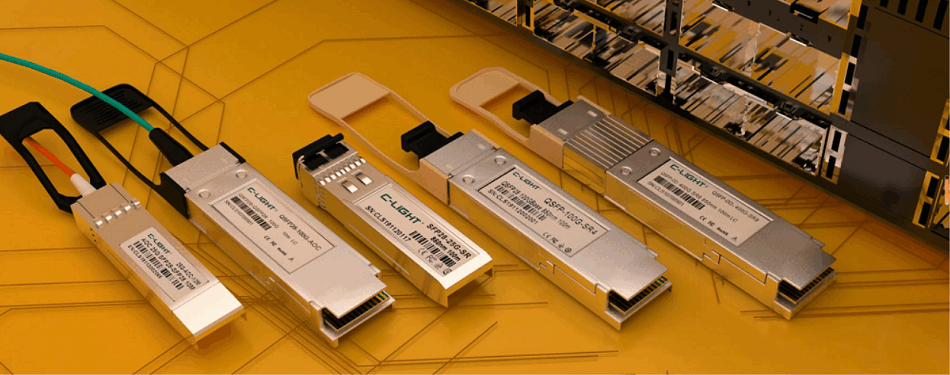
The optical transceiver is the core component for electro-optical conversion, transforming electrical signals from equipment into optical signals for high-speed transmission over fiber optics. The optical transceiver interface acts as the crucial "connector" in this process, with its type and performance directly determining the efficiency and reliability of data transmission.
optical transceiver interfaces are primarily divided into two categories: electrical interfaces and optical interfaces, corresponding to the connection points between the module and the device motherboard, and between the module and the fiber optic cable, respectively.
I. Electrical Interfaces
The electrical interface refers to the golden contact section where the optical transceiver is inserted into network devices like switches, routers, or servers. It is responsible for receiving and transmitting electrical signals. After decades of development, its form factor has become highly standardized, ensuring interoperability between equipment from different manufacturers.
Classic Legacy: SFP/SFP+
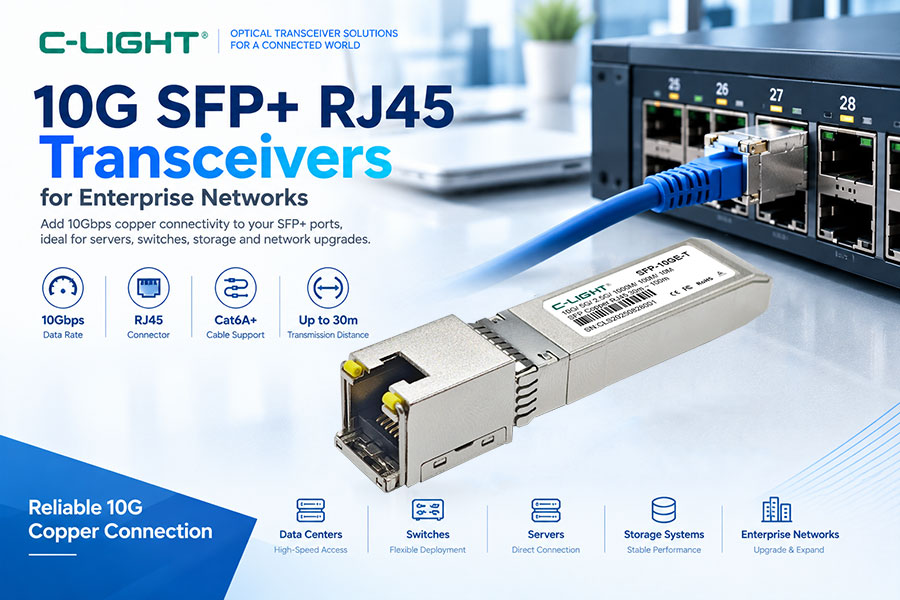
SFP (Small Form-factor Pluggable) was a milestone of the Gigabit Ethernet era and remains widely used in access layers today. Its enhanced version, SFP+, increased the rate to 10Gbps, becoming the de facto standard for 10G applications in data centers and telecom networks. Its compact size and hot-swappable nature greatly enhance network deployment and maintenance flexibility.
High-Speed Cluster: QSFP Series
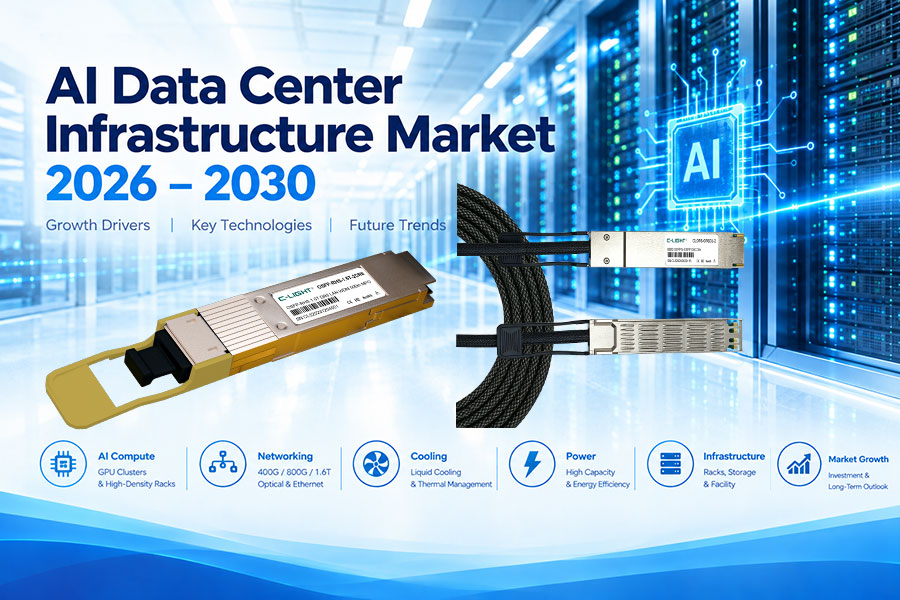
To address the explosive growth of data flow within data centers, the Quad Small Form-factor Pluggable (QSFP) family emerged. QSFP+ (40G) and QSFP28 (100G) achieve high-density, low-power, high-speed interconnection by transmitting four 25G lanes in parallel. The latest QSFP-DD (Double Density) and QSFP112 go even further, pushing single-module rates to 400G and even 800G/1.6T respectively via 8 lanes and single-lane 112G PAM4 technology, making them the absolute workhorses for interconnectivity within hyperscale data centers.
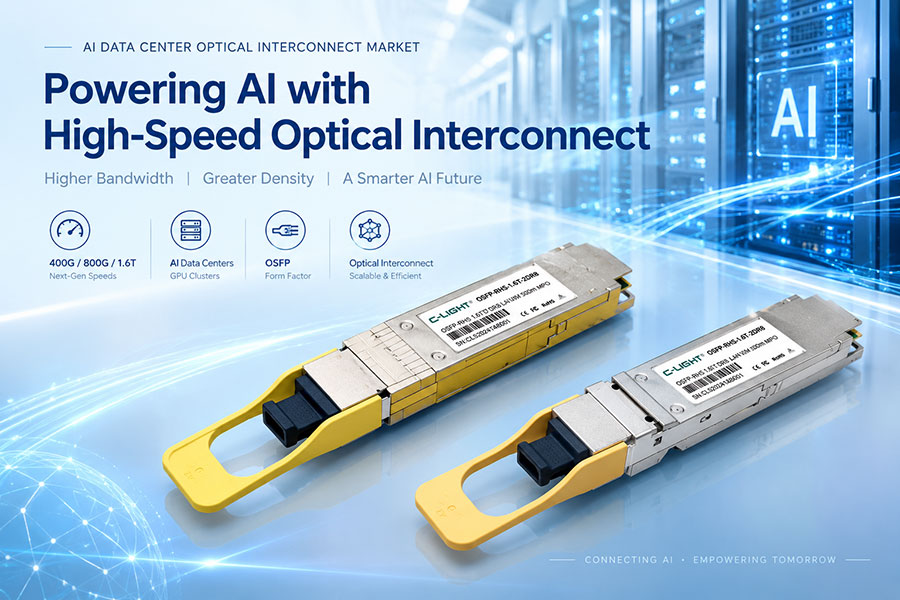
Emerging Forces: OSFP
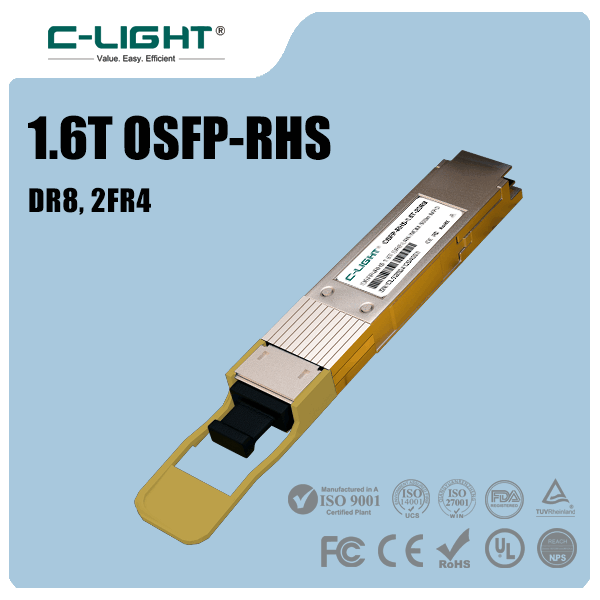
OSFP (Octal Small Form-factor Pluggable) is designed for 800G and higher rates. Slightly larger in size but with better thermal performance, it competes with QSFP-DD in the ultra-high-speed domain.
II. Optical Interfaces
The optical interface is the physical interface where the optical transceiver connects to the fiber optic patch cable. Its type determines the fiber connection method, the number of achievable channels, and density.
LC Duplex
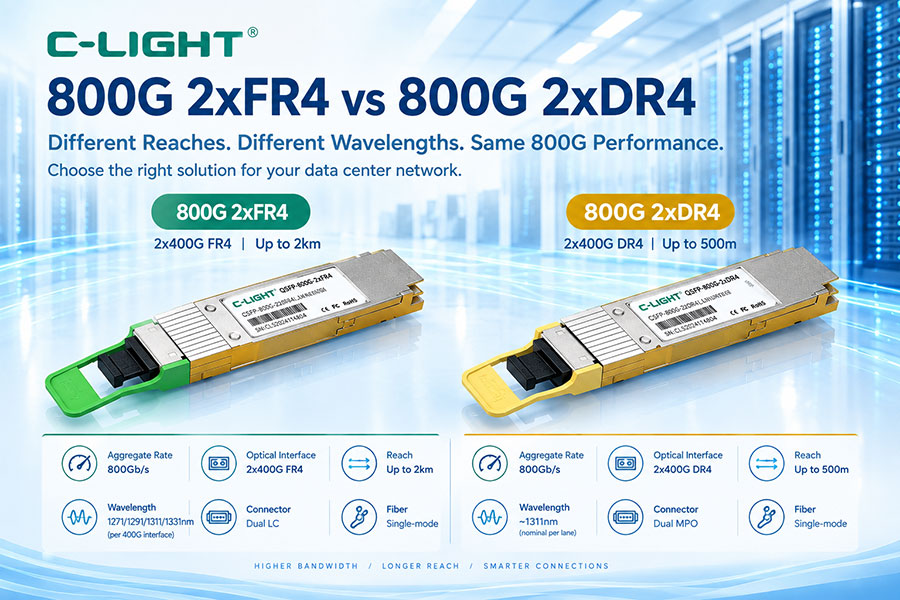
The LC interface is the dominant mainstream choice today. Its small form factor, half the size of the traditional SC interface, perfectly suits high-density panels. It typically appears in a duplex configuration, using two fibers for transmit and receive separately, covering the vast majority of applications from 1G to 800G.
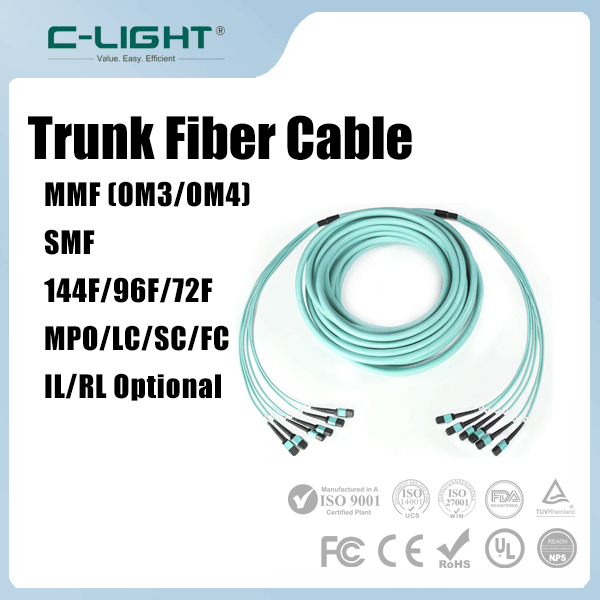
MPO/MTP
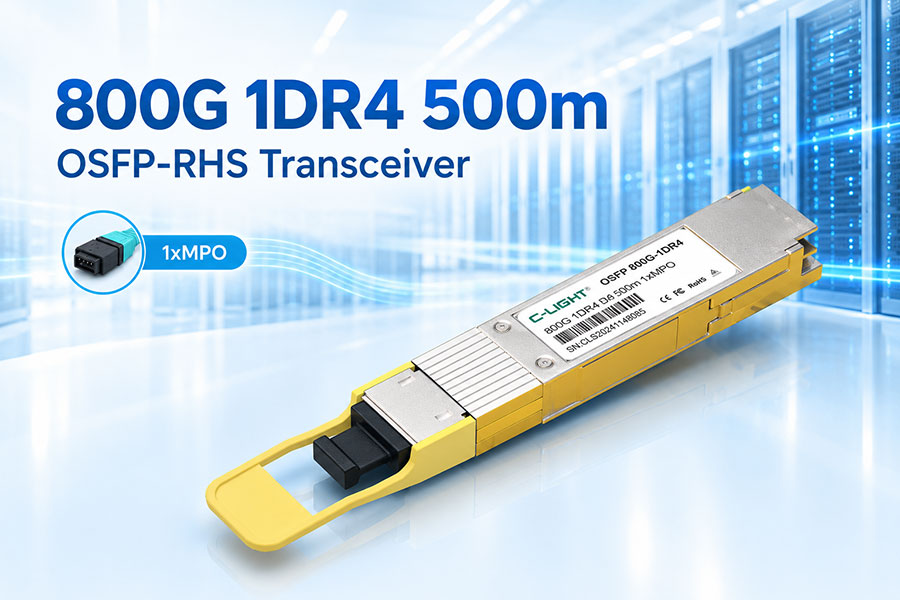
When speeds exceed 100G and single-channel costs surge, the MPO interface becomes key. It integrates multiple fibers (e.g., 12, 16, 24) within a single connector, enabling simultaneous data transmission and reception via parallel optics technology. For example, a 100G-SR4 module uses a 12-fiber MPO interface, with 8 fibers used for 4 transmit and 4 receive lanes to achieve 100G transmission. 400G and higher-rate modules heavily rely on the parallel capabilities of MPO.
BIDI and WDM
In scenarios with scarce fiber resources or where simplified cabling is needed, BIDI modules shine. They use only a single LC interface and one fiber, achieving bidirectional communication over that single fiber by utilizing different wavelengths of light. Related in principle but more powerful are interfaces associated with WDM (Wavelength Division Multiplexing) technology, such as LC/UPC or LC/APC. These can transmit dozens or even hundreds of different wavelength optical signals simultaneously over a single fiber, serving as backbone technology for long-haul trunk networks and 5G fronthaul.
III. Selection and Evolution
Selecting different interfaces involves a careful trade-off between performance, density, cost, and power consumption.
For short distances within data centers Max 100 meters.
For medium to long distances (100 meters to 10 kilometers), single-mode fiber paired with LC duplex interfaces is the classic choice.
In backhaul or access networks with limited fiber resources, BIDI or WDM modules hold a unique advantage due to their fiber-saving characteristics.
The development of optical transceiver interfaces is progressing along several clear paths:
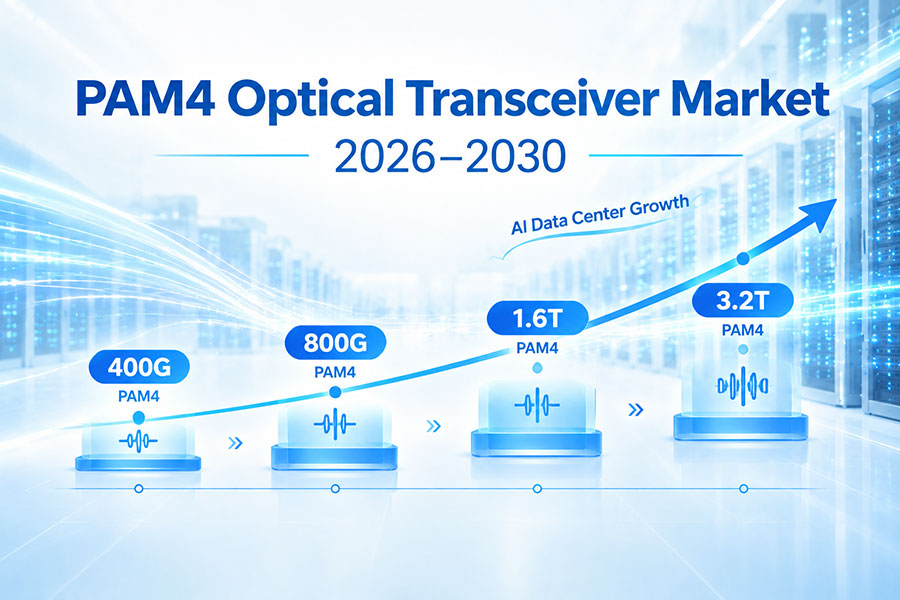
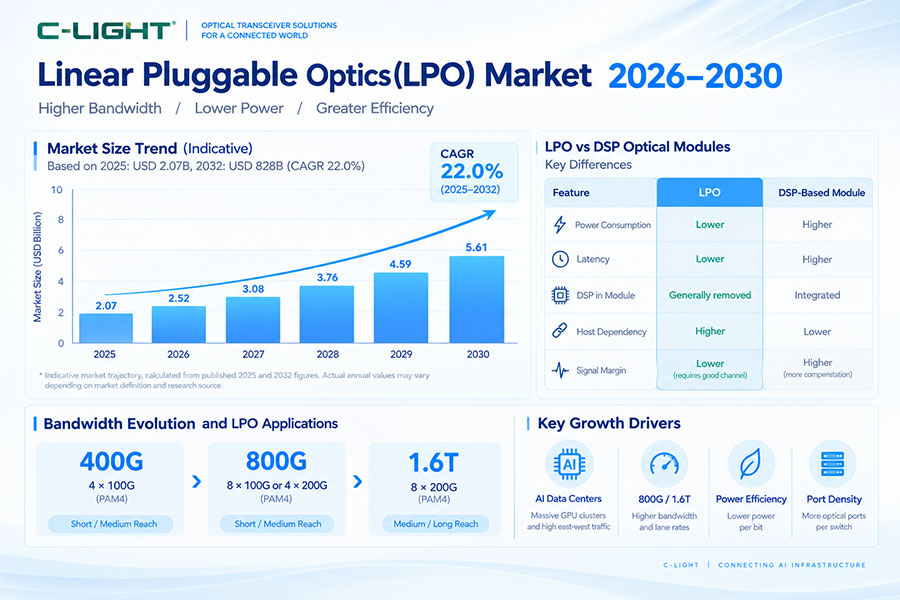
Continuous Rate Increase: 800G is entering volume deployment, and standards for 1.6T module interfaces are being actively developed.
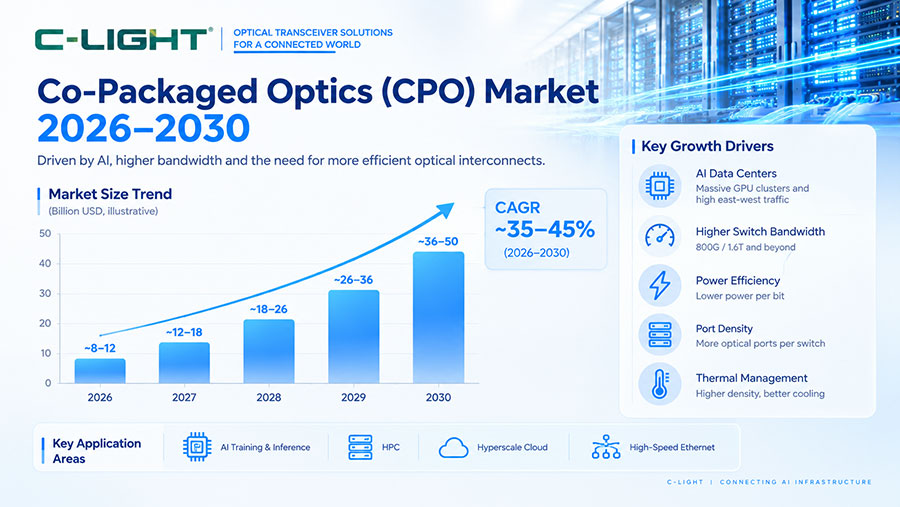
Density and Integration Revolution: Silicon photonics and CPO (Co-Packaged Optics) will combine with advanced packaging like COBO, performing electro-optical conversion directly alongside switch chips. This promises to break bandwidth and power consumption bottlenecks entirely, powering next-generation AI computing clusters.
Intelligence and Pluggability: Pluggable modules with Digital Diagnostic Monitoring (DDM) remain mainstream, but fixed optical modules for specific ultra-high-speed scenarios are also evolving.
From the classic LC to parallel MPO, from pluggable SFP to board-embedded COBO, the evolution of optical transceiver interfaces is a condensed history of the leap in data communication bandwidth. These precise physical interfaces are not only nodes of technology but also bridges connecting the virtual digital world to the physical fiber optic network.
 >
>

 >
>
 >
>
 >
>
 >
>
 >
>
 >
>
 >
>