TEL:+86 132 6656 7067




OLT (Optical Line Terminal) optical transceiver, serving as the core optical component in a Passive Optical Network (PON) system, has its performance and specifications directly impacting network transmission efficiency, coverage range, and equipment compatibility. This article systematically introduces the main categories and technical characteristics of OLT optical transceivers from four dimensions: form factor, rate specifications, optical power & transmission distance, and device compatibility.
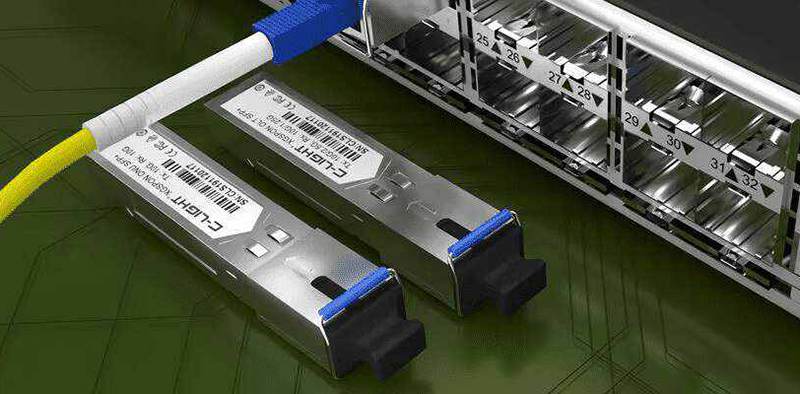
1. Form Factor
The form factor determines the physical interface, dimensions, and applicable equipment of an optical transceiver. Common types include:
●SFP (Small Form-factor Pluggable): A small, hot-pluggable form factor widely used in early PON equipment.
●SFP-DD (Double Density SFP): A dual-density small form-factor pluggable supporting higher data rates at the same port density, suitable for high-bandwidth scenarios.
●SFP+ 22PIN: An enhanced SFP form factor with 22 pins, commonly found in 10G PON transceivers (e.g., XG-PON).
●SFP+ 20PIN: An SFP+ form factor with 20 pins, often used in specific vendors' OLT equipment. Pin definitions may vary.
2. Rate Specifications
The rate refers to the data transmission standard supported by the optical transceiver, primarily categorized as follows:
●EPON (Ethernet PON): Features symmetric 1.25 Gbps upstream/downstream rates and is widely used in Fiber-to-the-Home (FTTH) deployments.
●GPON (Gigabit PON): Offers 2.5 Gbps downstream and 1.25 Gbps upstream rates, providing higher transmission efficiency.
●XGS-PON (10G Symmetric PON): Delivers symmetric 10 Gbps upstream/downstream rates, catering to high-bandwidth demand scenarios.
●25G-PON: A 25G rate PON standard targeting high-capacity applications like future 5G fronthaul and enterprise access.
●50G-PON: A 50G rate PON technology currently under standardization and commercialization, aiming to meet ultra-high-speed access requirements.
3. Optical Power and Transmission Distance
Optical power is closely related to transmission distance. The coverage capability of a transceiver is typically defined by its transmit power (dBm) and receiver sensitivity:
●4 dBm: Lower transmit power, generally suitable for short-distance transmission (e.g., within 500 meters).
●5 dBm: Common for medium-distance coverage, supporting 1-2 km transmission.
●7 dBm: Higher transmit power, often used for transmissions over 10 km, such as campus or metro access.
●9 dBm: High-power transceivers enabling long-distance coverage of 20 km or more, frequently used in remote areas or large-scale networks.
The actual transmission distance should be calculated comprehensively considering fiber type, split ratio, and environmental loss.
4. Device Compatibility
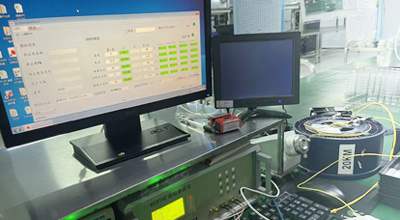
C-LIGHT Network performs compatibility testing for optical transceivers on switch devices from over 200 brands, simulating real application environments to ensure 100% compatibility.
|
| |
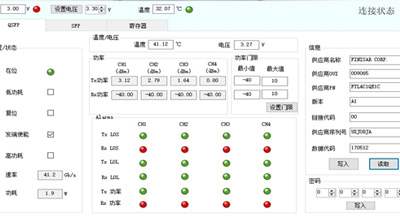
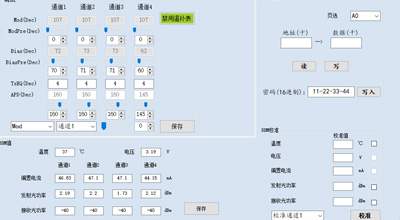
Hardware compatibility test Test the compatibility between optical modules and switch devices of different brands, including: plugging and unplugging locking and unlocking on the device | DDM parameter testing Read and monitor the relevant parameters of the optical module in real time: transmitted optical power, received optical power, temperature, voltage, current, threshold alarm |
 |
| |
Basic parameter test ●Port rate ●Manufacturer name ●Product model ●Serial number ●Production date ●Alarm test | Port Settings and PING ●IP settings and PING status; ●vlan settings and PING status; ●multi-port bundling settings; ●port remote registration optical module SN (PON); ●port remote registration optical module PLOAM PW (PON); ●device port dial-up Internet access status; |
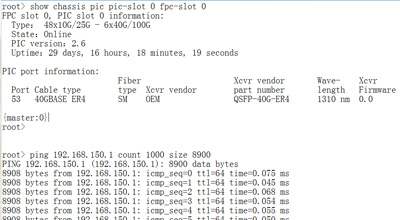
Compatibility is a critical consideration for OLT optical transceivers in actual deployment, primarily involving the following two aspects:
●Firmware Configuration: Different OLT brands have specific requirements for the software driver, Digital Diagnostic Monitoring (DDM), and initialization process of optical transceivers. It is essential to ensure the transceiver firmware matches the host system.
●Burst Timing Design: In the upstream direction, PON systems employ a Time Division Multiple Access (TDMA) mechanism. The transceiver's burst transmission and reception timing must be precisely synchronized with the OLT's scheduling algorithm. Timing parameters may differ among OLT vendors, requiring targeted calibration for the transceivers.
Therefore, when selecting an optical transceiver, beyond matching basic parameters, it is imperative to verify its inclusion in the compatibility list of the target OLT equipment or to choose transceivers certified by the manufacturer. This helps avoid issues such as failure to recognize the transceiver or unstable links.
Selecting an OLT optical transceiver requires comprehensive consideration of multiple technical indicators, including form factor, rate, power & transmission distance, and device compatibility. As PON technology evolves towards higher speeds and lower power consumption, optical transceivers are also undergoing continuous iteration and updates.
 >
>

 >
>
 >
>
 >
>
 >
>
 >
>
 >
>
 >
>