TEL:+86 132 6656 7067




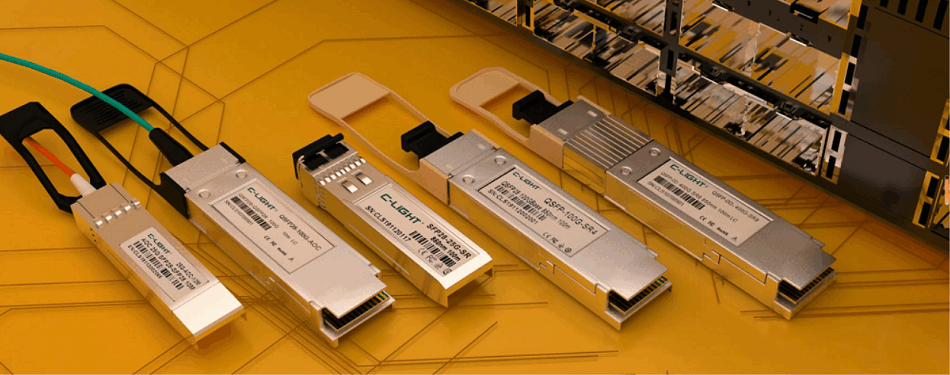
SFP A transmits data to SFP B but SFP B receives bad packets, the following analysis summarizes possible causes and solutions for faults in Transceiver A and Transceiver B:
I. Possible Issues and Solutions for Transceiver A (Transmitting End)
Cause Analysis:
1. Abnormal Transmit Optical Power: The output optical power of Transceiver A is too low or unstable, causing severe signal attenuation during transmission, which prevents End B from correctly interpreting the signal.
2. Dirty End Face of Transceiver A’s Transmit Laser: This results in SFP B receiving abnormal packets.
3. Distorted Data Signal: Faults in the laser or driver circuit inside Transceiver A cause waveform distortion in the transmitted signal.
4. Wavelength Shift or Abnormal Spectral Width: Applicable to optical modules—deviation of the center wavelength beyond the receiving tolerance affects the reception quality at End B.
5. Module Aging or Damage: Performance degradation after long-term use or physical damage leading to abnormal transmission functionality.
6. Compatibility Issues: Mismatch between Transceiver A and the connected device (e.g., switch optical port) or fiber type.
7. Unstable Connection of Transceiver A’s Transmit Laser Jumper Cable.
Solutions:
1. Use an optical power meter to test the transmit optical power of Transceiver A. Replace the module if it does not meet the standard.
2. Clean the end face to ensure it remains clean.
3. Check whether the device configuration (e.g., speed, duplex mode) matches. Reset or update the firmware if necessary.
4. Replace Transceiver A and test it on another normal port to confirm whether the issue lies with the module itself.
5. Reconnect the jumper cable, ensure the use of compliant fiber jumper cables (e.g., single-mode/multi-mode matching), and clean the fiber interface.
II. Possible Issues and Solutions for Transceiver B (Receiving End)
Cause Analysis:
1. Insufficient Received Optical Power: This may be due to excessive fiber length, excessive bending, dirty connectors, or low transmit power from Transceiver A, causing signal strength to fall below the receiving sensitivity.
2. Faulty Components at the Receiving End: Abnormalities in the photoelectric converter or amplifier of Transceiver B prevent correct restoration of the electrical signal.
3. Module Compatibility or Protocol Mismatch: Inconsistency with the device interface or communication parameters (e.g., speed, encoding method) of Transceiver A.
4. External Interference: Electromagnetic interference or optical reflection (e.g., contamination on the fiber end face) leading to signal misinterpretation.
Solutions:
1. Measure the received optical power of Transceiver B. If it is too low, check the fiber link loss and clean or replace the fiber connectors.
2. Check error counts on the device end (e.g., CRC errors, packet loss statistics) to confirm whether the fault lies at the receiving end.
3. Replace Transceiver B for testing, or connect it to another normal link to verify performance.
4. Ensure the device port configuration matches the module and verify whether the negotiation status at both ends of the link is normal.
When troubleshooting, prioritize checking physical layer factors (e.g., fiber link quality, interface cleanliness, optical power values), followed by compatibility and configuration issues between the module and the device. If conditions allow, using the replacement method (swapping modules, ports, or fibers) can quickly locate the source of the fault. If the problem persists, further investigation of device logs, temperature environment, firmware versions, and other comprehensive factors is recommended.
 >
>

 >
>
 >
>
 >
>
 >
>
 >
>
 >
>
 >
>