TEL:+86 132 6656 7067




1. Introduction
Silicon photonics optical engines are becoming an important building block for high-speed optical connectivity. By integrating multiple photonic functions into a compact photonic integrated circuit (PIC), an optical engine can support higher bandwidth density for 400G, 800G, 1.6T, and future optical interconnect systems.
2. What Is a Silicon Photonics Optical Engine?
A silicon photonics optical engine is an integrated optoelectronic subsystem that converts electrical signals into optical signals and optical signals back into electrical signals. It typically combines a silicon photonic PIC with lasers, drivers, receivers, and other electrical components.
3. What Is a Photonic Integrated Circuit?
A photonic integrated circuit is a semiconductor-based optical circuit that can integrate waveguides, modulators, wavelength filters, multiplexers, splitters, and photodetectors. It performs multiple optical functions on a compact chip rather than relying entirely on separate optical components.
4. Why Optical Engines Matter
Higher network speeds require more optical channels, faster electrical interfaces, greater bandwidth density, and better power efficiency. Optical engines provide a way to integrate these functions while reducing the physical complexity of the optical path.
5. Basic Optical Engine Architecture
A simplified architecture is:
Electrical Input → Driver → Silicon Photonic PIC → Optical Output
On the receive side:
Optical Input → Photodetector → TIA / Receiver IC → Electrical Output
6. Main Components
| Component | Main Function |
|---|---|
| Silicon Photonic PIC | Optical routing, modulation, multiplexing and detection |
| Laser | Provides optical carrier light |
| Driver IC | Drives the optical modulator |
| Photodetector | Converts optical signals to electrical signals |
| TIA | Amplifies received electrical signals |
| Controller / PMIC | Power, monitoring and control functions |
7. Silicon Photonic Waveguides
Optical waveguides route light through the PIC. Instead of using separate fiber or discrete optical paths for every function, integrated waveguides connect different photonic components on the same chip.
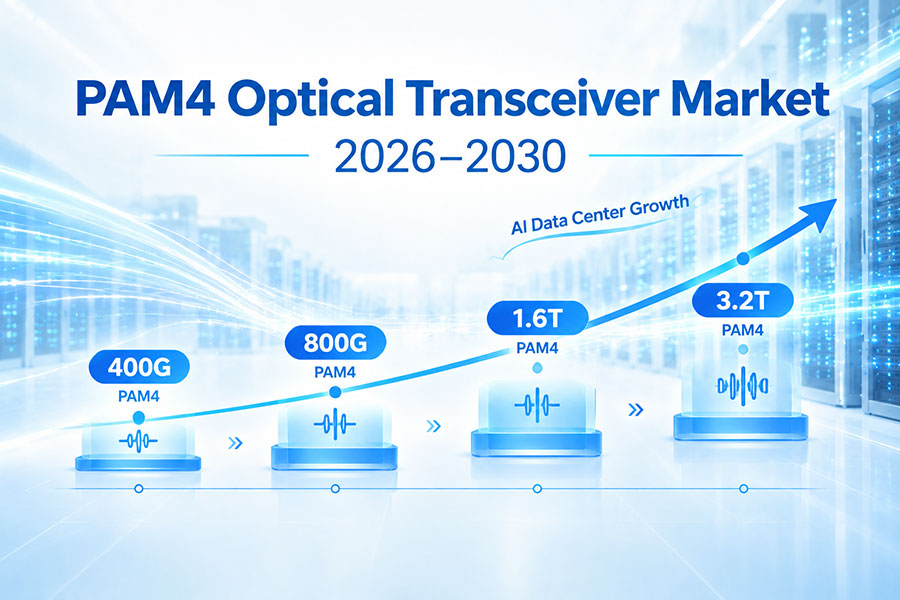
8. Optical Modulators
Modulators encode electrical information onto optical carriers by changing properties of the light. Silicon photonic modulators can be integrated directly into the PIC, reducing the need for separately packaged modulation components.
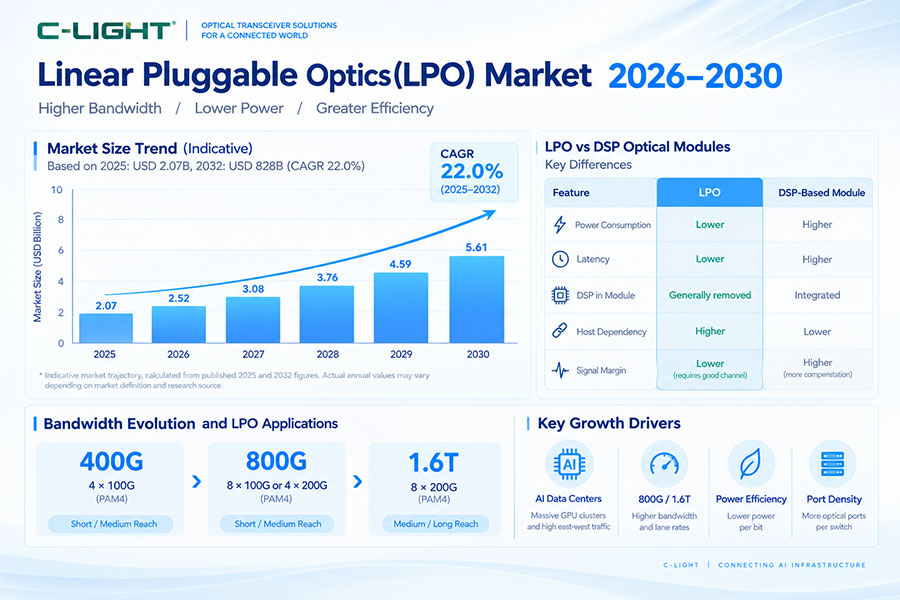
9. Photodetectors
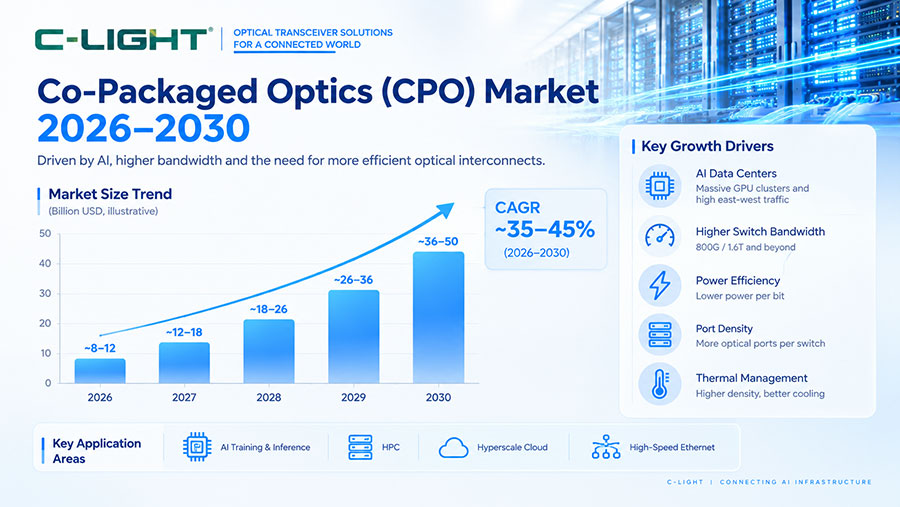
Photodetectors convert received optical signals back into electrical signals. Silicon photonics can integrate or closely couple photodetection functions with the PIC, creating a compact receiver architecture.
10. Laser Integration
The laser provides the optical carrier used by the modulator. Depending on the architecture, the laser can be external, hybrid-integrated, or directly integrated with the photonic platform. Silicon photonics does not necessarily mean that every optical function is fabricated in silicon.
11. On-Chip Lasers
Some silicon photonics platforms integrate lasers directly with the photonic circuit or use laser-on-wafer techniques. This can simplify optical coupling and support wafer-level manufacturing and testing.
12. External Laser Architecture
An external laser can provide continuous-wave optical light to the silicon photonic PIC. This approach separates the light-generation function from the photonic circuit while retaining integrated modulation and wavelength-processing functions.
13. Hybrid Laser Integration
Hybrid integration combines different semiconductor materials or separately fabricated optical devices with the silicon photonic platform. This provides access to efficient laser technologies while maintaining the integration advantages of silicon photonics.
14. Wavelength Division Multiplexing
Silicon photonic optical engines can integrate wavelength multiplexers and demultiplexers. This allows multiple optical channels to share a fiber pair and is particularly useful in high-bandwidth single-mode optical modules.
15. Optical Multiplexer
The multiplexer combines several optical wavelengths into a common optical path. Integrated WDM structures can reduce the number of external optical components required inside a transceiver.
16. Optical Demultiplexer
The demultiplexer separates incoming wavelengths so that each optical channel can be processed independently by the receiver circuitry.
17. Electrical Driver
The driver IC provides the high-speed electrical signal required by the optical modulator. Driver performance directly affects modulation quality, power consumption, and high-speed optical performance.
18. Receiver and TIA
The receiver section converts the optical signal into an electrical output. The TIA amplifies the low-level photocurrent generated by the photodetector and provides an appropriate electrical signal for the host system.
19. Optical Engine vs Optical Module
An optical engine is normally a functional optoelectronic subsystem inside a larger product. An optical module is the complete pluggable device, including the optical engine, electrical interface, management, mechanical housing, connectors, thermal structure, and other supporting components.
20. Optical Engine in a Pluggable Module
A silicon photonics engine can be integrated into QSFP-DD, OSFP, or other high-speed optical modules. The engine handles core optical conversion while the complete module manages the interface to the host system and fiber infrastructure.
21. 400G Optical Engines
Silicon photonics is already used in 400G-class optical architectures. Four-channel DR and WDM designs can benefit from integrated modulators, photodetectors, and wavelength-processing structures.
22. 800G Optical Engines
At 800G, optical engines must handle higher lane rates and greater bandwidth density. Silicon photonics provides a scalable platform for multi-channel optical architectures, including parallel and WDM designs.
23. 1.6T Optical Engines
1.6T increases the requirement for optical integration because each module may need eight 200G-class channels or another high-bandwidth architecture. Silicon photonics can provide compact optical engines for these emerging systems.
24. 200G Per Lane
200G-class lanes are an important step in the transition to 1.6T networking. Higher lane rates increase the demands on modulators, photodetectors, drivers, TIAs, packaging, and electrical signal integrity.
25. PAM4 Support
Modern high-speed optical engines can support PAM4 signaling. PAM4 uses four amplitude levels to transmit two bits per symbol, enabling higher data rates while increasing sensitivity to noise, distortion, and channel impairments.
26. DSP and Optical Engines
A silicon photonics optical engine does not automatically eliminate DSP. A complete transceiver can combine a silicon photonic engine with DSP, CDR, drivers, TIAs, controllers, and other electronics. Optical integration and signal-processing architecture are separate design dimensions.
27. Optical Engines and LPO
LPO reduces or removes selected module-level digital signal-processing functions and relies more heavily on the host SerDes. Silicon photonics can be used in an LPO architecture, but the two technologies describe different aspects of the system.
28. Optical Engines and CPO
Co-Packaged Optics places optical engines closer to a switching ASIC. Silicon photonics is one technology that can be used to implement these optical engines, while CPO describes the physical integration approach.
29. Optical Engines and Optical I/O
Optical engines are also becoming relevant to optical I/O architectures, where optical connectivity is positioned closer to CPUs, GPUs, and switching silicon. This can shorten high-speed electrical paths and help address bandwidth and power challenges.
30. Power Consumption
Silicon photonics can reduce optical component count and improve integration, but the optical engine's total power depends on the laser, modulator, driver, receiver, TIA, DSP, controller, and thermal design. The PIC alone does not determine power consumption.
31. Power per Bit
Power per bit is useful when comparing different generations of optical engines. A higher-capacity optical engine may consume more total power while still improving energy efficiency per transmitted bit.
32. Thermal Management
As optical engine bandwidth increases, heat generated by drivers, DSPs, lasers, and receivers becomes more important. Heat spreading, heat sinks, airflow, and liquid cooling can all be considered depending on the module and system architecture.
33. Packaging
Packaging connects the PIC, laser, electronics, fibers, and thermal structures into a reliable assembly. Optical coupling and electrical interconnects become increasingly challenging as lane speeds rise.
34. Fiber Coupling
Efficient coupling between the optical engine and external fiber is essential. Edge coupling, grating coupling, and other techniques can be used depending on the PIC design and packaging requirements.
35. Manufacturing
Silicon photonics can use semiconductor manufacturing processes to fabricate large numbers of PICs on wafers. This creates opportunities for higher integration and repeatable manufacturing while shifting some of the complexity toward packaging and optical coupling.
36. Wafer-Level Testing
Integrated photonic circuits can be tested at wafer level for selected optical and electrical parameters. This can help identify known-good photonic dies before final module assembly.
37. Manufacturing Yield
Manufacturing yield depends on PIC fabrication, laser integration, optical coupling, packaging, electrical assembly, and testing. Higher integration can reduce component count while increasing the importance of precise manufacturing processes.
38. Reliability
Optical engine reliability depends on lasers, PICs, optical coupling, solder connections, thermal interfaces, fiber attachments, and packaging. Long-term testing must evaluate the complete engine rather than the PIC alone.
39. Silicon Photonics vs Traditional Optical Engine
| Parameter | Silicon Photonics Engine | Traditional Optical Architecture |
|---|---|---|
| Optical Integration | High | More discrete components |
| Waveguides | Integrated PIC | Discrete optical paths |
| Modulator | Integrated photonic device | Separate device or EML |
| WDM | Can be integrated | Often separate optical components |
| Laser | External or integrated | Discrete or integrated laser |
| Manufacturing | Semiconductor-oriented | Component assembly |
| Scalability | High integration potential | Mature component ecosystem |
40. Applications in AI Data Centers
AI data centers require high-bandwidth connections between GPUs, NICs, switches, and storage systems. Silicon photonics optical engines can support high-density optical connectivity in 800G and 1.6T networking architectures.
41. Optical Engine Selection
Key selection factors include bandwidth, lane rate, optical reach, fiber type, wavelength architecture, laser technology, power consumption, thermal requirements, host interface, packaging, management, reliability, and interoperability.
42. Frequently Asked Questions
Q1. What is a silicon photonics optical engine?
Q2. Is an optical engine the same as an optical module?
Q3. Does silicon photonics include the laser?
Q4. Can silicon photonics support 800G?
Q5. Can silicon photonics support 1.6T?
Q6. Does a silicon photonics engine always use DSP?
Q7. What is the main benefit of an integrated optical engine?
Q8. Does silicon photonics automatically reduce power?
Q9. Can silicon photonics be used in CPO?
Q10. What are the main challenges of silicon photonics optical engines?
43. Summary
Silicon photonics optical engines integrate multiple optical functions into compact photonic platforms and provide an important path for scaling data center connectivity from 400G and 800G toward 1.6T and beyond. A typical engine can combine a silicon photonic PIC, laser source, modulators, photodetectors, drivers, and receiver electronics. Its advantages include high optical integration, WDM capability, multi-channel scalability, and compatibility with advanced optical architectures. However, the PIC itself does not determine the complete module's power, reach, or reliability. Laser integration, DSP architecture, packaging, thermal management, fiber coupling, manufacturing yield, and host compatibility remain critical. Silicon photonics can also coexist with LPO, CPO, and optical I/O, making optical engines an important building block for future AI data center and high-performance networking systems.
 >
>

 >
>
 >
>
 >
>
 >
>
 >
>
 >
>
 >
>