TEL:+86 132 6656 7067




With the rapid development of optical communication networks, SFP optical transceivers are widely used in data centers, telecom networks, enterprise networks, and access systems.
However, different network equipment vendors may have different compatibility requirements for optical modules. To ensure stable operation across various switches, routers, and networking platforms, SFP coding technology has become an important process in optical transceiver manufacturing and deployment.
SFP coding allows engineers to configure optical module information stored in the internal EEPROM, including vendor information, part number, serial number, wavelength parameters, and other MSA-defined data.
1. What Is SFP Coding?
SFP coding refers to the process of reading, editing, and writing configuration information inside the EEPROM memory of an SFP optical transceiver.
The EEPROM stores important module identification and monitoring information, which allows network equipment to recognize and communicate with the optical transceiver.
The main coding information includes:
Vendor name
Part number
Serial number
Date code
Wavelength information
Digital diagnostic monitoring parameters
2. Why Is SFP Coding Important?
2.1 Improve Network Compatibility
Different network equipment manufacturers may use different optical module identification requirements.
Through SFP coding, optical modules can be configured to meet specific equipment compatibility requirements, improving deployment flexibility.
2.2 Support Multi-Vendor Network Environments
Modern networks often include switches and routers from multiple suppliers. A flexible coding solution helps optical module manufacturers and network operators manage different compatibility requirements efficiently.
2.3 Reduce Inventory Pressure
Instead of stocking large quantities of modules for different equipment brands, a programmable optical module solution allows faster customization and configuration.
3. How SFP Coding Works
SFP coding is performed through communication between the coding tool and the optical module EEPROM through the I²C interface.
The general coding process includes:
Insert the SFP module into the coding device
Read existing EEPROM information
Edit required configuration parameters
Write updated information into EEPROM
Verify coding results
Professional coding tools ensure accurate programming while maintaining compliance with optical module standards.
4. SFP Coding Tool Technology
4.1 EEPROM Programming Capability
The core function of an SFP coding tool is programming the customer-specific EEPROM area of optical modules.
The tool should support:
EEPROM reading
EEPROM writing
Parameter editing
Data verification
4.2 Multi-Format Optical Module Support
Modern coding platforms are designed to support multiple optical module form factors.
Supported modules typically include:
SFP
SFP+
SFP28
SFP56
SFP112
CSFP
QSFP+
QSFP28
QSFP56
QSFP112
QSFP-DD
Advanced coding platforms can also support DAC, AOC, and ACC products. :contentReference[oaicite:1]{index=1}
5. Applications of SFP Coding
5.1 Optical Module Manufacturing
During optical transceiver production, coding is an important step for assigning product information and ensuring module identification accuracy.
5.2 Network Equipment Compatibility Testing
Optical module manufacturers use coding tools during compatibility verification with switches, routers, and network platforms.
5.3 Data Center Deployment
Large-scale data centers often require thousands of optical modules with different configurations. SFP coding technology helps simplify module management and deployment.
5.4 Telecom Network Maintenance
Telecom operators can use programmable optical modules to improve flexibility when upgrading or maintaining network infrastructure.
6. C-LIGHT SFP Coding Solutions
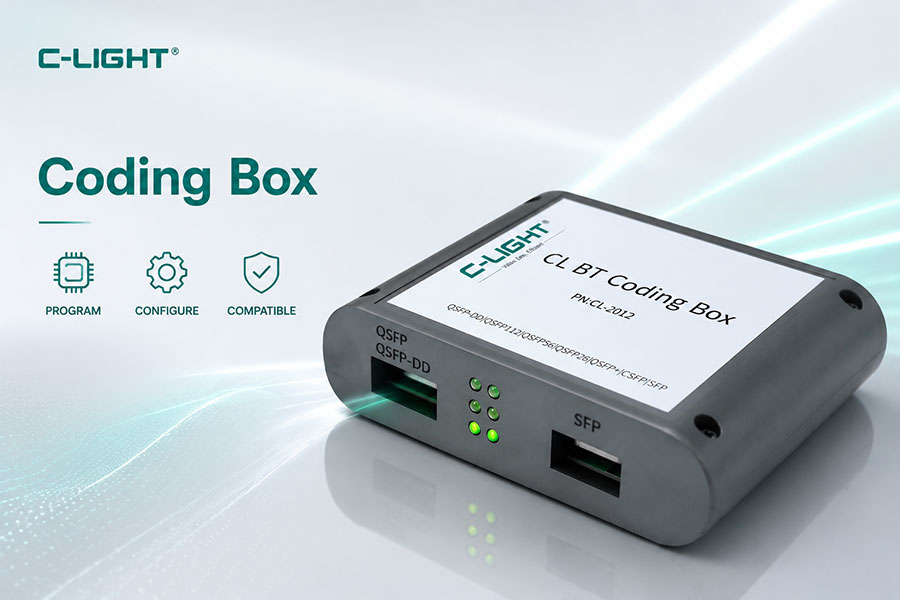
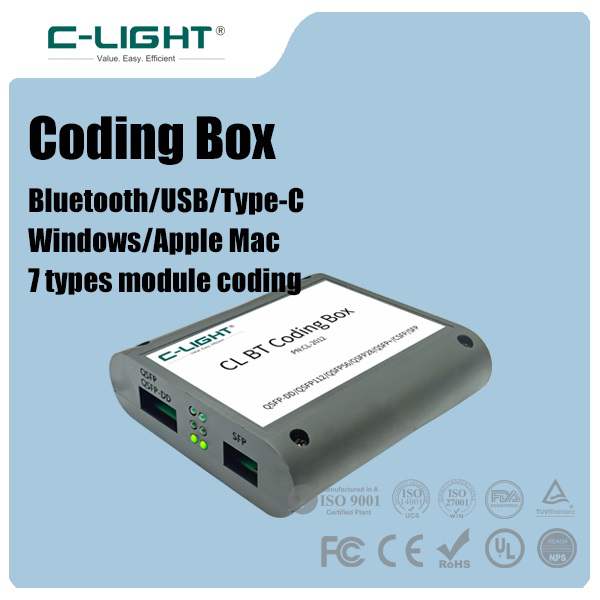
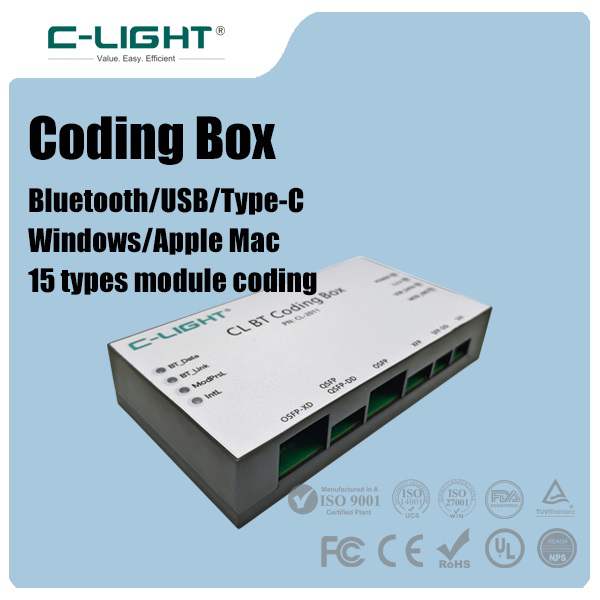
Transceiver Coding Box Tool丨C-LIGHT
C-LIGHT provides professional optical transceiver coding solutions designed for optical module manufacturers, system integrators, and network operators.
The C-LIGHT Transceiver Coding Box supports programming of MSA customer EEPROM areas for various optical transceivers, including SFP, SFP+, SFP28, SFP56, SFP112, CSFP, QSFP family products, as well as DAC, AOC, and ACC cables. :contentReference[oaicite:2]{index=2}
6.1 C-LIGHT Coding Box Features
Wide Compatibility: Supports multiple optical module formats.
Flexible Programming: Supports automatic writing, single-page writing, and single-byte editing.
Parameter Configuration: Supports vendor name, part number, serial number, date information editing.
Professional Software: Provides efficient optical module programming management.
6.2 C-LIGHT Coding Box Product Series
C-LIGHT provides different coding solutions for various application requirements:
Coding Box 2010: Suitable for standard SFP and QSFP coding requirements.
Coding Box 2011: Supports broader optical module formats including OSFP, QSFP-DD, SFP-DD, and other advanced interfaces.
Coding Box 2012: Designed for QSFP family and SFP family coding applications with flexible connectivity options.
7. Future Development of SFP Coding Technology
As optical communication speeds continue increasing from 100G to 400G, 800G, and beyond, optical module coding technology is also evolving.
Future coding solutions will focus on:
Higher-speed optical module support
More intelligent programming software
Automated batch processing
Advanced compatibility management
8. Conclusion: SFP Coding Improves Optical Network Flexibility
SFP coding technology plays an important role in optical transceiver customization, compatibility management, and network deployment.
With the continuous growth of data centers, telecom networks, and high-speed optical communication systems, professional coding tools provide an efficient solution for optical module configuration and management.
C-LIGHT Coding Box solutions help customers achieve reliable optical transceiver programming for modern networking applications.
9. FAQ: SFP Coding
Q1: What is SFP coding?
Answer: SFP coding is the process of programming optical module EEPROM information to configure identification data and compatibility parameters.
Q2: Why do optical modules need coding?
Answer: Coding helps optical modules meet compatibility requirements of different network equipment and improves deployment flexibility.
Q3: What information can be changed through SFP coding?
Answer: Common editable information includes vendor name, part number, serial number, date code, and wavelength parameters.
Q4: What optical modules are supported by coding tools?
Answer: Professional coding tools support SFP, SFP+, SFP28, SFP56, SFP112, QSFP, QSFP28, QSFP-DD, and other optical interfaces.
Q5: What is C-LIGHT Coding Box used for?
Answer: C-LIGHT Coding Box is used for optical transceiver EEPROM programming, compatibility configuration, and parameter management.
 >
>

 >
>
 >
>
 >
>
 >
>
 >
>
 >
>
 >
>