TEL:+86 132 6656 7067




Selecting the appropriate transceiver form factor depends on several key considerations:
1. Bandwidth Requirements
If your network traffic demands 100G connectivity today or in the foreseeable future, QSFP28 is the clear choice. For deployments where 40G remains sufficient—such as enterprise aggregation layers with moderate growth projections—QSFP+ offers a cost-effective solution.
2. Switch/Router Port Support
Verify that your network equipment supports the desired form factor. Many modern switches offer QSFP28 ports that are backward-compatible with QSFP+ modules, providing a smooth migration path. However, QSFP+ ports cannot accommodate QSFP28 modules operating at 100G.
3. Fiber Infrastructure
Consider your existing fiber plant. QSFP+ and QSFP28 both support multimode (MMF) and single-mode (SMF) fiber, but specific variants have different requirements:
SR4: Requires MPO/MTP multimode fiber with 8 or 12 fibers.
LR4/CWDM4/ER4: Use duplex LC connectors over single-mode fiber.
4. Power and Thermal Budget
QSFP28 modules consume more power (3.5–5 W) than QSFP+ modules (1.5–3.5 W). High-density 100G deployments require adequate power and cooling capacity in the host switch.
5. Cost Considerations
QSFP+ modules are generally less expensive than QSFP28 modules. For 40G connectivity, QSFP+ remains the more economical choice. However, the cost-per-gigabit of QSFP28 is significantly lower, making 100G the more efficient option for high-bandwidth applications.
6. Migration Path
QSFP28 provides a forward-looking upgrade path to higher speeds. The QSFP family continues to evolve with QSFP56 (200G) and QSFP-DD (400G/800G), both of which maintain backward compatibility with QSFP28 ports
How to Choose Between QSFP+ and QSFP28 FAQ
Q1: What is the difference between QSFP+ and QSFP28?
Answer: The main difference between QSFP+ and QSFP28 is the supported data rate.
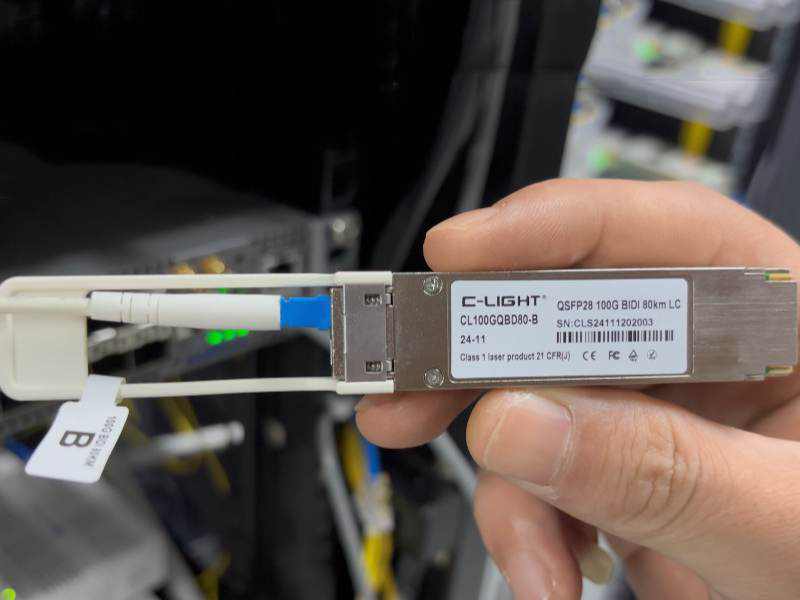
QSFP+ is designed for 40G Ethernet, using four 10Gbps electrical lanes to provide 40Gbps total bandwidth.
QSFP28 is designed for 100G Ethernet, using four 25Gbps electrical lanes to achieve 100Gbps total bandwidth.
Although both modules share the same physical form factor, QSFP28 provides significantly higher bandwidth for modern data center and high-performance networking applications.
Q2: When should I choose QSFP+ 40G optical modules?
Answer: QSFP+ is a suitable choice when your network requirements include:
Existing 40G Ethernet infrastructure
Moderate bandwidth requirements
Enterprise aggregation networks
Cost-effective data center connectivity
QSFP+ optical modules provide a mature and reliable solution for 40G applications, especially when existing switches and network devices already support QSFP+ ports.
Q3: When should I choose QSFP28 100G optical modules?
Answer: QSFP28 is recommended for new network deployments that require higher bandwidth, scalability, and future expansion.
Typical QSFP28 applications include:
100G data center spine-leaf networks
Cloud computing infrastructure
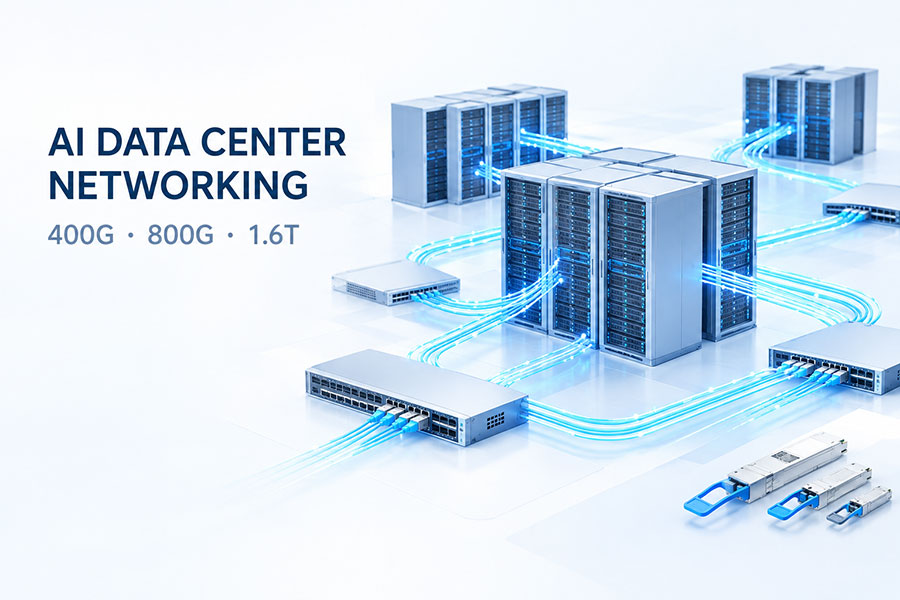
AI and HPC clusters
Data Center Interconnect (DCI)
Telecom backbone networks
For organizations planning long-term network growth, QSFP28 provides a better migration path toward higher-speed technologies.
Q4: Are QSFP+ and QSFP28 modules compatible with each other?
Answer: QSFP+ and QSFP28 modules share the same physical size and connector design, but their compatibility depends on the host device.
A QSFP28 port can typically support QSFP+ modules and operate at 40G speeds.
However, a QSFP+ port cannot support QSFP28 modules running at 100G because the hardware does not provide sufficient bandwidth capability.
Network equipment compatibility should always be verified before deployment.
Q5: What factors should I consider when choosing QSFP+ or QSFP28?
Answer: The key factors include:
Required network bandwidth
Switch and router compatibility
Existing fiber infrastructure
Transmission distance
Power consumption
Future upgrade requirements
Total deployment cost
Choosing the right optical module helps ensure network reliability while reducing unnecessary upgrade expenses.
Q6: What is the difference between QSFP+ and QSFP28 power consumption?
Answer: QSFP28 modules generally consume more power than QSFP+ modules because they support higher transmission speeds and more advanced optical components.
Typical considerations include:
QSFP+:
Lower power consumption
Suitable for existing 40G networks
QSFP28:
Higher bandwidth density
Requires stronger thermal management in high-density deployments
Power and cooling capacity should be considered when deploying large numbers of 100G optical modules.
Q7: Can QSFP28 support network migration from 40G to 100G?
Answer: Yes. QSFP28 provides a flexible migration path from 40G to 100G networking.
Many modern switches with QSFP28 ports can support QSFP+ modules, allowing organizations to gradually upgrade their infrastructure instead of replacing all equipment immediately.
QSFP28 also supports breakout applications, such as connecting one 100G port to multiple lower-speed connections, providing additional deployment flexibility.
Q8: How do I choose between QSFP+ and QSFP28 for a data center upgrade?
Answer: The choice depends on current requirements and future growth plans.
Choose QSFP+ when:
Maintaining existing 40G networks
Bandwidth requirements are limited
Cost optimization is the priority
Choose QSFP28 when:
Deploying new data centers
Supporting 100G Ethernet
Building AI, cloud, or HPC networks
Preparing for future bandwidth growth
For new high-performance data center deployments, QSFP28 is generally the preferred solution because it provides higher bandwidth density and better scalability.
 >
>

 >
>
 >
>
 >
>
 >
>
 >
>
 >
>
 >
>