TEL:+86 132 6656 7067




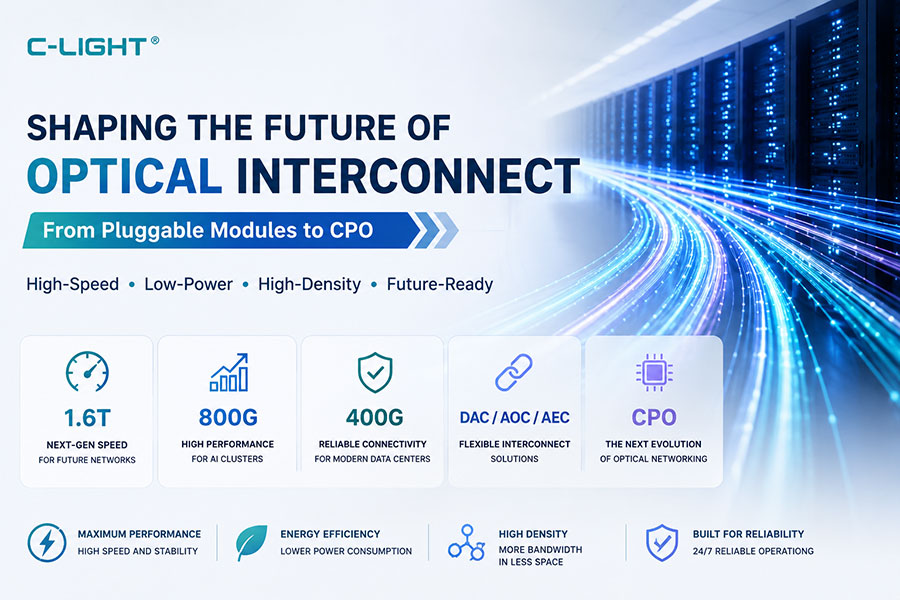
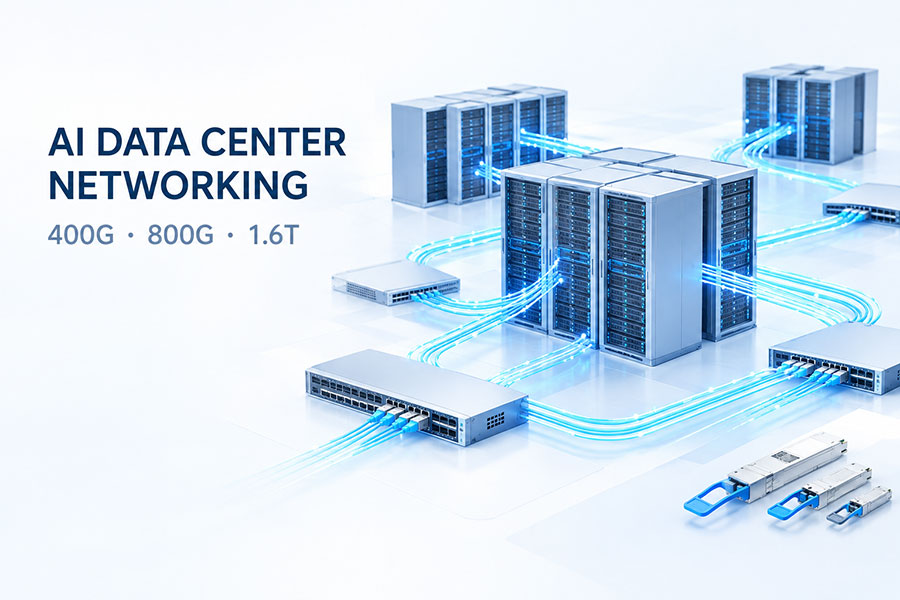
Optical interconnect technology is entering a major transition. As artificial intelligence, high-performance computing, cloud services, and large-scale data centers continue to expand, network bandwidth requirements are moving rapidly from 400G to 800G, 1.6T, and eventually higher data rates.
For many years, pluggable optical modules have been the mainstream solution for high-speed data transmission. However, increasing bandwidth density, power consumption, thermal challenges, and switch-to-optics connectivity requirements are creating new demands. Co-Packaged Optics (CPO) is emerging as one of the key technologies for addressing these challenges.
This article examines the evolution from traditional pluggable optical modules to 800G and 1.6T solutions, explains the role of CPO, and discusses how optical interconnect technology may evolve in next-generation AI data centers.
1. Why Optical Interconnect Is Becoming More Important
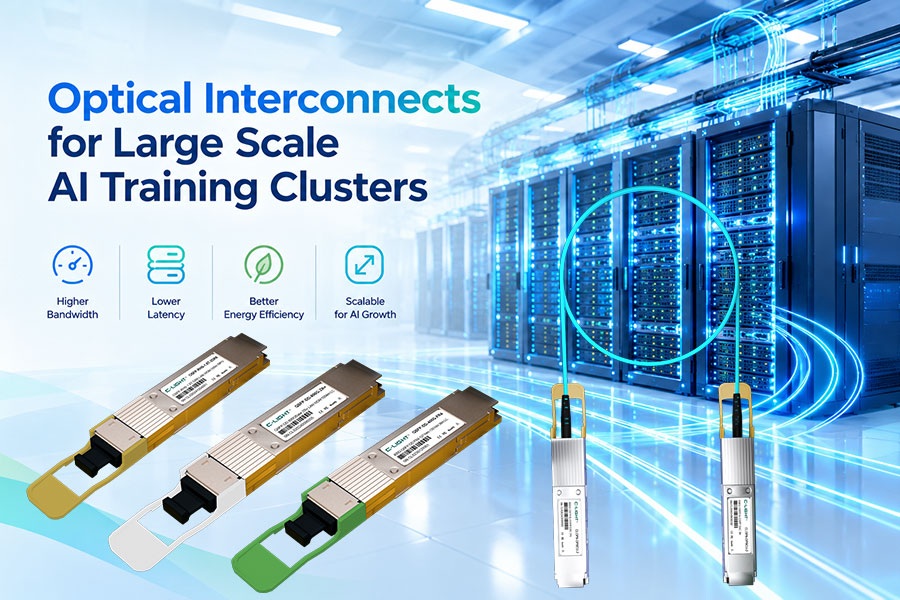
Modern data centers are no longer dominated by conventional CPU workloads. AI training and inference systems use large numbers of GPUs and accelerators that must exchange enormous volumes of data with extremely low latency.
As the number of GPUs increases, the network connecting compute nodes becomes a critical part of the overall system. Optical interconnects provide high bandwidth, low transmission loss, long reach, and strong scalability compared with traditional copper-based connections.
The growth of AI clusters is therefore directly increasing demand for high-speed optical transceivers, optical engines, fiber connectivity, and integrated photonics.
2. The Evolution of Optical Interconnect
The development of optical interconnect technology can be viewed as a continuous evolution toward higher bandwidth density, lower power consumption, and tighter integration.
2.1 From 100G to 400G
100G optical modules became widely adopted in data center and telecom networks. As network traffic increased, 200G and 400G technologies gradually became important for high-performance data center applications.
400G optical modules typically use multiple electrical and optical lanes to achieve higher aggregate bandwidth. QSFP-DD and OSFP form factors have become important platforms for 400G deployments.
2.2 The Rise of 800G
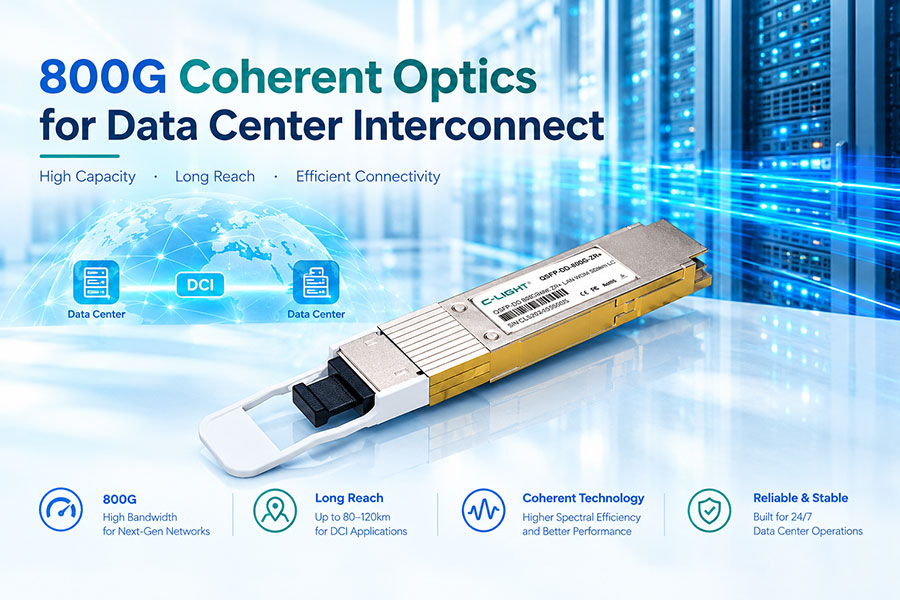
AI clusters are accelerating the transition toward 800G optical connectivity. An 800G link can provide twice the aggregate bandwidth of a 400G connection, helping reduce the number of physical interfaces required for high-bandwidth network architectures.
800G optical modules are increasingly associated with AI fabrics, high-performance computing, GPU clusters, and next-generation data center switches.
Technologies such as PAM4 modulation, advanced DSPs, high-speed VCSELs, EMLs, silicon photonics, and improved thermal management are contributing to the development of 800G optical modules.
2.3 Moving Toward 1.6T
The next major step is 1.6T optical connectivity. Instead of simply increasing the number of optical modules, future systems require higher bandwidth per port and greater integration density.
1.6T optical modules are expected to play an important role in large-scale AI networks where switch capacity and GPU-to-GPU communication requirements continue to increase.
At this stage, the limitations of conventional pluggable optics become increasingly visible, particularly in power consumption, thermal management, electrical signal integrity, and front-panel density.
3. What Are Pluggable Optical Modules?
Pluggable optical modules are removable optical transceivers installed in switch, router, server, or telecom equipment. They integrate optical transmitters, receivers, electrical interfaces, control electronics, and monitoring functions into a standardized form factor.
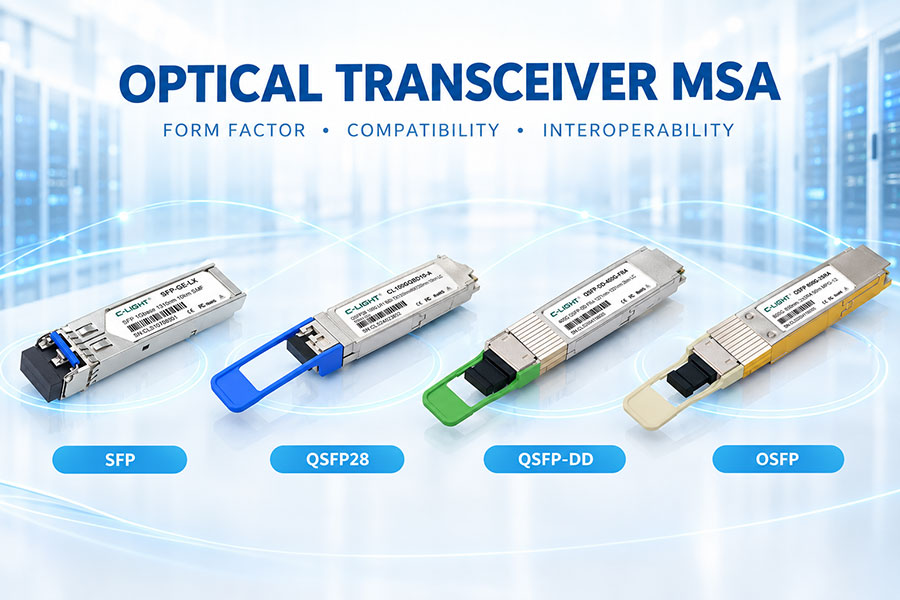
Common form factors include SFP, SFP28, QSFP28, QSFP-DD, OSFP, and other high-speed optical interfaces.
3.1 Advantages of Pluggable Optics
Easy installation and replacement
Flexible network upgrades
Standardized form factors
Wide equipment compatibility
Simple maintenance and troubleshooting
Flexible selection of transmission distance and optical technology
3.2 Limitations at Higher Data Rates
Although pluggable optics remain highly practical, scaling them to extremely high bandwidth levels introduces new challenges.
Higher module power consumption
Increasing thermal density
High-speed electrical signal loss
Increasing PCB routing complexity
Limited front-panel space
Higher switch-to-optics electrical interconnect loss
These limitations are becoming particularly important in AI data centers, where large switches may need to support hundreds of high-speed optical interfaces.
4. What Is Co-Packaged Optics?
Co-Packaged Optics, commonly known as CPO, changes the physical relationship between the optical engine and the switching ASIC.
In a conventional architecture, the optical module is located on the front panel of the switch and communicates with the switching ASIC through electrical traces and connectors on the PCB.
In a CPO architecture, optical engines are positioned much closer to the switching ASIC and integrated into the same package or package-level system.
This shorter electrical path can reduce electrical loss and improve signal integrity at extremely high data rates.
4.1 Traditional Pluggable Architecture
A simplified architecture can be represented as:
Switch ASIC → PCB Electrical Interface → Connector → Optical Module → Fiber
The electrical connection between the ASIC and optical module becomes increasingly challenging as signaling speeds increase.
4.2 CPO Architecture
A CPO architecture moves the optical engine closer to the switching ASIC:
Switch ASIC → Integrated Optical Engine → Fiber
This architecture can significantly shorten the high-speed electrical path and potentially improve system-level energy efficiency.
5. Why CPO Matters for AI Data Centers
AI data centers place unusually high demands on networking infrastructure. GPU clusters may contain thousands or even tens of thousands of accelerators, creating enormous east-west traffic between compute nodes.
When network bandwidth increases, the power consumed by optical interfaces and electrical interconnects becomes a significant component of overall system power.
CPO is therefore being investigated as a way to address several fundamental challenges simultaneously.
5.1 Lower Electrical Interconnect Loss
High-speed electrical signals experience increasing insertion loss and signal degradation as data rates increase. Shortening the electrical path between the switch ASIC and optical engine can help reduce these effects.
5.2 Improved Energy Efficiency
One of the major objectives of CPO is to reduce the energy required to move high-speed electrical signals between the switch ASIC and optical interface.
This becomes increasingly important as switch bandwidth moves toward 51.2T, 102.4T, and beyond.
5.3 Higher Bandwidth Density
Traditional pluggable modules require physical space around each optical interface. Integrating optical engines closer to the ASIC creates new opportunities for higher bandwidth density within a switch system.
5.4 Better Scaling for Future Networks
As 800G becomes widely deployed and 1.6T interfaces move toward broader adoption, optical architecture must scale alongside switch ASIC bandwidth. CPO provides one possible path toward this future.
6. Pluggable Optics vs CPO
Pluggable optics and CPO are not simply competing technologies. They represent different approaches to solving different system requirements.
| Feature | Pluggable Optics | CPO |
|---|---|---|
| Maintenance | Easy replacement | More integrated |
| Upgrade Flexibility | High | Lower |
| Electrical Path | Longer | Shorter |
| Bandwidth Scaling | Strong for current generations | Strong potential for future generations |
| Thermal Design | Module-level cooling | System-level thermal integration |
| Serviceability | Excellent | More complex |
| Manufacturing Complexity | Relatively mature | Higher |
7. The Role of Silicon Photonics
Silicon photonics is one of the technologies closely associated with the development of high-density optical interconnects and CPO.
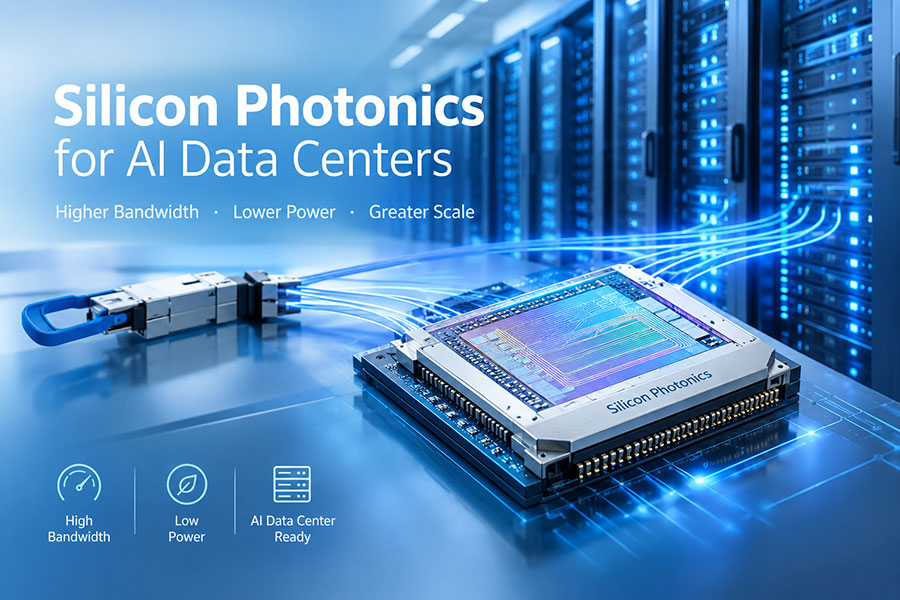
Silicon photonics integrates optical functions onto silicon-based photonic integrated circuits. This approach can combine multiple optical functions into a compact architecture and support higher levels of integration.
For 800G and 1.6T applications, silicon photonics can help address the requirements for compact optical engines, multi-channel optical transmission, and advanced packaging.
Silicon photonics is particularly attractive for CPO because the optical engine needs to be integrated closely with the switching ASIC while maintaining high optical performance and manufacturing scalability.
8. The Importance of PAM4 Technology
PAM4 has become an important modulation technology for high-speed optical communication.
Traditional NRZ signaling uses two signal levels to represent one bit per symbol. PAM4 uses four signal levels and can transmit two bits per symbol.
This enables higher data rates without simply doubling the symbol rate, making PAM4 particularly valuable for 400G, 800G, and emerging 1.6T optical technologies.
However, PAM4 also introduces stricter requirements for signal integrity, noise control, transmitter performance, receiver sensitivity, equalization, and DSP technology.
9. 800G and 1.6T Optical Modules in the Transition Period
Although CPO is attracting significant attention, pluggable optical modules will continue to play an important role in the optical networking market.
800G OSFP and QSFP-based solutions provide a practical way for data centers to increase bandwidth without completely changing their network architecture.
1.6T pluggable optics can further extend this approach while the industry continues to develop CPO packaging, thermal solutions, optical engines, and manufacturing processes.
This means the market is likely to experience a long transition period in which pluggable optics, co-packaged optics, and other integrated optical architectures coexist.
10. Optical Interconnect Challenges in CPO Systems
CPO provides significant technical advantages, but it also introduces new engineering challenges.
10.1 Thermal Management
AI switches and optical engines generate significant amounts of heat. Integrating optical components close to a high-power switching ASIC makes thermal design more complicated.
Advanced air cooling and liquid cooling technologies may both play roles in future high-density optical systems.
10.2 Optical Engine Reliability
Pluggable modules can be replaced individually when a module fails. In a highly integrated CPO architecture, optical engine maintenance can be more complicated.
Manufacturers therefore need to improve optical engine reliability, packaging technology, testing procedures, and field service strategies.
10.3 Manufacturing and Packaging
CPO requires highly precise integration between electrical, optical, thermal, and mechanical components. Advanced packaging becomes a critical part of system design.
10.4 Fiber Management
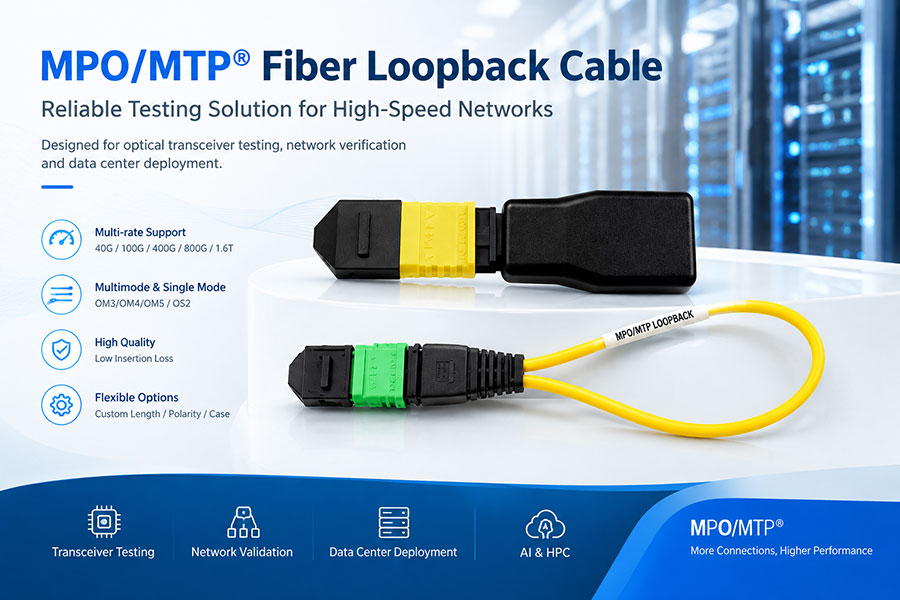
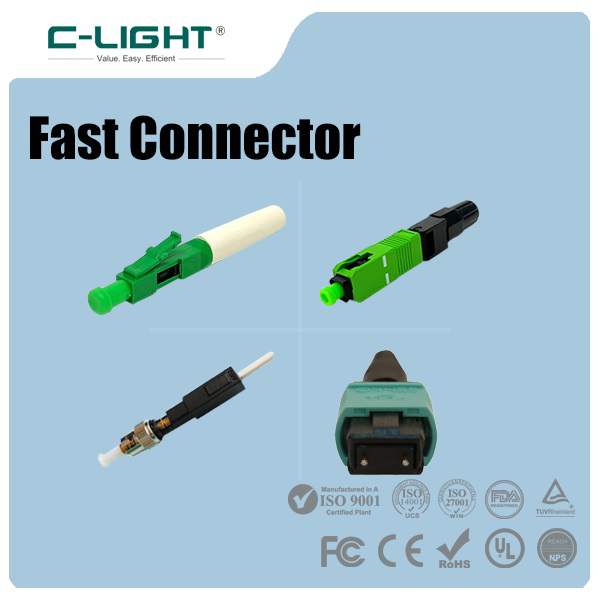
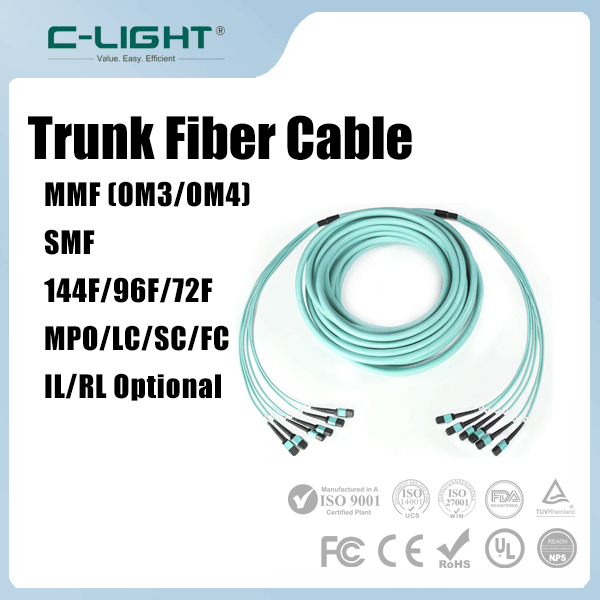
As optical density increases, fiber routing and connector management become increasingly important. MPO/MTP and other high-density fiber connectivity solutions can help simplify large-scale optical cabling.
11. Will CPO Replace Pluggable Optical Modules?
CPO is unlikely to immediately replace pluggable optics across all applications.
Pluggable modules have major advantages in flexibility, serviceability, interoperability, and deployment. These characteristics are extremely valuable for enterprise networks, telecom networks, cloud data centers, and many other applications.
CPO is more likely to gain adoption first in environments where bandwidth density, power efficiency, and switch performance are more important than field replaceability.
Large-scale AI clusters and high-performance computing systems are therefore among the most promising applications for CPO.
12. The Future Optical Interconnect Architecture
The future of optical interconnect is unlikely to be based on a single technology. Instead, multiple architectures will coexist according to bandwidth, reach, power, cost, and system requirements.
A possible development path is:
400G → 800G → 1.6T → Higher-Speed Pluggable Optics → Optical Engines → CPO → Advanced Photonic Integration
At the same time, technologies such as silicon photonics, co-packaged optics, linear-drive optics, advanced DSP, optical I/O, and photonic integration will continue to evolve.
13. C-LIGHT Optical Interconnect Solutions
As network bandwidth continues to increase, optical transceivers and high-speed interconnect products remain important building blocks for data center infrastructure.
C-LIGHT provides optical communication products covering multiple generations of network applications, including high-speed optical transceivers and optical interconnect solutions for data center and telecommunications environments.
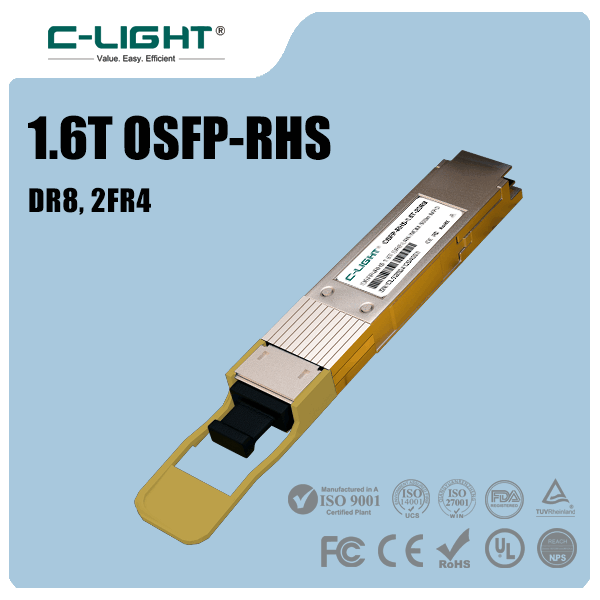
For AI and high-performance data center networks, 400G and 800G optical solutions can support high-bandwidth switch-to-switch and server-to-network connectivity. Emerging 1.6T solutions provide a path toward future higher-density AI networking.
C-LIGHT's product portfolio can be considered alongside the broader evolution from conventional pluggable modules toward higher-density optical engines and future CPO architectures.
14. Market Outlook: From Modules to Optical Engines
The optical interconnect market is moving from a module-centric architecture toward a more integrated architecture.
In the near term, 400G and 800G pluggable modules will remain important because they offer practical deployment and upgrade flexibility.
As AI clusters become larger and switch bandwidth continues to increase, 1.6T and higher-speed interfaces will become increasingly important.
In the longer term, optical engines, silicon photonics, CPO, and optical I/O may become increasingly important as the industry seeks to overcome the electrical interconnect bottleneck.
The key transition is therefore not simply from one optical module to another. It is a transition from pluggable optical interfaces toward deeply integrated optical computing and networking architectures.
15. Conclusion
The future of optical interconnect is being shaped by the rapid growth of AI data centers and high-performance computing. Increasing switch bandwidth and GPU communication requirements are pushing conventional electrical interconnects toward their physical and energy-efficiency limits.
Pluggable optical modules will continue to provide flexibility and practical deployment advantages, while 800G and 1.6T technologies will support the next stage of data center network scaling.
CPO represents a deeper architectural change by bringing optical engines closer to switching ASICs. Combined with silicon photonics, advanced packaging, PAM4 signaling, and high-density fiber connectivity, CPO could become an important technology for future high-bandwidth AI networks.
The long-term direction is clear: optical interconnects are moving closer to the compute and switching silicon. The transition from pluggable modules to CPO will not happen overnight, but it is likely to become one of the most important technology shifts in next-generation data center networking.
16. Q&A
Q1:What is the future of optical interconnect?
Answer: The future of optical interconnect is moving toward higher bandwidth, lower power consumption, higher integration, and shorter electrical paths. 800G, 1.6T, silicon photonics, optical engines, and CPO are important technologies in this evolution.
Q2:Will CPO replace pluggable optical modules?
Answer: CPO is not expected to immediately replace pluggable optics. Pluggable modules remain highly valuable because of their flexibility, serviceability, and compatibility. CPO is expected to become more important in high-density AI and high-performance computing environments.
Q3:Why is 800G important for AI data centers?
Answer: 800G provides significantly higher bandwidth per optical interface and can help support the large data volumes generated by GPU clusters and AI workloads.
Q4:Why is 1.6T optical connectivity important?
Answer: 1.6T increases bandwidth per port and helps data center networks scale to higher switch capacities and larger AI clusters while reducing the number of interfaces required for the same aggregate bandwidth.
Q5:What role does silicon photonics play in CPO?
Answer: Silicon photonics enables multiple optical functions to be integrated into compact photonic circuits. This makes it well suited for high-density optical engines and closely integrated CPO architectures.
Q6:What are the main advantages of CPO?
Answer: The major advantages include shorter electrical interconnects, potentially lower energy consumption, improved signal integrity, higher bandwidth density, and better scalability for future high-speed switching systems.
Q7:What are the main challenges of CPO?
Answer: Major challenges include thermal management, optical engine reliability, advanced packaging, manufacturing complexity, testing, fiber management, and serviceability.
Q8:What technologies will support future optical interconnects?
Answer: Key technologies include PAM4, silicon photonics, CPO, advanced DSP, optical engines, high-density fiber connectivity, liquid cooling, linear-drive optics, and increasingly integrated photonic architectures.
 >
>

 >
>
 >
>
 >
>
 >
>
 >
>
 >
>
 >
>