TEL:+86 132 6656 7067




Fiber enclosures and fiber patch panels are both used to organize and protect optical fiber connections, but they serve different primary functions in a data center cabling system. A fiber enclosure generally provides a protected housing for fiber termination, splicing, cassettes, adapters, and cable management, while a patch panel primarily provides an organized interface for connecting and managing fiber ports.
The terminology can overlap because many modern modular fiber products combine enclosure, patching, splicing, and cassette functions in one platform. A rack-mount fiber enclosure may contain patch panels or adapter modules, while a modular patch panel may also provide cable storage and splice management.
The appropriate solution depends on fiber count, connector type, splicing requirements, rack space, cable routing, port density, network topology, and whether the installation needs a simple patching interface or a more comprehensive fiber management platform.
1. What Is a Fiber Enclosure?
A fiber enclosure is a housing designed to protect, organize, terminate, splice, and distribute optical fibers. In data center environments, an enclosure can be installed in a rack, cabinet, wall, or other designated location.
Depending on the design, a fiber enclosure may contain adapter panels, splice trays, cassettes, fiber organizers, cable-storage areas, cable-entry hardware, and strain-relief components.
The enclosure therefore provides the physical environment in which optical fibers and connectivity modules are safely managed.
In this article, "fiber enclosure" refers primarily to data center and structured-cabling enclosures rather than outdoor fiber splice closures designed for environmental protection.
2. What Is a Fiber Patch Panel?
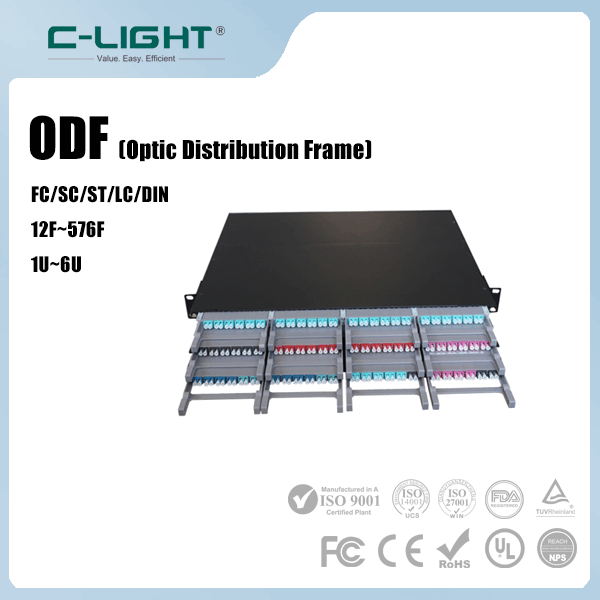
A fiber patch panel is a physical interface used to organize and manage fiber connections. It typically presents optical ports on the front of a rack-mounted or wall-mounted unit so technicians can connect patch cords between network equipment and permanent fiber infrastructure.
A patch panel can be fixed or modular. Modular designs may accept LC adapter panels, MTP/MPO modules, cassettes, splice modules, or other connectivity components.
The main purpose is to create an organized patching point that separates permanent fiber infrastructure from equipment connections.
3. What Is the Main Difference Between a Fiber Enclosure and a Patch Panel?
| Feature | Fiber Enclosure | Fiber Patch Panel |
|---|---|---|
| Primary Role | Protect, organize, terminate, splice, and manage fiber | Provide an organized fiber patching interface |
| Product Scope | Broader housing / management platform | Primarily connection and patching hardware |
| Splicing | Often supported | May or may not be supported |
| Cassettes | Can accommodate cassettes | Modular models can accommodate cassettes |
| Adapters | May contain adapter panels | Usually presents adapters or modules at the front |
| Cable Management | Usually more comprehensive | Focused on patching and connection management |
| Applications | Distribution, termination, splicing, protection | Equipment patching and cross-connect |
The distinction is therefore based primarily on function and product scope rather than a strict physical boundary.
4. How Does a Fiber Enclosure Work?
A fiber enclosure receives incoming fiber cables and organizes them into a protected internal structure. Depending on the application, the fibers can be spliced to pigtails, connected to adapters, routed through cassettes, or distributed to equipment interfaces.
A typical modular architecture can be represented as:
Incoming Fiber Cable → Cable Entry → Fiber Management → Splice / Cassette / Adapter Module → Patch Interface → Equipment
This arrangement allows the enclosure to handle permanent fiber infrastructure while protecting fibers from excessive bending, pulling, and accidental damage.
5. How Does a Fiber Patch Panel Work?
A patch panel creates an accessible point where fiber connections can be patched and rearranged.
A typical data center connection can be represented as:
Backbone Fiber → Patch Panel → Patch Cord → Optical Transceiver → Switch
The permanent backbone can remain connected to the panel while technicians use patch cords to establish or modify equipment connections.
This separation is particularly useful when equipment is frequently added, removed, or relocated.
6. Can a Fiber Enclosure Also Be a Patch Panel?
Yes. Many modern modular systems combine enclosure and patch-panel functions.
A rack-mount fiber enclosure can provide the physical housing while interchangeable adapter panels or cassettes create the actual patching interface. In this configuration, the enclosure is the overall platform and the patching module is the connection interface.
Some vendors also use terms such as fiber patch chassis, fiber panel, modular enclosure, fiber distribution panel, or fiber patch enclosure for products with overlapping functions.
Commercial product portfolios demonstrate this overlap. CommScope, for example, offers modular fiber platforms that can accommodate adapter packs, MPO modules, splice cassettes, and fiber patch functions within the same overall system.
7. How Do They Differ in Splicing?
Fiber enclosures generally provide more options for fiber splicing because they can contain splice trays, splice cassettes, pigtails, and fiber-storage areas.
Patch panels may support splicing, but many patch-focused products are designed primarily for connectorized patching rather than direct splice management.
| Splicing Requirement | Fiber Enclosure | Patch Panel |
|---|---|---|
| Fusion Splicing | Commonly supported | Supported on selected models |
| Splice Tray | Common | Optional on splice-panel models |
| Pigtail Management | Common | Possible depending on design |
| Connectorized Patch Only | Supported | Primary use |
When a project includes a large amount of incoming loose-tube or distribution fiber that must be spliced to connectorized pigtails, an enclosure with dedicated splice management can be useful.
8. How Do They Differ in Cable Management?
A fiber enclosure typically provides more internal space and routing features for organizing incoming cables, fibers, splice trays, storage loops, and connector modules.
A patch panel focuses more directly on the front-facing connection area. Some high-density patch panels also include rear cable-management structures or sliding trays, but the amount of internal management varies by product.
Proper cable management should maintain the required bend radius, minimize mechanical stress, keep connectors accessible, and separate incoming permanent cabling from frequently handled patch cords.
9. How Do They Compare in Fiber Density?
Fiber density depends on the physical platform and the modules installed rather than simply on whether a product is called an enclosure or patch panel.
High-density enclosures and patch panels can both support hundreds of fiber connections within a limited rack footprint through compact adapter systems, cassettes, and multi-fiber connectivity.
| Configuration | Typical Density Characteristic |
|---|---|
| Standard LC Patch Panel | Conventional duplex port density |
| High-Density LC Panel | Increased port density through compact panel design |
| MTP Cassette Enclosure | High-density multi-fiber distribution |
| MTP/MPO Modular Enclosure | High fiber consolidation |
| Splice Enclosure | Density depends on splice capacity and fiber-storage design |
For large data centers, rack-unit capacity, cable diameter, connector footprint, and access space should all be considered when evaluating actual installed density.
10. How Do Fiber Enclosures and Patch Panels Support MTP?
MTP/MPO connectivity can be integrated into both fiber enclosures and modular patch panels.
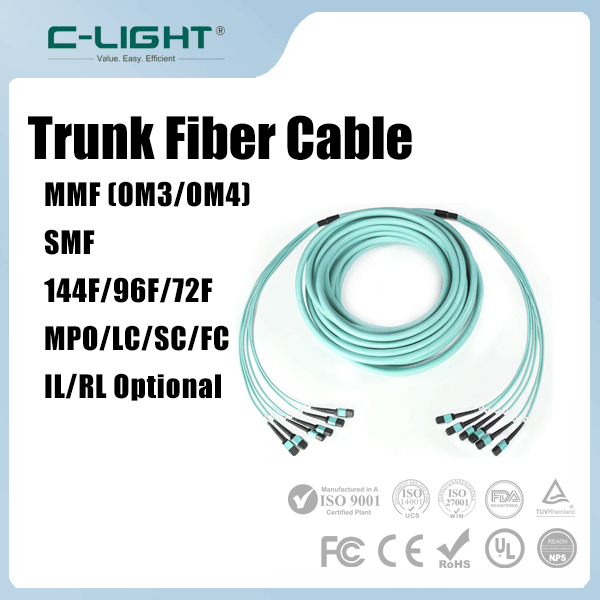
A high-density architecture may use an MTP trunk cable to connect distribution areas, with MTP cassettes inside an enclosure or patch panel providing the transition to LC or other equipment-side interfaces.
A typical architecture is:
MTP Trunk → MTP Cassette → LC Patch Interface → Optical Transceiver
This approach allows a high-fiber-count backbone to remain organized while providing a convenient equipment-side patching interface.
11. How Do They Support LC Connectivity?
LC is widely used at the equipment side of data center fiber systems because many optical transceivers provide duplex LC interfaces.
A patch panel can present LC adapters directly at the front, while an enclosure can house LC adapter panels or LC cassettes as part of a larger modular system.
This makes LC suitable for both conventional patch panels and modular enclosure architectures.
12. How Do They Compare for 100G, 400G, and 800G Networks?
The appropriate infrastructure depends on the optical architecture used by the transceiver.
| Optical Application | Typical Interface | Possible Infrastructure |
|---|---|---|
| 100G SR4 | MPO/MTP | MTP enclosure or modular patch panel |
| 100G LR4 | Duplex LC | LC patch panel or LC cassette enclosure |
| 400G SR8 | MPO/MTP-16 class | High-density MTP infrastructure |
| 400G DR4 | MPO/MTP-12 class | MTP structured cabling |
| 400G FR4 | Duplex LC | LC patching or cassette infrastructure |
| 400G LR4 | Duplex LC | LC patching or cassette infrastructure |
| 800G parallel optics | Multi-fiber interface | High-density multi-fiber infrastructure |
The enclosure or panel should therefore be selected after the optical transceiver interface and network topology have been defined.
13. Which Is Easier to Install?
A simple patch panel can be straightforward to install when the project mainly requires connectorized patching.
A modular enclosure can require more planning because it may contain splice trays, cassettes, adapter panels, cable-storage areas, and multiple internal routing paths.
However, factory-terminated modular enclosures can significantly simplify large deployments by allowing complete fiber assemblies to be installed without performing every termination at the site.
For large structured cabling projects, installation speed therefore depends on the configuration and degree of pre-termination rather than the product name alone.
14. Which Is Easier to Maintain?
A patch panel provides a clear front-facing patch field, which can make individual port identification and patch-cord changes straightforward.
A fiber enclosure can provide additional internal protection and fiber-management functions, but technicians may need to access internal trays, cassettes, or cable-storage areas for certain maintenance operations.
Sliding or front-access modular designs can reduce the amount of disturbance to adjacent connections during maintenance.
High-density systems should also provide adequate space for connector inspection, cleaning, labeling, and testing.
15. How Do They Compare for Network Expansion?
Modular fiber enclosures can provide substantial flexibility for network expansion because new cassettes, adapter modules, splice modules, or other components can be added as the fiber count grows.
Modular patch panels can provide similar scalability when they support interchangeable modules.
Fixed patch panels may be simpler for small installations, but expansion can require additional rack space or a second panel once all available ports are occupied.
For a growing data center, the expected number of fibers and future optical interfaces should be considered during the initial enclosure or panel selection.
16. How Do They Compare for AI Data Centers?
AI data centers create high-density connectivity requirements because large numbers of GPUs, switches, compute nodes, and storage systems can require high-speed optical connections.
A high-density fiber enclosure can provide structured backbone distribution, fiber management, MTP cassettes, and modular patching within a compact footprint.
Patch panels can provide the equipment-side interface where individual LC or MTP connections need to be organized.
In practice, AI facilities can use both. High-density enclosures and modular panels can handle structured backbone infrastructure, while direct DAC, AOC, and optical connections can be used for short equipment-level links.
17. Which Is More Suitable for Structured Cabling?
Both can be part of a structured cabling system, but their roles are different.
| Structured Cabling Requirement | Typical Direction |
|---|---|
| Simple equipment patching | Fiber patch panel |
| Backbone fiber termination | Fiber enclosure or distribution panel |
| Fusion splicing | Fiber enclosure / splice enclosure |
| High-density MTP distribution | Modular enclosure or MTP patch panel |
| Duplex LC patching | LC patch panel or LC cassette enclosure |
| Mixed connector architecture | Modular enclosure with interchangeable panels / cassettes |
| Frequent patch changes | Accessible patch panel |
A common architecture uses the enclosure as the broader management platform and the patch panel or cassette as the equipment-facing connectivity layer.
18. How Should You Choose Between a Fiber Enclosure and Patch Panel?
The choice should start with the type of fiber work that needs to be performed at the installation location.
| Requirement | Suitable Direction |
|---|---|
| Need only a simple fiber patch field | Fiber patch panel |
| Need fiber splicing and storage | Fiber enclosure with splice management |
| Need MTP cassette integration | Modular fiber enclosure or cassette patch panel |
| Need high-density backbone management | High-density fiber enclosure / modular panel |
| Need many duplex LC connections | LC patch panel or LC cassette system |
| Need modular network migration | Modular enclosure with interchangeable cassettes |
| Small number of fixed connections | Standard fiber patch panel |
| Large and evolving data center | Modular enclosure and patch-panel architecture |
Other parameters include fiber count, rack space, connector type, splice capacity, cassette compatibility, cable-entry configuration, bend-radius management, port density, insertion loss, maintenance access, and future expansion requirements.
19. What Should Be Considered in the Installation Design?
The enclosure or patch panel should be designed as part of the complete optical channel.
Important considerations include the number of fibers entering the location, connector type, fiber type, patching method, splice requirements, cable routing, polarity, bend radius, labeling, optical loss, and available rack space.
High-density systems require additional attention to cable access and maintenance clearance. A panel that provides a high number of ports but leaves insufficient room for patch cords and cable routing may create operational problems.
The design should also consider future migration from 100G to 400G, 800G, and higher-speed optical interfaces, particularly in large data center and AI infrastructure.
20. Conclusion
Fiber enclosures and patch panels perform related but different functions in data center fiber infrastructure.
A fiber enclosure is a broader housing and management platform that can provide fiber protection, cable entry, splicing, fiber storage, cassettes, adapter modules, and patching functions.
A fiber patch panel primarily provides an organized interface for connecting and managing fiber ports. It can be fixed or modular and may support LC, MTP/MPO, and other connectivity technologies.
The two are not necessarily alternatives. A modern data center may use a modular fiber enclosure as the main infrastructure platform and install patch panels, MTP cassettes, LC modules, or splice components inside it. This approach provides a structured path for high-density fiber management while allowing the equipment-side connectivity to change as the network evolves.
21.Fiber Enclosure vs Patch Panel Q&A
Q1. What is the difference between a fiber enclosure and a patch panel?
Q2. Can a fiber enclosure contain a patch panel?
Q3. Is a fiber enclosure the same as a splice enclosure?
Q4. Which is better for fiber splicing?
Q5. Can an MTP cassette be installed in a fiber enclosure?
Q6. Can a patch panel support MTP?
Q7. Which is better for LC connections?
Q8. Are fiber enclosures and patch panels used in 400G and 800G networks?
```
 >
>

 >
>
 >
>
 >
>
 >
>
 >
>
 >
>
 >
>