TEL:+86 132 6656 7067




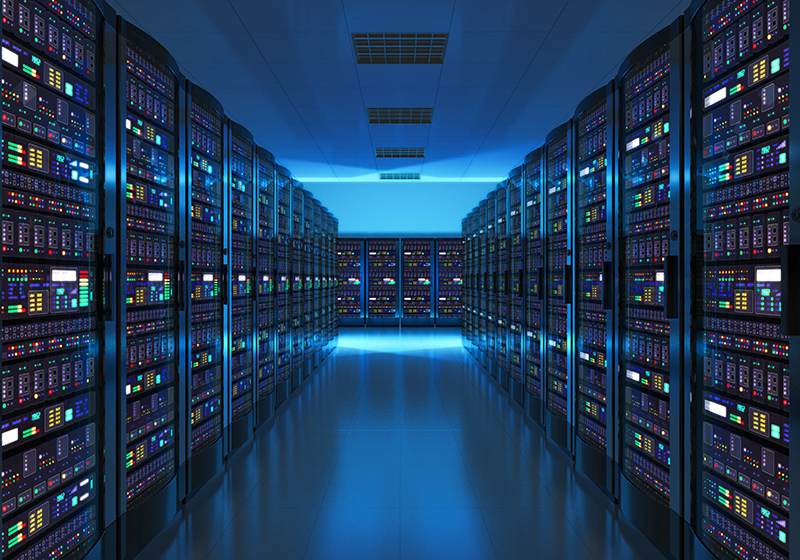
Modern data centers serve as the backbone of the digital economy, hosting everything from cloud computing services and big data analytics to artificial intelligence workloads and enterprise applications. A reliable, efficient data center depends on the seamless integration of multiple infrastructure components, each playing a critical role in ensuring performance, availability, and scalability. This article explores the essential building blocks of data center infrastructure, with a focus on how high-speed optical connectivity—including solutions from C-LIGHT—enables modern data center architectures.
1. The Layered Architecture of Data Center Infrastructure
Data center infrastructure can be understood through a layered model. At the foundation lies L1: Basic Infrastructure, which encompasses all critical support systems—power supply and distribution, cooling, fire suppression, and building management—that keep operations running around the clock. Above this sits L2: ICT Equipment, consisting of servers, storage arrays, network switches, and other hardware that perform core data processing and connectivity. The upper layers include software platforms and business applications that deliver value to end users.
Within the basic infrastructure layer, three core systems are paramount: power supply, temperature control, and management systems. Together, these functions ensure that IT equipment operates 24/7 without interruption, safeguarding against data loss and downtime.
2. Compute: Servers and Storage
Servers are the computational heart of any data center, responsible for processing and storing data. Modern data centers typically employ high-performance, multi-core servers that come in various form factors, including rack-mounted servers, blade servers, and tower servers. The core hardware components of a server include processors (CPUs), memory (RAM), storage systems, network interfaces, power supplies, and thermal management modules.
Storage systems provide persistent data retention for operating systems, applications, and user data. Data centers utilize a range of storage technologies, from traditional hard disk drives (HDDs) to high-speed solid-state drives (SSDs), organized through direct-attached storage (DAS), network-attached storage (NAS), or storage area networks (SAN). The choice of storage architecture significantly impacts performance, capacity, and cost-efficiency.
In recent years, hyper-converged infrastructure (HCI) has emerged as a transformative approach that integrates compute, storage, and networking into a unified software-defined platform, reducing hardware footprint and simplifying management.
3. Power Infrastructure
Power infrastructure forms the foundation of data center reliability. Core components include uninterruptible power supply (UPS) systems, backup generators, and power distribution units (PDUs).
UPS systems provide backup power during outages and maintain consistent voltage and frequency. They come in several types: online UPS delivers continuous power and isolates connected loads from fluctuations; offline UPS activates only when power is lost; and line-interactive UPS dynamically adjusts for voltage variations.
PDUs distribute electrical power to servers, storage devices, and networking equipment. These range from basic PDUs for simple distribution to intelligent PDUs that enable remote monitoring, load management, and power usage tracking for efficiency optimization.
Generators supply backup power during extended outages, typically running on diesel or natural gas, automatically activating when prolonged failures occur. Circuit breakers and switchgear protect equipment from overloads and short circuits while enabling safe maintenance.
Best practices for power infrastructure include implementing redundant power feeds, load balancing, continuous energy monitoring, and maintaining clear electrical layout diagrams.
4. Cooling Systems
Data center equipment generates substantial heat during operation, making effective cooling essential for maintaining equipment reliability and energy efficiency. Modern data centers employ various cooling methods, including air conditioning, chilled water systems, liquid cooling, and hot/cold aisle containment.
Air-based cooling remains prevalent, utilizing Computer Room Air Conditioning (CRAC) or Computer Room Air Handler (CRAH) units to supply cold air and remove heat. Hot/cold aisle containment—organizing server racks into alternating hot and cold aisles—prevents mixing of hot exhaust air with cool intake air, improving cooling efficiency.
Liquid cooling has become essential for managing higher heat loads, as liquids have higher thermal conductivity than air. Key techniques include:
Direct-to-chip cooling: Circulating coolant directly to heat-generating components such as CPUs and GPUs to absorb heat at the source.
Immersion cooling: Submerging servers in a dielectric fluid that absorbs heat, enabling higher-density configurations and reduced noise levels.-
Free cooling (economization): Leveraging external environmental conditions to reduce the need for mechanical refrigeration, thereby saving energy.
Hybrid systems that combine multiple cooling methods—such as integrating air-side economizers with liquid cooling—provide flexibility to handle varying workloads and environmental conditions.
5. Network Infrastructure
Network infrastructure is responsible for data transmission and connectivity within and beyond the data center. The key components include switches, routers, firewalls, and cabling systems.
Network Architecture
Modern data center network architecture is typically built around a physical underlay consisting of cables, switches, and routers that form the foundational connectivity layer. Overlay networks built on top of this physical underlay use technologies like VXLAN to create virtualized network segments, enabling flexible and scalable network configurations.
The spine-leaf architecture has become the dominant topology in modern data centers. In this design, each leaf switch (access layer) connects to every spine switch (core layer), creating a full-mesh topology that reduces latency, eliminates bottlenecks, and provides predictable performance. This architecture addresses the scalability limitations of traditional three-tier (core-aggregation-access) designs.
Structured Cabling
Structured cabling is the physical backbone that connects all active equipment. Standards such as ANSI/TIA-942 provide a comprehensive framework for designing and implementing data center cabling systems, ensuring flexibility and scalability- The cabling infrastructure includes:
Backbone cabling: Links the main distribution area (housing core routers and switches) to distribution areas across the data center.
Horizontal cabling: Connects switches in distribution areas to servers in equipment distribution areas.
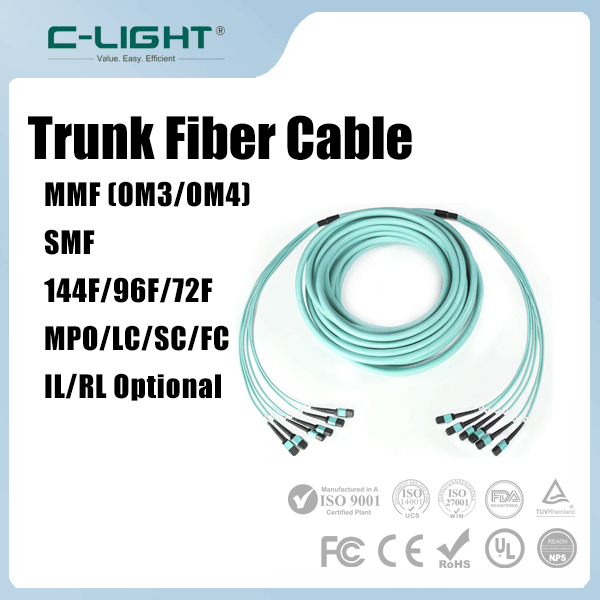
Fiber optic cabling: Essential for high-speed, long-distance transmission, including both single-mode and multimode fibers.
6. Physical Security and Management
Security systems encompass both physical and cybersecurity measures. Physical security includes biometric access control, surveillance cameras, and security personnel to restrict unauthorized physical access. Cybersecurity solutions include firewalls, intrusion detection/prevention systems (IDS/IPS), and encryption to protect data from cyber threats.
Data Center Infrastructure Management (DCIM) software helps monitor, manage, and optimize the performance and energy efficiency of data center components. DCIM provides unified visibility into power, cooling, space, and IT assets, enabling predictive maintenance and intelligent resource allocation.
7. C-LIGHT: Enabling High-Speed Data Center Connectivity
As data center networks evolve to handle exponentially growing traffic from AI training, cloud services, and high-definition streaming, the demand for high-bandwidth, low-latency connectivity has never been greater. C-LIGHT, a Shenzhen-based manufacturer founded in 2011 with 15 years of experience in fiber optic network products, has emerged as a key player in addressing these demands.
Comprehensive Optical Module Portfolio
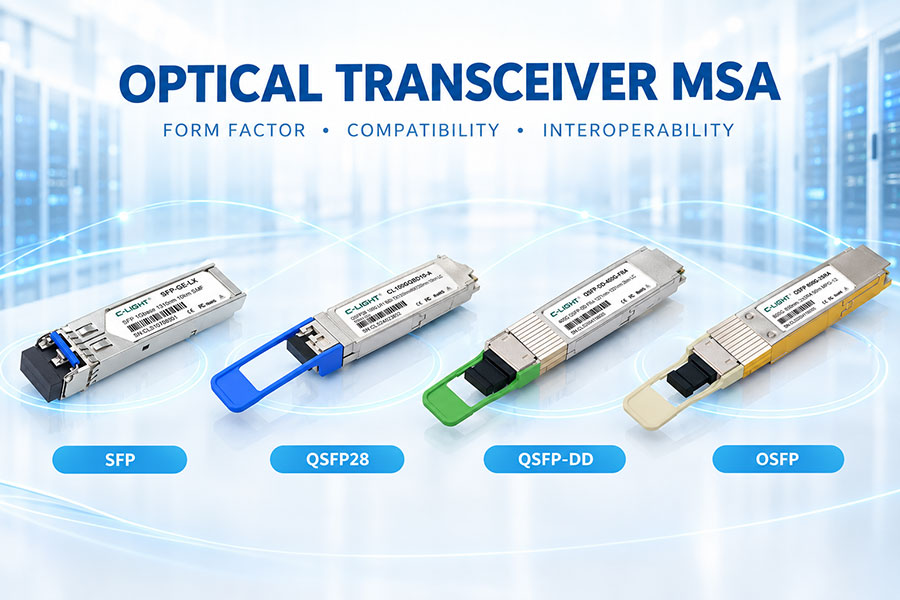
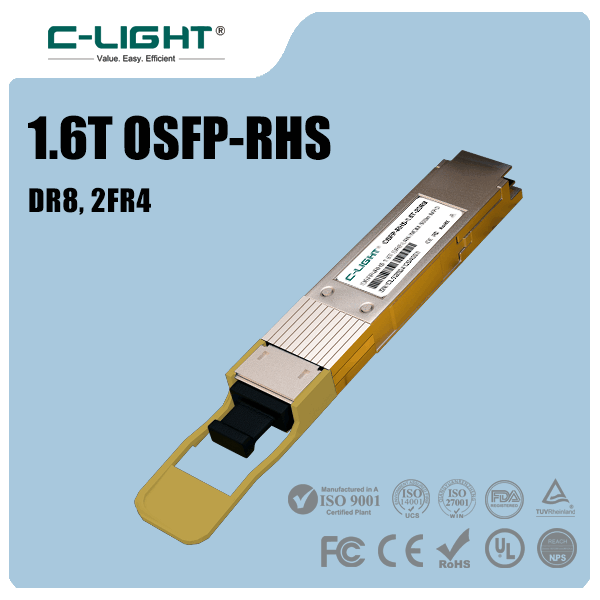
C-LIGHT has developed and produced more than 1,000 optical module product solutions across eight major categories, including 800G, 400G, 200G, 100G, 50G, 25G, and 10G, with numerous industry certifications. The company’s products are widely applied in data center networks, telecommunications FTTx broadband access, DWDM/CWDM wavelength division networks, 5G/6G mobile networks, and enterprise networks.Key optical transceiver offerings include:
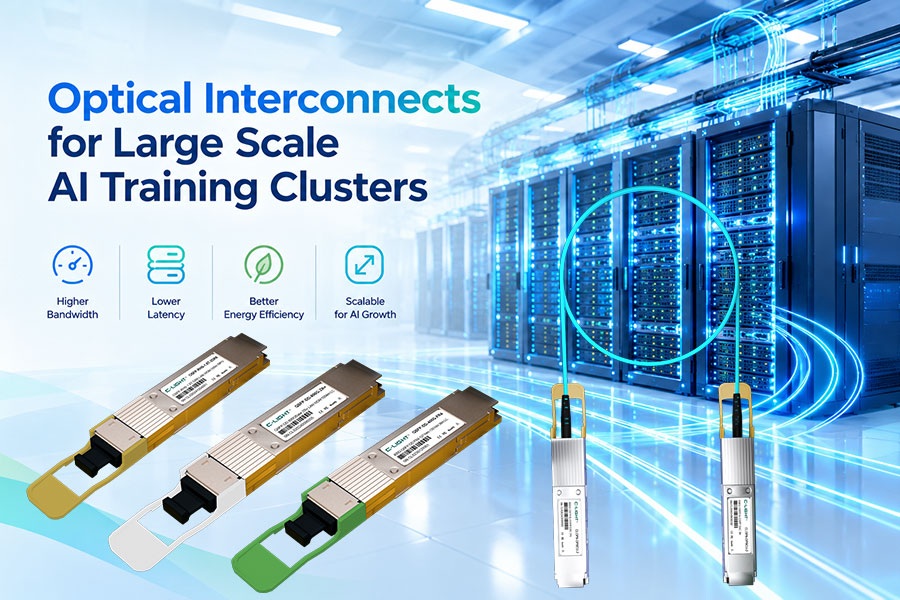
800G QSFP-DD optical transceiver: Supports transmission rates up to 800Gb/s over distances of 100m, 500m, and 2km, suitable for data center networks, cloud computing, AI, and 5G communications
800G OSFP SR8 InfiniBand optical transceiver: Designed specifically for AI clusters and supercomputing centers, achieving 800Gbps transmission based on OSFP packaging and InfiniBand NDR protocol.
400G QSFP-DD FR4 optical transceiver: A hot-pluggable coherent module designed for 400GbE applications over 2km single-mode fiber
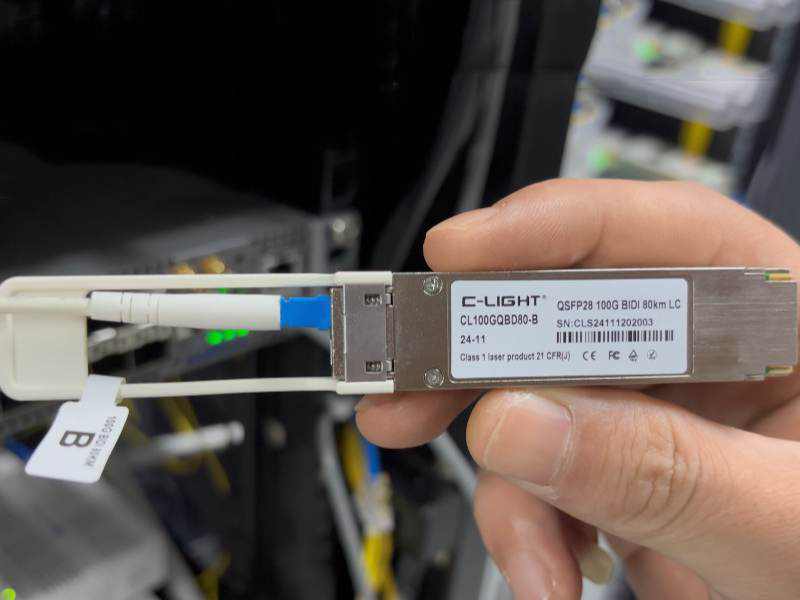
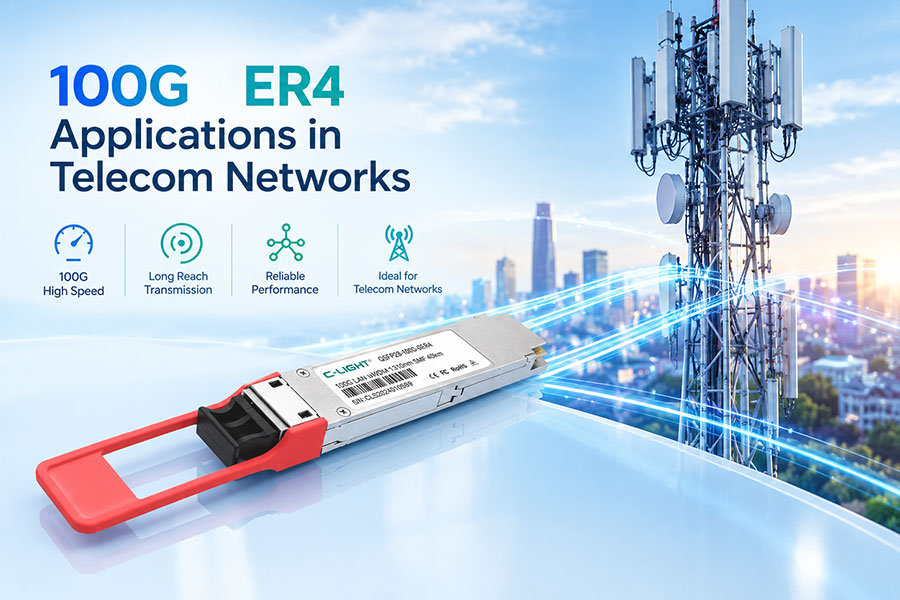
100G QSFP28 LR4 LAN WDM 10km optical transceiver: A compact, low-power solution for 100G Ethernet and long-distance connectivity.
In addition to optical transceivers, C-LIGHT offers active optical cables (AOC), direct attach cables (DAC) , and optical communication jumpers, providing complete interconnect solutions for high-density data center environments.
High-Performance Switching Solutions
C-LIGHT’s switching portfolio includes next-generation high-performance Layer 3 switches designed for high-density, high-bandwidth scenarios:
S5860 Series switch: A high-performance Layer 3 switch with 40G QSFP+ ports and scalability to 100G, delivering ultra-high bandwidth for data center interconnects and MAN backbone. It supports multi-rate access at 1G/2.5G/5G/10G and is designed for next-generation enterprise networks and data centers.
CLS6865-56YC 100G Ethernet switch: Features 48×25G ports and 8×100G uplinks with a switching capacity of 2.4Tbps and forwarding rate of 1780Mpps. Core innovations include a 128MB deep buffer enabling 400μs micro-burst handling without packet loss, M-AG multi-active gateway technology for seamless VM migration, and modular power supply with 1+1 redundancy. This switch builds non-blocking CLOS fabric with 400G upgrade capability, making it ideal for cloud data center cores and enterprise campus backbones.
Advanced Optical Transmission Systems
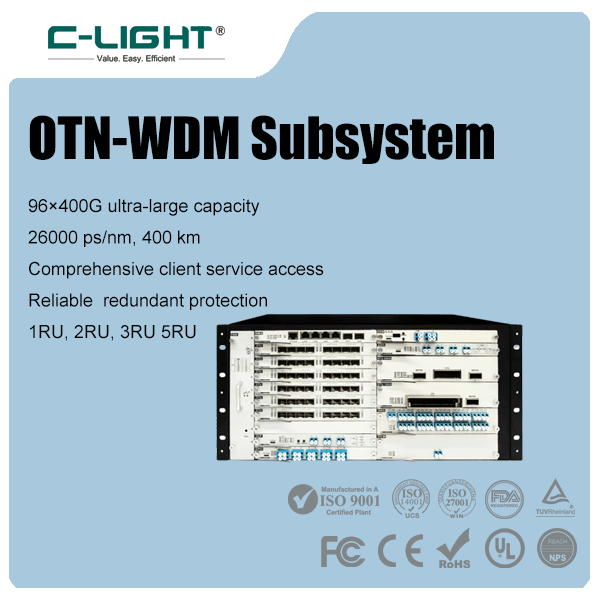
C-LIGHT also provides OTN-WDM subsystems such as the CL-OTN-3900-04, which embodies the philosophy of "Maximum Density, Full-service Support, Zero Compromise," converging optical and data technologies to deliver end-to-end 400G solutions for 5G fronthaul, cloud-network convergence, and mission-critical networks. The company’s product line further includes MUX/Demux, EDFA, and network data detection equipment, addressing the full spectrum of high-speed optical network requirements.
Quality and Innovation
With over 50 R&D engineers—including senior engineers with experience in international first-tier communication companies—C-LIGHT maintains a strong focus on innovation. The company’s R&D laboratory is fully equipped for product design, verification, reliability inspection, and universal testing. Production processes implement comprehensive MES monitoring and management, with mainstream products achieving permanent rolling inventory, ensuring 90% of products are shipped within 2 to 3 days.
8.Conclusion
Modern data center infrastructure is a complex ecosystem of interconnected systems—from power and cooling to compute, storage, networking, and management. Each component must be carefully designed, deployed, and maintained to ensure optimal performance, reliability, and efficiency. As data center speeds continue to scale toward 800G and beyond, the role of high-performance optical connectivity becomes increasingly critical. Companies like C-LIGHT, with their comprehensive portfolio of optical modules, active cables, and high-performance switches, provide the enabling technologies that allow data centers to meet the demands of AI, cloud computing, and the ever-growing digital economy. By understanding and integrating these infrastructure components effectively, organizations can build data centers that are not only robust and scalable but also future-ready.
9.DWDM Q&A
Q1: What is Dense Wavelength Division Multiplexing (DWDM)?
Answer: Dense Wavelength Division Multiplexing (DWDM) is an advanced optical communication technology that combines multiple wavelengths of light into a single fiber. It significantly increases fiber capacity and enables high-speed data transmission over long distances.
Q2: How does DWDM technology improve optical network capacity?
Answer: DWDM allows multiple independent optical channels to transmit simultaneously through different wavelengths on one fiber. This improves fiber utilization and enables higher bandwidth without deploying additional fiber infrastructure.
Q3: What are the main applications of DWDM optical modules?
Answer: DWDM optical modules are widely used in telecom networks, data center interconnects, metro networks, backbone networks, and long-distance optical transmission systems requiring high bandwidth and reliable connectivity.
Q4: What is the transmission distance of DWDM optical modules?
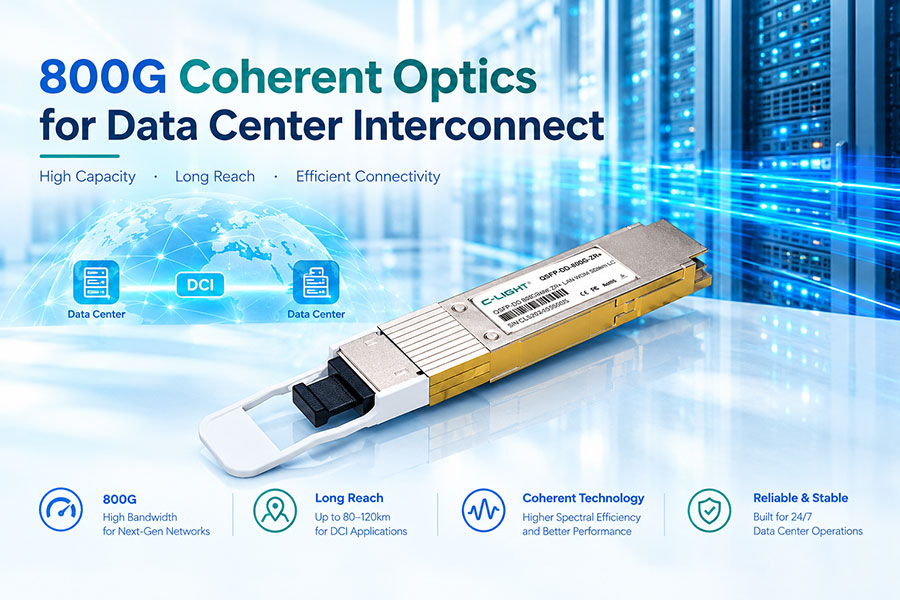
Answer: The transmission distance depends on the module type and network design. C-LIGHT DWDM optical modules support long-distance transmission applications, including solutions up to 120km and beyond for high-performance optical networks.
Q5: What is the difference between DWDM and CWDM?
Answer: DWDM uses closely spaced wavelengths to provide much higher channel density and transmission capacity, while CWDM uses wider wavelength spacing with lower cost and simpler deployment. DWDM is typically preferred for high-capacity and long-distance networks.
Q6: What wavelengths are used in DWDM systems?
Answer: DWDM systems mainly operate in the C-band and L-band wavelength ranges. These bands provide excellent optical performance and support multiple high-speed transmission channels.
Q7: What are the advantages of C-LIGHT DWDM optical modules?
Answer: C-LIGHT DWDM optical modules provide high bandwidth, long-distance transmission capability, stable optical performance, and flexible wavelength options for modern optical transport networks.
High-capacity wavelength multiplexing
Long-distance optical transmission
Stable and reliable operation
Support for telecom and data center applications
Q8: Can DWDM technology support future network upgrades?
Answer: Yes. DWDM provides a scalable foundation for future optical network expansion. By increasing wavelength channels and supporting higher-speed optical modules, DWDM helps operators upgrade network capacity efficiently.
Q9: What is the role of 100G DWDM optical modules in modern networks?
Answer: 100G DWDM optical modules provide high-speed transmission for backbone networks, metro networks, and data center interconnect applications. They enable efficient long-distance communication while reducing fiber resource requirements.
Q10: Why choose DWDM solutions for data center interconnection?
Answer: DWDM solutions provide high bandwidth, extended transmission distance, and efficient fiber utilization, making them suitable for connecting geographically distributed data centers and supporting growing cloud and AI infrastructure demands.
 >
>

 >
>
 >
>
 >
>
 >
>
 >
>
 >
>
 >
>