TEL:+86 132 6656 7067




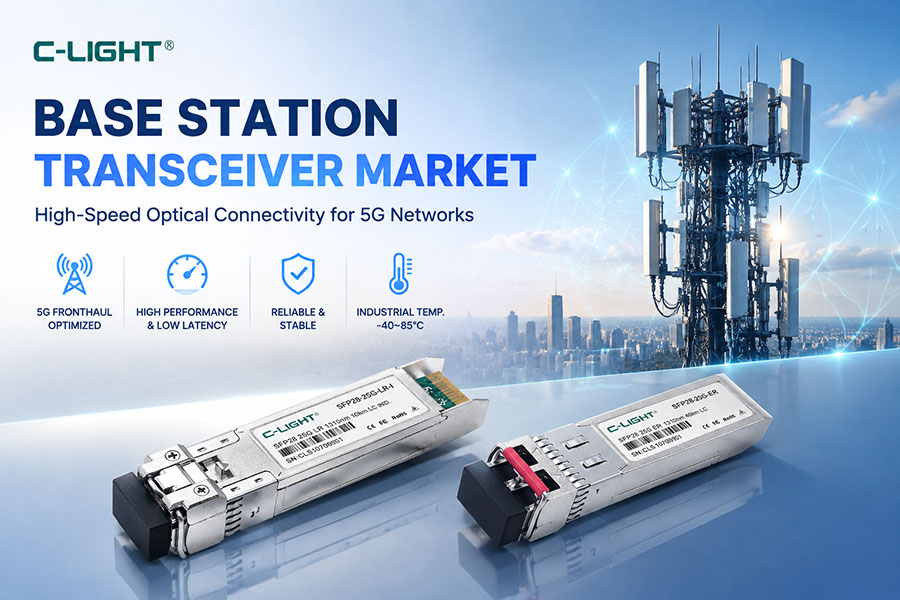
With the continuous expansion of 5G networks, mobile broadband services, and global wireless connectivity, the base station transceiver market is experiencing significant growth.
Base station transceivers (BTS) are essential components of wireless communication infrastructure. They enable signal transmission and reception between mobile devices and core networks, supporting voice communication, mobile data services, and next-generation applications.
Driven by 5G deployment, private networks, IoT applications, and higher mobile data traffic, the base station transceiver market is evolving toward higher performance, lower power consumption, and more advanced optical connectivity solutions.
1. What Is a Base Station Transceiver?
A base station transceiver (BTS) is a key wireless communication device responsible for transmitting and receiving radio signals between user equipment and the mobile network.
A typical base station transceiver system includes:
Radio frequency modules
Baseband processing units
Power supply systems
Antennas
Optical and electrical interfaces
BTS equipment is widely deployed in cellular networks, including 4G LTE, 5G NR, and future wireless communication systems.
2. Overview of Base Station Transceiver Market
2.1 Market Growth Drivers
The growth of the base station transceiver market is mainly driven by several factors:
5G Network Expansion: Global operators continue deploying 5G infrastructure to support higher-speed mobile services.
Increasing Mobile Data Traffic: Video streaming, cloud services, and AI applications require more wireless bandwidth.
Private 5G Networks: Industrial automation and smart factories are creating new demand.
IoT Growth: Massive device connectivity requires advanced wireless infrastructure.
2.2 Market Segmentation
The base station transceiver market can be segmented by:
Technology: 4G LTE, 5G NR, future 6G
Frequency band: Sub-6GHz and mmWave
Application: Telecom operators, enterprise networks, private networks
Deployment: Macro cells, small cells, distributed base stations
3. Base Station Transceiver Architecture
3.1 Traditional BTS Architecture
Traditional base station systems integrate radio units, baseband units, and antennas in a centralized architecture.
The basic structure includes:
Baseband Unit (BBU)
Remote Radio Unit (RRU)
Radio Frequency Unit
Antenna System
3.2 Distributed Radio Architecture
Modern wireless networks are moving toward distributed architectures such as:
BBU + RRU systems
Distributed Radio Units
Cloud Radio Access Network (C-RAN)
These architectures require high-speed optical links between baseband processing units and radio equipment.
4. Optical Connectivity in Base Station Networks
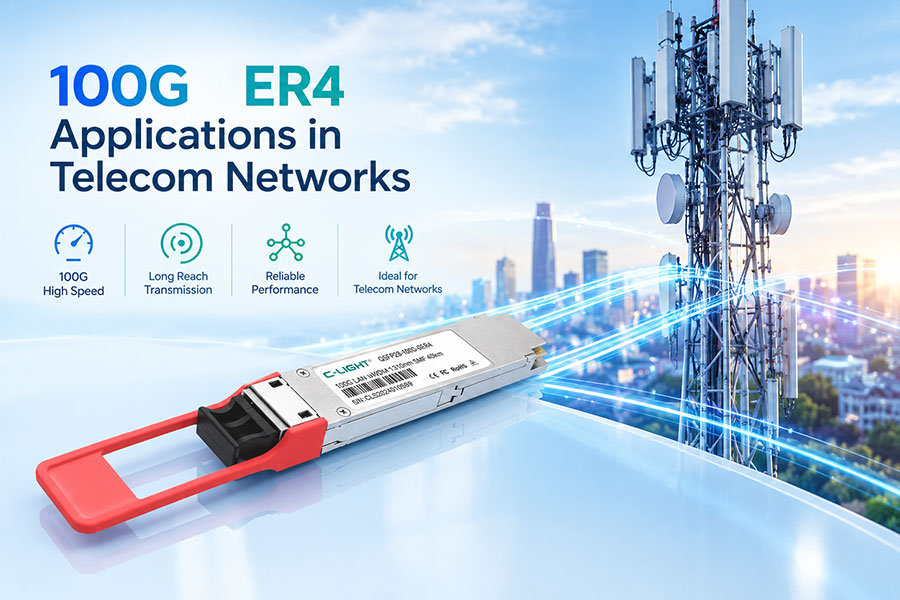
Optical communication plays a critical role in connecting base station equipment, especially in 5G networks.
Optical modules are widely used in:
Wireless fronthaul networks
Midhaul connections
Backhaul networks
Data center connections
4.1 Optical Modules for Base Stations
Common optical transceiver solutions include:
10G SFP+ Optical Modules
25G SFP28 Optical Modules
50G PAM4 Optical Modules
100G Optical Modules
Higher-speed optical modules improve network capacity and reduce latency for modern wireless infrastructure.
5. 5G Base Station Transceiver Market Trends
5.1 Growth of 5G Infrastructure
5G networks require significantly more base stations compared with previous generations due to higher bandwidth requirements and new frequency bands.
Operators are investing in:
Massive MIMO systems
Small cell deployments
High-capacity optical fronthaul
Edge computing infrastructure
5.2 Open RAN Development
Open RAN technology is changing traditional base station architectures by enabling interoperability between different vendors.
Open RAN requires:
Standardized interfaces
Flexible hardware platforms
High-performance optical connections
5.3 Low Power and High Efficiency
Energy consumption has become a major challenge for telecom operators.
Future BTS solutions focus on:
Energy-efficient RF components
Advanced cooling technology
Intelligent power management
6. Applications of Base Station Transceivers
6.1 Mobile Communication Networks
Base station transceivers provide wireless connectivity for smartphones, tablets, and mobile devices.
6.2 Private 5G Networks
Industries such as manufacturing, transportation, and energy are deploying private 5G networks for reliable wireless communication.
6.3 IoT and Smart Infrastructure
BTS systems support massive IoT connectivity for smart cities, industrial automation, and connected devices.
7. Challenges in Base Station Transceiver Market
7.1 High Deployment Cost
Large-scale 5G deployment requires significant investment in base stations, spectrum resources, and supporting infrastructure.
7.2 Power Consumption
Increasing network capacity creates higher energy requirements, especially for dense urban deployments.
7.3 Network Complexity
Modern wireless networks require more advanced management systems and higher-performance connectivity solutions.
8. Future Development of Base Station Transceiver Market
The future base station transceiver market will continue evolving with the development of 5G Advanced and future 6G networks.
Key trends include:
Higher frequency communication
AI-powered network optimization
Open and flexible network architecture
Higher-speed optical connectivity
Energy-efficient infrastructure
9. C-LIGHT Optical Solutions for Base Station Networks
C-LIGHT provides high-performance optical transceiver solutions designed for telecom networks, wireless infrastructure, and high-speed communication systems.
Product solutions include:
10G SFP+ Optical Modules
25G SFP28 Optical Modules
100G Optical Transceivers
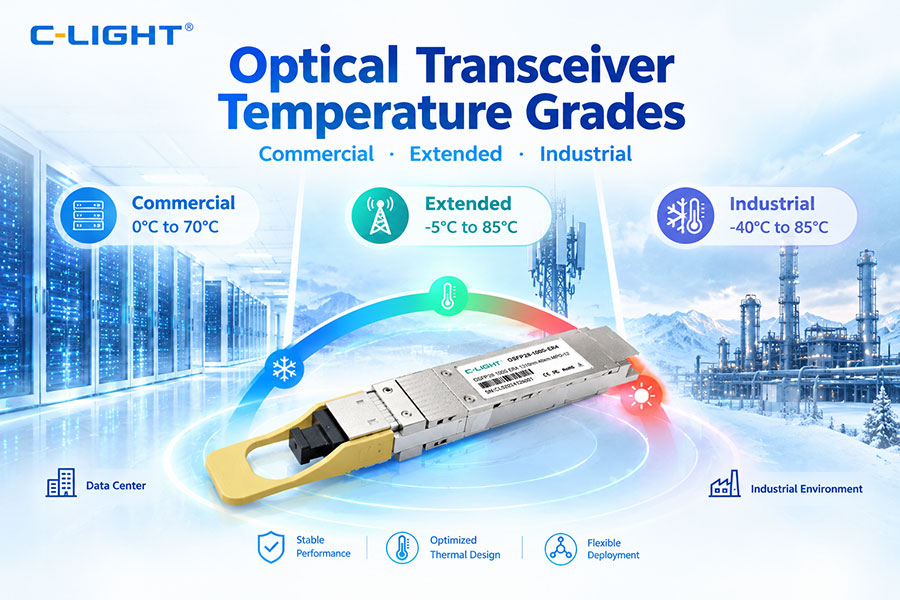
Industrial Temperature Optical Modules
Customized Telecom Optical Solutions
C-LIGHT optical modules help telecom operators improve network performance, reliability, and scalability for next-generation wireless infrastructure.
10. Conclusion: Base Station Transceivers Enable Future Wireless Networks
The base station transceiver market is becoming increasingly important as global wireless communication continues expanding.
Driven by 5G deployment, IoT growth, and increasing mobile data demand, BTS technology is moving toward higher efficiency, greater integration, and advanced optical connectivity.
Optical transceiver technology will continue playing a critical role in connecting future wireless networks and enabling high-speed communication infrastructure.
11.FAQ: Base Station Transceiver Market
Q1: What is a base station transceiver?
Answer: A base station transceiver is a wireless communication device that transmits and receives radio signals between mobile devices and network infrastructure.
Q2: What are the main applications of BTS?
Answer: BTS systems are used in 4G, 5G networks, private wireless networks, IoT infrastructure, and mobile communication systems.
Q3: How does 5G impact the BTS market?
Answer: 5G increases demand for advanced base stations, higher-capacity networks, and high-speed optical connectivity solutions.
Q4: Why are optical modules important for base stations?
Answer: Optical modules provide high-speed and low-latency connections between baseband units, radio units, and network infrastructure.
Q5: What optical modules are commonly used in telecom networks?
Answer: Common solutions include 10G SFP+, 25G SFP28, 50G PAM4, and 100G optical transceivers.
 >
>

 >
>
 >
>
 >
>
 >
>
 >
>
 >
>
 >
>