TEL:+86 132 6656 7067





The rapid growth of AI computing, cloud services and distributed data infrastructure is increasing the bandwidth required between data centers. As network operators move toward 800GbE interfaces, optical transport systems must deliver greater capacity without proportionally increasing fiber usage, equipment footprint or operational complexity.
800ZR addresses this requirement through standardized single-wavelength 800G coherent transmission. It brings high-capacity optical transport directly into compatible router and switch platforms, enabling high-speed DCI connections over DWDM infrastructure. Compared with conventional short-reach 800G client optics, 800ZR is designed for a different transmission environment: coherent optical links between geographically separated network facilities.
1. What Is 800ZR?
800ZR is an 800Gbps coherent optical interface developed for high-capacity data center interconnect and campus connectivity. Its implementation is defined by the Optical Internetworking Forum (OIF), which specifies interoperable coherent line interfaces for supported optical applications.
The technology transports an aggregate 800G signal over a single optical carrier. Instead of relying on multiple independent optical wavelengths or parallel fiber lanes, 800ZR uses coherent modulation and digital signal processing to transmit and recover high-capacity data over a DWDM channel.
This approach allows compatible routers and switches to connect directly to an optical line system through pluggable coherent modules. In suitable network architectures, it can reduce dependence on separate transponder equipment at the endpoints.
2. Why 800ZR Matters for DCI
Data center interconnect traffic continues to grow as computing, storage and cloud infrastructure become increasingly distributed. AI training and inference environments also generate substantial data movement between computing clusters, storage systems and separate facilities.
Traditional 400G DCI links remain useful, but some network environments need a higher-capacity optical channel to support traffic growth and reduce the number of individual wavelengths required for a given aggregate bandwidth.
The practical benefits depend on the optical line system, module power requirements, host compatibility and the traffic architecture. An 800G interface does not automatically make every part of a network twice as fast; the complete end-to-end system must support the required capacity.
3. How 800ZR Works in a DCI Network
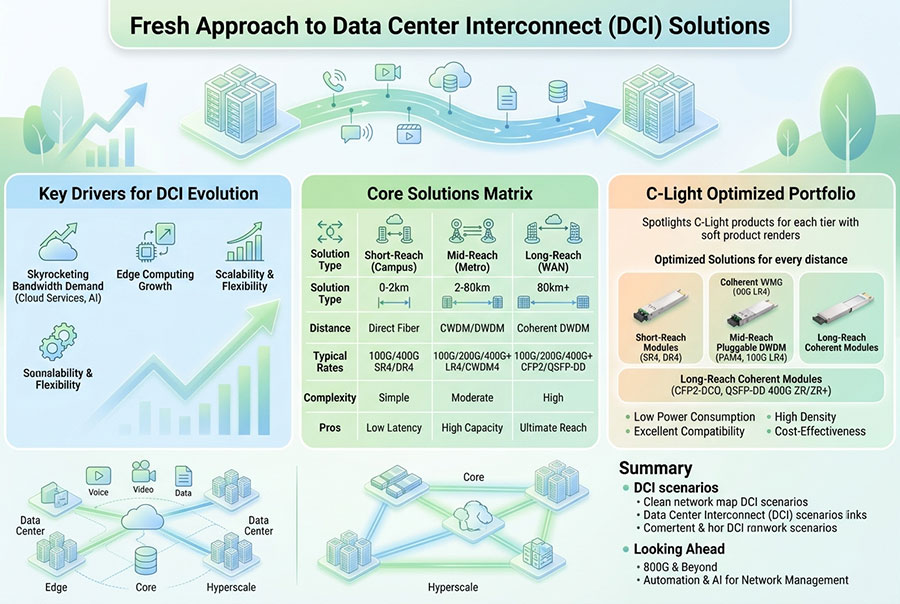
In an 800ZR architecture, a coherent module converts the host equipment's Ethernet traffic into a high-capacity optical signal. The signal is transmitted over a DWDM channel and recovered by a compatible coherent receiver at the remote site.
At the transmitting end, the host provides the electrical client signal to the coherent module. The module's DSP processes the signal and drives the optical transmitter to generate the required coherent wavelength.
The optical signal passes through the fiber path and any required DWDM components, such as multiplexers, demultiplexers and optical amplifiers. At the receiving end, the coherent receiver detects the signal and the DSP reconstructs the transmitted data for delivery to the remote host.
This architecture is commonly associated with IP-over-DWDM, where router or switch ports connect directly to optical transport infrastructure.
4. Key Technical Characteristics of 800ZR
800ZR uses advanced coherent modulation and digital signal processing to deliver high data rates over a single optical carrier. Its technical requirements are designed around interoperability and defined DCI transmission conditions.
| Parameter | 800ZR Characteristics | Engineering Significance |
|---|---|---|
| Aggregate line rate | 800Gbps class | Supports high-capacity DCI channels. |
| Optical architecture | Single-wavelength coherent transmission | Concentrates 800G capacity into one optical carrier. |
| Modulation | DP-16QAM for the defined 800G mode | Provides high spectral efficiency for the target application. |
| Symbol rate | Approximately 120 GBaud class | Supports the high-capacity coherent line signal. |
| Application | DCI and campus connectivity | Targets high-capacity links between network facilities. |
| Form factors | QSFP-DD and OSFP implementations | Enables integration into compatible routers and switches. |
| Optical connector | Commonly duplex LC | Connects the module to single-mode fiber infrastructure. |
| Standardization | OIF 800ZR Implementation Agreement | Establishes a common technical interoperability framework. |
Exact optical power, wavelength tuning range, channel spacing, power consumption and management features depend on the specific module implementation. Engineers should use the relevant product datasheet and host platform documentation when preparing a deployment.
5. 800ZR Transmission Distance and Network Reach
Reach is a central factor in 800ZR deployment. The OIF 800G coherent project defines two application categories: amplified single-span DWDM links and unamplified fixed-wavelength links.
| Application | Target Reach Range | Network Conditions |
|---|---|---|
| Unamplified campus link | Approximately 2–10 km | Fixed-wavelength operation with a suitable optical loss budget. |
| Amplified DCI link | Approximately 80–120 km | Single-span DWDM transmission with appropriate optical amplification and OSNR. |
| Extended metro or regional network | Implementation-dependent | May require 800ZR+ or another coherent transport solution. |
These figures describe application targets, not guaranteed distances for every product or fiber route. Actual reach depends on fiber attenuation, connector and splice losses, optical amplifier characteristics, channel loading, OSNR and the module's performance limits.
6. 800ZR vs. 800ZR+
800ZR and 800ZR+ both use 800G coherent technology, but they are intended for different optical network requirements.
800ZR follows the OIF 800ZR implementation agreement and focuses on standardized DCI and campus applications. 800ZR+ generally refers to extended coherent solutions based on OpenZR+ or related interoperable implementations. These can support additional line rates and longer transmission distances, depending on the module and network configuration.
| Feature | 800ZR | 800ZR+ |
|---|---|---|
| Technical basis | OIF 800ZR IA | OpenZR+ and related coherent implementations |
| Primary application | DCI and campus links | Metro, regional and extended optical transport |
| 800G transmission | Defined 800G coherent mode | Available in supported implementations |
| Additional line rates | Defined by the 800ZR application | May include 600G and 400G modes |
| Optical reach | Commonly up to 80–120 km for amplified DCI targets | Can extend substantially farther, depending on mode and line system |
| Network design | Optimized for defined DCI conditions | More flexibility for varied optical transport environments |
The term 800ZR+ is not a guarantee of one universal reach or performance level. Different implementations can support different modulation modes, optical power levels, wavelength bands and interoperability profiles. The exact specification must be checked before deployment.
7. 800ZR vs. Conventional 800G PAM4 Transceivers
800ZR and conventional 800G PAM4 transceivers both support high-speed networking, but they are built for different optical interfaces.
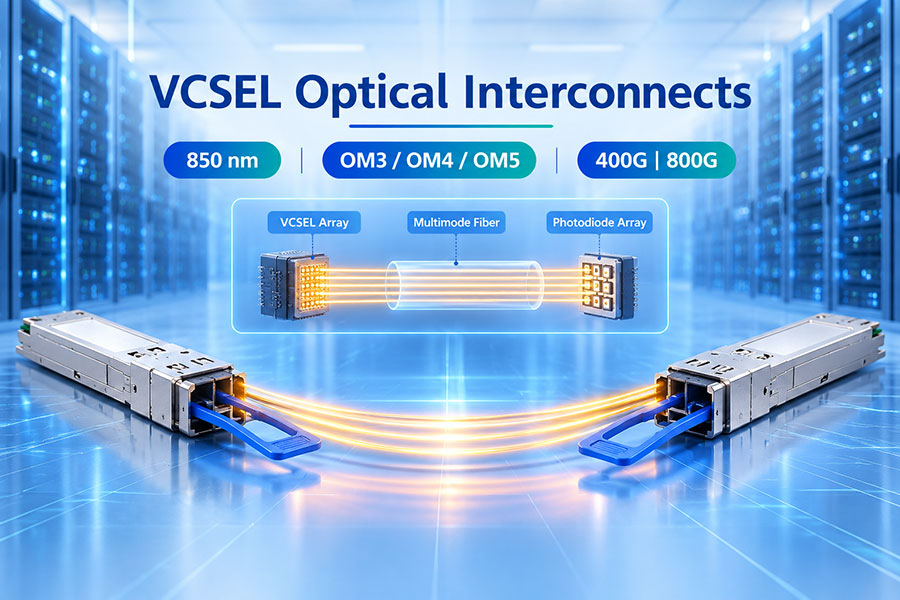
Conventional 800G PAM4 modules are commonly used for short-reach connections inside data centers or between nearby network devices. Depending on the product, they may use parallel optical lanes or multiple optical wavelengths.
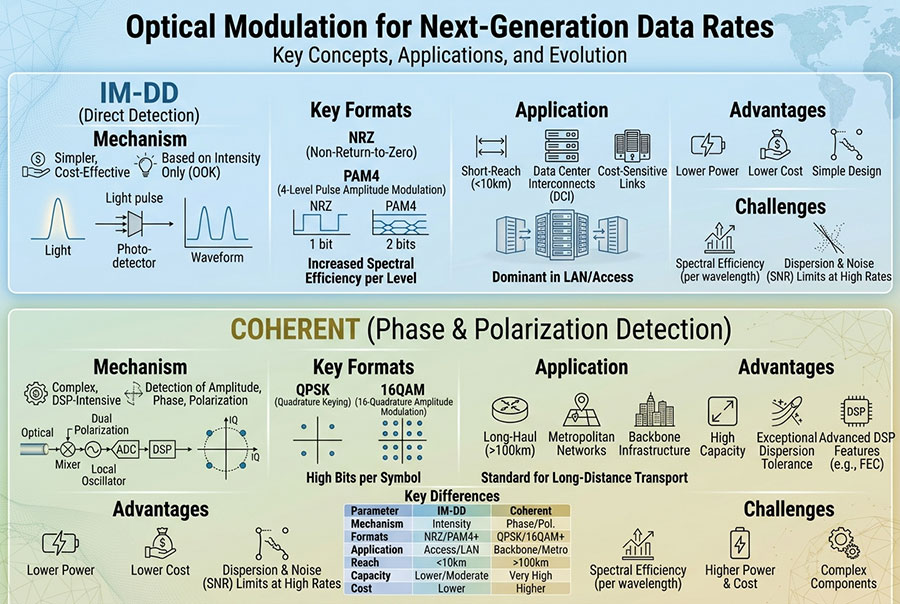
800ZR instead uses coherent modulation and a single DWDM optical carrier for DCI transmission.
| Comparison | 800ZR Coherent | 800G PAM4 Client Optics |
|---|---|---|
| Transmission method | Coherent detection | Direct-detection PAM4 |
| Optical architecture | Single coherent DWDM carrier | Multiple optical lanes or wavelengths, depending on type |
| Typical environment | DCI and campus optical transport | Data center and short-reach network connections |
| Signal processing | Coherent DSP | PAM4 electrical and optical signal processing |
| Optical infrastructure | DWDM line system and coherent channel planning | Depends on SR, DR, FR or other client interface |
| Key engineering factors | OSNR, wavelength grid and coherent link performance | Fiber type, lane mapping, insertion loss and link budget |
For example, an 800G OSFP SR8 or DR8 module is not an 800ZR coherent module. The former is designed for a specific client-side optical application, while the latter is designed to transmit a coherent DWDM wavelength. Both may be used in an 800G network, but they serve different parts of the architecture.
8. DWDM Architecture and Fiber Capacity
DWDM is essential to many 800ZR DCI deployments because it allows multiple optical wavelengths to share a fiber pair. Each wavelength carries an independent data channel, allowing network operators to increase total fiber capacity through wavelength aggregation.
With 800G coherent channels, the aggregate capacity of a fiber can increase significantly compared with systems based on lower-rate wavelengths.
A typical 800ZR DWDM architecture includes:
800ZR coherent modules: Generate and receive the 800G optical channels.
DWDM multiplexers: Combine multiple optical wavelengths onto a shared fiber.
DWDM demultiplexers: Separate incoming wavelengths at the destination.
Optical amplifiers: Compensate for optical loss where required by the link design.
Single-mode fiber: Provides the physical transmission path between sites.
Network monitoring: Tracks channel power, OSNR and other relevant optical parameters.
Channel spacing, wavelength grid and optical power must be planned together. A module that supports a particular wavelength range may still require specific line-system settings to operate correctly within a multi-channel DWDM network.
9. Power Consumption and Thermal Design
800G coherent modules integrate high-speed DSP, optical transmitters, coherent receivers and supporting electronics into compact pluggable form factors. This integration can simplify network architecture, but it also creates demanding power and cooling requirements.
Thermal planning becomes especially important when multiple coherent modules operate in the same switch or router. High port density can increase the total heat load and affect the operating conditions of adjacent modules.
QSFP-DD and OSFP form factors have different mechanical and thermal characteristics. Physical fit alone does not confirm that a host platform can support a particular 800ZR module.
10. OSNR, FEC and Optical Performance
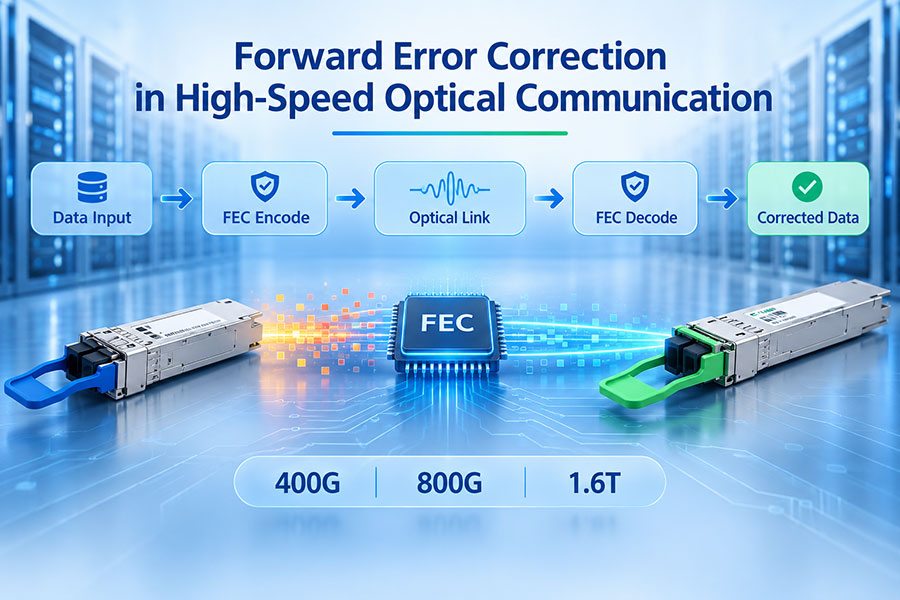
Coherent optical transmission relies on digital signal processing and forward error correction to maintain reliable communication under defined optical conditions. OSNR is one of the most important performance parameters because it indicates the relationship between the optical signal and noise.
In a DWDM network, OSNR can be affected by transmission distance, optical amplifier noise, channel loading and the characteristics of the optical line system.
| Parameter | Function | Deployment Relevance |
|---|---|---|
| OSNR | Measures optical signal quality relative to noise. | Helps determine whether the coherent link has sufficient signal margin. |
| Pre-FEC BER | Measures errors before forward error correction. | Indicates the quality of the received signal before correction. |
| Post-FEC BER | Measures residual errors after correction. | Helps assess whether the link meets the required performance target. |
| Optical Power | Indicates transmitted and received signal levels. | Helps identify excessive loss or abnormal optical conditions. |
| DSP Performance | Processes the coherent signal and compensates for transmission impairments. | Supports stable high-capacity optical transmission. |
FEC thresholds and OSNR requirements are implementation-specific. Engineers should use the module's official performance specifications rather than applying a single generic threshold to every 800ZR product.
11. Interoperability and Platform Compatibility
The OIF implementation agreement provides a common technical foundation for interoperable 800ZR equipment. However, successful deployment still requires compatibility across the host platform, coherent module and optical line system.
Before selecting a module, check the following areas:
Host compatibility: Confirm supported form factor, port type, firmware, power class and thermal limits.
Coherent interface: Verify OIF 800ZR compliance and the supported line mode.
Wavelength support: Check tunability, supported C-band or L-band range and channel spacing.
Optical line system: Confirm compatibility with the MUX/DEMUX, amplifiers and fiber path.
Management interface: Check CMIS or coherent management support and access to diagnostic information.
Multi-vendor operation: Validate interoperability with the actual equipment and line-system configuration.
Standard compliance is an important starting point, but it does not remove the need for system-level validation. Host vendor restrictions and implementation differences can affect whether a particular module operates correctly.
12. 800ZR Applications in AI and Cloud Data Centers
AI infrastructure is expanding beyond individual server racks and data center buildings. Large computing environments increasingly connect distributed resources through high-capacity network fabrics and optical transport systems.
800ZR is particularly relevant to the scale-across model, where multiple data center facilities cooperate to provide greater computing and storage capacity. It can also help operators increase the bandwidth of existing fiber infrastructure when the optical line system supports the required coherent channels.
It is important to distinguish DCI transport from short-reach AI cluster interconnects. 800ZR is designed for coherent optical transport between network facilities; it is not a direct replacement for every 800G SR8, DR8 or other short-reach optical connection inside an AI cluster.
13. C-LIGHT 800G Optical Connectivity Solutions
800G network deployments require a combination of high-speed optical modules, host interfaces, fiber connectivity and appropriate optical transport infrastructure. The selection of each component should follow the specific link architecture.
800G OSFP Optical Transceivers
The C-LIGHT 800G OSFP product family supports high-speed data center connectivity across applicable optical interface types. Depending on the selected model, the family addresses different short-reach and data center optical applications.
For example, SR8, DR8 and 2×FR4 interfaces have different reach and fiber requirements. They should be selected according to the intended client-side connection rather than treated as coherent 800ZR alternatives.
800G QSFP-DD Optical Transceivers
The C-LIGHT 800G QSFP-DD product family provides another form-factor option for high-density data center networking. Module selection should account for the host platform, optical interface, transmission distance and power requirements.
For coherent DCI applications, the required 800ZR specification must be verified separately. A conventional 800G QSFP-DD PAM4 transceiver is not automatically compatible with a coherent DWDM line system.
800G DAC and High-Speed Interconnects
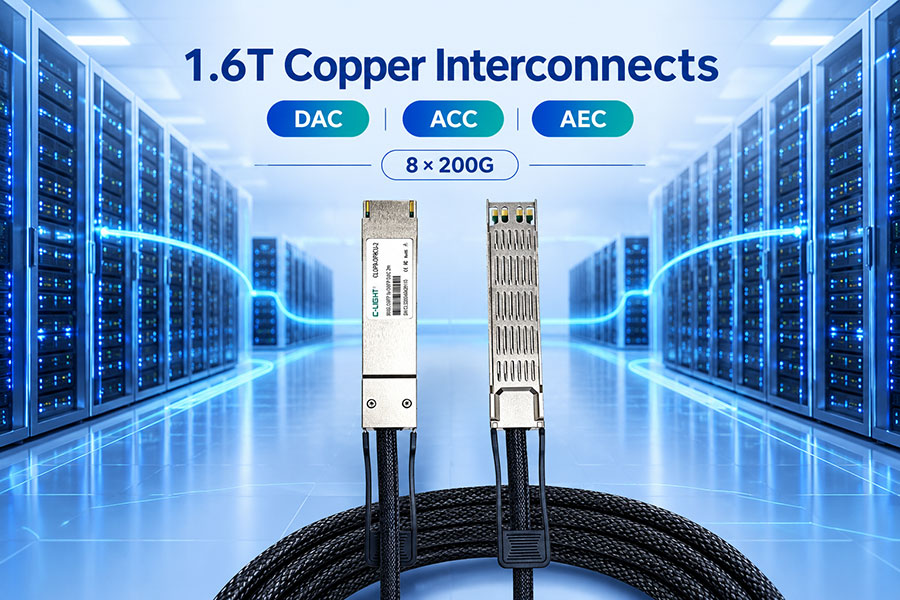
For connections inside racks and between nearby equipment, C-LIGHT 800G DAC solutions can be considered where the host interfaces, cable length and electrical specifications are suitable.
DAC connections serve a different role from long-distance coherent DCI links. They are part of the broader 800G connectivity architecture, rather than a substitute for 800ZR optical transport.
For an 800ZR DCI project, confirm the exact coherent module specification, host compatibility and line-system requirements before finalizing the bill of materials. C-LIGHT can provide product information and technical coordination for related high-speed optical connectivity requirements.
14. How to Plan an 800ZR DCI Deployment
A reliable 800ZR deployment requires coordinated planning across the Ethernet equipment, optical modules and DWDM infrastructure. The following workflow helps establish the main technical requirements.
Define capacity requirements: Determine whether the link requires 800GbE per wavelength and identify expected traffic growth.
Confirm the route: Establish the actual fiber distance, fiber type, connector count and optical path loss.
Select the coherent application: Determine whether the link requires unamplified campus operation or amplified single-span DCI.
Check host equipment: Verify QSFP-DD or OSFP support, power limits, thermal requirements and software compatibility.
Plan DWDM channels: Confirm the wavelength grid, channel spacing and compatibility with the optical line system.
Calculate optical performance: Evaluate OSNR, optical power, amplifier requirements and available link margin.
Validate interoperability: Test the coherent modules with the intended routers, switches and DWDM equipment.
Commission and monitor: Record baseline optical measurements and monitor performance during operation.
Careful planning reduces the risk of insufficient OSNR, excessive optical loss, unsupported module power, thermal problems and wavelength configuration errors.
15. Conclusion
800ZR represents an important development in high-capacity coherent optical networking. By carrying 800G traffic over a single coherent wavelength, it enables network operators to increase DCI capacity while making more efficient use of existing fiber infrastructure.
Its standardized application focuses on high-capacity campus and amplified single-span DWDM links. For longer metro and regional networks, 800ZR+ implementations can provide additional reach and line-rate flexibility, depending on the specific technology and optical system.
Successful deployment depends on matching the coherent module to the host platform, optical line system, wavelength plan and required transmission distance. As 800G Ethernet adoption expands, 800ZR will remain an important technology for connecting distributed data centers, cloud infrastructure and next-generation AI networks.
Develop Your Next-Generation 800G Network
Choosing the right optical connectivity requires careful consideration of interface type, transmission distance, platform compatibility and network architecture. Contact C-LIGHT for product information and technical support for your high-speed optical networking project.
Contact C-LIGHT >

 >
 >
 >
 >
 >
 >
 >