TEL:+86 132 6656 7067





The rapid global rollout of 5G networks has unleashed an unprecedented wave of demand for high-performance optical interconnect components. At the heart of this infrastructure transformation lies the optical transceiver—a compact optoelectronic module that converts electrical signals into optical signals and vice versa, enabling high-speed, low-latency data transmission across fiber-optic networks. As telecom operators worldwide accelerate their deployment of 5G base stations and upgrade existing network architectures, the market for 5G optical transceivers has entered a phase of explosive growth.
According to multiple market research reports, the global 5G optical transceiver market was valued at approximately US$2.3–3.2 billion in 2024 and is on track to reach US$10.4–15.2 billion by 2030–2031, with a compound annual growth rate (CAGR) ranging from 28% to 30% across different studies. This remarkable growth trajectory underscores the critical role that optical transceivers play in enabling the high-bandwidth, low-latency connectivity that defines the 5G era.
The broader optical transceiver market is also experiencing robust expansion, projected to grow from US$12.75 billion in 2025 to US$27.6 billion by 2030 at a CAGR of 16.8%, driven in part by 5G network deployment alongside hyperscale data center growth and increasing bandwidth demand.
Key Market Drivers
Massive 5G Base Station Deployment. The physical densification of 5G networks—requiring far more cell sites and small cells than previous generations—is a primary engine of optical transceiver demand. According to China‘s Ministry of Industry and Information Technology, the total number of 5G base stations in China alone reached 4.76 million by the end of 2025, each requiring multiple optical interconnects for fronthaul and midhaul links. This infrastructure expansion directly translates into sustained procurement of 25G and 50G optical modules across major telecom markets.
Surging Mobile Data Traffic. Global mobile data consumption continues to rise exponentially, fueled by high-definition streaming, cloud gaming, augmented and virtual reality applications, and industrial IoT. In the first ten months of 2025, cumulative mobile internet traffic in China hit 323.2 billion GB, reflecting intense pressure on network capacity that can only be alleviated through higher-speed optical links. Meanwhile, global 5G connections surpassed two billion in Q3 2024, signaling a sustained demand trajectory that requires continuous investment in high-performance optical solutions.
Annual investment in mobile internet connectivity infrastructure reached US$127 billion in 2025, according to GSMA data, highlighting the significant capital flowing into these critical network components.
Technical Landscape: From 25G to 400G and Beyond
The 5G Radio Access Network (RAN) architecture is typically divided into three distinct segments—fronthaul, midhaul, and backhaul—each with unique requirements for optical transceiver speed, distance, and form factor.
Fronthaul: 25G Dominates. The 25G SFP28 transceiver has emerged as the de facto standard for 5G fronthaul applications, connecting the Distributed Unit (DU) to the Active Antenna Unit (AAU) or Remote Radio Unit (RRU). 25G per channel delivers the optimal balance of bandwidth, cost, and power efficiency required for the eCPRI interface, which is more efficient than the legacy CPRI standard. Fronthaul distances are typically under 10 km, with Bi-Directional (BiDi) modules gaining traction as a means of conserving fiber resources through single-fiber bidirectional transmission.
Midhaul: 50G and 100G Transition. Midhaul networks, which aggregate traffic from multiple DUs before reaching the Centralized Unit (CU), predominantly employ 50G SFP56 and 100G QSFP28 transceivers. As data volumes increase, the industry is witnessing a gradual evolution toward 200G and 400G modules for high-capacity aggregation nodes.
Backhaul: 100G and 400G Mainstream. Backhaul represents the backbone connection from the CU to the core network, requiring the highest bandwidth and longest transmission distances—often 40 km or more. 100G QSFP28 (including LR4, ER4, and ZR4 variants) and 400G coherent solutions dominate this segment, with advanced technologies such as DWDM enabling efficient fiber utilization.
Among the different speed categories, 100G transceivers are projected to hold the largest market share due to their optimal balance between bandwidth, cost, and energy efficiency in both metropolitan and long-haul deployments. Meanwhile, 50G transceivers currently generate the largest revenue contribution, owing to their widespread adoption in mid-range network deployments and compatibility with legacy infrastructure.
C-LIGHT: A Growing Force in the 5G Optical Ecosystem
Among the diverse array of optical transceiver vendors, Shenzhen C-Light Network Communication Co., Ltd. has established itself as a notable participant in the 5G optical transceiver landscape. Founded in 2011, C-LIGHT brings 15 years of manufacturing experience in fiber optic network products, with a comprehensive portfolio spanning speeds from 100M to 800G, including optical modules, active optical cables (AOC), direct attach cables (DAC), and DWDM/CWDM active and passive products.
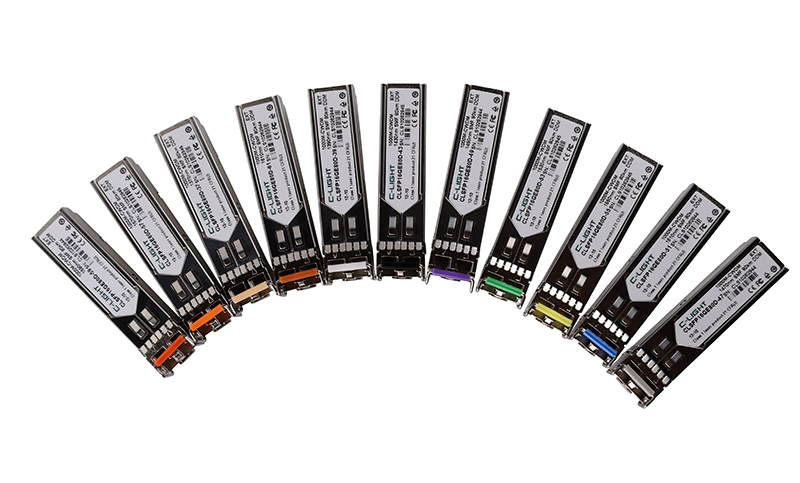
5G Fronthaul Portfolio. C-LIGHT‘s 5G fronthaul optical modules are specifically engineered to meet the rigorous demands of modern wireless access networks. The company’s offerings are characterized by high temperature resistance (supporting industrial-grade -40°C to +85°C operation), compact form factors, high-speed performance, low latency, and transmission capabilities of up to 40 km over DWDM infrastructure.
Notable products in C-LIGHT‘s 5G portfolio include:
- 25G BiDi SFP28 10km transceivers featuring single-fiber bidirectional transmission capability—a critical innovation for conserving fiber resources in dense urban deployments.
- 25G CWDM SFP28 10km modules designed with industrial temperature range support and cost-effective transmission for 25 Gigabit Ethernet and Fibre Channel applications.
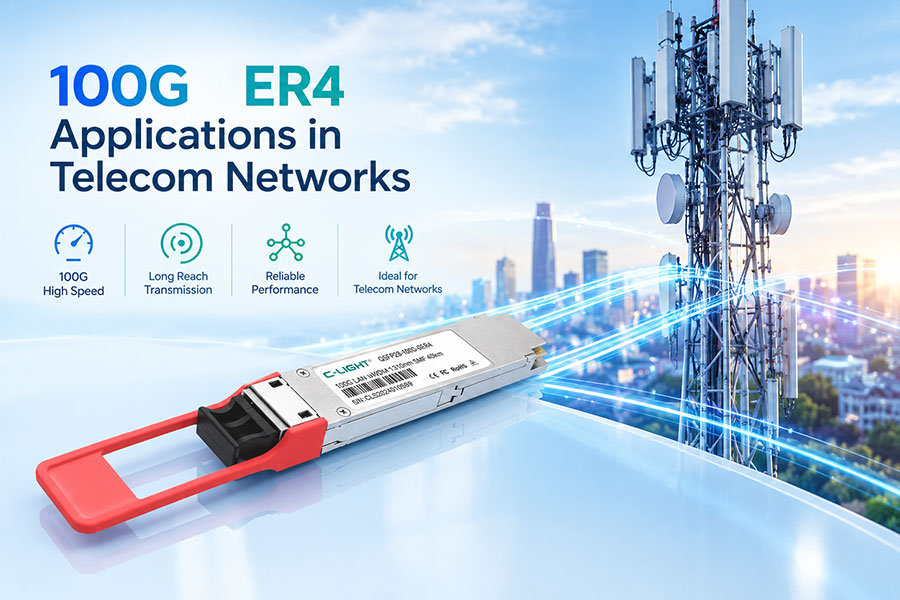
- 100G QSFP28 ER4 40km transceivers leveraging LAN-WDM technology for extended reach in backhaul and metro applications.
- DWDM-enabled modules supporting transmission distances up to 40 km, exceeding the industry‘s typical 15 km bottleneck for 25G DWDM applications.
Semi-Active WDM Equipment. Beyond discrete transceivers, C-LIGHT offers 5G fronthaul semi-active wavelength division equipment that addresses the challenges of limited optical cable resources, extended construction timelines, and high costs associated with direct fiber connections between DU and AAU. The solution employs active WDM equipment at the DU side and passive wavelength division multiplexers plus colored optical modules at the AAU side, forming a unified, manageable fronthaul network with support for IP-based Web management and Netconf/Yang operator integration.
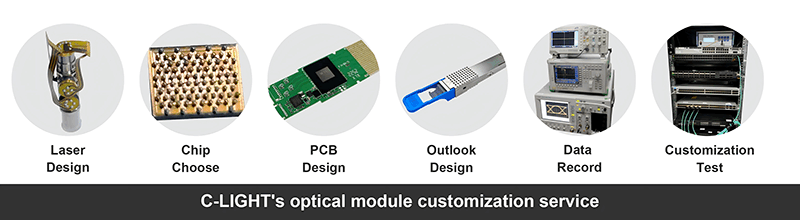
Market Positioning and Differentiators. C-LIGHT‘s competitive advantages stem from its flexible chip sourcing strategy—leveraging both international and domestic laser and driver chip solutions to provide cost-optimized options for diverse customer requirements—as well as its strong customization capabilities and broad compatibility with major forwarding equipment vendors globally. The company’s product line spans AI computing, data center networks, telecommunications FTTx, DWDM/CWDM wavelength division networks, and 5G/6G mobile networks, positioning it to capture opportunities across multiple high-growth verticals.
Competitive Landscape and Regional Dynamics
The 5G optical transceiver market features a competitive landscape dominated by established players including Coherent Corp., Innolight, Cisco (Acacia), Huawei, Lumentum, Accelink, Hisense Broadband, and Source Photonics, among others. Competition is intense, with manufacturers differentiating on product performance, cost efficiency, power consumption, and supply chain reliability.
Regionally, Asia-Pacific dominates the global market, driven by China‘s massive 5G infrastructure investment—China alone accounts for approximately 64% of the global telecom optical transceiver market. North America follows as the second-largest market, benefiting from early 5G adoption and robust investment in next-generation network infrastructure. The U.S. 5G optical transceiver market was estimated at US$851.5 million in 2024, while China is forecast to reach US$2.3 billion by 2030 growing at a 27.9% CAGR.
Challenges and Future Outlook
Despite the strong growth outlook, the 5G optical transceiver market faces notable challenges. Thermal management remains a critical concern as transceivers evolve to support higher data rates within increasingly compact form factors. The task of dissipating heat generated by high-speed optoelectronics becomes progressively more difficult and expensive, potentially impacting device reliability and operational efficiency. Additionally, supply chain complexities and high production costs for advanced coherent modules pose strategic challenges for industry stakeholders.
Looking ahead, several trends are poised to shape the market‘s evolution:
- Migration to higher speeds: 200G and 400G transceivers are gaining momentum in advanced data center and telecom networks, while 800G coherent solutions are emerging for next-generation DCI (Data Center Interconnect) applications.
- Open RAN and interoperability: The push toward open, disaggregated network architectures is creating opportunities for third-party optical module vendors with strong compatibility credentials.
- Coherent technology democratization: 400G ZR and ZR+ pluggable coherent optics are reducing costs and simplifying long-haul transmission, expanding the addressable market.
- 5G-Advanced and 6G preparation: As the industry looks beyond initial 5G deployments toward 5G-Advanced and eventually 6G, optical transceiver requirements will continue to escalate in terms of speed, density, and energy efficiency.
The 5G optical transceiver market stands at the confluence of two powerful forces: the global acceleration of 5G network deployment and the relentless growth of data traffic across mobile, cloud, and edge computing environments. With a projected market size exceeding US$10 billion by 2031 and sustained double-digit CAGR, the sector represents a compelling growth opportunity for established players and emerging vendors alike.
Companies like C-LIGHT, with their comprehensive product portfolios, industrial-grade reliability, and strong customization capabilities, are well-positioned to capture share in this rapidly expanding market. As 5G networks continue to densify and evolve toward 5G-Advanced and beyond, the demand for high-performance, cost-effective optical transceivers will remain a cornerstone of global telecommunications infrastructure investment.
 >
>

 >
>
 >
>
 >
>
 >
>
 >
>
 >
>
 >
>