TEL:+86 132 6656 7067




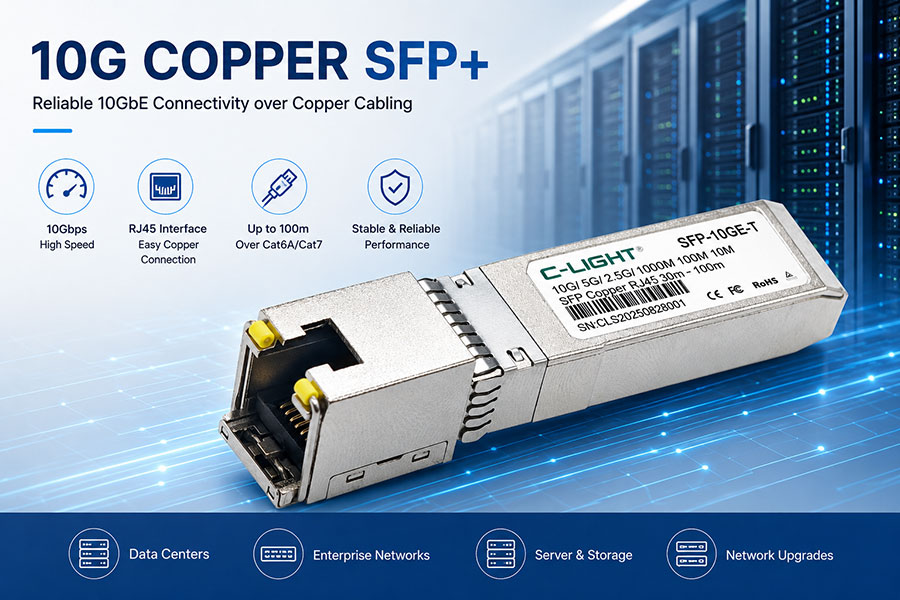
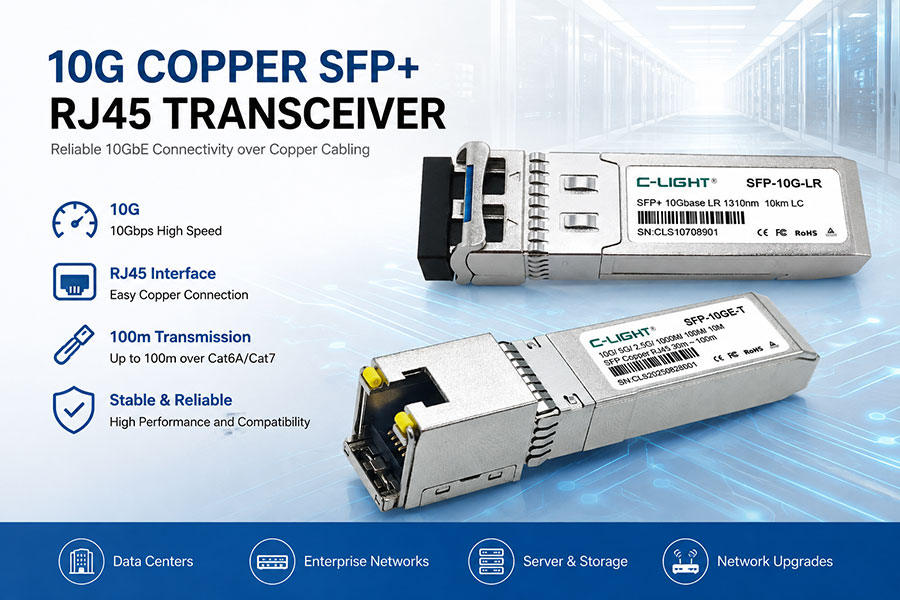
10G Copper SFP+ transceivers provide a practical way to connect 10GbE network equipment through standard RJ45 copper cabling. By combining the compact SFP+ form factor with 10GBASE-T electrical signaling, these modules allow switches, servers, routers, and network interface cards to use existing copper infrastructure for high-speed network connections.
For data centers with a large amount of existing Cat6A or Cat7 cabling, 10G Copper SFP+ can simplify network upgrades without requiring every short-distance connection to be converted to optical fiber. This makes copper-based 10GbE connectivity particularly useful for server access, switch connections, storage networks, and infrastructure upgrades.
1.What Is a 10G Copper SFP+?
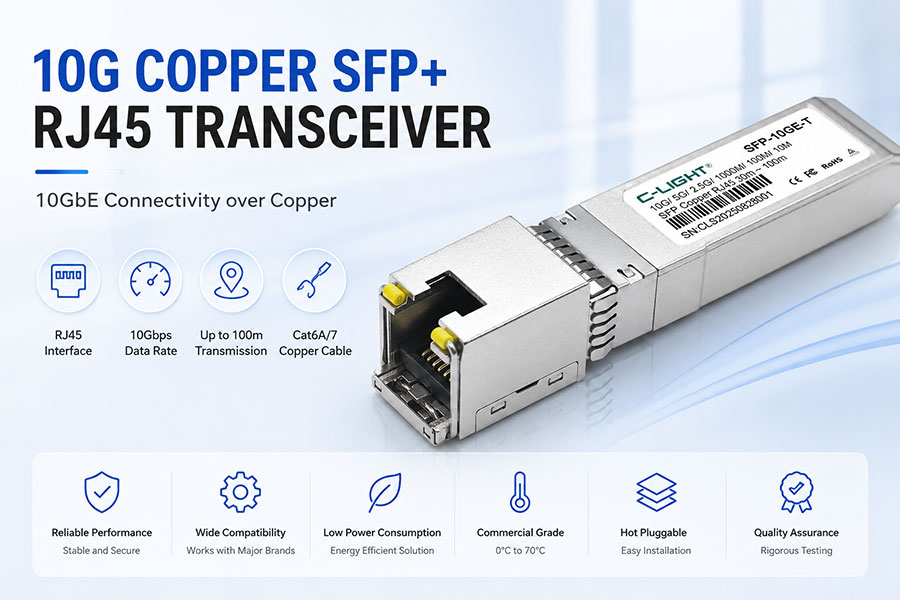
A 10G Copper SFP+ is a pluggable transceiver designed to provide 10GbE connectivity through an RJ45 copper interface. Unlike optical SFP+ modules, which transmit data as light through fiber, copper SFP+ modules use electrical signaling over twisted-pair Ethernet cabling.
The module fits into a standard SFP+ host port, while the RJ45 interface connects to copper Ethernet cabling. Depending on the specific module and network environment, 10GBASE-T Copper SFP+ can support transmission distances of up to 100 meters over suitable cabling.
Data Rate: Up to 10Gbps
Interface: RJ45
Ethernet Standard: 10GBASE-T
Cabling: Cat6A or Cat7 copper cabling
Typical Reach: Up to 100m, depending on the module and cabling
Form Factor: SFP+
2.How Does 10G Copper SFP+ Work in a Data Center?
In a data center network, the 10G Copper SFP+ acts as an interface between an SFP+ host port and copper Ethernet infrastructure. The host device sends electrical data to the transceiver, and the module processes the signal for transmission through the connected twisted-pair cable.
At the other end of the link, another compatible Ethernet interface receives the electrical signal and converts it into data for the connected network equipment. This provides a straightforward 10GbE connection while maintaining the familiar RJ45 cabling environment.
A typical connection can be arranged as:
10G Switch SFP+ Port → 10G Copper SFP+ → Cat6A/Cat7 Cable → RJ45 Ethernet Port
This architecture is particularly useful where servers, storage equipment, or other network devices already use copper Ethernet interfaces.
3.Why Use 10G Copper SFP+ in Data Center Networks?
Reuse Existing Copper Infrastructure
Many data centers and enterprise facilities already have extensive copper cabling. 10G Copper SFP+ allows compatible SFP+ ports to connect to this infrastructure without replacing short-distance copper links with fiber.
Simple RJ45 Connectivity
The RJ45 interface provides a familiar connection method for network engineers. Standard Ethernet patch cables can be used, making installation and maintenance straightforward in environments where copper connectivity is already widely deployed.
10GbE Network Performance
10G Copper SFP+ supports high-speed Ethernet connectivity for applications that require more bandwidth than traditional 1GbE connections. It can be used for server access, storage traffic, switch connections, and network aggregation where a 10Gbps link is sufficient.
Compact SFP+ Form Factor
The SFP+ form factor allows 10G Copper modules to be installed directly into compatible switch, router, server, or NIC ports. This provides flexibility when different types of transceivers are required within the same network platform.
4.10G Copper SFP+ Transmission Distance
Transmission distance is an important consideration when deploying copper-based 10GbE connections. Many 10GBASE-T Copper SFP+ modules support distances of up to 100 meters when used with appropriate Cat6A or Cat7 cabling.
The actual achievable distance depends on the transceiver, cable category, cable quality, installation conditions, and electromagnetic environment. For longer links, optical SFP+ transceivers are generally a better choice because fiber provides significantly greater transmission reach.
| Connection Type | Transmission Medium | Typical Application |
|---|---|---|
| 10G Copper SFP+ | Cat6A/Cat7 Copper | Short-distance 10GbE connections |
| 10G SFP+ SR | Multimode Fiber | Short-distance data center links |
| 10G SFP+ LR | Single-Mode Fiber | Longer-distance network connections |
5.10G Copper SFP+ vs. Optical 10G SFP+
The choice between copper and optical SFP+ depends mainly on transmission distance, existing cabling, power requirements, and network architecture.
10G Copper SFP+ is well suited to short-distance connections where Cat6A or Cat7 cabling is already available. Optical 10G SFP+ is generally preferred for longer links, fiber-based infrastructure, and applications where lower power consumption or greater transmission distance is important.
| Feature | 10G Copper SFP+ | 10G Optical SFP+ |
|---|---|---|
| Transmission | Electrical | Optical |
| Connector | RJ45 | Typically LC |
| Cabling | Cat6A/Cat7 | Multimode or single-mode fiber |
| Typical Reach | Up to 100m | Depends on module type |
| Infrastructure | Existing copper Ethernet | Fiber optic network |
| Power Consumption | Generally higher | Generally lower |
6.Common Data Center Applications
6.1 Server-to-Switch Connections
10G Copper SFP+ can connect compatible servers or network interface cards to data center switches through copper Ethernet cabling. This is useful for short server access links where 10GbE bandwidth is required.
6.2 Storage Networks
High-speed copper Ethernet connections can also be used for storage traffic where the required transmission distance is relatively short. This can simplify connections between storage equipment and network switches.
6.3 Top-of-Rack Networking
Top-of-rack switches often serve servers and other equipment within the same rack or adjacent racks. Where the required cable distance falls within the supported range, 10G Copper SFP+ provides a convenient way to connect these devices using existing copper infrastructure.
6.4 Data Center Network Upgrades
For facilities moving from 1GbE toward 10GbE, Copper SFP+ can provide an upgrade option when existing copper cabling remains suitable for the new network speed.
7.Important Compatibility Considerations
Physical SFP+ compatibility does not necessarily guarantee that a 10G Copper SFP+ module will operate correctly in every SFP+ port. The host device must support the specific copper transceiver and its operating requirements.
Host Device Compatibility: Verify support for 10GBASE-T Copper SFP+ modules.
Port Speed: Confirm that the host port supports 10GbE operation.
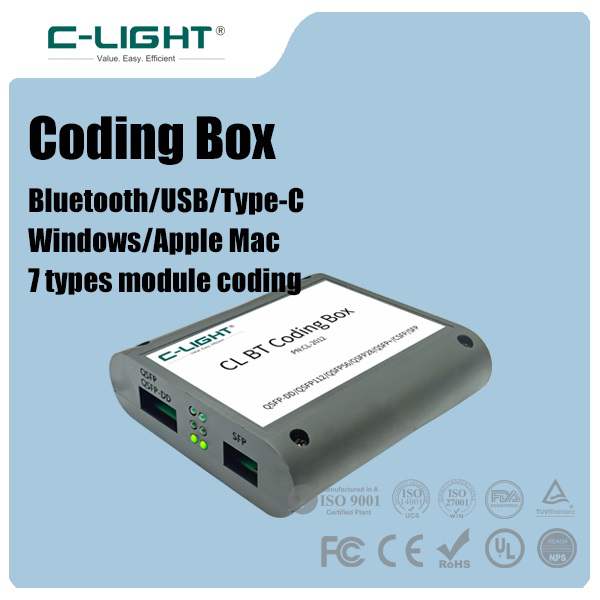
Module Coding: Check vendor coding, EEPROM information, and firmware requirements.
Cabling: Use suitable Cat6A or Cat7 cabling for the required distance and performance.
Power Budget: Make sure the host equipment can provide sufficient power to the copper module.
8.10G Copper SFP+ Deployment Considerations
Data center operators should evaluate the complete physical link rather than selecting a transceiver based only on its nominal 10Gbps speed. Cable length, cable category, connector quality, equipment compatibility, and environmental conditions can all affect link performance.
For new installations, structured cabling should be planned according to the expected network speed and transmission distance. For existing infrastructure, testing the installed copper links before upgrading to 10GbE can help identify cabling limitations and potential signal integrity issues.
9.Testing 10G Copper SFP+ Performance
Reliable 10GbE connectivity requires both the transceiver and the physical copper link to meet appropriate performance requirements. Manufacturers and network operators may evaluate parameters such as bit error rate, jitter, insertion loss, return loss, crosstalk, and overall signal integrity.
Compatibility testing is also important when deploying third-party transceivers. Testing with the target switches, servers, NICs, and other network equipment helps verify stable operation under actual deployment conditions.
10.Is 10G Copper SFP+ Suitable for Your Data Center?
10G Copper SFP+ is a practical option when the network requires 10GbE connectivity over relatively short distances and existing copper infrastructure can be reused. It is particularly attractive for server access, top-of-rack connections, storage systems, and network upgrades based on RJ45 Ethernet cabling.
For longer-distance links or new fiber-based network architectures, optical SFP+ modules may provide greater flexibility and lower power consumption. The right choice ultimately depends on the data center's cabling infrastructure, link distance, equipment compatibility, and performance requirements.
11.Conclusion
10G Copper SFP+ provides a compact and flexible solution for 10GbE data center network connections. With an SFP+ form factor and RJ45 interface, it bridges compatible SFP+ equipment with existing copper Ethernet infrastructure while supporting high-speed connectivity over suitable Cat6A or Cat7 cabling.
For short-distance data center links where copper cabling is already available, 10GBASE-T Copper SFP+ can reduce infrastructure changes and simplify network upgrades. Careful consideration of compatibility, cable quality, transmission distance, and power requirements is essential for reliable deployment.
12.Frequently Asked Questions About 10G Copper SFP+
Q1. What is a 10G Copper SFP+?
Answer: A 10G Copper SFP+ is a pluggable transceiver that provides 10GbE connectivity through an RJ45 copper interface, typically using 10GBASE-T technology.
Q2. How far can a 10G Copper SFP+ transmit?
Answer: Many 10GBASE-T Copper SFP+ modules support up to 100 meters over suitable Cat6A or Cat7 copper cabling. Actual performance depends on the module and cable specifications.
Q3. What cable is used with a 10G Copper SFP+?
Answer: Cat6A or Cat7 twisted-pair Ethernet cabling is commonly used for 10G Copper SFP+ connections, with the appropriate cable type selected according to the required distance and installation conditions.
Q4. Is 10G Copper SFP+ an optical module?
Answer: No. A 10G Copper SFP+ uses electrical signaling over copper Ethernet cabling rather than optical transmission over fiber.
Q5. Can a 10G Copper SFP+ be used in an SFP+ port?
Answer: Yes, it is designed for compatible SFP+ host ports. However, the switch, router, server, or NIC must support the specific 10GBASE-T Copper SFP+ module.
Q6. Is 10G Copper SFP+ better than optical 10G SFP+?
Answer: Neither is universally better. Copper SFP+ is convenient for short-distance connections and existing RJ45 infrastructure, while optical SFP+ is generally more suitable for fiber networks and longer transmission distances.
Q7. Does 10G Copper SFP+ consume more power than optical SFP+?
Answer: Generally, yes. 10GBASE-T modules typically require more power for copper PHY processing than comparable optical 10G SFP+ modules.
Q8. Where is 10G Copper SFP+ commonly used?
Answer: It is commonly used in data centers, enterprise networks, server connections, storage networks, top-of-rack switches, and 10GbE network upgrades where copper cabling is preferred.
 >
>

 >
>
 >
>
 >
>
 >
>
 >
>
 >
>
 >
>