TEL:+86 158 1857 3751





Introduction: Long-Distance Interconnect — The Critical Artery of Data Centers in the AI Era
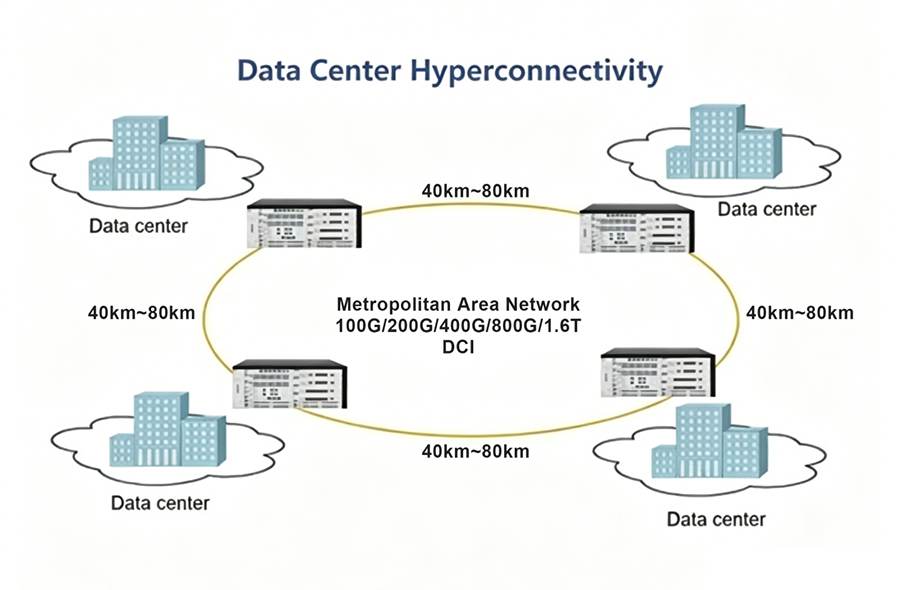
In 2025, NVIDIA formally introduced the "Scale-Across" concept, integrating distributed data centers into "gigawatt-class AI super factories" through cross-regional interconnection. This trend signals that future AI infrastructure requires not only continuous increases in single-point compute power but also ultra-high-speed, ultra-low-latency interconnect capabilities across data centers and metropolitan areas. Within this grand vision, the 100G optical transceiver, serving as the core physical carrier connecting distributed data center nodes, is undergoing a profound technological transformation. From short-reach SR4 (hundreds of meters) to intermediate-reach LR4 (up to 10 kilometers), and further to long-reach and extended-reach ER4/ZR4 (40 to 80 kilometers), the transmission distance of 100G transceivers is continuously expanding the physical boundaries of data interconnection.
It is against this backdrop that C-LIGHT is a professional optical transceiver manufacturer from Shenzhen with fifteen years of deep expertise in fiber-optic communications and independent manufacturing capabilities, has constructed a comprehensive portfolio of 100G long-reach optical transceivers covering distances from 10 km to 140 km. With robust technical accumulation and reliable delivery quality, C-LIGHT is addressing the rigid demand for long-distance interconnect in the AI era.
Part 1: Technical Panorama of 100G Long-Reach Optical Transceivers — From LR4 to XZR4+SOA
1. Data Rate and Form Factor: The Dominance of QSFP28
In the evolution of 100G optical transceivers, the QSFP28 form factor has emerged as the de facto standard in data center and high-performance computing applications. Compared to the earlier CFP/CFP2/CFP4 form factor families, QSFP28 offers a smaller footprint, lower power consumption, and higher port density, making it the mainstream choice for 100G port deployments. C-LIGHT's entire 100G long-reach transceiver portfolio adopts the QSFP28 form factor, delivering a per-lane data rate of 25.78 Gbps and an aggregate data rate of 103.125 Gbps across four parallel lanes. These modules support both 100GE Ethernet and OTU4 telecom standards and are compatible with over 100 mainstream switch brands.
2. Product Matrix: A Three-Tier Portfolio Covering All Scenarios
C-LIGHT's 100G long-reach transceiver product line features a clearly defined tiered structure, corresponding to three typical application scenarios: intra-metro interconnect, inter-metro interconnect, and ultra-long-haul dedicated links.
Tier 1: 100G QSFP28 LR4 — The "Entry-Level Choice" for Metro Interconnect
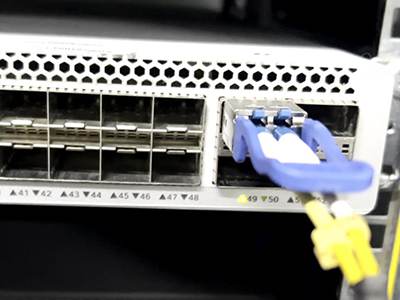
LR4 (Long Reach 4) represents the foundational form of 100G long-reach transceivers, offering transmission capabilities of 10 km to 20 km. C-LIGHT's LR4 modules utilize 4×25G LAN WDM wavelength multiplexing technology to achieve 10 km transmission over single-mode fiber via an LC duplex interface, with typical power consumption below 3.5W. This product is ideal for interconnecting different data center campuses within the same city, striking a balance between cost and transmission distance.
Tier 2: 100G QSFP28 ER4 — 40km Inter-Campus Backbone
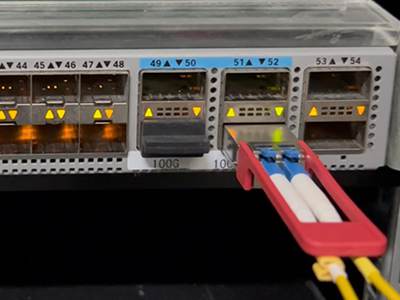
ER4 (Extended Reach 4) forms the core of the 100G long-reach transceiver portfolio, delivering error-free transmission over 40 kilometers. This distance precisely covers typical scenarios such as inter-campus connectivity for large data center clusters and backbone link extension in metropolitan area networks (MANs). C-LIGHT's 100G QSFP28 ER4 modules strictly comply with the IEEE 802.3ba 100GBASE-ER4 standard, consuming a maximum of just 5.5W under 70°C operating conditions. The modules incorporate integrated CDR (Clock and Data Recovery) functions on both the transmit and receive paths, effectively preserving signal integrity over long-distance links. With 40 km reach capability, network designers can directly connect data center nodes distributed across different urban areas without deploying external optical amplifiers, significantly simplifying network architecture and reducing operational costs.
Tier 3: 100G QSFP28 ZR4 — 80km Inter-Metro Connectivity
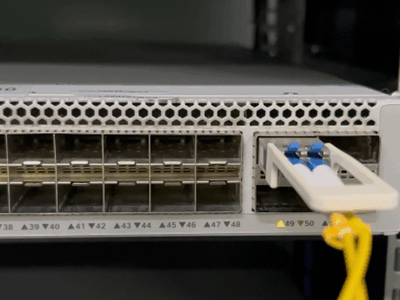
ZR4 (Zero-chirp Reach 4) extends 100G single-mode transmission distance to the 80 km level. With host FEC enabled, C-LIGHT's 100G QSFP28 ZR4 modules achieve a receiver sensitivity of -28 dBm and an optical power budget of 26 dB, supporting 80 km point-to-point Ethernet links. This transmission distance is sufficient to cover data center interconnect (DCI) requirements between most cities, offering cloud service providers and telecom operators a cost-effective solution for direct 100G inter-metro connectivity. Notably, compared to ER4, ZR4 incorporates SOA (Semiconductor Optical Amplifier) technology at the receiver side, using optical pre-amplification to significantly enhance receiver sensitivity, thereby doubling the transmission distance at the cost of approximately 1W of additional power consumption.
Ultimate Solution: XZR4+SOA — 140km Ultra-Long-Haul Dedicated Links
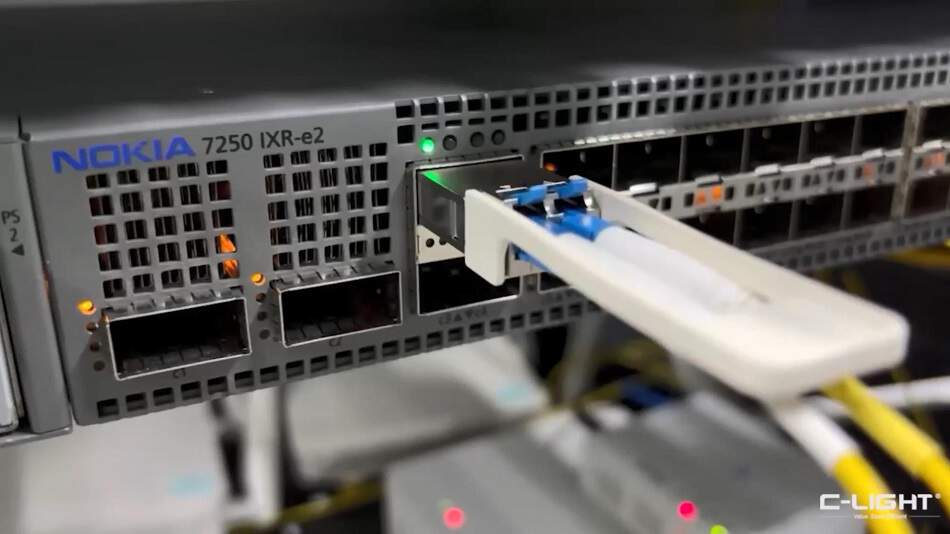
For more demanding ultra-long-haul point-to-point transmission requirements, C-LIGHT offers a combined solution featuring 100G QSFP28 XZR4 modules paired with external SOA amplifiers. In this architecture, C-LIGHT's self-developed 100G QSFP28 XZR4 modules provide over +4 dBm of transmit optical power per lane and guarantee a receiver sensitivity of -29 dBm per lane, achieving a per-lane link budget exceeding 33 dB. With a 15 dB gain SOA amplifier inserted 80 km from the transmitter, this solution provides a total link budget of over 47 dB, enabling 100G point-to-point data communication over a 140 km span between Point A and Point B. C-LIGHT has successfully validated this solution on Nokia 7250 and Huawei 8000 series switches, demonstrating its compatibility and reliability in multi-vendor equipment environments.
3. Industrial-Grade Temperature Adaptability: From Data Centers to Harsh Environments
In addition to commercial temperature (0°C to 70°C) variants, C-LIGHT offers an industrial-grade 100G QSFP28 long-reach transceiver series with an extended operating temperature range of -40°C to 85°C. This series is applicable to various reaches including ZR4 80km, ER4 40km, ER4Lite 40km, and LR4 20km, and can operate in dual-rate 27.95 Gbps/25.78 Gbps or single-rate modes to meet both Ethernet and Fiber Channel optical communication requirements. This industrial-grade product line expands the application boundaries of 100G long-reach transceivers from temperature-controlled data centers to harsh environments such as outdoor base station backhaul, industrial automation, and oil pipeline monitoring, thereby significantly broadening the market coverage of the product portfolio.
Part 2: Technical Deep Dive — Engineering Wisdom Behind Long-Distance Transmission
1. Four-Wavelength Multiplexing and LAN WDM Technology
The core mechanism enabling transmission in 100G ER4/ZR4 long-reach transceivers lies in four-wavelength LAN WDM multiplexing technology. Unlike short-reach SR4 modules that employ four independent parallel fiber channels, long-reach modules internally convert four 25.78 Gbps electrical signals into four LAN WDM optical signals with closely spaced yet distinct wavelengths (all centered around the 1310 nm O-band region). These signals are combined into a single composite optical signal via a multiplexer and transmitted over a single strand of single-mode fiber. At the receiving end, a demultiplexer separates the four wavelengths, and each is converted back into an electrical signal.
This "four-wave multiplexing" architecture dramatically increases the bandwidth utilization efficiency of a single fiber strand—a full-duplex 100G link can be supported using just a pair of fibers, avoiding the pain points of fiber resource waste and high cabling costs associated with parallel fiber solutions in long-distance scenarios. The LAN WDM EML lasers employed by C-LIGHT in its ER4 and ZR4 modules ensure optical signal quality over long distances with their low chirp characteristics. These are paired with APD receivers (ER4) or SOA+PIN receivers (ZR4) to form a complete transceiver link.
2. FEC and Forward Error Correction: Trading Algorithm Complexity for Reach
Forward Error Correction (FEC) represents the "soft power" enabling long-distance transmission. By proactively embedding error correction codes into the data stream, the receiver can detect and correct errors incurred during transmission, allowing the system to maintain an acceptable bit error rate under lower raw signal-to-noise ratio conditions. For 100G ER4 modules, a transmission distance of 40 km is achievable with host FEC enabled. For ZR4 modules, in conjunction with KR4 FEC, receiver sensitivity can reach -28 dBm (corresponding to a BER of 5E-5), thus realizing an 80 km point-to-point link. This strategy of "trading algorithm complexity for reach" enables optical transceivers to achieve distance multiplication within the performance boundaries of physical-layer components.
3. SOA Amplification: The Critical Leap from 80 km to 140 km
In the XZR4+SOA ultra-long-haul solution, the SOA (Semiconductor Optical Amplifier) plays a crucial role. As optical signals propagate through fiber, they attenuate continuously, with signal strength significantly diminished by the 80 km mark. Inserting an SOA at this point, utilizing its stimulated emission principle to directly amplify the optical signal, can compensate for approximately 15 dB of link loss, thereby supporting transmission over the subsequent 60 km. The cost advantage of this approach lies in its simplicity: a 140 km point-to-point link can be established with equipment deployed only at the two endpoints and a single intermediate amplification node, eliminating the need for complex in-line regeneration equipment along the route and substantially reducing deployment complexity and operational overhead.
It is worth noting that LAN WDM+SOA is not the only technological path for long-distance transmission in the optical transceiver industry. Coherent optical technology, leveraging DSP (Digital Signal Processors) for chromatic dispersion compensation and polarization demultiplexing, can deliver superior performance for reaches exceeding 80 km, albeit at higher cost and power consumption. C-LIGHT's non-coherent approach based on LAN WDM+SOA achieves a balanced trade-off among performance, power consumption, and cost within the 80–140 km reach range.
Part 3: Factory Intelligent Manufacturing — C-LIGHT's R&D System and Manufacturing Prowess
1. Fifteen Years of Technical Accumulation: From Chip Selection to System Validation
Founded in 2011, C-LIGHT has dedicated fifteen years to the research, development, and production of fiber-optic communication transceivers. Its product portfolio spans eight data rate categories from 100M to 800G, with over 1,000 optical transceiver product variants developed and mass-produced. The company's R&D team comprises more than 50 professional engineers, with core members bringing experience from leading international telecommunications enterprises. The team consistently introduces industry-leading or proprietary new products and technologies to the market.
In terms of product customization, C-LIGHT possesses full-chain engineering capabilities encompassing chip selection, circuit design, firmware development, and host software customization, enabling private customization services for high-end clients. This depth of R&D capability is particularly critical for 100G long-reach optical transceivers. Differences among switch vendors in FEC implementation, DDM monitoring register mapping, and temperature compensation algorithms require factory-level customization capabilities to ensure true "plug-and-play" interoperability in multi-vendor environments.
2. Manufacturing: Full-Process Control from Supply Chain to MES
C-LIGHT has established a raw material supply chain benchmarked against top-tier international manufacturers, with key components sourced from renowned certified suppliers. The production process is subject to comprehensive MES (Manufacturing Execution System) monitoring and management, with core calibration and testing steps automated and data-driven. For mainstream market products, C-LIGHT maintains a perpetual rolling inventory strategy, ensuring that 90% of products can be shipped within 2 to 3 business days. The daily production capacity exceeds 5,000 units.
3. Quality Assurance: From 100% Testing to Factory Yield Rate
In terms of quality management, C-LIGHT has implemented a three-step quality control process encompassing initial testing, final testing, and outgoing inspection, ensuring that every single transceiver undergoes 100% testing before shipment. Products are subjected to reliability validation procedures including temperature cycling chamber tests, ESD immunity tests, mechanical shock and vibration tests, and extended power-on burn-in tests prior to delivery. The company commits to a factory outgoing yield rate exceeding 99.7% and has obtained numerous international and domestic product certifications. Rigorous pre-shipment testing is particularly vital for 100G long-reach transceivers, as long-distance links are highly sensitive to parameters such as optical power, receiver sensitivity, and eye diagram quality—even minor parameter deviations can result in link failure or unacceptable bit error rates.
4. Quality Certification System
C-LIGHT's production facilities have achieved ISO9001 Quality Management System certification and ISO14001 Environmental Management System certification. At the product level, the company has secured multiple international certifications including CE, FCC, TUV, and RoHS. These certifications serve not only as strong endorsements of the factory's quality management capabilities but also provide the necessary qualifications for C-LIGHT products to access global markets.
Part 4: The Deeper Significance of Factory Value — Why Independent Manufacturing Matters for Long-Reach Optical Transceivers
The optical transceiver industry is undergoing profound structural change. The explosive growth in AI computing demand is driving rapid expansion in the Data Center Interconnect (DCI) market. Within the global optical transport equipment market, the share attributed to cloud DCI has risen from 30% in 2018 to an estimated 55–60% in 2023–2024, and is projected to reach 60–70% during 2025–2029. Given this trend, the sustained and growing demand for 100G long-reach optical transceivers as the physical layer core of DCI links is self-evident.
For factory-type manufacturers like C-LIGHT, which possess both independent R&D capabilities and large-scale production capacity, core value is manifested in three dimensions:
First, cost control and supply stability. In the cost structure of long-reach optical transceivers, key optoelectronic components such as EML lasers and APD/SOA receivers account for a significant portion. A factory with autonomous supply chain management can interface directly with upstream component vendors, reducing intermediary markups. Furthermore, the factory's control over production scheduling and inventory management ensures delivery certainty for customers amidst market supply and demand fluctuations.
Second, customization responsiveness. The application scenarios for 100G long-reach transceivers are diverse—some customers require compatibility with specific switch vendors' FEC implementations, others need industrial-grade wide-temperature operation, and still others require adaptation to DWDM wavelength division multiplexing systems. A factory equipped with its own R&D lab and production line can rapidly complete chip selection, circuit modification, and firmware adaptation without waiting on upstream supplier lead times, offering a significant responsiveness advantage in project-based sales and high-end customer support.
Third, product iteration and forward-looking deployment. The 100G long-reach optical transceiver is not the technological endpoint. As data centers evolve toward 400G and 800G, demand for higher-rate long-reach transceivers is emerging. While maintaining stable supply of mature products like 100G ER4/ZR4, C-LIGHT has already positioned itself in cutting-edge products such as 400G ZR QSFP-DD coherent 120km transceivers. This autonomous engineering capability, spanning from chip selection to system integration, enables C-LIGHT to remain competitive through industry technology iteration cycles.
A 100G QSFP28 long-reach optical transceiver, though compact in size, serves as the physical nexus connecting data center clusters and bridging urban boundaries. From 10 km LR4, to 40 km ER4, to 80 km ZR4, and onward to the 140 km XZR4+SOA extreme solution, C-LIGHT has constructed a 100G long-reach optical transceiver product spectrum ranging from "entry-level" to "ultimate," all built upon a foundation of independent R&D and large-scale manufacturing.
Behind this product spectrum lies full-chain manufacturing capability—from chip selection, circuit design, and optical assembly, to MES-driven production management—and fifteen years of unwavering technological dedication from a specialized factory. Today, as demand for data center interconnect continues to expand in the AI era, C-LIGHT is writing its own chapter in the global value chain positioning of China's optical transceiver manufacturing industry, anchored by solid product performance and dependable delivery.



 >
>

 >
>
 >
>
 >
>
 >
>
 >
>